
小米

Search documents
【整车主线周报】12月新能源批发符合预期,看好26年景气度向上
东吴汽车黄细里团队· 2026-01-12 15:53
Investment Highlights - The automotive industry is expected to see a recovery in passenger vehicle demand in Q1 2026 due to the implementation of subsidy policies, with a focus on high-end electric vehicles and resilient companies like Jianghuai Automobile, Geely, Great Wall, and others [3][8] - For heavy trucks, wholesale sales in 2025 are projected at 1.14 million units, a 26% year-on-year increase, with domestic sales expected to reach 800,000 units in 2026, reflecting a 3% growth [4][35] - The bus sector is anticipated to benefit from a new vehicle replacement policy in 2026, with expected sales of 40,000 units, a 5% increase year-on-year, driven by the need to replace aging buses [4][34] - The motorcycle market is projected to grow, with total industry sales expected to reach 19.38 million units in 2026, a 14% increase, and large-displacement motorcycles expected to see a 31% increase in sales [5][32] Passenger Vehicle Insights - The short-term outlook for the passenger vehicle sector is positive, with a recovery in demand expected in early 2026, supported by subsidy policies [3][8] - Key players in the domestic market include Jianghuai Automobile and high-end brands like Geely and Great Wall, while export strategies should focus on established companies like BYD and Changan [3][8] Heavy Truck Insights - In 2025, heavy truck wholesale sales are expected to reach 1.14 million units, with a significant increase in terminal sales and exports [4][35] - The market is expected to see a reduction in older trucks, with a projected elimination of 210,000 units by the end of 2025 [4][35] Bus Insights - The bus market is expected to see a slight increase in sales in 2026, with a focus on replacing older buses that have exceeded their replacement cycle [4][34] - The anticipated sales for 2025 are 38,000 units, with a 25% increase year-on-year, while 2026 is expected to see 40,000 units sold [4][34] Motorcycle Insights - The motorcycle industry is projected to grow significantly, with total sales expected to reach 19.38 million units in 2026, driven by both domestic and export markets [5][32] - Large-displacement motorcycles are expected to see a 31% increase in sales, with domestic sales projected at 430,000 units [5][32]

苹果(AAPL.US)重返全球智能手机第一!Wedbush继续看多:四大利好因素支撑,今年有望涨35%
智通财经网· 2026-01-12 13:07
Core Viewpoint - Wedbush maintains an "outperform" rating for Apple (AAPL.US) with a target price of $350, indicating a potential upside of approximately 35% from last Friday's closing price, while highlighting four key areas of focus for the stock to reach this target by 2026 [1] Market Position and Performance - According to Counterpoint Research, Apple is projected to lead the global smartphone market in 2025 with a market share of 20% and a year-over-year shipment growth of 10%, surpassing Samsung for the first time in years [1][4] - Samsung is expected to hold a 19% market share with a 5% year-over-year growth rate in 2025, while Xiaomi and Vivo follow with 13% and 10% market shares, respectively [1] - In Q4, Apple accounted for one-quarter of global smartphone shipments, achieving a historic high, while Samsung held a 17% share [1] Strategic Focus for 2026 - Analysts from Wedbush emphasize that 2026 will be a pivotal year for Apple, requiring the execution of four strategic initiatives that could potentially increase the stock price by about $100 [2] - The partnership with Google's Gemini is seen as a crucial element of Apple's AI strategy, with expectations for a formal collaboration in the AI space [2] Product Development and Market Trends - The anticipated launch of an upgraded AI-driven Siri is expected in March/April, aimed at competing with AI models like OpenAI's ChatGPT [3] - The iPhone 17 series has seen significant market success, contributing to Apple's growth in emerging markets, with expectations for continued strong performance leading into the iPhone 18 launch [4] Pricing and Supply Chain Considerations - Analysts predict an increase in average selling prices (ASP) for the iPhone 18 models, potentially rising by about $100 due to global production cost increases [5] - The global smartphone market is expected to slow down in 2026 due to rising component costs and supply shortages, although Apple and Samsung are likely to maintain resilience due to their strong supply chains [5] Leadership and Strategic Direction - There are increasing speculations about CEO Tim Cook's potential departure, but analysts believe he will remain in his position until at least the end of 2027, as this period is critical for executing Apple's AI strategy [5]

观澜2025 | 被“围剿”的雷军
Sou Hu Cai Jing· 2026-01-12 12:55
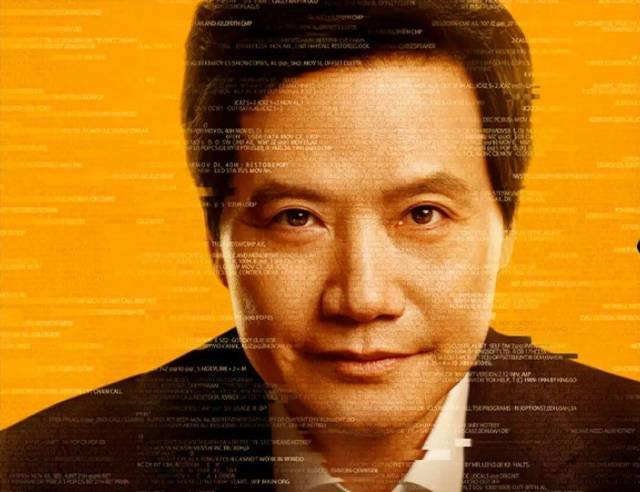
Core Viewpoint - The article discusses the challenges faced by Xiaomi and its CEO Lei Jun in 2025, highlighting a series of controversies that have impacted the company's reputation and operations in the automotive sector, despite achieving significant sales milestones and technological advancements. Group 1: Controversies and Reactions - The 3·29 incident involving a Xiaomi SU7 vehicle resulted in a tragic accident, leading to public outcry and significant scrutiny over the vehicle's safety features, causing a loss of 380 billion HKD in market value for Xiaomi [5] - Lei Jun addressed various accusations during a live stream, including claims of misleading marketing and safety concerns, emphasizing the need for fair media representation and acknowledging the company's past marketing practices that require improvement [4][10] - The "green belt warrior" label emerged from edited videos circulating online, which misrepresented the safety of Xiaomi vehicles, prompting Lei Jun to clarify that the accident rate of Xiaomi cars is below the industry average [9] Group 2: Product and Marketing Issues - The SU7Ultra's power limitation controversy arose when an OTA update restricted the vehicle's horsepower, leading to consumer backlash and accusations of misleading marketing [6] - The "flavor hood" controversy involved discrepancies between the advertised features of the SU7Ultra's carbon fiber hood and its actual design, resulting in customer demands for refunds and legal action [7] - The "small字 marketing" issue highlighted misleading promotional practices across multiple product lines, prompting Lei Jun to acknowledge the problem and commit to clearer marketing strategies [10] Group 3: Business Performance Amid Controversies - Despite the controversies, Xiaomi's automotive division achieved over 410,000 vehicle deliveries in 2025, surpassing its targets, with the SU7 series becoming the best-selling model in its category [12] - The company reported its first quarterly profit in the automotive sector, with a gross margin of 25.5%, indicating a successful transition into the automotive market despite the surrounding challenges [12] Group 4: Industry Implications - The controversies surrounding Xiaomi have sparked broader discussions within the automotive industry regarding safety standards, marketing ethics, and the importance of consumer rights, pushing for regulatory improvements [13] - The ongoing scrutiny of Xiaomi's practices serves as a case study for other companies in the rapidly evolving smart automotive sector, emphasizing the need for transparency and accountability in marketing and product safety [14]
合资车企的生死500天
3 6 Ke· 2026-01-12 11:25
Core Viewpoint - The automotive landscape in China has dramatically changed, with joint venture car manufacturers facing significant challenges and competition from domestic brands and new energy vehicles [2][3][4]. Group 1: Challenges Faced by Joint Venture Car Manufacturers - 2023 and 2024 are considered the most difficult years for joint venture car manufacturers in China, with several brands like Changan Suzuki and Dongfeng Renault exiting the market [3]. - Joint venture brands that once thrived in China are now losing market share to domestic brands and Tesla, with their product competitiveness being heavily criticized [4]. - The perception of joint venture brands has shifted, with consumers questioning their value compared to domestic electric vehicle brands [4]. Group 2: Signs of Recovery - In 2023, some joint venture brands began to show signs of recovery, such as GAC Toyota's Platinum 3X, which received 10,000 orders within an hour of its launch [5]. - Dongfeng Nissan's N7 model also performed well, achieving over 40,000 deliveries in six months despite later production issues [6]. - The emergence of new models from joint ventures indicates a potential turnaround, with some industry observers suggesting a "comeback" for these brands [7][8]. Group 3: The 2023 Shanghai Auto Show - The 2023 Shanghai Auto Show marked a turning point, showcasing the strength of domestic brands and the challenges faced by joint ventures [9][17]. - Executives from major global automotive companies were reportedly shocked by the advancements of domestic brands, which now offer competitive products [12][13]. - The event highlighted a shift in market dynamics, with domestic brands beginning to lead industry trends while joint ventures are seen as followers [18]. Group 4: Internal Changes and Strategy Shifts - Joint venture manufacturers are now allowing their Chinese teams more autonomy in product development, moving away from a global model to a more localized approach [31][32]. - This shift includes empowering local teams to design and develop products tailored to the Chinese market, as seen with Nissan's N7 and GAC Toyota's Platinum 3X [34][39]. - The focus on local development is part of a broader strategy to enhance competitiveness in the rapidly evolving automotive landscape [44][50]. Group 5: The Concept of Reverse Joint Ventures - The trend of "reverse joint ventures" is emerging, where foreign companies collaborate with Chinese brands to leverage local technology and market knowledge [54][57]. - This shift indicates a significant change in the dynamics of the automotive industry, with Chinese companies now taking the lead in technology and product development [62][63]. - The evolving landscape suggests that foreign manufacturers are increasingly reliant on Chinese innovation to remain competitive in the global market [64][68].




小米卢伟冰回应辞职传闻:今天上班
21世纪经济报道· 2026-01-12 09:31
公开信息显示,卢伟冰2019年加入小米担任REDMI品牌总经理,先后掌管小米中国区和国际 部,2020年晋升为合伙人,两年后升任集团总裁,2024年兼任手机部总裁,分管大家电、生 态链、互联网、汽车出海以及中国区和国际部两大战区等核心业务。 截至12日发稿,小米股价翻红,报38.58港元/股,涨2%,总市值超1万亿港元。 (声明:文章内容仅供参考,不构成投资建议。投资者据此操作,风险自担。) 出品丨21财经客户端 21世纪经济报道 编辑丨黎雨桐 SFC 21君荐读 2 智能 悦 读 · 权 威 n o 扫码点击下载 记者丨叶映橙 见习记者林健民 编辑丨谭婷 21财经《辟谣财知道》注意到,近日,有市场消息称小米集团合伙人、总裁卢伟冰辞职,引发 部分网友关注。微博词条数据显示,"小米卢伟冰辞职"话题已有60.6万阅读量。 值得注意的是,卢伟冰在微博认证的小米职务并未发生变化。1月12日,卢伟冰还转发了小米 汽车动态,并配文称"今天上班",用上班动态辟谣离职传闻。 ...
收评:港股恒指涨1.44% 科指涨3.1% 科网股普涨 AI概念股强势 智谱涨超31% 快手涨超7%
Xin Lang Cai Jing· 2026-01-12 08:10
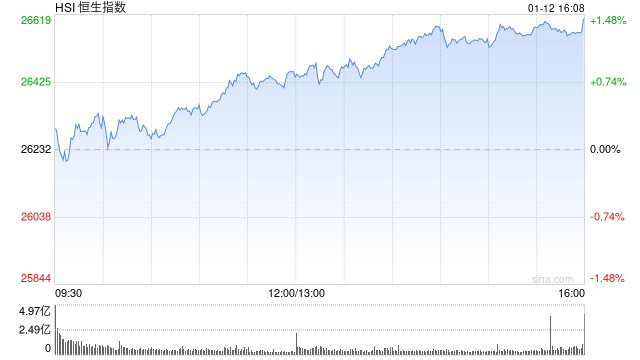
Market Overview - The Hong Kong stock market indices experienced a strong performance, with the Hang Seng Index rising by 1.44% to close at 26,608.48 points, the Hang Seng Tech Index increasing by 3.10%, and the National Enterprises Index up by 1.90% [1][7]. Technology Sector - Technology stocks saw a broad increase, with Kuaishou rising over 7%, Meituan and Bilibili up by 6%, and Baidu and Alibaba increasing by over 5% [1][7]. AI Sector - AI concept stocks showed significant strength, particularly Zhihui, which surged over 31%. This wave of domestic AI large model companies going public is seen as a transition from the technical research phase to a stage where technology and commercialization are aligned, providing a basis for future financing and valuation of large model companies [3][8]. - According to a Frost & Sullivan report, the market size for China's large language models is projected to reach 5.3 billion yuan in 2024 and grow to 101.1 billion yuan by 2030, with a compound annual growth rate of 63.5% from 2024 to 2030 [3][8]. Entertainment Sector - The entertainment sector also performed well, with Dama Entertainment rising over 6%. As of January 9, 2026, the total box office (including pre-sales) surpassed 1 billion yuan. The upcoming release of "Fast and Furious 3" has heightened public interest in the Spring Festival box office, although the overall heat for the 2026 Spring Festival may not match that of 2025 [3][8]. Semiconductor Sector - The semiconductor sector experienced a positive trend, highlighted by the debut of OmniVision Technologies, which saw its stock rise over 16% on its first trading day. The company raised approximately 4.8 billion HKD through its IPO, with 10 cornerstone investors committing a total of 2.174 billion HKD, accounting for 45.28% of the global offering [4][9].

“制造强国”实干系列周报-20260112
Shenwan Hongyuan Securities· 2026-01-12 04:41
Group 1: Commercial Aerospace - China has submitted applications for over 200,000 satellite constellations, with the largest being CTC-1 and CTC-2, each comprising 96,714 satellites[6] - The commercial aerospace sector is expected to see significant growth, with a focus on satellite payloads, platforms, and application terminals[3] - Key companies to watch include Xinke Mobile, Fenghuo Communication, and China Satellite Communications[21] Group 2: Space Photovoltaics - The focus from 2024 to 2026 will be on P-type HJT and perovskite tandem batteries, with companies like Dongfang Risen and Junda Co. highlighted for their capabilities[33] - P-type HJT batteries are expected to penetrate low Earth orbit applications due to their superior radiation resistance and cost advantages[40] - The global photovoltaic market is dominated by China, which holds over 90% of the production capacity in polysilicon, wafers, and battery cells[46] Group 3: Controlled Nuclear Fusion - 2025 is projected to be a pivotal year for nuclear fusion development in China, marking the start of significant capital expenditure[51] - Key players in the nuclear fusion sector include Hezhong Intelligent and Lianchuang Optoelectronics, focusing on core components and supporting technologies[51] - The BEST project in Anhui has made significant progress, with key components successfully installed, indicating a shift towards engineering validation[50] Group 4: Robotics and Automation - The CES 2026 showcased advancements in cleaning robots and intelligent lawn mowers, indicating a trend towards embodied intelligence in consumer products[54] - The cleaning robot market is experiencing rapid growth, benefiting from government subsidies, with major players like Ecovacs and Roborock leading the market[60]
印度拟推全球最严手机安全新规 要求苹果(AAPL.US)、三星开放源代码
智通财经网· 2026-01-12 04:32
智通财经APP获悉,据知情人士透露,印度正在权衡新的网络安全规则,要求智能手机制造商向政府开 放源代码访问权限并进行软件修改。此举引发了包括苹果(AAPL.US)和三星在内的主要科技公司的低调 抵制。 规则草案将允许印度政府批准的实验室检查源代码并进行漏洞测试。他们还将强制要求进行更改,使用 户能够删除预装应用程序,并限制对摄像头和麦克风的后台访问。其他条款还要求进行定期的恶意软件 扫描,并在设备上存储长达一年的系统日志。 企业反驳称,某些要求并不切实际。行业团体表示,持续的恶意软件扫描可能会损害电池寿命,软件更 新的预先通知可能会放慢紧急安全修复的速度,而长期的日志存储可能会超过设备容量。 这场争论反映了印度与全球科技公司之间长期存在的紧张关系。虽然印度政府最近在行业抵制下撤回了 一些数字指令,但也以国家安全的名义推进了其他指令。 这些规则最初于 2023 年起草,随着政府考虑使其具有法律约束力,目前正面临重新审查。据路透社报 道,预计包括谷歌和小米在内的公司高层及政府官员将在本周继续进行磋商。 该提议是包含 80 多项安全标准的广泛法案的一部分,旨在这一全球最大的智能手机市场之一应对日益 增长的在线欺诈, ...
若愚与硬哥转发了大博主对雷军王传福不提宁德的评论
理想TOP2· 2026-01-12 04:20
Core Viewpoint - The article discusses the shifting dynamics in the electric vehicle (EV) industry, particularly the changing power balance between battery manufacturers and automakers, with a focus on the growing trend of automakers developing their own batteries to gain more control over costs and supply chains [3][4]. Group 1: Industry Dynamics - The power dynamics in the EV industry are changing, with automakers increasingly moving away from reliance on major battery suppliers like CATL (Contemporary Amperex Technology Co., Limited) [3]. - The traditional model where automakers had to "kneel" to battery suppliers for production capacity is being replaced by a more balanced approach, where automakers are looking to self-manufacture batteries or choose from multiple suppliers [3][4]. - The shift is driven by rising costs and the need for supply chain security, which has become a new key performance indicator (KPI) for executives [3]. Group 2: Self-Manufacturing Benefits - Developing in-house batteries can lead to clearer cost structures, often resulting in savings of 10-20% compared to purchasing from external suppliers, while also allowing for better performance specifications [4]. - Automakers are exploring different strategies for battery production, with companies like BYD opting for a fully integrated approach, while others like Xiaomi and Changan are taking a more hybrid route [4]. Group 3: CATL's Response - In response to the changing landscape, CATL is also adapting its strategies by focusing on technological advancements, tighter partnerships with automakers, and shifting its business model from merely selling batteries to providing "battery services" [4]. - The competitive landscape is evolving, with consumers now having the option to choose between vehicles with CATL's technology or those with transparent, self-manufactured batteries that promise cost efficiency and reliability [4].


招银国际每日投资策略-20260112
Zhao Yin Guo Ji· 2026-01-12 03:08
Group 1: Market Overview - The Hang Seng Index closed at 26,232, up 0.32% for the day and 2.35% year-to-date [1] - The Shanghai Composite Index rose by 0.92% to 4,120, with a year-to-date increase of 3.82% [1] - The US markets showed positive performance, with the Dow Jones up 0.48% and the S&P 500 up 0.65% [1] Group 2: Sector Performance - In the Hong Kong market, the financial sector increased by 0.20%, while the real estate sector rose by 0.32% [2] - Chinese stocks saw gains in materials, consumer discretionary, and integrated enterprises, while consumer staples and utilities declined [3] - The MSCI China Healthcare Index has risen by 11.8% since the beginning of 2026, outperforming the MSCI China Index which increased by 9.1% [5] Group 3: Economic Indicators - China's CPI growth has slightly increased, reaching a near two-year high, driven by rising food and gold jewelry prices [4] - The US non-farm payrolls for December fell short of expectations, indicating a weakening job market, with the unemployment rate dropping to 4.4% [4] - The basic medical insurance expenditure in China showed a recovery with a 0.5% growth in 2025, compared to a 5.5% increase in 2024 [9] Group 4: Pharmaceutical Industry Insights - The market size for patented drugs in China is estimated to be around 300-400 billion RMB, with domestic innovative drugs accounting for about 1/3 of this market [6] - The global pharmaceutical market is projected to reach 1.74 trillion USD, with China's market size at 166 billion USD, representing only 9.5% of the global market [7] - The trend of Chinese innovative drugs going overseas is expected to continue, with a significant increase in BD (business development) transactions projected for 2025 [8]