红旗连锁

Search documents
历史首次!无孩家庭过半,中国人第一次为自己消费?
Sou Hu Cai Jing· 2025-12-09 13:18
Group 1 - The proportion of single-person households increased from 8.30% in 2000 to 25.39% in 2020, while two-person households rose from 17.05% to 29.68%, indicating a shift towards childless families becoming the mainstream, with single populations reaching 240 million [1] - The traditional role of marriage is evolving from a necessity for survival to a financial burden, leading to a complete rewrite of ordinary people's financial logic influenced by income, employment, marriage, and family dynamics [1] - The old wealth paradigms have been disrupted, and new capital opportunities are emerging in the market [1] Group 2 - In 2025, Hangzhou experienced a significant decline in the real estate market, with the once-popular Regal International facing vacancies and landlords willing to accept lower rents and flexible payment options [2][4] - The hourly wage for e-commerce live streamers dropped from 160 yuan to 80 yuan, reflecting a shift in the job market as many graduates compete for these positions [2] Group 3 - The e-commerce penetration rate in China has declined from 27.6% in 2023 to 25%, marking the first continuous drop in the history of Chinese e-commerce [5] - The current economic climate indicates a transition from material consumption to emotional consumption, suggesting potential new opportunities for the real economy [5][6] - The decline in consumer interest in traditional e-commerce is attributed to the saturation of material goods in households, leading to a shift in purchasing behavior [8] Group 4 - The pet market in China is projected to reach 300 billion yuan, with the number of pets surpassing that of children under four years old, indicating a shift in consumer priorities [10] - The rise of emotional consumption is evident in various sectors, including outdoor sports and wellness products, which are gaining popularity among younger consumers [10][12] - The changing social structure, characterized by declining birth and marriage rates, is reshaping consumer behavior towards individual and emotional needs rather than traditional family-oriented spending [13][14] Group 5 - The elderly population in China is expected to exceed 300 million by 2024, leading to an increase in solitary living situations and a growing market for products catering to emotional well-being [15] - The shift from traditional family spending to individual consumption reflects a broader societal change where personal satisfaction takes precedence over collective family needs [15][16] - The evolution of consumer preferences indicates a move towards experiences and emotional fulfillment rather than mere material acquisition, highlighting a maturation of the Chinese consumer market [16][19]


安岳、潼南:15亿杯柠檬水需求背后,产业能否熨平天灾?
Guan Cha Zhe Wang· 2025-12-09 12:29
Core Insights - The Chinese lemon industry is undergoing a significant structural adjustment, characterized by a decline in production and a simultaneous increase in consumer demand, leading to substantial price fluctuations [4][6]. Group 1: Production Challenges - Extreme weather conditions, including late spring frosts and prolonged summer droughts, have severely impacted lemon yields in major production areas like Sichuan and Chongqing [6][8]. - Sichuan's Anyue County, which accounts for over 70% of China's lemon production, is expected to see its 2024 yield drop to approximately 1.3 million pounds, less than half of the 2023 output [6][8]. - The overall lemon production in Anyue is projected to decline by around 20% in 2024 due to adverse weather conditions [6]. Group 2: Market Dynamics - The retail price of lemons has surged, with reports indicating prices exceeding 20 yuan per kilogram, reflecting a price increase of three to four times compared to previous years [4][6]. - The global lemon supply is tightening, with major lemon-producing countries like Turkey, Argentina, and South Africa also experiencing significant production declines due to extreme weather [8]. - The demand for lemons is rapidly increasing, particularly driven by the new-style tea beverage industry, with companies like Mixue Ice City selling over 1.5 billion cups of lemon drinks in the first ten months of 2025, requiring over 100,000 tons of lemons [8].

市场在资金和政策支撑下,整体仍处于上行中枢,自由现金流ETF(159201)打开低位布局窗口
Mei Ri Jing Ji Xin Wen· 2025-12-09 03:18
Group 1 - The A-share market experienced a weak adjustment on December 9, with the Guozheng Free Cash Flow Index dropping over 1.4% during the session, while stocks like Hongqi Chain, China Power, and Weichai Heavy Industry led the gains, and companies such as Luoyang Molybdenum, China Aluminum, and Nanshan Aluminum faced declines [1] - The largest free cash flow ETF (159201) saw significant capital inflow, accumulating a total of 2.236 billion yuan over the past 22 days, with a peak single-day net inflow of 253 million yuan [1] - According to a report from Zhongyin Securities, the market remains in an upward trend supported by capital and policy, with expectations for A-shares to continue rising next year due to valuation support and stabilizing profits, indicating an early start to the cross-year allocation market [1] Group 2 - The free cash flow ETF (159201) and its linked funds (A: 023917; C: 023918) closely track the Guozheng Free Cash Flow Index, selecting stocks with positive and high free cash flow after liquidity, industry, and ROE stability screening, indicating high quality and strong risk resistance suitable for long-term investment [1] - The annual management fee for the fund is 0.15%, and the custody fee is 0.05%, both representing the lowest rates in the market, maximizing benefits for investors [1]
零售股走强,中央商场、茂业商业、东百集团、永辉超市涨停
Ge Long Hui· 2025-12-09 03:07
责任编辑:栎树 | 代码 | 名标 | | 涨幅% ↓ | 总市值 | 年初至今涨幅%。 | | --- | --- | --- | --- | --- | --- | | 600280 | 中央商场 | | 10.03 | 45.81亿 | -1.22 | | 600828 | 茂业商业 | 策 | 10.02 | 112亿 | 48.28 | | 600693 | 东百集团 | 1 | 9.99 | 107亿 | 78.52 | | 601933 | 永辉超市 | 1 | 9.95 | 431亿 | -25.08 | | 603123 | 翠微股份 | | 5.48 | 96.81亿 | 50.56 | | 002187 | 广百股份 | 1 | 4.43 | 56.21亿 | 13.95 | | 000759 | 中百集团 | | 4.35 | 50.82亿 | -41.36 | | 601116 | 三江购物 | | 3.86 | 87.03亿 | 48.75 | | 002356 | 赫美集团 | 策 | 3.10 | 56.78亿 | 31.61 | | 002697 | 红旗连锁 | | 2.7 ...


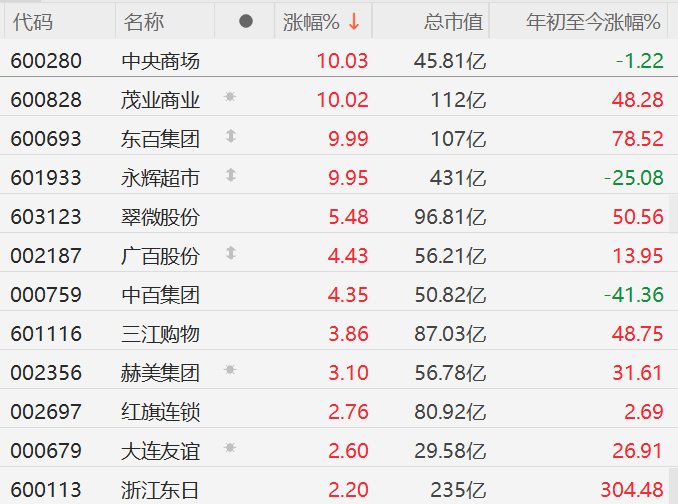
零售板块短线拉升,茂业商业涨停
Mei Ri Jing Ji Xin Wen· 2025-12-09 02:37
Group 1 - The retail sector experienced a short-term surge, with notable stocks such as Maoye Commercial hitting the daily limit up [1] - Dongbai Group previously reached its limit up, indicating strong market interest [1] - Other companies including Central Plaza, Guoguang Chain, Sanjiang Shopping, Guangbai Co., and Hongqi Chain also saw increases in their stock prices [1]


见证历史!全球亿万富翁总数达2919人,中国平民企业上榜
Sou Hu Cai Jing· 2025-12-07 21:37
Group 1 - The number of billionaires globally has reached a new high of 2,919, an increase of 8.8% compared to the previous year, with their total wealth soaring to $15.8 trillion, reflecting a year-on-year growth of 13% [3][5] - UBS reported that 287 new billionaires were added this year, marking the second-highest record since tracking began in 2015 [7] - The wealth accumulation among new billionaires is diverse, with 196 of the 287 being self-made, collectively amassing $386.5 billion across various sectors such as marketing software, infrastructure, and biotechnology [11][13] Group 2 - The rise of billionaires is significantly driven by advancements in technology, particularly in artificial intelligence and biotechnology, which have created unique barriers and growth potential [9] - In contrast to self-made billionaires, 91 individuals entered the billionaire ranks through inheritance, with their total wealth reaching $298 billion, reflecting a growth of over one-third from the previous year [19] - The report indicates that in the next 15 years, heirs of billionaires are expected to inherit at least $5.9 trillion, with the U.S., Western Europe, and India being key regions for wealth transfer [19][21] Group 3 - The mobility of billionaires is increasing, with 36% of surveyed billionaires having relocated at least once, driven by factors such as quality of life, tax efficiency, and geopolitical conditions [23][25] - Countries like Italy, the UK, and Spain are implementing stricter tax policies for the wealthy, while regions like Dubai and Singapore are attracting wealth through tax incentives and relaxed regulations [25][27] - The dynamics of wealth concentration and mobility are influenced by market regulations and national strategies, highlighting the need for a balance between wealth growth and social equity [32][33]


错失牛市!消费板块后市如何走?
证券时报· 2025-12-07 09:07
年内A股在科技板块的提振下开启了迈向4000点的征程,但亦有部分板块未能搭上车。 多只重仓消费股的基金净值迄今为止遗憾告负,在传统消费持续不景气的背景下,部分高位加仓新消费的基金 也在个股的回撤中折损净值。 多名基金经理认为,"旧消费"在经历了长达四年的回撤后,估值已回归合理区间;新消费面临的则是高景气度 与高估值并存的现状。此外,在个股遴选中,部分基金经理提及"出海"这一关键词,并认为国产消费品牌在国 际竞争中潜力巨大,海外营收若能放量,对应当前估值水平有不少增长空间。 多只消费主题基金"躲牛市" 年内的科技牛市中,五年前的"核心资产"多数缺席,白酒、家电以及银行等板块多数涨幅有限,其中消费类个 股更是表现平平。据Wind数据,年初至今"酒类指数"跌幅超过6%,"零售指数"跌超2%,成为为数不多的下跌 板块。 因此,在多只科技股催生的"翻倍基"榜单中,还有部分消费主题产品跌幅超过10%,占据跌幅靠前位置。 以 华东某公募旗下消费主题基金 为例,上半年的两个季度内,该基金重仓股中包括了贵州茅台、五粮液和美 的集团等传统消费股,上半年跌幅达17%,下半年虽转向了消费电子但依旧走势一般。 "旧消费"不景气的同时, ...

山寨奶茶店,县城中产的财富粉碎机
虎嗅APP· 2025-12-06 03:32
以下文章来源于图数室 ,作者图数室 图数室 . 新浪新闻出品《图数室》栏目。 关注我们,用数据读懂热点。 本文来自微信公众号: 图数室 ,作者:图数室,题图来自:AI生成 人到中年,梦碎奶茶店 县城奶茶一条街上,正牌连锁店门口排着队,几步外招牌相似的"追随者"们却总开了又倒,循环挣 扎。 不少中年人为寻事业"第二春"加盟开店,反被"快招"套路掏空半生积蓄。 县城中年有自己的破产四件套:奶茶店、咖啡店、汉堡店、烘焙店。从线上创业直播间到县城商业 街,"自杀式开店"的戏码正不断上演。 所谓"一键开店、短期回本"的话术背后,常是环环相扣的收 费陷阱。 想辞职开店的朋友有福了!某创业导师的连麦直播奉上最新电子榨菜:抵押房子开6层奶茶大厦的大 哥,用洗脚盆放榨汁工具的大姐,负债开中药奶茶店的离异宝妈……一群中年人押上半生积蓄,加盟 一家名不见经传的奶茶店,却敢于和雪王中门对狙。 他们的创业结局让人心惊胆战:"投60万开奶茶店血本无归""砸33万日销仅100""28万一个月亏精 光"……这些"商业新秀"的故事,足以打消普通人99%不切实际的暴富幻想。 "快招"陷阱有哪些特征?为何这类骗局总瞄准中年创业者?当市场被连锁巨头 ...

2025年中国餐饮食品连锁加盟行业白皮书
艾瑞咨询· 2025-12-06 00:06
Core Insights - The Chinese restaurant food chain franchise industry is undergoing significant transformation, driven by macroeconomic recovery and increasing consumer spending power, leading to market expansion and digital transformation [1][4][9] Market Overview - The Chinese restaurant food market reached a scale of 12.6 trillion yuan, with a compound annual growth rate (CAGR) of approximately 7.2% from 2020 to 2024, driven by both service and retail sectors [9] - The restaurant service sector is recovering strongly post-pandemic, with an annual growth rate close to 9%, while food retail is experiencing structural upgrades with high-value subcategories [9][10] Consumer Behavior - Urban and rural residents' per capita consumption expenditure is showing a recovery trend, with urban and rural growth rates of 6.4% and 8.9% respectively, indicating strong demand stability in food spending [6] - The at-home dining market is rapidly growing at an annual rate of 18.4%, reflecting changing consumer preferences towards convenience and health [10][36] Industry Trends - The chain rate in the restaurant service sector is expected to rise from 15% in 2020 to 24% by 2025, indicating a shift towards more standardized and digital operations [12] - The differentiation in chain categories is evident, with ready-to-drink beverages leading in chain rates, while traditional Chinese cuisine remains lower due to reliance on local tastes and chef skills [15] Investment Opportunities - The at-home dining segment is favored by franchisees due to its lower investment threshold and shorter return on investment periods, with monthly sales per store ranging from 80,000 to 200,000 yuan and gross margins of 30-40% [34][35] - Brands like Guoquan Shihui are emerging as leaders in the at-home dining space, offering a diverse product matrix and strong operational support, making them attractive for franchisees [39][40] Digital Transformation - The industry is moving towards digitalization to support scale expansion and operational efficiency, with data-driven site selection and standardized operational systems becoming essential [44] - Digital management of supply chains is crucial for enhancing profitability and reducing risks for franchisees [44] Franchisee Dynamics - The franchisee landscape is shifting towards more experienced investors, with a growing number of professional franchisees who prioritize brands with clear profit models and operational support [47][48] - Successful franchise experiences are leading to repeat investments, fostering a mutually beneficial relationship between strong brands and capable franchisees [48]

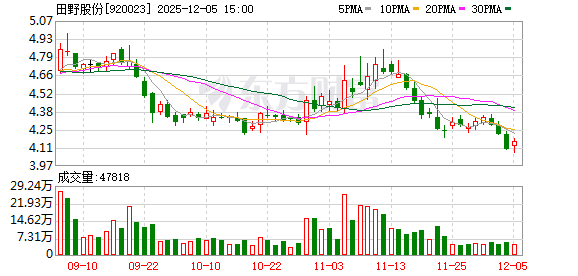
被北交所评价为“不合格” 田野股份下一步怎么走?
Xin Jing Bao· 2025-12-05 12:28
Core Viewpoint - Tianye Innovation Co., Ltd. faces significant challenges due to internal control deficiencies and regulatory penalties, impacting its financial performance and market position in the new tea beverage industry [2][6][8]. Group 1: Internal Control Issues - Tianye's internal control was deemed ineffective, leading to a negative audit opinion for the 2024 financial report, primarily due to inflated procurement costs amounting to 8.5534 million yuan [2][3]. - The company has been penalized by the Beijing Stock Exchange, receiving the lowest D-class rating for information disclosure, indicating non-compliance with listing regulations [7][8]. - The management has acknowledged the internal control deficiencies and is actively working on rectifying these issues, including enhancing procurement processes and internal control training [4][6]. Group 2: Financial Performance - In its first year post-listing, Tianye reported a revenue of 460 million yuan, a decrease of 2.33% year-on-year, and a net profit of 33.38 million yuan, down 37.69% [8]. - For 2024, the company’s revenue increased to 494 million yuan, a growth of 7.34%, but net profit plummeted by 71.07% to 9.65 million yuan [8]. - The trend of declining profitability continued into 2025, with the first three quarters showing a revenue of 407 million yuan (up 9.79%) and a net profit of 26.39 million yuan (down 15.87%) [8]. Group 3: Industry Context - The new tea beverage industry is experiencing a shift from rapid expansion to refined operations, with companies focusing on differentiation rather than scale [9][10]. - The market growth rate for the new tea beverage sector is projected to slow significantly, from 44.3% in 2023 to 12.4% by 2025, indicating increased competition and market saturation [9]. - The trend of brands establishing their own supply chains poses additional challenges for suppliers like Tianye, as major clients may reduce reliance on external suppliers [10]. Group 4: Recommendations for Improvement - Experts suggest that suppliers should enhance R&D to create differentiated, high-value products, expand their customer base, optimize cost structures, and strengthen internal control management to improve governance [11].