
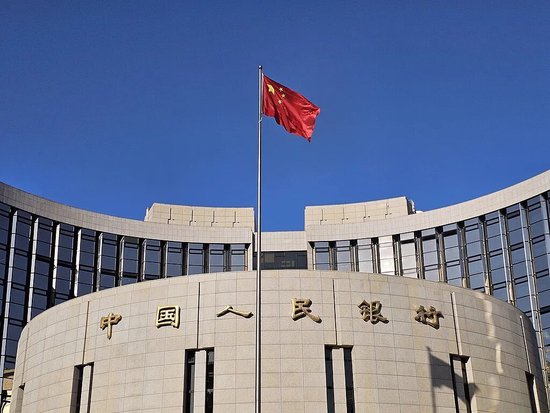
中国人民银行

Search documents
央行大额净回笼,股债延续跷跷板行情
Hua Lian Qi Huo· 2026-01-11 13:38
1. Report Industry Investment Rating - No relevant content provided. 2. Core Views of the Report - This week, the total issuance scale of China's bond market was 1294.537 billion yuan, with the supply rhythm significantly advanced at the beginning of the year. Government bonds and credit bonds jointly pushed up the weekly issuance volume. The combined issuance scale of national bonds and local bonds exceeded 400 billion yuan, and the combined issuance of medium - term notes, short - term financing bills, and financial bonds exceeded 80 billion yuan, indicating active financing demand from enterprises and financial institutions. The supply pressure at the beginning of the year was released in advance, with the planned issuance of local bonds in the first quarter exceeding 2 trillion yuan [7]. - This week, the central bank's open - market operations saw a large - scale net withdrawal. Due to the concentrated maturity of 7 - day and 14 - day reverse repurchases around the New Year, the net withdrawal of funds in a single week reached 1.655 trillion yuan, a two - year high. This reflects the central bank's "precise regulation" thinking. The long - term yield rose rapidly. However, on January 9th, the central bank conducted 3.4 billion yuan of reverse repurchase operations, achieving a net injection, and the bond market sentiment recovered [7]. - The short - term funds remained stable. DR007 fluctuated narrowly around the 7 - day reverse repurchase policy rate of 1.40%, and the overnight Shibor remained stable in the 1.2% - 1.3% range, indicating sufficient market funds [7]. - The yield of interest - rate bonds completed a "rise and fall" cycle this week. Attention should be paid to the issuance progress of government bonds, credit delivery data, and the central bank's reverse repurchase renewal rhythm. The long - term yield may still fluctuate, while the short - term liquidity is expected to remain loose. If the equity market continues to strengthen, the bond market may face greater capital diversion pressure, and the long - term yield may rise again. If the central bank increases the net injection, the short - term stability will be enhanced, and institutional allocation demand may shift to short - term varieties [7]. - The bank system's excess reserve ratio is at a reasonable level, and the central bank's timely small - scale reverse repurchase operations have effectively smoothed out the capital fluctuations caused by the concentrated maturity of New Year's reverse repurchases. The bank system's liquidity remains relatively loose, laying a foundation for the decline in short - term interest - rate bond yields [9]. - This week, the yield of credit bonds generally declined, the market's demand for high - quality entities continued to be released, the credit spread narrowed passively, and the overall valuation center moved down. The urban investment bonds are mainly short - term (within 1 year), with intensified regional differentiation. The yields of high - quality regions such as Shanghai, Jiangsu, and Zhejiang declined significantly, while provinces like Liaoning and Yunnan are still under pressure. In the industrial bond market, stable industries such as public utilities, transportation, and power performed steadily, while industries such as light manufacturing and real estate had large valuation deviations, and credit risk re - pricing should be noted. The credit bond market showed a "simultaneous rise of stocks and bonds" pattern, with fund companies as the main buyers, insurance institutions showing a net selling trend, banks' allocation and trading desks being divided, and wealth management funds continuously increasing their positions in 1 - 3 - year credit bonds [9]. - With the release of consumer loan and equipment renewal loan demand driven by the new round of trade - in programs and the return of enterprise and household deposits promoted by fiscal spending, the stability of the bank's liability side has been improved, and the expectations of credit expansion and economic recovery have been strengthened. With the support of the central bank's reverse repurchase and MLF tools, the short - term yield may remain in a low - level shock, while the long - term yield may be suppressed by economic recovery expectations, and the interest - rate curve may continue to show a "bullish steepening" pattern [9]. - In November 2025, 500 billion yuan of local special bond balance limits were issued, driving government - funded expenditures from negative to positive. The market expects that fiscal stimulus in 2026 will be significantly advanced, especially in the first half of the year. The expected issuance scale of local government special bonds in 2026 is about 4.4 trillion yuan, and the expected issuance scale of special national bonds is about 1.3 trillion yuan [9]. 3. Summaries According to Relevant Catalogs 3.1 Bond Market Issuance - This week, the total issuance scale of China's bond market was 1294.537 billion yuan, with government bonds and credit bonds jointly driving the increase. The combined issuance of national bonds and local bonds exceeded 400 billion yuan, and the combined issuance of medium - term notes, short - term financing bills, and financial bonds exceeded 80 billion yuan. The planned issuance of local bonds in the first quarter exceeds 2 trillion yuan [7]. 3.2 Central Bank Operations - This week, the central bank's open - market operations had a net withdrawal of 1.655 trillion yuan due to the concentrated maturity of reverse repurchases. On January 9th, it conducted 3.4 billion yuan of reverse repurchase operations, achieving a net injection [7]. 3.3 Yield Trends - The yield of interest - rate bonds completed a "rise and fall" cycle this week. The long - term yield may still fluctuate, while the short - term liquidity is expected to remain loose [7]. - The yield of credit bonds generally declined this week, and the credit spread narrowed passively. Urban investment bonds showed regional differentiation, and industrial bonds in different industries had different performances [9]. 3.4 Market Participants' Behavior - Bank system liquidity is relatively loose, providing a stable capital environment for bond issuance and institutional allocation [9]. - In the credit bond market, fund companies are the main buyers, insurance institutions are net sellers, banks' allocation and trading desks are divided, and wealth management funds are increasing their positions in 1 - 3 - year credit bonds [9]. 3.5 Fiscal Policy Expectations - In 2026, fiscal stimulus is expected to be significantly advanced, especially in the first half of the year. The expected issuance scale of local government special bonds is about 4.4 trillion yuan, and the expected issuance scale of special national bonds is about 1.3 trillion yuan [9]. 3.6 Other Market Indicators - Multiple charts show data on bond market prices, yields, interest rates, and liquidity, including the prices of national bond futures, the basis of national bond futures, the implied interest rate of national bond futures, various bond yields, inter - bank repurchase rates, inter - bank lending rates, loan rates, and market liquidity indicators [10][14][16]
中国人民大学教授郭彪:让小失误止步于小失误
Xin Lang Cai Jing· 2026-01-11 09:16
炒股就看金麒麟分析师研报,权威,专业,及时,全面,助您挖掘潜力主题机会! 2025年12月22日,中国人民银行发布的一次性信用修复通知,为曾因非主观失误留下小额逾期记录的群 体推开了信用重塑的大门。 第一,政策的精准性与治理效能,让"容错"更有温度。 此次信用修复政策的科学性,首先体现在覆盖范围的精准划定上。1万元的单笔金额上限,恰好囊括了 信用卡忘还、房贷小额欠缴、互联网信贷漏存等高频民生场景,既排除了大额恶意逾期的风险,又确保 政策善意触达真正有需要的群体。这种"以小见大"的政策设计,正是"金融为民"理念的具象化。 更值得称道的是"免申即享"的机制创新。不同于以往信用修复需个人跑网点、交材料的繁琐流程,此次 政策依托征信系统自动识别符合条件的逾期信息。个人还清欠款后,系统将在规定时限内自动完成"不 予展示"处理,无需主动申请。这背后是治理理念从"重流程"向"重实效"的升级,避免了因信息不对称 导致的政策空转。 第二,普通人的生活转变,让"修复"更具民生价值。 这一政策并非对失信行为的"豁免通行证",而是现代信用治理体系中容错与激励并重的生动实践,更是 引导全社会重新审视信用价值、主动守护信用的重要起点。 ...

21评论丨数字人民币2.0的转型逻辑与前景
Xin Lang Cai Jing· 2026-01-09 22:52
Core Viewpoint - The People's Bank of China has introduced a new action plan to enhance the management and service system of the digital renminbi, transitioning from cash-based version 1.0 to deposit currency-based version 2.0, effective January 1, 2026 [1] Group 1: Progress and Developments - Since 2016, the digital renminbi pilot has focused on domestic retail payment, utilizing consumption vouchers and red packets to increase attractiveness [1] - The digital renminbi has also expanded into cross-border retail payments, enhancing services for foreign visitors and deepening cooperation with the Hong Kong Monetary Authority [1] - In the wholesale payment sector, the mBridge project has reached the minimum viable product stage, indicating ongoing development in cross-border wholesale payments [1] Group 2: Challenges and Issues - The retail payment service system faces challenges in forming sustainable business models under the current M0 positioning, with a need for clearer regulations regarding the roles of participating banks and third-party institutions [2] - The wholesale payment service system is complicated by the lack of a stable model for central bank digital currencies (CBDCs) globally, making interoperability and compatibility a significant challenge [2] Group 3: Adjustments and Future Focus - The new digital renminbi plan includes major adjustments in its functional positioning, shifting from cash substitutes to interest-bearing deposits and from a single payment tool to a multifunctional financial account [3] - Future focus areas include optimizing functions for small retail payments, enhancing large retail payments for enterprises through programmability, and innovating in cross-border wholesale payments to support the internationalization of the renminbi [3][5] Group 4: Addressing Challenges - The new digital renminbi plan must effectively address challenges related to monetary policy operations, the impact on existing banking systems, and the potential for a "Matthew effect" among participating and non-participating institutions [5] - The implications for the existing payment and clearing systems need thorough exploration, particularly regarding the transfer and clearing of digital renminbi accounts [5] Group 5: Future Applications - The digital renminbi could explore new applications in the era of digital assetization, potentially leading to the creation of a unified ledger for financial markets that records tokenized asset ownership and transaction information [6] - The distinction between traditional electronic deposits and digital renminbi deposits remains unclear, emphasizing the need to focus on the incremental value of tokenized deposits [6]


专家预计1月资金面将延续宽松态势
Sou Hu Cai Jing· 2026-01-08 23:35
Core Viewpoint - The People's Bank of China (PBOC) conducted a 99 billion yuan reverse repurchase operation with a fixed rate of 1.4%, indicating a strategy to maintain liquidity in the financial system [1] Group 1: Monetary Policy Actions - The PBOC executed a 99 billion yuan 7-day reverse repurchase operation on January 8, with an interest rate set at 1.4% [1] - There were no 7-day reverse repos maturing on that day, but 1.1 trillion yuan of 3-month reverse repos were set to mature, leading to a net injection of 99 billion yuan [1] Group 2: Market Implications - Experts suggest that various factors, including fiscal deposits and credit issuance, will influence liquidity in January [1] - The central bank is expected to continue using various policy tools, such as government bond transactions and Medium-term Lending Facility (MLF), to ensure ample liquidity [1] - It is anticipated that the funding environment will remain loose in the near term [1]
11000亿元!人民银行最新操作为2026“适度宽松”货币政策打开空间
Bei Jing Shang Bao· 2026-01-08 10:11
Core Viewpoint - The People's Bank of China (PBOC) has initiated a significant liquidity injection into the banking system through a 110 billion yuan reverse repurchase operation, aimed at maintaining ample liquidity in the financial market [1][6]. Group 1: Reverse Repo Operations - On January 8, the PBOC conducted a 110 billion yuan buyout reverse repo operation with a term of three months (90 days) to ensure sufficient liquidity in the banking system [1]. - This operation marks the third consecutive month of equal-scale buyout reverse repo operations, indicating a consistent approach to liquidity management [6]. - Additionally, the PBOC executed a 99 billion yuan seven-day reverse repo operation on the same day, highlighting its dual approach to liquidity provision [7]. Group 2: Market Implications - The continuation of the buyout reverse repo operations is expected to support the funding needs of key projects and bolster economic recovery, especially with the early issuance of local government bonds in 2026 [8]. - Analysts suggest that the PBOC's actions are designed to counter potential liquidity tightening, thereby stabilizing the financial market and encouraging increased credit supply from financial institutions [8]. - The PBOC is likely to utilize both buyout reverse repos and Medium-term Lending Facility (MLF) tools to inject liquidity into the market throughout January, reflecting a sustained supportive monetary policy stance [8][9]. Group 3: Broader Monetary Policy Context - The PBOC's recent actions align with its broader monetary policy goals of maintaining a moderately loose monetary environment, promoting high-quality economic growth, and ensuring that liquidity conditions remain favorable [9]. - The PBOC's work conference emphasized the importance of flexible and effective use of various monetary policy tools, including reserve requirement ratio cuts and interest rate adjustments, to match the growth of social financing and money supply with economic growth expectations [9].

金融大家评 | 2026年央行工作怎么干?
清华金融评论· 2026-01-08 09:56
Core Viewpoint - The People's Bank of China (PBOC) is set to continue implementing a moderately accommodative monetary policy in 2026, focusing on counter-cyclical and cross-cyclical adjustments to promote stable economic growth and reasonable price recovery [3]. Group 1: Monetary Policy - The PBOC will utilize various monetary policy tools such as reserve requirement ratio (RRR) cuts and interest rate reductions to maintain ample liquidity, aligning the growth of social financing and money supply with economic growth and price level expectations [3]. - In 2025, over 50% of the social financing scale was from non-loan financing methods, and this trend is expected to continue in 2026, with growth rates surpassing the overall social financing growth [3]. - The PBOC aims to improve the market-oriented interest rate formation and transmission mechanism, ensuring that policy interest rates effectively influence various market rates, thereby stabilizing the comprehensive financing costs for society [3][4]. Group 2: Financial Market Development - The PBOC has introduced a "Technology Board" in the bond market to enhance financial support for technological innovation, with a cumulative issuance of 1.8 trillion yuan in technology innovation bonds by the end of 2025 [5]. - The "Technology Board" is designed to meet the financing needs of technology enterprises throughout their lifecycle, supporting both mature and early-stage companies through differentiated institutional arrangements [5]. - The PBOC will continue to develop the "Technology Board" to foster a financial market ecosystem that supports high-level self-reliance and strength in technology [5]. Group 3: Regional Financial Initiatives - The PBOC's Fujian branch will deepen the high-level opening of cross-border trade and investment, focusing on expanding domestic demand, boosting consumption, and activating effective investment [6][8]. - The Fujian branch will also emphasize financial support for key areas such as technological innovation, private economy, green transformation, and urban-rural integration [7]. - The Guangdong branch will enhance financial services for the real economy, particularly in supporting domestic demand, technological innovation, and small and medium-sized enterprises [9][10].

1.1万亿元买断式逆回购,保障岁末年初金融市场平稳运行
Ren Min Ri Bao· 2026-01-08 09:07
Group 1 - The People's Bank of China (PBOC) announced a 1.1 trillion yuan reverse repurchase operation with a term of 3 months, aimed at maintaining market liquidity and ensuring stable financial operations at the year's end [1][6] - The reverse repurchase operation is expected to achieve net liquidity injection, counteracting the 1.1 trillion yuan of 3-month reverse repos maturing this month [1][3] - The PBOC's use of the reverse repurchase tool is part of a broader strategy to manage liquidity effectively, especially during critical periods such as year-end and cross-quarter transitions [2][6] Group 2 - The PBOC has been utilizing the reverse repurchase and Medium-term Lending Facility (MLF) since 2025 to provide medium to long-term liquidity [2][6] - The current financial market is relatively liquid, which is why the PBOC did not increase the amount in the latest reverse repurchase operation, indicating that liquidity support remains robust [3][7] - Analysts expect that the PBOC will conduct additional operations, including a 6-month reverse repurchase and MLF operations, to further support liquidity in the market [3][7] Group 3 - The PBOC's 2026 work meeting emphasized the continuation of a moderately loose monetary policy, focusing on enhancing macro policy effectiveness and supporting high-quality economic development [4][9] - The central bank aims to maintain a stable liquidity environment to support economic growth and financial market stability, leveraging a comprehensive set of liquidity management tools [4][9] - The PBOC plans to use various monetary policy tools flexibly to ensure that the growth of social financing and money supply aligns with economic growth and price stability targets [5][9]
黄金期货多空聚焦4584与4200
Jin Tou Wang· 2026-01-08 03:58
Group 1 - The core viewpoint of the news highlights a recent decline in gold prices due to profit-taking by short-term futures traders, with a notable resistance level at record highs causing caution among gold bulls [1] - The People's Bank of China has increased its gold holdings for 14 consecutive months, indicating a strong and persistent demand for gold amid rising prices [3] - In December, the People's Bank of China added 30,000 ounces of gold, bringing the total increase since November 2024 to approximately 1.35 million ounces (42 tons) [3] Group 2 - The February gold futures have a key resistance level at $4,584.00 per ounce, while the bearish target is to push prices below the critical support level of $4,200.00 per ounce [4] - The first resistance level is at the overnight high of $4,512.40 per ounce, followed by $4,550.00 per ounce; the first support level is at today's low of $4,432.90 per ounce, with the next support at $4,400.00 per ounce [4]
央行1月操作11000亿元逆回购等量续作,预计本月将开展6个月期操作并可能加量
Sou Hu Cai Jing· 2026-01-08 03:19
Group 1 - The People's Bank of China (PBOC) announced a 1.1 trillion yuan reverse repo operation on January 8, with a term of 3 months, to maintain ample liquidity in the banking system [1] - The operation is a continuation of a similar scale and term reverse repo maturing on the same day, indicating a rollover without increasing the amount [1] - Analysts expect the PBOC to conduct another 6-month reverse repo operation around January 15, with a high possibility of increasing the amount, marking the eighth consecutive month of net liquidity injection into the market [1][2] Group 2 - The PBOC is expected to use various policy tools, including reverse repos and Medium-term Lending Facility (MLF), to inject mid-term liquidity into the market, reflecting a continuation of a moderately loose monetary policy [2]
地缘避险情绪升温,BCOM指数权重调整启动
Hua Tai Qi Huo· 2026-01-08 02:56
Report Industry Investment Rating No relevant content provided. Core Viewpoints - Policy expectations are swinging back and forth. After a series of important domestic meetings and the Fed's return to a "restrictive" stance in December, there are risks of policy expectation swings both at home and abroad, with asset sentiment deviating from the macro situation. Future commodity prices will be determined by supply - side risks and loose monetary policies due to global geopolitical instability [1]. - There is a certain divergence in domestic and foreign economic outlooks. Overseas economic sentiment has been declining since October, while China's exports and new orders remain positive. China's November economic data was under pressure, but the official manufacturing and non - manufacturing PMIs in December returned to the expansion range [2]. - For commodity investment, focus on high - certainty sectors such as non - ferrous metals and precious metals. There are also opportunities for low - valued commodities to make up for price increases. In the energy sector, pay attention to the growth expectation of crude oil supply after the US "temporary management" of Venezuela. In the chemical industry, focus on the "anti - involution" space of some varieties. For agricultural products, pay attention to weather expectations and short - term pig diseases [3]. Summary by Related Catalogs Market Analysis - Policy expectations are unstable. After the Central Economic Work Conference in December and the 2026 People's Bank of China Work Conference in January, there are uncertainties in domestic and foreign policies. The Fed has internal differences. Geopolitical tensions during the New Year's Day holiday have increased supply - side risks for commodities [1]. - On January 7, the A - share market showed mixed performance. The semiconductor industry chain was active, and the coal sector had a strong performance. In the commodity futures market, many contracts such as nickel, coke, and coking coal reached the daily limit [1]. Domestic and Foreign Economic Data - Overseas economic sentiment has been declining since October, while China's November foreign trade growth rebounded. China's November economic data was under pressure, but the December official manufacturing and non - manufacturing PMIs returned to the expansion range. The US November non - farm payrolls recovered but were still weak, and the unemployment rate reached a four - year high [2]. Commodity Investment - Focus on non - ferrous metals and precious metals. Among non - ferrous metals, aluminum is a good choice. In the energy sector, pay attention to the situation in Venezuela and Iran. In the chemical industry, focus on the "anti - involution" space of methanol, PTA, etc. For agricultural products, pay attention to weather and pig diseases. There are opportunities to buy precious metals at low prices, but short - term silver risks have increased [3]. Strategy - For commodities and stock index futures, consider buying on dips in stock index futures, precious metals, and non - ferrous metals [4]. Key News - China's central bank increased its gold reserves for the 14th consecutive month in December. On January 8, the central bank carried out a 1.1 trillion - yuan buy - out reverse repurchase operation. The US Supreme Court will rule on the tariff issue on January 9. Trump announced that Venezuela will transfer 30 - 50 million barrels of oil to the US [6].