
腾讯控股

Search documents
港股午评:恒指跌0.39%、科指跌1.65%,科技及金融权重股普跌,锂电池概念股走势分化,电力设备及军工股活跃
Jin Rong Jie· 2026-02-26 04:10
2月26日,隔夜美股三大指数收涨,英伟达财报亮眼,港股三大指数追随亚太股市高开后震荡下挫,截 止午盘,恒生指数跌0.39%报26661.2点,恒生科技指数跌1.65%报5173.65点,国企指数跌1.29%报 8918.15点,红筹指数跌0.6%报4439.45点。 大型科技股中,阿里巴巴跌2.09%,腾讯控股跌0.77%,京东集团跌1.97%,小米集团跌0.17%,网易跌 1.63%,美团跌1.51%,快手跌2.41%,哔哩哔哩跌2.27%;芯片股走弱,华虹半导体跌超5%,上海复旦 跌近3%。大金融股(保险、银行、券商)等权重低迷拖累大市下行,非洲最大锂矿出口国宣布"断供",锂 电池股走势分化,赣锋锂业、天齐锂业走强,宁德时代、中创新航下挫。另外,机构看好国内内燃机及 相关产业链出海,电力设备股拉升明显,军工股、光通讯概念股部分活跃。 盘面表现:板块涨跌互现 科网股多数走低 科网股整体表现不佳,跌多涨少。快手、阿里巴巴、百度集团等知名科网股纷纷走低,对市场人气形成 一定压制。在科技行业竞争日益激烈的当下,这些企业面临着来自国内外同行的多重挑战,业绩增长压 力凸显,导致股价表现疲软。 锂电池板块先扬后抑 万咖 ...
资金低位抢筹,春节后游戏ETF(159869)累计“吸金”达1.1亿元
Mei Ri Jing Ji Xin Wen· 2026-02-26 04:03
Group 1 - The gaming sector experienced a healthy performance during the Spring Festival, with major companies like Tencent having over 7 games in the iOS top 10 bestsellers, and "Honor of Kings" achieving significant social media engagement [1] - The gaming ETF (159869) has attracted substantial investment, accumulating 1.1 billion yuan since the market opened after the holiday, with a total scale reaching 128.81 billion yuan as of February 25 [1] - The potential of female gamers continues to be validated, with games like "Supernatural" achieving record daily active users (DAU) during the Spring Festival and "Goose Goose Duck" seeing a 46% month-over-month revenue increase [1] Group 2 - The gaming sector is undergoing multiple catalysts, including AI applications, content innovation, and changes in commercialization models, supported by favorable policies and product cycles [2] - The gaming ETF (159869) tracks the CSI Animation and Gaming Index, which leads the market in AI application content, providing a comprehensive coverage of the A-share animation and gaming industry [2] - The gaming sector is viewed as a promising investment opportunity, with upcoming potential hits like "Lock Kingdom" and "EVE" expected to drive further growth [1]
现金流与回购潮:为何汇添富恒生港股通中国科技ETF联接C(025167)在震荡市中展现资金吸引力?
Xin Lang Cai Jing· 2026-02-26 03:48
Core Viewpoint - The Hong Kong stock market continues to experience volatility amid macroeconomic uncertainties, but a significant trend of share buybacks led by technology giants is emerging, providing a stabilizing force for core assets in the market [1] Group 1: Data Insights on Buyback Trends - From 2025 to early 2026, the Hong Kong stock market has seen a concentrated wave of buybacks, primarily driven by technology giants. In 2025, Tencent Holdings topped the buyback list with a total of HKD 800.36 billion, conducting 130 buybacks throughout the year [2] - As of February 21, 2026, the total buyback amount in the Hong Kong market exceeded HKD 254 billion, with Tencent leading at HKD 63.58 billion, followed by ZTO Express and Xiaomi with HKD 41.03 billion and HKD 35.32 billion respectively [2] Group 2: Analysis of Buyback Logic - Buybacks serve as a multi-faceted support for stock prices in a volatile market. They act as a "signal tower" for valuation repair, indicating management's confidence when stock prices misalign with intrinsic value [3] - Compared to dividends, buybacks can enhance shareholder returns by reducing the number of shares outstanding, thus increasing earnings per share and return on equity. The Hong Kong Stock Exchange's reforms have increased the flexibility of buyback operations [3] - Leading companies often utilize idle cash for buybacks, providing a source of incremental funds that supports stock prices, especially during periods of tight external liquidity [3] Group 3: Focus on ETF 025167 - The 汇添富恒生港股通中国科技ETF联接C (025167) is well-positioned to capture the buyback trend, as it tracks the Hang Seng Hong Kong Stock Connect China Technology Index, which includes major players like Tencent and Xiaomi [4] - This ETF's high-weight coverage enhances its appeal by providing natural support during market downturns and accelerating valuation recovery when market sentiment improves [4][5]

美国砸5万亿搞AI,中国却靠“省钱”逆袭?2026年格局定了
Sou Hu Cai Jing· 2026-02-26 03:46
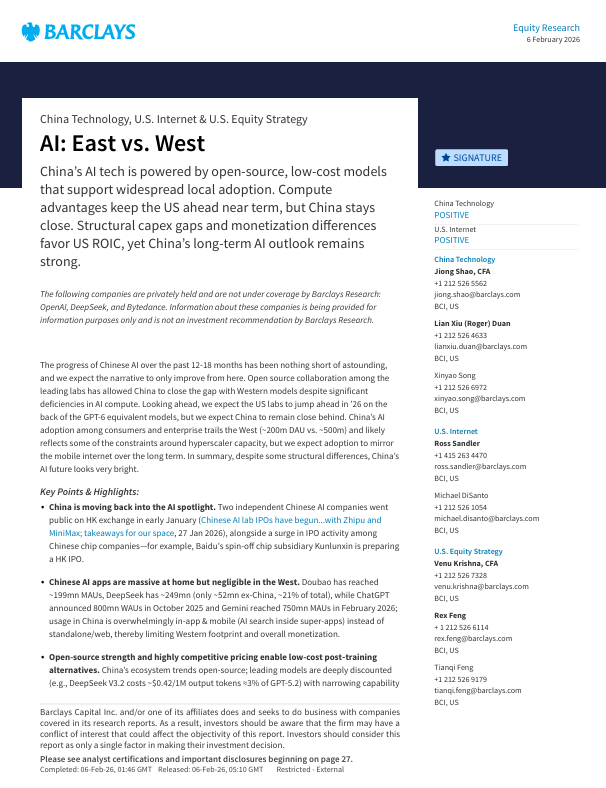
Core Insights - The report from Barclays titled "AI: East vs. West" analyzes the competitive landscape of AI between the US and China, highlighting that the US currently leads due to its financial resources and early advantages, while China is rapidly catching up with its cost-effective and highly applicable AI solutions [1][4]. Market Status - The AI market is experiencing a dichotomy where the US is "on fire" with soaring valuations and performance, while China is "recovering" from previous downturns, particularly in the tech sector [3][11]. - The S&P 500's forward P/E ratio has expanded from 15.3x at the end of 2022 to 21.7x, driven largely by AI advancements [13][56]. Competitive Dynamics - The report categorizes the AI industry into three layers: Application, Model, and Compute, with distinct strategies from both countries in each layer [1][12]. - In the application layer, US AI applications have a broader global reach, while Chinese applications are predominantly domestic, with DeepSeek and Doubao leading in user numbers but lacking significant overseas penetration [10][40]. - The model layer shows that Chinese companies are adopting an open-source approach, significantly reducing costs, with DeepSeek's latest model priced at approximately 3% of GPT-5.2's cost, while US companies maintain a more closed, proprietary model strategy [3][10][49]. - In the compute layer, US tech giants are expected to spend over $500 billion in capital expenditures, significantly outpacing Chinese firms, which are constrained by access to high-end chips [3][29][38]. Investment Implications - The competition between the US and China in AI is expected to lead to more affordable and accessible AI applications for consumers, benefiting the overall market [2][4]. - Chinese AI is no longer viewed merely as a "follower" but is demonstrating unique strengths in application deployment and cost management, indicating a shift in the competitive narrative [2][4]. Future Outlook - The report suggests that while the US may maintain a short-term lead in AI capabilities, China's long-term outlook remains strong due to its innovative approaches and large domestic market [4][5]. - The ongoing competition is likely to evolve from a focus on technological superiority to one centered on practical applications that can transform everyday life and work [2][4].

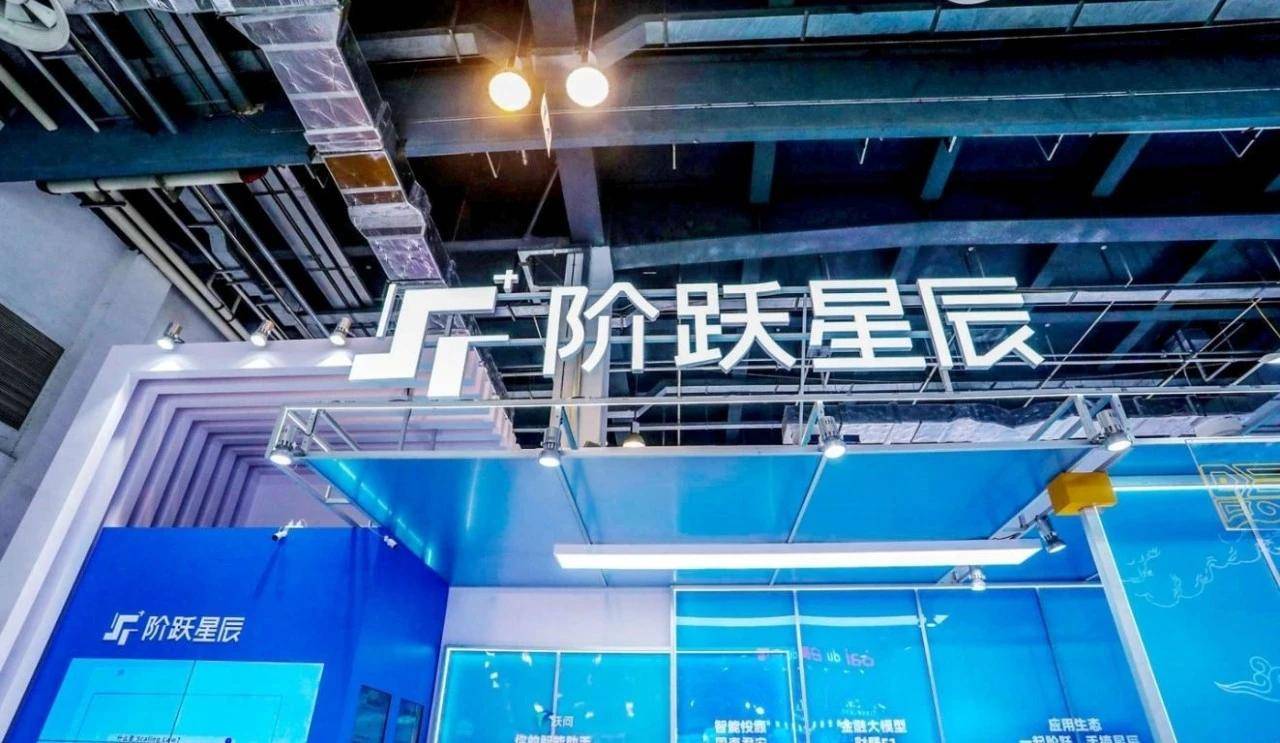
传阶跃星辰将赴港IPO,最快年内上市
Sou Hu Cai Jing· 2026-02-26 03:04
Group 1 - The company Jueyue Xingchen is considering an IPO on the Hong Kong Stock Exchange, aiming to raise approximately $500 million (around 3.4 billion RMB) [2] - Jueyue Xingchen was founded in 2023 by former Microsoft global vice president Jiang Daxin and has released the Step series of general large model matrices, covering comprehensive capabilities from language to multimodal and reasoning [2] - The company has completed two rounds of financing, with the latest round in January raising over 5 billion RMB, setting a record for the largest single financing in China's large model sector in 2025 [2] Group 2 - Under the leadership of Chairman Yin Qi, the company released its strongest open-source base model, Step 3.5 Flash, which approaches the capabilities of closed-source models in agent scenarios and mathematical tasks [3] - Jueyue Xingchen may become the third large model enterprise to be listed on the Hong Kong Stock Exchange [3]
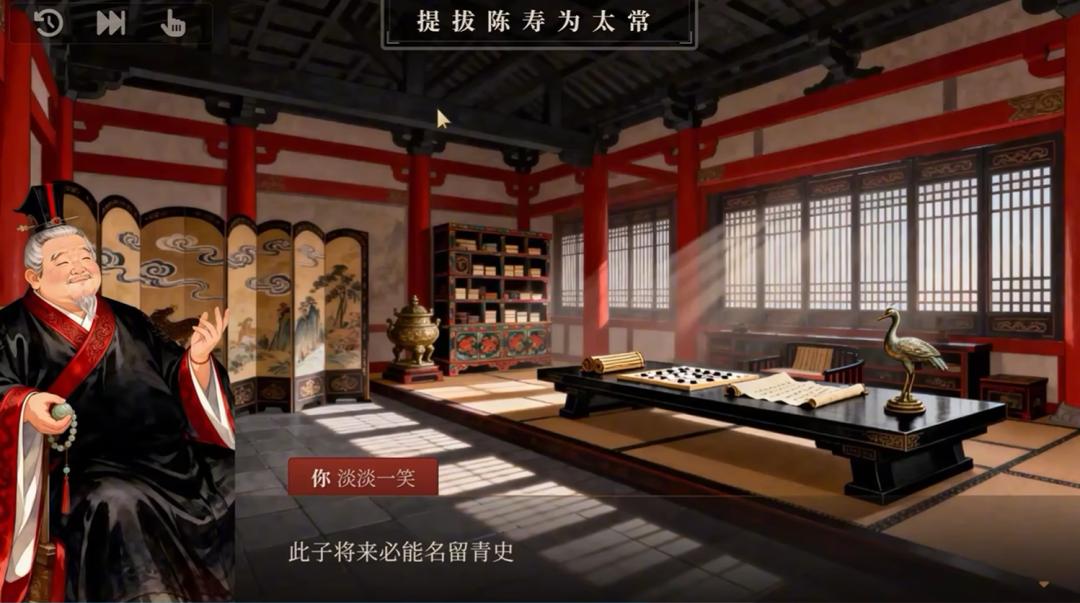
离开腾讯后,他想做一款能改变历史的三国游戏
3 6 Ke· 2026-02-26 03:03
文 | 贝果树 编辑 | 果脯 对于熟悉三国历史的玩家来说,《我的三国》的游玩体验,可能类似于主角拿到剧本的穿越文学。 公元264年,离陈寿写下《三国志》还有十余年,这时的陈寿,在官场上还资历尚浅。但你看重陈寿的才能,打算提拔他为官职太常。重臣董厥出来劝 阻,说这恐难服众。不过,你知道自己不会看错人,便在对话框里自信地打下:"此子将来必能名留青史"。 这是《我的三国》在1月2日发布的实机演示中的内容。《我的三国》是一款由AI驱动的历史模拟游戏,玩家将作为三国故事中的人物,下达指令,触发 事件,推进历史的进程。 也有一些新的问题。在实机演示的评论区,不少玩家质疑AI"记忆如何保留";交互与Token成本挂钩,如何选择营收方式?;AI生成内容怎么应对审核? 现在《我的三国》还没有做出一个真正可玩的版本,他们也在探索。但胡景皓相信,"等大家真的能玩到的那天,就能感受到AI游戏的潜力"。 以下是我们和《我的三国》制作人胡景皓的对话内容,经整理后呈现。 用AI做出一款"前所未有"的游戏 为什么选择从腾讯自己出来做游戏? 游戏实机演示截图 此子将来必能写就《三国志》 有玩家在评论区说这是一款"AI美术,AI文案,AI配音 ...
招商证券拟1.48亿元出售深圳五处不动产;腾讯再减持中金公司H股|券商基金早参
Mei Ri Jing Ji Xin Wen· 2026-02-26 02:58
|2026年2月26日 星期四| NO.1腾讯再减持中金公司H股!近7个月套现5.29亿港元 腾讯再次出手减持中金公司股票。近日,港交所披露易显示,腾讯控股的全资子公司Tencent Mobility Limited于2月20日减持中金公司H股股票65万股,平均价格为21.4688港元,套现1395.47万港元。据梳 理,自2025年7月以来,腾讯已先后7次减持中金公司H股,合计套现5.29亿港元。腾讯入股中金公司可 追溯至2017年9月,彼时中金公司宣布引入腾讯控股作为战略投资者。根据认股协议,腾讯认购中金公 司新发行的2.075亿股H股,分别占中金发行后H股的12.01%及总股本的4.95%,每股认购价为 13.8港 元,合计耗资28.64亿港元。2019年中金公司定增后,腾讯持有该公司股数增至2.16亿股,持股占总股本 比例降至4.48%。 点评:腾讯持续减持中金公司H股,反映出其资产配置策略的调整与资金回笼需求。此举虽可能引发市 场对券商股短期情绪的波动,但中金公司基本面未发生根本改变。腾讯作为战略投资者,其退出步伐稳 健,对中金公司股权结构影响可控。市场应理性看待互联网巨头的财务投资调整,关注中金公 ...

华源证券:首予香港交易所(00388)“买入”评级 现货和股票期权交易持续活跃
智通财经网· 2026-02-26 02:52
Core Viewpoint - Huayuan Securities initiates coverage on Hong Kong Exchanges and Clearing Limited (HKEX) with a "Buy" rating, highlighting its unique ecological position connecting "capital" and "goods," along with regional monopoly, scarcity, and commercial viability [1] Group 1: Financial Performance - From 2015 to 2024, HKEX's revenue and other income are expected to grow at a compound annual growth rate (CAGR) of 6.3%, while net profit attributable to shareholders is projected to grow at a CAGR of 5.8% [1] - In Q3 2025, the average daily turnover (ADT) of stock securities products increased by 150% year-on-year to HKD 267.9 billion, with southbound and northbound trading volumes growing by 285% and 144% respectively [1] - For the first three quarters of 2025, revenue from spot trading increased by 75% year-on-year to HKD 11.1 billion, accounting for 51% of total revenue [1] Group 2: Derivatives and Commodity Performance - In Q3 2025, the average daily trading volume of derivative contracts decreased by 7% year-on-year to 727,000 contracts, while stock options saw a 30% increase in daily trading volume [2] - The commodity segment's revenue and other income grew by 9.5% year-on-year, with the average daily trading volume of LME metal contracts increasing by 3% [3] Group 3: Investment and Strategic Initiatives - Investment income for Q3 2025 decreased by 16% year-on-year to HKD 1.02 billion, primarily due to reduced investable funds from property redemptions [4] - HKEX is advancing strategic measures, including the launch of LME-approved warehousing facilities, adjustments to minimum price fluctuations, and the introduction of new products like the Hang Seng Biotechnology Index futures [5] Group 4: IPO Contributions and Market Dynamics - In the first three quarters of 2025, 69 IPOs raised a total of HKD 188.3 billion, marking a new high since 2022, with a significant increase in the number of IPO applications [6] - The top ten stocks by trading volume in Q3 2025 included seven internet and technology companies, contributing 30% to the total market ADT [7]

平安证券(香港)港股晨报-20260226
Ping An Securities Hongkong· 2026-02-26 02:51
Market Overview - The Hong Kong stock market experienced fluctuations, with the Hang Seng Index closing at 23,831 points, down 145 points or 0.61% [1] - The market turnover decreased to 82.799 billion HKD, with net inflows of 484 million HKD recorded in the Hong Kong Stock Connect [1] - The US stock market saw all three major indices rise, with the Dow Jones up 0.63%, S&P 500 up 0.81%, and Nasdaq up 1.26%, driven by Nvidia's strong earnings report [2] Sector Performance - In Hong Kong, local real estate, software, and 5G concept sectors faced significant declines, while gold stocks performed well [1] - The technology sector showed mixed results, with the Hang Seng Technology Index slightly down by 0.19% [1] - In the US, major tech stocks like Microsoft and Facebook saw gains, while the Nasdaq China Golden Dragon Index fell by 0.47% [2] Investment Opportunities - The report emphasizes the importance of "self-reliance in technology" and AI applications as key themes for future growth in the Hong Kong stock market, suggesting that leading companies in these sectors may see long-term development opportunities [3] - The recent policies from the Ministry of Industry and Information Technology regarding national computing power and communication infrastructure are expected to boost domestic computing and communication sectors [3] - Investors are advised to focus on sectors supported by policies aimed at expanding domestic consumption, such as sports apparel and non-essential services, as well as undervalued central state-owned enterprises with high dividends [3] Key Company Highlights - Haidilao (6862.HK) led the Hang Seng Index component stocks with a gain of 6.2%, while HSBC Holdings (0005.HK) and Longfor Group (0960.HK) rose by 5.5% and 4.6%, respectively [1] - The report notes that the recent adjustments in Shanghai's real estate policies are expected to release pent-up demand, benefiting core area property companies and their supply chains, such as Longfor Group and China Resources Land [10] - The Hong Kong government announced plans to issue licenses for stablecoin issuers and establish a committee focused on AI and industry development, which could benefit sectors related to digital assets and fintech [11]
每日投资策略:港股反复回升,恒指收涨175点
Guodu Securities Hongkong· 2026-02-26 02:50
Market Performance - The Hang Seng Index closed at 26,765.72, up 175 points or 0.66%[2] - The Shanghai Composite Index rose to 4,147.23, an increase of 0.72%[2] - The Shenzhen Component Index increased by 1.29%, closing at 14,475.87[2] Economic Indicators - Hong Kong's inflation rate slowed to 1.1% in January, down from 1.4% in December[6] - The basic inflation rate, excluding one-off government relief measures, was 1%[6] - The year-on-year price increases for various categories included electricity, gas, and water at 3%[6] Corporate Earnings - Hong Kong's San Miguel Brewery reported a profit of HKD 76.12 million for the year, compared to a loss of HKD 20.10 million the previous year[11] - New World Development's rental income from office spaces is expected to decline at a slower rate, with occupancy rates stabilizing at 81.6%[12] - Neway Data's net profit for the six months ending December rose by 9.72% to HKD 531 million[13] Government Fiscal Policy - The government plans to increase tax allowances for dependents, estimating a reduction in tax revenue by HKD 5 billion this fiscal year[7] - The Financial Secretary proposed transferring HKD 150 billion from the Exchange Fund to support infrastructure projects[8] - The Exchange Fund recorded an investment income of over HKD 330 billion in 2025, with total reserves exceeding HKD 780 billion[8] Industry Developments - Steel mills in northern China are required to reduce production by at least 30% to improve air quality during the upcoming National People's Congress[9]