三星

Search documents
业绩爆表+扩产加码,这个赛道的机会藏不住了
3 6 Ke· 2026-02-05 10:12
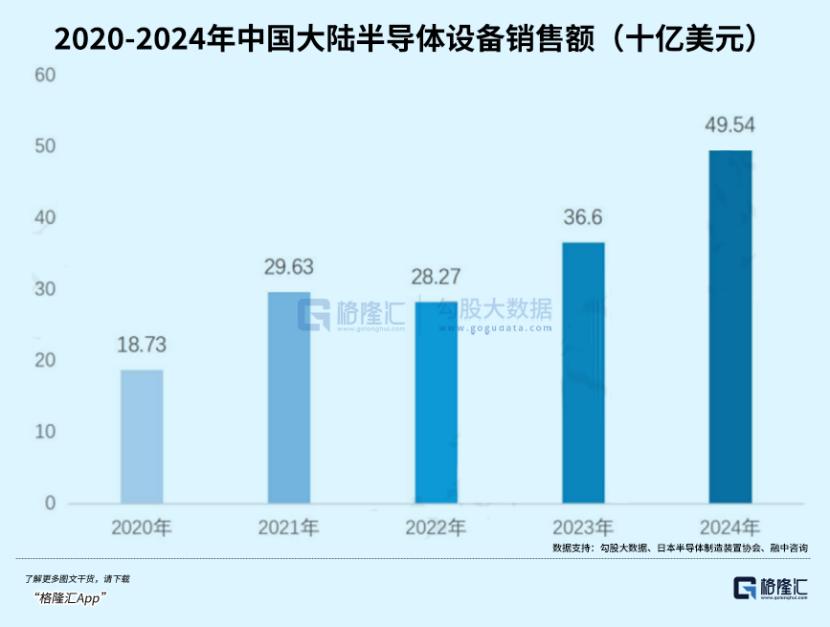
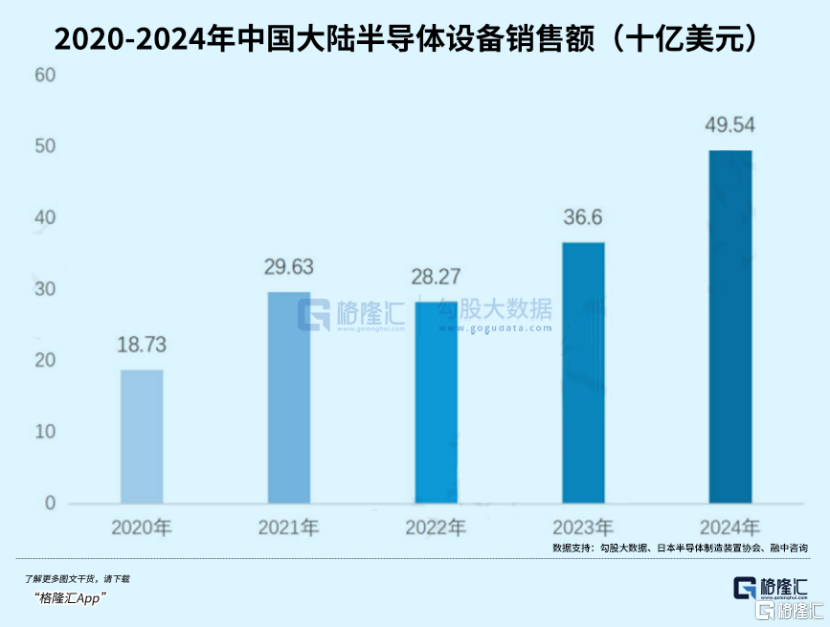
Core Insights - The semiconductor equipment industry is experiencing significant growth driven by AI computing power, domestic substitution, and global capacity expansion, marking a definitive growth cycle for the sector [1][14]. Group 1: Industry Performance - ASML reported a net sales of €32.7 billion in 2025, a 16% year-on-year increase, with a backlog of orders reaching €38.8 billion, of which €25.5 billion is from EUV [1]. - Samsung's semiconductor business saw an operating profit increase of 33%, while SK Hynix's Q4 operating profit surged by 137% [1]. - Domestic semiconductor equipment companies like Jinhaitong and Changchuan Technology also reported significant performance improvements [1]. Group 2: Demand Drivers - The scale application of generative AI has drastically reshaped storage demand, with AI servers requiring 8 times more DRAM and 3 times more NAND than regular servers, and each AI server needing up to 2TB of storage [2]. - HBM (High Bandwidth Memory) is emerging as a key growth driver, with a projected CAGR of 33% from 2024 to 2030, potentially capturing 50% of the DRAM market by 2030 [2]. - Major global storage manufacturers are ramping up production, with Samsung's capital expenditure for 2025 expected to increase by 89% and SK Hynix raising its capital expenditure to $20.3 billion [2]. Group 3: Domestic Market Dynamics - The domestic semiconductor equipment localization rate is projected to reach 35% in 2024, up from 16.4% in 2022, with etching equipment localization at 23% and CMP equipment at 30%-40% [3]. - China has maintained its position as the largest semiconductor equipment market globally for five consecutive years, with sales expected to reach $49.54 billion in 2024, accounting for 42.34% of the global market [3]. Group 4: Future Outlook - The global DRAM industry capital expenditure is forecasted to reach $61.3 billion in 2026, a 14% increase year-on-year, while NAND Flash capital expenditure is expected to be $22.2 billion, a 5% increase [5]. - ASML's order situation reflects high industry prosperity, with €13.2 billion in new orders in 2025, and a backlog extending to 2027, supporting future capacity releases [5]. - The global semiconductor equipment market is projected to reach $117 billion in 2024, with a CAGR of 8.4% from 2025 to 2033, potentially growing to $224.93 billion by 2033 [5]. Group 5: Key Trends - The competition in advanced processes is intensifying, with global semiconductor giants focusing on 2nm and below, driving demand for high-end semiconductor equipment [10][11]. - Policy and capital support are crucial for the advancement of domestic substitution, with significant investments in key technologies and local government subsidies for R&D [12]. - The demand structure is diversifying, with emerging fields like AI computing centers and electric vehicles driving growth, while domestic companies are expanding into overseas markets [13].




日媒:四大PC厂商首次考虑采购中国内存芯片
Sou Hu Cai Jing· 2026-02-05 09:31
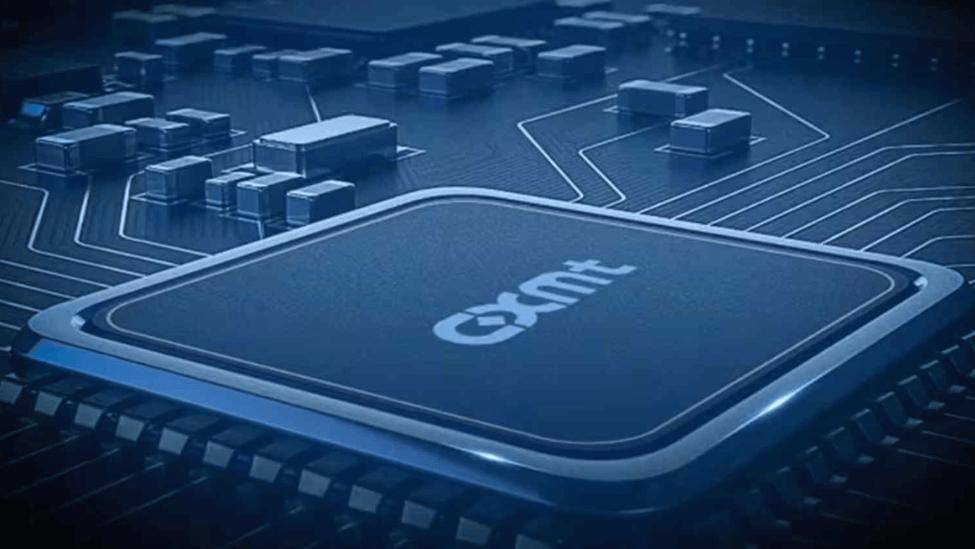
Core Viewpoint - Major PC manufacturers are considering sourcing memory chips from Chinese manufacturer Changxin Storage due to global supply constraints and rising costs in the tech industry [2][3]. Group 1: Manufacturer Actions - HP has begun certifying products from Changxin Storage to prepare for alternative supply options, monitoring the memory chip supply situation until mid-2026 [2]. - Dell is also in the process of certifying Changxin Storage's DRAM products, driven by concerns over sustained price increases throughout 2026 [3]. - Acer is willing to use memory chips from Chinese manufacturers if their mainland partners procure them, as they aim to reduce costs [3]. - ASUS has requested its mainland production partners to assist in sourcing memory chips for certain laptop projects [3]. Group 2: Market Context - The memory chip shortage has created an opportunity for Chinese electronics manufacturers to play a more significant role in the supply chain, with some brands asking their partners to help expand procurement sources [3]. - Major memory chip producers like Micron, Samsung, and SK Hynix prioritize capacity for AI giants such as Nvidia, Google, and Amazon, leaving the consumer electronics market in a challenging position [3]. Group 3: Importance of Memory Chips - DRAM and NAND flash memory chips are essential components for all types of electronic devices, with DRAM playing a critical role in system performance through fast data access, while NAND serves as the primary storage for laptops and computers [4].


美又拉30国建新群,想抽掉中国稀土王牌,欧洲抢先献上投名状
Sou Hu Cai Jing· 2026-02-05 09:27
Core Viewpoint - The United States is establishing a new alliance focused on reshaping the global supply chain for critical minerals, particularly rare earth resources, to reduce dependence on China [1][3]. Group 1: Alliance Formation - The new mineral alliance includes the United States, the United Kingdom, Japan, Australia, and the European Union, with a meeting planned in Washington to discuss de-China-fication of the rare earth supply chain [1][3]. - Australia is identified as a core member due to its significant role as a major lithium exporter, committing to invest $1 billion with the U.S. for exploration and processing of critical minerals [3]. - Japan and South Korea are positioned as technology processors and consumers, with Japanese companies importing rare earth elements from Australia for local electric vehicle and electronics industries [3]. Group 2: Member Roles and Interests - The alliance exhibits a division of roles among member countries, but underlying tensions exist regarding the alignment of U.S. pricing strategies and the interests of resource-supplying countries like Australia [4][5]. - Australia is focused on increasing its profits through higher mineral prices and expanded exports, which has led to market fluctuations when U.S. policies do not align with its interests [4]. - The EU is caught between the desire to counter China's dominance and the risk of over-reliance on the U.S., particularly in light of territorial concerns related to Greenland [5]. Group 3: Challenges and Competitive Landscape - The cooperation model within the alliance lacks consistency due to varying national interests, making it difficult to form a strong collective action in the short term [5]. - China's dominance in the rare earth sector is attributed not only to resource availability but also to its complete industrial chain, which poses a significant technological gap for the U.S. and its allies to overcome [7].


非洲手机之王传音即将退位?利润腰斩 50元手机扛不住存储涨价
Xin Lang Ke Ji· 2026-02-05 08:53
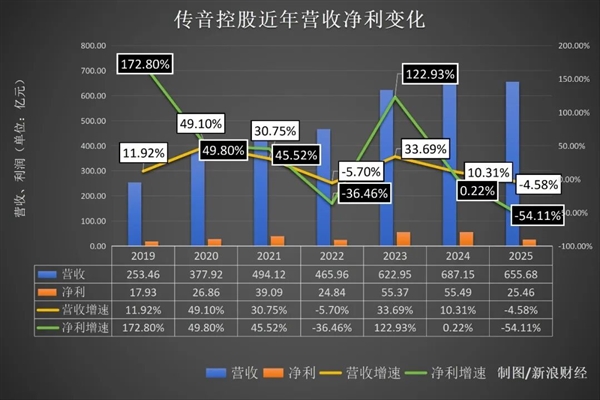
Core Viewpoint - Transsion Holdings is expected to experience a decline in both revenue and net profit in 2025, with net profit projected to be halved, marking the worst performance since its IPO in 2019 [1][5][6]. Financial Performance - The company forecasts a revenue of approximately 65.568 billion yuan for 2025, a decrease of about 31.47 billion yuan or 4.58% year-on-year [2]. - The expected net profit for 2025 is around 2.546 billion yuan, down by approximately 30.03 billion yuan or 54.11% compared to the previous year [2][5]. Market Competition - Transsion remains the market leader in Africa, but faces increasing competition from Xiaomi and Honor, which have shown growth rates of 34% and 158% respectively in the third quarter of 2025 [1][8]. - The overall smartphone market is experiencing sluggish growth, particularly in emerging markets, with a projected global smartphone shipment growth of only 2% in 2025 [7][8]. Cost Pressures - The company attributes its poor performance to rising storage prices, which have increased by over 40% due to demand from AI data centers, impacting product costs and gross margins [7][8]. - Transsion's average smartphone price in 2025 is reported to be 332.1 yuan, with feature phones averaging only 50.1 yuan, indicating a focus on the low-end market [9][10]. Diversification Efforts - To mitigate risks, Transsion is exploring new business areas such as mobility and energy storage, although these segments currently contribute only 8.8% to total revenue [12][14]. - The company has established a mobility division and is expanding into electric two-wheelers and energy storage products, but these initiatives are still in early stages and have not yet significantly impacted overall revenue [11][12].

业绩爆表+扩产加码!这个赛道的机会藏不住了
Ge Long Hui· 2026-02-05 08:40
Core Insights - The semiconductor equipment industry is experiencing significant growth driven by AI computing power, domestic substitution, and global capacity expansion, marking a definitive growth cycle for the sector [1] Group 1: Industry Performance - ASML reported a net sales of €32.7 billion in 2025, a 16% year-on-year increase, with a backlog of orders reaching €38.8 billion, of which €25.5 billion is from EUV [1] - Samsung's semiconductor business saw an operating profit increase of 33%, while SK Hynix's Q4 operating profit surged by 137% [1] - Domestic semiconductor equipment companies like Jinhaitong and Changchuan Technology also reported significant performance increases, indicating a robust domestic market [1] Group 2: Demand Drivers - The rise of generative AI has drastically reshaped storage demand, with AI servers requiring 8 times more DRAM and 3 times more NAND than regular servers, and each AI server needing up to 2TB of storage [3] - HBM (High Bandwidth Memory) is emerging as a key growth driver, with a projected CAGR of 33% from 2024 to 2030, expected to capture 50% of the DRAM market by 2030 [3] - Major global storage manufacturers are ramping up production, with Samsung's capital expenditure for 2025 increasing by 89% and SK Hynix raising its annual capital expenditure to $20.3 billion [3] Group 3: Domestic Substitution and Market Share - The domestic semiconductor equipment localization rate is projected to reach 35% by 2024, doubling from 16.4% in 2022, with etching equipment localization at 23% and CMP equipment at 30%-40% [4] - China remains the largest semiconductor equipment market globally, with sales expected to reach $49.54 billion in 2024, accounting for 42.34% of the global market [4] - The continuous expansion of domestic wafer fabs provides ample validation scenarios for local equipment, creating a positive cycle of technological breakthroughs and market share increases [4] Group 4: Future Trends - The global DRAM industry capital expenditure is forecasted to reach $61.3 billion in 2026, a 14% increase year-on-year, while NAND Flash capital expenditure is expected to reach $22.2 billion, a 5% increase [6] - ASML's order situation reflects high industry prosperity, with €13.2 billion in new orders in 2025, including €7.4 billion for EUV lithography machines, and a backlog extending to 2027 [6] - The global semiconductor equipment market is projected to reach $117 billion in 2024, with a CAGR of 8.4% from 2025 to 2033, potentially growing to $224.93 billion by 2033 [6] Group 5: Key Segments and Opportunities - The etching equipment segment holds a 22% market share in the front-end equipment market, with the domestic market size reaching ¥48.67 billion in 2025 [8] - Thin film deposition is also experiencing rapid growth, with a global market size of $12.68 billion, supported by domestic leaders like TuoJing Technology [8] - Testing and packaging equipment are benefiting from the promotion of advanced processes, with companies like Changchuan Technology and Huafeng Measurement Control expanding their product coverage [8] Group 6: Material and Component Localization - The localization rate of core semiconductor equipment components is expected to rise from 10% to 20% in 2024, with Anji Technology's CMP polishing liquid achieving a 15% global market share [9] - Continuous breakthroughs in supporting segments enhance the competitiveness of domestic equipment, fostering a collaborative development advantage across the entire industry chain [9] Group 7: Strategic Outlook for 2026 - The competition in advanced processes is intensifying, driving demand for high-end equipment, with major global players focusing on 2nm and below technologies [11] - Policy and capital support are crucial for deepening domestic substitution, with significant investments in key technologies and local industry clusters receiving subsidies [13] - The demand structure is diversifying, with emerging fields like AI computing centers and electric vehicles driving growth, while domestic companies expand into overseas markets [14]
内存价格猛踩刹车:三星、海力士和美光联手“救市”,等等党这次能赢吗?
3 6 Ke· 2026-02-05 08:39
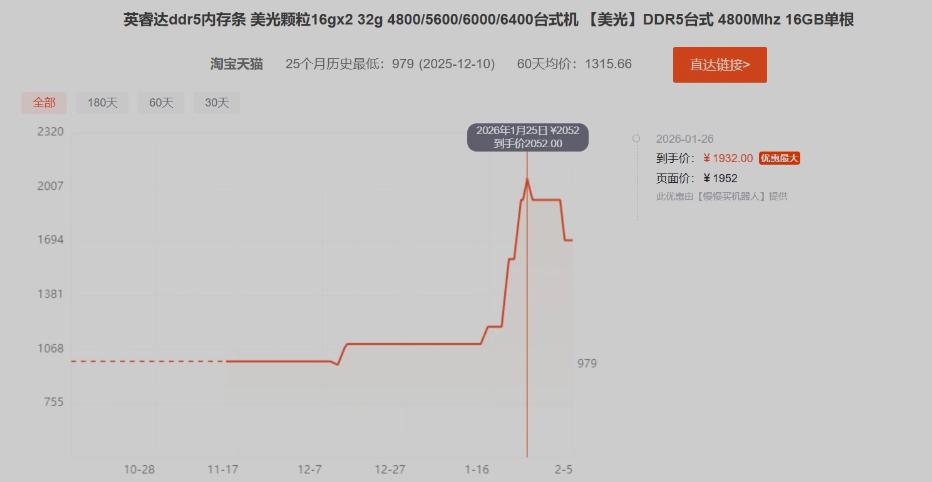
Core Insights - The recent surge in memory prices has stabilized, with major players like Samsung, SK Hynix, and Micron initiating a "real demand survey" to assess the market and signal increased production [1][10][15] - The price of memory products, such as DDR5 RAM, has shown a downward trend, with prices dropping from a peak of 2000 yuan to 1699 yuan [1][3] - The memory price increase has been attributed to panic buying and supply chain disruptions rather than genuine demand growth, leading to a disconnect between consumer demand and price hikes [4][9] Market Dynamics - The price of DDR4 memory increased from 138 yuan to 899 yuan within a year, representing a more than sixfold increase, while DDR5 prices have also surged significantly [4] - The price hikes have affected graphics card prices, with some models seeing a 20% increase due to rising memory costs [4] - The phenomenon of "bullwhip effect" is evident, where small fluctuations in consumer demand lead to exaggerated responses in the supply chain, causing significant price volatility [8] Company Responses - Samsung, SK Hynix, and Micron's joint initiative to investigate real demand is a rare move aimed at cooling the overheated market and addressing the role of distributors in inflating prices [10][15] - Despite record profits reported by these companies, the disparity between their revenue growth and the price increases in the market raises concerns about sustainability [10][11] Future Outlook - The memory market is expected to see a gradual price decline, but significant drops may take 3-6 months due to production ramp-up times [16] - The ongoing AI market dynamics and potential investment disputes may further influence memory demand and pricing strategies [16][17] - The current price levels are unlikely to return to pre-2023 lows, as new demand from AI applications is expected to support higher price floors [17]

2026年全球固态电池行业发展现状 全球固态电池产业进入快速发展阶段【组图】
Qian Zhan Wang· 2026-02-05 08:15
Core Insights - The global solid-state battery industry is entering a rapid development phase, with significant potential for improving battery safety and energy density, despite challenges such as high costs and complex manufacturing processes [3][4][11]. Market Size and Growth - By 2030, the global solid-state battery market is projected to reach 17.2 billion yuan, while the semi-solid battery market is expected to reach 99.1 billion yuan [3]. - The solid-state battery market is anticipated to grow to 116.3 billion yuan by 2030, driven by government support and strategic development plans in major countries [3]. Industry Development - The semi-solid battery, which uses gel electrolytes, is currently in a transitional phase and has achieved a certain level of industrialization, serving as a bridge to full solid-state batteries [4][7]. - Companies like QuantumScape are making significant progress in the commercialization of oxide solid-state batteries, with plans for mass production by 2025 [8][10]. Technological Advancements - Toyota is leading the commercialization of sulfide solid-state batteries, with advancements in ion conductivity and production capabilities [11][12]. - The first commercial polymer solid-state batteries were developed by Bolloré in 2011, showcasing their application in electric vehicles [13]. Key Players - Major companies involved in the solid-state battery sector include BYD, SAIC Motor, NIO, CATL, and others, each focusing on different aspects of battery technology and production [1][3]. - Companies like Cymbet, Infinite Power Solutions, and Solid Power are also developing solid-state battery technologies for various applications, including IoT devices and electric vehicles [10][12].
高通公司(QCOM.US)2026财年Q1电话会:第二财季手机芯片收入预计将降至约60亿美元
智通财经网· 2026-02-05 08:08
Core Viewpoint - Qualcomm reported strong terminal demand but faces significant memory shortages in the smartphone industry, leading to a projected decline in mobile chip revenue to approximately $6 billion in Q2 due to supply chain bottlenecks [1] Financial Performance - Qualcomm achieved record revenue of $12.3 billion in the latest quarter, with a Non-GAAP EPS of $3.50 [1] - QCT (chip business) revenue reached a record $10.6 billion, driven by strong performance in flagship smartphones [1] - Automotive business revenue grew 15% year-over-year to $1.1 billion, also a historical high [1] - Revenue guidance for Q2 is projected between $10.2 billion and $11 billion, with Non-GAAP EPS between $2.45 and $2.65 [1] Market Position - Despite supply challenges, Qualcomm maintains a strong position in the high-end market, expecting to retain approximately 75% market share for Samsung's upcoming flagship devices (Galaxy S26 series) [1] - The company highlighted ByteDance's launch of the Doubao AI smartphone as a significant milestone towards "AI-native smartphones" [1] Memory Supply Issues - The memory availability is entirely responsible for the projected revenue decline, with DRAM availability for consumer electronics, particularly smartphones, decreasing year-over-year [2][7] - OEMs are adjusting production plans based on available memory, indicating that memory availability will dictate the overall market size for the fiscal year [7][23] Automotive and Data Center Growth - Qualcomm's automotive pipeline continues to convert into revenue, with new vehicle production and launches contributing to record revenue in this segment [3][4] - The company is optimistic about its data center growth, with plans to show revenue starting in 2027, supported by positive feedback from major cloud service providers [6][23] Strategic Focus - Qualcomm is focusing on maintaining relevance across various industries despite memory shortages, with a commitment to diversify revenue streams by fiscal year 2029 [27] - The company is actively working on enhancing its technology capabilities in areas like robotics and edge AI, which are seen as future opportunities [27]

中国软件技术发展洞察和趋势预测研究报告2026
极客邦科技· 2026-02-05 07:26
Investment Rating - The report does not explicitly state an investment rating for the industry Core Insights - The artificial intelligence (AI) sector continues to dominate investment, accounting for 88.1% of total financing in the technology field in 2025, an increase of 5.3 percentage points from 2024 [21] - The humanoid robot sector has emerged as a significant area of investment, capturing 16.8% of the total technology financing [28] - The report highlights the rapid evolution of AI technologies, particularly in reasoning models and multimodal models, which are reshaping the landscape of AI applications [36][38] Summary by Sections 2025 Technology Market Review - In 2025, the technology sector saw a total financing of 738.4 billion yuan across 644 events, with AI leading the way [21] - Key developments included the rise of humanoid robots and advancements in AI models, such as the release of various reasoning models by major companies [19][36] 2026 Technology Trend Outlook - The report anticipates continued growth in AI and humanoid robotics, with significant investments expected in these areas [28] - The integration of AI into various applications is expected to accelerate, driven by advancements in multimodal models and reasoning capabilities [36][38] Financing Events and Trends - The AI sector experienced 212 financing events exceeding 100 million yuan, representing 88.7% of all such events in the technology field [29] - The report notes a shift towards more substantial financing rounds, with seed and A rounds making up 67.7% of total financing events [31] Key Companies and Innovations - Notable companies in the AI sector include Zhiyuan AI, Minimax, and Yuzhi Technology, which have raised significant funds in recent rounds [32] - The report highlights the emergence of new technologies and models, such as DeepSeek and various multimodal models, which are expected to drive future growth [36][38]
全球手机季度收入创历史新高!均价首破400美元!
Sou Hu Cai Jing· 2026-02-05 06:32
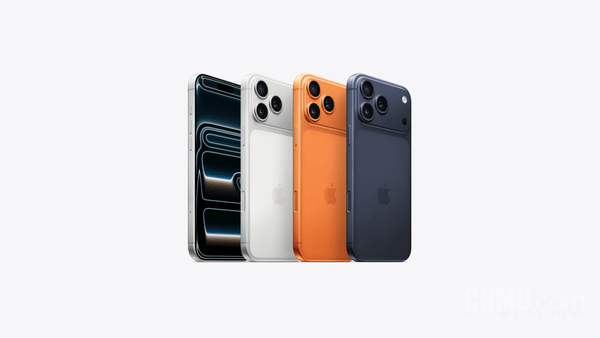
【CNMO科技消息】2月5日,据Counterpoint Research发布的《Market Monitor Service》报告,2025年第 四季度,全球智能手机市场收入同比增长13%,达到1430亿美元(约合人民币9930亿元),创单季度历 史新高。同时,手机平均售价(ASP)同比增长8%,首次在单季度内突破400美元(约合人民币2777 元)。 据CNMO了解,2025年第四季度,苹果出货量和收入均创历史新高,分别同比增长14%和23%。三星则 以11%的市场份额继续保持全球第二大收入贡献者地位,2025年第四季度收入同比增长12%;同期,其 出货量同比增长17%,为前五大品牌中最高。 Counterpoint Research指出,苹果的增长主要由iPhone 17系列驱动,受益于换机超级周期。同时,各区 域ASP的整体提升也带来了更强劲的收入增长,Pro版机型的占比提升尤为明显。苹果在美国、中国等 多个地区的收入均创下新纪录。 2025年第四季度,小米收入同比下降9%,出货量同比下降11%,主要受到供应受限以及元器件成本上 升对其入门级和中端产品组合的冲击;OPPO的收入和ASP分别同比增长23 ...