宝马

Search documents
美银:排放标准放宽提振欧洲汽车制造商
Ge Long Hui A P P· 2025-12-04 10:59
格隆汇12月4日|美国银行分析师写道,监管规定减少,尤其是有关二氧化碳排放的规定,将为汽车行 业带来亟需的灵活性。这些分析师表示,美国已经引领了这一趋势,甚至可能完全取消二氧化碳法规。 该行补充称,欧洲不会走那么远,但可能会将内燃机汽车的禁令推迟到2040年以后。"我们认为,最便 宜的股票将从监管放松中获益最多,但最终,所有汽车制造商——从雷诺到法拉利——的折现现金流前 景都将改善。"该行以估值为由,将雷诺和保时捷的股票评级从"中性"上调至"买入",并将梅赛德斯-奔 驰的评级从"弱于大盘"上调至"中性"。保时捷、大众汽车、宝马、梅赛德斯-奔驰、法拉利、雷诺、沃 尔沃汽车和保时捷的股价均上涨3.5%至5%。 ...

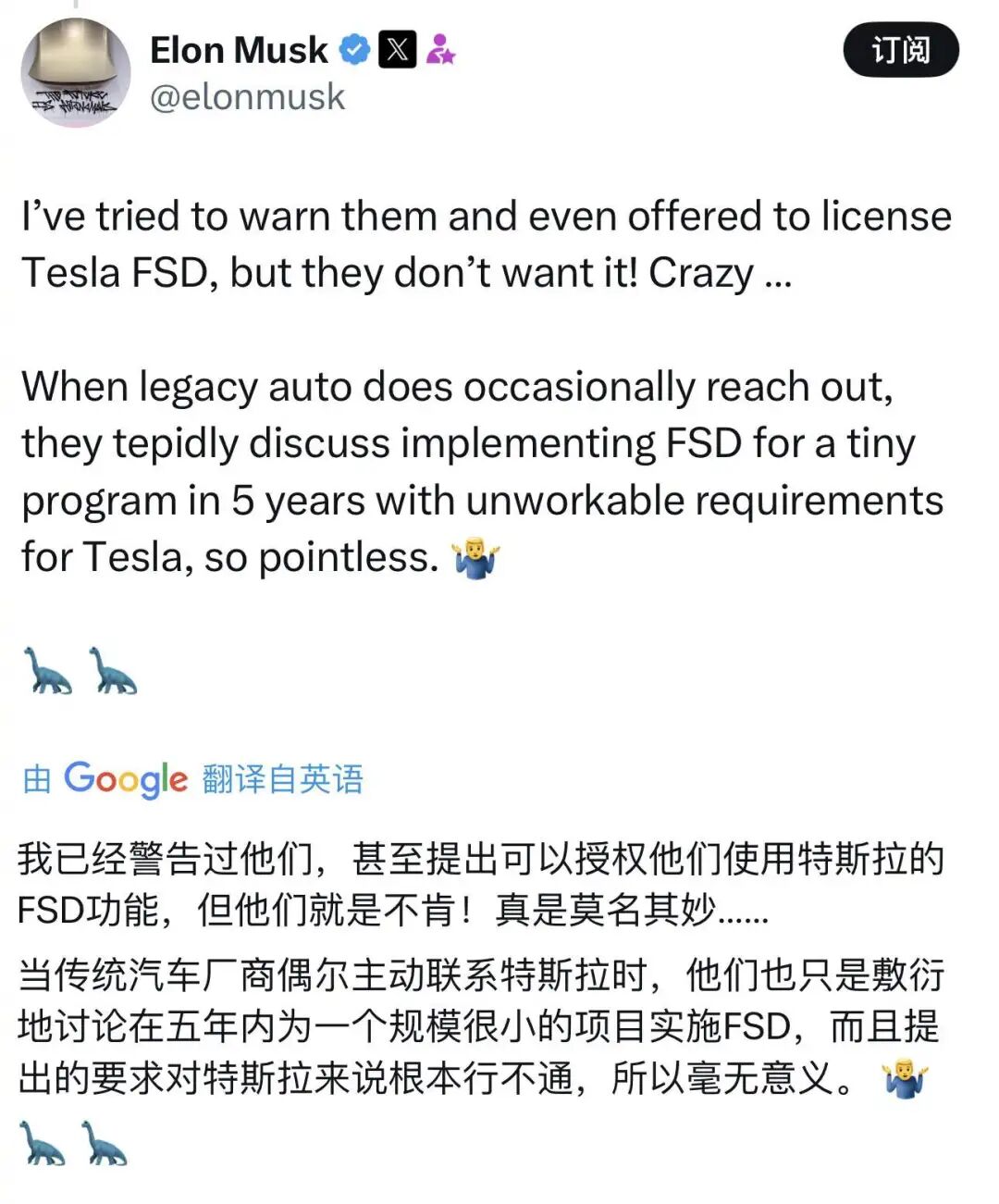
轮到马斯克破防,没有车企愿用FSD,「他们不想要!」
36氪· 2025-12-04 10:03
以下文章来源于超电实验室 ,作者王磊 超电实验室 . 让汽车和未来触手可及。 贾老板力挺。 文 | 王磊 编辑 | 秦章勇 来源| 超电实验室(ID:SuperEV-Lab) 封面来源 | IC photo 被马老板视为心头好的FSD,以为自己好心授权给其他车企用,这些企业不说争前恐后,起码也得有相当大的热情。 但事实是, 没有一家车企愿意用特斯拉的FSD。 气的马斯克在社交媒体吐槽,"我曾经警告过他们,甚至提出授权特斯拉 FSD,但他们不想要!属实是疯了……" 也有马斯克破防的时候。 他直接在社交平台声援马斯克,说FF愿意和特斯拉在FSD上全面合作,还说双方已经完成了充电网络兼容,FF和FX车型都能用上特斯拉的超级充电站,合 作已经有了基础。 尴尬的是,马斯克到现在还没回他。 为FSD打抱不平 最扎心的还是福特CEO,他曾直接公开说"Waymo比FSD好用",这等于把拒绝摆在明面上。 不过有意思的是,就在马斯克吐槽"没人懂FSD"的时候,贾跃亭站出来了。 他还表示,就算有传统车企偶尔联系特斯拉,也只是在敷衍的讨论五年后为一个小项目使用FSD,并且提出了一些对特斯拉来说完全不可能实现的要 求,"简直毫无意义" ...



德企的选择,是中欧合作共赢生动写照
Ren Min Ri Bao Hai Wai Ban· 2025-12-04 01:00
Group 1 - Volkswagen Group has launched a full-process R&D testing center in Hefei, Anhui, marking the first full-chain development of a new vehicle platform outside its German headquarters, reducing the vehicle development cycle by approximately 30% [1] - This move reflects the recognition of China's technological advantages and industrial ecosystem, as well as the growing trend of German companies investing in China [1] - Siemens Healthineers, Bosch Group, and BASF are among the German companies making significant investments in China, indicating a shift towards China as a global innovation platform [1] Group 2 - German companies are not only seeking market share in China but are also synchronizing with the new wave of productivity in China, accelerating the integration of R&D, manufacturing, and market [2] - Collaborations in the field of intelligent driving, such as partnerships between Mercedes-Benz and ByteDance, and BMW with Alibaba, highlight the deepening cooperation between German automakers and Chinese innovation [2] - The bilateral trade between China and Germany reached €185.9 billion in the first nine months of 2025, showing a year-on-year growth of 0.6%, with China remaining Germany's largest trading partner [2] Group 3 - Chinese enterprises are also steadily investing in Germany, with 199 greenfield projects initiated in 2024, making China the third-largest source of foreign investment in Germany [3] - Leading Chinese companies in the new energy sector, such as CATL and NIO, are establishing production or R&D bases in Germany, enhancing cooperation in green transformation and technological innovation [3] - The bilateral cooperation between China and Germany is characterized by mutual dependence and is based on industrial complementarity, market needs, and joint innovation [3]
当传统巨头收缩战线:比亚迪的研发“豪赌”为何赢了?
经济观察报· 2025-12-03 14:22
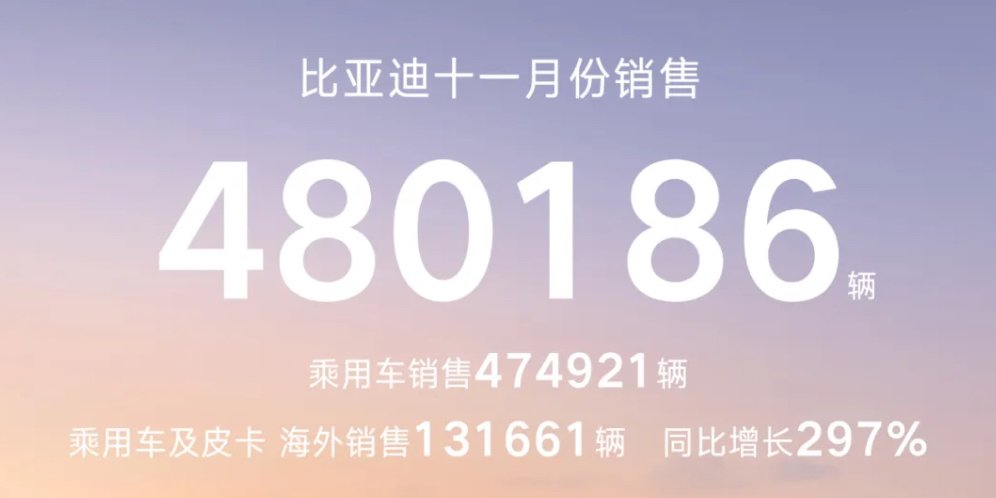
Core Viewpoint - BYD demonstrates a long-term commitment to R&D, with investments exceeding net profits for 13 out of the last 14 years, driving its sales to rank among the top five globally, showcasing a "technology is king" strategy [1][5]. Group 1: Sales Performance - In November, BYD achieved a record monthly sales of 480,000 new energy vehicles, marking a significant year-end sales push [2]. - Cumulatively, BYD's sales reached 4.182 million units in the first 11 months, reflecting an 11.3% year-on-year growth, maintaining its leading position in the industry [2][3]. Group 2: R&D Investment - BYD's R&D expenditure for the first three quarters of this year reached 43.7 billion yuan, a 31% increase year-on-year, positioning it as a leader in R&D investment among global automakers [3]. - Over the past decade, BYD has invested over 220 billion yuan in R&D, ranking it among the top in A-share listed companies [5]. - The company's R&D spending has consistently exceeded its net profits, emphasizing its focus on long-term technological advantages [5]. Group 3: Competitive Landscape - Chinese automakers, including BYD, are experiencing positive performance while traditional foreign automakers face challenges, indicating a shift in the industry dynamics [3][5]. - While Chinese companies are increasing R&D investments, traditional foreign automakers like Volkswagen and BMW are reducing their R&D budgets, potentially compromising their future competitiveness [5]. Group 4: Technological Advancements - BYD's innovations, such as the Tian Shen Eye driver assistance system and the Super e-platform, are enhancing its product competitiveness [8]. - In the battery sector, BYD ranked second globally in electric vehicle battery usage in Q3, with a 28.4% year-on-year growth [8]. Group 5: Global Expansion - BYD's overseas sales reached 700,000 units in the first three quarters, a 136% increase year-on-year, becoming a significant growth driver for the company [12]. - The company's global presence is expanding, with its products integrated into various international markets, showcasing its competitive edge in the global automotive landscape [12].

比亚迪首入韩国月销前五,超越雷克萨斯丰田大众
Xin Lang Ke Ji· 2025-12-03 10:16
Core Insights - BYD has entered the top five in monthly car sales in South Korea, surpassing brands like Lexus, Toyota, and Volkswagen [1] - The total number of new registrations for imported passenger cars in November was 29,357, marking a 23.4% increase year-on-year and a 22% increase month-on-month [1][2] - Cumulative registrations from January to November reached 278,769, up 16.3% compared to the same period last year [1] Brand Performance - Tesla led the brand registrations with 7,632 units, followed by BMW with 6,526 units, and Mercedes-Benz with 6,139 units [1] - BYD registered 1,164 units, moving up to fifth place, overtaking Lexus which registered 1,039 units [1] - The ranking of brands saw BMW and Mercedes-Benz drop from first and second to second and third respectively, while Tesla moved to the first position [1] Vehicle Types - The best-selling model was Tesla Model Y with 4,604 units, followed by Mercedes-Benz E 200 with 1,658 units [2] - Electric vehicles accounted for 10,757 units (36.6%), while hybrid vehicles totaled 15,064 units, gasoline vehicles 3,210 units, and diesel vehicles 326 units [2] - By region, Europe had the highest registrations at 17,996 units (61.3%), followed by the United States with 8,139 units (27.7%) [2] Market Dynamics - The increase in new registrations in November was attributed to a base effect from the previous month’s lower registrations due to the Chuseok holiday and active marketing efforts from various brands [2]
当传统巨头收缩战线:比亚迪的研发“豪赌”为何赢了?
Jing Ji Guan Cha Wang· 2025-12-03 09:37
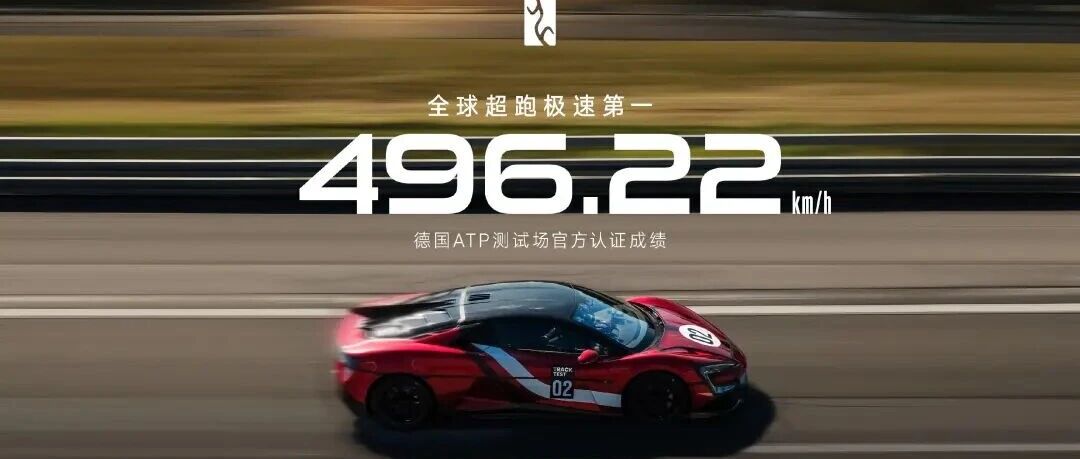
Core Insights - The November sales data highlights the strong performance of China's electric vehicle (EV) industry, with BYD achieving a record monthly sales of 480,000 units, marking a year-high [1] - BYD's cumulative sales for the first eleven months reached 4.182 million units, reflecting a year-on-year growth of 11.3%, maintaining its leading position in the industry [1] - A divergence in performance is noted between Chinese automakers, led by BYD, and foreign giants, with the former showing robust growth while the latter struggles [1][4] Sales Performance - In November, BYD's sales reached 480,000 units, while other major players like SAIC and Geely also reported strong sales figures [1] - BYD's cumulative sales for the first eleven months of the year reached 4.182 million units, a year-on-year increase of 11.3% [1] R&D Investment - BYD's R&D expenditure for the first three quarters of the year was 43.7 billion yuan, a 31% increase year-on-year, positioning it as a leader in R&D investment among global automakers [1][4] - Over the past decade, BYD has invested over 220 billion yuan in R&D, consistently prioritizing technology as a core strategy [4] - In contrast, traditional foreign automakers like Volkswagen and BMW have reduced their R&D spending, indicating a more conservative approach to innovation [4] Technological Advancements - BYD has introduced innovative technologies such as the Tian Shen Eye driver assistance system and the Super e-platform, enhancing its product competitiveness [6] - The company ranks second globally in electric vehicle battery usage, with a total of 55.1 GWh in the third quarter, reflecting a year-on-year growth of 28.4% [6] Market Expansion - BYD's energy storage systems have positioned it among the top three globally, with significant projects like the largest energy storage project in Germany [7] - The company has seen a 136% year-on-year increase in overseas sales, reaching 700,000 units in the first three quarters, contributing significantly to its growth [11] Brand Development - BYD's high-end brand strategy has led to rapid increases in sales and market share, enhancing its global influence and technological authority [9] - The U9 Xtreme model has set a world record for electric vehicles, showcasing BYD's technological prowess and elevating the brand's status in the automotive industry [9]
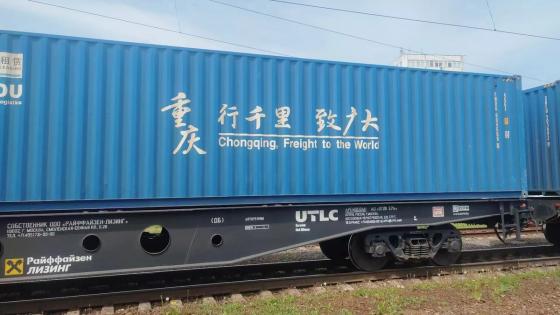
告别马六甲,中欧+北极航线,怎样让中国突破海上霸权?
3 6 Ke· 2025-12-03 08:40
Core Viewpoint - The sudden closure of all border crossings between Poland and Belarus has significant implications for China's foreign trade, particularly affecting the Central European Railway Express, which is crucial for transporting goods from China to Europe [1][3]. Group 1: Impact on Trade and Logistics - The closure of the Malaszewicze port, which handles nearly 90% of the Central European Railway freight volume, has resulted in approximately 300 freight trains being stranded in Belarus, causing a direct impact on high-value goods transportation and a 15% increase in logistics costs [3][5]. - A new shipping route via the Arctic Northeast Passage has emerged, exemplified by the "Istanbul Bridge" container ship, which successfully transported goods worth $200 million from Ningbo to the UK in 20 days, significantly faster than traditional routes [5][9]. - The Central European Railway Express has shown remarkable efficiency, with a punctuality rate of 99.8% and a transit time of 15-20 days, compared to the unreliable sea freight which has seen delays and increased costs [7][9]. Group 2: Economic and Strategic Implications - The closure of the Polish border serves as a reminder of the vulnerability of supply chains reliant on a single route, highlighting the importance of the Central European Railway in mitigating risks associated with maritime transport [9][11]. - The Central European Railway and Arctic shipping routes provide China with strategic autonomy in logistics, allowing it to avoid reliance on traditional maritime routes controlled by foreign shipping giants [11][15]. - The ability to control logistics routes enhances China's bargaining power in global trade, as evidenced by the impact of the Central European Railway on freight rates during geopolitical tensions [12][14]. Group 3: Future Prospects and Global Trade Dynamics - The development of the Arctic shipping route and the Central European Railway is expected to reshape global trade dynamics, allowing China to reduce dependency on traditional maritime routes and enhance its role in global supply chains [21][22]. - As climate change continues to open the Arctic for longer shipping seasons, the strategic value of these routes will increase, potentially altering the balance of power in global trade [21][26]. - The integration of logistics routes with local economies through infrastructure investments and shared benefits positions China as a key player in establishing new trade networks, contrasting with historical precedents of imperialistic control [27][28].
【快讯】每日快讯(2025年12月3日)
乘联分会· 2025-12-03 08:34
Domestic News - Shanghai has strengthened the quality and safety management of public electric vehicle charging and swapping facilities, mandating that all new or updated facilities must use products certified by the CCC certification starting from August 1, 2026 [7] - Hongmeng Zhixing has released a tax subsidy plan for the AITO M9/M8/M7 2026 models, offering up to 15,000 yuan for customers whose vehicles are delayed in delivery due to non-user reasons [8] - Li Auto has announced a strategic partnership with Zeiss, with a product launch event scheduled for December 3, 2025 [9] - Didi's autonomous driving service has begun all-weather, fully driverless passenger testing in Guangzhou [10] - Beijing Automotive Investment Company has increased its registered capital from approximately 7.96 billion yuan to about 8.96 billion yuan, marking a 13% increase [11] - In October 2025, China's automotive goods import and export total reached 25.31 billion USD, a year-on-year increase of 9.5% [12] - Shanghai Minhang District will open approximately 330 kilometers of autonomous driving test roads [13] - GAC Group has established a charging network with over 1,800 charging stations and more than 22,000 self-operated charging piles across 204 cities in China [14] International News - BMW has set a new interim carbon emission reduction target, aiming to reduce CO2 emissions by at least 60 million tons by 2035 compared to 2019 levels [15] - In October 2025, new car sales in Europe reached 1,097,663 units, a year-on-year increase of 4.9%, marking the fourth consecutive month of growth [17] - Malaysian automaker Perodua has launched its first locally developed electric vehicle, the QV-E, with a development investment of 800 million ringgit (approximately 194 million USD) [18] - NVIDIA and Synopsys have announced an expanded strategic partnership to integrate AI and accelerated computing technologies [19] Commercial Vehicles - CEVA and Windrose EV have completed a cross-border transport test with electric heavy trucks, covering 1,725 kilometers with an average energy consumption of 1.02 kWh/km, achieving a 65% reduction in CO2 emissions [20] - Scania has launched its first localized product, NEXT ERA, in China, marking a significant step in its localization strategy [22][23] - The Fokang F light-duty engine has successfully completed high-performance testing for commercial vehicles, focusing on power output and fuel economy [24] - Maxus has showcased multiple new energy vehicles at the Thailand International Motor Show, enhancing its presence in the Southeast Asian market [25]

目标年销100万辆!成立刚10年的零跑,飘了?
电动车公社· 2025-12-02 16:21
Core Viewpoint - The article highlights the rapid growth of Leap Motor, emphasizing its ambitious target of achieving 1 million vehicle sales in the coming year, which would mark a significant milestone in the company's trajectory [1][4]. Sales Performance - In November, Leap Motor's monthly sales surpassed 70,000 units, securing the title of the new force champion in the electric vehicle market [2]. - If the sales target is met, it would represent a doubling of sales for three consecutive years, positioning Leap Motor to compete with established automotive brands [4]. Product Launch - Leap Motor has officially launched the Lafa5, priced starting at 92,800 yuan, which is positioned as a unique offering in the market with features like 605 km range and advanced technology [6][7][9]. - The Lafa5 is designed based on the B platform, sharing components with other models to reduce costs and enhance efficiency [17][19]. Market Strategy - The introduction of the Lafa5 is seen as a strategic move to cater to the growing demand for personalized vehicles while maintaining a focus on practicality [38]. - The company aims to leverage its existing platforms to expand its product lineup and brand influence, potentially leading to a series of models from Lafa1 to Lafa9 [41][42]. Future Projections - Leap Motor anticipates achieving nearly 600,000 units in sales this year, with plans to introduce new models in the D and A series, which are expected to contribute significantly to sales [44][48]. - The company is also expanding its international presence, with projects in Malaysia and Europe, and aims for overseas sales of 100,000 to 150,000 units [55]. Competitive Edge - Leap Motor is investing heavily in self-research and development, aiming to increase the self-research rate of core components from 65% to 80%, which will enhance its competitive position in the market [61][63]. - The focus on producing high-value components in-house allows Leap Motor to maintain control over quality and pricing, differentiating itself from competitors [65].


轮到马斯克破防,没有车企愿用FSD,“他们不想要!”
3 6 Ke· 2025-12-02 09:28
Group 1 - The core issue is that despite Elon Musk's enthusiasm for Tesla's Full Self-Driving (FSD) technology, no traditional automaker is willing to adopt it, leading to Musk's frustration expressed on social media [1][2][6] - Musk has indicated that discussions with traditional automakers about using FSD have been superficial, with requests that are unrealistic for Tesla to fulfill, which he finds meaningless [2][6] - The FSD authorization strategy involves a "hardware binding + software fee" model, where partner automakers must use Tesla's chips and hardware, allowing Tesla to profit from both hardware sales and high-margin software licensing [6][10] Group 2 - Concerns over data security are a significant barrier for automakers considering FSD, as they fear that using Tesla's system would allow Tesla to access sensitive data from their vehicles [10][11] - The lack of a clear legal framework regarding liability in the event of accidents involving FSD further deters automakers from adopting the technology, as there is uncertainty about who would be responsible [11][12] - Compared to Tesla, established autonomous driving suppliers like Waymo offer not only technology but also mature service solutions, making them more attractive to automakers [13]