阿里云

Search documents
互联网传媒周报:泡泡玛特、巨人网络等已到布局期,阿里云验证AI全栈自研价值-20251130
Shenwan Hongyuan Securities· 2025-11-30 07:41
Investment Rating - The industry investment rating is "Overweight," indicating a positive outlook for the sector compared to the overall market performance [5][22]. Core Insights - The report highlights that core consumer brands in the gaming and entertainment sectors, such as Giant Network, Huatuo, and Bubble Mart, have reached a price-to-earnings (PE) ratio of less than 20x for 2026, providing a significant safety margin. The structural consumption dividend from young domestic users willing to pay for enjoyment remains intact, suggesting a favorable investment opportunity at this time [5][6]. Summary by Relevant Sections Gaming Sector - The gaming industry is experiencing a demographic shift with Generation Z users accounting for 65% of the market. The potential of female-oriented gaming segments is still underestimated. The overseas market expansion is expected to unlock further growth potential. The report emphasizes the resilience of leading companies in managing product cycles and suggests focusing on Giant Network, which has a strong daily active user (DAU) base and potential for IP development [6][7]. Trendy Toys - Bubble Mart is viewed as having overly pessimistic expectations regarding single IPs. The expansion of IPs and geographical reach (especially in Europe and North America) is seen as a cornerstone for mid-term growth. The company has 171 overseas stores, with significant room for growth in North America and Europe. The report anticipates that the upcoming holiday season will boost sales and social engagement for new IPs [7][8]. Music Sector - The valuation of Tencent's music companies is projected to average a PE of 17x for 2026. The demand for subscription-based music services among young users is stable, and the report suggests that the market is currently undervaluing this segment. It notes a clear segmentation in music consumption, with Tencent focusing on premium content and community engagement, while competitors like Soda Music target the low-cost segment [8][9]. Other Entertainment Companies - The report mentions that companies like Red Child City are expected to show high growth with low PE ratios. The Hong Kong internet sector is also highlighted, with Alibaba Cloud validating AI narratives and anticipating growth from AI applications and chip production [9][10]. AI and Technology Integration - The report discusses the integration of AI in various applications, including advertising and video content. Companies like Tencent and Alibaba are working on enhancing their chatbot capabilities to create a more integrated ecosystem for advertising, e-commerce, and lifestyle services. The potential for AI applications in gaming and robotics is also noted for the years 2026-2027 [10][11].

电新行业周报:工信部会议定调锂电“反内卷”,阿里云势头猛进重塑AI格局-20251130
Western Securities· 2025-11-30 07:03
Investment Rating - The report recommends investment in the electric power equipment sector, highlighting specific companies for potential investment opportunities [1][2][3]. Core Insights - The Ministry of Industry and Information Technology (MIIT) emphasizes orderly competition in the lithium battery industry, aiming to curb "involution" competition [1][2]. - The report identifies key companies in various segments, including electric vehicles, PCB, solid-state batteries, and energy storage, suggesting specific stocks for investment [1][2][3]. - The report notes significant growth in the wind power sector, with a total installed capacity increase of 70.01 GW from January to October 2025, reflecting a year-on-year increase of 24.21 GW [4][62]. Summary by Sections Electric Vehicle Sector - Recommended companies include Tianci Materials, Zhuhai Guanyu, Terui De, Xinwangda, and Haopeng Technology, with additional attention on Tianji Co., Duofluor, and others [1]. - The report highlights the structural transformation in the AI market, with major cloud providers becoming the preferred choice for enterprises [2]. Energy Storage Sector - The total bidding scale for energy storage in 2025 reached 95.7 GW/347.19 GWh, with winning prices ranging from 0.3261 to 3.216 CNY/Wh [3]. - Recommended companies in the energy storage sector include Sungrow Power, Yiwei Lithium Energy, and CATL, among others [3]. Wind Power Sector - The report indicates that the newly installed wind power capacity in October 2025 was 8.92 GW, showing a year-on-year increase of 33.53% [4][62]. - Recommended companies in the wind power sector include Goldwind Technology, Daikin Heavy Industries, and Zhongtian Technology [4]. Solid-State Battery Sector - The report mentions the establishment of the first large-capacity all-solid-state battery production line in China, which is expected to enhance the electric vehicle industry's capabilities [60]. - Companies like Enli Power are highlighted for their advancements in solid-state battery technology and production capacity [61]. PCB Sector - The report suggests focusing on companies like Defu Technology and Copper Crown Copper Foil within the PCB segment [1].
计算机行业周报:AI Infra:重点关注数据层软件及MaaS-20251129
Shenwan Hongyuan Securities· 2025-11-29 15:20
Investment Rating - The report rates the industry as "Overweight," indicating a positive outlook for the sector's performance compared to the overall market [61]. Core Insights - The report emphasizes the importance of AI Infrastructure (AI Infra) as a foundational system for AI workloads, which includes computing power, storage, and networking [5][11]. - The AI Infra market in China is projected to grow significantly, reaching CNY 3.45 billion in 2024 and CNY 6.73 billion in 2025, representing a year-on-year growth of 95.1% [7][10]. - Key players in the AI Infra space include both domestic and international companies, with a focus on data layer software and models [4][36]. Summary by Sections AI Infra Overview - AI Infra is defined as the hardware and software systems designed to support AI workloads, aiming for efficient and large-scale AI model training and inference [5][11]. - The infrastructure consists of several layers, including computing, storage, and networking, with a focus on optimizing AI model performance [8][11]. Market Growth and Trends - The AI Infra market is expected to see rapid growth, with a significant increase in the number of AI applications anticipated in 2024 [29][32]. - The demand for private deployment and data integration solutions is rising, particularly in sectors with stringent data security requirements [29][36]. Key Players and Technologies - Major players in the AI Infra market include Alibaba Cloud, Huawei Cloud, and various startups focusing on Machine as a Service (MaaS) [12][13]. - Technologies such as virtualization and containerization are central to the computing management layer, enhancing resource utilization and efficiency [12][22]. Investment Opportunities - The report identifies several investment targets across different categories, including AIGC applications, digital economy leaders, and data infrastructure [52][53]. - Companies like Snowflake and MongoDB are highlighted as international benchmarks for data layer software, with strong revenue growth trends [36][38]. Future Outlook - AI infrastructure providers are expected to maintain high growth potential due to their critical role in supporting AI applications and the increasing integration of AI into traditional industries [51].



1200+ 全球头部企业齐聚上海!激光光学 × 半导体全链路协同的顶级峰会仅剩最后三席
半导体行业观察· 2025-11-29 02:49
Core Insights - The article highlights the significance of the Munich Shanghai Optical Expo as a pivotal event for the global optoelectronics and semiconductor industry, featuring over 1,200 leading companies and attracting hundreds of thousands of professional attendees, emphasizing the theme of "technological iteration + ecological integration" [2] Group 1: Policy Alignment - The forum aligns closely with the "14th Five-Year Plan," focusing on the critical role of laser technology in supporting 6G/5G-A, targeting key areas such as compound semiconductors, EDA tools, and optical communication chips, and aims to create a collaborative ecosystem through "policy - technology - capital" synergy [2][4] Group 2: Technical Focus - The forum emphasizes a comprehensive technology logic covering the entire supply chain from "materials - tools - chips - devices - components - applications," showcasing hard-core achievements from leading companies in critical areas like compound semiconductor mass production processes and AI-enabled optical chip design [3] Group 3: Demand-Supply Coupling - The forum effectively links the supply side, represented by leading technology firms like Silan Micro and Xizhi Technology, with the demand side, including major telecom operators and cloud service providers, creating a high-efficiency closed loop of "technology output - demand feedback - cooperation landing" [4] Group 4: Key Participants - Major telecom operators such as China Mobile, China Unicom, and China Telecom are participating to address 6G network architecture and 5G-A deployment needs, while leading cloud service providers like Alibaba Cloud and Tencent Cloud are seeking solutions for high-speed data transmission and green data center construction [6] Group 5: Final Opportunities - The article emphasizes the urgency of securing the last three sponsorship seats for the forum, highlighting the scarcity of resources and the potential for significant market engagement, with a focus on connecting with decision-makers from major telecom and cloud service companies [7][9]





PCB是十问十答:AI算力与终端创新共振,PCB重塑高密度连接格局
Guoxin Securities· 2025-11-28 14:57
Investment Rating - The report maintains an "Outperform" rating for the PCB industry [2]. Core Insights - The industry is entering a new AI-driven cycle, fundamentally changing demand structures. The construction of AI server clusters is leading to simultaneous upgrades in PCB demand and pricing. The expected market for wired communication PCBs will reach 206.9 billion RMB by 2027, with a CAGR of 20% over the next two years [4]. - High-end PCBs are expected to remain in tight supply until 2027, with major global manufacturers expanding production aggressively. The combined output of 13 leading PCB manufacturers is projected to reach 186 billion RMB by 2027, with a CAGR of 54% from 2025 to 2027 [4]. - The trend towards high-end PCB manufacturing is accelerating due to technological iterations and material upgrades. The industry is expected to see a three-pronged evolution in materials, processes, and architectures driven by AI [4]. - The demand surge and profit improvement in upstream materials present opportunities for domestic substitution. The price of copper-clad laminates has risen significantly, and domestic manufacturers are making notable progress in high-end materials [4]. - The PCB industry is experiencing a long-term trend of simultaneous growth in volume, price, and structure, driven by AI. The report recommends focusing on leading companies with high-end manufacturing capabilities and overseas delivery layouts [4]. Summary by Sections AI-Driven Growth - The AI cycle is expected to drive significant growth in PCB demand, particularly in AI servers, high-speed switches, and optical modules. The total market for wired communication PCBs is projected to reach 1,433 billion RMB by 2025 and 1,815 billion RMB by 2026 [19]. Production Capacity Expansion - Major PCB manufacturers are announcing aggressive expansion plans, with significant investments in new production facilities in Southeast Asia and domestic high-end capacity [15]. Technological Advancements - The report highlights the rapid adoption of mSAP technology in AI servers and switches, which is essential for meeting the demands of high-density signal transmission [4][21]. Market Dynamics - The report notes that the global PCB market is expected to face a supply-demand gap of nearly 20 billion RMB by 2026, although this gap is anticipated to narrow by 2027 [19]. Key Players - The report identifies leading companies such as Huada Technology, Jingwang Electronics, and Shenghong Technology as key players to watch in the PCB industry due to their high-end manufacturing capabilities and strategic expansion plans [4].




企业级AI应用开发:从技术选型到生产落地
阿里云· 2025-11-28 13:53
Investment Rating - The report does not explicitly state an investment rating for the industry Core Insights - The report emphasizes the transition from traditional application development to Serverless AI application development, highlighting the need for a new infrastructure paradigm that supports AI agents and their unique requirements [10][27] - It identifies the importance of dynamic elasticity and task-driven orchestration in AI-native architectures, which allows for efficient resource allocation and management [19][24] - The report discusses the advantages of Serverless AI runtimes, including reduced operational burdens, cost efficiency, and enhanced developer focus on business innovation rather than infrastructure [26][34] Summary by Sections 01 Enterprise-level AI Application Development Runtime Selection - AI-native paradigms demand new infrastructure requirements, focusing on agent-centric services rather than traditional user-centric models [13][15] - The infrastructure must support state persistence and low-latency access, enabling agents to maintain memory and personality [17] - Embracing uncertainty is crucial, with infrastructure designed to lower risks associated with non-deterministic outputs from large language models (LLMs) [21] - The transition from traditional architectures to AI-native architectures is necessary for effective application development [26] 02 Key Technologies of Serverless AI Runtime - Serverless platforms provide heterogeneous computing capabilities, integrating various programming languages and event-driven architectures [33][34] - The report highlights the importance of security isolation and automatic disaster recovery in Serverless AI runtimes [38][42] - Serverless GPU services are emphasized for their rapid cold start capabilities and efficient resource utilization, significantly reducing costs [43][49] 03 Customer Cases – Serverless + AI Simplifying Application Development - The report presents internal case studies from Alibaba, showcasing successful implementations of Serverless runtimes in building models and AI tools [87][90] - It illustrates how Serverless AI runtimes have become core to Alibaba Cloud's AI-native applications, enhancing performance and reducing operational costs [90][92] - The case studies demonstrate the ability to handle high concurrency and low latency requirements in real-time AI applications [93][99]
特斯联赴港IPO:上半年营收大涨77%净亏损扩大四成 三年半累亏逾30亿元 一场与时间赛跑的生态之战
Xin Lang Zheng Quan· 2025-11-28 08:34
Core Viewpoint - The company Teslian has submitted its application for a mainboard listing on the Hong Kong Stock Exchange, showcasing a paradoxical financial performance with a significant revenue increase but an expanding net loss, raising questions about the sustainability of its high-growth model [1][2]. Financial Performance - In the first half of 2025, Teslian's revenue surged by 77% year-on-year to 632 million yuan, while its net loss widened by 40% to 574 million yuan [1][2]. - From 2022 to 2024, revenue grew from 738 million yuan to 1.843 billion yuan, achieving a compound annual growth rate (CAGR) of 58%, with a further acceleration to 77% in the first half of 2025 [2]. - The primary growth driver was the AI industry digitalization business, which saw a 191% year-on-year increase in revenue, reaching 577 million yuan and accounting for over 90% of total revenue [2]. - Cumulative losses exceeded 5.8 billion yuan from 2022 to 2024, with the first half of 2025 showing a 40% increase in net losses [2]. - High research and development (R&D) and market expansion costs are the main reasons for the losses, with R&D expenses exceeding 1 billion yuan over three years and 162 million yuan in the first half of 2025 [2]. Capital Structure - Teslian's shareholder base includes prominent investors, with the Everbright Group holding 25.89% as the largest shareholder, and other significant stakes from SenseTime and JD Technology [3]. - The company’s valuation reached 21 billion yuan after a 50 million yuan investment from Meigaoyu in August 2024, further increasing to 21.6 billion yuan in early 2025 [3]. - Despite a 316% increase in cash reserves to 657 million yuan by mid-2025, the company continues to face negative cash flow from operating activities [3]. Industry Context - The IPO coincides with a pivotal moment in the AIoT industry, with the market expected to grow from 394 billion yuan in 2024 to 715 billion yuan by 2029, reflecting a CAGR of 12.6% [4]. - Competition is intensifying, with major players like Huawei and Alibaba Cloud applying price pressure on smaller firms, while listed companies are establishing barriers in niche markets [4]. - Teslian differentiates itself as an "operating system product provider," with its self-developed TacOS system capable of supporting millions of devices [4]. Market Challenges - Teslian's listing is seen as a litmus test for the valuation models of AIoT companies in the Hong Kong market, where previous listings have faced stock price declines due to skepticism about profitability [5]. - The company must demonstrate that its spatial intelligence strategy can achieve economies of scale and potentially lower marginal delivery costs through its TacOS system [5]. Strategic Outlook - Analysts highlight the challenge for Teslian to balance short-term losses with long-term value creation, suggesting that improving gross margins from 22.7% to over 30% and controlling operational expenses could lead to breakeven by 2026-2027 [6]. - The IPO represents a transition for the AIoT industry from technological exploration to commercial maturity, with the success of Teslian's strategy being crucial for its acceptance in the capital market [7].
东港股份子公司北京瑞宏与阿里云达成合作 将联合推广销售AI及机器人产品
Zheng Quan Shi Bao Wang· 2025-11-28 02:57
Core Viewpoint - Donggang Co., Ltd. (002117) has signed a framework cooperation agreement with Alibaba Cloud to leverage their strengths in artificial intelligence, embodied intelligence, robotics research and development, and cloud computing technology [1] Group 1: Partnership Details - The collaboration will focus on AI-related technologies and products, with an emphasis on joint promotion and sales of AI and robotics products [1] - Both parties will work together to advance the development and implementation of intelligent applications [1] Group 2: Areas of Cooperation - The cooperation will encompass cloud computing, computing power, AI training, and large model services [1] - Beijing Ruihong's AI and robotics products will be jointly promoted and sold within Alibaba Cloud's ecosystem and Beijing Ruihong's platform [1]

看科技如何重构快递服务新生态
Huan Qiu Wang Zi Xun· 2025-11-28 02:09
Core Insights - The express delivery industry in Zhejiang is undergoing a profound transformation driven by technological innovation, integrating digital and physical economies [1] - Zhejiang serves as a model for high-quality development in the postal industry, showcasing practices that can be replicated nationwide [1] Group 1: Unmanned Delivery Vehicles - Unmanned delivery vehicles have significantly reduced operational costs, with daily electricity expenses dropping from 50 yuan to 15 yuan, leading to a 70% increase in efficiency at the Tonglu sorting center [2] - The introduction of unmanned vehicles allows for earlier dispatch of deliveries, improving overall delivery efficiency and increasing the proportion of home deliveries by over 30% [2] - In Jinhua, 34 unmanned vehicles have been deployed, covering over 100,000 kilometers and transporting more than 1 million items, with plans to expand the fleet to over 200 vehicles by 2026 [3] Group 2: Integrated Logistics Solutions - The "Rail + Low Air" logistics model in Jinhua combines drone and rail transport, enhancing delivery speed by over 50% and reducing costs by approximately 35% [4] - This innovative logistics network allows for same-day delivery of fresh produce, with a total transit time of under one hour for certain routes [4][5] - The integration of rail and drone services is set to expand, with plans for additional routes and improved service coverage [5] Group 3: Drone Delivery Innovations - Drones are being utilized to solve last-mile delivery challenges in mountainous areas, significantly reducing delivery times from 90 minutes to just 15 minutes [7] - The establishment of a drone delivery network includes a command center and multiple takeoff and landing sites, covering key areas and enhancing service efficiency [8] - Drones are also being used for emergency services, such as delivering firefighting supplies, showcasing their versatility beyond traditional logistics [8] Group 4: Industry Growth and Statistics - The express delivery market in China is projected to handle approximately 1.75 trillion packages in 2024, with a year-on-year growth of 21.5% [10] - Zhejiang province accounts for 18.5% of the national express delivery volume, with a robust network of over 30,000 service points and 930 logistics routes [10] - The province has seen significant advancements in smart logistics and regulatory frameworks, positioning itself as a leader in the express delivery sector [11] Group 5: Cultural and Historical Context - Tonglu is recognized as the birthplace of China's private express delivery industry, with a rich history of entrepreneurial spirit and innovation [9] - The local government and industry leaders are fostering a collaborative environment to enhance logistics capabilities and workforce development [12][13] - The integration of logistics with urban development aims to create a sustainable ecosystem that benefits both the industry and local communities [13]


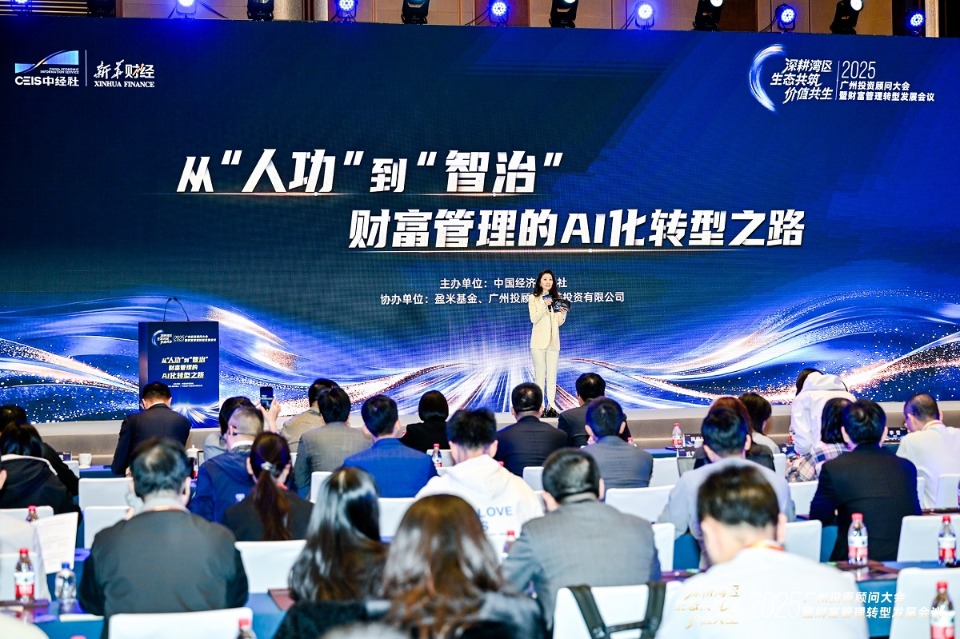
从“人功”到“智治” 业内共议财富管理AI化转型之路
Xin Hua Cai Jing· 2025-11-27 14:29
Core Insights - The "2025 Guangzhou Investment Advisory Conference and Wealth Management Transformation Development Meeting" was held in Guangzhou, focusing on the AI transformation in wealth management [1] - Experts discussed how AI is reshaping the wealth management industry, emphasizing the need for practitioners to embrace change and enhance their services through AI technology [3] Group 1: AI in Wealth Management - Lin Jiecai from Yingmi Fund highlighted the rapid development of AI technology and the necessity for wealth management professionals to undergo a comprehensive transformation, including product AI integration [4] - He introduced the AI investment advisory product "Qie Man AI Xiao Gu," which utilizes a full-agent architecture to overcome traditional service limitations, advocating for transparency in AI decision-making to build client trust [4] - Gu Min from Alibaba Cloud pointed out a significant supply-demand gap in China's wealth management market, with 720 million investors and only 200,000 registered financial advisors, leading to a ratio of 3600:1 [6] Group 2: Technological Advancements - Gu Min also discussed the application of post-training technology in wealth management, enhancing service capabilities and accuracy through structured knowledge extraction [6] - McKinsey's partner Ma Ben emphasized that AI's integration with other technologies will lead to personalized services and improved operational efficiency in the financial sector [8] - Wang Fengyi from Xun Tu Technology presented a three-stage evolution of AI capabilities, aiming to assist users in high-dimensional decision-making by 2027-2028 [12] Group 3: Practical Applications and Innovations - Chen Ping from Yingmi Fund mentioned the company's efforts in digital transformation for financial institutions, creating a knowledge base project to enhance content creation and compliance scenarios [13] - Sun Mingzhan from Pu Lan highlighted the importance of AI as a comprehensive solution for family wealth management, focusing on training simulations for advisors [15] - Xu Guoxing from Doufu Wencai described their platform as a "Zhihu for finance," utilizing AI algorithms to match users with personalized financial advice, significantly increasing service efficiency [19]