Temu

Search documents
跨境电商希音被指违反欧盟消费者保护法 官方回应
Feng Huang Wang· 2025-05-26 16:08
Group 1 - The European Union (EU) regulatory authorities have stated that Shein's sales strategies violate EU laws, potentially leading to fines if the company does not change its practices [1][2] - The EU Commission found multiple violations by Shein, including false discounts, misleading product labeling, and deceptive information, as well as issues with the company's sustainability claims [1][2] - Shein has responded by stating that it is cooperating with EU regulators to demonstrate its commitment to compliance with EU regulations, emphasizing the importance of providing a safe and reliable online shopping experience for European consumers [1] Group 2 - The EU Consumer Protection Cooperation Network (CPC) initiated an investigation into Shein's policies, which may violate EU laws regarding e-commerce and consumer rights [2] - The EU Commission is also reviewing Shein under the Digital Services Act, aimed at enhancing transparency and removing illegal products from large platforms [2] - The EU is addressing concerns over the influx of cheap and potentially unsafe products in the market, with proposals for customs reforms that may impact Shein and similar low-cost retailers [2]
每周政经资讯丨港科大欢迎哈佛国际生就读;国有大行下调三年五年期存款利率25个基点;欧盟拟对快递小包裹征收2欧元费用
Sou Hu Cai Jing· 2025-05-26 14:01
Group 1 - Hong Kong University of Science and Technology (HKUST) welcomes international students from Harvard University, offering unconditional admission and support for transfer students amid changes in the global academic environment [4][5] - The International Mediation Institute will establish its headquarters in Hong Kong, enhancing the city's status as a global mediation hub and attracting more international organizations [5][6] - The New Capital Investor Immigration Scheme has received 1,257 applications, expected to bring over HKD 37 billion in investments to Hong Kong, reinforcing its position as a top international investment hub [6][8] Group 2 - The Hong Kong Legislative Council passed the Stablecoin Bill, establishing a licensing system for fiat-backed stablecoin issuers to enhance the regulatory framework for virtual asset activities [7][8] - Hong Kong Investment Company has invested in over 100 projects, with several companies planning IPOs, indicating a focus on AI and innovative technologies [8][9] - The Hong Kong government plans to provide tax incentives for eligible commodity trading activities, aiming to establish a commodity trading ecosystem [9][10] Group 3 - Major state-owned banks in China have lowered three- and five-year deposit rates by 25 basis points, with the Loan Prime Rate (LPR) also reduced by 10 basis points, reflecting a shift in monetary policy [10][11] - The People's Bank of China announced a MLF operation of CNY 500 billion to maintain liquidity in the banking system, indicating ongoing support for the economy [12][13] - The State Administration of Foreign Exchange is working on a draft to improve cross-border fund management for domestic companies listing abroad, aiming to enhance financing convenience [13][14] Group 4 - The European Union proposed a €2 fee on small parcels, primarily targeting e-commerce shipments from China, which accounted for over 90% of such imports [15][16] - The U.S. Congress passed a significant tax reform bill under the Trump administration, which includes various tax cuts and spending increases, potentially impacting the economy and federal debt [21][22] - Bitcoin reached a historic high of $110,000, driven by macroeconomic policies and structural factors, positioning it as the fifth-largest asset globally by market capitalization [26]


90天关税窗口期观察:跨境电商开启外贸618,买家囤货忙
Nan Fang Du Shi Bao· 2025-05-26 11:59
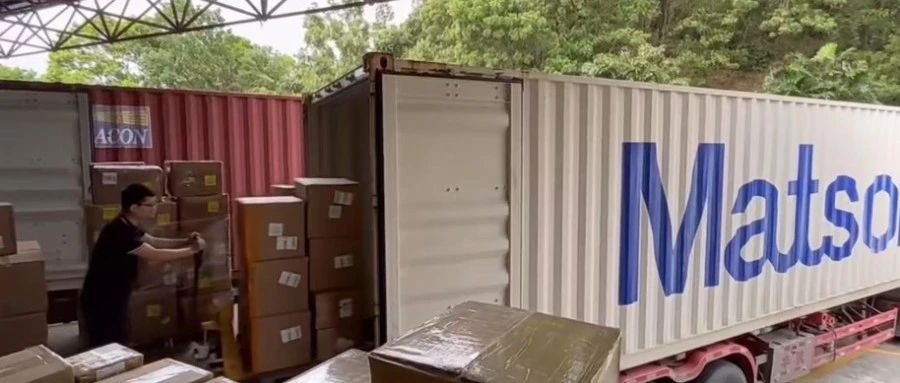
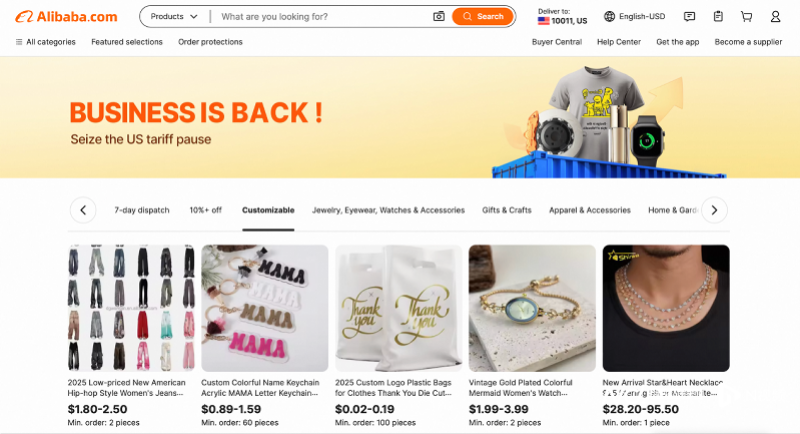
Core Insights - The recent tariff adjustment between China and the U.S. has led to a significant surge in container shipping bookings, with a nearly 300% increase in bookings from China to the U.S. [7] - The 90-day tariff window has sparked a "stockpiling wave" among U.S. buyers, with a 40% year-on-year increase in inquiries from American buyers on cross-border e-commerce platforms [1][3] - Various industries, particularly machinery, textiles, and consumer goods, are poised to benefit from the reduced tariffs, while high-tech products like chips remain constrained due to retained tariffs [1][13] Industry and Company Summaries - The 90-day tariff window is providing a valuable adjustment period for industries with significant tariff reductions, such as machinery, textiles, and consumer goods, enhancing their market competitiveness [1][13] - On May 14, the day the tariff adjustments took effect, Alibaba's international platform saw a double-digit increase in order volume across various categories, with automotive parts up 62% and machinery up 46% [2] - The demand for shipping has surged, leading to a shortage of shipping containers, with many shipping companies announcing price increases due to the high demand [7][8] - The new T86 customs policy has reduced the tax rate on small packages under $800, easing price pressures for Chinese online retail giants like Shein and Temu [6] - Companies are actively preparing for the upcoming holiday season, with many manufacturers ramping up production to meet the anticipated demand during the 90-day window [12][9] - The textile and consumer goods sectors are expected to see a rebound in orders, with companies like Midea reporting significant cost savings due to reduced tariffs [13][14] - Long-term risks remain as companies are advised to diversify their market strategies and reduce reliance on single markets due to potential future tariff changes [14][15]
同款商品Temu美国售价是国内7倍,中国制造优势明显
Di Yi Cai Jing· 2025-05-26 11:15
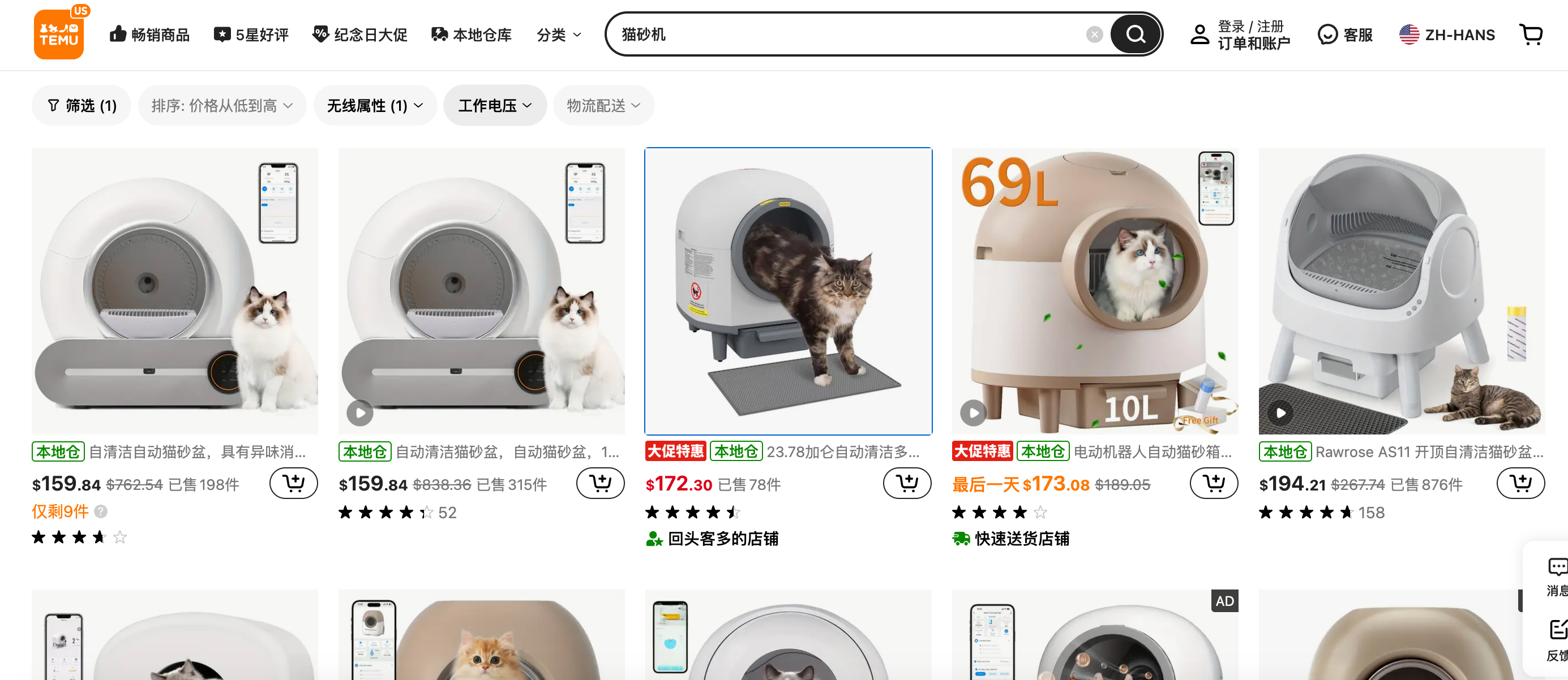
Group 1 - The high cost of manufacturing in the U.S. makes it difficult for Chinese manufacturing to be easily replaced, with significant price differences observed between U.S. and Chinese products [1][4] - Products sold on U.S. e-commerce platforms like Temu and Shein are often 2-3 times, or even 7 times, more expensive than their Chinese counterparts, indicating a substantial markup after logistics and operational costs [1][3] - Despite the high costs associated with shipping and tariffs, Chinese products still maintain a competitive pricing advantage in the U.S. market compared to local alternatives [3][4] Group 2 - Following the reduction of tariffs from 145% to 30% on May 14, there was a significant surge in orders on Alibaba International, with many U.S. buyers placing large orders without negotiating prices [4] - The push for manufacturing to return to the U.S. is challenged by high domestic costs, including environmental compliance and labor, which could lead to increased prices for consumers [4]

中山10亿级大卖上市,产品上过太空;刚成立的割草机器人公司倒闭,曾众筹230万美金丨Going Global
创业邦· 2025-05-26 10:35
Core Insights - The article discusses significant events in the international business landscape, focusing on Asian companies seeking growth outside the US, particularly in Europe and Asia [5][6] - It highlights the challenges faced by TikTok's US e-commerce division, including potential layoffs due to new tax policies affecting cross-border packages [8] - Temu has surpassed Shopee to become the second-largest e-commerce platform in Brazil, indicating rapid growth in the region [10] - Taobao's global expansion efforts are emphasized, with the 618 shopping festival extending to 12 countries, including Kazakhstan and Mongolia for the first time [19] - The article also notes the recent IPO of Taile Technology, which reported annual revenues of 1 billion yuan [15][17] Group 1: Major Events - Asian companies are encouraged to seek growth in Asia and Europe amid US-China tensions, with Alibaba focusing on e-commerce, cloud computing, and AI integration [5][6] - TikTok's US e-commerce division is undergoing restructuring, with potential layoffs due to new tax implications affecting profitability [8] - Temu has achieved a 25.8% increase in traffic, becoming the second-largest e-commerce platform in Brazil with a 9% market share [10] Group 2: Company Developments - Taile Technology has successfully listed on the Shenzhen Stock Exchange, with a market capitalization of approximately 4.5 billion yuan [15][17] - Taobao's 618 shopping festival has expanded its global reach, now covering 12 countries, enhancing its international sales strategy [19] - Meituan's Keemart has launched operations in Saudi Arabia, marking its entry into the Middle Eastern market [22] Group 3: International Trade and Policy - Trump threatens to impose a 50% tariff on EU imports, escalating trade tensions and affecting international business dynamics [29][30] - The EU proposes a 2 euro fee on small packages, primarily targeting e-commerce shipments from China, which could impact cross-border trade [33] - Amazon and Walmart are both undergoing significant layoffs, reflecting broader economic challenges and shifts in the retail landscape [36][43] Group 4: Investment and Financing - Whale, a Singapore-based AI company, has completed a C-round financing of over $60 million to expand its technology applications [46] - Meitu has secured a $250 million strategic investment from Alibaba to enhance its AI-driven e-commerce tools [48] - Stord, a US logistics startup, has acquired UPS's Ware2Go to strengthen its position in the e-commerce logistics sector [50]

关税调整期,中国外贸企业如何突围
Huan Qiu Shi Bao· 2025-05-26 01:41
Group 1 - The core viewpoint of the articles highlights the positive impact of the recent U.S.-China tariff adjustments on Chinese foreign trade enterprises, leading to increased orders and a shift in export strategies [1][2][3] - The short-term effects of tariff reductions, particularly for small packages, are expected to stabilize cross-border e-commerce, benefiting small and medium-sized enterprises in China [1][2] - Chinese foreign trade enterprises are responding rationally to the surge in orders, focusing on export diversification and cautious strategies in the U.S. market [2][4] Group 2 - The long-term restructuring of China's foreign trade is accelerating, with companies recognizing the risks of relying on a single market and shifting towards regional diversification in Southeast Asia, Latin America, and the Middle East [2][3] - The Regional Comprehensive Economic Partnership (RCEP) is enhancing the feasibility of stable supply chains within the region, with significant export growth to ASEAN and EU markets [3] - Companies are optimizing their global supply chain structures, establishing assembly factories in Southeast Asia while retaining key manufacturing processes in China [3][4] Group 3 - Chinese foreign trade enterprises are adapting to price negotiations and risk-sharing mechanisms, with some companies increasing upfront payment requirements to mitigate potential risks [4][5] - The global restructuring of supply chains has led to misunderstandings in some countries regarding Chinese exports, particularly in electric vehicles and photovoltaic components [5] - Chinese companies are focusing on enhancing product value and local operational capabilities, as evidenced by the significant increase in BYD's electric vehicle registrations in Europe [5][6] Group 4 - The current tariff adjustment period provides a critical opportunity for Chinese foreign trade enterprises to accelerate structural transformation and strategic realignment [6] - Emphasis is placed on the importance of digital capability enhancement, regional market collaboration, and green transformation for future competitiveness [6] - The role of foreign trade is underscored as a barometer of economic performance and a key element in global economic governance [6]
马斯克宣布回归7x24小时工作状态,还要在工厂打地铺;吉利李书福:几乎所有新势力都来吉利挖人;曝UU跑腿要求高管午休接单
雷峰网· 2025-05-26 00:30
Group 1 - Geely's chairman Li Shufu stated that almost all new car manufacturers are poaching talent from Geely, emphasizing that without Geely's trained personnel, they cannot produce vehicles [4] - Geely has focused on acquiring global automotive companies to learn advanced technologies and attract top talent, which has helped maintain its competitive edge in the market [4] - The acquisition of Volvo was specifically aimed at learning about safety technology, enhancing Geely's design and research capabilities [4] Group 2 - A strategic merger has been announced between two leading Chinese computing companies, Sugon and Haiguang Information, marking the first major merger under the revised regulations for listed companies [6] - Sugon, a major player in high-end computing and data center products, is the largest shareholder of Haiguang Information, holding 27.96% of its shares [6] - The merger is expected to enhance the capabilities of both companies in the semiconductor industry, particularly in high-end CPU and processing technologies [6] Group 3 - Alibaba's chairman, Daniel Zhang, expressed that the company has returned to a stable trajectory after facing numerous challenges over the past five years, focusing on e-commerce, cloud computing, and AI integration [7] - Zhang emphasized the importance of young professionals choosing the right mentors over job titles, highlighting the value of learning from experienced leaders [7] Group 4 - The European Union plans to impose a €2 tax on low-value packages, primarily affecting imports from China, which could significantly impact platforms like Temu and Shein [10] - This new regulation is expected to increase operational costs and require adjustments in business models for affected e-commerce platforms [10] Group 5 - JD's 7Fresh has set a goal to achieve the highest price competitiveness in the industry, planning to reduce prices by nearly 20% during the upcoming 618 shopping festival [12] - The company aims to enhance product quality while maintaining competitive pricing through supply chain optimization [12] Group 6 - BYD's electric vehicle sales in Europe reached 7,231 units in April, a 169% year-on-year increase, surpassing Tesla for the first time and entering the top ten brands in local sales [16]

中国大厂,争夺巴西「互联网下半场」
创业邦· 2025-05-24 10:33
Core Viewpoint - Brazil is emerging as a significant destination for Chinese companies seeking to expand globally, driven by its large market size, digital habits, and relatively lower competition compared to other Latin American countries [3][5][6]. Group 1: Investment and Expansion - Chinese companies are making substantial investments in Brazil, with Meituan planning to invest $1 billion in its food delivery service Keeta over the next five years [3]. - Didi has relaunched its food delivery service "99 Food" in Brazil, indicating a strategic move to integrate various services [3][4]. - Mixue Ice Cream plans to open its first store in Brazil and establish a supply chain factory, with an investment of no less than 4 billion RMB in local agricultural products over the next 3-5 years [4]. Group 2: Market Potential - Brazil is viewed as the "last blue ocean" for many Chinese companies, with a population of 210 million and a projected GDP per capita of approximately $11,178 in 2024 [5][6]. - The average consumer spending in Brazil is around $6,800, which is higher than in China, indicating a strong consumer willingness to spend [6]. - The internet penetration rate in Brazil is high, with approximately 86.2% of the population being internet users, and 99.1% of respondents owning smartphones [8]. Group 3: E-commerce and Competition - Brazil's e-commerce sales surged from approximately 126 billion BRL in 2020 to 169.6 billion BRL in 2022, attracting various Chinese e-commerce platforms [10]. - Local giants like Mercado Livre dominate the e-commerce market, contributing 51.7% of the new GMV in 2023-2024, making it challenging for new entrants [24][25]. - The food delivery market in Brazil is highly competitive, with local platform iFood holding over 80% market share, making it difficult for Didi's 99 Food to gain traction [23][24]. Group 4: Challenges and Risks - Brazil's complex tax system poses significant challenges for foreign companies, with compliance costs exceeding 1% of revenue [12][13]. - The logistics and payment infrastructure in Brazil is underdeveloped, with a significant portion of the population relying on cash transactions [16]. - Recent tax reforms have increased the burden on cross-border e-commerce, complicating the operational landscape for companies like SHEIN and Shopee [13][15].





中国未雨绸缪压倒了特朗普
36氪· 2025-05-23 13:58
以下文章来源于日经中文网 ,作者日经中文网 日经中文网 . 编制日经指数的《日本经济新闻》的中文版。提供日本、中国、欧美财经金融信息、商务、企业、高科技报道、评论和专栏。 "中国之所以强硬,是因为中国从第一次特朗普政府的贸易战以来,历经七年推进了相关准备,核心是推动经济结构转型,打造没有美国 也能生存的经济。2018年至今新增出口额超过1万亿美元,相当于中国每年对美出口额的两倍……" 文 丨桃井裕理 来源| 日经中文网(ID:rijingzhongwenwang) 封面来源 | Unsplash 特朗普政府于美国东部时间14日凌晨0点1分(北京时间下午12点1分)将对中国的追加关税从145%下调了115%。对800美元以下 的小额货物征收120%的关税或每件100美元的关税,也一并降至54%。面对中国的反制,美国并未再反击,而是退让了。 美国对中国的追加关税目前是10%的基础对等关税税率,再加上之前以打击非法药品为名设定的20%,总共为30%。 特朗普于4月2日宣布对中国征收34%的对等关税,中国则采取了全面抗争的姿态而非谈判解决。美国将对等关税提高至84%、 125%,中国就以相同水平回应,最终美方对中方的 ...

跨境电商卖家赶货忙,但行业已悄然生变
21世纪经济报道· 2025-05-23 08:45
Core Viewpoint - The article discusses the recent changes in the cross-border e-commerce landscape, particularly focusing on the impact of the T86 policy cancellation on different business models and the subsequent adjustments made by sellers in response to market dynamics [1][5][11]. Group 1: Impact of T86 Policy Cancellation - The cancellation of the T86 policy, which previously allowed for higher tax-free limits on low-value packages, has significantly affected platforms like Temu and Shein that relied on a full-service model [5][6]. - Sellers have shifted from a full-service model to a semi-service model, managing logistics and inventory themselves, which has led to a change in operational dynamics within the industry [3][5]. Group 2: Seller Adjustments and Market Dynamics - Sellers like Zhang Sheng have adapted by increasing inventory in overseas warehouses and returning to a more proactive management style, focusing on real-time monitoring and replenishment of popular products [3][5]. - The emergence of a "robust" market for cross-border e-commerce is noted, with sellers diversifying their strategies to reduce reliance on single platforms and exploring new markets, such as Latin America [6][11]. Group 3: Shipping and Logistics Trends - The logistics landscape has seen a significant increase in shipping demand, with inquiries rising by 300% as traditional foreign trade companies and cross-border e-commerce sellers rush to replenish stock [10]. - Despite the surge in shipping volume, sellers have not faced significant issues in securing shipping containers, indicating a resilient logistics network [10]. Group 4: Seller Experiences on Amazon - Amazon FBA sellers have reported a relatively stable shipping experience, with many opting for tax-inclusive shipping channels and preparing inventory well in advance of peak seasons [7][8]. - The overall impact of rising shipping costs has been manageable for sellers of lightweight products, allowing for flexible pricing strategies [7][8]. Group 5: Future Outlook - There is optimism regarding the recovery of shipping capacity, with expectations that normal operations will resume as the market stabilizes [10][11]. - Cross-border e-commerce companies are encouraged to optimize logistics models and enhance product value to adapt to the evolving market conditions [11].