海信视像

Search documents
铝价存趋势格局,氧化铝寻底路漫漫
Yin He Qi Huo· 2025-12-31 08:17
Report Industry Investment Rating No relevant content provided. Core Viewpoints of the Report - The aluminum price is expected to show a trending pattern, while alumina is on a long - term downward path. The financial attribute of aluminum will continue to strongly drive the price in 2026, and the global supply - demand shortage of aluminum will support the price. Alumina will maintain a cost - based pricing logic due to an oversupply situation [6][86]. - The consumption of aluminum will grow at a low rate but still have bright spots, such as in energy transformation, lightweight applications, and the export of aluminum - processed products. However, traditional industries like real estate and home appliances may still perform weakly [34][54]. - The supply of recycled cast aluminum alloy will be affected by raw material shortages and policy uncertainties, and its price will generally follow the trend of the aluminum price [89]. Summary by Directory Part One: Preface Summary 1. Market Review - **Electrolytic Aluminum**: Overseas tariffs, monetary policies, and the "de - dollarization" trend have affected the aluminum price. The supply - demand contradiction and low inventory have supported the price, and the cost has decreased while the profit has increased [5]. - **Aluminum Alloy**: The casting aluminum alloy futures were successfully launched this year. The price of aluminum alloy is highly correlated with the aluminum price, but the spot price of casting aluminum alloy has difficulty following the increase in the aluminum price [5]. - **Alumina**: The supply - demand situation at home and abroad has turned to oversupply, and the price has declined. The industry is shifting profits to the ore end, and there are basis trading opportunities [5]. 2. Market Outlook - **Electrolytic Aluminum**: The financial attribute will continue to strongly drive the aluminum price. The supply - demand shortage and low inventory will give the price greater elasticity [6]. - **Aluminum Alloy**: The supply - demand pattern will remain slightly oversupplied, and the price will generally follow the metal sector and the aluminum price. There are risks in basis and cross - variety spreads [6]. - **Alumina**: The oversupply situation will continue, and the price will maintain a downward - selling strategy. There are policy risks, and basis trading opportunities still exist [6]. 3. Strategy Recommendation - **Unilateral**: Be bullish on the aluminum price on dips; the absolute price of casting aluminum alloy will follow the aluminum price, and pay attention to basis and variety spread opportunities before the expiration of warehouse receipts; maintain a downward - selling strategy for alumina, and pay attention to price elasticity risks driven by policy expectations [7]. - **Arbitrage**: Pay attention to the expansion of the monthly spread of aluminum at low inventory levels, the convergence of the basis at the end of the off - season, and the repeated arbitrage opportunities in the internal - external price difference; for aluminum alloy, pay attention to the arbitrage opportunities in the range of a discount of 100 - 1400 yuan to the aluminum price and the spot - futures arbitrage opportunities; there are basis trading opportunities for alumina when the warehouse receipts are low and before expiration [7]. Part Two: Supply Rigidity and Global Shortage, Aluminum Price in a Trending Pattern 1. 2025 Aluminum Market Review - The aluminum price showed a volatile upward pattern in 2025, with the Shanghai Aluminum main contract price ranging from a minimum of 19,000 yuan to a maximum of 22,980 yuan, an annual increase of 13.8% [11]. - The price increase in the first and fourth quarters was mainly driven by LME aluminum, while in the second and third quarters, the price rebounded steadily after a decline [12][13]. 2. 2026 - 2030 Global Electrolytic Aluminum Supply Outlook - **Domestic**: The supply - side constraints on domestic electrolytic aluminum capacity still exist. The capacity will reach the theoretical ceiling in 2026, and the supply elasticity will decrease significantly. The production in 2026 and 2027 will have limited growth [20][21][22]. - **Overseas**: The overseas electrolytic aluminum capacity is expected to increase by 820,000 tons in 2026 and 1.65 million tons in 2027. The new - investment capacity is mainly concentrated in Indonesia [24][25]. - **Imports**: China will still rely on imported aluminum ingots in 2026, and the net import volume is expected to increase to 2.5 million tons [33]. 3. Aluminum Consumption with Low Growth but Bright Spots - **Export of Aluminum - processed Products**: The export volume of aluminum - processed products in 2025 is expected to be about 10.2 million tons, a year - on - year decrease of 2.55%. It is expected to turn positive in 2026, with an increase of about 400,000 tons [34]. - **Domestic Aluminum Demand**: The proportion of domestic aluminum demand in the total apparent demand increased in 2025. The growth of domestic demand was mainly in the first half of the year, and the demand in the energy transformation and lightweight application fields will be a stable growth source [41][54]. - **Difference between Apparent Demand and Actual Output**: The apparent demand of aluminum is significantly higher than the actual output of aluminum - processed materials, mainly due to the inventory in the intermediate links of the industry [45]. - **Traditional Industries**: The demand for aluminum in the real estate industry will still be weak, and the home appliance industry is expected to have a mild growth in air - conditioner production. The "aluminum - for - copper" substitution is ongoing [59][65]. 4. Certainties and Uncertainties of Aluminum - The global aluminum supply - demand gap may continue in the next five years, which will increase the price elasticity of aluminum. Tariffs and trade barriers mainly affect the price difference between regions, and the EU's CBAM policy may increase the trading cost [69][70]. - The aluminum market has a weak tolerance for supply - side uncertainties. Overseas electrolytic aluminum plants face risks such as accidents, carbon tariffs, and energy supply, and the climate phenomenon may also affect production and demand [71]. 5. Supply - Demand Balance and Inventory Expectations - **Balance Sheet**: The global economic growth is expected to be slow from 2025 to 2030. The domestic aluminum demand in 2026 is expected to increase by 2.54%. The global aluminum supply - demand gap is expected to be 570,000 tons in 2026 and 330,000 tons in 2027 [72]. - **Inventory**: Overseas, the LME aluminum spot basis has been in a premium state, and the new regulatory rules may make the price increase more stable. Domestically, the overall inventory is expected to remain stable, but attention should be paid to the changes in the monthly spread and basis during peak seasons [79][84]. 6. Macroeconomic and Fundamental Factors Affecting Aluminum Price The price of aluminum is affected by both financial and commodity attributes. In 2026, the resonance of these two attributes may push the aluminum price to break through previous highs, and the smelting profit is expected to be considerable [86]. Part Three: Recycled Cast Aluminum Alloy Expected to Follow the Aluminum Price 1. Supply - Demand of Recycled Aluminum Alloy - **Supply**: In 2025, the total built - in capacity of recycled aluminum alloy reached 18.67 million tons, with a low production rate due to raw material shortages, price inversion, and policy disturbances. In 2026, about 1 million tons of new capacity are expected to be put into operation, but the supply growth is still restricted [89]. - **Demand**: The demand for recycled aluminum alloy is mainly from the transportation industry, especially in the automotive sector. The demand growth rate is expected to slow down in 2026 [94][95]. - **Supply - Demand Balance**: The industry is expected to face a shortage in 2025 and 2026. The futures market may drive demand, but the expiration of warehouse receipts may widen the basis [102]. 2. Scrap Aluminum Raw Materials - The global scrap aluminum trade has been growing steadily. China's scrap aluminum is in short supply and relies on imports. The application of scrap aluminum in non - alloy products is increasing, which will keep the scrap aluminum in short supply and narrow the refined - scrap price difference [105][108]. 3. Price and Spread of Recycled Aluminum Alloy The price of recycled aluminum alloy is highly correlated with the aluminum price. In 2026, it is expected to follow the aluminum price, but the seasonal performance of the spread may be weaker than in previous years [113][114]. Part Four: Alumina in an Oversupply Situation with a Long - term Downward Path 1. 2025 Alumina Market Review The alumina price showed a downward trend in 2025, mainly due to the improvement of the supply - demand situation. The price rebounded in May and July but then continued to decline. The domestic production capacity and output increased significantly [120][121][124]. 2. Alumina Supply Outlook - **Domestic**: The domestic alumina production capacity is expected to increase in 2026, with a theoretical maximum output of 103.68 - 104.68 million tons. After considering dynamic balance, the output is expected to be about 99.45 million tons, a year - on - year increase of 4.8% [127][128]. - **Overseas**: The overseas alumina production is expected to increase by about 7% to 61.73 million tons in 2026 [133]. 3. Alumina Supply - Demand Balance Expectation The growth rate of electrolytic aluminum production is not significant, and there will be an oversupply of about 4 million tons at home and abroad in 2026. The alumina price will mainly follow the cost - based pricing logic, but the price may rebound if the supply - demand surplus narrows [141]. 4. Bauxite with Significant Increment and Expected Price Decline In 2025, the domestic bauxite production increased slightly, and the import volume increased significantly. The supply of bauxite is expected to be in surplus in 2026, and the price is expected to continue to decline, which will drive the alumina price down [145][153][154].
国投证券:2026年家电以旧换新政策出台 有望提振家电消费景气
智通财经网· 2025-12-31 06:58
智通财经APP获悉,国投证券发布研报称,2026年家电以旧换新政策落地,相较于2025年,明年补贴政 策支持范围有所缩小、补贴比例有所下调、更聚焦高能效产品,整体内容基本符合市场预期,有望刺激 家电内销边际改善,推动行业产品结构优化。预计国内家电消费将保持稳健表现,具有研发、渠道和品 牌优势的白电、黑电企业将更受益于新政策;外销方面,中美贸易冲突趋于缓和,关税压力有望降低, 且家电企业全球产能逐步释放,新兴市场持续贡献增量。 3)实施机制方面,2026年政策明确在全国范围内执行统一的补贴标准;建立补贴资金预拨制度,缓解企 业垫资压力;充分发挥不同销售渠道优势,支持线下实体零售;增加农村地区线下经营主体、引导线上 渠道向农村地区倾斜等方式,提高农村地区消费便利度。 2025年以旧换新政策有效刺激家电消费 据国家统计局数据显示,2025年1-11月份,全国限额以上单位家用电器和音像器材类商品零售额 YoY+14.8%。据央视新闻援引商务部消息,1-11月,全国家电以旧换新超12844万台,测算累计补贴金 额约827亿元,带动家电消费约4395亿元。家电以旧换新补贴政策带动更新需求释放,有效提振家电消 费景气。 2 ...
北交所再现10倍新股,蘅东光盘中暴涨1120%
Huan Qiu Lao Hu Cai Jing· 2025-12-31 06:30
Group 1: Company Overview - Company "Hengdongguang" debuted on the Beijing Stock Exchange on December 31, with a peak intraday increase of over 1120%, reaching 388 CNY per share, and closing at 319.5 CNY, giving it a market capitalization of 21.75 billion CNY [1] - The company operates in the rapidly growing optical module sector and is recognized as a national "little giant" enterprise, with business segments including passive optical fiber wiring and passive inline optical devices [2] - Hengdongguang's core products include optical fiber connectors and multi-fiber parallel passive inline optical devices, serving notable clients such as AFL, Coherent, and Hisense [2] Group 2: Financial Performance - Revenue projections for Hengdongguang show significant growth, with expected revenues of 475 million CNY in 2022, 613 million CNY in 2023, and 1.315 billion CNY in 2024, reflecting a compound annual growth rate (CAGR) of 49.07% [2] - The net profit is projected to grow from 55 million CNY in 2022 to 148 million CNY in 2024, with a CAGR of 128.50% [2] - In the first half of 2025, the company achieved revenues of 1.021 billion CNY, a year-on-year increase of 105.84%, and a net profit of 143 million CNY, up 170.72% year-on-year [2] Group 3: Market Dynamics - The global optical communication industry is expected to see the market size of optical modules exceed 20 billion USD by 2027, with data centers becoming the largest application market [2] - Hengdongguang's sales are predominantly export-oriented, with 90% of total revenue coming from overseas markets in 2024, and the largest client, AFL Group from the USA, contributing 706 million CNY, accounting for over half of total revenue [3]
奔腾之跃:从稳健增长到历史突破的“国家队”样本
Jing Ji Guan Cha Bao· 2025-12-31 05:24
Core Insights - The article discusses the evolving dynamics of the electric vehicle (EV) market, highlighting the strategic adjustments of various automakers, particularly traditional brands like FAW Bestune, which is adapting to industry changes and competition [2] Group 1: Growth Trajectory - FAW Bestune's recent data indicates that its transformation has reached a critical juncture, with overall sales expected to grow year-on-year by November 2025, and over 80% of sales coming from new energy vehicles [3] - The sales growth over the past three years shows distinct phases, with 2023 serving as a performance baseline following initial efforts in EV transformation, and significant year-on-year increases anticipated in 2024 due to new model launches and channel adjustments [3] - By 2025, the brand aims to achieve record sales, with new energy products becoming the primary contributors, indicating a successful transition in growth momentum [3] Group 2: Product Reconstruction - FAW Bestune has accelerated its transition to the new energy sector, launching a new product series called "Yueyi" aimed at mainstream EV consumers [5] - The "Yueyi 03," a pure electric SUV, targets the entry-level and mainstream home EV market, while the "Yueyi 07," a plug-in hybrid SUV, caters to families with higher range requirements [5] - The introduction of the higher-end "Yueyi 08" sedan reflects the company's intent to enhance product positioning and explore advanced features in range and intelligent driving assistance [5] Group 3: Technical Support - The company has introduced a technology system named "Zhuri Power," which encompasses various technical paths including pure electric and hybrid technologies, rather than focusing on a single route [7] - FAW Bestune has highlighted its hybrid system's low fuel consumption under specific conditions as a key technical feature, and is also collaborating with Horizon Robotics to develop advanced intelligent driving assistance systems [7] Group 4: Service Upgrade - In the era of new energy vehicles, FAW Bestune is transforming its service system to enhance the user experience, introducing a service philosophy of "three lifetime guarantees, two plans, and one family" [9] - The company is upgrading its offline channels to "Yueyi Service Centers," which emphasize new energy experiences and services, aiming to optimize the entire customer journey from selection to ownership [9] - Overall, FAW Bestune is responding to the irreversible trends of electrification and intelligence through a combination of new product development, multi-path technology research, and service ecosystem upgrades, with plans to launch multiple new energy models in the mainstream market over the next three years [9]



告别连接“将就”时代:星闪如何成为 AIoT 的“神经中枢”与万物互联的“硬总线”
Xin Lang Cai Jing· 2025-12-31 02:58
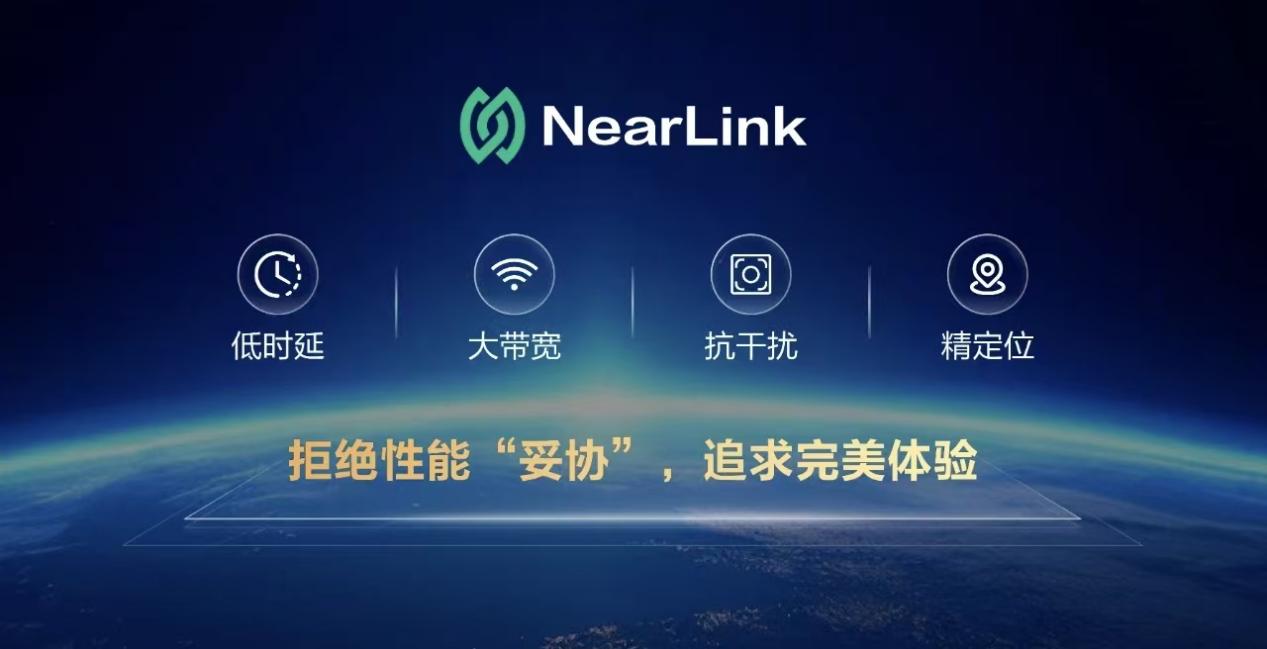
Core Insights - The year 2025 is marked as a watershed moment for the global wireless communication industry, with the launch of the Chinese-origin NearLink technology, which signifies a critical leap in industrial development [1][57]. Industry Overview - NearLink technology has transitioned from steady growth to explosive scale by 2025, with over 100 million terminal products expected to be equipped with this technology, indicating a shift from concept validation to large-scale commercialization [3][59]. - The International NearLink Alliance has grown to over 1,200 members, covering the entire industry chain from chip design to terminal applications, establishing a collaborative ecosystem [5][61]. Technological Advancements - NearLink technology integrates the advantages of traditional wireless technologies like Bluetooth and Wi-Fi, achieving six key capabilities: low latency, high bandwidth, strong anti-interference, precise positioning, integrated sensing, and high concurrency [10][66]. - The introduction of Polar codes enhances anti-interference capabilities by 7dB, significantly improving signal reception sensitivity and capacity [12][68]. - NearLink expands physical layer bandwidth to 4MHz and achieves a transmission rate of 12Mbps, which is six times faster than traditional Bluetooth [13][69]. Application Scenarios - In consumer electronics, NearLink is revolutionizing user experiences with high-speed interactions and lossless audio transmission, with over 50 products already utilizing this technology [19][75]. - In smart home applications, NearLink enables devices to transition from passive control to proactive sensing, enhancing user interaction and energy efficiency [36][92]. - In the automotive sector, NearLink is becoming a standard for digital car keys, improving accuracy and security in vehicle access [42][100]. Ecosystem Development - The strategic partnership between NearLink and the open-source HarmonyOS is fostering a synergistic ecosystem, enhancing device interconnectivity and user experience [47][103]. - The combined efforts of over 1,200 industry partners are driving the rapid adoption of NearLink technology, aiming to create a foundation for a trillion-dollar market in the AIoT era [5][61]. Future Outlook - NearLink aims to establish a robust ecosystem that supports 1 billion to 10 billion connections, marking a significant shift in the wireless communication landscape [54][110]. - The technology's evolution reflects China's transition from a follower to a leader in short-range wireless communication, paving the way for a new era of interconnected devices [55][111].
2026年家电以旧换新政策出台,有望提振家电消费景气
Guotou Securities· 2025-12-31 02:04
Investment Rating - The report assigns an "A" rating for the investment in major appliance companies such as Midea Group, Haier Smart Home, and Gree Electric Appliances, indicating a "Buy" recommendation with target prices of 94.68, 31.81, and 50.60 CNY respectively [4]. Core Insights - The 2026 appliance replacement policy is expected to boost consumer demand for home appliances, focusing on energy-efficient products and providing subsidies of 15% of the product price, capped at 1500 CNY per item [1][2]. - The 2026 policy has optimized the subsidy scope, reducing the number of supported appliance categories from eight to six, and lowering the subsidy rate from 20% to 15% for high-efficiency products [2][11]. - The first batch of funding for the 2026 policy amounts to 625 billion CNY, a 23% decrease from the previous year's 810 billion CNY, indicating a potential decline in total subsidy funds for the year [2][12]. Summary by Sections Policy Changes - The 2026 policy focuses on six categories: refrigerators, washing machines, televisions, air conditioners, computers, and water heaters, excluding other appliances like stoves and microwaves [2][11]. - The subsidy for high-efficiency products is now set at 15% of the sales price, with a cap of 1500 CNY per item, and consumers can only receive one subsidy per product category [2][11]. Market Impact - The 2025 replacement policy effectively stimulated appliance consumption, with retail sales of home appliances increasing by 14.8% year-on-year from January to November 2025, and over 12.84 million units replaced [3]. - The introduction of the 2026 policy is expected to improve domestic appliance sales, despite some pressure on consumption due to earlier demand release and high base effects [3][9]. Investment Recommendations - The report suggests focusing on three investment themes: 1. High-quality white goods companies with strong cash flow and high dividend yields, such as Midea Group and Haier Smart Home [9]. 2. Companies with strong global capabilities, particularly in emerging markets where appliance penetration is low [9]. 3. Technology-driven appliance companies that are expanding into new business areas, leveraging AI and robotics to enhance product offerings [9].



“AI闪耀中国”2025,在算法时代重塑人的光芒
Zhong Guo Jing Ji Wang· 2025-12-31 00:06
Core Insights - The speech by Wu Xiaobo highlights the transformative impact of AI on various industries in China, emphasizing the shift from experimental applications to practical, large-scale implementations. Group 1: AI Competition Landscape - The US and China are the two main players in the global AI competition, with the US focusing on foundational infrastructure and original innovations, while China leverages its manufacturing capabilities and application market for industrial applications [3] - The gap in large model capabilities between China and the US has narrowed from 20% last year to just 0.3%, marking a significant shift in the AI landscape [3] Group 2: Content Production Revolution - AI multi-modal technology is revolutionizing the content industry, reducing production cycles by over 80% and costs by 60-90% [5] - The content production capacity of silicon-based entities is now exceeding that of carbon-based humans, prompting individuals to reconsider their roles in the future [5] Group 3: Industry Transformation - AI is being integrated into various industries, with specific applications like AI-native mobile banking and smart decision-making in sectors such as mining and home decoration [5] - The concept of having an industry-specific large model for every sector is becoming a reality, indicating a shift from tools to scientific revolutions in business models [5] Group 4: Emergence of Intelligent Agents - The proliferation of intelligent agent tools is making personal AI assistants a reality, significantly enhancing knowledge management and office efficiency [6] - The era of AI belongs to those who effectively utilize these tools, positioning intelligent agents as efficiency pioneers for individuals [6] Group 5: Robotics Market Potential - China holds 65% of the global supply chain for embodied intelligence, with predictions of a trillion-dollar market for robotics in the next five years due to deep integration with AI [7] - The evolution of robots from mere machines to sensitive tools capable of complex tasks is highlighted [7] Group 6: Industrial 5.0 in China - China is defining Industrial 5.0, focusing on machine vision, deep learning, and comprehensive AI management, with 79 out of 189 global "lighthouse factories" located in China [9] - The country is positioned to become a leader in building AI industrial clusters in the coming decade [9] Group 7: E-commerce Transformation - The current e-commerce ecosystem is facing challenges due to high costs and inefficiencies, with AI set to reconstruct trade models and lower barriers for small businesses [11] - A shift towards "flow equity" in e-commerce is anticipated by 2026, allowing better product visibility and consumer empowerment [12] Group 8: AI in Service Industries - AI is penetrating service industries, enhancing experiences in sectors like healthcare and beauty, with examples of AI applications improving service quality and efficiency [14] - The emphasis is on the importance of adopting AI tools to remain competitive in various industries [14] Group 9: Consumer Electronics and AI - AI is enhancing everyday consumer products, with Chinese smart hardware gaining advantages over Western products due to manufacturing capabilities [15] - Companies are encouraged to build their industry-specific large models and open platforms to succeed in the future market [15] Group 10: New Entrepreneurship Era - A new wave of entrepreneurship is expected to emerge by 2026, driven by AI tools that enable small organizations to achieve productivity levels comparable to larger companies [16] - The establishment of a 60 million yuan angel investment fund aims to support this new entrepreneurial wave [16] Conclusion - The speech concludes with a reflection on the role of AI in empowering individuals and businesses, emphasizing the importance of curiosity and imagination in navigating the future landscape shaped by AI [18]

家用电器行业投资策略周报-20251230
CAITONG SECURITIES· 2025-12-30 13:17
Core Insights - The report maintains a positive outlook on the home appliance sector, particularly focusing on the cost reduction potential of aluminum replacing copper in air conditioning systems [2][5] - The adoption of aluminum-copper technology is seen as a significant step towards reducing production costs amid rising copper prices and resource scarcity [10][15] Group 1: Aluminum-Copper Technology Impact - The use of aluminum instead of copper in air conditioning units can lead to substantial cost savings, with estimates suggesting a reduction of 208 to 277 RMB per unit when replacing 50% of copper, and up to 416 to 554 RMB when replacing 100% [11][12] - Copper currently constitutes about 26% to 33% of the cost in standard air conditioning units, with high-end models reaching over 40% [11][12] - The global market has seen significant adoption of aluminum-copper products, particularly in Japan where approximately 40% to 50% of air conditioners use aluminum heat exchangers [15][16] Group 2: Domestic Market Challenges - Despite the cost advantages, the domestic promotion of aluminum-copper air conditioners faces challenges, including inferior thermal conductivity and corrosion resistance compared to copper [19][20] - Consumer perception is a major barrier, as negative opinions about aluminum's reliability persist, complicating market acceptance [19][20] - The first domestic aluminum-copper air conditioner was launched by Wanbao in collaboration with JD.com, targeting the mid-to-low-end market, which may help accelerate industry-wide material transitions [16][17] Group 3: Industry Performance and Trends - The home appliance sector has shown mixed performance, with the overall index increasing by 0.44%, while specific segments like white goods and black goods experienced varied changes [21][22] - Recent data indicates a decline in domestic sales growth for air conditioners, refrigerators, and washing machines, reflecting broader market challenges [33][47] - The report highlights the importance of monitoring raw material prices, with copper and aluminum prices showing significant fluctuations that could impact production costs [29][31]


CES 2026终极前瞻:机器人、芯片、显示技术全面爆发,中国军团最强阵容出征
3 6 Ke· 2025-12-30 11:24
Group 1 - CES 2026 will take place from January 6 to 9, 2026, in Las Vegas, showcasing the latest trends and innovations in consumer electronics and technology [1] - The event has evolved to cover a wide range of technology products, making it a leading global technology exhibition [1] - The focus of CES 2026 will be on AI, with various companies set to present their advancements in this area [1][2] Group 2 - Chinese brands are expected to make a significant impact at CES 2026, particularly in the smart cleaning robot sector, with companies like Dreame, Roborock, and Ecovacs showcasing their latest products [3][10] - Dreame plans to unveil two major technologies at CES 2026, including a "stair-climbing robot" and a future version of their cleaning robot featuring embodied intelligence technology [5][6] - Other notable participants include Stone and Ecovacs, with Stone teasing significant announcements and Ecovacs CEO scheduled to speak at the event [7] Group 3 - The competition in the lawn mowing robot market is intensifying, with companies like Navimow and Suton collaborating to showcase innovative solutions at CES 2026 [11] - The humanoid robot sector will also see participation from Chinese companies like Zhiyuan and Yuzhu, presenting their latest products and technologies [12][14] - Major global players such as Boston Dynamics and LG Electronics will also be present, highlighting the competitive landscape of the robotics industry [16] Group 4 - NVIDIA CEO Jensen Huang will present at CES 2026, focusing on AI technology advancements and product developments [17][20] - AMD CEO Lisa Su will also deliver a keynote, discussing the company's AI solutions and new product offerings, including the Ryzen AI 400 chip [26][27] - The event will feature a new stage setup, CES Foundry, where major tech companies will showcase their latest AI technologies and products [27] Group 5 - Display technology will be a key focus, with companies like TCL and Hisense presenting new innovations in OLED and Mini LED technologies [29][31] - The competition in the display sector will include major brands from Japan and South Korea, with Sony and LG expected to showcase their latest advancements [32][33] - Lenovo will host a high-profile innovation conference during CES 2026, featuring prominent figures from the tech industry [33][36] Group 6 - The automotive sector will see significant participation, with companies like Great Wall Motors and Faraday Future showcasing their latest technologies and products [37][39] - New entrants like Kosmera are expected to reveal high-performance electric vehicles, indicating a growing trend in the automotive market [41] - The event will also feature technology suppliers like Qualcomm, highlighting the integration of tech innovations in the automotive industry [41] Group 7 - Smaller niche brands in the digital accessories and audio equipment sectors, such as Ugreen and Shokz, are also expected to make their mark at CES 2026 [42][44] - AI technology will be prominently featured across various product categories, including smart glasses and kitchen appliances [45][50] - The overall participation of Chinese companies is anticipated to increase, potentially surpassing previous records set in 2018 [51][52]

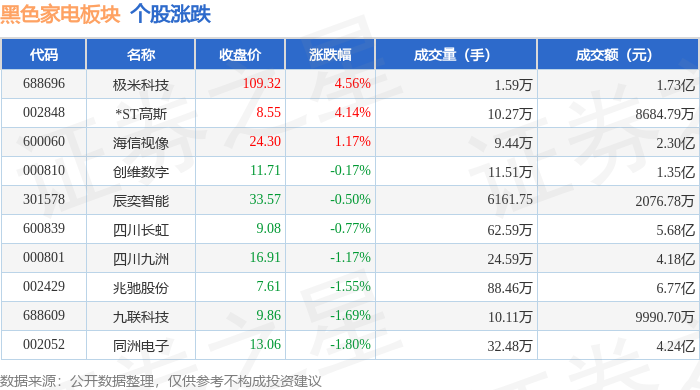
黑色家电板块12月30日跌0.36%,同洲电子领跌,主力资金净流出1.57亿元
Zheng Xing Xing Ye Ri Bao· 2025-12-30 09:00
| 代码 | 名称 | 收盘价 | 涨跌幅 | 成交量(手) | 成交额(元) | | | --- | --- | --- | --- | --- | --- | --- | | 688696 | 极米科技 | 109.32 | 4.56% | 1.59万 | | 1.73亿 | | 002848 | *ST高斯 | 8.55 | 4.14% | 10.27万 | | 8684.79万 | | 600060 | 海信视像 | 24.30 | 1.17% | 9.44万 | | 2.30亿 | | 000810 | 创维数字 | 11.71 | -0.17% | 11.51万 | | 1.35亿 | | 301578 | 辰奕智能 | 33.57 | -0.50% | 6161.75 | | 2076.78万 | | 600839 | 四川长虹 | 9.08 | -0.77% | 62.59万 | | 5.68亿 | | 000801 | 四川九洲 | 16.91 | -1.17% | 24.59万 | | 4.18亿 | | 002429 | 非驰股份 | 7.61 | -1.55% | 88.46万 | | ...