地平线

Search documents
地平线征程芯片量产出货突破1000万套
Guan Cha Zhe Wang· 2025-09-02 03:48
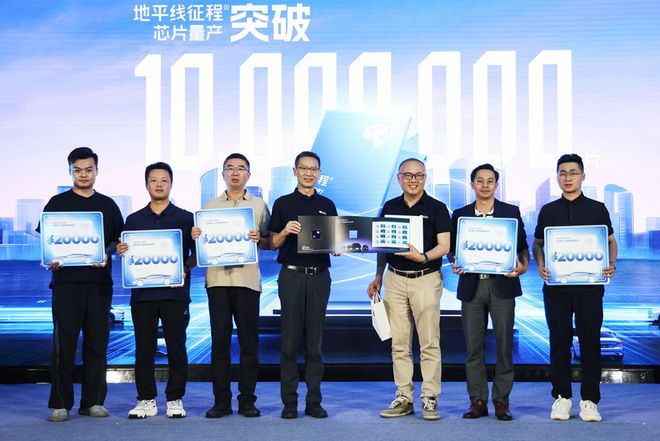
Group 1 - Horizon has launched the "Horizon Journey 10 Million Production Witness Ceremony" at the Chengdu International Auto Show, aiming to achieve over 10 million units of the Journey family chips by August 2025 [1] - The company has established partnerships with over 40 global automotive manufacturers, including China's top ten car companies, enabling over 400 vehicle models and serving more than 6 million users [3] - The Journey 6 series, set to begin mass production in 2025, is developed on the new BPU Nash architecture, covering a computing power range of 10-560 TOPS, catering to L2 to full-scene urban driving assistance needs [3] Group 2 - The high-performance flagship Journey 6P has a computing power of 560 TOPS, and the HSD urban driving assistance system is based on a one-stage end-to-end architecture with reinforcement learning capabilities [4] - The HSD system has already secured partnerships with over 10 vehicle models from various manufacturers, with the first collaboration model, the Starway ET5, set to be mass-produced in November 2025 [4] - The achievement of over 10 million units in production marks a new phase for China's intelligent driving industry, transitioning from the initial stage to large-scale commercialization and ecosystem collaboration [5]

4000人的自动驾驶社区,开学季招生了!!!
自动驾驶之心· 2025-09-02 03:14
Core Viewpoint - The article emphasizes the establishment of a comprehensive community focused on autonomous driving technology, aiming to provide valuable resources and networking opportunities for both beginners and advanced learners in the field [1][3][12]. Group 1: Community Structure and Offerings - The community has been focusing on nearly 40 cutting-edge technology directions in autonomous driving, including multimodal large models, VLM, VLA, closed-loop simulation, world models, and sensor fusion [1][3]. - The community consists of members from leading autonomous driving companies, top academic laboratories, and traditional robotics firms, creating a complementary dynamic between industry and academia [1][12]. - The community has over 4,000 members and aims to grow to nearly 10,000 within two years, serving as a hub for technical sharing and communication [3][12]. Group 2: Learning and Development Resources - The community provides a variety of resources, including video content, articles, learning paths, and Q&A sessions, to assist members in their learning journey [3][12]. - It has organized nearly 40 technical routes for members, covering various aspects of autonomous driving, from entry-level to advanced topics [3][12]. - Members can access practical solutions to common questions, such as how to start with end-to-end autonomous driving and the learning paths for multimodal large models [3][12]. Group 3: Networking and Career Opportunities - The community facilitates job referrals and connections with various autonomous driving companies, enhancing members' employment opportunities [8][12]. - Regular discussions with industry leaders and experts are held to explore trends, technological directions, and challenges in mass production [4][12]. - Members are encouraged to engage with each other to discuss academic and engineering-related questions, fostering a collaborative environment [12][54]. Group 4: Technical Focus Areas - The community has compiled extensive resources on various technical areas, including 3DGS, NeRF, world models, and VLA, providing insights into the latest research and applications [12][27][31]. - Specific learning paths are available for different aspects of autonomous driving, such as perception, simulation, and planning control [12][13]. - The community also offers a detailed overview of open-source projects and datasets relevant to autonomous driving, aiding members in practical applications [24][25].

英伟达新一代芯片预计26年出货,台积电预计Q4量产2nm | 投研报告
Zhong Guo Neng Yuan Wang· 2025-09-02 01:33
Market Overview - The overseas AI chip index decreased by 1.44% this week, with Marvell down 13.88%, AMD down 3.06%, and Nvidia down 2.14%. MPS and TSMC experienced declines of less than 1% [1][2] - The domestic AI chip index increased by 11.3%, with companies like Rockchip, Loongson Technology, and Cambricon rising over 20%. Tongfu Microelectronics rose by 9.46%, SMIC by 8.06%, and GigaDevice by 5.37%. Aojie Technology saw a decline of 7.53% [1][2] - The Nvidia mapping index rose by 18.9%, with Changxin Technology up 39.07% and Megmeet up 29.09%. Other companies like Huadian Technology, Invec, Shenghong Technology, and Jianghai Technology also saw increases of over 20%, while Jingwang Electronics and Industrial Fulian rose around 17% [2] Industry Data - The expected compound annual growth rate (CAGR) for the semiconductor industry from 2024 to 2030 is 12.8%, with smartwatches showing competitive advantages in health data monitoring due to screen and sensor capabilities [3] - In Q2 2025, the DRAM revenues for SK Hynix, Samsung Electronics, and Micron are projected to be $12.2 billion, $9.6 billion, and $7.1 billion respectively, with SK Hynix expected to surpass Samsung in revenue starting Q4 2024 [3] - The European smartphone market is projected to see a 9% year-on-year decline in Q2 2025, with Samsung, Apple, and Xiaomi experiencing declines of 10%, 4%, and 4% respectively [3] Major Events - The Ministry of Industry and Information Technology issued guidelines aiming for over 10 million satellite communication users by 2030, promoting large-scale applications of mobile direct satellite services [4] - Tesla's humanoid robot, Optimus, is being trained using a pure vision approach, consistent with its autonomous driving technology strategy [4] - Horizon's revenue for the first half of 2025 reached 1.567 billion yuan, a year-on-year increase of 67.6%, with market shares for ADAS and autonomous driving solutions at 45.8% and 32.4% respectively [5]



地平线前副总裁张玉峰创办「无界动力」,押注双臂轮式机器人
雷峰网· 2025-09-01 10:21
Core Insights - Zhang Yufeng, former Vice President of Horizon Robotics, has founded a new company called Wujie Power, focusing on the B-end industrial scene with a product line of dual-arm wheeled robots [2][3] - The trend of talent migration from intelligent driving to the robotics sector is evident, as another former executive, Yu Yinan, has also left Horizon to start a consumer robotics company [2][3] Group 1 - Zhang Yufeng's background includes a Master's degree in Engineering and an MBA, with previous roles at global semiconductor giants like SONY and ARM [3] - At Horizon, Zhang was responsible for global business development and built an international customer network across the US, Europe, Japan, and South Korea [3] - He led the development of key products such as Horizon Matrix for autonomous driving and Horizon Halo for in-car interaction [3] Group 2 - The emergence of Wujie Power and the departure of key executives from Horizon Robotics indicate a significant shift in the robotics industry, particularly in the context of intelligent driving talent moving towards robotics [2][3]
亏损超7亿,国产智驾第一股掉队了
3 6 Ke· 2025-09-01 10:04
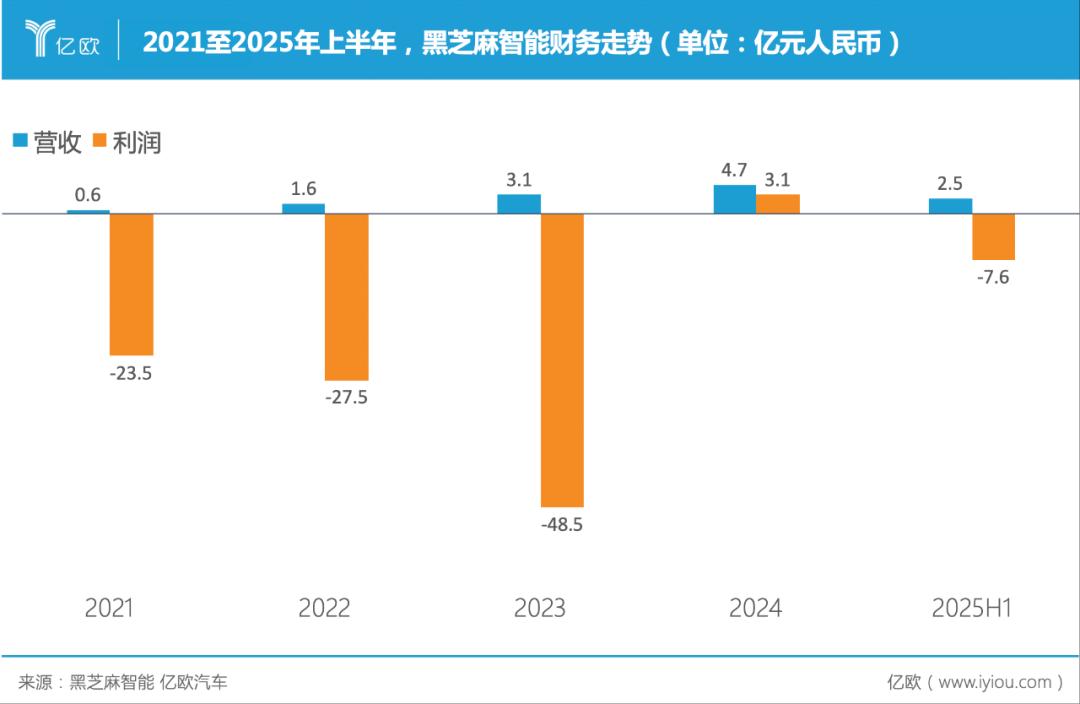
Core Viewpoint - The article highlights the challenges faced by Hezhima Intelligent, the leading Chinese smart driving chip company, due to increasing competition from self-research initiatives by major automotive manufacturers and a lack of significant high-quality clients compared to competitors like Momenta and Horizon Robotics [1][4][10]. Company Performance - Hezhima reported a net loss of 760 million RMB for the first half of 2025, a 169% increase year-on-year, despite a revenue of 250 million RMB, which represents a 40.4% increase compared to the previous year [4][5]. - The company had previously warned of expected losses not exceeding 800 million RMB for the same period, attributing the losses to employee stock-based compensation, R&D expenses, and reduced fair value gains on financial instruments [5][12]. Industry Context - The Chinese assisted driving industry continues to grow, with L2 and above assisted driving function installation rates in passenger vehicles increasing from 66.4% to 82.6% year-on-year, a rise of 16.2 percentage points [5]. - Major competitors like Momenta and Horizon Robotics are advancing their self-research chip capabilities, with Momenta's chip set to compete with high-performance chips from NVIDIA and Qualcomm [8][10]. Competitive Landscape - Hezhima's client base is relatively weak compared to competitors, with significant clients like BYD and Geely not fully leveraging Hezhima's chips in their popular models [11][15]. - The performance of Hezhima's A1000 chip, with a computing power of 58 TOPS, is significantly lower than competitors like Horizon's 128 TOPS and NVIDIA's 254 TOPS, making it less attractive to automakers [19][20]. Future Outlook - The trend of automotive manufacturers developing their own chips poses a significant threat to all chip suppliers, including Hezhima, as companies like Tesla, Huawei, and various domestic automakers are increasingly integrating their hardware and software solutions [22][23][24]. - Hezhima's revenue for 2024 is projected to be under 500 million RMB, raising concerns about its ability to survive in a rapidly evolving market [25].
稳坐中国智驾头把交椅?地平线营收大涨的背后藏着什么?
Hu Xiu· 2025-09-01 07:16
Core Insights - The company Horizon has reported its financial results for the first half of the year, indicating significant progress in the autonomous driving sector [1] Company Summary - Horizon is a key player in the autonomous driving industry, and its recent financial performance suggests that the era of assisted driving is approaching [1]
新能源车销量占比今年底有望超燃油车!贸促会王侠:智能化正成为推动汽车产业发展的新动力
Mei Ri Jing Ji Xin Wen· 2025-09-01 04:21
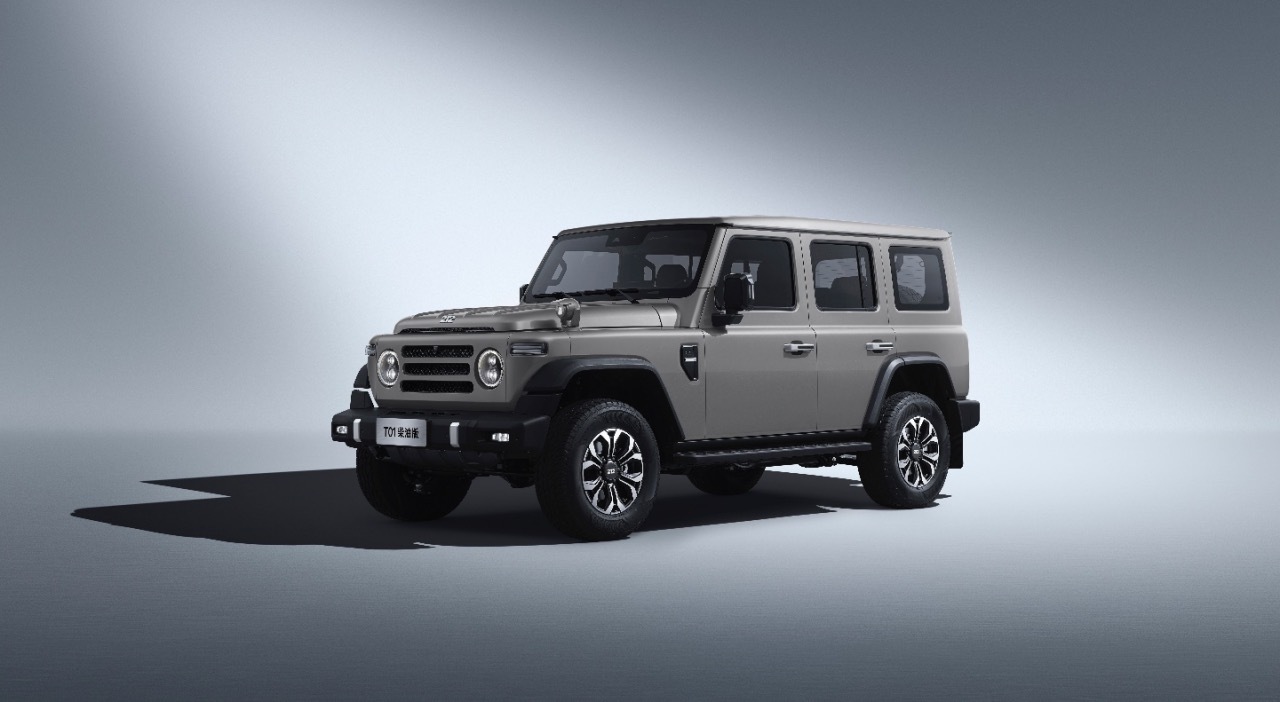
Group 1 - The penetration rate of L2-level assisted driving in new cars in China is expected to reach nearly 60% by 2024, with a forecast of two-thirds by the end of this year [1] - The installation rate of smart cockpits is projected to exceed 70% in 2024 and is expected to surpass 80% this year [1] - In the first seven months of this year, the sales proportion of new energy vehicles (NEVs) in China reached 45%, with expectations to surpass traditional fuel vehicles by the end of the year [1] Group 2 - The growth rate of NEV sales has decreased from 157% in 2021 and 95% in 2022 to around 30%, indicating a weakening effect on overall automotive sales growth [1] - Traditional fuel vehicles face challenges in becoming intelligent, primarily due to electronic and electrical architecture rather than energy type [1] - There is a consensus among industry players that traditional automakers and tech companies should leverage each other's strengths to create a healthier industry ecosystem [1] Group 3 - Many automakers are adopting a "hybrid" strategy, showcasing both new energy models and actively promoting the intelligent upgrades of fuel or hybrid vehicles [2] - Examples include Ford's intelligent driving features in both its extended-range and pure electric models, and the T01 off-road vehicle equipped with advanced safety and interaction features [2] Group 4 - The debate between full-stack self-research and collaborative partnerships remains a hot topic in the industry [4] - Some experts argue that while traditional automotive industries have relied on partnerships for over 140 years, the success of companies like Tesla and Huawei in the AI-driven era highlights the advantages of full-stack self-research [4] - Other industry representatives advocate for collaboration to reduce risks and accelerate implementation, especially as intelligent driving features have not yet stabilized [4][6] Group 5 - Full-stack self-research can create technological barriers and brand protection, but it requires significant investment and carries high risks [6] - Many industry professionals believe that intelligent driving is still rapidly evolving, and the choice between full-stack self-research and collaborative partnerships depends on the stage and strategy of different companies [6]

“智”问下半场:做好科技平权与和谐共生
Zhong Guo Qi Che Bao Wang· 2025-09-01 03:17
Group 1 - The automotive industry is experiencing a transformation with the integration of AI technologies, particularly in the areas of L3 autonomous driving and Robotaxi, which are entering a critical phase of commercialization [1][5] - The shift from electric vehicle growth to a focus on intelligent technology is evident, as the industry faces challenges in globalization and regulatory upgrades [1][5] - The need for high-quality development over mere quantity is emphasized, with a call for the industry to embrace low growth while pursuing technological advancements [3][4] Group 2 - The concept of "technology equity" is highlighted, stressing that it should not be mistaken for free access but rather a means to lower costs and enhance consumer experience [6][7] - Companies are encouraged to focus on user needs and avoid overwhelming consumers with technical jargon, promoting a clearer understanding of technology's value [7][8] - The automotive ecosystem is diversifying, with some companies opting for full-stack self-research while others collaborate with tech firms to enhance product competitiveness [8][9] Group 3 - The balance between full-stack self-research and collaborative partnerships is crucial for the industry's future, as both models will coexist [9][10] - Companies must focus on their strengths and collaborate on core components like chips and sensors to optimize their offerings [10]

“智驾平权”加速到来 智能网联汽车产业基础迎来“攻坚”阶段
Mei Ri Jing Ji Xin Wen· 2025-08-31 06:40
Core Insights - The era of "intelligent driving equality" is accelerating, with a focus on core industry foundations such as operating systems and chips entering a critical phase [1] - The development of intelligent connected vehicles in China faces challenges, including the need for breakthroughs in core technologies and the establishment of a complete data system [2][3] - The consensus in the industry is shifting towards open-source solutions for vehicle software systems, although there are risks of ecological fragmentation [2][6] Industry Developments - The 2025 Intelligent Vehicle Basic Software Ecological Conference and the Fourth China Automotive Chip Conference were held in Chongqing, highlighting the importance of integrated development of software and hardware [1] - As of 2025, Changan Automobile plans to stop developing non-intelligent new products and aims to launch 35 smart vehicles in the next three years, with full scene L3 autonomous driving by 2026 and L4 by 2028 [3] - The open-source movement is gaining traction, with companies like Li Auto and Dongfeng Motor launching their own open-source operating systems [6] Challenges and Recommendations - Current issues in the intelligent connected vehicle sector include insufficient safety reliability, incomplete data systems, and a lack of a profitable business model [2][3] - Experts suggest that leading companies should adopt a long-term perspective, integrate vehicle-grade chips and basic software, and promote the establishment of technical standards [3][7] - The focus should be on creating a unified operating system baseline and developing a collaborative ecosystem to avoid fragmentation [7]



「地平线」副总裁张玉峰与滴滴高管联手创业,入局具身智能赛道!
Robot猎场备忘录· 2025-08-31 00:31
Core Viewpoint - The article discusses the emergence of a new startup, "Wujie Power," founded by Zhang Yufeng, former Vice President of Horizon Robotics, focusing on embodied intelligence in industrial applications with dual-arm wheeled robots. This trend reflects a broader movement of professionals from the autonomous driving sector transitioning into the embodied intelligence field, leading to significant investment interest and rapid funding rounds in this space [3][8]. Group 1: Company Developments - Zhang Yufeng, former Vice President of Horizon Robotics, has founded "Wujie Power," which is set to complete its first round of financing soon [3]. - "Wujie Power" was established on March 21, 2025, with a registered capital of 100,000 yuan, and is located in Beijing [5]. - The company is focusing on B2B industrial scenarios and is developing dual-arm wheeled robots [3]. Group 2: Industry Trends - Since Q4 2024, many professionals from the autonomous driving sector have left their positions to start companies in the embodied intelligence field, indicating a trend of "bringing capital to the field" [8]. - Numerous startups in the embodied intelligence sector, such as "Tashizhi Hang," "Zhi Ping Fang," and "Vita Power," have completed significant funding rounds, with "Tashizhi Hang" raising over 1.7 billion yuan within five months without any product launch [8]. - The embodied intelligence sector is becoming crowded with talent from automotive and autonomous driving backgrounds, with 15 well-known automotive companies entering the humanoid robot space, 11 of which are based in China [10]. Group 3: Market Dynamics - The article highlights that the entry of automotive companies into the humanoid robot market is driven by their existing advantages in supply chain and large-scale manufacturing [11]. - The overlap in technology paths between autonomous driving and humanoid robots is noted, with the current commercial viability of humanoid robots being questioned due to the lack of established revenue streams [11]. - The article suggests that the influx of automotive and tech professionals into the embodied intelligence sector may be a response to the challenges faced in the autonomous driving industry [11].