一汽

Search documents
银轮股份(002126):汽车热管理龙头 拓展算力、机器人新成长曲线
Xin Lang Cai Jing· 2025-12-02 00:33
Core Viewpoint - The company, a leader in automotive thermal management, is expanding into new growth areas such as data centers and robotics, showing strong revenue and profit growth with a compound annual growth rate (CAGR) of 22% in revenue and 43% in net profit from 2022 to 2024 [1] Group 1: Business Expansion and Growth - The company has diversified its business into four growth curves: commercial vehicle off-road, new energy thermal management, digital and energy thermal management, and artificial intelligence and robotics [1] - The passenger vehicle segment is leading the growth, while the digital energy business is rapidly expanding, and the commercial vehicle and off-road segments are providing stable contributions [1] - The company has achieved a historical high in overseas revenue, which accounted for 24% of total revenue in the first half of 2025, with significant improvements in profitability from international operations [1] Group 2: Digital Energy and AI Cooling - The demand for liquid cooling in data centers is expected to accelerate, driven by high capital expenditures in the domestic internet sector and AI applications [2] - The company has secured 301 orders for data center liquid cooling systems, with a total capacity of 500 MW, indicating a strong market presence [2] - The digital and energy segment is projected to contribute an additional annual sales revenue of 637 million yuan after mass production [2] Group 3: Acquisition and Strategic Moves - The company plans to acquire a controlling stake in Deep Blue Co., focusing on energy storage temperature control and HVAC systems, which will enhance its capabilities in data center liquid cooling and energy storage [3] - The automotive sector is transitioning towards electrification and intelligence, increasing the thermal management value per vehicle, with the penetration rate of new energy vehicles in China expected to reach 56% in 2025 [3] Group 4: Market Position and R&D - The company has established a comprehensive product layout, including battery thermal management systems and various components, with over 1,000 effective patents and a research and development expense ratio of over 4% [4] - The company has entered the supply chains of numerous leading domestic and international clients, including major automotive manufacturers [4] - The humanoid robotics market is anticipated to grow significantly, with the company positioning itself to leverage synergies between robotics and automotive clients [4][5] Group 5: Financial Projections - The company is expected to achieve revenues of 15.211 billion yuan, 17.952 billion yuan, and 20.978 billion yuan from 2025 to 2027, with year-over-year growth rates of 19.8%, 18.0%, and 16.9% respectively [6] - The projected net profits for the same period are 973 million yuan, 1.255 billion yuan, and 1.577 billion yuan, with year-over-year growth rates of 24.2%, 29.0%, and 25.7% respectively [6]

11月压力大!车企销量看环比就露馅
Jing Ji Guan Cha Bao· 2025-12-01 15:03
Group 1 - The Chinese automotive market remains strong in November, but the impact of subsidy reductions is spreading beyond price-sensitive consumers, leading to a general delay in purchasing decisions [2] - NIO's CEO Li Bin noted a significant drop in new orders across the industry in November, with consumers adopting a wait-and-see approach [2] - BYD's sales in November reached 480,000 units, a year-on-year decline of 5.25%, indicating a shift from rapid growth to a need for structural adjustment [2] Group 2 - Geely's sales in November were 310,000 units, a year-on-year increase of 24%, supported by multiple product lines [3] - SAIC's overall sales reached 316,000 units, with a growth rate of 9.5%, indicating a stable performance across its brands [3] - Great Wall and Chery maintained steady sales, with Great Wall selling 133,200 units (up 4.57%) and Chery selling 255,800 units (down 2%) [3] Group 3 - The new energy vehicle segment is gaining traction among state-owned enterprises, with Dongfeng's Lantu surpassing 20,000 units in November [4][5] - Traditional brands like FAW showed stable performance, with total sales of 306,000 units in November, including a significant increase in new energy vehicle sales [5] Group 4 - Huawei's automotive strategy is evolving, with its smart vehicle delivery reaching 81,864 units in November, reflecting its growing influence in the industry [6] - The competition is shifting from vehicle-to-vehicle to ecosystem-to-ecosystem, highlighting the importance of integrated capabilities [6] Group 5 - New entrants like Leap Motor delivered 70,327 units in November, marking a year-on-year growth of over 75%, positioning themselves as significant competitors [6] - Xiaomi maintained stable delivery levels above 40,000 units, while XPeng and NIO also reported strong growth in November [7] Group 6 - The automotive market is entering a phase that tests companies' capabilities, with consumers becoming more discerning and extending their decision-making processes [8] - The focus of competition is shifting from subsidies to long-term brand value, supply chain stability, and technological advancement [9]







智能驾驶双轨演进:政策“破冰”激活技术“竞速”
Zhong Guo Qi Che Bao Wang· 2025-12-01 09:19
Core Insights - The integration of intelligent driving technology is reshaping lifestyles at an unprecedented pace, driven by advancements in artificial intelligence and a unique market environment in China [1][3] - The Chinese intelligent driving industry is transitioning from a phase of rapid growth to one of high-quality development, with regulatory frameworks being strengthened alongside pilot programs for higher-level autonomous driving [3][4] - The rapid adoption of electric vehicles is providing an optimal platform for intelligent driving technologies, creating a virtuous cycle between electrification and intelligence [4][6] Industry Trends - The emergence of cognitive intelligence technologies is transforming intelligent driving from a rule-based tool to a cognitive-driven entity, with new architectures like end-to-end and VLA opening new possibilities for high-level autonomous driving [3][5] - The intelligent driving sector is witnessing a clear focus on L4-level scenario-based applications, with significant investments directed towards areas like unmanned delivery and logistics [6][7] - Key components of the supply chain, such as sensor manufacturers and chip companies, are receiving substantial funding, highlighting their foundational role in the development of autonomous driving [7] Regulatory Environment - The regulatory landscape is evolving, with policies being introduced to facilitate the testing and commercialization of L3-level and above autonomous driving technologies in multiple cities [3][4] - The dual approach of relaxing pilot programs while simultaneously enhancing regulatory frameworks is creating clearer competitive advantages for companies with core competencies [3][4] Investment Landscape - Investment activities in the intelligent driving sector are increasingly concentrated in later-stage financing, indicating a shift from technology validation to large-scale commercial applications [7] - Traditional automotive companies are actively participating in investments to address technological gaps, while collaborations within the supply chain are emerging to build ecological advantages [7] Future Outlook - The competition in intelligent driving is entering a new phase where success will depend on the ability to integrate technology, compliance, and commercialization effectively [9] - The industry is at a historical turning point, with the potential for new industry giants to emerge from the convergence of technology, policy, and market dynamics [8][9]
被遗忘的商汤绝影
自动驾驶之心· 2025-11-30 02:02
Core Viewpoint - The article discusses the challenges and dynamics faced by the autonomous driving sector, particularly focusing on the company SenseTime's subsidiary, Absolute Shadow, as it seeks external financing amidst a tightening market environment [4][5][20]. Group 1: Market Dynamics - The autonomous driving battlefield is entering a critical phase, with significant events such as the announcement of a 3.6 billion financing round by another player, indicating a narrowing financing environment [5]. - Absolute Shadow is seen as a unique player outside the final competition circle, struggling to secure its position in a market dominated by tech giants and established automotive manufacturers [6][10]. Group 2: Company Positioning - Absolute Shadow is categorized among three types of companies in the autonomous driving landscape: those incubated by tech giants, those supported by automotive manufacturers, and those founded by star entrepreneurs [6]. - The company has faced challenges in becoming a core platform provider, with its product lines significantly reduced and a focus on specific platforms like Horizon and NVIDIA [24][26]. Group 3: Talent and Management Issues - The company has experienced significant turnover in its leadership, impacting its ability to meet the demands of long-term production cycles [27]. - Frequent changes in management have led to a disconnect between the algorithm and engineering teams, hindering the transition from theoretical models to practical applications [31]. Group 4: Customer Relationships - Absolute Shadow's customer base primarily consists of secondary suppliers, with its largest client, Nezha Auto, facing operational challenges that jeopardize future orders [28][29]. - The company has attempted to attract clients through innovative delivery models but risks being marginalized as competitors solidify their partnerships [29]. Group 5: Financial Viability and Future Outlook - The company has struggled with profitability, with most of its revenue coming from low-margin products rather than high-value autonomous driving solutions [31]. - Despite its challenges, Absolute Shadow retains potential value in areas like AI infrastructure and multi-modal interactions, although it has fallen behind in the autonomous driving sector [32][33].

40年来首次!大众中国摆脱总部造车
汽车商业评论· 2025-11-26 23:07
Core Insights - Volkswagen is redefining its competitive pace in the Chinese market with a new R&D hub in Hefei, investing €2.5 billion (approximately $2.9 billion) and covering 100,000 square meters, featuring over 100 advanced laboratories [4][6][11] - The company has shifted from the traditional "German R&D, Chinese production" model, allowing its Chinese operations to complete the entire vehicle manufacturing process without headquarters approval for the first time in its history [6][11] - Volkswagen aims to enhance local verification and efficiency, with a new software-defined vehicle development process expected to increase speed by 30% and reduce costs by 50% [11][12] Group 1: Market Challenges and Strategic Shifts - Volkswagen lost its leading position in the Chinese market in 2022, with a projected 34% year-on-year decline in electric vehicle sales by mid-2025, totaling 1.31 million units across all drive types [14][15] - The profit from the Chinese market has drastically decreased from over €4 billion in 2018-2019 to an expected less than €1 billion by 2025 [15] - Local competitors have significantly increased their market share in the new energy vehicle sector, rising from 35% in 2019 to over 90% currently [16][18] Group 2: Leadership and Strategic Goals - Ralf Brandstätter, who took over Volkswagen's China operations in 2022, is central to the company's transformation strategy, shifting focus to "rooted in China, serving China" [18][19] - Volkswagen plans to launch 40 new models in China from 2025 to 2027, with 20 being electric vehicles, aiming to regain its position as the largest international car manufacturer in the Chinese market [23][24] - The financial target is to increase the contribution of the Chinese region to operating profit back to €2 billion by 2027, emphasizing profitability over market share [24][26] Group 3: Product Development and Innovation - Volkswagen is advancing its product strategy, with plans to launch the ID.Unyx 08 in collaboration with XPeng Motors in 2026, marking its most intelligent model to date [32] - The company showcased three production-level smart electric vehicles at the Shanghai International Auto Show, targeting various market segments [33][35][36] - Volkswagen is also developing a "super fast charging" network in collaboration with XPeng Motors, aiming to establish 20,000 charging stations across 420 cities in China [40] Group 4: Global Strategy and Export Plans - Volkswagen is upgrading its Chinese base to serve as a strategic hub for emerging global markets, beginning exports of fuel luxury cars to the Middle East and evaluating further opportunities in Southeast Asia [43][46] - The company has no plans to export vehicles manufactured in China to Europe or North America, as it maintains production capabilities in those regions [47] - Volkswagen views China not just as a market or production base but as a source of innovation and a critical platform for enhancing global competitiveness [48][49]

零跑汽车曹力:明年100万辆年销目标“有信心完成”
Bei Ke Cai Jing· 2025-11-22 08:36
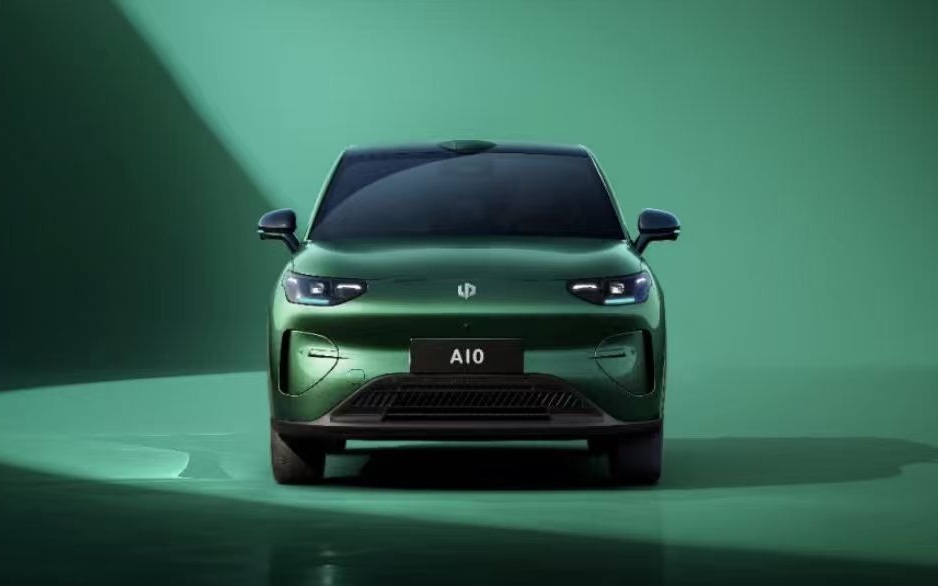
Group 1 - The core viewpoint of the article highlights the challenges and confidence of Leap Technology in achieving its sales targets for 2026, despite external and internal pressures [1] - Leap Technology's new model, the Leap A10, was launched at the Guangzhou International Auto Show, completing its product matrix across four major series (A, B, C, D) and marking a new phase of full coverage in mainstream market segments [1] - The Leap A10 features impressive specifications, including a 500km CLTC range, dual flagship chips (Snapdragon 8295P and 8650), comprehensive intelligent assistance, and an 88.1% space utilization rate [1] Group 2 - Leap Technology aims to double its overseas sales target to over 100,000 units next year, with a current target of 50,000 units for this year [1] - The company plans to expand its network and enhance its product lineup in overseas markets, with models like T03, C10, B10, and the upcoming Lafa5 and C16 [1] - Leap Technology has signed a strategic cooperation agreement with FAW, focusing on joint product development and exploring potential capital collaboration [2]
崔东树:10月全国汽车市场总体走势较强 商用车市场现结构性增长
智通财经网· 2025-11-15 11:46
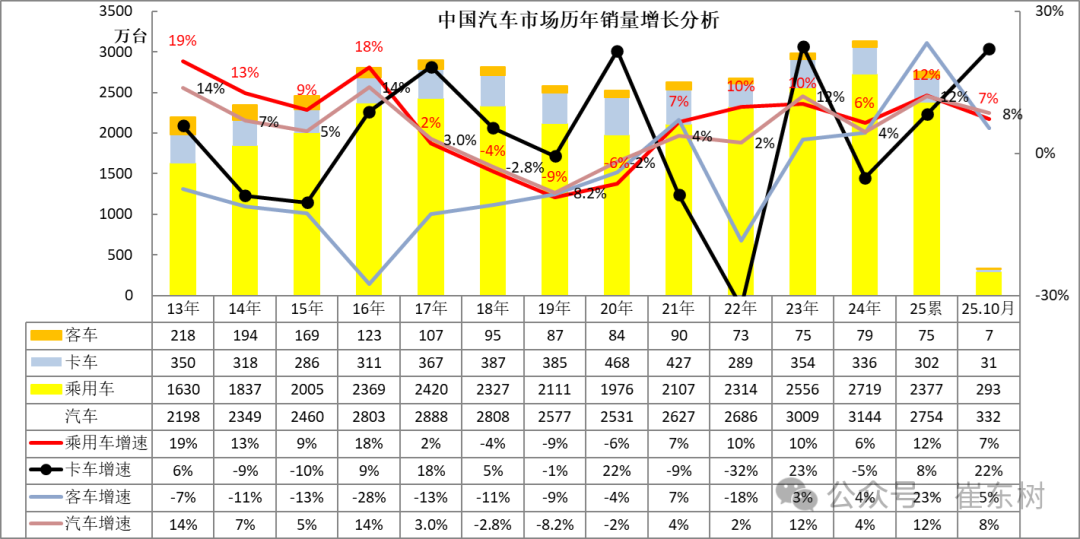
Core Insights - The automotive market in China is experiencing strong growth driven by government policies promoting consumption, with significant recovery observed in both truck and passenger vehicle markets in October [1] - Retail sales of passenger vehicles showed negative growth in October due to slower wholesale transmission, while manufacturer sales remained strong due to exports and inventory increases [1] - The new energy vehicle (NEV) segment is performing well, with structural growth in the commercial vehicle market driven by electrification [1] Group 1: Market Trends - The automotive market is expected to see a divergence in trends between passenger and commercial vehicles by 2025, with passenger vehicle growth projected at 13% due to policy support [2][4] - In the first ten months of 2025, total automotive sales reached 27.52 million units, with a cumulative growth rate of 12% [6] - October 2025 saw total automotive sales of 3.32 million units, a year-on-year increase of 9% [6] Group 2: Company Performance - There is a significant performance divergence among major automotive groups, with state-owned enterprises facing challenges while companies like BYD and Chery are performing well [9][12] - In October, manufacturers like Geely and BYD showed strong month-on-month performance, while SAIC Volkswagen faced substantial year-on-year adjustments [15] - The market is witnessing a shift where private enterprises are increasingly replacing state-owned enterprises as industry leaders, with companies like Geely, BYD, and Chery maintaining high growth rates [12][13] Group 3: New Energy Vehicles - In the first ten months of 2025, new energy passenger vehicle sales reached 12.07 million units, reflecting a year-on-year increase of 30% [25] - October 2025 saw new energy passenger vehicle sales of 1.62 million units, a year-on-year increase of 18% [25] - The growth in new energy vehicles is supported by scrappage subsidies, manufacturer price reductions, and the introduction of new models [25] Group 4: Traditional Vehicles - Traditional fuel passenger vehicle sales in 2023 remained stable at 16.66 million units compared to 2022, but are projected to decline by 10% in 2024 [30] - The market for traditional vehicles is under pressure due to ongoing declines, although there has been some recent recovery from June to October [30] Group 5: Commercial Vehicles - In 2023, total truck sales reached 3.54 million units, with a cumulative growth rate of 19% [39] - October 2025 saw truck sales of 310,000 units, a year-on-year increase of 22% [39] - The commercial vehicle market is experiencing strong performance from leading manufacturers, particularly in the electric truck segment [41]

苏州高新区冲刺“金秋经贸招商季”
Xin Hua Ri Bao· 2025-11-13 20:49
Group 1 - Suzhou High-tech Zone is launching an investment promotion campaign focusing on the automotive industry, engaging with companies like BYD and NIO for deep cooperation [1] - The region is leveraging the "Golden Autumn Economic and Trade Investment Season" to drive breakthroughs in automotive technology, new consumption, and digital economy sectors [1] - Recent events include a series of targeted investment activities, such as the Nanjing Digital Industry Exchange and Jilin University project matching, aimed at precise investment promotion [1] Group 2 - The "Zhihui Su Gao Xin" innovation and entrepreneurship competition has attracted 21 outstanding projects, focusing on core industries like photonics and integrated circuits [2] - Suzhou High-tech Zone is increasing its outreach efforts, visiting major cities to engage with well-known groups and facilitate project implementation [2] - The region is establishing a global investment network, conducting over 10 high-level "cloud dialogues" with Fortune 500 companies to showcase its industrial advantages and development potential [2] Group 3 - Investment personnel are implementing a "list management, project promotion" strategy to tailor solutions for key projects, aiming for a rolling development model of planning, signing, and landing projects [3] - Future initiatives will focus on optimizing investment strategies and hosting more specialized investment activities in sectors like cross-border e-commerce and biomedicine [3] - The strategy includes leveraging existing enterprises to create application scenarios that facilitate technological innovation and regional high-quality development [3]

阿尔特(300825) - 300825阿尔特投资者关系管理信息20251113
2025-11-13 13:04
Group 1: Company Overview - Altec Automotive Technology Co., Ltd. is the largest independent automotive design company in Asia and the only automotive design company listed on A-shares [2][3] - The company has over 20 years of experience in full-process vehicle and platform R&D, with 1,992 patents and 68 copyrights as of mid-2025 [3] - Altec has developed nearly 500 vehicle models for over 80 clients [3] Group 2: Core Business Areas - The company focuses on full-process vehicle R&D, core component R&D and manufacturing, and new energy vehicle systems [4] - Altec has established a product matrix covering automotive power systems, small batch production, high-voltage systems for new energy vehicles, and automotive electronics [4] - The company aims to expand its overseas business, targeting markets in Japan, Southeast Asia, and the Middle East [4] Group 3: Competitive Advantages - Altec's core competencies include leading technical strength, high-standard talent configuration, full-stack development capabilities, and significant industry recognition [7] - The company has a robust team of over 100 international automotive R&D experts [7] - Altec's strategic partnerships with Japanese clients enhance its market position and facilitate entry into European markets [7][8] Group 4: Financial Performance and Future Outlook - In the first half of 2025, Altec's overseas revenue was RMB 0.66 billion, accounting for 12.54% of total revenue [7] - The company is optimistic about increasing its overseas revenue share as it secures more international orders [7] - Altec plans to maintain its R&D investment to adapt to industry changes and enhance its service capabilities [9] Group 5: Industry Trends - The autonomous driving industry is experiencing rapid technological advancements driven by chip and algorithm iterations, with a focus on L0-L5 classification [5] - The market is seeing the commercialization of unmanned logistics vehicles and the demonstration operation of unmanned taxis [5] - Policy support is accelerating industry standardization through regulations and pilot programs [5]

固态电池设备行业深度报告:产业化进程加速
材料汇· 2025-11-12 15:48
Core Viewpoint - Solid-state batteries exhibit superior performance and have a wide range of applications, with accelerated industrialization processes both domestically and internationally [5]. Group 1: Advantages of Solid-State Batteries - Solid-state batteries have higher energy density and better safety compared to liquid batteries, with energy density expected to reach over 500 Wh/kg [15][11]. - They can operate under extreme conditions without the risk of combustion or explosion due to the use of non-volatile solid electrolytes [15]. - The design of battery cells, modules, and systems is simplified due to the non-flowing nature of solid electrolytes, optimizing the PACK design [15]. Group 2: Solid Electrolyte Technologies - Solid electrolytes are the core component of solid-state batteries, with various technology routes including polymers, oxides, sulfides, and halides, with sulfides being the most widely accepted due to their high ionic conductivity [16][14]. - Each type of solid electrolyte has its advantages and disadvantages, with sulfides offering excellent processing advantages and flexibility [16]. Group 3: Production Challenges - The mass production of solid-state batteries faces challenges such as the interface contact between solid electrolytes and electrodes, as well as the engineering issues related to cost reduction [19][22]. - Key challenges include ensuring the stability of the solid-solid interface and the large-scale preparation of sulfide solid electrolytes, which significantly impact the commercial viability of solid-state batteries [22][19]. Group 4: Domestic and International Industry Landscape - Major domestic battery manufacturers have clarified their technology routes, focusing on sulfide electrolytes and aiming for small-scale production by 2027, with energy density targets around 400 Wh/kg [26][23]. - Internationally, companies in the US and Japan are advancing rapidly, with many planning to achieve large-scale production of solid-state batteries by 2030 [27][25]. - Policies in China are accelerating the development of solid-state batteries, with significant support from government agencies aimed at achieving commercial applications by 2026 [29][31].