帝尔激光

Search documents
【公告臻选】电能+算力+高速铜缆+智能电网+特高压!公司子公司1月份中标/签约合同订单超30亿元
第一财经· 2026-02-02 14:13
Core Viewpoint - The article emphasizes the importance of efficiently filtering and interpreting key announcements in the market to uncover investment opportunities, providing a comprehensive overview in a short time frame [1] Group 1: Selected Highlights - On January 27, the article highlighted the potential of a company that integrates laser technology into photovoltaic solar cells, leading to a stock price increase of over 4% on January 28 and nearly 6% on January 29 [2] - Another company was noted for its role in the AI computing supply chain and semiconductor domestic substitution, with a projected net profit increase of nearly 8 times by 2025, resulting in a stock price rise of over 5% on January 29 and 5.8% on January 30 [2] Group 2: Today's Overview - A subsidiary of a company secured contracts/orders exceeding 3 billion yuan in January, focusing on energy, computing, high-speed copper cables, smart grids, and ultra-high voltage [3] - The company has over 12 GWh of overseas energy storage orders, emphasizing its involvement in photovoltaic technologies, including TOPCon, perovskite, and HJT batteries [3] - The company has officially entered the Wi-Fi 6E high-speed data communication and transmission market, aligning with trends in semiconductors, artificial intelligence, and domestic chip development [3]


"太空光伏"概念走热,部分企业触发交易异常,业内: 目前仍处于0到1阶段
Di Yi Cai Jing· 2026-02-02 07:45
Core Viewpoint - The "space photovoltaic" concept has become a major focus in the secondary market, significantly influenced by Tesla CEO Elon Musk's endorsements, with the relevant index rising 19.83% in the past month, outperforming the CSI 300 index's 1.18% increase [1] Group 1: Market Performance - The space photovoltaic concept index has seen a substantial increase, with notable stocks such as JunDa Co., Ltd. rising by 84.62%, Mingyang Smart Energy increasing by 60.22%, and Jiejia Weichuang up by 44.04% over the past 20 days [1] - Several photovoltaic companies have experienced significant stock price surges, triggering trading anomalies, with stocks like Dongfang Risen and Laplace exceeding a cumulative price deviation of 30% over multiple trading days [3] Group 2: Technology and Feasibility - Space photovoltaic energy involves utilizing solar photovoltaic technology in outer space to generate and supply energy, with the potential for direct power transmission to Earth or powering satellites and space stations [3] - The feasibility of space photovoltaic technology is supported by the abundant sunlight in space and the ability to deploy photovoltaic components on satellites, with near-Earth orbit satellites experiencing over 60% sunlight exposure [3] - Despite the market enthusiasm, the industry faces significant uncertainties regarding the maturity and long-term reliability of the technology, as well as the economic viability required for large-scale commercialization [4][5] Group 3: Industry Insights - Industry insiders indicate that the application scenarios for space photovoltaic technology are still in the exploratory phase, with many companies in the secondary market not yet supplying products to commercial space satellite companies [4] - Analysts emphasize that space photovoltaic technology is currently in the early stages, requiring validation of technical routes and economic benefits for large-scale commercial applications [5] - The current cost of space photovoltaic energy is estimated to be around $2-3 per kilowatt-hour, significantly higher than ground photovoltaic costs of $0.03-0.05 per kilowatt-hour, highlighting the economic challenges ahead [6] Group 4: Future Outlook - Companies like Trina Solar and HaiMuxing express optimism about the future of space photovoltaic technology, with ongoing collaborations with leading aerospace institutions to accumulate practical experience [6] - The commercial viability of space photovoltaic technology is projected to gradually materialize over the next 10 to 15 years, driven by decreasing launch costs and breakthroughs in battery technology [7]





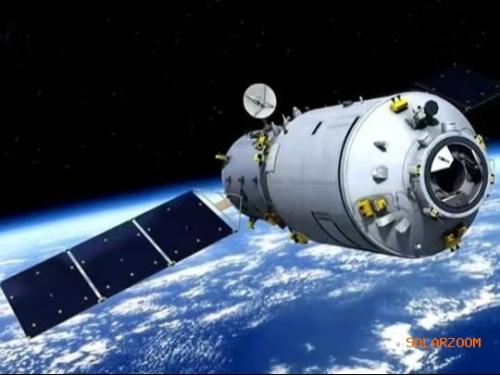
国盛证券:低轨星座竞赛与太空算力革命 引爆太空光伏需求新周期
智通财经网· 2026-02-02 07:34
Group 1 - The rapid increase in satellite deployment and the planning of space AI computing power are driving exponential growth in demand for space photovoltaic systems, which are transitioning from supporting components to strategic infrastructure [1] - China plans to submit applications for 203,000 satellites by the end of December 2025, while the US has launched over 10,000 satellites under the SpaceX Starlink program, intensifying the global space race [1] - The emergence of "space-based data centers" is driven by the limitations of ground data centers, with space offering continuous sunlight and near-zero cost cooling due to the cold cosmic background [1] Group 2 - New technological pathways are emerging, including P-type HJT batteries and silicon/perovskite tandem cells, which offer lower costs and improved performance compared to traditional gallium arsenide batteries [2] - P-type HJT batteries benefit from lower costs due to their manufacturing process and established supply chains, while silicon/perovskite tandem cells have demonstrated laboratory efficiencies of around 35% [2] - Perovskite materials are seen as the ultimate solution for space photovoltaics due to their high defect tolerance and radiation resistance, making them suitable for the harsh conditions of space [2] Group 3 - The global manufacturing landscape is misaligned, presenting historic opportunities for Chinese equipment and battery manufacturers as the US lacks capabilities in HJT and perovskite production lines [3] - The demand for photovoltaic equipment is expected to surge as SpaceX and Tesla plan to build a total of 200 GW of photovoltaic capacity in the US over the next three years [3] - Chinese photovoltaic companies, equipped with aerospace certification and large-scale delivery capabilities, are transitioning from ground support to core space applications, positioning themselves to benefit from the growing demand for space photovoltaics [3] Group 4 - Investment recommendations include photovoltaic equipment suppliers such as Maiwei Co., and potential players like Laplace, Liancheng CNC, Jiejia Weichuang, Aotwei, Gaocai Co., Dier Laser, and Jingsheng Mechanical & Electrical [4] - Material suppliers recommended include Junda Co., Dongfang Risheng, Mingyang Smart Energy, Shanghai Port, Qianzhao Optoelectronics, Trina Solar, and Shuangliang Energy [4]

“制造强国”实干系列周报(26、02、01期)-20260202
Shenwan Hongyuan Securities· 2026-02-02 07:11
Group 1: Commercial Aerospace - The commercial aerospace industry is experiencing upward trends due to accelerated progress in domestic and international computing constellations[5] - Key focus areas include satellite payloads, satellite platforms, space photovoltaics, application terminals, operational services, and rocket support[3] - The China Aerospace Science and Technology Corporation has significant external assets, indicating strong expectations for mergers and acquisitions[3] Group 2: Photovoltaic Industry - Rising silver prices are increasing cost pressures in the photovoltaic industry, making "de-silvering" a critical demand for battery mass production[3] - The adoption of N-type batteries has become mainstream, with silver paste costs in components rising to 21.4% by January 2026[30] - The laser technology is pivotal in supporting the de-silvering transition, enhancing efficiency and reducing material costs[31] Group 3: AI Glasses Market - Global sales of AI glasses are rapidly increasing, with Meta contributing significantly to growth, projecting 6 million units sold in 2025[3] - By 2026, global AI glasses sales are expected to reach 16 million units, with non-display AI audio and photography glasses being major contributors[40] - In Q4 2025, domestic and overseas sales of AI glasses were 24.5 million and 425 million units, respectively[40]
装备制造行业周报(1月第4周):银价波动影响上游硅片提价-20260202
Century Securities· 2026-02-02 03:14
Investment Rating - The report does not explicitly state an investment rating for the industry, but it provides insights into market performance and trends that may influence investment decisions. Core Insights - Fluctuations in silver prices have significantly impacted the cost of upstream silicon wafers, with silver paste costs rising from 17% to approximately 30% of component costs, leading to an increase of over 0.16 CNY per watt in battery cell costs, which is currently the largest drag on profitability [3]. - The cultivation of diamonds is advancing in high-end manufacturing applications, with notable collaborations and projects in China and Japan aimed at enhancing production capabilities for semiconductor and precision manufacturing [3]. - Tesla is accelerating the commercialization of humanoid robots by establishing production lines for its first-generation Optimus robots, indicating a potential shift in the robotics industry [3]. - The market is currently experiencing a "cost push vs. demand pull" dynamic, necessitating close monitoring of silver price trends and downstream demand recovery [3]. Market Performance Review - During the week of January 26 to January 30, 2026, the indices for machinery, power equipment, and automotive sectors experienced declines of -3.49%, -5.1%, and -5.08% respectively, ranking 24th, 30th, and 29th among 31 primary industries [8][10]. - The Shanghai Composite Index showed a slight increase of +0.08% during the same period, indicating a relative underperformance of the machinery and automotive sectors compared to the broader market [8]. Industry News and Key Company Announcements - The National Energy Administration reported that by 2025, China's energy supply capacity will improve significantly, with policies aimed at stabilizing coal prices and enhancing the photovoltaic industry [17]. - Tesla's announcement regarding the Optimus robot production line and plans for mass production of Cybercab and Semi trucks by 2026 highlights the company's commitment to advancing AI hardware and robotics [17]. - The establishment of a humanoid robot innovation center in Beijing and the launch of various humanoid robot projects indicate a growing focus on robotics technology in China [17]. - Companies like Gansu Energy and Crystal Machine Electric are making significant strides in renewable energy projects and are expected to report substantial changes in their financial performance due to market conditions and operational improvements [18][20].

未知机构:申万宏源2026年第一期十大金股组合表现亮眼1月单月整体上涨1689-20260202
未知机构· 2026-02-02 02:10
申万宏源2026年第一期十大金股组合表现亮眼,1月单月整体上涨16.89%。 其中7只A股平均涨幅17.37%,分别跑赢上证综指、沪深300指数13.61、15.72个百分点。 3只港股平均涨幅15.77%,跑赢恒生指数8.92个百分点。 【华鲁恒升】:国内化工品 "反内卷"政策陆续出台,行业格局确定性优化;低成本核心优势不断巩固,未来规划 清晰,成长路径确定性高,有望实现量价齐升。 2月申万宏源十大金股 首推 "铁三角": 【贵州茅台】:市场化改革理顺产品、价格、渠道体系,夯实底 申万宏源2026年第一期十大金股组合表现亮眼,1月单月整体上涨16.89%。 其中7只A股平均涨幅17.37%,分别跑赢上证综指、沪深300指数13.61、15.72个百分点。 3只港股平均涨幅15.77%,跑赢恒生指数8.92个百分点。 2月申万宏源十大金股 首推 "铁三角": 【贵州茅台】:市场化改革理顺产品、价格、渠道体系,夯实底部并打开长期成长空间。 春节临近且 i茅台拓宽消费者触达,动销有望超预期。 【帝尔激光】:公司在主业光伏领域保持较强竞争力,新技术升级提升价值量;先进封装 / 半导体等非光伏业务 迎放量拐点,优化盈 ...

未知机构:申万宏源2026年第一期十大金股组合表现及2月推荐申万宏源2026年-20260202
未知机构· 2026-02-02 02:05
其中7只A股平均涨幅17.37%,分别跑赢上证综指、沪深300指数13.61、15.72个百分点。 3只港股平均涨幅15.77%,跑赢恒生指数8.92个百分点。 2月申万宏源十大金股 【申万宏源】2026年第一期十大金股组合表现及2月推荐 申万宏源2026年第一期十大金股组合表现亮眼,1月单月整体上涨16.89%。 【华鲁恒升】:国内化工品 "反内卷"政策陆续出台,行业格局确定性优化;低成本核心优势不断巩固,未来规划 清晰,成长路径确定性高,有望实现量价齐升。 【帝尔激光】:公司在主业光伏领域保持较强竞争力,新技术升级提升价值量;先进封装 / 半导体等非光伏业务 迎放量拐点,优化盈利结构。 除了 "铁三角",申万宏源看好的其余七只金股为: 首推 "铁三角": 【申万宏源】2026年第一期十大金股组合表现及2月推荐 申万宏源2026年第一期十大金股组合表现亮眼,1月单月整体上涨16.89%。 其中7只A股平均涨幅17.37%,分别跑赢上证综指、沪深300指数13.61、15.72个百分点。 3只港股平均涨幅15.77%,跑赢恒生指数8.92个百分点。 2月申万宏源十大金股 首推 "铁三角": 【贵州茅台】:市场 ...
申万宏源证券晨会报告-20260202
Shenwan Hongyuan Securities· 2026-02-02 01:32
| 指数 | 收盘 | | 涨跌(%) | | | --- | --- | --- | --- | --- | | 名称 | (点) | 1 日 | 5 日 | 1 月 | | 上证指数 | 4118 | -0.96 | 3.85 | -0.44 | | 深证综指 | 2684 | -0.78 | 5.71 | -2.27 | | 风格指数 | 昨日 | 近 1 个月 | 近 6 个月 | | --- | --- | --- | --- | | (%) | | | | | 大盘指数 | -0.81 | 0.63 | 13.2 | | 中盘指数 | -1.67 | 10.42 | 31.3 | | 小盘指数 | -1.05 | 8.78 | 24.7 | 涨幅居前 行业(%) 昨日 近 1 个月 近 6 个月 通信设备 4.32 4.7 87.85 种植业 3.61 12.69 19.72 渔业 3.35 10.96 8.63 影视院线 2.39 12.32 5.47 橡胶 2.07 10.83 17.04 跌幅居前 行业(%) 昨日 近 1 个月 近 6 个月 贵金属 -8.87 59.71 116.25 工 ...
长江研究2026年2月金股推荐
Changjiang Securities· 2026-02-01 11:23
Market Outlook - The market is expected to maintain a fluctuating upward trend around the Spring Festival in February 2026, with a focus on the "Technology + Resources" mainline market[3] - Key attention should be given to the earnings reports of US tech stocks and the potential validation of AI industry trends[3] Investment Strategy - Focus on three main lines: - Technology sector, including optical modules, storage, semiconductor equipment, and energy storage, addressing the issues of electricity shortages in the US, chip shortages domestically, and global storage shortages[3] - Non-ferrous metals, with increased volatility expected after January, particularly in industrial metals and chemicals[3] - Hot topics such as robots participating in the Spring Festival Gala and updates on AI large models[3] Recommended Stocks - **Metals**: Shandong Gold (EPS: 1.78, PE: 30.6 in 2026E)[20] - **Chemicals**: Juhua Co. (EPS: 2.51, PE: 15.7 in 2026E)[20] - **New Energy**: Junda Co. (EPS: 1.67, PE: 60.5 in 2026E)[20] - **Machinery**: Dier Laser (EPS: 2.87, PE: 30.6 in 2026E)[20] - **Military Industry**: Aero Engine Corporation (EPS: 0.35, PE: 132.9 in 2026E)[20] - **Non-Banking**: New China Life (EPS: 10.68, PE: 7.8 in 2026E)[20] - **Automotive**: Top Group (EPS: 1.92, PE: 37.7 in 2026E)[20] - **Electronics**: Jingce Electronics (EPS: 1.15, PE: 115.3 in 2026E)[20] - **Communication**: Zhongji Xuchuang (EPS: 17.40, PE: 37.3 in 2026E)[20] - **Media**: Giant Network (EPS: 2.12, PE: 20.8 in 2026E)[20] Risk Factors - Economic recovery may fall short of expectations, leading to slow growth or stagnation due to factors like slow job growth and reduced market demand[22] - Significant changes in individual stock fundamentals could lead to substantial declines in revenue or net profit[22]




低轨星座竞赛与太空算力革命,引爆太空光伏需求新周期
GOLDEN SUN SECURITIES· 2026-02-01 10:08
Investment Rating - The report provides a positive investment rating for solar equipment suppliers, particularly highlighting companies like Maiwei Co., Ltd. and others with potential capabilities in the solar photovoltaic sector [7][33]. Core Insights - The demand for space photovoltaic systems is expected to surge due to the explosive growth in satellite deployment and AI computing power in space, with China planning to submit applications for 203,000 satellites by the end of 2025, while the U.S. has already launched over 10,000 satellites [1][10]. - New technological pathways such as P-type HJT and perovskite tandem cells are emerging, offering lower costs and improved performance compared to traditional gallium arsenide batteries, which are currently too expensive for large-scale deployment [2][27]. - The global manufacturing landscape is shifting, presenting historic opportunities for Chinese equipment and battery manufacturers to expand internationally, especially as the U.S. lacks capabilities in HJT and perovskite production lines [3][29]. Summary by Sections Section 1: Satellite Deployment and Space AI - The global low Earth orbit satellite deployment is entering a critical phase, with intense competition between China and the U.S. for orbital resources and frequency bands [10]. - The AI computing explosion is creating a new paradigm for space-based data centers, which can operate continuously under sunlight and utilize the cold of space for cooling, leading to exponential growth in demand for space photovoltaic systems [1][10]. Section 2: Technological Advancements - P-type HJT batteries and silicon/perovskite tandem cells are identified as the main directions for future space photovoltaic technology, with significant advantages in efficiency and cost [2][16]. - The report highlights the limitations of traditional gallium arsenide batteries, which are costly and reliant on scarce materials, making them unsuitable for large-scale satellite constellations [2][26]. Section 3: Global Market Dynamics - The report emphasizes that the demand for solar photovoltaic systems in space is set to enter a new cycle, benefiting domestic equipment and battery manufacturers as they transition from ground support to core space applications [29][30]. - Companies like Junda Co., Ltd., Trina Solar, and others are noted for their advancements in space-grade batteries and solar technologies, positioning them well for future growth in the space photovoltaic market [30][33].