科思创

Search documents
机器人TPU材料交流
2026-01-04 15:35
Summary of TPU Materials in Robotics Industry Conference Call Industry Overview - The conference call focused on the TPU (Thermoplastic Polyurethane) materials industry, particularly its applications in the robotics sector [2][3][10]. Key Characteristics of TPU - TPU combines the elasticity of rubber with the processability of plastics, offering excellent wear resistance, tear strength, and a tensile strength typically above 60 MPa [2][3]. - It remains stable in extreme temperatures ranging from -40°C to 120°C, making it suitable for various applications in robotics [4][10]. Applications in Robotics - TPU is widely used in four key areas within robotics: 1. **Safety Protection Components**: Flexible joint covers and protective shells, valued at approximately 6,000 RMB per robot [6]. 2. **Lightweight Composite Structures**: Used in non-load-bearing parts to reduce weight while maintaining rigidity, valued at around 2,000 RMB [6]. 3. **Transmission Sealing Systems**: Includes wear-resistant components like joint seals, valued at about 1,500 RMB [6]. 4. **Sensor and Cable Protection**: For flexible sensor packaging and high-bend cables, valued at approximately 500 RMB [6]. Market Dynamics - The global TPU production capacity is expected to reach 1.3 million tons by 2025, with China accounting for 46.2% of this capacity [3][4]. - Major international producers include BASF and Covestro, while leading domestic companies are Wanhua Chemical, Huafeng Chemical, Meirui New Materials, and Innovate [9][10]. Pricing Trends - The average price of TPU materials for robotics ranges from 23,000 to 28,000 RMB per ton, significantly higher than the average price of general-purpose TPU at around 15,000 RMB per ton [12][19]. - The price is influenced by the complexity of the production process and the specific properties required for robotics applications [12][19]. Challenges in Production - Key challenges in TPU production include material modification, mold opening, and injection molding processes, which require precise temperature control and specific conditions [15][18]. - The production of high-performance TPU involves complex chemical reactions and careful selection of raw materials, which can create barriers to entry for new competitors [13][14]. Environmental Regulations - Future environmental regulations, such as the EU REACH regulation, will significantly impact the TPU industry, pushing for the development of bio-based TPU to reduce harmful substances and carbon emissions [22]. - Companies like BASF and Wanhua are actively working on bio-based TPU, with production lines being established to increase bio-content in their products [22]. Future Outlook - The demand for TPU in the robotics sector is expected to grow, with projections indicating that the market value could exceed 10 billion RMB by 2030 [20]. - As the number of robots increases, the average TPU usage per robot is anticipated to rise, potentially leading to limited price decreases despite increased production [19][20]. Conclusion - The TPU materials market in the robotics industry is characterized by strong growth potential, driven by technological advancements and increasing applications in various robotic components. The focus on sustainability and compliance with environmental regulations will shape the future landscape of the industry [22].

万华化学:化工茅涨价,不止“反内卷”
2 1 Shi Ji Jing Ji Bao Dao· 2026-01-04 12:10
Core Viewpoint - The chemical industry, particularly the polyurethane sector, is experiencing a price increase led by Wanhua Chemical, but a full recovery is still distant due to ongoing challenges in downstream demand and supply chain issues [1][8]. Price Increase Dynamics - Wanhua Chemical has initiated multiple price hikes for its core products, including MDI and TDI, starting from December 2025, following similar moves by global giants like BASF and Dow [1][2]. - The price adjustments include a $200/ton increase for MDI in Southeast Asia and South Asia, and a €300/ton increase for all MDI products in Europe [2][3]. - The price surge is attributed to unexpected production halts and geopolitical factors affecting raw material costs, alongside seasonal maintenance peaks [3][5]. Supply Chain Challenges - Significant production disruptions have occurred, including a one-month shutdown of Hunstman’s MDI facility in the Netherlands and maintenance at Wanhua's 1 million ton/year MDI plant in Ningbo [4][5]. - The ongoing structural shortage of ethylene in Europe and Asia is a critical concern, exacerbated by the permanent closure of several ethylene cracking facilities by major companies [6][7]. Industry Outlook - The chemical industry in Europe faces long-term challenges due to energy structure issues and stringent carbon emission policies, which may weaken its international competitiveness [7]. - Despite the supply issues in Europe and Japan, a complete recovery of the industry hinges on the rebound of downstream demand [8][9]. - Wanhua Chemical's financial performance shows signs of stabilization, with a slight increase in net profit in Q3 2025, although overall revenue remains down year-on-year [11].


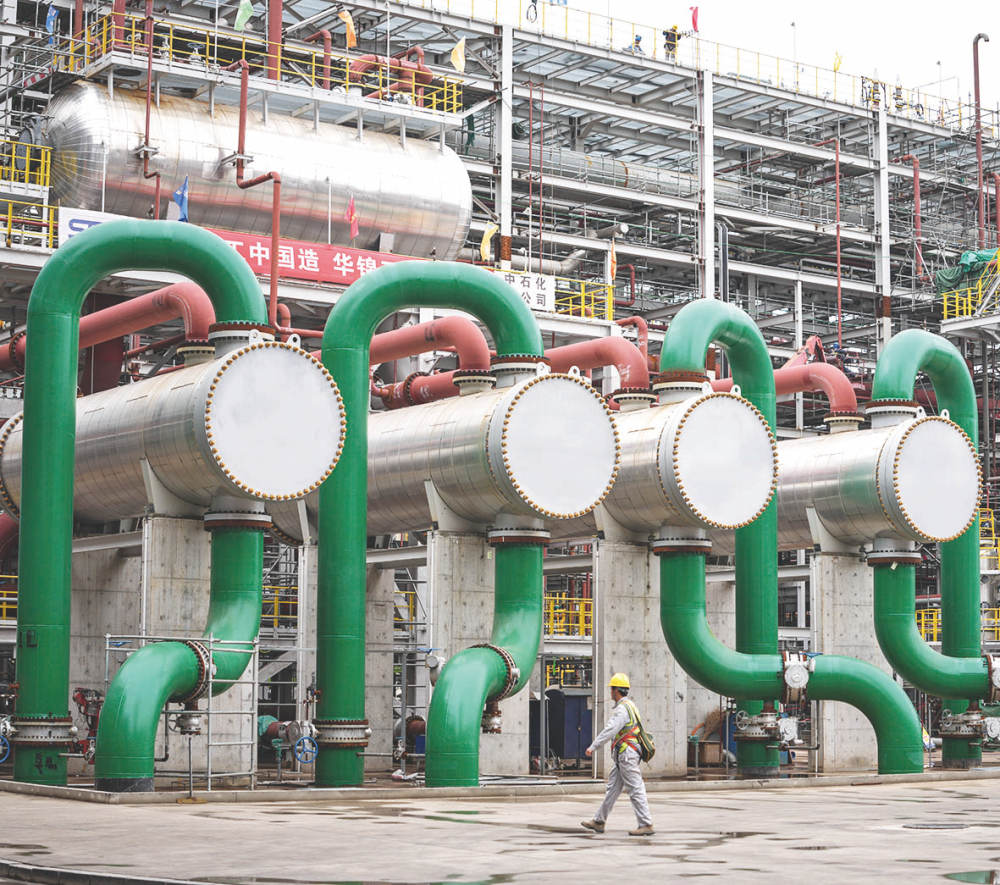
高质量发展故事汇|纵深推进全国统一大市场建设
Bei Jing Ri Bao Ke Hu Duan· 2025-12-30 00:15
Core Viewpoint - The construction of a unified national market is a significant decision made by the central government, essential for building a new development pattern and addressing long-term national development strategies [5]. Group 1: Market Construction and Challenges - China, as the world's second-largest consumer market with over 1.4 billion people and more than 190 million business entities, has a substantial advantage in market resources that supports economic growth and innovation [5]. - The establishment of a unified national market has seen positive outcomes, including improved market infrastructure and smoother flow of goods and services, but challenges such as local protectionism and market segmentation remain [7][10]. - Recent measures have been implemented to eliminate market barriers, such as the reduction of the negative list for market access to 106 items, a nearly 30% decrease since 2018 [7]. Group 2: Competition and Quality - The phenomenon of "involution" in competition, characterized by low-price and low-quality practices, has been identified as detrimental to market mechanisms and innovation [8]. - The government has initiated actions to curb "involution" in various industries, including the solar and automotive sectors, emphasizing the importance of quality and standards in fostering healthy competition [8][9]. Group 3: Open Market Strategy - The construction of a unified national market is not a closed system but aims to promote reform and openness, facilitating both domestic and international economic cycles [9]. - The negative list for foreign investment has been reduced to 29 items, with all manufacturing sector restrictions eliminated, indicating a commitment to high-level openness [9]. Group 4: Case Studies - The cross-network electricity trading mechanism has been established, allowing for significant electricity transfers across regions, exemplifying the practical implementation of a unified market [12]. - The flower industry in Yunnan has transitioned from unregulated sales to standardized production, enhancing market access and pricing for quality products [13]. - The rapid introduction of new drugs, such as "Kexaira," into the Chinese market through Hainan's pilot policies demonstrates the effectiveness of streamlined regulatory processes and local production capabilities [15][16].

纵深推进全国统一大市场建设(高质量发展故事汇·第14期)
Ren Min Wang· 2025-12-29 22:23
本期主讲人:习近平经济思想研究中心副主任 李玉举 视频报道请看人民日报客户端、"人民网+"客户端,英文报道请看环球时报英文版客户端 海南先声药业实验室,工作人员在做实验。 人民网记者 皇甫万里摄 云南昆明斗南花卉市场一角。 受访者供图 闽粤联网工程福建云霄换流站。 资料图片 建设全国统一大市场,是以习近平同志为核心的党中央作出的重大决策。这不仅是构建新发展格局的基 础支撑和内在要求,也是关乎国家发展全局和长远的战略之举。 当今世界,市场是最稀缺的资源。作为全球第二大消费市场,中国拥有14亿多人口、超1.9亿户经营主 体,这样超大规模且极具增长潜力的市场,是我国发展的巨大优势和应对变局的坚实依托,对资源集 聚、创新激励、产业升级、经济增长发挥着有力支撑作用。如何用好市场资源和优势?纵深推进全国统 一大市场建设,至关重要。 近年来,我们加强战略谋划和顶层设计,出台关于加快建设全国统一大市场的意见,围绕完善法律规范 或操作指引,制定系列配套措施,推动全国统一大市场建设取得积极成效——市场基础制度不断完善, 市场设施互联互通显著增强,商品服务和资源要素流动更加顺畅,统一大市场的规模效应和集聚效应不 断彰显。但是我们也 ...

能源化工正在重塑全球并购交易格局
Zhong Guo Hua Gong Bao· 2025-12-29 06:37
Group 1: M&A Market Overview - The global M&A market in 2025 has surpassed the previous year's levels, with the energy and chemical sectors contributing over 60% of the transaction value increase, making them a key driver of the M&A market [1] - The surge in M&A activity in the energy and chemical sectors is attributed to the massive energy demand from AI data centers, the acceleration of traditional energy companies' consolidation, and the demand for low-carbon assets due to green transitions [1] Group 2: AI Technology and Energy Sector Integration - The rapid development of AI technology has led to a significant increase in energy consumption by data centers, with a single AI data center consuming as much electricity as 100,000 households, making energy supply a critical bottleneck for tech companies [2] - Companies like Alphabet are actively acquiring energy firms, such as the $4.75 billion acquisition of Intersect, to support their AI data center energy needs, indicating a new trend of "AI infrastructure driving cross-industry M&A" [2] Group 3: Traditional Energy Sector Transformation - Traditional energy companies are also accelerating consolidation and transformation, with the Middle East showing notable M&A activity, where the region's transaction value reached $53 billion in the first nine months of the year, a significant year-on-year increase [3] - The acquisition of chemical companies by traditional energy firms, such as the $13.4 billion acquisition by the UAE, is enhancing their influence in the global chemical market and supporting energy transition efforts [3] Group 4: Strategic Resource Acquisitions - M&A activities in the energy and chemical sectors are increasingly focused on securing key mineral resources essential for developing new energy technologies and facilitating energy transitions, with growing competition for lithium, cobalt, and rare earth elements [4] Group 5: Green Transition as a Catalyst - The global response to climate change has made green transitions a significant catalyst for M&A activities in the energy and chemical sectors, with companies acquiring low-carbon technologies and clean energy assets to accelerate sustainable development goals [5] - In Europe, many energy and chemical companies are integrating green assets through M&A, optimizing their product portfolios to include more environmentally friendly products and services [5] - Future M&A activities in the energy and chemical sectors are expected to remain active, driven by the deepening global energy transition and the integration of technology, particularly AI and big data, which will create new M&A opportunities [5]
利柏特(605167):化工模块龙头拓核辟新,卡位核电模块建造趋势
GOLDEN SUN SECURITIES· 2025-12-29 05:12
Investment Rating - The report initiates coverage with a "Buy" rating for the company [4]. Core Views - The company is a leading player in chemical modular manufacturing with excellent profitability, benefiting from increased investments by core clients in China, leading to significant growth in contract signings and revenue [1][24]. - The industrial modularization penetration rate is continuously increasing, providing a stable order source for the company's main business [2]. - The company plans to raise 750 million yuan through convertible bonds to build a new base in Nantong, which will expand its capacity for large module manufacturing and tap into the nuclear power sector as a new growth point [3][4]. - The nuclear module business is projected to contribute an additional 460 million yuan in performance by 2025, driven by contracts with major nuclear power operators [4]. Summary by Sections 1. Chemical Modular Manufacturing Leader with Excellent Profitability - The company has established a full industry chain layout in chemical EPFCO, integrating design, procurement, modularization, construction, and maintenance [14]. - The company has seen rapid revenue growth due to increased investments from core clients like BASF and Invista, with a total contract amount of 4.2 billion yuan in 2022, doubling its total revenue from 2021 [24][25]. - The company's profitability is superior to its peers, with a gross margin consistently maintained between 15%-20% since 2021, and a projected gross margin of 16.1% for 2024 [30]. 2. Continuous Improvement in Industrial Modularization Penetration - Modular construction offers significant advantages over traditional methods in cost control, construction efficiency, and operational performance, leading to a stable demand for the company's main business [2]. - The company has successfully completed several benchmark large modular projects, enhancing its technical capabilities and establishing stable partnerships with multinational chemical giants [2]. 3. Fundraising for Nantong Base to Enter Nuclear Power Sector - The Nantong base is expected to significantly increase the company's large module manufacturing capacity, with an estimated annual output value of 2.1 billion yuan upon reaching full production [3]. - The nuclear power sector is projected to see substantial growth, with an average annual investment of approximately 160 billion yuan expected to be driven by the construction of new nuclear units [3]. 4. Earnings Forecast, Valuation, and Investment Recommendations - The company is forecasted to achieve net profits of 220 million yuan, 246 million yuan, and 356 million yuan for 2025, 2026, and 2027 respectively, with corresponding EPS of 0.49, 0.55, and 0.79 yuan per share [4]. - The current stock price corresponds to a P/E ratio of 28, 25, and 17 for the years 2025, 2026, and 2027, indicating potential for significant earnings growth from the nuclear business [4].

2025年第四季度全球企业十大并购案:金佰利收购科赴、阿克苏诺贝尔与艾仕得合并
Sou Hu Cai Jing· 2025-12-29 03:45
Group 1: Overview of Mergers and Acquisitions - The fourth quarter of 2025 saw a surge in global mergers and acquisitions, with significant deals exceeding $40 billion in sectors such as media, entertainment, data centers, and consumer goods [1] - A total of ten representative large-scale mergers and acquisitions were highlighted, providing insights into the trends and activities in the market [1] Group 2: Notable Mergers and Acquisitions - A consortium led by BlackRock, Nvidia, and Microsoft is set to acquire Aligned DataCenters for approximately $40 billion, aiming to expand next-generation cloud and AI infrastructure [2] - Airbus, Leonardo, and Thales signed a memorandum to merge their space businesses into a new company expected to generate annual revenues of about €6.5 billion, with a workforce of 25,000 in Europe [4] - Novartis agreed to acquire Avidity Biosciences for around $12 billion to enhance its portfolio for rare muscle diseases [7] - Kimberly-Clark will acquire Kenvue for approximately $48.7 billion, creating a major consumer health products company with projected annual net revenues of about $32 billion by 2025 [9] - Pfizer has successfully acquired Metsera, a weight-loss drug startup, in a deal valued at over $10 billion [10] - AkzoNobel plans to merge with Axalta Coating Systems, resulting in a combined company valued at $25 billion, with expected annual revenues of $17 billion [12] - Abbott Laboratories is acquiring Exact Sciences for $23 billion, marking its largest acquisition in nearly a decade [13] - Netflix agreed to acquire Warner Bros. Discovery's TV and film production and streaming assets for an enterprise value of $82.7 billion [14] - IBM will acquire Confluent for $11 billion to strengthen its cloud computing offerings [17] - ByteDance has established a new joint venture in the U.S. for TikTok, with a consortium of investors holding 50% of the shares [20] Group 3: Completed Mergers and Acquisitions - Lowe's completed its acquisition of Foundation Building Materials, marking its largest acquisition to date [21] - Omnicom Group's acquisition of Interpublic Group was approved by the EU, making it the largest marketing communications group globally with revenues exceeding $25 billion [21] - Mars Incorporated completed its acquisition of Kellanova for a total consideration of $35.9 billion [21] - XRG completed its acquisition of Covestro, marking a significant step in its goal to become one of the top three chemical investment companies globally [22] - Boeing and Airbus completed their acquisition of Spirit AeroSystems' assets, integrating thousands of employees into their operations [22] - Geely Automobile announced its merger with Zeekr, with a total consideration of approximately $2.399 billion [23] Group 4: Failed Mergers and Acquisitions - BHP Group abandoned its acquisition proposal for Anglo American, focusing on its existing asset portfolio [25] - Performance Food and US Foods terminated their merger discussions, which would have created a significant competitor in the food distribution industry [25]
2025年新材料创业者大会——人工智能与新材料产业机遇圆桌论坛观点分享
AMI埃米空间· 2025-12-22 09:09
Core Viewpoint - The article discusses the transformative impact of AI on the materials industry, emphasizing the shift from traditional knowledge-based advantages to data-driven competitive edges, and the need for individuals to adapt to this new landscape [2][3][9]. Group 1: Trends in the Industry - The traditional industrial competition model, which relied on a "knowledge gradient," is undergoing fundamental changes, with significant implications for materials and chemical industries [3]. - The "knowledge gradient" consists of three barriers: technological barriers (core formulas, patents), application barriers (deep understanding of downstream processes), and first-mover advantages (brand reputation and customer relationships) [3]. - Major industry players are experiencing a collapse of this knowledge gradient, as evidenced by the restructuring of companies like陶氏, 巴斯夫, and 杜邦, driven by the rapid democratization of industry knowledge through open patent databases and academic literature [4][5]. Group 2: Opportunities for Data Application - The current phase presents a critical opportunity for the materials industry to transition from "investment-driven" to "data application" models, leveraging existing digital infrastructure [6]. - The focus should be on breaking down data silos to enhance data flow and value creation across all stages of production, from R&D to supply chain integration [6][7]. - This transition represents a golden window for the industry to capitalize on data value, marking a significant shift in operational strategies [6]. Group 3: Personal Transformation in the Industry - Individuals in the industry are encouraged to evolve from "industry experts" to "industry AI experts," focusing on specific pain points where AI can be effectively applied [7][8]. - Two potential career paths are highlighted: becoming a "cross-disciplinary engineering prototype creator" or transitioning to roles such as "industry AI solution architect" or "data strategy and governance expert" [8]. - The article emphasizes the importance of leveraging deep industry knowledge to drive AI applications, suggesting that those who can effectively combine industry expertise with AI capabilities will be the most valuable in the future [9].
利柏特(605167):募投项目开工,静待核电业务突破
NORTHEAST SECURITIES· 2025-12-18 07:49
Investment Rating - The report assigns an "Accumulate" rating to the company, indicating a potential stock price increase of 5% to 15% over the next six months [2][3]. Core Insights - The company is a core manufacturer of industrial modules with a comprehensive service capability across the entire industry chain, including design, procurement, modularization, construction (EPFC) [1]. - The company has established long-term stable partnerships with leading clients in the chemical industry, such as BASF, Linde, Covestro, Honeywell, and Umicore, and is expanding into oil and gas energy, nuclear power, and other sectors [1]. - The modular construction approach is becoming a significant trend in modern manufacturing, providing advantages such as better cost and quality control, and the company is well-positioned to benefit from this industry development [1]. - The company has recently completed a large industrial module manufacturing project, which will lay the foundation for future growth and expansion into energy sectors [2]. Financial Summary - The company expects net profits of 212 million, 199 million, and 323 million for the years 2025, 2026, and 2027, respectively, with corresponding P/E ratios of 23x, 25x, and 15x [2]. - Revenue is projected to decline by 17.9% in 2025, followed by a slight decrease in 2026, before rebounding with a 20% increase in 2027 [2]. - The company's total revenue for 2023 is estimated at 3,242 million, with a significant growth of 88.39% compared to the previous year [2].
基础化工 2026 年度投资策略:供给优化,气势升腾
Changjiang Securities· 2025-12-17 10:39
Core Insights - The chemical industry is currently at the bottom of its cycle, with expectations of gradual recovery driven by global economic growth and demand increase [2][5][20] - The report emphasizes the importance of supply-side dynamics, noting the retreat of foreign investment and the slowdown of domestic capacity expansion, which may lead to a turning point for the industry [2][5][36] - Key recommendations include focusing on cyclical resilient and growth sectors such as industrial silicon, organic silicon, PTA, spandex, caprolactam, soda ash, and chlor-alkali, as well as high-demand products like refrigerants and potassium fertilizers [2][5][6] Demand Side Analysis - The chemical industry is closely tied to global economic performance, with a projected global GDP growth of 3.09% in 2026, driven mainly by developing countries like India [22][25] - China's GDP growth is expected to be 4.16% in 2026, indicating robust domestic demand [22][25] - Emerging sectors such as new energy and AI are expected to drive material consumption, with significant growth in electric vehicle sales and energy storage capacity anticipated [27][29] Supply Side Dynamics - The report highlights the challenges faced by foreign chemical giants due to rising energy costs and increased competition, leading to significant profit declines [36][41] - Major foreign companies are closing high-cost production facilities in Europe, which may create opportunities for domestic players [36][41][47] - Domestic chemical companies are experiencing pressure on investment returns, leading to a slowdown in capital expenditure growth and a pause in new capacity plans [49] Investment Strategy - The report suggests a focus on cyclical resilient products and growth sectors, with specific attention to high-quality companies that possess competitive advantages [6][36] - The potential for price increases or stable prices with volume growth in bottom-tier products is emphasized, particularly in industrial silicon and organic silicon [6][36] - The report also identifies opportunities in the tire and civil explosives sectors, particularly as companies expand internationally [7][36] Emerging Opportunities - New material sectors, including humanoid robots and AI materials, are highlighted as areas of potential growth, driven by domestic policy support and the need for localized supply chains [8][36] - The report notes the increasing importance of domestic production capabilities in high-end materials due to international trade tensions [8][36]