索菲亚

Search documents
今日339只个股突破五日均线
Zheng Quan Shi Bao Wang· 2026-01-20 06:34
Market Overview - The Shanghai Composite Index closed at 4105.16 points, below the five-day moving average, with a decline of 0.21% [1] - The total trading volume of A-shares reached 230.22 billion yuan [1] Stocks Performance - A total of 339 A-shares have prices that broke through the five-day moving average today [1] - The stocks with the largest deviation rates include: - Meibang Technology (21.58%) - Jiayun Technology (10.57%) - Dongtong Retreat (8.25%) [1] - Stocks with smaller deviation rates that just crossed the five-day moving average include: - China Merchants Bank - Balanshi - Aike Co., Ltd. [1] Top Stocks by Deviation Rate - The top stocks with significant price increases and their respective deviation rates are: - Meibang Technology: 29.94% increase, 25.39% turnover rate, latest price 17.49 yuan [1] - Jiayun Technology: 19.92% increase, 18.95% turnover rate, latest price 6.38 yuan [1] - Dongtong Retreat: 9.78% increase, 9.36% turnover rate, latest price 2.02 yuan [1] - Other notable stocks include: - Hongmian Co., Ltd.: 10.13% increase, latest price 4.24 yuan, deviation rate 8.16% [1] - Shanghai Jiubai: 10.01% increase, latest price 14.07 yuan, deviation rate 8.11% [1]




认知差异,蜕变在即:轻工制造行业2026年投资策略:
Huafu Securities· 2026-01-20 06:09
Core Insights - The report emphasizes the theme of "cognitive differences, transformation imminent," highlighting the accelerated iteration of business models among light industry companies amid macroeconomic and trade fluctuations, suggesting a focus on identifying alpha opportunities in companies with high barriers and leading global capacity layouts [2][16] - The light industry index underperformed the market in 2025, with a return of +20.88%, trailing the CSI 300 by -0.31%. The performance was driven by companies undergoing transformation or restructuring, while only a few stocks, like Xiangxin Home, saw price increases driven by solid fundamentals [10][16] - For 2026, three investment themes are proposed: export alpha, steady growth, and low-level consumption. Recommended companies include Zhongxin Co., Xiangxin Home, and Mengbaihe for exports; Sun Paper and Jiu Long Paper for steady growth; and Gujia Home and Oppein for low-level consumption [2][16] 2025 Sector Review - The light industry sector underperformed the market, with packaging and personal care showing stable growth, while home furnishings and paper faced pressure, leading to a divergence in export performance [3][11] - The overall revenue growth for the light industry sector in Q3 2025 was -0.7%, with a significant decline in net profit attributed to the paper sector, while personal care and packaging showed positive growth [13][14] 2026 Investment Themes - **Export Alpha**: Focus on high-barrier export manufacturing companies that are transitioning from product export to capacity and brand export, benefiting from the recovery of the US real estate chain due to interest rate cuts [2][21] - **Steady Growth**: Emphasis on paper and packaging sectors, with expectations of price recovery in 2026 for paper products, recommending companies like Sun Paper and Yutong Technology [2][16] - **Low-Level Consumption**: Targeting home furnishings and stationery, with recommendations for companies like Gujia Home and Oppein, as the sector is expected to recover with improved consumer sentiment [2][16] Key Companies - Recommended companies for export include Zhongxin Co. and Mengbaihe, while for steady growth, Sun Paper and Jiu Long Paper are highlighted. In the low-level consumption category, Gujia Home and Oppein are suggested as potential investment opportunities [2][16]
今日119只个股突破半年线
Zheng Quan Shi Bao Wang· 2026-01-20 04:39
Market Overview - The Shanghai Composite Index closed at 4101.62 points, above the six-month moving average, with a decline of 0.30% [1] - The total trading volume of A-shares reached 18654.95 billion yuan [1] Stocks Above Six-Month Moving Average - A total of 119 A-shares have surpassed the six-month moving average today [1] - Notable stocks with significant deviation rates include Jiangtian Chemical (15.30%), Meibang Technology (10.67%), and Hanjian Heshan (10.04%) [1] Stock Performance Details - Jiangtian Chemical (300927) saw a price increase of 19.99% with a turnover rate of 13.00%, latest price at 30.31 yuan [1] - Meibang Technology (920471) increased by 20.28% with a turnover rate of 14.46%, latest price at 16.19 yuan [1] - Hanjian Heshan (603616) rose by 10.07% with a turnover rate of 8.34%, latest price at 6.23 yuan [1] Additional Stocks with Notable Performance - Other stocks with significant performance include: - Jiaxin Technology (000560) up by 10.00%, latest price at 3.30 yuan [1] - China Merchants Shekou (001979) up by 8.32%, latest price at 10.02 yuan [1] - Jingji Zhino (000048) up by 10.01%, latest price at 16.82 yuan [1] Stocks with Smaller Deviation Rates - Stocks with smaller deviation rates just above the six-month moving average include: - Zhongyuan Haifa (000048) with a deviation rate of 3.15% [2] - Daya City (000031) with a deviation rate of 3.94% [2] - Baichuan Chang (300614) with a deviation rate of 3.71% [2]



新零售股走强,上海九百等多股涨停,发改委称研究出台扩内需战略方案
Ge Long Hui· 2026-01-20 03:29
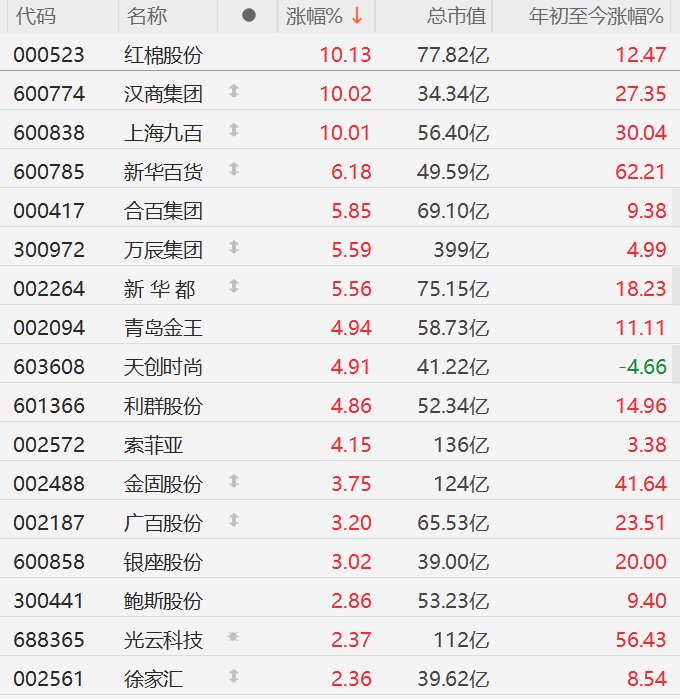
Group 1 - The A-share market saw a strong performance in the new retail sector, with stocks such as Hongmian Co., Hanchang Group, and Shanghai Jiubai hitting the daily limit, while Xinhua Department Store rose over 6% [1] - The National Development and Reform Commission (NDRC) plans to formulate an implementation plan for expanding domestic demand from 2026 to 2030, aiming to create new demand through new supply and provide strong innovation measures and resource guarantees [1] - The NDRC is currently working on a plan to stabilize jobs and expand capacity, as well as a plan to increase income for urban and rural residents, with the goal of enhancing consumer capacity and optimizing consumption upgrades [1] Group 2 - Specific stock performance includes: - Hongmian Co. increased by 10.13% with a market cap of 7.782 billion [2] - Hanchang Group rose by 10.02% with a market cap of 3.434 billion [2] - Shanghai Jiubai increased by 10.01% with a market cap of 5.640 billion [2] - Xinhua Department Store rose by 6.18% with a market cap of 4.959 billion [2] - Other notable increases include He Bai Group (5.85%), Wancheng Group (5.59%), and Xinhua Du (5.56%) [2]


渤海证券研究所晨会纪要(2026.01.20)-20260120
BOHAI SECURITIES· 2026-01-20 00:27
Macro and Strategy Research - The performance of corporate credit is better than that of household credit, with a slight year-on-year decrease in RMB loans in December 2025, where corporate short-term and medium-to-long-term loans significantly outperformed the same period in 2024 [3][5] - The increase in M2 year-on-year indicates a positive trend, with non-bank financial institutions showing better deposit performance compared to the same period in 2024 [4][5] - The financial data for December 2025 highlights the growth in corporate credit, while household credit remains under pressure, necessitating further observation of sustainability [5] Fixed Income Research - Green bonds are defined as securities issued to raise funds specifically for green industries, projects, or economic activities, with a cumulative issuance scale of 5.32 trillion yuan by the end of 2025 [6][9] - The development of China's green bond market can be divided into three stages: exploratory phase (2015), standardized development phase (2016-2020), and system improvement phase (2021-present), with significant growth in issuance scale and variety [9][10] - Green bonds generally exhibit a stable interest rate advantage, with their issuance rates lower than corresponding non-green bonds, although this advantage has slightly diminished in recent years [10] Fund Research - The first gold ETF exceeding 100 billion yuan has been established, indicating a significant milestone in the market [11] - The public fund market saw a net outflow of 157.33 billion yuan in the ETF sector, with stock-type ETFs experiencing the largest outflow [12][13] - The average performance of equity funds was positive, with a 74.98% positive return ratio, while fixed income funds also showed strong performance [11][12] Industry Research - The focus on cultivating service consumption is emphasized, with sports events and IP+ consumption expected to benefit directly from new policies aimed at enhancing service consumption [14][15] - Recent announcements include measures from the Shanghai government to promote service industry quality and consumption expansion, indicating a shift towards service sector reform [14] - The light industry and textile sectors have shown mixed performance, with the light industry underperforming the CSI 300 index while the textile sector slightly outperformed it [14][15]
轻工制造、纺织服饰行业周报:着力培育服务消费,体育赛事、IP+消费将直接受益-20260119
BOHAI SECURITIES· 2026-01-19 10:47
Investment Rating - The investment rating for the light industry manufacturing and textile apparel sectors is "Neutral" [5][52]. Core Insights - The report emphasizes the cultivation of service consumption, with sports events and IP+ consumption expected to benefit directly from new policies aimed at boosting service consumption [4][51]. - Recent government measures, including the "Several Measures to Promote the Quality Improvement and Efficiency Enhancement of the Service Industry" in Shanghai, aim to stimulate service consumption and enhance supply quality [12][51]. - The report highlights the expected performance of key companies, with Jia Mei Packaging forecasting a decline in net profit for 2025 by 43.02%-53.38%, while Wo Le Home is expected to see a growth of 40.78%-56.42% in the same period [41][42]. Industry News - The State Council is focusing on accelerating the cultivation of new growth points in service consumption, particularly in sectors like transportation, home services, performances, and sports events [4][12]. - The Shanghai government has introduced 28 measures targeting six key industries to enhance service quality and stimulate consumption [12][51]. Important Company Announcements - Jia Mei Packaging anticipates a significant decline in net profit for 2025, projecting a profit of 85.44 million to 104.42 million yuan, a decrease of 43.02%-53.38% year-on-year [41]. - Wo Le Home expects a net profit increase for 2025, estimating a profit of 171 million to 190 million yuan, representing a growth of 40.78%-56.42% year-on-year [41]. Market Review - From January 12 to January 16, the light industry manufacturing sector underperformed the CSI 300 index by 0.54 percentage points, while the textile apparel sector outperformed it by 0.02 percentage points [2][42]. - The light industry manufacturing index decreased by 1.11%, while the textile apparel index decreased by 0.55% during the same period [2][42]. Weekly Strategy - The report suggests continuous attention to sectors benefiting from the new service consumption policies, particularly in sports equipment, athletic apparel, and related fields [4][51].


美国12月成屋销售超预期,AI眼镜迎催化:轻工制造
Huafu Securities· 2026-01-18 04:06
Investment Rating - The report maintains an "Outperform" rating for the industry [4] Core Insights - December home sales in the U.S. exceeded expectations, indicating a potential improvement in consumer demand related to the real estate chain [3] - META aims to double the production capacity of AI RAY-BAN glasses to 20 million units by 2026, suggesting investment opportunities in companies like 康耐特光学, 明月镜片, and 博士眼镜 [3] - Despite weak domestic consumption in home goods and stationery, leading companies are at historical low stock prices, presenting opportunities for valuation recovery [3] Summary by Sections Real Estate and Related Consumption - U.S. home sales in December reached an annualized total of 4.35 million units, up 1.4% year-on-year and 5.1% month-on-month, surpassing expectations of 4.22 million units [6] - The Trump administration has announced plans to enhance housing affordability, including a proposal to prohibit institutional investors from purchasing single-family rental homes [6] Home Goods and Furniture - The home goods sector continues to face challenges, with a reported 4.4% year-on-year decline in sales for large-scale home goods markets in December [41] - The furniture manufacturing industry saw a cumulative revenue decline of 9.1% year-on-year from January to November [43] Paper and Packaging - As of January 16, 2026, prices for various paper products showed mixed trends, with double glue paper at 4725 CNY/ton (unchanged) and corrugated paper down to 2725 CNY/ton (a decrease of 95.63 CNY/ton) [48] - The report highlights a decline in the revenue of the paper and paper products industry, with a cumulative year-on-year revenue drop of 2.7% from January to November [63] Consumer Goods - The medical segment of the consumer goods sector is expected to see growth, with strategic initiatives aimed at enhancing product offerings and operational excellence [5] - The stationery sector is recommended for investment, particularly in companies like 晨光股份, which is expected to maintain steady growth [5] New Tobacco Products - The report notes ongoing investigations into Chinese competitors by British American Tobacco regarding electronic cigarette regulations in the U.S., indicating potential market shifts [10]
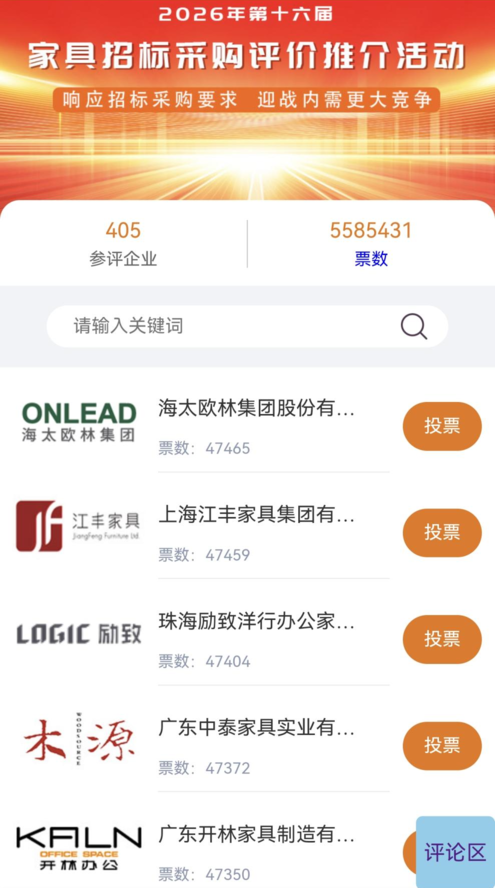
2026(第16届)家具招标采购评价推介活动第二期情况通报
Cai Fu Zai Xian· 2026-01-16 11:08
Industry Overview - The Chinese furniture industry exhibits a "multi-level, segmented" competitive landscape, characterized by a highly fragmented market and distinct consumer demand tiers [1] - The competitive structure is clearly layered, with national leading brands like Oppein and Sophia dominating the whole-house customization sector, while brands like Kuka and Man Wah excel in the soft furniture segment [1] - Competition has evolved beyond products to encompass "brand positioning + channel efficiency + supply chain integration + user experience," with design capabilities, flexible customization through smart manufacturing, and efficient logistics becoming key differentiators for leading brands [1] Brand Competition - The industry concentration is slowly increasing under the trends of whole-house customization and home integration, with leading companies expanding categories to squeeze the space for single-category brands [1] - All brands face challenges from real estate downturns, consumer segmentation, and fragmented traffic [1] - Future brand competition will increasingly rely on precise consumer insights, strong supply chain collaboration efficiency, and the ability to build unique lifestyle brands [1] Notable Companies - **Haitai Oulin Group Co., Ltd.**: A well-known enterprise in the office furniture industry, focusing on smart office solutions and ergonomic design, with a modern production base and a nationwide marketing network [6] - **Shanghai Jiangfeng Furniture Group Co., Ltd.**: A large modern furniture enterprise specializing in mid-to-high-end solid wood furniture, emphasizing quality materials and sustainable practices [7] - **Zhuhai Lizhi Yanghang Office Furniture Co., Ltd.**: A leading brand in the office furniture sector, offering a wide range of products and emphasizing ergonomic design and modern aesthetics [8] - **Guangdong Zhongtai Furniture Industry Co., Ltd.**: A major player in the office furniture market, known for its advanced production techniques and strict quality management [9] - **Guangdong Kailin Furniture Manufacturing Co., Ltd.**: A comprehensive modern furniture enterprise focusing on various commercial and public space furniture solutions, with a commitment to innovation and quality [10] - **Chongqing Zhancheng Furniture Manufacturing Co., Ltd.**: Recognized for its high-end hotel furniture solutions, providing a full range of services from design to installation [11] - **Dongguan Weige Steel Supreme Office Equipment Co., Ltd.**: A modern metal office furniture manufacturer, known for its strict quality control and comprehensive service offerings [13] - **Beijing Weisen Shengye Furniture Co., Ltd.**: Specializes in high-end office and hotel furniture, focusing on innovative design and quality control [14] - **Jingtai Holding Group Co., Ltd.**: A comprehensive commercial furniture enterprise with a focus on environmental sustainability and innovation in product development [15] - **Guangzhou Liwei Office Furniture Co., Ltd.**: A modern office furniture enterprise dedicated to ergonomic and environmentally friendly products, with a strong market presence [16]
七年关十店!宜家中国“断臂求生”
Sou Hu Cai Jing· 2026-01-16 07:06
Core Viewpoint - IKEA China is set to close seven stores, marking its largest closure in nearly 30 years, indicating a significant shift in its operational strategy in the Chinese market [1][4]. Group 1: Store Closures - IKEA China will cease operations at seven stores, including locations in Shanghai and Guangzhou, effective February 2, 2026, which is its largest batch closure to date [1][4]. - The closure is part of a broader trend where IKEA's store closure strategy has evolved from single-store adjustments to batch optimizations, with a total of 10 stores closed over the past seven years [3][6]. - The closures are attributed to market saturation in certain regions and are aimed at optimizing costs and improving operational efficiency, rather than indicating an inability to operate [6]. Group 2: Financial Performance - IKEA China's sales for the fiscal year 2024 are projected to decline by 7.6% to 11.15 billion yuan, a nearly 30% decrease from its peak sales of 15.77 billion yuan in 2019 [6]. - The global operating profit for IKEA has dropped by over 25%, with the revenue share from the Chinese market slightly decreasing from 3.6% to 3.5% [6]. Group 3: Market Competition - The Chinese market is experiencing slower growth compared to India (31%) and Southeast Asia (22%), with local brands gaining popularity due to their customization options and competitive pricing [7][11]. - Consumers are increasingly favoring local brands that offer integrated services, such as design, production, and installation, which contrasts with IKEA's traditional self-service model [11][13]. Group 4: Strategic Shifts - IKEA plans to open over 10 smaller stores in cities like Beijing and Shenzhen over the next two years, focusing on high-frequency, essential home products [8]. - The company is enhancing its digital capabilities, including partnerships with platforms like JD.com for instant retail trials and improving its app for better customer experience [8][9]. - A new pricing strategy involves a 160 million yuan investment to introduce over 150 lower-priced products, with 70% of this investment focused on bestsellers [9][10]. Group 5: Challenges and Future Outlook - Despite efforts to adapt, IKEA faces challenges such as execution issues with its pricing strategy and competition from local brands that are quicker to adopt digital innovations [10][13]. - The company aims to localize its supply chain, with 80% of its value chain sourced from China, to mitigate cost fluctuations [13]. - The success of IKEA's transformation will depend on its ability to integrate into the local market and meet evolving consumer preferences [13].

三类玩家加速圈地旧改大市场!鲸装鲸改、库高生活、青岚小筑等各出何招?
3 6 Ke· 2026-01-15 08:35
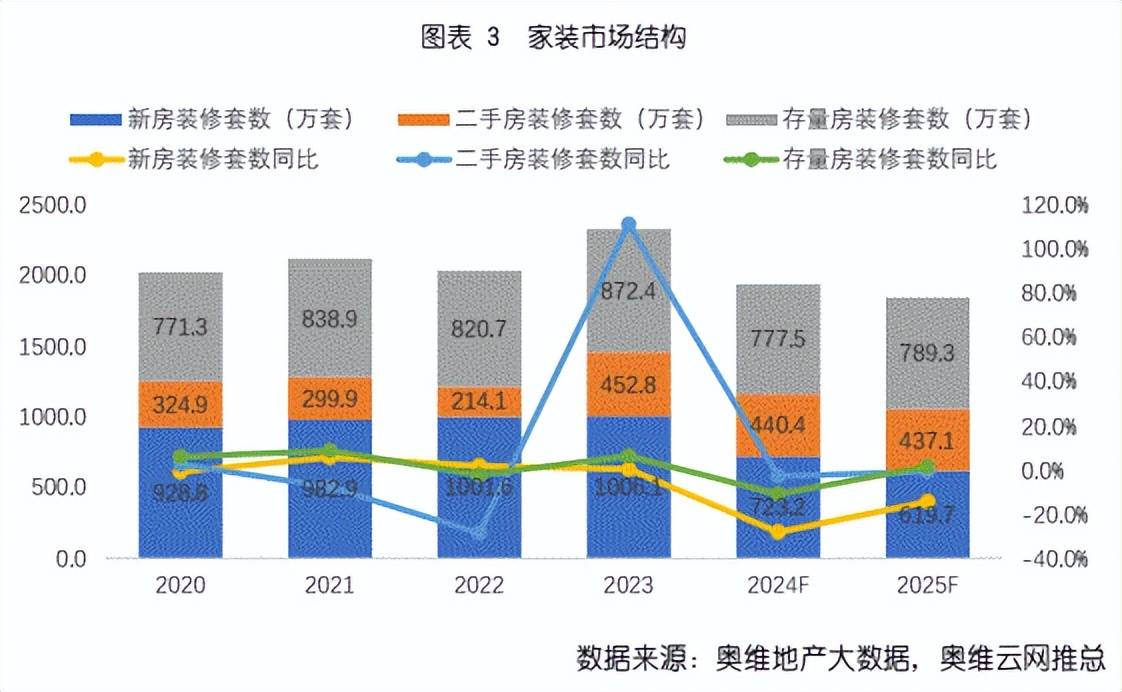
Core Viewpoint - The article discusses the significant shift in the home renovation market towards the renovation of existing homes, driven by government policies and the growing demand for urban renewal and old community renovations. Group 1: Market Dynamics - The potential of the existing housing market is yet to be fully explored, especially with recent government support for urban renewal and old community renovations emphasized in policy reports since 2021 [2][3] - The focus of the home renovation market is shifting towards existing homes, with data indicating that by 2024, the renovation of existing homes will surpass that of new homes, with an estimated market size of 1.5 trillion yuan [3][6] Group 2: Competitive Landscape - The home renovation market is seeing increased competition from both traditional home furnishing giants and emerging players, categorized into three main groups: traditional custom home furnishing companies, new entrants focused on renovation, and cross-industry players [6][8] - Traditional companies like Sophia and Oppein are launching targeted renovation services, while new players like Jingzhuang Jinggai are rapidly evolving their business models to offer comprehensive renovation solutions [6][7] Group 3: Community Strategy - A community-based strategy is becoming crucial for capturing the renovation market, as the demand is highly fragmented and requires targeted outreach to potential customers [9][10] - Companies are establishing community stores to provide localized services, with examples including Oppein's "Qinglan Xiaozhu" and Jingzhuang Jinggai's community chain stores, which aim to enhance service delivery and customer engagement [10][11] Group 4: Business Model Transformation - The shift from a sales-oriented approach to a service-oriented model is evident, with companies focusing on high-frequency services to build trust and stimulate renovation demand [12][13] - Community stores are facilitating the creation of private traffic pools, allowing for personalized marketing and increased customer retention through ongoing service relationships [13][14]