
地平线

Search documents
上汽业绩企稳背后的关键词:换挡、整合、协同
Jing Ji Guan Cha Wang· 2025-04-30 03:46
Core Insights - SAIC Motor Corporation reported a significant recovery in its operating performance in Q1 2025, with total vehicle sales reaching 945,000 units, a year-on-year increase of 13.3%, and total revenue of 140.86 billion yuan, with a net profit attributable to shareholders of 3.02 billion yuan, up 11.4% year-on-year [1][2] - The company achieved a remarkable milestone by delivering 1.368 million new energy vehicles and 1.082 million vehicles in overseas markets in 2024, making it the only Chinese automotive group to sell over one million units in both new energy and overseas markets for three consecutive years [1][3] Sales Recovery: Dual Engines of Self-owned and New Energy - The rebound in sales is attributed to the company's deep reform efforts and internal business integration, which have allowed it to seize market opportunities effectively [2][6] - In Q1 2025, the sales of SAIC's self-owned brands, including SAIC Passenger Cars, SAIC Maxus, and SAIC-GM-Wuling, contributed significantly to overall growth, with SAIC Passenger Cars selling 163,000 units (up 0.77%), SAIC Maxus 51,800 units (up 7.57%), and SAIC-GM-Wuling 353,000 units (up 57.58%) [2][8] - The new energy vehicle segment also saw substantial growth, with sales reaching 272,900 units in Q1 2025, a year-on-year increase of 29.89%, significantly outpacing the overall market growth [2][3] Market Trends and Strategic Initiatives - The rise of self-owned brands and new energy vehicles aligns with broader trends in the Chinese automotive market, where self-owned brands captured 62.7% of the domestic retail market share in March 2025, up 7.7 percentage points year-on-year, and new energy vehicles achieved a retail penetration rate of 51.1%, up 8.7 percentage points [3][5] - SAIC's overseas strategy, termed "Glocal Strategy," aims to create a localized ecosystem while expanding globally, shifting focus from mere scale expansion to value creation [5][15] Internal Reforms and Brand Revitalization - The company's internal restructuring has led to the integration of core self-owned businesses, enhancing resource concentration and operational efficiency [8][6] - SAIC is focusing on brand rejuvenation across its self-owned brands, including the high-end, intelligent IM brand, the youthful MG brand, and the locally-focused Roewe brand, each targeting different market segments [9][10] Collaborative Growth and Cross-industry Partnerships - SAIC is leveraging collaborative synergies with established partners like Volkswagen and General Motors, as well as tech companies like Huawei and OPPO, to enhance its technological capabilities and market offerings [10][13] - The company plans to launch multiple new models tailored for the Chinese market through its joint ventures, including 18 new models from SAIC Volkswagen by 2030 [12][15] Conclusion - Through internal reforms, a robust technological foundation, and strategic partnerships, SAIC is solidifying its leadership position in the domestic market while paving the way for future global expansion [15]


汽车视点丨“全民智驾”被“下架” 车企辅助驾驶回归安全第一
Xin Hua Cai Jing· 2025-04-30 02:08
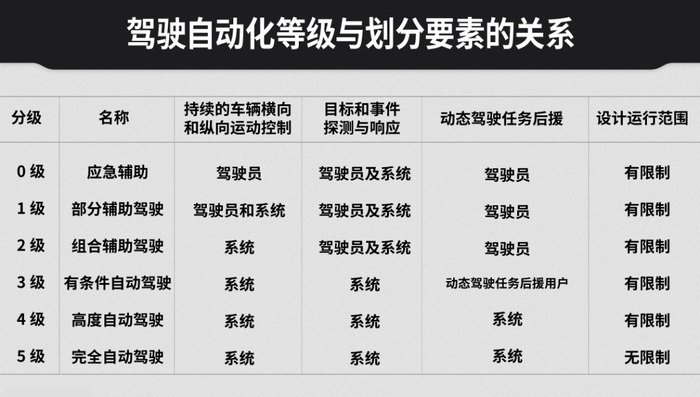
Core Viewpoint - The automotive industry is shifting its focus from flashy marketing of advanced driving technologies to prioritizing safety and regulatory compliance in intelligent driving systems [1][6]. Group 1: Industry Trends - The 2025 Shanghai Auto Show showcased a more rational approach from automotive companies, moving away from terms like "high-level intelligent driving" to standardized terminology such as L2-level assistance [1]. - Over 50 companies related to intelligent driving participated in the auto show, including both international giants like Bosch and local stars like Momenta [2]. - The Ministry of Industry and Information Technology emphasized the need for companies to adhere to safety standards and avoid exaggerated claims regarding intelligent driving systems [2]. Group 2: Consumer Education and Experience - J.D. Power's 2024 research highlighted two main issues: the rapid advancement of technology outpacing consumer understanding and the lack of standardized education on intelligent driving features [3]. - Consumers often find advanced intelligent functions difficult to understand and use, relying on various channels for information, which can lead to misinformation [3]. Group 3: Safety Initiatives and Insurance - A safety initiative was launched at the auto show by Huawei and 11 automotive companies, focusing on technology, transparent marketing, user-centric approaches, and standardization [4]. - Xiaopeng Motors introduced a new insurance service for intelligent driving, covering a wide range of scenarios with a maximum payout of 1 million yuan [4]. - Other companies like Hongmeng Zhixing and Avita have also introduced similar insurance products, indicating a trend towards enhancing consumer confidence in intelligent driving technologies [5]. Group 4: Regulatory and Market Adjustments - The tightening of regulations is seen as a necessary step to ensure safety in intelligent driving, with companies now emphasizing the importance of adhering to these guidelines [6][7]. - Industry leaders acknowledge that while technology will continue to advance, safety must remain the top priority, and companies are now more focused on the reliability of their systems [6][7]. - The distinction between different levels of driving assistance (L2, L3, L4) is becoming clearer, with a focus on the responsibilities of drivers versus the vehicle in terms of safety [7].
都看好自动驾驶,为什么相关企业接连倒闭?
3 6 Ke· 2025-04-30 01:45
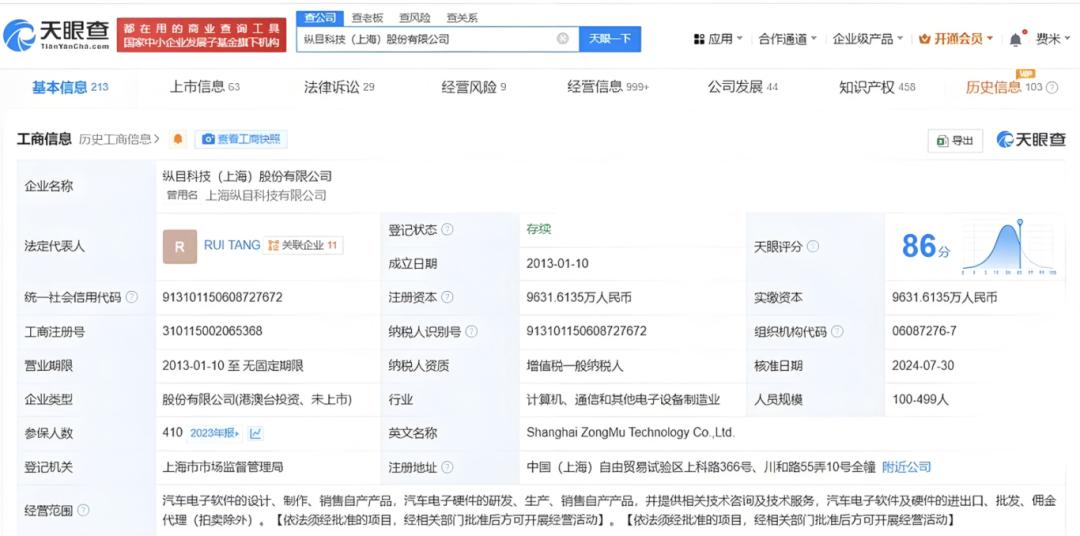
Core Viewpoint - Zongmu Technology has entered judicial reorganization, highlighting the challenges faced by the autonomous driving industry despite its previously high valuation and investment influx [1][3][6] Company Summary - Zongmu Technology, founded in 2013, has a registered capital of approximately 96.32 million RMB and focuses on the design, production, and sales of automotive electronic software and hardware [1][2] - The company has experienced significant financial losses, with net losses of 434 million RMB, 588 million RMB, and 564 million RMB from 2021 to 2023, respectively [6][8] - Zongmu's attempts to go public have failed multiple times, including a withdrawal of its IPO application in 2023, which has exacerbated its financial difficulties [6][8] Industry Summary - The autonomous driving sector has seen a decline in investment enthusiasm due to slow technological implementation and lack of profitability, leading to a "capital winter" [3][4][11] - Many companies in the industry, including Zongmu, are facing a "high investment, low output" cycle, with significant losses reported across the sector [6][10] - The shift towards in-house development by major automotive manufacturers has reduced the market for technology suppliers like Zongmu, leading to a decrease in orders and revenue [11][13] - Despite the challenges, the long-term market potential for autonomous driving remains significant, with projections suggesting a market size exceeding 500 billion USD by 2030 in China [17]
智能汽车|监管加强行业规范,智驾头部公司有望受益
中信证券研究· 2025-04-30 00:06
文 | 尹欣驰 李景涛 4月2 8日,工信部发布2 0 2 5年汽车标准化工作要点,其中提出需要强化驾驶辅助、自动驾驶等智能网联汽车标准供给。此前, 工信部召开闭门会议,进一步规范产业链公司对于辅助驾驶的宣传、发布、测试、OTA升级等活动。我们认为,产业链公司料 将重点提升产品成熟度与安全性:1)资源投入方面,预计主机厂将进一步收敛软硬件架构,以保证产品成熟度,并加速数据收 集;2)技术演进方面,能够提升系统鲁棒性的激光雷达有望加速渗透,功能边界明确、安全责任划分清晰的L3级别有条件自 动驾驶也有望获得更多资源投入。重点推荐智驾行业的头部公司。 从行业进展来看,工信部正有序推进试点工作,于2 0 2 4年6月发布首批智能网联汽车准入和上路通行试点名单,共有9个联合 体入选。从产业链公司的进展来看,华为已发布支持高速L3的ADS Ultr a,致力于推进相关功能的落地,尊界S8 0 0将成为 ADS Ultr a的首发车型之一。 ▍ 安全性将成为驾驶辅助的重要卖点,激光雷达有望逐步成为"标配产品"。 2 0 2 3年起,主机厂加速投放L2级别组合驾驶辅助功能。与视觉方案相比,激光雷达在夜间的识别能力更强,识别精 ...
自研高阶智驾芯片替代英伟达的潜力分析
是说芯语· 2025-04-29 22:59
申请入围"中国IC独角兽" 半导体高质量发展创新成果征集 在当下中国汽车智驾产业的发展进程中,自研芯片成为一股不可忽视的力量。从市场份额数据来看,不同企业的自研芯片各有表现。盖世汽车研究院数据 显示,2024年上半年,英伟达Orin-X以近73万颗的装机量,占据35.9%市场份额,在国内智驾芯片市场仍占据重要地位。但中国本土企业也在奋力追赶, 不断抢占市场份额。其中,地平线、华为、黑芝麻智能、蔚来汽车等企业已推出多款具备国际竞争力的产品。这些芯片在算力、能效比、量产进度及生态 布局方面展现出差异化优势,逐步挑战英伟达Orin的统治地位。 地平线作为国内智驾科技领域的佼佼者,根据高工智能汽车研究院数据,2024年上半年凭借征程系列计算方案,以28.65%的份额位居市场第一,在自主 品牌乘用车前视一体机计算方案市场(L2ADAS)更是以33.73%的市场份额跃居首位。其征程家族产品覆盖低、中、高阶全场景智驾量产需求,累计出货 量已超600万套,并且已经赋能超80家生态伙伴推出成熟产品,超40家投入主机厂定点及量产项目,强大的市场影响力和广泛的客户基础,使其在市场竞 争中优势明显。 黑芝麻智能同样表现不俗,2022 ...



上汽集团:一季度净利润同比增长11.4% 围绕四大价值坐标推动智能出行体验进阶
Zhong Zheng Wang· 2025-04-29 14:29
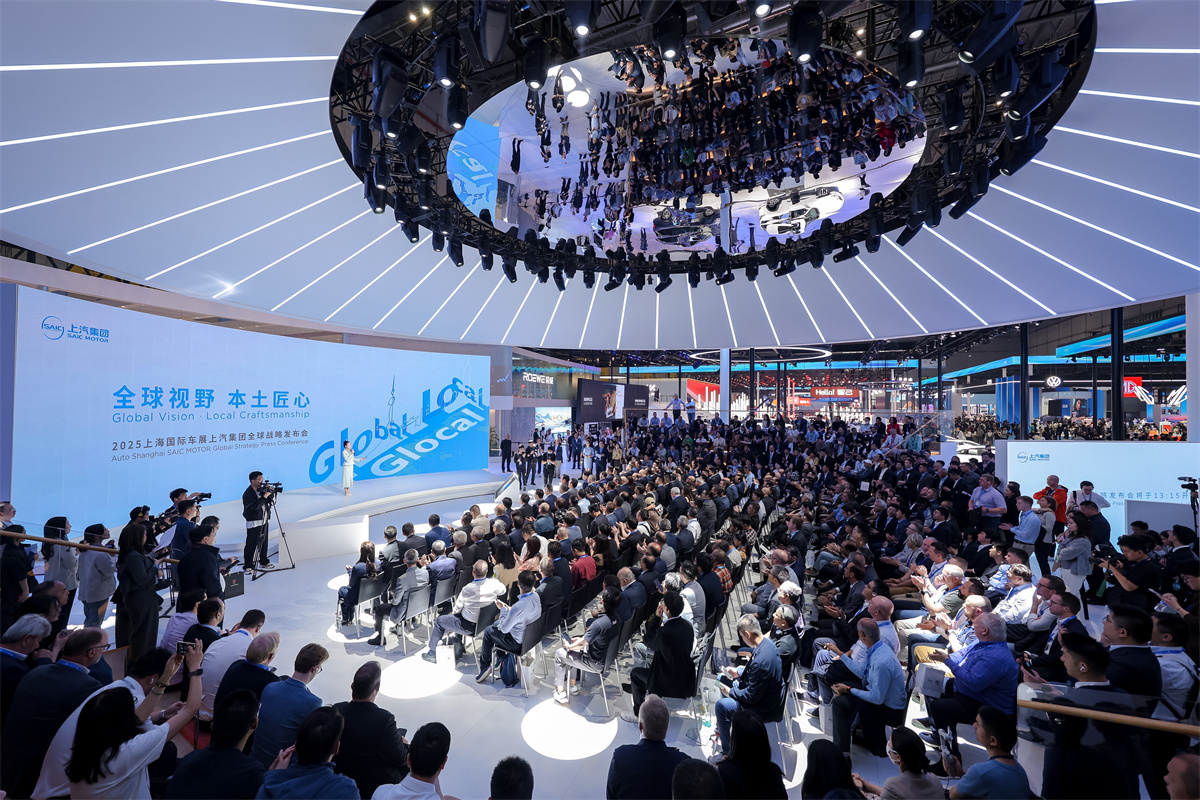
Core Insights - SAIC Motor Corporation reported a revenue of 627.59 billion yuan and a net profit of 1.67 billion yuan for the year 2024, with Q1 2025 revenue at 140.86 billion yuan and a net profit of 3.02 billion yuan, marking a year-on-year growth of 11.4% [1][2] Financial Performance - In 2024, SAIC sold 4.013 million vehicles and achieved terminal retail sales of 4.639 million vehicles, with 1.368 million of those being new energy vehicles and 1.082 million sold overseas, making it the only domestic automotive group to sell over one million vehicles in both segments for three consecutive years [2] - For Q1 2025, SAIC's total vehicle sales reached 945,000, with terminal deliveries exceeding 1.08 million, indicating a continuous improvement in channel health [2] - The sales of SAIC's new energy vehicles in Q1 2025 reached 273,000, a nearly 30% increase year-on-year, with March sales alone hitting 126,000, showing over 40% growth both year-on-year and month-on-month [2] - SAIC's self-owned brand vehicle sales in Q1 2025 reached 601,000, a 28.4% increase year-on-year, accounting for 63.6% of total sales, up 7.5 percentage points from the same period in 2024 [2] Strategic Initiatives - SAIC's chairman emphasized the importance of "equality" in the automotive industry, focusing on technological and experiential advancements to enhance user satisfaction and surprise [3] - The company aims to collaborate with both traditional partners like Volkswagen and General Motors, as well as new partners such as Huawei and ByteDance, to create a new industrial ecosystem [3] - At the 2025 Shanghai Auto Show, SAIC unveiled its strategic vision centered on "safety, intelligence, user understanding, and aesthetics" to enhance the smart mobility experience [4] New Brand Launch - SAIC and Huawei launched a new brand called "SAIC Shangjie," which is part of the HarmonyOS intelligent vehicle family, with the first model expected to debut in Q4 2025, targeting the mainstream market with a price around 200,000 yuan [5] - The brand focuses on a minimalist design philosophy and leverages Huawei's smart travel solutions to provide an intelligent mobility experience, emphasizing high safety and reliability [5] - The collaboration aims for "dual empowerment," combining SAIC's manufacturing expertise with Huawei's technological innovations in the smart driving sector [5]
上海车展开幕,聚焦智能化 | 投研报告
Zhong Guo Neng Yuan Wang· 2025-04-29 09:33
Core Viewpoint - The 2025 Shanghai Auto Show, themed "Embrace Innovation and Win the Future," opened on April 23, showcasing advancements in automotive technology and attracting nearly a thousand domestic and international exhibitors, with a record scale and nearly a hundred new car models unveiled [1][2]. Industry Highlights - The auto show highlighted a focus on smart technology, with several automakers launching new products, including Li Auto's new family member, the Li Auto MEGA Home, and upgraded versions of the Li Auto MEGA Ultra and Li L6 [3]. - XPeng Motors showcased its humanoid robot IRON, which stands 178 cm tall and can perform various movements, emphasizing the importance of full-body intelligence in robotics [2][3]. - SAIC Group and Huawei introduced a new brand "SAIC Shangjie," marking a significant collaboration in the smart vehicle sector [3]. - Horizon Robotics presented its new urban driving assistance system, Horizon SuperDrive, and has partnered with over 40 automakers, achieving over 8 million units in pre-production deliveries [4]. Investment Strategy - The automotive sector is advised to focus on undervalued leading manufacturers and component suppliers due to performance improvements, particularly in the fields of new energy and smart technology [5]. - Recommended companies include BYD, Changan Automobile, Geely, and Li Auto in the new energy sector, as well as stable, undervalued component leaders like Huayu Automotive and Fuyao Glass [5]. - Key focus companies for the week include BYD, Li Auto, Top Group, Desay SV, and Sheng Electronics [6].


2025上海车展:当智驾不再让人兴奋,汽车智能化暗战升级
Xin Lang Cai Jing· 2025-04-29 07:10
Group 1: Industry Trends - The 2025 Shanghai Auto Show reflects a shift towards balancing technology pursuit, commercial value, and social benefits in the automotive industry [1] - The focus on L3 conditional autonomous driving is becoming a common goal among major Chinese automakers, with many aiming for commercial viability by 2025 [2][3] - The automotive industry is transitioning from a marketing-driven approach to one centered on product and user needs, indicating a return to the essence of the industry [1][23] Group 2: Technological Developments - Huawei's ADS 4.0 system was introduced as a high-level intelligent driving solution, with expectations for L3 commercial capabilities by 2025 [2] - The L3 level of automation allows vehicles to perform all driving tasks under specific conditions, marking a significant advancement from L2 [3][7] - The integration of world models and reinforcement learning is seen as a new generation of intelligent driving technology, enhancing decision-making and safety [10][12] Group 3: Regulatory Changes - New regulations in Shenzhen and Beijing clarify accident liability in L3 autonomous driving scenarios, placing responsibility on manufacturers for system failures [16] - These regulatory changes are expected to drive automakers to invest more in technology development and safety testing [16] Group 4: Market Dynamics - The automotive industry is experiencing a shift in consumer expectations, with users increasingly demanding vehicles that understand their needs rather than just perform tasks [18][19] - Companies are focusing on self-research and development of core technologies to enhance brand competitiveness and reduce reliance on external suppliers [20][22] - The competitive landscape is evolving, with traditional automakers needing to innovate while new entrants focus on applying the latest technologies [20][23]
智驾宣传“降温” 车企智驾系统忙更名 上汽通用五菱林智桂:智驾不是为了替代用户
Mei Ri Jing Ji Xin Wen· 2025-04-29 05:51
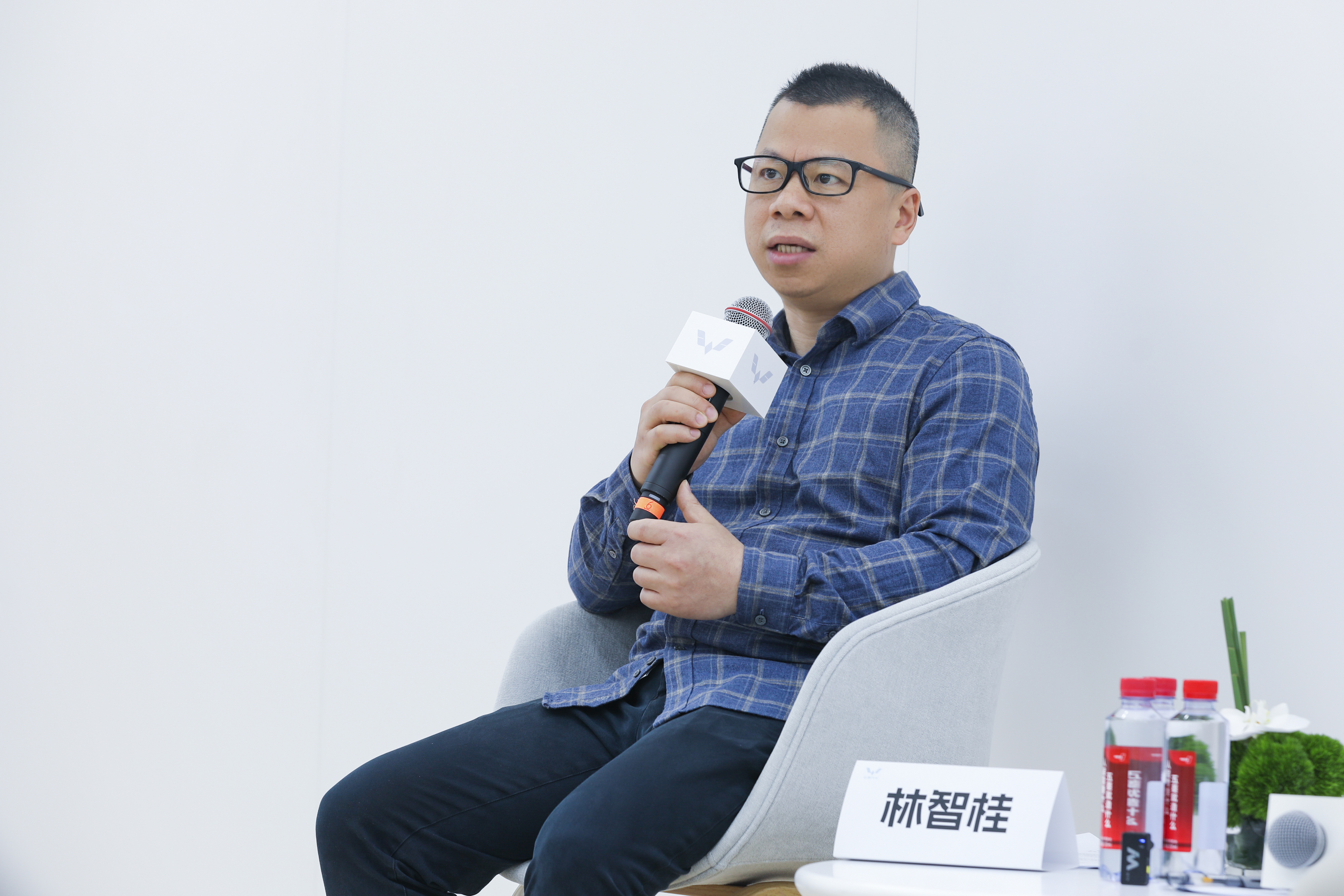
Group 1 - The marketing narrative in the automotive industry has shifted from an aggressive "smart driving arms race" to a more pragmatic approach focusing on "gradual technological iteration" and "enhanced safety margins" during the 2025 Shanghai Auto Show [1][3] - There has been excessive marketing of L2-level assisted driving as "autonomous driving," leading to scrutiny from regulators and consumers. The industry is now returning to a more rational perspective, which is beneficial for healthy development [3][6] - The Ministry of Industry and Information Technology has emphasized the need for automotive manufacturers to conduct thorough testing and validation of driving assistance systems, ensuring clear communication of system capabilities and safety measures [3][6] Group 2 - Industry leaders view the new regulations as a means to normalize the sector rather than restrict it, with clearer safety standards being welcomed by companies like BMW and Horizon Robotics [6] - Major automotive companies, including SAIC-GM-Wuling and BYD, have rebranded their advanced driving systems to "assisted driving" to guide users in proper system usage, which is seen as crucial for the industry's health [6][10] - The penetration rate of new cars with L2-level and above intelligent assisted driving in China reached 55.7% in the first half of 2024, with expectations to exceed 65% by the end of the year [7][10] Group 3 - The 2025 Shanghai Auto Show marked the pre-sale announcement of the Wuling Star 2025 model, which will feature the intelligent assisted driving system, indicating a shift in product positioning [10] - As the automotive industry enters the second half of its smart transformation, competition is expected to focus primarily on intelligent driving technology [10]
观车 · 论势 || 从电动化迈向智能化 中国汽车引领变革 ——2025上海车展深度观察
Zhong Guo Qi Che Bao Wang· 2025-04-29 01:19
Core Insights - The 2025 Shanghai International Auto Show, themed "Embrace Innovation, Win the Future," highlights China's automotive industry's shift from electrification to intelligence, reshaping the global competitive landscape [1] Technological Trends - Breakthroughs in new energy technologies were showcased, including the mass production of solid-state batteries with energy density exceeding 400Wh/kg and 800V high-voltage platforms becoming standard [1] - The Ideal i8 supports ultra-fast charging, allowing for 400 kilometers of range in just 10 minutes, while GAC's hydrogen fuel cell vehicles achieve over 800 kilometers of range [1][2] - Driving assistance technologies are entering mass production, with various companies integrating advanced systems, making them standard across both new and traditional automotive brands [2] Market Competition Landscape - Chinese automakers are leveraging technological advantages to penetrate the high-end market, with significant sales growth in electric vehicles priced above 300,000 yuan, which increased by 12 percentage points year-on-year [3] - Traditional automakers are accelerating their transition to electric platforms, with many adopting local technologies and enhancing their offerings with advanced driving assistance systems [3] New Forces and Brand Dynamics - The market is witnessing a polarization among new entrants, with leading companies establishing ecological barriers while weaker brands face financial challenges [4] - User experience is evolving, with vehicles transforming into smart terminals, featuring multi-modal interactions and personalized environments [4] Industry Implications - The Shanghai Auto Show signals a new era, with Chinese brands leading in multiple fields, a shift in supply chain roles, and an upgrade in user experience [4] - The automotive market is expected to see a significant increase in the share of L2+ level vehicles, projected to reach 65%, indicating a growing emphasis on advanced driving assistance features [4]