
腾讯

Search documents
江小涓:中国不缺钱,缺的是“把钱用对地方”的能力
Jing Ji Guan Cha Bao· 2025-12-29 04:02
Core Viewpoint - China is not lacking in capital but rather in the ability to allocate funds effectively to the right areas [4][11] Group 1: National and Local Investment Funds - The National Venture Capital Guidance Fund has been established with a registered capital of 100 billion RMB and aims to set up over 600 sub-funds to support emerging industries [2] - Local venture capital guidance funds are also being established, such as the Guangdong-Hong Kong-Macau Greater Bay Area Fund with a target size of 50.45 billion RMB and the Beijing Fengtai District Fund with an initial scale of no less than 10 billion RMB [3] Group 2: Shift in Investment Focus - The focus of investment has shifted from merely finding capital to selecting the right projects, as the total scale of government-led guidance funds has exceeded 1 trillion RMB [5] - The Chinese technology innovation capability has solidified, and a surge of new technologies is expected during the 14th Five-Year Plan period, creating a significant opportunity for investment in quality tech projects [5] Group 3: Rise of Corporate Venture Capital (CVC) - Corporate venture capital (CVC) is emerging as a key player in filling the capability gap left by traditional financial institutions, with companies like Alibaba and Tencent leading the charge in investing in new startups [6][8] - CVCs are increasingly aligning their investments with their own development needs, particularly in cutting-edge research areas like artificial intelligence [8] Group 4: Challenges for Traditional Financial Institutions - Traditional financial institutions face challenges in accurately identifying quality investment targets amidst the influx of capital from CVCs and government venture capital [6][9] - The competition from CVCs and government venture capital could lead to a talent and project drain from traditional financial sectors if they do not adapt [9][10] Group 5: Optimism for Future Innovation - There is a strong optimism regarding China's technological innovation landscape, with expectations of a diverse and accessible funding environment for quality projects [9] - The significant capital injection into technology innovation is unprecedented, with various funds and corporate actions indicating a robust commitment to advancing the sector [10]
“二号人物”拟减持不超20亿美元股票 小米早盘一度跌超3%
Mei Ri Jing Ji Xin Wen· 2025-12-29 02:43
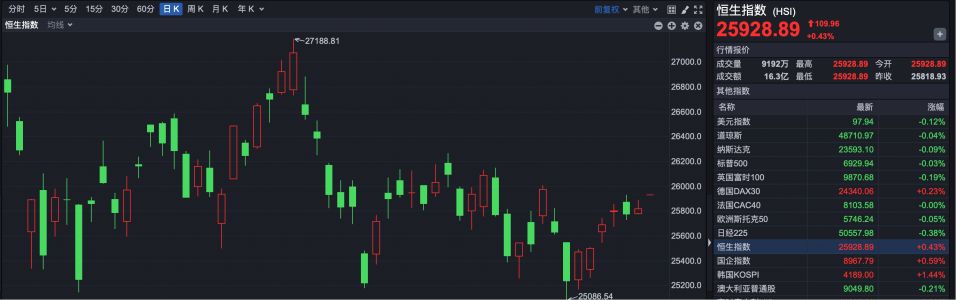
每经记者|曾子建 每经编辑|袁东 12月29日早盘,港股市场经过节假日休市之后继续小幅高开。 截至发稿,恒生指数报25928.89点,上涨109.96点,涨幅0.43%。 炒股就看金麒麟分析师研报,权威,专业,及时,全面,助您挖掘潜力主题机会! 港股速报 | "二号人物"拟减持不超20亿美元股票 小米早盘一度跌超3% 恒生科技指数报5547.79点,上涨48.49点,涨幅0.88%。 焦点公司方面,小米集团(HK01810)昨晚发布公告,公司联合创始人、执行董事、副董事长林斌计划自2026年12月开始,每12个月出售金额不超过5亿美 元的公司B类普通股,累计出售总金额不超过20亿美元。此外,林斌此次减持款项将用于成立投资基金。 公开资料显示,2010年,林斌与雷军共同创立小米,出任总裁至2019年,后担任副董事长。创业初期,林斌凭借自身人脉为小米招揽诸多关键人才,在供应 商战略合作、产品运作和销售等方面也发挥了关键作用,帮助小米在竞争激烈的智能手机市场崛起。 值得注意的是,此前林斌已多次减持小米集团股票。其中,2019年8月,林斌通过大宗交易套现3.7亿港元。时隔一年,2020年9月,林斌套现79.97亿港元 ...


财信证券晨会纪要-20251229
Caixin Securities· 2025-12-29 00:20
Group 1: Market Overview - The overall market shows a positive trend with the Shanghai Composite Index closing at 3963.68, up by 0.10% [1] - The Shenzhen Component Index increased by 0.54%, closing at 13603.89, while the ChiNext Index rose by 0.14% to 3243.88 [1] - The CSI 300 Index also saw a gain of 0.32%, ending at 4657.24, indicating a generally bullish sentiment in the market [1] Group 2: Economic Insights - The Chinese ETF market has reached a record high of 6.03 trillion yuan, marking an increase of over 60% year-to-date [23][24] - The Ministry of Finance announced a continuation of a more proactive fiscal policy in 2026, aiming to expand fiscal spending [21][22] - The People's Bank of China is focusing on creating a favorable environment for long-term investments in A-shares, aiming to increase the scale and proportion of various long-term funds [27][28] Group 3: Industry Dynamics - The establishment of the Human Robot and Embodied Intelligence Standardization Technical Committee by the Ministry of Industry and Information Technology aims to promote the development of the humanoid robot and embodied intelligence industry [29][30] - The total box office for Chinese films in 2025 reached 51.2 billion yuan, with over 1.22 billion viewers, setting new annual records [31][32] - The approval of 1771 games in 2025 marks the highest number in seven years, indicating a robust gaming industry [33] Group 4: Company Updates - Heng Rui Medicine has licensed its SHR6508 project rights in mainland China to Hansoh Pharmaceutical, receiving an upfront payment of 30 million yuan [39][40] - Chipmaker Chipone Technology reported a significant increase in new orders, totaling 2.494 billion yuan, a 129.94% increase compared to the previous year's fourth quarter [42] - Shengyi Technology announced an adjustment to its share repurchase price ceiling to no more than 144.36 yuan per share [43][44] - Jianlin Home has entered into a strategic partnership with Jieka Robotics to enhance its smart home offerings [45][46] Group 5: Regional Economic Developments - In Changsha, the import and export volume maintained growth, with "new three samples" products seeing an export increase of 86.7% [50][52] - The city reported a total import of 2.5944 trillion yuan in the first eleven months of 2025, reflecting a 2.7% year-on-year growth [51]

京东物流首个海外智狼仓在英国投用;飞书在海外上线AI办公App“AnyGen”|36氪出海·要闻回顾
36氪· 2025-12-28 13:34
Core Insights - The article highlights significant developments in various companies and industries, focusing on their international expansions, technological advancements, and strategic partnerships. Group 1: Logistics and Supply Chain - JD Logistics has launched its first overseas automated warehouse in the UK, enhancing its supply chain efficiency and enabling same-day delivery for consumers [5][6]. - SF International signed a memorandum of cooperation with MSC Air Cargo to improve global supply chain resilience through integrated air, land, and sea transport [8]. Group 2: Technology and AI - Feishu (Lark) has introduced an AI office app called "AnyGen" overseas, which allows users to convert voice notes and ideas into documents and presentations seamlessly [5][6]. - Alibaba's Tongyi has released two foundational models to enhance industrial-grade video and voice capabilities, including a video generation model that supports multi-scene storytelling [5][6]. Group 3: Automotive Industry - XPeng Motors is expanding its presence in the Middle East and Africa, launching its brand in Qatar and establishing partnerships in Mauritius and the UAE [9]. - Lynk & Co has officially entered the UAE market, showcasing its flagship SUV and emphasizing community engagement and high-end positioning [9]. Group 4: Investment and Financing - Sazhi Intelligent has completed several rounds of financing, with over 20% of its revenue coming from overseas markets, aiming to increase this to around 50% [12]. - Qianjue Technology has secured nearly 100 million yuan in financing to accelerate global commercialization and technology development in the embodied intelligence sector [13]. Group 5: Market Regulations - Thailand will eliminate the tax exemption for cross-border packages valued under 1,500 THB starting January 1, 2026, which is expected to increase costs for cross-border e-commerce [15].

——互联网传媒周报20251222-20251226:字节AI春晚合作,游戏潮玩视频消费旺季来临-20251228
Shenwan Hongyuan Securities· 2025-12-28 12:20
Investment Rating - The industry investment rating is "Overweight," indicating that the industry is expected to outperform the overall market [9]. Core Insights - ByteDance's AI collaboration for the Spring Festival is a significant milestone, with its product Doubao achieving over 100 million daily active users. The integration with Douyin's e-commerce platform is expected to enhance monetization through advertising and transaction fees [2]. - Alibaba is focusing on AI advancements, particularly in chip localization and consumer applications, while Tencent is restructuring its AI framework to accelerate the development of large models [2]. - The gaming sector is entering a peak season, with major titles expected to drive user engagement and revenue growth. Notable releases include Giant Network's "Supernatural Action Group" and Tencent's "Delta" [2]. - The collectibles market is also thriving, with Pop Mart's Labubu 4.0 set to launch, reflecting a diverse product range and successful international market expansion [2]. Summary by Sections AI and Technology - ByteDance's AI cloud partnership for the Spring Festival and Doubao's integration with e-commerce are pivotal for future growth [2]. - Alibaba's AI initiatives include the launch of new products and continued growth in cloud services [2]. - Tencent's restructuring aims to enhance its AI capabilities and product offerings [2]. Gaming Industry - The upcoming gaming season is highlighted by major releases that cater to a younger audience, which is crucial for monetization [2]. - Notable games include "Supernatural Action Group" and "Delta," which are expected to perform well during the peak season [2]. Collectibles and Entertainment - Pop Mart's Labubu 4.0 is anticipated to boost sales, supported by a diverse product lineup and international market strategies [2]. - The animation "Chinese Fantasy 2" is set to premiere exclusively on Bilibili, indicating strong collaboration in the entertainment sector [2]. Advertising and Media - Companies like Tencent, Alibaba, and Baidu are expected to benefit from AI product promotions, which will positively impact advertising firms like Focus Media [2]. - The report emphasizes the importance of adapting to AI changes in content production to maintain competitive advantages [2].
中国MaaS服务紧追美国云厂商:加速度缩小差距
Xin Lang Cai Jing· 2025-12-28 11:11
Core Insights - The global AI industry is undergoing a significant transformation, particularly in the Model as a Service (MaaS) sector, with a notable shift in the competitive landscape between China and the U.S. [1] - Chinese companies like Alibaba Cloud and Volcano Engine are rapidly closing the gap with U.S. giants such as OpenAI and Google Cloud in the MaaS market [1][2] Market Dynamics - As of October 2025, the daily average token usage for major MaaS providers is as follows: OpenAI at approximately 70 trillion, Google Cloud at 43 trillion, and Volcano Engine at over 30 trillion [3] - By the end of December 2025, Volcano Engine's daily token usage surged to 50 trillion, surpassing Google Cloud's previous levels [2][3] - The MaaS market is projected to grow tenfold in the coming year, driven by explosive growth in the Chinese market [2] User Segmentation - The user base for MaaS services is predominantly composed of individual users (80%), but enterprise users account for 80% of the token consumption [3] - The early growth of MaaS services was primarily in the consumer sector, but the enterprise market is rapidly emerging [2] Competitive Landscape - Chinese companies are achieving significant advancements in specific AI applications, such as video generation, where they are competitive with global counterparts [4][5] - The gap in foundational large language models remains, with U.S. companies like OpenAI having a head start [5] Strategic Approaches - Chinese firms are shifting focus from pure parameter competition to creating user-friendly, efficient, and commercially viable service ecosystems [5][6] - The MaaS market in China is characterized by a collaborative approach among local firms, aiming to expand the overall market rather than compete against each other [6] Differentiated Development Paths - The U.S. model emphasizes computational power and general large models, while the Chinese approach focuses on application, deployment, and industry penetration [6] - The market concentration in large models is expected to narrow down to a few key players, while smaller models tailored for specific industries are anticipated to see significant growth [6] Business Model Evolution - The MaaS pricing model is evolving from a token-based system to a more value-driven "Agent as a Service" model, allowing clients to purchase specific AI solutions [6] - This shift is expected to expand the MaaS market into the broader Business Process Outsourcing (BPO) sector, which is valued in the trillions [6] Challenges Ahead - The foundational large model sector still presents challenges due to existing technological barriers established by early movers like OpenAI [7] - Addressing concerns regarding the neutrality of Chinese MaaS platforms, especially those linked to large internet companies, remains a critical issue for the industry [7]



火了整整一年 AI更“懂人”了!
Sou Hu Cai Jing· 2025-12-27 09:43
Core Insights - The AI industry is experiencing significant advancements, marked by the release of the DeepSeek AI model, which has sparked a wave of revaluation in the tech sector [2] - AI applications are evolving from simple question-answering to executing complex multi-modal tasks, indicating a shift towards more sophisticated AI capabilities [3][4] - The competition in the AI sector is increasingly focused on multi-modal capabilities, where models must understand and generate various types of information [4] Group 1: AI Advancements - The launch of DeepSeek's AI model R1 on January 20, 2025, has ignited a revaluation of tech stocks in the A-share and Hong Kong markets, leading to a surge in AI-related companies [2] - AI applications are now capable of processing multi-modal information, moving from mere intent understanding to executing services based on real-world data [2][3] - The introduction of various AI applications, such as Sora 2 and the Ant Group's AI health app, showcases the growing sophistication and understanding of AI in real-world scenarios [4][5] Group 2: Market Dynamics - The AI industry is transitioning from a phase reliant on capital investment to one that demands self-sustainability and rigorous scrutiny, as evidenced by companies like Zhiyu and MiniMax seeking IPOs [7] - The investment landscape for AI has been robust, with significant funding rounds and a total of 186 financing events in the AIGC sector from July to November 2025, amounting to 33.67 billion [7] - Major tech companies are committing substantial resources to AI development, with Alibaba planning to invest at least 380 billion RMB over three years for cloud computing and AI infrastructure [7] Group 3: Application Trends - AI applications are becoming more specialized, with a notable increase in vertical applications in healthcare, as seen with the Ant Group's AQ brand upgrade to Ant Aifu [5][6] - The competitive edge in AI applications is shifting from model parameters to a deeper understanding of industry needs and the ability to create closed-loop solutions [6] - The current landscape features a mix of general-purpose AI and specialized applications, with a notable presence of healthcare-focused AI apps among the top user engagement rankings [5][6] Group 4: Future Outlook - The AI industry is at a critical juncture, transitioning from a conceptual phase to a growth phase, with a need to enhance monetization strategies for AI applications [9] - Predictions for 2026 indicate a focus on lightweight models and deeper integration of AI with the real economy, alongside the establishment of regulatory frameworks to guide industry development [9][10] - The emergence of embodied intelligence and AI smartphones is expected to drive significant growth, with a competitive focus on application ecosystems among various AI platforms [10]
2025年Q3中国移动互联网流量季度报告
艾瑞咨询· 2025-12-27 00:03
Core Insights - The report indicates a slight growth in mobile internet traffic in Q3 2025, with user behavior shifting towards low-frequency deep usage. Monthly active devices reached 1.452 billion, a 0.83% increase from Q2 2025, while daily usage frequency decreased by 2.9% to 59.8 times, and usage duration increased by 2.3% to 282.9 minutes, reflecting deeper user engagement [1][2][6]. User Changes - The proportion of unmarried users increased to 32.7%, up 1.39% year-on-year, with growth driven by the unmarried demographic in mid-to-high tier cities [2][8]. - User preferences vary significantly by age, with younger users (post-2000) favoring gaming and entertainment, while those aged 25-30 lean towards parenting and family content [2][16]. Industry Changes - The food delivery sector saw a temporary surge in traffic due to intense competition, but growth momentum has weakened post-surge, with a decline in user engagement metrics [3][61]. - The travel and transportation sector continues to grow, with a 15% year-on-year increase in usage duration, and monthly active users reaching 1.13 billion [3][65]. - Artificial intelligence applications are experiencing rapid growth, with monthly active users reaching 470 million and a year-on-year increase of 321% in user scale [3][37]. - The gaming service sector is facing overall decline, with intensified competition among existing players [4][76]. APP Changes - The top three apps with over 100 million monthly active users in September 2025 were: Railway 12306, Doubao, and Quanmin K Ge, while the top three apps with over 50 million monthly active users were: Tencent Yuanbao, Soda Music, and Zhuanzhuan [5][81][82].

未来智造局 | 国产AI芯片加速追赶 为算力经济注入“中国芯”
Xin Hua Cai Jing· 2025-12-26 15:38
Core Insights - The domestic GPU industry is poised for historic development opportunities by 2025, driven by technological breakthroughs and a growing ecosystem, reflecting strong market recognition of domestic "hard technology" [1][2] - The rapid development of domestic GPUs not only supports cutting-edge industries like artificial intelligence but also enhances supply chain security, contributing to high-quality economic development [1] Industry Development - The demand for computing power has surged due to the global rise of AI models, with China accelerating the construction of robust computing infrastructure [2] - By 2025, major tech companies in China, including Alibaba, Tencent, and ByteDance, are expected to invest approximately 450 billion yuan in AI computing power, with 30% allocated for domestic chip validation and adaptation [2] - The domestic GPU industry is transitioning from technological exploration to commercialization and scaling, with leading companies innovating architectures and integrating ecosystems to catch up with international giants [2][3] Technological Innovations - Domestic GPU manufacturers are striving to capture market share through technological innovation and differentiation strategies, with some companies achieving significant breakthroughs [3] - The introduction of supernodes as core computing units in intelligent computing centers is a key focus, with Huawei showcasing its Ascend 384 supernode, achieving a total computing power of 300 PFLOPS, surpassing international competitors [3] Market Dynamics - The emergence of open-source domestic models like DeepSeek is driving explosive growth in AI applications, with future demand for inference computing power expected to be significantly higher than training power [4] - The domestic GPU sector faces challenges in general computing and high-performance scenarios due to technological gaps and ecological barriers, particularly in comparison to NVIDIA's established CUDA ecosystem [5] Ecosystem Development - To address ecological shortcomings, domestic companies are exploring paths such as chiplet technology, collaboration with model manufacturers, and enhancing software ecosystems [5][6] - Strategic collaborations among companies like Wallen Technology, Jiyue Star, and Shanghai Yidian Smart Computing aim to create a comprehensive ecosystem for domestic chips, models, and computing power [6] Capital Market Trends - The domestic GPU industry is experiencing a notable IPO boom, with significant fundraising activities, including the record-setting IPO of Moore Threads on the STAR Market [7][8] - The market's enthusiasm for domestic AI chip companies is fueled by high valuations of international competitors like NVIDIA and AMD, alongside the successful turnaround of companies like Cambricon [8] - Analysts highlight that the accelerated IPO processes reflect strong market recognition of the domestic GPU sector, with funds raised primarily aimed at R&D and ecosystem development [8]


【e公司观察】国内AI原生APP竞争格局逐渐清晰
Zheng Quan Shi Bao Wang· 2025-12-26 14:08
Core Insights - The article discusses the competitive landscape of four major applications: Doubao, Quark, Yuanbao, and DeepSeek, highlighting their unique strengths and market positions [1][2][3] Doubao - Doubao, developed by ByteDance, has achieved significant success due to its high promotion efficiency, leveraging the Douyin recommendation system for user acquisition [2] - As of December 2025, Doubao is projected to have 155 million weekly active users, with an average daily interaction time of 28 minutes [2] Quark - Quark, initially launched as a minimalist browser by Alibaba in 2016, has evolved into a strategic innovation for the company, being recognized alongside other key products [2][3] - The app has diversified its offerings to include search, cloud storage, and various productivity tools, making it popular among students and professionals [3] Yuanbao - Yuanbao, launched by Tencent in mid-2024, has struggled to establish a strong competitive position compared to its peers, despite initial growth supported by Tencent's user base [3] - The app's development has been marked by a lack of distinctive features, leading to a perception of it as a follower in the market [1][3] DeepSeek - DeepSeek's growth has primarily relied on organic user downloads, but it has faced challenges as its technological advantages diminished, resulting in user attrition [3] - The app's market share has been eroded by competitors, indicating a need for stronger promotional efforts to regain user interest [3] Industry Dynamics - The competition among these applications is characterized by a focus on technology, user engagement, and promotional strategies, with ByteDance and Tencent holding significant advantages in traffic control [4] - The current market trend emphasizes investment in large model infrastructure, with companies like NVIDIA gaining attention as industry leaders [4] - The ability to serve users effectively is crucial for monetization, and app usage metrics are key indicators of a company's AI service capabilities [4]