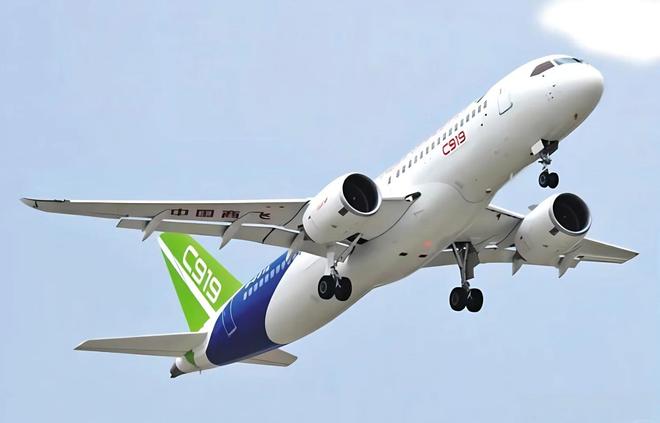
中国商飞

Search documents
最新披露,社保新晋7只大飞机龙头股,全是全球唯一性龙头
Sou Hu Cai Jing· 2026-01-24 03:40
Core Viewpoint - The A-share market experienced a significant sector rotation, particularly in the large aircraft sector, with major stocks like Changhe Aircraft Industries and others hitting the daily limit up, indicating a collective surge in the industry chain [1] Group 1: Market Movement - The large aircraft sector saw a collective rally with 13 leading stocks reaching their daily limit up, indicating strong investor interest and confidence in the sector [1] - The surge in the large aircraft sector is attributed to recent disclosures from the National Social Security Fund, which revealed new investments in seven leading companies within the large aircraft industry chain [3][4] Group 2: Key Companies and Investments - Chaojie Co., a core supplier of fasteners for the C919 aircraft, was highlighted as a new investment by the social security fund, becoming its sixth-largest shareholder with 670,000 shares [3] - Xice Testing, the only private entity with full-chain aerospace testing qualifications, saw the social security fund increase its holdings to 3.5 million shares, making it the fourth-largest shareholder [3] - Aero Engine Corporation of China (AECC) Technology, a key player in the C919 engine supply chain, attracted new investments from major international banks like Goldman Sachs and UBS [3] - Hangya Technology, a leader in the domestic aviation precision forging blade sector, received new investments from the social security fund, becoming the eighth and ninth largest shareholders [4] - Hongdu Aviation, a core enterprise under AVIC, is the sole supplier of the C919's front and rear fuselage, with the social security fund acquiring 5 million shares [4] Group 3: Industry Developments - The European Union Aviation Safety Agency (EASA) completed the compliance flight test for the C919, providing a positive evaluation that exceeded market expectations and facilitating its entry into the EU market [6] - The CJ-1000A domestic engine has completed extensive testing, resolving previous capacity constraints and is expected to receive certification by the second quarter of 2026 [6] - Predictions indicate that C919's annual production capacity could rapidly increase to 50-70 aircraft by 2027, with plans to raise production from 30 to 60 aircraft in 2026 [7] Group 4: Market Potential - The existing orders for C919 exceed 1,000 aircraft, representing a market scale of 650 billion yuan, with the potential to drive over 2 trillion yuan in value across the supply chain [7] - The Yangtze River Delta region has become a hub for the large aircraft industry, housing over one-third of the national aircraft supply chain suppliers [7] - By 2043, China's civil aviation fleet is projected to reach 10,061 aircraft, making it the largest single aviation market globally, with an expected reception of 9,323 new passenger aircraft over the next 20 years [8]



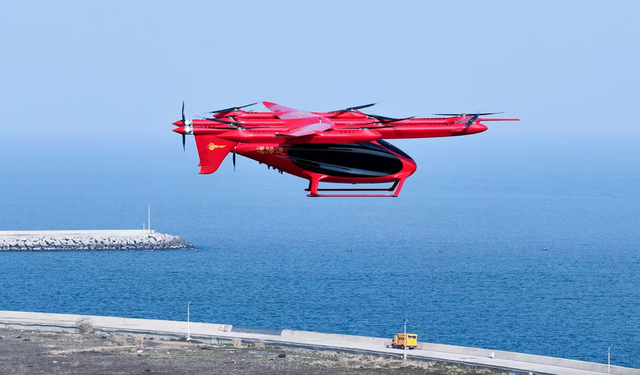
“eVTOL五小龙”齐聚 上海争夺低空经济先发优势
Xin Lang Cai Jing· 2026-01-23 19:56
Core Insights - Shanghai is focusing on developing electric vertical takeoff and landing aircraft (eVTOL) to capture the low-altitude economy, with the establishment of a significant transportation node in the Yangtze River Delta [2][4] - The city aims to achieve a core industry scale of approximately 80 billion yuan in the low-altitude economy by 2028, creating a complete industrial chain for new aviation vehicles [4][5] - Shanghai's strategic initiatives are part of a broader transition towards a future-oriented manufacturing model, integrating advanced manufacturing, digital technology, and artificial intelligence [3][5] Policy Initiatives - Shanghai has introduced several supportive policies for the low-altitude economy and commercial aerospace, including the "Measures" and "Action Plan" aimed at fostering investment and innovation in these sectors [2][4] - The government is providing financial support for eVTOL projects, with funding up to 10 million yuan for key manufacturing capabilities and technology breakthroughs [5][6] Industry Development - As of December 2025, Shanghai is home to at least 251 low-altitude economy startups, with 66 eVTOL and drone manufacturers, representing over 50% of the country's leading eVTOL companies [6][7] - The city has a robust aviation industry ecosystem, including expertise in aircraft design, manufacturing, and airworthiness certification, which supports the growth of eVTOL enterprises [6][7] Infrastructure and Challenges - Infrastructure development is identified as a major bottleneck for the low-altitude economy, with calls for improved vertical takeoff and landing sites and enhanced low-altitude communication and navigation systems [8][9] - The industry is in its early stages, with public concerns about the safety of eVTOL products, necessitating a focus on compliance and safety verification throughout the development process [9]
广州2025年内资项目投资总额排名全省第一
Nan Fang Ri Bao Wang Luo Ban· 2026-01-23 08:14
1月22日,据广州市投资发展委员会办公室消息,2025年全市累计新引进产业项目3169个,预计投资总 额超5900亿元。其中,投资或产值/营收超十亿元的项目215个。内资项目投资总额在全省排名第一。推 动华星光电T8、藏粤直流等重大生产力骨干项目落户。 在深化与中央企业(央企)的战略合作方面,广州展现出前瞻性的谋划与主动作为。去年,广州主动谋 划央企在穗发展的"第二增长曲线",推动中国通号智能科技、中海油销售总部项目等51个项目落户,与 中国商飞等6家企业签订战略合作协议,与中国移动共建产业生态。 外资利用方面,广州同样实现了量与质的双提升。2025年新设外资企业数量达1.1万家,同比增长 28.8%。实际利用外资251.9亿元人民币,同比增长9.1%。纵深拓展外资合作,推动巴斯夫在华140周年 节点与广州签订双中心协议,安利在华30周年节点增资扩产,汇丰银行全球培训中心运营,鹏瑞利、抖 音、TCL家电等成为外资入资的新增长点。 优异的引资成绩背后,是广州持续深化营商环境改革、系统性提升投资效能的坚实努力。去年,广州出 台《广州市进一步促进企业投资发展的若干措施(第一批)》,系统降低用地、审批等制度性交易成 ...
变天了?马克龙非常罕见地发表反美演讲:帝国野心再次浮出水面!
Sou Hu Cai Jing· 2026-01-23 08:09
Group 1 - Macron's speech at the Davos Forum marked a significant shift in France's diplomatic stance, openly challenging Trump's leadership and highlighting the resurgence of imperial ambitions [1][3][10] - The immediate trigger for the escalating tensions was the announcement of a 200% tariff on French wine by the White House, which is seen as a blatant economic confrontation [3][4] - The economic implications of the tariff are severe, potentially increasing the price of French champagne from $50 to $150, thereby making French wine exports to the U.S. less competitive and leading to a significant drop in market demand [4][11] Group 2 - Macron's refusal to join the U.S.-led peace committee was a key factor in the diplomatic fallout, with France asserting that the committee's power could undermine the UN framework [5] - The Greenland incident further exacerbated tensions, with Trump publicly dismissing Macron's inquiry about the U.S. interest in acquiring Greenland, showcasing a lack of respect for European concerns [7] - Macron's bold statements at Davos resonated with European sentiments, as evidenced by a significant 11% increase in his approval ratings shortly after the speech, reflecting a growing discontent with U.S. unilateralism [10][12] Group 3 - The U.S. tariff policy is a double-edged sword, as it threatens to impact American consumers and businesses that rely on French wine, potentially leading to over 40,000 job losses in related sectors [11] - In response, France is proactively collaborating with Germany and Italy to establish a European Sovereignty Fund to support industries affected by U.S. tariffs, indicating a strategic shift towards greater European autonomy [12] - The evolving dynamics suggest a deepening of Europe's "Look East" strategy, with China emerging as a crucial partner for European nations seeking stability and open markets amidst U.S. protectionism [13][15]

未知机构:①为保持银行体系流动性充裕1月23日央行将以固定数量利率招标多重价位中标-20260123
未知机构· 2026-01-23 02:20
Summary of Key Points from Conference Call Records Industry Overview - The records indicate a focus on the banking sector, semiconductor industry, aerospace, and commercial space sectors, highlighting various trends and developments within these industries. Banking Sector - The central bank will conduct a 900 billion yuan MLF operation on January 23, with a one-year term to maintain liquidity in the banking system [1] - The central bank aims to ensure the stable operation of the financial market throughout the year [2][3] Semiconductor Industry - The semiconductor sector is experiencing significant developments, with a focus on advanced packaging as a key trend. Institutions suggest that price corrections present buying opportunities [5] - Advanced packaging prices are expected to rise by 5%-20%, exceeding previous expectations of 5%-10% [6] - Intel and AMD plan to increase server CPU prices by 10%-15% to address supply-demand imbalances [5] Aerospace Industry - The European Union Aviation Safety Agency (EASA) has begun flight evaluation tests for the C919 aircraft in Shanghai, indicating good performance and safety [7] - Successful flight tests could facilitate the C919's entry into European and other international markets, accelerating the global expansion of Chinese commercial aviation [8] Commercial Space Sector - The commercial space sector is poised for growth, with significant satellite deployment plans. Over 20,000 satellite constellation applications have been submitted, marking a new phase of large-scale deployment [10] - Beijing's commercial space industry is set to host a high-quality development conference, attracting over 300 domestic and international companies [6] Renewable Energy and Storage - The storage product production lines are operating at full capacity, with expectations of significant increases in overseas large storage orders by 2026 [5] - The development of space photovoltaics is anticipated to drive long-term demand, with a technological evolution from arsenide gallium to silicon-based HJT and eventually to perovskite tandem technologies [10] Other Notable Developments - Alibaba is reportedly planning to push for the listing of its AI chip subsidiary, which may become a core strategic focus for the group [5] - The successful integration of large-scale integrated circuits into flexible polymer fibers has been achieved, transforming the concept of "fiber chips" into reality [5] - The humanoid robot company Yuzhu Technology expects to exceed 5,500 units in actual shipments by 2025, with mass production surpassing 6,500 units [9] This summary encapsulates the key points and trends across various industries as discussed in the conference call records, providing insights into potential investment opportunities and risks.
得罪全欧洲后,特朗普马上转向,对我们送双重大礼,大事有得求中国办
Sou Hu Cai Jing· 2026-01-22 17:39
Group 1 - The U.S. is shifting its diplomatic stance towards China after facing backlash from European allies and internal pressures, indicating a need for cooperation to manage escalating tensions [1][5][11] - The announcement of a 10% tariff on eight European countries by the Trump administration led to immediate retaliatory measures from the EU, including a €93 billion countermeasure list, highlighting the fragility of U.S.-Europe relations [1][3] - The U.S. financial markets reacted negatively to the tariff announcements, with significant declines in stock and bond markets, and a surge in gold prices, indicating investor anxiety and the economic repercussions of the tariffs [1] Group 2 - The U.S. military is stretched thin, with a notable decrease in aircraft carrier deployments, which has raised concerns about its operational capabilities across multiple regions [5] - American businesses are under pressure due to their reliance on the Chinese market, with ongoing trade tensions threatening their stability and profitability [6] - China's response to U.S. overtures has been measured, emphasizing the importance of maintaining its own economic interests and leveraging its strong market position, as evidenced by a 12% increase in exports to Belt and Road countries [8] Group 3 - The U.S. is attempting to alleviate geopolitical pressures by softening its stance on trade negotiations with China, proposing a tiered approach to discussions while simultaneously imposing restrictions on Chinese technology [9] - The U.S. strategy appears to be a mix of cooperation and coercion, as it seeks to negotiate trade terms while maintaining a hardline stance on issues like semiconductor supply chains [9][11] - China's advancements in renewable energy and 5G technology position it favorably in the global market, reducing its dependency on U.S. security guarantees and dollar transactions [11]

华创交运航空强国系列研究(二):技术壁垒到估值高地,全球视角看商用航空发动机产业链
Huachuang Securities· 2026-01-22 13:25
Investment Rating - The report maintains a recommendation for the commercial aviation engine industry, indicating a positive investment outlook [1]. Core Insights - The commercial aviation engine is referred to as the "crown jewel" of modern industry, with engines accounting for approximately 25% of the total value of commercial aircraft [4][20]. - The report emphasizes the significant growth potential of China's commercial aviation engine market, projecting a total market size exceeding 2.6 trillion yuan over the next 20 years, with an annualized scale of over 130 billion yuan [5][11]. - The commercial aviation engine supply chain is characterized by high barriers to entry, with a global oligopoly dominated by a few major manufacturers [5][6]. Summary by Sections Industry Overview - The report introduces the commercial aviation engine as a critical component of modern industrial capabilities, highlighting China's reliance on imported engines and the low marketization rate of domestic engines, which is less than 1% [4][21]. Commercial Aviation Engine Analysis - The structure of commercial aviation engines includes key components such as fans, compressors, combustion chambers, and turbines, with the hot section being the most critical and challenging to manufacture [26][33]. - The aftermarket services for engines can generate revenues up to four times the initial sale price, indicating a lucrative long-term profit potential [4][18]. Business Model Exploration - The primary manufacturers operate under a "super blade + long-term blade" profit model, leveraging significant discounts on initial sales to capture market share while securing long-term service contracts for profitability [5][6]. - Suppliers in the engine manufacturing chain are positioned as "hidden champions," benefiting from high entry barriers and the need for extensive certification processes [5][6]. Global Valuation Perspective - The average price-to-earnings (PE) ratio for major engine manufacturers is reported at 30.2 times, with leading companies like GE Aerospace at 42 times, indicating robust valuation metrics driven by order backlog and aftermarket growth [5][6]. - Core suppliers exhibit an even higher average PE of 68.5 times, reflecting their scarcity and stable demand characteristics [5][6]. China's Commercial Aviation Engine Market - The report highlights the Longjiang series of engines as a key initiative to reduce reliance on foreign technology and enhance domestic capabilities [5][11]. - The projected growth of the Chinese aviation market is supported by forecasts indicating a compound annual growth rate (CAGR) of 4.4% from 2024 to 2044, with expectations of 10,175 aircraft by 2044 [5][11]. Investment Recommendations - The report suggests focusing on three key areas within the domestic aviation engine supply chain: core component suppliers, high-temperature alloy manufacturers, and raw material suppliers [5][11].


中航高科20260121
2026-01-22 02:43
Summary of the Conference Call for AVIC High-Tech (中航高科) Industry Overview - **Composite Materials in Aviation**: Composite materials are increasingly used in aviation due to their lightweight and high-strength properties. The military sector has matured, and there is a growing expansion into the civilian sector. [2][3] - **Domestic Demand Forecast**: The demand for auxiliary materials in military aircraft is expected to reach 18,000 tons over the next decade, while the civilian aviation auxiliary materials market is projected to be significantly larger, with a forecasted demand of approximately 100,000 tons over the next 20 years. [2][7] Company Insights - **AVIC High-Tech's Role**: AVIC High-Tech is a key player in the production of prepreg materials, with its subsidiary AVIC Composites being a major supplier of resins and prepregs in China. The company holds about 70% of the prepreg market share. [2][13] - **Market Position**: The company is close to monopolizing the military-grade aviation prepreg market and is actively expanding into the civilian aviation sector, participating in projects like C919 and C929. [4][16] Demand Dynamics - **Civil vs. Military Aviation**: Military aviation has stringent performance requirements and higher prices, but the civilian aviation market is larger and more sustainable. Historical examples from companies like Hexcel and Toray show that commercial aviation demand has long-term advantages. [10] - **Future Demand Growth**: The demand for composite materials in civilian aviation is expected to grow significantly, driven by the C919 and CR929 projects, which will increase the usage of composites from 12% to 50%. [6][9] Strategic Developments - **Partnerships and New Ventures**: AVIC High-Tech has formed a joint venture with Commercial Aircraft Corporation of China (COMAC) to produce resin-based composite fan blades and casings for commercial aircraft engines, marking a strategic expansion into component manufacturing. [17] - **Production Capacity Expansion**: The company has invested in new production lines aimed at civilian aircraft composite applications, indicating a proactive approach to meet future demand. [16] Financial Performance - **Recent Financial Trends**: In the first three quarters of 2025, AVIC High-Tech experienced a slight revenue decline of about 1% and a decrease in net profit, attributed to fluctuations in military product delivery schedules. However, this is viewed as a temporary situation, with expectations for demand recovery. [18] - **Long-term Outlook**: The company is optimistic about its long-term growth potential, with expectations for improved profitability as civilian aircraft production scales up. The current valuation is considered to be at a historically low level, suggesting potential for future appreciation. [19] Key Challenges - **Barriers to Entry**: The prepreg and downstream auxiliary material sectors have high barriers to entry due to the need for customized resin development and extensive validation processes, making it difficult for new entrants to gain a competitive edge. [14] Conclusion - **Investment Consideration**: AVIC High-Tech is positioned to benefit significantly from the growth in both military and civilian aviation sectors, with a strong market presence in prepreg materials and strategic initiatives to expand its capabilities. The company remains a focal point for investors looking at the aviation materials market. [19]

C919的欧洲航空安全局试飞:一场关乎“适航话语权”的跨国审计
Sou Hu Cai Jing· 2026-01-21 09:57
Core Viewpoint - The European Union Aviation Safety Agency (EASA) has completed a series of evaluation flights for China's COMAC C919 in Shanghai, marking a significant moment in Sino-European aviation cooperation, but it is primarily a deep audit of "airworthiness discourse" rather than just a technical test [2] Group 1: EASA Evaluation and Certification Process - EASA pilots assessed not only the basic performance of the C919 but also the human-machine interface (HMI), alarm system prioritization, and system redundancy under extreme conditions, focusing on whether these details align with European pilots' operational habits [2] - EASA has recognized the basic safety of the C919 but identified several initial adaptation issues that need optimization, which could delay certification due to the extensive software iterations and testing required [2] - EASA's projected certification timeline of 3 to 6 years is seen as a non-tariff barrier, reflecting both design logic conflicts and strategic considerations to maintain Airbus's market dominance until C919's production capacity matures [3] Group 2: Market Dynamics and Political Influences - Ryanair CEO Michael O'Leary's statement about purchasing C919 at a 20% discount is viewed as a negotiation tactic rather than a genuine procurement intention, using C919 as leverage against Boeing and Airbus [4] - The entry of C919 into Western markets is hindered by U.S. political barriers, with warnings from U.S. lawmakers labeling C919 as having military ties, which could lead to severe repercussions for Western airlines attempting to purchase it [5] Group 3: Strategic Market Focus - The true target market for C919 is not European airlines but rather emerging markets in Brazil, Southeast Asia, and the Middle East, where EASA certification serves as a "universal key" for market entry [6] - EASA's evaluation highlights that obtaining airworthiness certification is a test of comprehensive capabilities, often more challenging than aircraft manufacturing itself, suggesting that the focus should shift towards enhancing C919's international compliance and detail adaptation for emerging markets [7]
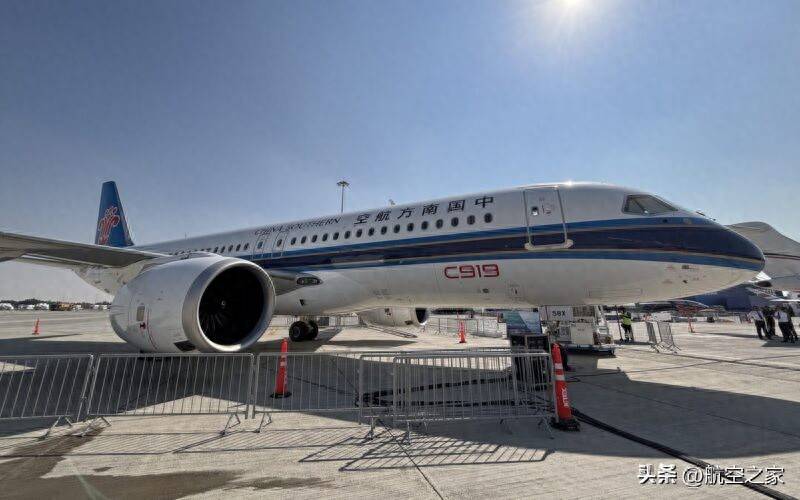
为什么C919一定要拿到这张欧洲适航证?
Guan Cha Zhe Wang· 2026-01-21 05:40
Core Viewpoint - The C919 aircraft is undergoing EASA certification testing, which is crucial for its international market acceptance, despite domestic production challenges and skepticism from the public regarding its capacity to meet demand [1][3]. Group 1: Certification Importance - EASA's certification is essential for C919 to operate internationally, as it allows for broader market access beyond China [3][4]. - While C919 has received certification from the Civil Aviation Administration of China (CAAC), obtaining EASA certification is necessary for registration with foreign airlines [3][6]. - The certification process involves a thorough evaluation, and the C919 is currently in the critical assessment phase with EASA [6]. Group 2: Production and Supply Chain Challenges - The projected production capacity for 2025 is 75 aircraft, but this figure represents design capacity rather than actual delivery targets, with only 15 expected to be delivered [10][11]. - The supply chain for C919 includes many components from Western suppliers, particularly from the U.S., which complicates production due to regulatory scrutiny and potential delays [10][11]. - The geopolitical landscape affects the availability of critical components, as U.S. suppliers must comply with government regulations, impacting the production timeline [11][14]. Group 3: Market Dynamics and Political Factors - The certification process is not solely a technical issue; it also involves political considerations that can act as barriers to market entry for foreign aircraft [8][10]. - Historical examples show that regulatory changes can be influenced by market protectionism, affecting the competitiveness of foreign aircraft like the C919 [8][10]. - The reliance on foreign components for C919 is driven by the current state of China's aviation industry, which lacks the maturity and reliability of Western counterparts [14][15].