中美贸易

Search documents
建信期货豆粕月报-20260302
Jian Xin Qi Huo· 2026-03-02 10:30
行业 豆粕月报 日期 2026 年 3 月 2 日 农产品研究团队 021-60635732 yulanlan@ccb.ccbfutures.com 期货从业资格号:F0301101 021-60635740 linzhenlei@ccb.ccbfutures.co m期货从业资格号:F3055047 021-60635727 wanghaifeng@ccb.ccbfutures.c om期货从业资格号:F0230741 021-60635726 hongchenliang@ccb.ccbfutures .com 期货从业资格号:F3076808 021-60635570 liuyouran@ccb.ccbfutures.com 期货从业资格号:F03094925 研究员:余兰兰 研究员:林贞磊 研究员:王海峰 研究员:洪辰亮 研究员:刘悠然 升水修复,重新起航 中美贸易好转预期 豆粕谨慎偏强 请阅读正文后的声明 #summary# 月度报告 观点摘要 请阅读正文后的声明 - 2 - #summary# 供给端,南美方面,巴西进入收获期,节假日期间巴西降雨不均,导致 南部主产区可能有部分产量损失、中南部主产区 ...
豆粕:地缘事件影响市场情绪,或稳中偏强;豆一:关注两会政策情绪,或稳中偏强
Guo Tai Jun An Qi Huo· 2026-03-01 09:38
上周(02.23~02.27),美豆期价小幅上升,利多因素:美国关税政策缓和(2月25日美国贸易代 表杰米森 · 格里尔表示,特朗普政府不打算提高对中国商品的关税)、美豆油偏强带动(美国生物燃料生 产前景明朗:生物燃料惨混要求预计3月底前最终确定、大型炼油厂至少弥补一半生物燃料修混豁免额度 等);偏空因素:美国关税政策不确定《美国贸易代表格里尔表示,将继续推进对中国履行中美第一阶段 经贸协议情况 301 调查,并可能采取关税措施)、市场担忧中方采购美豆需求受到影响。截至2月 27日, 美豆主力 05 合约周涨幅 1.41%,美豆粕主力 05 合约周涨幅 1.85%。 上周(02.24~02.27),国内豆粕和豆一期价"先跌后涨、重心上移"。豆粕方面,一方面美豆、巴 西贴水稳中偏强,带来成本端支撑;另一方面,中美贸易事件不确定性犹动:美国贸易代表格里尔表示, 将继续推进对中国履行中美第一阶段经贸协议情况 301 调查。并可能采取关税措施。豆一方面,东北产区 现货价格补涨,购销较少。期价仍偏强,受到整体豆类市场情绪影响、且无利空因素。从周K线角度。2 月 27 日当周,豆粕主力 m2605 合约周涨幅 1.18% ...
豆粕:地缘事件影响市场情绪,或稳中偏强,豆一:关注两会政策情绪,或稳中偏强
Guo Tai Jun An Qi Huo· 2026-03-01 08:35
1. Report Industry Investment Rating - Not provided in the report 2. Core Viewpoints - Next week (March 2 - March 6, 2026), the prices of Dalian soybean meal and soybean futures are expected to be stable with a slight upward trend. For soybean meal, the cost - side US soybean futures prices and Brazilian soybean premium quotes are stable with a slight upward trend. For soybeans, attention should be paid to market sentiment fluctuations such as policy sentiment (Two Sessions) and rumors of state reserve sales. Additionally, geopolitical events in the Middle East during the weekend may affect market sentiment [8]. 3. Summary by Related Contents US Soybean Market - Last week (February 23 - February 27, 2026), US soybean futures prices rose slightly. Bullish factors included the easing of US tariff policies and the strong performance of US soybean oil. Bearish factors were the uncertainty of US tariff policies and concerns about China's demand for US soybeans. As of February 27, the weekly increase of the main US soybean May contract was 1.41%, and that of the main US soybean meal May contract was 1.85% [2]. - In the week of February 19, 2026, the net sales of US soybeans decreased month - on - month. The export shipments of US soybeans in the 2025/26 season were about 810,000 tons, a month - on - month decrease of 37% and a year - on - year decrease of about 16%. The cumulative export shipments were about 25.03 million tons, a year - on - year decrease of about 32%. The weekly net sales in the current season (2025/26) were about 410,000 tons, and in the next season (2026/27) were 0 tons, with a total of about 410,000 tons (compared to about 866,000 tons in the previous week). The weekly net sales to China in the current crop year were about 75,000 tons, and the cumulative sales were about 10.66 million tons [3]. Brazilian Soybean Market - As of the week of February 28, 2026, the average CNF premium of Brazilian soybeans for May 2026 delivery decreased slightly week - on - week, while the average import cost increased week - on - week, and the average crushing profit on the futures market increased week - on - week [3]. - As of the week of February 19, 2026, the harvest progress of Brazilian soybeans in the 2025/26 season was 30%, compared to 39% in the same period last year, the lowest level since the 2020/21 season. Reasons included late sowing, long crop growth cycles, and rainfall during the harvest period. In Rio Grande do Sul, rainfall was uneven, and the soybean harvest still faced the risk of poor yields [3]. - According to the February 28 weather forecast, in the next two weeks (March 1 - March 15, 2026), the precipitation in the main soybean - producing areas of Brazil was uneven and the temperature was high. The precipitation in Mato Grosso was normal, while that in other main producing areas was low. In Argentina, the precipitation in the main soybean - producing areas was slightly low, and the temperature was slightly high or normal except for a low - temperature period around March 6. The current weather impact on South American production areas was slightly bullish [5]. Domestic Soybean Meal Market - Last week (February 24 - February 27, 2026), domestic soybean meal futures prices "first fell and then rose, with the center of gravity moving up". The cost - side support came from the stable and slightly upward trend of US soybeans and Brazilian premiums, while the uncertainty of Sino - US trade events caused disturbances. The weekly increase of the main soybean meal May contract was 1.18% [3]. - The domestic soybean meal spot price rose slightly, and the spot trading, crushing, etc. rebounded slightly after the Spring Festival holiday. The average daily trading volume of soybean meal of mainstream oil mills was about 44,000 tons, an increase from the pre - holiday week. The average daily pickup volume of main oil mills decreased to about 107,000 tons from the previous week. The average weekly basis of soybean meal (Zhangjiagang) decreased to about 275 yuan/ton from the previous week. The inventory of soybean meal of mainstream oil mills increased slightly week - on - week and significantly year - on - year, reaching about 770,000 tons. The weekly soybean crushing volume of 125 oil mills increased to about 590,000 tons, and the operating rate increased to about 16%. It is expected to reach about 1.89 million tons next week, with an operating rate of 52% [6]. Domestic Soybean Market - Last week (February 24 - February 27, 2026), domestic soybean futures prices "first fell and then rose, with the center of gravity moving up". The spot price of soybeans in the Northeast increased in compensation, but the trading volume was small. The futures price remained strong due to the overall sentiment of the soybean market and the absence of bearish factors. The weekly increase of the main soybean May contract was 0.73% [3]. - The domestic soybean spot price was stable with a slight upward trend. The purchase price of clean soybeans in some Northeast regions increased by 160 yuan/ton, that in the Inner Pass remained the same as the previous week, and the selling price in the sales areas increased by 40 yuan/ton. The spot price in the Northeast increased in compensation, but the trading volume was small. Farmers were expected to sell their grain after the Lantern Festival. The sales areas adjusted prices following the production areas, but the trading volume was limited. The resumption time of soybean product factories was inconsistent, and the raw material inventory purchased before the Spring Festival had not been consumed. The centralized start of schools in March may boost the demand for soybean products [7].
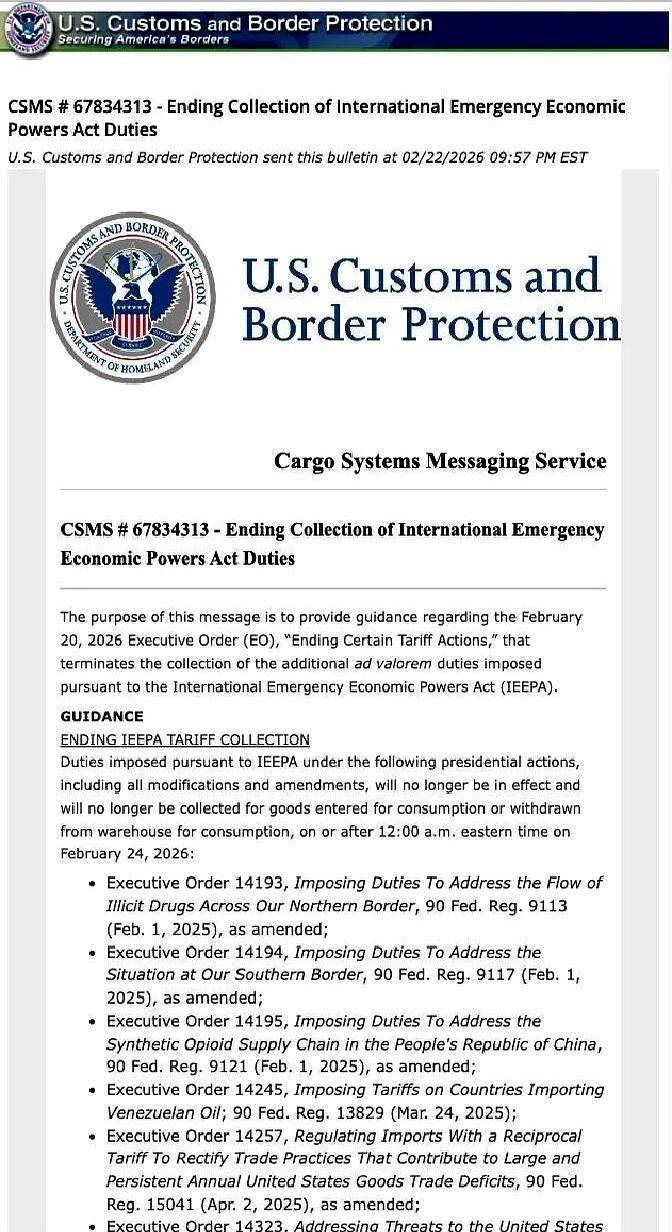
美国海关宣布:取消对等关税与芬太尼税务!2月24日起实施
Sou Hu Cai Jing· 2026-02-27 21:22
为什么这条消息要悄悄地丢到垃圾时间,连带着朋友圈的外贸老板都被炸醒了——这到底是美国的良心发现,还是又一次滑头操作? 其实,这就是美国人自作聪明的典型表现,做事永远藏着掖着,不敢直面自己的失误。 说到底,美国突然撤掉对中国的芬太尼关税和对等关税,表面上看是给中国制造业松了绑,实际上更像是他们内部利益集团打架,法律派终于压过了行政 派。 美国海关这次突然宣布取消对中国商品的部分关税,你说,这到底是他们为了谁? 是为了美国老百姓,还是为了那些资本大佬? 你要是去义乌小商品城溜达一圈,估计能看到不少订单突然涌了出来,工厂老板们都在盘算着加班费。 洛杉矶的长滩港口也得忙起来了,原本积压的货物很可能会借着这波政策调整,一股脑地涌向美国市场。 对我们普通人来说,涨工资的机会说不定就藏在这些细节里。 可你别以为美国这次真的彻底服软了,他们搬起石头砸了自己的脚,但绝不会轻易认输。 真正让行业炸锅的,是他们留下的那个"黄金漏洞"——报关10天缓冲期。 只要你赶在2月24日前报关,哪怕只是放行,关税都能免掉。 结果呢? 物流圈、报关行直接疯了,这哪里是政策调整,简直就是一场"生死时速"的豪赌。 那些错过时间点的进口商,估计肠子都 ...

特朗普发文昭告全球,包括中国、俄罗斯在内,这次一个都跑不掉?
Sou Hu Cai Jing· 2026-02-27 12:31
近日,特朗普再次成为全球舆论的焦点,他的关税政策被判定为违法。然而,令许多人感到意外的是,特朗普不仅没有因此退缩,反而迅速找到新的理由, 再次决定加税,而且这次的目标是全世界。这个消息一传出,立即引起了轩然大波——从中国到欧洲,再到他曾经的盟友,纷纷表示强烈反对。 与此同时,特朗普计划在3月底访问中国的消息也引发了外界的诸多疑问。为何他在引发全球关税风波的同时,又急于与中国展开高层会谈?这一对比,难 免让人感到困惑。 特朗普的这番举动,难道是为了绝地反击?从表面上看,特朗普的新关税政策似乎充满了强硬气息,但细究之下,却又充满了被动反击的意味。此前,特朗 普通过对等关税的手段,对中国等国征收了超过1750亿美元的关税。然而,最高法院的裁决不仅宣布这一政策违法,还要求美国政府归还相关的税款。面对 财政压力和政治困境,特朗普没有停手,而是找到了新的理由,宣布对全球加征15%的关税。 然而,这项新政策的漏洞和局限性却显而易见。首先,特朗普此举引用的《1974年贸易法》第122条,仅适用于美国面临严重国际收支逆差的情况,而根据 当前的贸易状况,美国并不符合这一条件。这使得新政策的法律基础显得异常脆弱。其次,这项政策的有 ...
投顾周刊:1月信贷投放实现“开门红”
Sou Hu Cai Jing· 2026-02-14 23:22
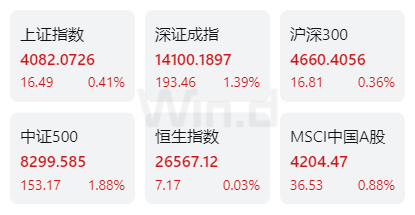
Group 1 - In January, social financing scale reached a record high of 7.22 trillion yuan, with M2 growing by 9% year-on-year, indicating strong support from a moderately loose monetary policy for the economy's stable start [1][5] - The anticipated visit of US President Trump to China in April is expected to ease bilateral trade tensions, potentially extending the "truce" in US-China trade relations and stabilizing global supply chains [1][5] - The launch of ByteDance's AI video model Seedance 2.0 has positively impacted the media sector, leading to a significant rebound in the net value of several media-themed funds [1][5] Group 2 - The bank wealth management market is showing strong capital attraction, with an expected recovery of 1 trillion yuan in February, driven by declining deposit rates and year-end bonuses [2][5] - The expansion of pension wealth management trials nationwide, with increased fundraising limits for institutions, provides a broader business space for wealth management companies and more stable pension growth tools for investors [2][5] - The Federal Reserve's February meeting minutes indicate a hawkish stance, with expectations for interest rate cuts being postponed, leading to a short-term strengthening of the US dollar [2][5] Group 3 - The "AI panic trading" in tech stocks has caused significant market fluctuations, with funds shifting from overvalued AI sectors to more stable cash flow assets, particularly in Chinese internet leaders and high-dividend stocks [3][5] - Global stock markets showed mixed performance before the Spring Festival, with the Shanghai Composite Index rising by 0.41% and the Nasdaq Index declining by 2.10% [4][5] Group 4 - The bond yield performance was mixed, with the 1-year Chinese government bond yield rising by 0.95 basis points to 1.32%, while the 10-year US Treasury yield fell by 18 basis points to 4.04% [8][11] - The overall performance of the Wande Fund Index was stable, with the Wande Stock Fund Index rising by 1.26% [9][10]
冠通期货早盘速递-20260213
Guan Tong Qi Huo· 2026-02-13 02:11
2.国家能源局发布数据显示,2025年全国风光发电量同比增长25%,占发电量比重达到22%,有力带动可再生能源电量占发电量 比重达到近四成。2025年,我国可再生能源新增装机4.52亿千瓦,同比增长21%。 3.美国总统特朗普表示,美国"必须"与伊朗达成协议,否则局势将"非常严重"。此外,特朗普称以色列总理内塔尼亚胡" 没有说过"要求停止谈判,双方也"没有讨论过"这一问题。特朗普称,如果伊朗不达成协议,"将会是另一种局面",并警 告未来一个月内局势可能迅速发展。 4.中国氮肥工业协会发布关于市场炒作尿素指导价的说明称,尿素指导价是协会以促进国内尿素保供稳价为宗旨,以稳定尿素 市场预期为目标,综合考虑行业上下游情况提出的指导性价格建议。 早盘速递 2026/2/13 热点资讯 1.美国总统特朗普预计4月初访问中国,习近平主席将同其会见,消息人士还称中美贸易"休战"预计会延长。外交部发言人 林剑对此表示,不久前的两国元首通话中,特朗普总统再次表达了4月访华的愿望。习近平主席重申了对特朗普总统访华的邀 请。双方就此保持着沟通。 | | | | 大类资产表现 | | | | --- | --- | --- | --- ...
马云讲述对中美贸易的看法,果然听完了一针见血
Xin Lang Cai Jing· 2026-01-27 09:25
Core Viewpoint - Jack Ma provides insightful perspectives on Sino-US trade relations, highlighting the complexities and challenges faced by both countries in the current economic landscape [1] Group 1 - The discussion emphasizes the importance of cooperation between China and the United States to foster mutual economic growth and stability [1] - Ma points out that trade tensions can lead to significant disruptions in global supply chains, affecting businesses and consumers alike [1] - He advocates for dialogue and understanding to resolve trade disputes, suggesting that both nations should focus on long-term benefits rather than short-term gains [1]
美财长会见中方,开口提了个要求,高市早苗被点名,日本自求多福
Sou Hu Cai Jing· 2026-01-22 03:17
Core Insights - The recent Davos Forum highlighted U.S. Treasury Secretary Yellen's comments on U.S.-China trade, particularly his suggestion for China to "buy more U.S. soybeans," indicating a strategic economic consideration rather than a mere commercial proposal [1] - Yellen noted that China's supply completion rate of rare earths to the U.S. is as high as 90%, which raises concerns for U.S. allies like Japan, who are facing a "rare earth crisis" due to China's export controls [1][3] Group 1 - Yellen's remarks on U.S.-China trade suggest a strategic approach to economic relations, emphasizing the importance of cooperation for mutual benefit [1][5] - Japan's predicament regarding rare earth supplies is linked to Prime Minister Kishi's provocative statements on Taiwan, which have strained Japan-China relations [1][3] - The U.S. appears to be distancing itself from Japan's issues, with Yellen attributing responsibility for the tensions to Japan's government, showcasing a self-interested U.S. strategy [3][5] Group 2 - The upcoming U.S. midterm elections add complexity to the political landscape, with 58% of respondents in a CNN poll viewing Trump's presidency as a failure, pressuring him to adopt effective foreign policies to boost his approval ratings [3][5] - The U.S. may continue to leverage cooperation with China to maximize its own interests while minimizing conflicts with allies [5] - The evolving international relations landscape reflects a multidimensional game involving economic, geopolitical, and national security factors, with Japan facing significant challenges [5][7]
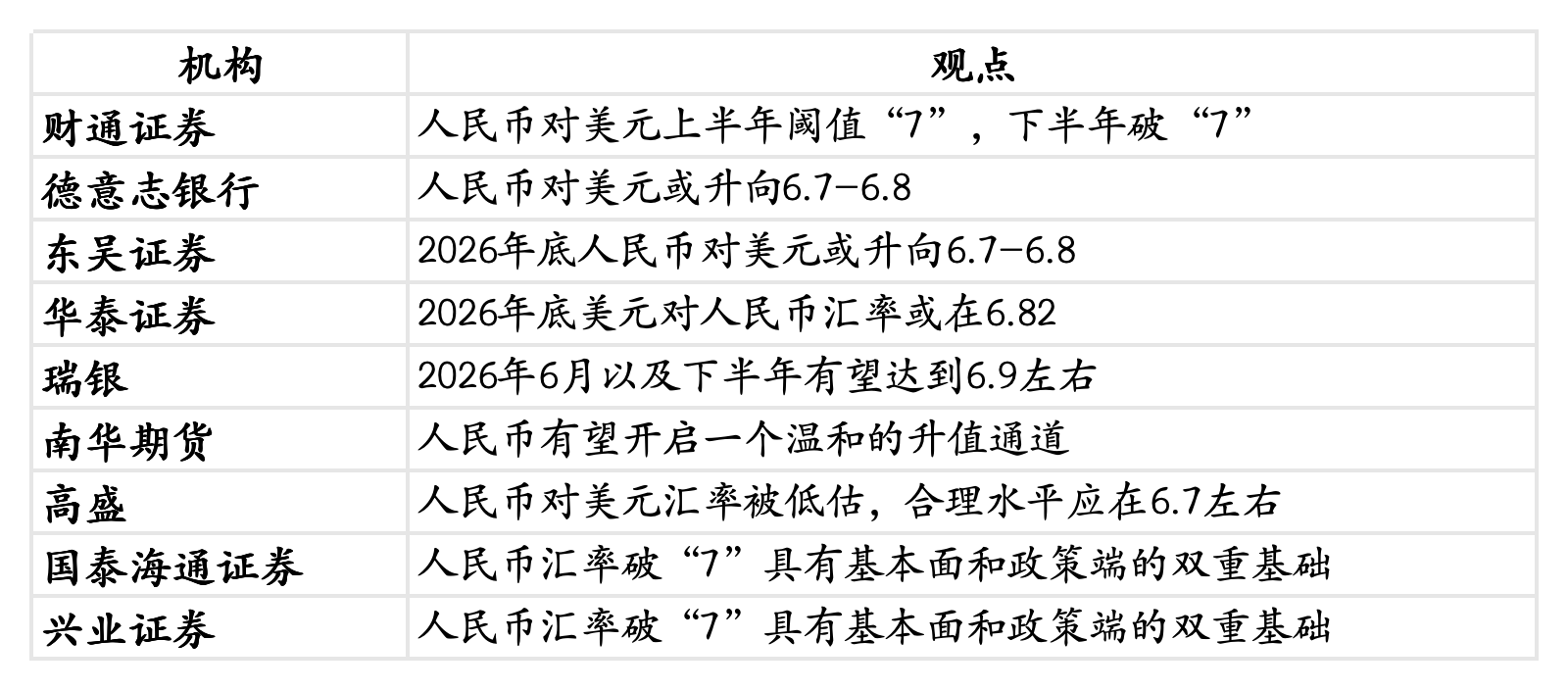
2026年人民币有望维持温和升值势头 | 界面预言家
Xin Lang Cai Jing· 2025-12-23 06:40
Core Viewpoint - In 2025, the global financial market underwent significant changes, including a shift in monetary policy and economic restructuring, leading to a "weak first, strong later, and narrowing volatility" trend in the RMB exchange rate against the USD [1] Group 1: RMB Exchange Rate Trends - As of December 22, 2025, the RMB appreciated approximately 3.7% against the USD, closing at 7.0382 RMB per USD, an increase of 2606 basis points from the previous year [1] - Predictions for 2026 suggest a continued trend of moderate appreciation for the RMB, with expected exchange rates ranging between 6.7 and 7.2 RMB per USD, and a year-end target of 6.7 to 7.0 RMB per USD [1][2] Group 2: Economic Factors Supporting RMB Strength - Analysts believe that the core factors supporting the RMB's appreciation include the domestic economic fundamentals, the Federal Reserve's monetary policy, and the stance of the People's Bank of China [2] - China's GDP is expected to grow around 5.0% in 2026, with a healthy trade surplus and current account providing a solid foundation for the RMB [2][3] Group 3: Export Dynamics - In 2025, China's exports grew by 5.4% year-on-year, despite challenging trade conditions with the US, indicating resilience in the face of tariffs [2] - Deutsche Bank forecasts a 6% growth in Chinese exports for 2026, supported by China's industrial advantages and diversification into non-US markets [3] Group 4: Capital Flows and Market Sentiment - A significant reversal in the willingness of export enterprises to settle foreign exchange has been a key factor in the RMB's appreciation since September 2025 [4] - Analysts note that the historical accumulation of approximately $1 trillion in unconverted export earnings could lead to increased capital inflows as RMB appreciation expectations solidify [4] Group 5: Monetary Policy and Market Stability - The Federal Reserve's monetary policy and the USD index are critical variables influencing the RMB exchange rate, with expectations of continued easing from the Fed [6] - The People's Bank of China is expected to maintain a relatively independent monetary policy, with potential rate cuts in 2026, which will support the RMB's appreciation trend [6][7] Group 6: RMB Internationalization - The Chinese government's shift towards promoting RMB internationalization is expected to enhance demand for the currency, contributing to its steady appreciation [8] - Analysts predict that 2026 could mark the beginning of a new appreciation cycle for the RMB, with expectations of breaking the 7.0 mark against the USD [8]