无风险利率

Search documents
为什么无风险利率不断下行,但茅台的估值却不断走低?
雪球· 2026-03-18 09:13
Core Viewpoint - The valuation of Moutai has shifted fundamentally from a growth stock premium to a focus on stable cash flow and dividends, resulting in a significant drop in its price-to-earnings (P/E) ratio from 73 times to 19 times, aligning it with utility stocks [3][6]. Valuation Shift - Moutai's business model remains strong, with its brand barrier intact, but market expectations have changed drastically, leading to a new valuation anchor based on dividend yield rather than growth potential [4][5]. - The current P/E ratio of 19 places Moutai in the same category as utility stocks like Yangtze Power, with a dividend yield of approximately 3.7%, reflecting a shift in investor focus from growth to stable returns [6][7]. Market Dynamics - The decline in risk-free interest rates has not led to an increase in Moutai's valuation due to a fundamental change in how its value is assessed, with the market now prioritizing dividend certainty over growth [7][8]. - The market's growth expectations for Moutai have plummeted from 15% to around 1%, significantly altering the valuation dynamics and leading to a negative impact on its price [9][10]. Risk Factors - Increased risk premiums due to economic concerns, regulatory changes, and a shift back to consumer goods from investment assets have further pressured Moutai's valuation [10][11]. - The overall market sentiment has shifted, with capital moving away from traditional sectors like liquor towards emerging sectors such as AI and semiconductors, contributing to Moutai's valuation decline [11][12]. Comparative Analysis - In contrast to Moutai, Yangtze Power has successfully transitioned through different valuation phases, benefiting from stable growth expectations and lower risk premiums, which have allowed it to achieve a higher P/E ratio [14][16]. - Moutai's valuation challenges stem from a lack of growth expectations and increased risk premiums, while Yangtze Power has maintained a stable growth outlook, allowing for valuation appreciation [16]. Future Outlook - For Moutai to recover its valuation, it must stabilize its growth expectations above 10%, reduce risk premiums, and see a shift in market preference back towards the food and beverage sector [17].



“特朗普变量”搅局财报季! 白宫施压信用卡利率 华尔街金融巨头们或将掀发债狂潮抽走流动性
Zhi Tong Cai Jing· 2026-01-13 00:20
Core Viewpoint - The upcoming bond issuance by Wall Street's financial giants is expected to be larger than usual due to pressures from the Trump administration, potentially draining market liquidity and leading to a correction in the currently high-performing corporate bond and stock markets [1][2]. Group 1: Bond Issuance and Market Impact - Wall Street's six major financial institutions are anticipated to lead a significant bond issuance, with estimates of around $60 billion this week, driven by the need to respond to operational pressures from the Trump administration [1][2]. - Barclays predicts that approximately $35 billion of bond issuance will come from these six financial giants this month, with the total potentially rising to $55 billion by the end of the quarter [1]. - The large-scale bond issuance may create short-term "supply pressure," tightening financial conditions and impacting credit spreads and liquidity premiums in the bond market [2]. Group 2: Financial Performance and Earnings Season - The earnings season for major Wall Street banks is set to begin, with analysts expecting a strong performance that could validate the bullish outlook for the S&P 500 index, projected to reach 8,000 points in 2026 [3]. - The financial giants are expected to report robust earnings, driven by a recovery in investment banking and increased trading volumes, which have pushed their stock prices to historical highs [3]. Group 3: Regulatory Pressures and Credit Card Rates - President Trump has called for a cap on credit card interest rates at 10%, which could significantly impact the profitability of Wall Street's financial giants, particularly in their credit card businesses [4][5]. - The proposed cap is seen as a direct threat to the high-margin credit card business, which typically has interest rates around 21%, and could lead banks to tighten credit and reduce customer benefits [5][6]. Group 4: Future Outlook and Investment Opportunities - Analysts expect that the demand for bank credit assets will remain strong, offsetting any supply reductions due to regulatory changes, with a projected issuance of approximately $188 billion in high-rated bonds by the six major banks in 2026, a 7% increase from the previous year [7][8]. - The outlook for the banking sector is constructive, with expectations of a recovery in net interest income (NII) and stable growth in capital markets and wealth management fees, which could support a positive operating leverage [9][10].


银行理财要大变天了?
表舅是养基大户· 2026-01-08 13:33
Core Viewpoint - The article discusses the current state, issues, and future of the 30 trillion yuan wealth management market, emphasizing the impending changes in competition and business models within the industry [7][11]. Group 1: Wealth Management Market Overview - The wealth management market is facing significant challenges as the previous model of "retained earnings" is nearing its end, which has historically allowed banks to manage returns during varying market conditions [8][9]. - The "wealth management ranking" business model, which attracted customers with high short-term returns, is becoming less effective as investors become more discerning [10][11]. Group 2: Future Directions for Wealth Management Companies - Future competition in the wealth management sector will focus on three key areas: investment research capabilities, product line structuring, and channel service capabilities [16]. - Companies like Ant Bank are leading the way with a focus on transparency and quality, offering clear performance metrics to users, which is becoming increasingly important in a market where traditional models are failing [17][25]. Group 3: Importance of Research in Wealth Management - Understanding the wealth management market is crucial as it serves as a benchmark for the risk-free rate in China, influencing asset pricing across various sectors, including the stock market [15]. - The decline in risk-free rates due to lower returns on pure debt wealth management products is expected to increase valuations in the stock market, potentially leading to more capital inflows [15]. Group 4: Key Insights from Recent Articles - A recent report highlighted that only one out of eight banks displays annualized returns on their wealth management products, indicating a lack of transparency in the industry [4][23]. - The article emphasizes the need for a user-centered approach in wealth management, moving away from asset under management (AUM) focused sales systems to enhance customer trust and satisfaction [22][25].

老牌私募宽远资产2026年策略出炉:上证指数有机会看到4500点上方
Xin Lang Cai Jing· 2026-01-08 11:36
Core Viewpoint - The report from Kuanyuan Asset outlines its investment strategies for 2026, reflecting on the performance of 2025 and identifying potential market opportunities. The firm anticipates a continued upward trend in the securities market, with the Shanghai Composite Index potentially exceeding 4500 points in 2026 [7][50][112]. Investment Performance in 2025 - Kuanyuan Asset achieved significant contributions from heavily invested Hong Kong internet companies, maintaining high positions despite market volatility [9][76]. - The firm strategically positioned itself in the chemical sector early in the year, which eventually yielded positive results despite the sector's overall struggles [10][77]. - Investments in the machinery sector were increased, focusing on companies with strong competitive advantages and reasonable valuations [11][79]. - Bank stocks contributed to performance but had limited impact relative to their holding proportions [14][81]. - The firm missed opportunities in the hot sectors of non-ferrous metals and artificial intelligence, which significantly outperformed the market [15][82]. Market Outlook for 2026 - Key factors influencing the Chinese securities market include stable national policies, ongoing international relations, and the real estate sector's recovery [19][85]. - The firm expects the Shanghai Composite Index to maintain a volatile upward trend, with a target above 4500 points [50][112]. - The real estate market is nearing a bottom, with sales expected to decline by 13% in 2025, but stabilization is anticipated to support overall economic recovery [30][32][94]. Valuation and Market Conditions - The current valuation metrics indicate that the Chinese stock market remains relatively undervalued compared to developed countries, with a dynamic PE of 14 times for the CSI 300 and a dividend yield of 2.78% [8][34][47]. - The trade surplus is projected to exceed $1.2 trillion in 2025, enhancing China's competitive position in global markets [35][102]. - The firm emphasizes the importance of focusing on companies that effectively integrate AI technology into their business models for sustainable growth [41][43]. Sector-Specific Insights - The internet sector is expected to continue benefiting from improved regulatory environments and stable earnings growth, despite previous price increases [55][117]. - The machinery sector is highlighted for its growth potential, particularly with the rise of humanoid robots, which could drive significant performance improvements [56][119]. - The home appliance sector is currently undervalued, with potential for recovery as companies adapt to market conditions and maintain growth despite challenges [120]. - The food and beverage industry remains in a downturn, but opportunities may arise if prices stabilize after a prolonged decline [121][122]. Global Trade Dynamics - The report notes that China's trade surplus may lead to increased scrutiny and potential tariffs from other nations, impacting global trade relations [62][123]. - Companies with global manufacturing capabilities are expected to benefit from these dynamics, as they can better navigate trade barriers [64][125]. Conclusion - Kuanyuan Asset's investment strategy for 2026 reflects a cautious optimism, focusing on sectors with growth potential while remaining vigilant about market volatility and geopolitical risks [51][115].
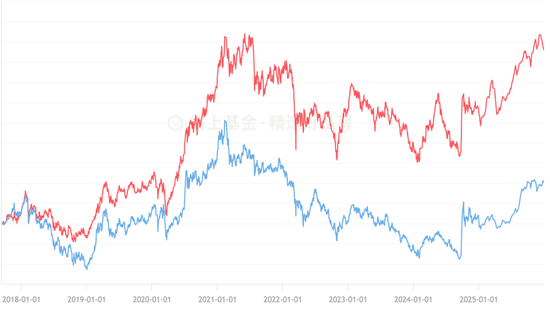
近期调整行情中,资金正借道ETF快速入市
Sou Hu Cai Jing· 2025-12-17 22:48
Group 1 - The overall sentiment towards equity assets is optimistic among institutions [1] - The risk premium of the CSI 300 index remains above one standard deviation, indicating attractive risk compensation compared to the declining risk-free interest rates [1] - Continued macro liquidity support is favorable, with a mild expansion expected in the credit cycles of major global economies, creating a conducive environment for equities and commodities [1] Group 2 - Domestic demand policies are continuously strengthening, while external demand shows signs of stabilization, which may further support corporate profit recovery [1]
200亿爆雷的启发
表舅是养基大户· 2025-12-09 13:33
Group 1 - The recent news about the Zhejiang Jin Center product failure highlights the liquidity issues faced by the financing entities behind these products, which are currently unable to meet redemption demands [1] - Investors should have a rational understanding of the current risk-free interest rate environment, as exemplified by the near-zero annualized yield of Yu'ebao [2] - For pure debt financial products, expectations should be adjusted accordingly, with money market funds likely yielding below 1.5% and pure debt funds around 2.5% after fees [3][4] Group 2 - In the unprecedented low interest rate environment, investors should establish a benchmark for expected returns; anything significantly above this benchmark may indicate higher risk [5] - It is crucial to control concentration in investments to avoid significant losses, emphasizing the importance of diversification [6][8] - The analogy of lending money to a friend versus investing in high-yield products illustrates the need for cautious investment practices, particularly in high-risk products [7] Group 3 - The importance of having a professional and trustworthy investment advisor is emphasized, as many products advertised with high returns may not be sustainable [9][10] - Investors should be wary of advisors who promote high-yield products without understanding the underlying risks, as this could limit potential returns [11] - Institutional investors face similar challenges as individual investors, particularly in a low interest rate environment, which necessitates careful asset allocation [12][13] Group 4 - The current market conditions show a decline in both A-shares and Hong Kong stocks, with the latter experiencing a more significant drop [16][17] - Factors affecting the market include the rebalancing of funds between A-shares and Hong Kong stocks, as well as rising yields on Japanese and U.S. bonds impacting valuations [18][19] - Long-term concerns for the market include the sustainability of the Federal Reserve's interest rate cycle, the persistence of low domestic interest rates, and the profitability of major technology companies in Hong Kong [23][24]

红利投资绕不开的股息率,到底是什么?
Sou Hu Cai Jing· 2025-12-04 09:08
Group 1 - The core concept of dividend investing focuses on generating income through dividends rather than relying solely on capital gains from stock price increases, especially in volatile market conditions [1] - Dividend yield is a key metric for assessing the attractiveness of dividend-paying stocks, calculated as the total cash dividends divided by the total market value or as the dividend per share divided by the stock price [2][3] - High dividend payments do not necessarily equate to high dividend yields; the relationship depends on the stock price, which can affect the yield even if the dividend amount remains constant [4] Group 2 - Dividend yield serves as a critical threshold for selecting quality dividend investment targets, with strict criteria for inclusion in indices, ensuring that only companies with strong profitability and stable cash flows are considered [5] - The dividend yield of the low-volatility dividend index reached 4.08% as of November 6, 2025, indicating a higher yield compared to common broad-based indices in the A-share market [5][6] - Over a decade, the low-volatility dividend index has shown a cumulative price increase of 149.26%, with reinvested dividends contributing significantly to total returns, highlighting the importance of dividends in long-term investment strategies [8] Group 3 - The attractiveness of a dividend yield can be assessed relative to the risk-free rate, such as government bond yields, to determine if the current yield offers a favorable risk-reward profile [12] - As of November 6, 2025, the 10-year government bond yield was 1.81%, with a 2.28% difference between the low-volatility dividend index yield and the bond yield, suggesting a potentially attractive investment opportunity for long-term investors [12] - Dividend yield is crucial for long-term investment strategies, particularly for retirement planning, as it provides a stable and predictable income source while also serving as a buffer against market volatility [14]
国泰海通 · 首席大咖谈|宏观梁中华:决胜于“价”——2026年宏观年度展望
国泰海通证券研究· 2025-11-25 04:20
Group 1 - The article discusses the importance of pricing strategies in achieving success by 2026, emphasizing the need for effective fiscal and monetary policies [2][6] - Expectations for future risk-free interest rate trends are analyzed, indicating potential shifts that could impact investment decisions [6] - The article highlights the significance of understanding market dynamics and policy implications for long-term investment strategies [6] Group 2 - The research emphasizes the role of macroeconomic indicators in shaping investment opportunities and risks in the coming years [4] - Insights into the anticipated fiscal policies and their potential effects on various sectors are provided, suggesting areas for strategic focus [4][6] - The analysis includes projections for economic growth and market performance, which are crucial for investors to consider [4][6]

指数估值日报(2025-11-24 周一)
Sou Hu Cai Jing· 2025-11-24 12:38
Core Insights - The overall valuation of the A-share market is reflected in the PE ratio of 19.91 and PB ratio of 1.56, indicating a relatively high valuation level with a PE percentile of 86.73% [1] - The 10-year government bond yields are significantly different between China (1.82%) and the US (4.05%), suggesting varying risk-free rates impacting investment decisions [1] A-share Major Index Valuation - The PE and PB ratios for major indices show that the ChiNext Index has a high PE of 37.85 and a PB of 4.86, indicating strong growth expectations [1] - The Shanghai Composite Index has a PE of 13.11 and a PB of 1.26, reflecting a more conservative valuation compared to other indices [1] - The CSI 300 Index shows a PE of 13.11 and a PB of 1.26, suggesting it is trading at a reasonable valuation relative to its earnings [1] A-share Major Industry Index Valuation - The computer industry has the highest PE ratio at 201.45, indicating high growth expectations but also potential overvaluation [1] - The banking sector has a low PE of 9.19 and a PB of 0.79, suggesting it may be undervalued compared to other sectors [1] - The real estate sector shows a PE of 59.59 and a PB of 0.97, indicating a mixed valuation with potential risks [1]
基本功 | 为啥买债的人都关注10年期国债?
中泰证券资管· 2025-11-13 11:32
Group 1 - The core concept emphasizes the importance of foundational knowledge in investing and selecting the right funds, suggesting that a solid understanding of investment fundamentals is crucial for success [2] Group 2 - The article highlights the significance of the 10-year government bond as a benchmark in the bond market, often referred to as the "reference anchor" for pricing other bonds [3] - It explains that government bonds are backed by national credit, making them a low-risk investment and typically regarded as the benchmark for risk-free interest rates [3]