
私募信贷风险

Search documents
中金 | 私募信贷:2万亿美元的“灰犀牛”
中金点睛· 2026-03-19 23:55
Core Viewpoint - The article discusses the rapid growth and risks associated with private credit, highlighting its role as a significant component of the shadow banking system, with a management scale projected to reach approximately $2.3 trillion by 2025, doubling since 2020 [1][8]. Group 1: Private Credit Overview - Private credit refers to non-bank financial institutions providing debt financing to companies through private placements, evolving from private equity management structures [6][8]. - The growth of private credit has been driven by banks reducing their involvement in high-leverage mergers and loans post-2008 financial crisis, leading to a shift of financing to non-bank institutions [8][11]. Group 2: Funding Sources and Allocation - Funding for private credit primarily comes from long-term institutional investors such as pension funds, family offices, and insurance companies, with retail channels accounting for approximately 13% of the funding sources [11][20]. - The software industry represents the largest exposure in private credit, accounting for about 30% of the total, with approximately $200 billion directed towards AI-related investments [11][12]. Group 3: Reintermediation and Risk Transmission - Banks indirectly participate in corporate credit through loans to private credit, creating a reintermediation structure, with an estimated $500-600 billion flowing from banks to private credit, representing about 3% of bank assets [17][20]. - The relationship between private credit and insurance companies is strengthening, with insurance funds increasingly allocated to private credit assets, leading to potential risks related to internal funding cycles [20][21]. Group 4: Retailization and Liquidity Mismatch - The retailization of private credit has accelerated, with retail products estimated to be around $400-500 billion, representing about 20% of the total private credit market [23][24]. - Retail private credit products face significant liquidity mismatch risks, as they often have redemption limits while underlying assets are illiquid loans, leading to potential redemption pressures during market volatility [23][24]. Group 5: Monitoring Risks - Current private credit does not exhibit systemic asset quality deterioration similar to the 2006 real estate peak, but concerns about liquidity and borrower repayment capabilities persist, indicating a potential gradual transmission of "gray rhino" risks over the next 12-24 months [3][30]. - A multi-dimensional risk monitoring framework is suggested, focusing on direct asset default rates, market pricing indicators, and financial institution credit default swaps (CDS) to assess credit risk transmission to the financial system [30].


中金:美联储在“类滞胀”下降息空间有限
中金点睛· 2026-03-19 00:11
Core Viewpoint - The Federal Reserve's decision to maintain interest rates aligns with market expectations, reflecting a cautious policy stance amid rising inflation expectations and limited room for rate cuts [1][2] Group 1: Economic Conditions - The U.S. economy is entering a "quasi-stagflation" phase, influenced by tariffs and immigration policies that constrain supply, compounded by recent oil price shocks [3] - The Fed has slightly raised its inflation and growth forecasts, with total PCE inflation adjusted from 2.4% to 2.7% and core PCE inflation from 2.5% to 2.7% [2][5] - The unemployment rate forecast remains unchanged at 4.4%, indicating that officials perceive the oil price shock as primarily inflationary with limited negative impacts on growth and employment [2][3] Group 2: Federal Reserve's Policy Outlook - The Fed's policy space is constrained by persistent inflation, likely leading to a wait-and-see approach in the short term, which may not alleviate tightening credit market pressures [4] - The likelihood of rate hikes this year is low, as the current macro environment differs significantly from 2022 when the economy was overheating [4] - The Fed is expected to maintain rates in the first half of the year, with any potential rate cuts likely delayed until the second half, contingent on signs of easing inflation or worsening employment conditions [4][3] Group 3: Financial Market Conditions - Risks in private credit markets are becoming apparent, with increased redemption rates in private credit products and banks lowering loan valuations for these products [3] - The overall financing conditions are expected to tighten rather than loosen, reflecting a shift in the credit environment [3][4]

宏观策略周论-汇率与股市的关系
2026-03-17 02:07
Summary of Key Points from Conference Call Records Industry Overview - **Macro Strategy Discussion**: The records discuss the relationship between exchange rates and stock markets, particularly in the context of rising oil prices and geopolitical tensions, notably the situation in Iran. The U.S. dollar and oil prices both surpassed $100, raising concerns about stagflation and its impact on U.S. inflation rates and Federal Reserve policies [1][3][4]. Core Insights and Arguments - **Inflation Impact**: A $10 increase in oil prices is estimated to raise the U.S. CPI by approximately 0.2-0.3 percentage points. If oil prices remain above $100, the CPI could peak at 3.5% in Q2, complicating the Fed's ability to lower interest rates [1][3]. - **Currency and Market Performance**: The appreciation of the RMB has not aligned with stock market performance, primarily due to a strong external demand and weak internal demand. Historical examples, such as Japan in the 1990s, illustrate that a strong currency can coexist with a declining stock market [1][5][9]. - **Investment Focus**: Current investment strategies should prioritize sectors with resilient profits, such as technology manufacturing and external demand-driven industries, rather than relying solely on currency appreciation to drive stock market gains [1][10]. Additional Important Content - **Private Credit Market Risks**: The U.S. private credit market has seen risks emerge, with a total size exceeding $2 trillion. Issues such as liquidity mismatches and double-pledging fraud have raised concerns about trust in the market, which could impact GDP growth if defaults occur [1][14][15]. - **Hong Kong Real Estate Recovery**: The Hong Kong property market is stabilizing, driven by supply constraints and increased demand from mainland buyers. Predictions suggest new home sales could reach levels not seen since 2008, with price growth expected to be in double digits [1][17][18]. - **Energy Sector Developments**: The "15th Five-Year Plan" emphasizes energy security, marking a shift in investment focus towards renewable energy and infrastructure, including significant investments in power grids and energy storage solutions [1][12][13]. Conclusion - The records highlight the complex interplay between macroeconomic factors, currency movements, and sector-specific dynamics. Investors are advised to adopt a nuanced approach, focusing on resilient sectors while being cautious of potential risks in the private credit market and geopolitical developments. The Hong Kong real estate market presents a unique opportunity for growth, driven by structural changes and demand dynamics.
2026年春季海外宏观展望:结构性“滞胀”
Shenwan Hongyuan Securities· 2026-03-16 01:09
Group 1: Global Economic Outlook - The global macroeconomic recovery continues, with manufacturing and services PMI improving, indicating resilience in major economies like the US, Europe, and Japan[2] - Since February 2026, geopolitical uncertainties in the Middle East and rising oil prices have increased the risk of stagflation, particularly for energy-dependent economies like the Eurozone and Japan[2] - The Citigroup Economic Surprise Index remains positive, with both manufacturing and services PMIs above 50, reaching recent highs[2] Group 2: Inflation and Monetary Policy - The conditions for a repeat of the 1970s "stagflation" are insufficient, as long-term inflation expectations remain stable and the labor market is not tight[2] - A 10% increase in oil prices is estimated to raise overall CPI by approximately 20-30 basis points and core CPI by about 4-7 basis points[2] - The Federal Reserve's baseline assumption for interest rate cuts in 2026 has been revised to "at most once" due to the impact of rising oil prices on inflation expectations[2] Group 3: Geopolitical and Technological Risks - The ongoing geopolitical conflicts and the narrative surrounding the AI bubble face three challenges: sustainability of capital expenditure, disruptive potential for the software industry, and risks in private credit[2] - Long-term, the Middle East conflicts may accelerate structural stagflation, characterized by commodity inflation and service deflation, driven by AI and energy transition demands[2] - The interplay of demand surges and supply constraints may lead to a "super cycle" in commodities, while services may experience deflation due to automation and AI[2]
A股投资策略周报:油价大涨和美国私募信贷市场对流动性以及A股的影响-20260315
CMS· 2026-03-15 10:02
Group 1 - The report highlights that the ongoing geopolitical tensions, particularly the US-Iran conflict, have shifted market focus towards supply security and strategic resources, leading to a transition from risk aversion to concerns about re-inflation [1][4] - Rising oil prices are expected to reinforce inflation expectations, suppressing the prospects for interest rate cuts by the Federal Reserve, which will impact market risk appetite and keep the A-share market in a state of fluctuation, with a clear structural differentiation benefiting resource sectors [1][6] - The report notes that the Producer Price Index (PPI) has narrowed its year-on-year decline to -0.9%, and the continued rise in oil prices is anticipated to accelerate the timeline for PPI turning positive, historically favoring value-oriented market styles post PPI recovery [6][44] Group 2 - The private credit market has seen an increase in risk events since 2025, including localized defaults and redemption pressures, which have contributed to market sentiment suppression and significant declines in private investment firms' stock prices [5][43] - The report indicates that the redemption pressure in the private credit sector is currently manageable, as most private credit funds are structured to minimize liquidity mismatches, with a significant portion of their assets locked in for long durations [34][35] - The private credit market has a high exposure to the technology sector, particularly AI, which creates a feedback loop between the development of AI and the stability of the private credit market, necessitating caution regarding potential AI bubble risks [39][43]
细分化工品或大面积短缺
Ge Lin Qi Huo· 2026-03-13 10:46
1. Report Industry Investment Rating - No investment rating information is provided in the report. 2. Core Viewpoints - The situation of global crude oil shortage will become more severe due to the long - term blockage of the Strait of Hormuz and the limited daily release volume of reserve crude oil [4][7][11] - The US economy is sliding towards stagflation, with inflation rising, employment and consumption weakening, while the re - industrialization is accelerating [23][27][37][39][42] - The risk of private credit is spreading to the banking system, and the US stock market, especially the Nasdaq, is at high risk [17][20] - Due to the blockage of crude oil transportation, refineries are reducing their loads, and there may be a large - scale shortage of refined chemicals [52] 3. Summary by Relevant Catalogs Global Economic Outlook - The blockage of the Strait of Hormuz is becoming long - term. Although the IEA is releasing a large amount of strategic oil reserves, the actual daily release is far from meeting the supply gap caused by the blockage [23] - The US private credit crisis is spreading to the traditional banking system, and the firewall of traditional banks is facing a severe test [23] - The Nasdaq futures have broken through the support level. The disruptive substitution of AI and the Middle East situation may trigger a new round of large - scale selling of US stocks, which may have a significant negative impact on US consumption [23] - The US is returning to the Monroe Doctrine and shrinking globally, which will have a profound and subversive impact on major global assets [23] - The global economy has passed its peak and is continuously declining due to the US's wrong policies [23] US Economic Indicators - **Inflation**: The US core CPI increased by 0.4% month - on - month in February, and the PPI final demand increased by 0.5% month - on - month in January, indicating an upward trend in inflation. The manufacturing and service PMI price indices are expanding, and the US is sliding towards stagflation [27][29][31] - **Employment**: The number of initial jobless claims in the US is 213,000, and the unemployment rate is 4.3%. Non - farm employment decreased by 92,000 in February, and the number of active corporate layoffs is rising [34][37] - **Consumption**: Retail and food sales in the US decreased by 0.1% month - on - month in January, indicating a weakening of overall consumption [39] - **Industry**: The import of capital goods in the US reached a record high in December, and the US re - industrialization is accelerating. The ISM manufacturing PMI and service PMI in the US expanded unexpectedly in February [42][45] International Economic Indicators - In February, the manufacturing PMI in the eurozone slightly expanded, probably driven by the expansion of the military industry [48] - The manufacturing and service PMIs in India remain at a certain level of prosperity [50] Large - scale Asset Allocation - The blockage of the Strait of Hormuz makes the interruption of crude oil transportation long - term. Although the total amount of reserve crude oil release is large, the daily release volume is far from meeting the demand, leading to a rapid spread of crude oil shortage [52] - Refineries are forced to reduce their loads, resulting in a decline in the production of aromatics, olefins, PX, PTA, bottle chips, pure benzene, and styrene. The PX - PTA - bottle chip industrial chain is severely affected [52][56][58][61][64] - The US 2 - year Treasury bond is continuously falling, the US dollar index is about to break through 100, private credit risks are spreading to the banking system, and the collapse of the Nasdaq is approaching [52] - The oil price may remain at a high level, and international capital is accelerating its withdrawal from the US. If the Nasdaq falls, the market may sell all assets [69]
中金:美国私募信贷,风险不可低估
中金点睛· 2026-03-10 00:05
Core Viewpoint - Recent events in the U.S. private credit market have raised concerns, leading to a decline in the stock prices of related asset management institutions. The vulnerabilities in private credit stem from three main factors: persistent information asymmetry, structural shocks from AI affecting business models and valuations, and a shift in macro liquidity from "abundant" to "neutral-tight," amplifying redemption pressures in private credit [3][4]. Group 1: Private Credit Overview - Private credit refers to lending activities conducted by non-bank financial institutions, primarily funded by institutional and individual investors, as well as bank leverage. Asset management companies act as intermediaries, providing floating-rate loans to borrowing companies [6]. - The private credit market has expanded rapidly over the past decade, driven by low interest rates, excess return advantages, and regulatory arbitrage. The global private credit assets under management have grown from $380 billion in 2010 to an expected $2.3 trillion by 2025, and potentially $4.5 trillion by 2030 [9]. Group 2: Recent Risk Events - Since the second half of 2025, there has been a noticeable increase in risk events related to private credit, including the bankruptcies of Tricolor and First Brands, which had received significant loans from private credit institutions [15]. - The stock prices of asset management companies have been adversely affected, with declines of 48% for Blue Owl, 31% for KKR, and 25% for Apollo over the past year [16]. Group 3: Sources of Vulnerability - The vulnerabilities in private credit arise from three main areas: 1. Long-standing information asymmetry, where the lack of transparency allows risks to accumulate unnoticed. Investors often lack insight into the true financial conditions of borrowers, leading to potential trust crises [21]. 2. Structural shocks from AI, which threaten the business foundations of borrowing companies, particularly in the tech sector. The emergence of AI tools has led to concerns about cash flow erosion and repayment capabilities [22]. 3. A tightening macro liquidity environment, which increases redemption pressures. Recent data indicates that the liquidity in the market has shifted from abundant to marginally tightening, leading to increased redemption requests from investors [24]. Group 4: Market Implications - The risks in private credit may not lead to a systemic financial crisis, but they could suppress overall market risk appetite. The intertwining of private credit risks with other macro and policy risks could lead to a significant shift in asset allocation strategies, moving from high-yield, high-risk assets to safer and defensive sectors [31][34].

“蟑螂”出没!金融板块全线重挫,道指狂泻500点
Xin Lang Cai Jing· 2026-02-28 03:57
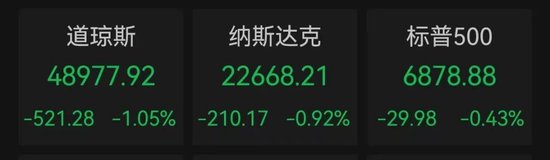
Core Viewpoint - The recent surge in the Producer Price Index (PPI) and the collapse of a UK mortgage company have reignited inflation concerns and heightened fears regarding private credit risks in the financial sector [1][17]. Group 1: Market Performance - The Dow Jones Industrial Average fell over 1%, dropping 500 points, while the S&P 500 index decreased by 0.4%, marking its largest monthly decline since March of the previous year [2][18]. - The Nasdaq Composite Index closed down by 210.171 points, a decline of 0.92%, ending at 22,668.212 points [2][18]. - The financial sector experienced significant losses, with the S&P regional bank ETF plummeting by 5%, and major banks like Goldman Sachs and Morgan Stanley seeing declines of 7.4% and 6.2%, respectively [4][20]. Group 2: Financial Sector Analysis - The banking sector faced one of its worst single-day declines of the year, with the KBW Bank Index dropping by 6%, as all 23 component stocks fell by over 2.9% [6][22]. - Concerns over AI disruption and private credit risks have led to a new wave of sell-offs in financial stocks [6][22]. - Investment-grade bonds, previously seen as a safe haven, have seen spreads widen by nearly 4 basis points, the largest weekly fluctuation since November of the previous year [8][24]. Group 3: Private Credit Risks - The collapse of Market Financial Solutions (MFS) has raised alarms about the $1.7 trillion private credit market, with reports of a $1.3 billion collateral shortfall [15][30]. - Analysts warn that the credit cycle has not truly ended, with risks increasingly concentrated in the unregulated shadow banking system [8][24]. - Concerns about liquidity in private credit funds have escalated, with firms like Blue Owl Capital halting redemptions and Invico Capital preparing for large investor withdrawal requests [15][30]. Group 4: AI Impact on Financial Services - The financial sector has been under pressure since early this month, with wealth management stocks being the first to suffer due to the introduction of AI tools that automate client strategies [9][25]. - The launch of an AI-based auto insurance comparison tool has triggered sell-offs in insurance brokerage stocks, further exacerbating market fears about AI's impact on financial jobs [10][25]. - Analysts indicate that banks are entering a period of heightened volatility, with the pace of AI adoption and disruption remaining uncertain [11][25].
近5亿美元资产94折抛售!AI吓坏美国私募信贷基金
Hua Er Jie Jian Wen· 2026-02-25 08:35
Core Viewpoint - The private credit market is transitioning from "concern" to "pricing," as evidenced by New Mountain's decision to sell nearly $500 million in assets at a discount, reflecting increasing industry pressure amid rising investor skepticism regarding AI-related risks, liquidity, and lending standards [1]. Group 1: New Mountain's Asset Sale - New Mountain's private credit fund sold $477 million in assets at a price of $0.94 per dollar of asset value, aiming to enhance portfolio diversification and reduce PIK income to improve financial flexibility [1][2]. - The sale aligns with New Mountain's previously stated plan to divest up to $500 million in assets, indicating a proactive approach to portfolio rebalancing [2]. - The transaction price signals a market interpretation of risk aversion, as discounted sales are more common in periods of heightened sensitivity to valuation and liquidity [2]. Group 2: Financial Performance and Market Impact - New Mountain reported a decline in net asset value (NAV) per share from $12.06 to $11.52 in the quarter ending December 31, indicating pressure on asset returns [3]. - The company reduced its dividend from $0.32 to $0.25 per share due to income pressure from interest rate cuts and narrowing credit spreads [3]. - New Mountain has repurchased $30 million in stock since the end of Q3 2025, with plans to continue buybacks, reflecting confidence in long-term value [3]. Group 3: Industry-Wide Liquidity Concerns - Blue Owl's decision to limit redemptions and sell direct lending investments led to a $2.4 billion drop in its market value, affecting the stock prices of several private credit-related firms [4]. - This incident has prompted a reevaluation of semi-liquid product mechanisms, as rising redemption demands can strain fund structures, asset valuations, and exit paths, leading to increased risk premiums [4]. Group 4: AI-Related Risks and Market Dynamics - Concerns surrounding AI expenditures, software exposure to AI threats, and lending standards are central to the current narrative of private credit risks [6]. - Some credit asset prices remain historically high, while related stocks and fund structures are trading at significant discounts, indicating a market dislocation [6]. - UBS has projected that default rates could rise as high as 15%, raising expectations for future losses, while some investors view discounted assets as potential buying opportunities [6].
综合晨报:美国9月非农超预期-20251121
Dong Zheng Qi Huo· 2025-11-21 00:41
Report Industry Investment Rating No relevant content provided. Core Viewpoints - The US September non - farm payrolls exceeded expectations, leading to significant changes in market risk preferences and various asset price fluctuations. The market is in a high - volatility state, and different industries face different situations and investment opportunities [2][16]. - In the bond market, November is mainly in a volatile state, but the probability of a decline in December is relatively high. In the commodity market, different products have different supply - demand situations and price trends [3][6]. Summary by Directory 1. Financial News and Comments 1.1 Macro Strategy (US Stock Index Futures) - Chicago Fed President Goolsbee hinted at not supporting a rate cut in December. Fed Governor Cook warned of private credit risks. The US September non - farm payrolls added 119,000 jobs, with the unemployment rate rising to 4.4%. The short - term market volatility is difficult to reduce, and there may still be a decline [14][15][16]. 1.2 Macro Strategy (Gold) - Fed's Goolsbee is worried about premature and significant rate cuts. The US September non - farm payrolls data made the market's expectation of a December rate cut slightly increase, but it is still less than 50%. Gold prices are expected to continue to fluctuate, and there is a risk of correction [18][19]. 1.3 Macro Strategy (Foreign Exchange Futures - US Dollar Index) - Multiple Fed officials maintained a hawkish stance. The US September non - farm payrolls exceeded expectations, with new employment exceeding 100,000, but the unemployment rate rose to 4.4%. The dollar index is expected to oscillate at a high level [22][23]. 1.4 Macro Strategy (Stock Index Futures) - Vice - Premier He Lifeng emphasized promoting foreign trade quality improvement. A - shares had a volume - shrinking adjustment. Market rumors of new real - estate stimulus policies may have a positive impact on the economy and prices if implemented. It is recommended not to add long positions in the short term [25][26][28]. 1.5 Macro Strategy (Treasury Bond Futures) - The November LPR remained unchanged. The central bank conducted a 3000 - billion - yuan 7 - day reverse repurchase operation. The probability of a decline in December is relatively high. It is recommended to short at the upper edge of the oscillation range [30][31][32]. 2. Commodity News and Comments 2.1 Agricultural Products (Soybean Meal) - The USDA weekly export sales report met expectations. US bio - fuel policy uncertainty increased, and CBOT soybeans declined. It is expected that soybean meal prices will oscillate, and attention should be paid to China's soybean purchases and South American weather [33][34]. 2.2 Agricultural Products (Soybean Oil/Rapeseed Oil/Palm Oil) - The Trump administration is considering delaying the reduction of import bio - fuel incentives. Malaysian palm oil exports from November 1 - 20 decreased by 20.5% month - on - month. It is recommended to wait and see and pay attention to the 1 - 5 reverse spread opportunity [35][36]. 2.3 Agricultural Products (Hogs) - Wens Co., Ltd. shut down 7 pig farms for capacity adjustment. In the short - term, it is recommended to short LH2601 and LH2603, and in the long - term, pay attention to the opportunity to lay out LH2607 and far - month contracts at low prices [37][38]. 2.4 Black Metals (Rebar/Hot - Rolled Coil) - The inventory of five major steel products decreased by 442,500 tons week - on - week. Although the current destocking is good, the subsequent inventory pressure is still large, and steel prices are expected to continue to oscillate [39]. 2.5 Agricultural Products (Corn Starch) - The starch production rate slightly decreased, and inventory decreased. The rice - flour price difference is expected to oscillate in the short term, and it is recommended to conduct band trading [41][42][43]. 2.6 Agricultural Products (Corn) - The inventory of northern ports increased, and the inventory of southern ports decreased. Corn prices are expected to remain high and oscillate in the short term, and it is recommended to wait and see [45]. 2.7 Black Metals (Steam Coal) - The power plant's winter storage is coming to an end. Coal prices are expected to stabilize in the short term, and attention should be paid to actual temperature and daily consumption in December [46]. 2.8 Black Metals (Iron Ore) - US Steel announced a $3 billion expansion project. Iron ore prices are expected to maintain a weak oscillation, and attention should be paid to policy changes [47]. 2.9 Non - ferrous Metals (Polysilicon) - The "Chengdu Declaration" was released. Polysilicon prices are expected to return to an oscillation state, and attention should be paid to interval trading opportunities [48][49][51]. 2.10 Non - ferrous Metals (Industrial Silicon) - The "anti - involution" of silicone drove up the industrial silicon futures price, but it is actually a negative factor. It is recommended to stop profiting from short positions in a timely manner [52][53][54]. 2.11 Non - ferrous Metals (Lead) - The social inventory of lead ingots first increased and then decreased. It is recommended to short at high prices in the short term and wait and see for arbitrage and internal - external trading [55][56]. 2.12 Non - ferrous Metals (Zinc) - The domestic social inventory of zinc decreased. LME zinc oscillated upward. It is recommended to manage positions well in the short term and pay attention to buying opportunities on dips in the medium term [57][59][60]. 2.13 Non - ferrous Metals (Nickel) - China's refined nickel imports decreased significantly in October. Nickel prices are expected to remain weak in the short term, and attention should be paid to Indonesia's supply adjustment [61][62][63]. 2.14 Non - ferrous Metals (Lithium Carbonate) - Liontown's lithium concentrate auction price was higher than the spot price. The Guangzhou Futures Exchange adjusted the trading fees and limits of lithium carbonate futures. It is recommended to short at high prices in the short term [64][65][66]. 2.15 Energy Chemicals (Carbon Emissions) - The CEA price increased by 1.51% on November 20. The CEA price has a strong upward driving force [67][68]. 2.16 Energy Chemicals (Natural Gas) - US natural gas inventory decreased by 14 Bcf week - on - week. Nymex natural gas faces a downward risk [69][70]. 2.17 Energy Chemicals (PX) - PX prices were relatively strong. It is recommended to adjust in the short term and try to go long at low prices in the long term [71][72]. 2.18 Energy Chemicals (PTA) - The terminal operating rate in Jiangsu and Zhejiang remained stable. PTA is expected to accumulate a small amount of inventory at the end of the year. It is recommended not to chase the rise unilaterally and to lay out long positions in far - month contracts and 5 - 9 positive spreads at low prices [73][75][76]. 2.19 Energy Chemicals (Pulp) - The price of imported wood pulp in the spot market was weakly adjusted. It is expected that the subsequent market will oscillate [77]. 2.20 Shipping Index (Container Freight Rates) - CMA CGM and AD Ports will expand the Khalifa Port terminal. The container freight rate market is expected to oscillate, and it is recommended to pay attention to low - buying opportunities for the 02 contract at the lower edge of the oscillation range [78][79][80].