
风格再平衡

Search documents
3月金股报告:指数震荡,风格再平衡
ZHONGTAI SECURITIES· 2026-02-27 13:44
Core Insights - The report anticipates a fluctuating upward trend in the index, with a primary focus on style rebalancing [4][5] - The A-share market has shown signs of recovery after initial volatility, with significant performance differences among major indices [5][6] Domestic Policy and Market Liquidity - The People's Bank of China conducted a 600 billion MLF operation and net injected 300 billion, marking the 12th consecutive month of increased liquidity to ensure reasonable liquidity before and after the Spring Festival [2] - The strengthening of the RMB has stabilized expectations for cross-border capital flows [2] Sector Performance - In the technology sector, midstream high-end manufacturing has led the gains, particularly in defense, machinery, and power equipment, driven by geopolitical tensions and domestic equipment renewal cycles [2] - In the cyclical sector, building materials, steel, and coal have outperformed, with glass fiber leading due to supply-side optimization and demand from AI and new energy [3] - Conversely, the non-ferrous metals sector has seen a pullback due to fluctuating expectations around U.S. Federal Reserve interest rate cuts and geopolitical disturbances [3] Market Trends and Historical Context - Historical data from 2010 to 2025 indicates a high probability of the Shanghai Composite Index rising in the month following the Spring Festival, particularly after a month of adjustment or fluctuation [6] - The report suggests that the market is likely to follow a "diffusion" model of industry rotation rather than a dramatic style switch, with a focus on moderate rebalancing [6] Investment Strategy - The report recommends focusing on "supply constraints + visible profits" as dual main lines, particularly in midstream high-end manufacturing [6] - The core trading logic around the AI chain continues to revolve around profit visibility and supply shortages, with a cautious approach to market liquidity [6] - Opportunities for Chinese manufacturing to expand overseas are highlighted, particularly in sectors like power equipment and engineering machinery [6] Recommended Stocks - The March stock selection includes a mix of sectors such as central enterprise dividend ETFs, hospitality, electronics, military, machinery, beverages, and communications [10]





风险偏好各异公募投顾调仓泾渭分明
Zhong Guo Zheng Quan Bao· 2025-12-04 20:22
Group 1 - Multiple public fund advisory products have initiated a new round of portfolio adjustments, with some increasing positions in growth sectors like technology and healthcare, while others adopt a more conservative strategy by slightly reducing equity positions and increasing fixed-income assets [1][2] - The market environment shows favorable indicators for equity assets, including valuation, risk premium, and new fund issuance, alongside supportive policies aimed at expanding domestic demand and reducing competition, which are expected to benefit the A-share market [1] - Several advisory products have favored growth-oriented funds, particularly in technology and healthcare sectors, with specific funds being added to portfolios, such as those focused on AI and innovative medical solutions [1][2] Group 2 - Some advisory products have taken a defensive approach by slightly reducing equity positions due to increased volatility in the stock and gold markets, while enhancing bond allocations [3] - Recent market adjustments have led to a rebound, with expectations of further positive developments in technology sectors, although market participants remain cautious about domestic policy and external economic conditions [3][4] - The overall market is experiencing a structural rebalancing, with many funds suggesting that the current valuation levels are attractive, particularly in low-valuation sectors like real estate and cyclical industries [2][4] Group 3 - Investment strategies recommended by various advisory firms include focusing on sectors with potential for valuation recovery, such as agriculture and brokerage, while also considering long-term investments in technology [5] - The technology sector is viewed as having a solid long-term investment rationale, despite short-term trading congestion and a lack of positive catalysts, indicating a period of adjustment [4][5]
资金“高切低”,机构看上哪些板块?
券商中国· 2025-11-21 07:19
Core Viewpoint - The article highlights the increasing demand for defensive investments in the A-share market, characterized by a "high cut low" trend where funds are flowing out of high-performing sectors and into low-valuation, high-dividend, and performance-stable sectors [2][3][5]. Group 1: Market Trends - The "high cut low" trend is becoming more pronounced, with significant capital outflows from previously high-performing sectors like technology and media, while low-valuation sectors are seeing capital inflows [2][3]. - The market is experiencing a structural divergence, with traditional sectors like finance and consumption remaining undervalued, creating a mismatch between valuation and performance, which drives the "high cut low" behavior [3][4]. - Data from Wind indicates that certain ETFs focused on low-valuation themes have received over 1 billion yuan in net inflows this month, contrasting with net redemptions in high-performing ETFs [3]. Group 2: Defensive Investment Demand - There is a notable increase in defensive investment demand as investors' risk preferences return to rationality following market volatility, leading to heightened caution in the fourth quarter [5]. - The year-end profit-locking and macroeconomic uncertainties are contributing to a significant rise in risk-averse sentiment and reallocation needs among funds [5]. - The market is entering a phase of stock selection, with funds concentrating on a few leading stocks, indicating potential volatility in high-performing sectors [5]. Group 3: Investment Strategies - Fund managers emphasize focusing on "value for money" and "margin of safety" in investment strategies, seeking companies with strong and stable free cash flow that can withstand market fluctuations [7]. - The article suggests that the investment in the consumer sector is increasingly reliant on company-specific research rather than broad industry analysis, indicating a shift towards higher specialization [8]. - Fund managers recommend a "growth + high dividend" allocation strategy to improve risk-reward ratios, identifying four key investment directions: aging electrical grids in Europe and the U.S., metals with supply-demand gaps, undervalued companies in consumption and pharmaceuticals, and high-dividend stocks [8].


资金高切低趋势持续强化基金经理聚焦性价比与安全边际
Zheng Quan Shi Bao· 2025-11-19 22:01
Core Viewpoint - The A-share market is experiencing a pronounced trend of "high cutting and low buying," where funds are flowing out of previously high-performing sectors and into low-valuation sectors with strong earnings support [1][2]. Group 1: Market Trends - There is a significant divergence in market performance, with high-growth sectors like technology and innovative pharmaceuticals facing profit-taking pressure, while traditional sectors such as finance and consumer goods remain undervalued [2][3]. - Data indicates a clear trend in fund flows, with thematic ETFs that previously performed well experiencing net redemptions, while low-valuation ETFs are seeing substantial inflows, exceeding 1 billion yuan in some cases [2][3]. - The market is currently in a phase of style rebalancing, driven by weakening micro liquidity and macroeconomic uncertainties [2][4]. Group 2: Defensive Demand - Investor risk preferences are shifting towards more defensive strategies, with heightened caution typical of the fourth quarter, leading to increased profit-locking and reallocation demands [4][5]. - The market is entering a phase of stock selection, with funds concentrating on a few leading stocks, indicating potential volatility in high-performing sectors [4][5]. Group 3: Focus on Value and Safety Margin - Fund managers emphasize the importance of focusing on value and safety margins, seeking companies that can generate stable cash flows and withstand market fluctuations [5][6]. - The low-valuation consumer sector is highlighted as having significant value, although challenges remain, such as supply-side adjustments and changing consumer behaviors [6][7]. - Investment in the consumer sector is increasingly reliant on detailed company research rather than broad industry analysis, reflecting a trend towards specialization [7][8]. Group 4: Investment Opportunities - There are specific investment opportunities within high-valuation sectors, particularly in areas like power grid upgrades and essential metals with supply-demand gaps [7][8]. - A balanced investment strategy combining growth and high-dividend stocks is recommended to enhance risk-return profiles [7][8].
资金高切低趋势持续强化 基金经理聚焦性价比与安全边际
Zheng Quan Shi Bao· 2025-11-19 21:38
Core Viewpoint - The A-share market is experiencing a pronounced trend of high-cutting and low-buying, with funds flowing out of previously high-performing sectors and into low-valuation sectors with strong earnings support [1][2]. Fund Flow Dynamics - There is a significant divergence in fund flows, with thematic ETFs that previously performed well facing net redemptions, while low-valuation ETFs are seeing substantial net inflows, particularly in sectors like dividend-paying stocks and cash flow-focused ETFs [2][5]. - The market is characterized by a structural shift, with traditional sectors like finance and consumption remaining undervalued, creating a core driver for the high-cut low-buy trend [2][3]. Defensive Demand - Investor risk preferences are shifting towards more defensive positions due to increased market volatility, leading to heightened defensive demand as year-end profit-locking and global economic uncertainties influence fund allocation [4][5]. - The market is entering a phase of stock selection, with funds concentrating on a few leading stocks, indicating potential volatility in high-performing sectors [4][5]. Focus on Value and Safety Margin - Fund managers emphasize the importance of focusing on value and safety margins, suggesting that companies with strong and stable cash flows are better positioned to withstand market fluctuations [5][6]. - The essence of the high-cut low-buy trend is the search for value and safety, with a focus on companies that can consistently create shareholder value [5][6]. Sector-Specific Insights - Within the low-valuation consumption sector, there are notable opportunities, but challenges remain, including supply-side adjustments and the need for effective management transitions [6][7]. - Even in high-valuation technology sectors, there are localized opportunities, particularly in areas like optical modules and energy storage, driven by strong fundamentals [7].
国金证券:全球风险偏好再度回落 A股风格继续再平衡 行情扩散至消费资产
Zhi Tong Cai Jing· 2025-11-16 12:33
Group 1: Global Financial Landscape - The current global financial assets to GDP ratio is at a high level, historically indicating that any fundamental changes can lead to significant pullbacks in risk assets [2][3] - The U.S. economy is shifting towards a "strong investment, weak consumption" pattern, similar to China's situation from 2022 to 2024 [6] Group 2: AI and Investment Concerns - There are growing concerns regarding the actual returns on massive investments in AI, as exemplified by CoreWeave's reduction in capital expenditure despite revenue growth [3] - The disparity between U.S. consumer stocks and the S&P 500 reflects market fears of an economic downturn, with AI sector growth not translating into robust consumer spending [3] Group 3: Domestic Consumption and Economic Recovery - Domestic economic data shows weak overall consumption, but structural improvements are noted, particularly in "non-subsidized" sectors contributing positively to overall consumption [4] - Two potential scenarios for China's domestic demand are identified: one where export resilience supports consumption recovery, and another where financial risks abroad could lead to capital inflows, benefiting domestic assets [4] Group 4: Investment Recommendations - Key investment themes include focusing on physical assets that may benefit from a recovery in manufacturing and investment post U.S. rate cuts, particularly in sectors like upstream resources and midstream industries [6] - Consumer sectors in China, such as food and beverage, are expected to benefit from stabilizing prices and structural demand improvements [6]

南财观察|上一轮牛市买的主动权益基金,为何还有4成未回本?
2 1 Shi Ji Jing Ji Bao Dao· 2025-11-12 11:49
Core Insights - The article discusses the performance of actively managed equity funds in the context of the Shanghai Composite Index surpassing 4000 points for the first time in ten years, revealing a significant number of funds still in loss despite a majority achieving positive returns since 2025 [1][2] Fund Performance Overview - As of November 10, 2023, 97.45% of 4679 actively managed equity funds reported positive returns since 2025, with some funds achieving over 200% gains [2] - However, nearly 38% of actively managed equity funds, totaling 1019 funds, remain in loss over the past five years, including products from leading public fund institutions and well-known fund managers [1][3] Reasons for Underperformance - Key factors contributing to the underperformance of these funds include high-level increases in positions, frequent trading, and reliance on specific sectors [1][6] - The average stock position for funds with negative returns was significantly higher than the overall market average during peak market periods, indicating poor timing decisions [6] Fund Manager Challenges - Frequent trading has negatively impacted fund performance, with an average turnover rate of 460.71% for all actively managed equity funds from 2021 to 2024, and even higher for those with significant losses [7] - Changes in fund management have led to inconsistent investment strategies, further complicating performance recovery [8] Market Trends and Future Outlook - The market has seen a resurgence in the issuance of new funds, with 1354 new funds launched in 2023, reflecting a renewed interest in actively managed products [10] - Fund managers are advised to focus on sectors with long-term growth potential, such as high-end manufacturing and new consumption, while being cautious of market volatility [11]

六大券商2026年策略会观点汇总!芯片行业迎利好
天天基金网· 2025-11-11 09:26
Group 1 - The core viewpoint is that brokerages are optimistic about the continuation of the A-share bull market into 2026, recommending an overweight position in Chinese stocks and gold, while suggesting a balanced approach to market styles focusing on technology growth and large-cap growth opportunities [2][5][10]. - China’s economic indicators show signs of an upward trend, with brokerages adjusting their asset allocations accordingly, increasing exposure to commodities and maintaining a focus on stocks [2][5]. - The semiconductor industry is experiencing positive developments, with HBM4 prices rising by 51.35% to approximately $560, and AMD receiving export licenses for its AI chips to China, indicating a favorable environment for the sector [14][15]. Group 2 - The storage industry is entering a new upward cycle driven by the increasing demand for memory capacity due to AI model training, with HBM and DDR5 memory shortages impacting the entire storage supply chain [16][18]. - Major storage manufacturers like Samsung and SK Hynix are adjusting prices in response to the heightened demand for storage driven by AI applications, with AI servers requiring significantly more DRAM and NAND capacity compared to standard servers [18][21]. - The domestic storage industry is expected to see significant growth in production capacity, with companies like Yangtze Memory Technologies and Changxin Memory Technologies ramping up output to meet the rising demand [15][16].

11月10日早餐 | 存储龙头提价;美股巨震反弹
Xuan Gu Bao· 2025-11-10 00:07
Group 1 - US stock market saw a significant rebound from intraday lows on Friday, with the S&P 500 rising by 0.13% and the Dow Jones increasing by 0.16%, while the Nasdaq Composite fell by 0.22%, marking its worst weekly performance since April [1] - Microsoft experienced its longest losing streak since 2011, with eight consecutive declines, while Tesla dropped over 3.6% following the approval of Elon Musk's $1 trillion compensation plan at the shareholder meeting [2] - Gold fluctuated around $4,000, ending a two-week decline, while crude oil prices briefly rose above $60 but ultimately fell by over 1.7% for the week [3] Group 2 - Bitcoin briefly dipped below $100,000 but later surged over 4.6%, while Ethereum rose by over 4.3%, reclaiming the $3,400 mark [4] - The US government shutdown situation appears to be improving, with Democrats softening their stance, although Republicans have rejected the proposal but acknowledged progress [4] - The EU AI legislation may face pressure to lower its thresholds due to collective pressure from tech giants [5] Group 3 - Google launched its next-generation AI image model, Nano Banana 2, capable of quickly generating 4K images and solving calculus problems [6] - The Chinese government issued a document to accelerate the cultivation of scenarios and promote large-scale applications in the AI field, focusing on key technology breakthroughs and standard construction [7] - A white paper on carbon peak and carbon neutrality in China indicated that the proportion of non-fossil energy consumption is expected to increase from 16.0% in 2020 to 19.8% in 2024 [8] Group 4 - The People's Bank of China increased its gold reserves by 30,000 ounces in October, marking the 12th consecutive month of increases [10] - China's October CPI rose by 0.2% year-on-year, with the core CPI reaching its highest level since March 2024, while the PPI saw its first year-on-year increase of the year [11] Group 5 - Various brokerage strategies are focusing on year-end style rebalancing, with analysts suggesting that sectors like new energy, pharmaceuticals, and food and beverage may show weaker performance as they face profit-taking pressures [12] - Analysts recommend focusing on sectors with independent logic and improving ROE, such as chemicals, non-ferrous metals, and electric new energy, which are at historical low points in profitability and industry prosperity [13] Group 6 - NAND flash memory prices are set to increase significantly, with SanDisk raising contract prices by up to 50%, leading to some manufacturers pausing shipments to reassess pricing [14] - The flu activity in China has risen sharply, with most provinces entering the flu epidemic period, prompting increased production of antiviral medications [16] - The Ministry of Agriculture and Rural Affairs released guidelines for building a smart agriculture standard system, aiming for a comprehensive standard system by 2030 [17] - The smart agriculture market in China is projected to exceed 100 billion yuan in 2024, growing by 11.7% year-on-year, driven by policy support and increased fiscal investment [18] Group 7 - Several companies announced significant transactions, including Suzhou planning to acquire 100% of Dongjin Hangke for 250 million yuan, and Guocheng Mining proposing to pay 3.168 billion yuan for a 60% stake in Guocheng Industrial [19] - Huadian Energy plans to invest 12.043 billion yuan in a wind power project, while Huadian Science and Technology signed a contract for a major offshore wind power project [20] - Fangzheng Technology is investing 1.364 billion yuan to expand its AI production base in Chongqing, addressing capacity bottlenecks in high-end products [21]



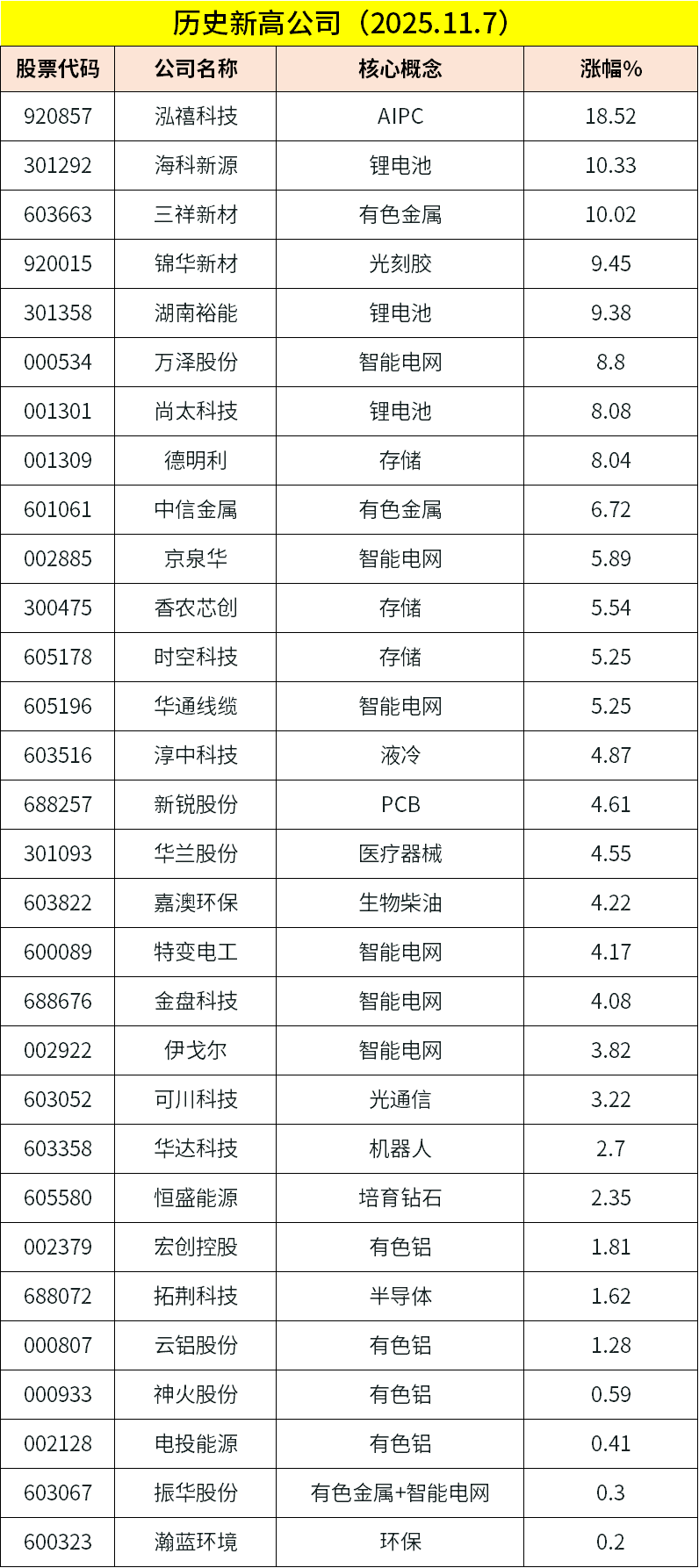
风格再平衡引发热议 公募再拾“哑铃型配置”
Zhong Guo Zheng Quan Bao· 2025-11-05 21:17
Core Viewpoint - The A-share market is experiencing increased volatility, with a focus on style rebalancing as several well-known balanced fund managers have proactively adjusted their holdings in anticipation of market changes. Group 1: Investment Opportunities - Fund managers are identifying investment opportunities in sectors such as engineering machinery, chemicals, and non-ferrous metals, with some products in these sectors at the bottom of their price ranges, suggesting potential for revenue growth as overseas demand recovers in the coming years [1][5]. - Notable stocks like China Ping An, Wanhua Chemical, XCMG, Sany Heavy Industry, and Luoyang Molybdenum have been added to the heavy holdings list or continuously increased in holdings by several fund managers [1][2]. Group 2: Fund Manager Actions - China Ping An has gained favor among several well-known balanced and growth fund managers, with significant increases in holdings across multiple funds, totaling a market value of 794 million yuan and 358 million yuan in different funds [2]. - The chemical sector has also seen increased attention, with funds like China Europe Era Pioneer and China Europe New Blue Chip significantly increasing their positions in Wanhua Chemical, with total holdings exceeding 1 billion yuan [2][4]. Group 3: Market Trends - The cyclical and value-style stocks have gained traction, becoming key drivers of market performance, as the technology growth sector enters a high volatility phase [2][7]. - The non-ferrous metals sector has attracted considerable investment, with funds increasing their positions in stocks like Zijin Mining and Huaxi Nonferrous, with total holdings exceeding 1 billion yuan [4][5]. Group 4: Performance Metrics - As of November 4, several funds have managed to maintain positive returns despite market fluctuations, with some controlling net value drawdowns within 2% [4]. - The ETF market reflects this trend, with significant net inflows into various indices, indicating a shift towards value and dividend-paying assets [7][8]. Group 5: Future Outlook - Fund managers are optimistic about the potential for recovery in traditional industries, with low valuations and high dividend yields making certain stocks attractive for future investment [6][9]. - The market is expected to continue its focus on balanced strategies to navigate upcoming volatility, while still recognizing the long-term value in technology and growth sectors [8][9].