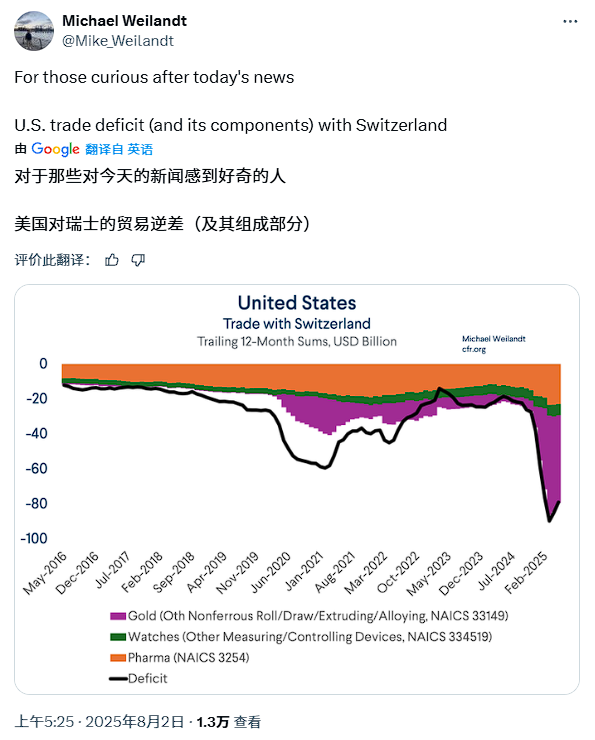
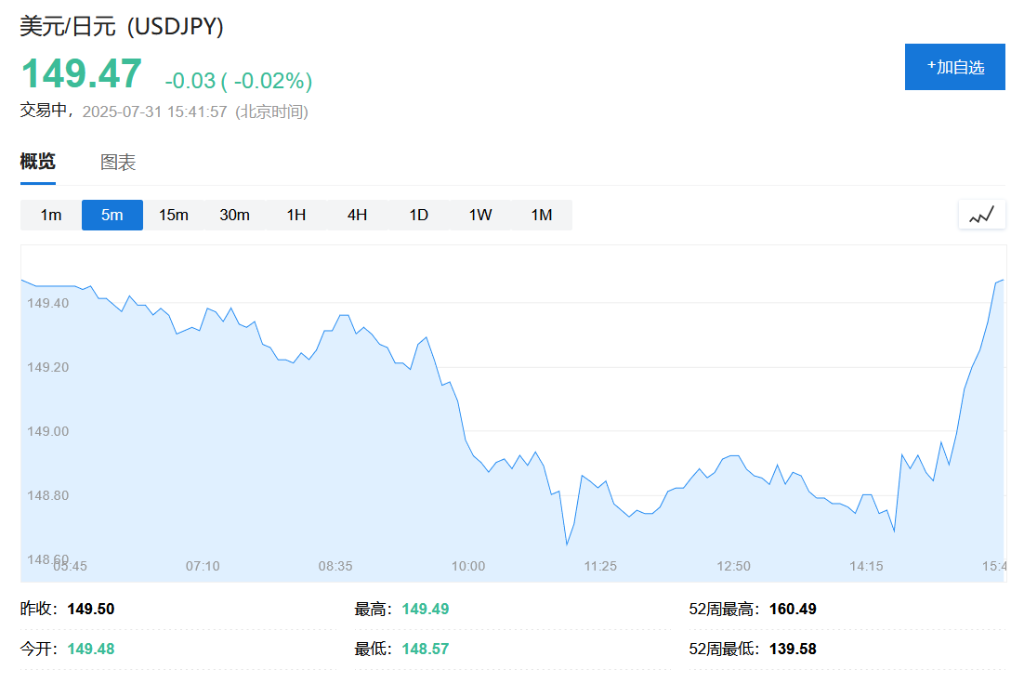
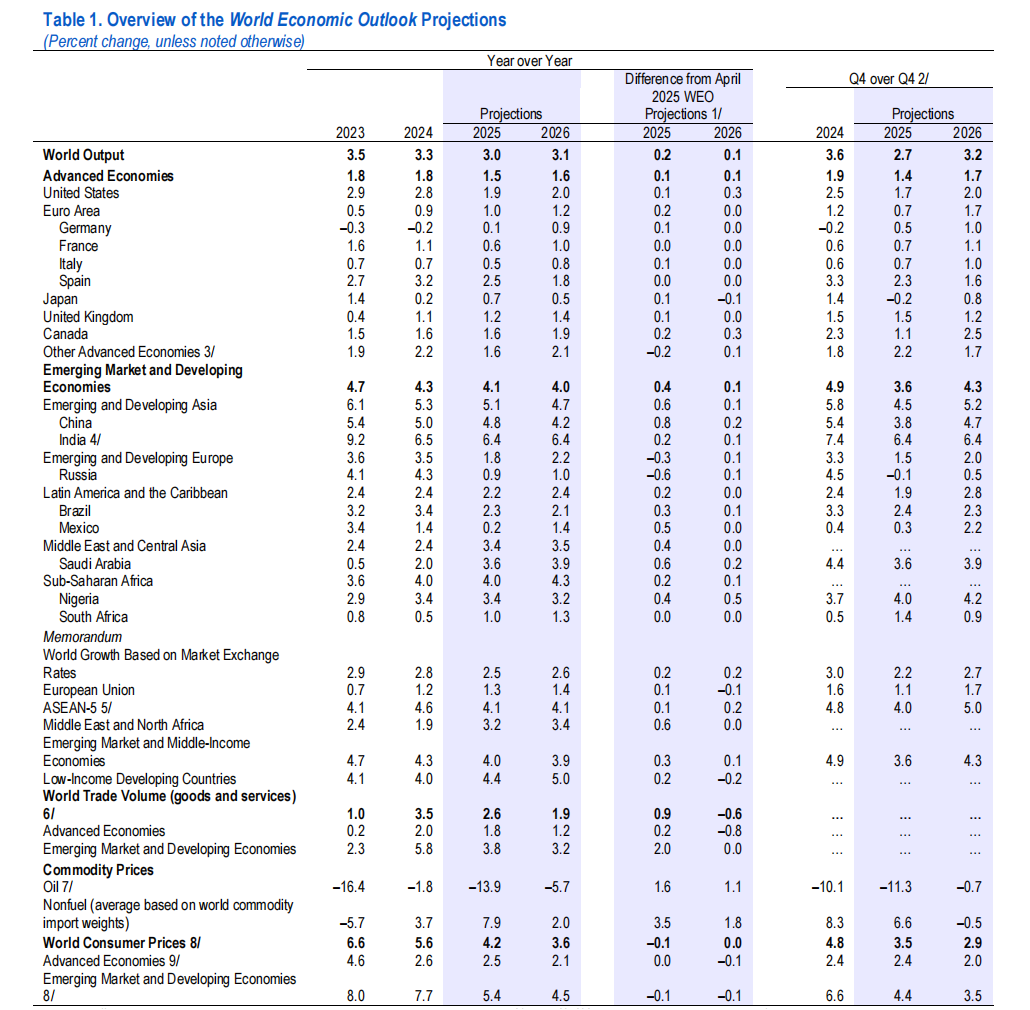
贸易政策不确定性
Search documents
初请数据前夜黄金突现异动!机构预警:3320美元或成多空决战点
Sou Hu Cai Jing· 2025-07-10 05:22
Group 1: Gold Price Dynamics - Gold prices showed a rebound after hitting a near two-week low of $3282.61 per ounce, closing at $3313.38 per ounce, indicating significant recovery momentum [1][3] - The increase in gold prices is driven by rising geopolitical risks, trade policy uncertainties, and U.S. fiscal expansion, leading to increased demand for gold as a safe-haven asset [3][4] - The U.S. dollar index remains near a two-week high, exerting short-term pressure on gold, but the decline in the 10-year U.S. Treasury yield to 4.34% partially offsets the impact of a stronger dollar [4][11] Group 2: U.S.-EU Trade Negotiations - The EU is accelerating trade negotiations with the U.S. to avoid tariff increases set by the Trump administration, focusing on reducing auto import tariffs and providing export credits for EU car manufacturers [5][6] - In-depth discussions on auto tariff rates and quotas have taken place, with proposals for providing tariff credits to manufacturers producing and exporting cars in the U.S., which could benefit companies like BMW and Mercedes [6] Group 3: Federal Reserve Policy and Inflation - The Federal Reserve's June meeting minutes indicate a cautious stance, with most policymakers focusing on potential inflation pressures from trade tariffs, maintaining the interest rate range at 4.25%-4.50% [8][9] - Market expectations for a rate cut in July are low, but there is an increasing probability of a first cut in September, with a cumulative cut of 50 basis points by year-end being likely [9] Group 4: U.S. Treasury Market Performance - The U.S. Treasury auction of $390 billion in 10-year notes saw a strong bid-to-cover ratio of 2.61, the highest since April, indicating reduced concerns about "selling U.S. assets" [10] - The decline in the 10-year Treasury yield to 4.34% reflects alleviated worries about fiscal outlook, creating a favorable environment for gold price rebound [11] Group 5: Market Sentiment and Future Outlook - Gold price fluctuations are influenced by trade negotiations, dollar movements, and Federal Reserve policies, with short-term pressures from a stronger dollar and Treasury yield volatility [12] - Investors are advised to monitor initial jobless claims data and Federal Reserve officials' speeches to gauge market sentiment changes [12]
美元指数反弹趋势限制黄金多头
Jin Tou Wang· 2025-07-09 09:02
Group 1 - The core viewpoint indicates that gold prices are experiencing a downward trend, currently at $3284.47 per ounce, with a decline of 0.51% [1] - The recent rebound of the US dollar index is limiting the bullish momentum for gold, as the market is under strong resistance [1] - The extension of the tariff agreement by Trump until August 1 has provided temporary relief to the market, but the long-term macro pressures on the dollar remain significant, including rising public debt and deficit concerns [2] Group 2 - The market is closely monitoring the upcoming Federal Reserve meeting minutes, as a dovish tone could lead to a depreciation of the dollar and support for gold prices [2] - Technical analysis suggests that gold prices are currently fluctuating, with key support at $3280 and resistance around $3335; a break below $3297 could lead to further declines [4] - If geopolitical risks escalate or negotiations fail, the dollar's support may be short-lived, leading to a renewed focus on gold [2]
澳承关税利弊双压纸黄金小幅反弹
Jin Tou Wang· 2025-07-08 06:23
Group 1 - The current trading price of paper gold is around 768.06 CNY per gram, with a slight increase of 0.31% [1] - The highest price reached today is 771.68 CNY per gram, while the lowest is 765.59 CNY per gram, indicating a short-term oscillating trend [1] - Key resistance levels for paper gold are identified between 775 CNY per gram and 800 CNY per gram, with important support levels ranging from 760 CNY per gram to 800 CNY per gram [3] Group 2 - Australia currently faces a relatively low U.S. tariff rate of 10%, but is still impacted by specific tariffs on the steel and aluminum industries [2] - The Australian Productivity Commission's analysis suggests that proposed U.S. tariff adjustments could have a mild but positive impact on the Australian economy, potentially increasing GDP by approximately 0.37 percentage points [2] - The report warns that growing global economic uncertainty is becoming a constraint on economic activity, affecting household consumption, business investment, and trade policy stability [2]
澳洲联储意外暂停降息 应对全球经济不确定性
Xin Hua Cai Jing· 2025-07-08 06:06
声明中还强调,全球经济不确定性高企,尤其是美国关税政策演变或对贸易活动及企业投资决策造成冲 击。尽管澳大利亚受美国关税直接影响有限(钢铁、铝等行业除外),但生产力委员会模型显示,全球 贸易政策不确定性可能拖累澳GDP增长0.37%。国内方面,劳动力市场仍紧张,工资增速高位徘徊,叠 加生产率疲软导致单位劳动力成本高企,加剧通胀压力。 (文章来源:新华财经) 澳洲联储明确维持物价稳定与充分就业为首要目标,承认私人需求复苏步伐或慢于预期,但领先指标显 示劳动力市场存超预期韧性可能。声明特别提及货币政策将保持灵活,若国际动态对澳大利亚经济产生 实质影响,将"果断应对"。 新华财经北京7月8日电(崔凯)澳洲联储意外决定将现金利率目标维持在3.85%,未如市场预期降息25 个基点。尽管自2022年峰值以来,通胀已显著下降,并且当前利率较五个月前已下调50个基点,但鉴于 全球经济不确定性高企以及贸易政策对经济活动的潜在负面影响,委员会认为需等待更多信息以确认通 胀可持续回落至2-3%的目标区间。 澳洲联储承诺将密切关注数据变化和风险评估的发展,以指导未来政策决策。值得注意的是,本次会议 决议以6票赞成、3票反对通过,反映了 ...
国信期货:贸易政策仍存不确定性 白银期货或呈现震荡格局
Jin Tou Wang· 2025-07-08 03:24
Group 1 - Silver futures showed a slight increase, with the main contract on July 8 reported at 8958 CNY/kg, up 0.28% from the opening price of 8856 CNY/kg [1] - The highest price reached was 8959 CNY/kg, while the lowest was 8839 CNY/kg [1] Group 2 - FHN economist Chris Low noted that despite better-than-expected non-farm employment data for June, the overall situation is not celebratory, with only 74,000 private sector jobs added when excluding new teacher positions [2] - Low humorously suggested that setting low expectations can make poor data appear better, indicating a need to face the reality of slowing economic growth in the U.S. [2] Group 3 - Guoxin Futures commented on the uncertainty in trade policies, suggesting that silver futures may exhibit a volatile pattern due to recent tariff announcements by President Trump [3] - The report indicated that precious metals experienced wide fluctuations, with New York gold futures down 0.11% and Shanghai silver down 0.19% [3] - Looking ahead, precious metals are expected to remain volatile in the short term due to the influence of the U.S. dollar index and trade policy uncertainties, while medium to long-term support is expected from central bank purchases, technological demand, and de-dollarization trends [3]
特朗普“变脸”被当成跳梁小丑,市场会不会看走眼?
Jin Shi Shu Ju· 2025-07-07 09:25
Group 1 - The article discusses how geopolitical uncertainty and tariff policies have led to increased defensive investments by governments and companies, unexpectedly supporting the stock market [2][3] - The European Union has allowed member states to increase defense spending, with Germany planning to raise military expenditure to over 1% of GDP and invest an additional €500 billion (approximately $588 billion) in infrastructure [2] - The Stoxx Aerospace and Defense Index surged 54% in the first half of the year, marking a historic performance with a 74% increase in USD terms [2] Group 2 - There are three potential scenarios regarding the impact of geopolitical and tariff uncertainties on the economy: 1. The market may have already priced in the uncertainties, with a belief that Trump will not reimpose severe tariffs [3] 2. The uncertainties may primarily affect the value of the dollar, as foreign investors show decreased interest in U.S. assets, leading to the worst dollar performance since the Nixon administration [5] 3. The uncertainties could eventually harm the economy as CEOs delay critical decisions, which may suppress corporate investment [6][8] Group 3 - The article highlights a divide between bullish and bearish perspectives, with bulls focusing on current economic conditions and strong corporate investments, while bears emphasize the potential negative impacts of uncertainty on consumer and business sentiment [8] - Concerns are raised about inflationary pressures and growth slowdowns due to tariffs, with some analysts suggesting that now may be an appropriate time to cash out given the high valuations in the stock market [8]
大限之前关税信号“混乱”,亚洲股市普遍下挫,欧美股指期货承压,黄金跌逾20美元
Hua Er Jie Jian Wen· 2025-07-07 04:22
Core Viewpoint - The uncertainty surrounding the U.S. tariff policy is causing significant turmoil in global markets, with mixed signals from the Trump administration leading to confusion about the effective dates of tariffs [1][13]. Market Reactions - Asian stock markets mostly declined, with the Nikkei 225 and Thailand's SET index both dropping approximately 0.5%. The MSCI Asia-Pacific index fell by 0.6% [1]. - U.S. stock index futures also faced pressure, with the S&P 500 and Nasdaq 100 futures both down about 0.5% [1]. - Commodity prices generally decreased, with gold dropping over $20 to $3314 per ounce, and copper falling for the third consecutive day to $9821 per ton [1][6]. Commodity Market Impact - The uncertainty in trade policies has led to widespread declines in commodity prices, with iron ore prices in Singapore down 0.3% to $95.60 per ton, and futures for steel in Dalian and Shanghai also declining [6]. - Brent crude oil prices fell by 0.6% to $67.8 per barrel, while WTI crude oil prices decreased by 1.4% to $64.7 per barrel, influenced by both tariff policies and OPEC+ decisions to increase production [7]. Bond Market Response - There was an increase in demand for safe-haven bonds, with the yield on 10-year U.S. Treasury bonds dropping nearly 2 basis points to 4.326% [10]. - The U.S. dollar index slightly rose to 97.071, while the euro to dollar exchange rate remained stable at 1.1771, close to last week's high of 1.1830 [10].
OPEC+超预期增产54.8万桶,特朗普70%关税威胁,油价跌破67美元
Sou Hu Cai Jing· 2025-07-07 02:16
Group 1: OPEC+ Production Increase - OPEC+ has agreed to increase oil production by 548,000 barrels per day in August, exceeding market expectations of 411,000 barrels per day [1][3] - This marks a significant shift in OPEC+'s strategy from production cuts to actively ramping up capacity, following the removal of a 2.2 million barrels per day cut agreement in April [3] - The organization is considering another increase of 548,000 barrels per day in September, potentially allowing it to meet its 2023 supply targets a year ahead of schedule [3] Group 2: Global Oil Market Conditions - The global oil market is showing signs of oversupply, with Brent crude futures prices down 8.5% since 2025, influenced by increased production from OPEC+ and other regions [3] - The International Energy Agency anticipates a significant oversupply in the market later this year, with Wall Street predicting oil prices could drop to $60 per barrel or lower in the fourth quarter [3] Group 3: Trade Uncertainty Impact - President Trump's new tariff threats are expected to weaken market risk appetite, with potential tariffs ranging from 10% to 70% affecting a wide range of countries [4] - This uncertainty may disrupt global supply chains and suppress energy consumption demand in major economies, raising concerns about the impact on global economic recovery [4] - The combination of weak demand and increased supply poses significant challenges to the balance of the oil market, with WTI crude falling to $66.50 per barrel [4]
外汇:美元难以转向
Hua Tai Qi Huo· 2025-07-06 12:11
Report Industry Investment Rating No relevant content provided. Core Viewpoints - In the first half of 2025, the global foreign exchange market saw a weakening US dollar and a general strengthening of non - US currencies. The on - shore RMB appreciated about 1.8% against the US dollar, mainly due to a more than 10% drop in the US dollar index, along with China's economic recovery, policy support, and central bank's regulation [6]. - The slowdown of the US economy, rising fiscal deficits and debt risks have increased concerns about the US dollar's credit. In contrast, China's economy continues its moderate recovery, and the narrowing growth gap between the two countries is conducive to the RMB's stability [6]. - With the expectation of falling inflation, the Fed may start cutting interest rates in the fall, which will narrow the Sino - US interest rate spread, reduce capital outflows, and support the RMB [6]. - Although the Trump administration's tariff policies caused short - term fluctuations in the RMB exchange rate in the first half of the year, the RMB's sensitivity to such policies has decreased, and it is expected to only fluctuate significantly under extreme policy scenarios in the second half [7]. - Overall, the RMB exchange rate is expected to continue to fluctuate within a range, showing a trend of "two - way fluctuations and moderate appreciation" [7]. Summary by Directory 2025 H1 USD/CNY Exchange Rate Trend: Policy - led Features in Structural Decline - At the beginning of 2025, the US dollar index was high but started to decline after Trump's new trade protectionist policies. The US dollar index dropped from about 109 to less than 100 from January to May, and the "tariff stick" policy weakened investors' confidence in US dollar assets [12]. - The RMB exchange rate against the US dollar generally appreciated in H1 2025, with the USD/CNY exchange rate fluctuating between 7.1 - 7.45. The RMB showed resilience and recovered quickly after short - term weakening [13]. Macroeconomic and Policy Variables Shape the Exchange Rate's Central Axis - Trump's trade protectionist policies in H1 2025 led to a weakening of the US dollar and changes in the global foreign exchange market's risk - hedging pattern. The RMB faced short - term depreciation pressure [15]. - The Sino - US relationship's temporary easing in May 2025 boosted market sentiment and supported the RMB, although this easing was fragile [16]. Divergence in Domestic and Foreign Economies and Policy Stances Reduced Linkage - In H1 2025, the RMB's appreciation was moderate compared to the decline of the US dollar index, due to China's complex economic recovery and the central bank's policy of maintaining the RMB's stability against a basket of currencies [17]. Economy: Macroeconomic Drivers and Exchange Rate Fluctuations under the Background of Sino - US Policy Divergence - In H1 2025, China's economy had improving domestic demand and fluctuating external demand. The RMB exchange rate remained stable with a slight depreciation tendency. The US economy showed resilience but had hidden risks, and the US dollar remained strong due to high interest rates [34][35]. - In H2 2025, the US inflation and fiscal situation may affect the US dollar index, and China's external demand may weaken, but domestic policies can support the RMB [36][37]. Interest Rate Spread: Continued Inversion and Adjustment Space under Sino - US Policy Divergence - In H1 2025, the 10 - year Sino - US Treasury yield spread was deeply negative, mainly due to the divergence in monetary policies and macro - fundamentals between the two countries [44][45]. - China's central bank aims to maintain exchange rate stability and may be more cautious in policy implementation. The Fed may cut interest rates in H2 2025, which could narrow the Sino - US interest rate spread and relieve the RMB's depreciation pressure [46]. Trade Policy Uncertainty: The RMB Exchange Rate is "Desensitized" to Trade Policy Uncertainty - In H1 2025, Sino - US trade frictions intensified but eased in May. In H2 2025, trade policies still have uncertainties, which may affect exports but have a weakening impact on the RMB exchange rate [52][54]. H2 Trend: The Possibility of a Weakening US Dollar and a Strengthening RMB - From an economic fundamental perspective, the US economy has structural contradictions, while China's economy is recovering. This is favorable for the RMB's strength [55]. - In terms of interest rate spreads, if the Fed cuts interest rates as expected and China's interest rates remain stable, the Sino - US interest rate spread may narrow, supporting the RMB [58]. - Regarding trade policy uncertainty, the RMB exchange rate has become less sensitive to trade frictions, and its pricing will rely more on economic fundamentals and interest rate spread expectations [59]. - In H2 2025, the RMB exchange rate's central axis may continue to decline moderately, and it may even break below 7.0 against the US dollar under certain conditions [60].
非农"黑天鹅"突袭:美联储降息预期一夜反转,特朗普狂欢背后暗藏三大隐忧
Sou Hu Cai Jing· 2025-07-05 09:03
Group 1: Core Insights - The June non-farm payroll report revealed a significant increase of 147,000 jobs, surpassing market expectations of 110,000, while the unemployment rate unexpectedly dropped to 4.1%, below the anticipated 4.3% [1][3] - The job growth was primarily driven by a surge in government employment, particularly in education-related positions, which accounted for nearly half of the new jobs, indicating a structural imbalance in employment growth [3][9] - The report raised concerns about the sustainability of job growth, as private sector job additions were only 74,000, reflecting a moderate economic vitality [3][10] Group 2: Market Reactions - Following the release of the non-farm data, the financial markets experienced a rapid shift, with the dollar index rising by 0.6%, marking the largest single-day increase in three months, while gold prices fell sharply [5][6] - The expectations for a July interest rate cut by the Federal Reserve plummeted, with the probability of maintaining rates rising from 76.7% to 93.3%, indicating a fundamental shift in market pricing logic [4][5] Group 3: Political and Monetary Policy Dynamics - The release of the non-farm data sparked a heated debate in the U.S. political and financial spheres, highlighting the tension between political influence and the independence of monetary policy [7][8] - President Trump claimed credit for the job growth, labeling it the "Trump effect," despite the fact that a significant portion of the job increase came from government sectors, undermining the narrative of private sector prosperity [7][9] Group 4: Future Outlook and Concerns - The report highlighted three major concerns: the sustainability of job growth, the ongoing uncertainty surrounding trade policies, and the potential for a shift in Federal Reserve policy [9][10] - Analysts expressed differing views on the Fed's future actions, with some suggesting that the likelihood of rate cuts has diminished, while others warned that economic indicators could still prompt a policy shift later in the year [8][10]