
宏观政策

Search documents
顶住压力稳定增长,宏观政策组合拳作用体现在这些方面
Sou Hu Cai Jing· 2025-05-19 05:23
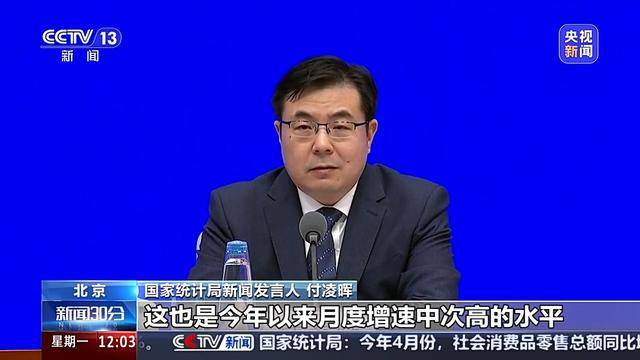
国务院新闻办今天举行新闻发布会,国家统计局新闻发言人付凌晖介绍,4月份,我国加紧实施更加积 极有为的宏观政策,经济顶住压力稳定增长,延续向新向好态势。 4月份,生产供给较快增长。从工业来看,宏观政策组合效应持续释放,工业保持较快增长。4月份,规 模以上工业增加值同比增长6.1%,是去年以来月度增速中比较快的速度。在"两新"政策加力扩围和产业 升级带动下,装备制造业持续较快增长,4月份装备制造业增加值同比增长9.8%。对规模以上工业增长 的贡献率达到55.9%。 今年以来,我国外贸韧性持续彰显。就业形势总体稳定。4月份,全国城镇调查失业率为5.1%,比上月 下降0.1个百分点,连续两个月下降。 今年,我国新质生产力成长壮大。4月份,规模以上高技术制造业增加值同比增长10%,其中,航空航 天相关设备制造、集成电路制造增加值快速增长,数字产业蓬勃发展。 国家统计局新闻发言人 付凌晖:4月份,外部冲击影响加大,但我国经济基础稳、优势多、韧性强、潜 能大,宏观政策协同发力,各方面积极应变、主动作为,国民经济应变克难稳定运行,发展质量持续提 升,进一步增强了我们应对各种风险挑战的信心和底气。 来源:央视新闻客户端 国家统 ...

国家统计局:优化调整产能结构,促进工业品价格回归合理区间
news flash· 2025-05-19 03:36
Group 1 - In April, the Producer Price Index (PPI) decreased by 2.7% year-on-year, with the decline expanding by 0.2 percentage points compared to the previous month, influenced by falling international energy prices and domestic price drops in certain industries [1] - Despite the ongoing decline in PPI, macroeconomic policies are showing effectiveness, leading to a recovery in market demand and growth in new economic drivers, resulting in price improvements in some sectors [1] Group 2 - Demand in the high-end manufacturing sector has strengthened, with prices for wearable smart devices increasing by 3% and aircraft manufacturing prices rising by 1.3% in April, driven by economic restructuring and expanding demand for high-tech products [1] - The "Two New" policies are showing effects, with a narrowing decline in prices for household washing machines and new energy passenger vehicles by 0.3 and 0.2 percentage points respectively compared to the previous month [1] - In traditional industries, there has been an improvement in supply and demand, with price declines in the black metal smelting and rolling industry and non-metallic mineral products narrowing by 1.4 and 1 percentage points respectively compared to the previous month [2] Group 3 - The continuous decline in PPI indicates that some industries are experiencing significant price drops, which negatively impacts the profitability of industrial enterprises [2] - There is a need to continue expanding domestic demand, promote technological and industrial innovation, and optimize capacity structure to achieve a high-level dynamic balance between supply and demand, thereby improving industrial product prices and enhancing business confidence [2]
管涛:从本轮金融增量政策的市场反应说起 | 宏观经济
清华金融评论· 2025-05-16 10:27
Core Viewpoint - The article discusses the recent financial policies implemented in China, particularly the "5·07" incremental policy, which aims to stabilize the market and expectations amid external uncertainties and economic transitions. The response from the financial markets, especially the A-share market, has been more restrained compared to the previous "9·24" policy [1][4]. Summary by Sections Financial Policy Overview - On May 7, China announced a comprehensive set of financial policies to stabilize the market, which included a 0.1 percentage point reduction in policy rates and a 0.5 percentage point cut in the reserve requirement ratio [4][9]. - The "5·07" policy is characterized by its broad scope, multiple measures, and rapid implementation, comparable to or exceeding the "9·24" policy [2][4]. Market Reactions - Following the "9·24" policy, the Shanghai Composite Index experienced a significant rally, gaining 27% over a two-week period. In contrast, the response to the "5·07" policy was more muted, with only a 2% increase over three trading days [4][6]. - The market's restrained reaction to the "5·07" policy is attributed to the fact that many of the measures were anticipated by investors [4][6]. Economic Context - The article highlights the ongoing economic challenges, including a decline in the GDP deflator index and a prolonged decrease in the Producer Price Index (PPI), which has raised concerns about the effectiveness of monetary policy [9][10]. - The need for a balance between supporting the real economy and maintaining the health of the banking system is emphasized, as low interest rates face constraints from insufficient market demand and bank credit supply [11][12]. Fiscal Policy Measures - The article outlines the government's commitment to a more proactive fiscal policy, with a projected deficit rate of around 4% and an increase in new government debt to support economic stability [13][15]. - Specific measures include enhancing financial support for foreign trade enterprises affected by tariffs and promoting domestic consumption [14][15]. Trade and External Relations - Despite challenges in exports to the U.S., overall Chinese exports have shown resilience, with significant growth in exports to non-U.S. markets [16]. - The article suggests that ongoing trade negotiations between China and the U.S. may lead to a reduction in tariffs, which could further support economic stability [16].

锭:去库持续,关注淡旺季交替转换
Hua Bao Qi Huo· 2025-05-16 03:01
Report Summary 1) Report Industry Investment Rating - Not provided 2) Core Views - The price of finished products is expected to move in a sideways consolidation [3] - The price of aluminum is expected to fluctuate strongly in the short - term, and macro - sentiment and downstream start - up should be monitored [4] 3) Summary by Related Content Finished Products - In the Yungui region, short - process construction steel producers' Spring Festival shutdown is mostly from mid - to late January, and the resumption is expected around the 11th to 16th day of the first lunar month, affecting a total of 741,000 tons of construction steel output [2] - In Anhui, 1 out of 6 short - process steel mills stopped production on January 5th, most will stop around mid - January, and some after January 20th, with a daily output impact of about 16,200 tons [3] - From December 30, 2024, to January 5, 2025, the transaction area of newly - built commercial housing in 10 key cities was 2.234 million square meters, a 40.3% MoM decrease and a 43.2% YoY increase [3] - The price of finished products continued to decline in a volatile manner, hitting a new low. In the context of weak supply and demand, market sentiment is pessimistic, and the price center continues to shift downward. This year's winter storage is sluggish, providing little price support [3] Aluminum - Yesterday, the aluminum price fluctuated strongly. In April, the US PPI unexpectedly fell, and retail sales growth slowed. Fed officials need more data to determine the impact of tariff statements on prices and the economy [2] - Last week, the operating rate of domestic aluminum downstream processing leading enterprises rose 0.3 percentage points to 61.9%. The aluminum cable operating rate increased 1.4 percentage points to 65.6%, while the national profile operating rate decreased 1.5 percentage points to 57.5% [3] - On May 15, the inventory of electrolytic aluminum ingots in domestic mainstream consumption areas was 581,000 tons, a decrease of 20,000 tons from Monday, 39,000 tons from last Thursday, and 166,000 tons from the same period last year, remaining at a near - three - year low [3] - Although the inventory of domestic aluminum ingots can maintain a de - stocking trend in the short term, around the end of May and early June, the circulation in domestic mainstream consumption areas may gradually ease. The key node of the subsequent inventory accumulation of domestic aluminum ingots needs to be confirmed [3] - Short - term warming of the macro - atmosphere boosts prices, but subsequent consumption will enter the off - season, and inventory faces accumulation pressure. Attention should be paid to the support of fundamentals after the dissipation of macro - sentiment [4]
长江期货黑色产业日报-20250516
Chang Jiang Qi Huo· 2025-05-16 02:06
Group 1: Overall Core View - The black industry market is affected by multiple factors including macro - policies, supply - demand relationships, and international relations. Different products in the black industry have different trends [1][3][4] Group 2: Report on Each Product 1. Rebar - On Thursday, rebar futures prices fluctuated narrowly. The price of Hangzhou Zhongtian rebar was 3,250 yuan/ton, up 10 yuan/ton from the previous day, and the basis of the 10 - contract was 132 (+19) [1] - In terms of macro - policies, on May 7, three departments issued a package of financial policies, and the Sino - US talks had better - than - expected results. In the industrial aspect, this week, rebar production and apparent demand both increased, and inventory continued to decline. Whether demand has started seasonal decline needs further observation [1] - In terms of valuation, rebar futures prices are still lower than the valley - electricity cost of electric furnaces, with a low static valuation. In terms of driving factors, the Sino - US trade environment has improved, and the probability of large - scale fiscal stimulus policies in the short - term is small. The current supply - demand situation is okay, but demand faces seasonal decline pressure. It is expected that prices will fluctuate [1] 2. Iron Ore - On Thursday, due to the good expectations from the Sino - US talks, the market speculated on export rush again, and the futures price rebounded. The price of PB powder at Qingdao Port was 773 yuan/wet ton (-5), the Platts 62% index was 102.20 US dollars/ton (-0.60), and the monthly average was 99.67 US dollars/ton. The PBF basis was 82 yuan/ton (-5) [1] - The total iron ore shipments from Australia and Brazil were 2,422.4 million tons, a week - on - week decrease of 118. The total inventory of 45 ports + 247 steel mills was 23,197.69 million tons, a week - on - week decrease of 439.84. The daily hot - metal output of 247 steel enterprises was 244.77 million tons, a week - on - week decrease of 0.87 [1] - Steel mills' profitability this week is okay, and the willingness to resume production after blast - furnace maintenance is strong. As it is about to enter the traditional off - season, there is limited room for the high - level hot - metal output to increase further, with a peak - reaching expectation. The positive effect of domestic monetary policy has landed, and the follow - up macro - expectation effect is weakening. It is expected that iron ore will maintain a box - shaped oscillation [1] 3. Coking Coal - In terms of supply, coal mines in domestic main production areas are generally stable, but some areas have phased production cuts due to safety inspections and sales pressure, and overall supply is relatively loose. In terms of imports, the customs clearance volume of Mongolian coal is suppressed by weak demand, and traders' quotes are under pressure [3] - In terms of demand, the expectation of coke price cuts continues to ferment, downstream coke enterprises maintain a low - inventory procurement strategy, the auction market sentiment is weak, and the transaction price of some coal types has declined. The supply - demand contradiction in the coking coal market is not significantly alleviated, and coal mine inventory pressure is emerging. In the short - term, prices may continue to be under pressure [3] 4. Coke - In terms of supply, coke enterprises in main production areas maintain a stable production situation, and some areas continue to limit production due to continuous pressure on profit margins, but overall capacity release is relatively loose. In terms of demand, steel mills continue the low - inventory management mode, and the restocking rhythm is mainly based on rigid demand. High - level hot - metal output supports short - term consumption, but the expectation of seasonal weakening of terminal demand suppresses the willingness to stockpile raw materials [4] - The improvement of Sino - US relations boosts market sentiment, but the expectation of simultaneous decline in domestic and foreign demand for steel products intensifies the negative feedback pressure on the industrial chain. Mainstream steel mills still have a tendency to reduce prices when purchasing raw materials. The coke market is in a weak balance state of strong supply and weak demand, and short - term prices may continue to oscillate within a range [4] Group 3: Industry News - On May 15, the General Office of the Communist Party of China Central Committee and the General Office of the State Council issued the "Opinions on Continuously Promoting Urban Renewal Actions", which requires the renovation of old urban communities, the construction of complete communities, and the renovation of old blocks, old factories, and urban villages [6] - From January to April 2025, the online retail sales and volume of China's home appliance market (excluding 3C) increased by 9.1% and 1.2% year - on - year respectively, and the offline retail sales and volume increased by 14.8% and 4.5% year - on - year respectively [6] - Federal Reserve Chairman Powell said that the Fed is considering adjusting the core content of the monetary policy guidance framework to deal with major changes in inflation and interest - rate prospects after the 2020 pandemic [6] - According to Mysteel's May survey on the southward movement of steel from the north, the planned southward movement volume of northeast rebar in May was 360,000 tons, an increase of 142,000 tons year - on - year and a decrease of 7,000 tons month - on - month. The planned southward movement volume of wire rods was 275,000 tons, a decrease of 66,000 tons year - on - year and a decrease of 20,000 tons month - on - month [6] - The Inner Mongolia Industry and Information Technology Department carried out on - site verification of the implementation of the 2024 stepped electricity - price policy and announced the verification results [6]
长江期货黑色产业日报-20250515
Chang Jiang Qi Huo· 2025-05-15 05:11
黑色产业日报 简要观点 ◆ 螺纹钢 黑色产业团队 2025/5/15 公司资质 长江期货股份有限公司交易咨询业 务资格:鄂证监期货字[2014]1 号 研究员 周三,螺纹钢期货价格震荡上行,杭州中天螺纹钢 3240 元/吨,较前一 日上涨 40 元/吨,10 合约基差 113(-8)。宏观政策方面,5 月 7 日, 三部门发布一揽子金融政策稳市场稳预期,货币政策利多落地,不过市 场仍在期待财政政策发力,中美会谈成果超预期,双方大幅互降关税, 市场预期改善;产业方面,上周螺纹钢产量、表需双降,库存小幅累积, 供需格局有转差迹象,当然也有五一假期因素影响,需求是否已经开始 季节性回落还需进一步观察。后市而言:估值方面,螺纹钢期货价格仍 低于电炉谷电成本,静态估值处于偏低水平;驱动方面,政策端,中美贸 易环境改善,短期国内出台大规模财政刺激政策概率较小,产业端,现 实供需尚可,但需求仍面临季节性下滑压力,关注需求变化,低估值背 景下,预计价格震荡运行。(数据来源:同花顺 iFinD,Mysteel) ◆ 铁矿石 周三,中美会谈成果营造良好预期,市场再度炒作抢出口,盘面向上回 调。现货方面,青岛港 PB 粉 778 ...
4月末中国社融规模存量424.0万亿元,同比增8.7%
Zhong Guo Xin Wen Wang· 2025-05-14 15:12
Group 1 - The People's Bank of China reported that as of April 2025, the total social financing stock reached 424 trillion yuan, reflecting a year-on-year growth of 8.7% [1] - The balance of RMB loans to the real economy was 262.27 trillion yuan, with a year-on-year increase of 7.1% [1] - In the first four months of 2025, the cumulative increase in social financing was 16.34 trillion yuan, which is 3.61 trillion yuan more than the same period last year [1] Group 2 - New RMB loans added in the first four months amounted to 9.78 trillion yuan, which is an increase of 339.7 billion yuan year-on-year [1] - Net financing from corporate bonds was 759.1 billion yuan, showing a decrease of 409.5 billion yuan year-on-year, while net financing from government bonds was 4.85 trillion yuan, an increase of 3.58 trillion yuan year-on-year [1] - The issuance of local government bonds has accelerated due to factors such as debt replacement and pilot projects for special bonds [1] Group 3 - The stock financing has seen a steady increase year-on-year, influenced by a warming in equity financing and a low base from the previous year [1] - Off-balance-sheet financing, including entrusted loans and undiscounted bank acceptance bills, increased by 95.9 billion yuan and 149.4 billion yuan respectively, continuing to support the real economy [1] Group 4 - Experts indicate that strong fiscal support and a rapid pace of bond issuance this year have effectively supported social financing, contributing to domestic demand expansion and credit easing [1] - The macroeconomic policies have shown positive effects this year, with increased fiscal policy strength and a more proactive pace being significant factors [1]
超325万亿元,M2同比增长8%!4月金融数据亮点来了→
第一财经· 2025-05-14 12:06
Core Viewpoint - The article emphasizes that the financial data for April indicates a stable and supportive monetary policy environment, which is effectively aiding the real economy. The growth in M2 and social financing reflects a positive trend in financial support for economic activities [1][2][17]. Financial Data Overview - In April, the M2 balance reached 325.17 trillion yuan, with a year-on-year growth of 8%, which is 1.0 percentage points higher than the previous month and 0.8 percentage points higher than the same period last year [1][13]. - The total social financing stock was 424 trillion yuan, growing by 8.7% year-on-year, with an increase of 1.16 trillion yuan in April alone, which is 1.22 trillion yuan more than the previous year [1][4]. Government Bond Issuance - The acceleration in government bond issuance has significantly contributed to the increase in social financing. From January to April, net financing from government bonds exceeded 5 trillion yuan, which is approximately 3.6 trillion yuan more than the previous year [4][6]. - In April, the issuance of special long-term government bonds and refinancing bonds for hidden debt replacement contributed to a net financing of about 970 billion yuan, boosting the social financing growth rate by approximately 0.3 percentage points [4][6]. Credit Growth and Structure - The total increase in RMB loans from January to April was 10.06 trillion yuan, roughly in line with the previous year. Notably, inclusive small and micro loans grew by 11.9%, and medium to long-term loans for the manufacturing sector increased by 8.5%, both exceeding the overall loan growth rate [1][8]. - As of the end of April, the RMB loan balance was 265.7 trillion yuan, with a year-on-year growth of 7.2%. Adjusting for the impact of local government debt replacement, the actual loan growth rate remains above 8% [9][17]. Monetary Policy and Economic Outlook - The article indicates that the current monetary policy is supportive, with the People's Bank of China implementing effective measures to stabilize the economy. The weighted average interest rate for new corporate loans was approximately 3.2%, down 4 basis points from the previous month and 50 basis points from the same period last year [18]. - Experts anticipate that the effects of the moderately loose monetary policy will continue to manifest, especially if external conditions improve [18].
华宝期货晨报铝锭-20250514
Hua Bao Qi Huo· 2025-05-14 09:59
Group 1: Industry Investment Rating - No relevant content provided Group 2: Core Views - The price of finished products is expected to move in a downward - centered and weak manner, and will be in a state of shock consolidation. The price of aluminum ingots is expected to fluctuate strongly in the short - term. [1][3][4] Group 3: Summary by Related Content For Finished Products - Yungui region's short - process construction steel enterprises will stop production for maintenance from mid - January, and resume production around the 11th to 16th day of the first lunar month, affecting a total output of 741,000 tons. In Anhui, 1 short - process steel mill stopped production on January 5, most will stop around mid - January, and individual ones after January 20, with a daily output impact of about 16,200 tons. [2][3] - From December 30, 2024, to January 5, 2025, the transaction area of newly - built commercial housing in 10 key cities was 2.234 million square meters, a 40.3% month - on - month decrease and a 43.2% year - on - year increase. [3] - The price of finished products continued to decline in shock, hitting a new low recently. In the context of weak supply and demand, market sentiment is pessimistic, and winter storage is sluggish, with weak price support. [3] - The finished products are expected to move in a shock - consolidated manner, and attention should be paid to macro - policies and downstream demand. [3] For Aluminum - Yesterday, the aluminum price fluctuated strongly. The US CPI increased by 0.2% last month, lower than the expected 0.3%, and the consumer price index decreased by 0.1% in March. The easing of trade tensions reduced the market's expectation of an economic recession. [2] - Last week, the total operating capacity of alumina enterprises decreased slightly by 80,000 tons/year. In the short - term, the operating capacity may fluctuate. The spot price may rebound slightly, but the cost - side support is weakening, and the price is expected to move in a shock in the short - term. [3] - Last week, the domestic aluminum downstream processing leading enterprises' operating rate increased by 0.3 percentage points to 61.9%. The aluminum cable operating rate increased by 1.4 percentage points to 65.6%, while the national profile operating rate decreased by 1.5 percentage points to 57.5%. [3] - On May 12, the domestic mainstream consumption area's electrolytic aluminum ingot inventory was 601,000 tons, a decrease of 19,000 tons from last Thursday and 35,000 tons from May 6. It is expected to break through the 600,000 - ton mark this Thursday. [3] - The aluminum price is expected to fluctuate strongly in the short - term, and attention should be paid to macro - sentiment and downstream operating rates, as well as macro - expectations, geopolitical crises, mine resumption, and consumption release. [4]
4月物价数据点评:物价总体偏弱,政策加快落地
CDBS· 2025-05-14 04:25
Inflation Data - April CPI decreased by 0.1% year-on-year, slightly better than the expected -0.2% and the previous value of -0.1%[11] - April PPI fell by 2.7% year-on-year, also better than the expected -2.8% and the previous value of -2.5%[11] Economic Stability - The year-on-year CPI remained stable compared to March, with a two-year average growth rate slightly improving to 0.1%[12] - The month-on-month CPI increased by 0.1%, recovering from a 0.4% decline in March, outperforming the historical average of -0.1%[12] Core CPI and Demand - Core CPI remained low, indicating weak terminal demand and sluggish consumption, necessitating accelerated domestic demand policies[7] - Food prices showed a seasonal increase, with a 0.2% month-on-month rise, driven by supply factors[12] Policy Response - The Central Political Bureau proposed more proactive macro policies to address domestic demand shortages and external shocks[8] - A package of financial policies was launched in early May, including interest rate cuts and structural tools to stimulate domestic demand[8] Risks and Considerations - Potential risks include unexpected central bank adjustments, inflation exceeding expectations, and escalating trade tensions[17] - Ongoing monitoring of policy implementation, US-China tariff negotiations, and fiscal measures is essential for future economic stability[8]