
扩大内需

Search documents
扩大内需是战略之举,消费行情是不是要来了?
Ge Long Hui A P P· 2025-12-18 12:01
Group 1 - The core viewpoint of the article discusses the recent developments in consumer spending and the government's stance on expanding domestic demand, indicating a potential shift in consumer sentiment [2][3][5] - The article highlights that the government's recent document titled "Expanding Domestic Demand is a Strategic Move" has led to misconceptions that it solely pertains to consumer spending, while it actually encompasses both consumption and investment [3][4] - The government's attitude towards consumption has shown a gradual improvement, as evidenced by the stronger language used in the latest five-year plan compared to previous plans [4][5] Group 2 - Despite the positive signals from the government, actual consumer stimulus measures remain limited, with only minor initiatives like subsidies for trade-ins and childbirth support [6][7] - The primary issue affecting consumer spending is the decline in household wealth due to falling property prices and pessimistic income expectations, which has led to a lack of motivation for consumers to borrow for spending [7][8] - Recent economic data indicates a significant slowdown in consumer spending, with retail sales growth in November at only 1.3%, marking a long-term low, particularly in categories like home appliances and furniture [10][11][12]

龙头六连板,这个板块反转了?
Ge Long Hui· 2025-12-18 11:57
零售板块,过去几年在A股市场上一直较为冷淡。 以零售板块龙头永辉超市为例,自2020年4月以来,永辉股价持续下跌,至2024年"924"行情之前,永辉股价已然跌去近70%。 回看板块内其他企业,也是如此。 "924"行情以前,东百集团等一众零售商场上市公司,要么持续阴跌,要么横盘近四年。 但最近,零售板块集体躁动。 百大集团直接收获六连板,东百集团10天6板,红旗连锁、广百股份、茂业商业接连涨停,连沉寂多年的永辉也收获多个涨停板。 但在市场热情和政策暖风之下,零售板块,到底能否彻底反转? 01 零售板块这一波行情,来源于近期一系列的政策利好。 此前,中央经济工作会议将"坚持内需主导,建设强大国内市场",位列明年八大重点任务之首。 近日,国家发改委也在《求是》发文,再次强调要"坚定实施扩大内需战略",核心在于"提升居民消费意愿"和"增强居民消费能力",无不彰显了国家层面提 振消费的决心。 在最近召开的中国经济年会上,国家发展改革委副秘书长肖渭明表示,要全方位扩大国内需求,深入实施提振消费专项行动,加快放宽服务消费限制,加快 出台实施首发经济、赛事经济、电子商务、"人工智能+"消费等领域提振消费的政策。 不难想象 ...

电话会议纪要(20251214)
CMS· 2025-12-18 11:31
Macro Analysis - The central economic work conference highlighted ongoing challenges in the economy, including external environmental changes and risks in key sectors, while emphasizing the need to balance domestic economic work and international trade struggles [2][3] - The conference introduced five "musts" for economic work, focusing on the integration of investment in physical and human capital and the importance of internal strengthening to address external challenges [2] Policy Orientation - The policy tone for the upcoming year shifts from "strengthening extraordinary counter-cyclical adjustments" to "increasing counter-cyclical and cross-cyclical adjustment efforts," indicating a decrease in urgency but maintaining a proactive fiscal and moderately loose monetary policy [3] - Fiscal policy will maintain necessary levels of deficit, debt, and total expenditure, while monetary policy will focus on stabilizing growth and promoting inflation, with expectations for adjustments in interest rates and reserve requirements [3] Key Economic Work Areas - The economic work for the next year will focus on eight key areas, with an emphasis on expanding domestic demand through urban renewal policies and increasing investment scale to counteract negative growth in investment [7] - The conference reiterated the importance of stabilizing the real estate market through targeted measures, including inventory reduction and supply optimization, indicating a potentially more proactive stance on real estate policies [8][18] Real Estate Market Insights - The conference emphasized "high-quality urban renewal" as a crucial strategy for expanding investment and stimulating domestic demand, with expectations for financial tools to support urban renewal projects [17] - The focus on stabilizing the real estate market has shifted from aggressive measures to a more balanced approach, with an emphasis on controlling supply and inventory while encouraging the acquisition of existing properties for affordable housing [18][20] ESG Developments - The report highlighted significant ESG policies, including the expansion of the national carbon trading market and the promotion of integrated development in the renewable energy sector, which are crucial for achieving carbon neutrality goals [21][22] - The issuance of green financial bonds and the successful launch of digital green bonds in Hong Kong reflect growing market recognition and support for sustainable finance initiatives [24][25]
龙头六连板!这个板块反转了?
Ge Long Hui· 2025-12-18 10:58
Core Viewpoint - The retail sector in the A-share market has shown signs of recovery after a prolonged period of decline, driven by recent favorable policies and a shift in consumer behavior towards increased domestic demand [6][9][30]. Group 1: Market Performance - The leading retail company, Yonghui Supermarket, has seen its stock price drop nearly 70% since April 2020, prior to the recent market rally [1]. - Other retail companies, such as Dongbai Group, have also experienced stagnant performance, with many retail stocks recently showing significant gains, including multiple trading halts due to price increases [3][9]. Group 2: Policy Support - Recent government policies emphasize the importance of domestic demand and consumer spending, with the central economic work conference prioritizing the construction of a strong domestic market [7]. - The National Development and Reform Commission has reiterated its commitment to expanding domestic demand and enhancing consumer capacity, indicating a clear intention to boost consumption [7][8]. Group 3: Economic Indicators - In the first nine months of 2025, the value added by wholesale and retail industries grew by 5.6%, maintaining a stable GDP contribution of 10.3% [11]. - Retail sales increased by 4.6%, with physical retail formats like convenience stores and supermarkets showing growth [12][13]. Group 4: Industry Challenges - The retail industry has faced unprecedented challenges, particularly from e-commerce, which has permanently shifted consumer behavior towards online shopping [18]. - Traditional retailers are experiencing rising operational costs, which are squeezing profit margins, leading to significant performance disparities among companies [18][20]. Group 5: Transformation and New Trends - The retail sector is undergoing a transformation from a focus on scale expansion to high-quality development, emphasizing customer experience over mere product sales [20][28]. - New retail formats are emerging, with companies like Hema and discount stores expanding rapidly, indicating a shift in competitive dynamics within the industry [25][27]. Group 6: Future Outlook - Despite recent positive signals, the retail sector's fundamental challenges remain, with ongoing adjustments and potential for further differentiation among companies based on their ability to adapt [30].



华安证券深学笃行中央经济工作会议精神 以金融之力服务高质量发展新格局
Zheng Quan Ri Bao Wang· 2025-12-18 10:47
Core Viewpoint - The 2025 Central Economic Work Conference has set the direction for economic development, emphasizing the core goal of achieving qualitative improvement and reasonable quantitative growth, while deploying major measures to stabilize growth, promote transformation, prevent risks, and improve people's livelihoods [1] Group 1: Financial Services Direction - The conference deepens the macro policy tone from "stability while seeking progress" to "stability while seeking progress and improving quality and efficiency," indicating a shift towards more sustainable and high-quality economic growth [2] - Financial institutions are encouraged to focus on "precise drip irrigation" in financial services, supporting emerging industries and optimizing traditional industries through tools like restructuring and mergers [2] Group 2: Macro Policy and Economic Stability - The conference maintains a "more proactive macro policy" with a more aggressive fiscal policy and moderately loose monetary policy, providing a solid policy environment for economic recovery [3] - The fiscal policy for 2025 is set to increase, with new debt reaching 2.9 trillion yuan, and emphasizes the need for effective fiscal management and addressing local government financing risks [3] Group 3: Key Tasks and Economic Support - The conference highlights the need to expand domestic demand, with a focus on increasing residents' income and stabilizing investment, indicating a significant shift in policy emphasis [5] - New measures for innovation and service sector development are introduced, including a focus on education, technology, and talent development [6] - The conference stresses the importance of systemic reforms to address "involution" in competition, indicating a continued focus on improving market efficiency [6] Group 4: Risk Management in Key Areas - The overall tone for the real estate sector has shifted to "stabilization," with specific measures to control supply and encourage the acquisition of existing housing for affordable housing [7] - Financial institutions are urged to enhance their internal capabilities and risk management to better serve the real economy, focusing on expanding domestic demand and optimizing asset-liability structures [7] Group 5: Future Outlook - Looking ahead to 2026, the company aims to align its actions with the spirit of the Central Economic Work Conference, enhancing the precision and effectiveness of financial services to support economic growth [8]

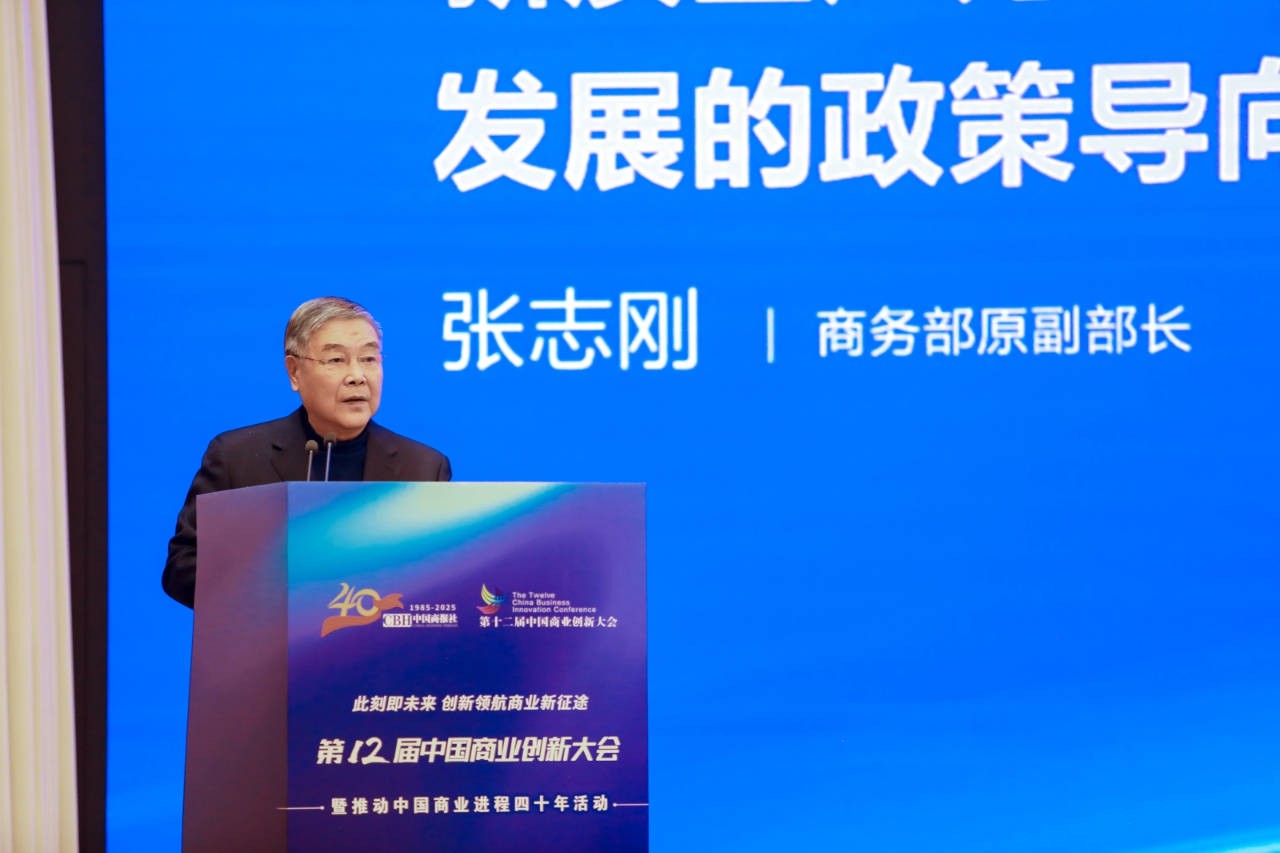
张志刚:为中国式现代化谱写商业发展新篇章
Sou Hu Cai Jing· 2025-12-18 10:30
Group 1 - The core viewpoint emphasizes the need to boost consumption, improve investment efficiency, and expand domestic demand as key tasks outlined in the 2025 Central Economic Work Conference [2] - In the first three quarters of this year, China's GDP reached 101.5 trillion yuan, growing by 5.2% year-on-year, while the total retail sales of consumer goods increased by only 4.5%, indicating a gap between consumption growth and GDP growth [2] - Zhang Zhigang highlights the urgency of addressing the downward pressure on the economy and insufficient effective demand, which are significant issues affecting the healthy development of China's economic cycle [2] Group 2 - The expansion of service consumption, digital consumption, and the promotion of green consumption are becoming new pursuits in line with the trends towards new, green, and quality consumption [3] - In agriculture, grain production remains stable at 1.4 trillion jin, with agricultural technology contributing 63.2% to progress, and over 96% of crop coverage with quality seeds, enhancing the supply of commercial consumption [3] - The transportation network, including a high-speed rail network of over 48,000 kilometers, significantly improves commercial circulation and trade space, with advancements in maritime routes like the ice silk road [3] Group 3 - The implementation of a plan to increase urban and rural residents' income is identified as a key task for next year's economic work, aligning with the Central Economic Work Conference's directives [4] - Innovation and reform are emphasized as ongoing processes, with a commitment to using innovative development as a driving force for modernizing commercial development in China [4]
扩大内需是战略之举,消费行情是不是要来了?
格隆汇APP· 2025-12-18 10:12
Core Viewpoint - The article discusses the current state of consumer spending in China, indicating that while there are signs of potential recovery, the actual consumer sentiment remains weak and requires more time for a significant turnaround [5][10][29]. Group 1: Consumer Sentiment and Policy - Recent discussions have emerged regarding whether consumer spending is set to rebound, particularly following Kweichow Moutai's decision to control supply, which has led to speculation about stock price recovery [6][10]. - The official article titled "Expanding Domestic Demand is a Strategic Move" has sparked excitement about consumer spending, but it is important to note that "domestic demand" encompasses both consumption and investment, not just consumer spending [11][12]. - The government's attitude towards consumer spending has shown a gradual improvement, as evidenced by the stronger language in the latest five-year plan compared to previous plans, indicating a renewed focus on increasing the consumption rate [14][15][18]. Group 2: Economic Indicators - The growth rate of social retail sales was only 1.3% in November, marking a significant low, with categories like home appliances seeing declines of nearly 20% due to the absence of old-for-new subsidies and a downturn in the real estate market [25][27]. - The continued decline in housing prices is negatively impacting residents' wealth, further suppressing consumer spending [27][29]. Group 3: Future Outlook - The current economic environment suggests that consumer spending remains in a low state, with macroeconomic factors and population dynamics creating uncertainty for investors regarding future recovery [29]. - There is anticipation for more concrete policies to emerge in March during the annual meetings, which could provide clearer guidance for consumer spending recovery [29].

龙头六连板!这个板块反转了?
格隆汇APP· 2025-12-18 10:12
Core Viewpoint - The retail sector in A-shares has been underperforming for several years, but recent policy support and market enthusiasm may signal a potential turnaround for the industry [2][6][8]. Group 1: Market Conditions and Policy Support - The retail sector has seen a collective uptick recently, driven by a series of favorable policies aimed at boosting domestic consumption [6][8]. - The Central Economic Work Conference prioritized "domestic demand" as a key task, emphasizing the need to enhance consumer willingness and capacity [9][10]. - The Ministry of Commerce has redefined the retail sector's role as a crucial component in building a complete domestic demand system [11][12]. - Upcoming policies are expected to stimulate consumption, particularly in service-oriented sectors [10][13]. Group 2: Economic Indicators - From January to September 2025, the value added by wholesale and retail industries grew by 5.6%, maintaining a stable GDP contribution of 10.3% [15]. - Retail sales increased by 4.6%, with physical retail formats like convenience stores and supermarkets showing growth [16][17]. - The approaching Spring Festival is anticipated to further boost offline retail activities, contributing to a positive market sentiment [18]. Group 3: Market Behavior and Valuation - Consumer stocks have shown signs of recovery, with valuations at historically low levels; for instance, the food and beverage sector's latest P/E ratio is 20.36, at a percentile of 7.05% [19][20]. - The prolonged period of low valuations has created a technical rebound demand in the retail sector [21][22]. Group 4: Industry Challenges and Transformations - The retail industry has faced unprecedented challenges, particularly from e-commerce, which has permanently shifted consumer behavior towards online shopping [24][25][28]. - Traditional retailers are experiencing rising operational costs, which are squeezing profit margins [29]. - Performance disparities among retail companies are evident, with some struggling to adapt while others, like Bubu Gao, have seen significant revenue growth due to successful transformations [32][36]. Group 5: New Business Models and Innovations - The retail landscape is evolving, with a shift from mere product sales to enhancing customer experiences [38][39]. - Companies are increasingly focusing on operational efficiency and cost control, with strategies like closing underperforming stores and optimizing organizational structures [42][43]. - New retail formats, such as discount stores and instant retail, are emerging, intensifying competition within the sector [45][46]. Group 6: Future Outlook - The retail sector is at a crossroads, with the potential for recovery tempered by ongoing challenges from e-commerce and changing consumer behaviors [58][62]. - While leading companies may benefit from valuation rebounds, those unable to adapt may face continued difficulties [63].


创业板跌超2%,沐曦下跌,中金、东兴、信达证券大涨,军工、存储芯片午后拉升,港股午后拉升回暖,焦煤 、焦炭期货涨超5%,钯金涨停
Hua Er Jie Jian Wen· 2025-12-18 09:29
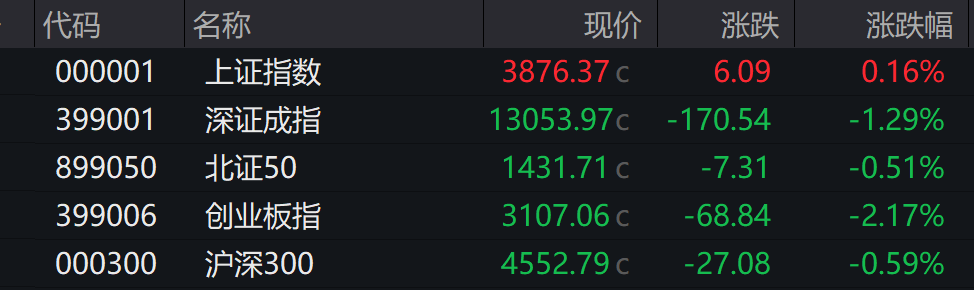
Market Overview - The A-share market experienced mixed fluctuations, with the ChiNext index falling over 2%. Sectors such as AI healthcare, commercial aerospace, retail, and IP economy saw significant gains, while battery, lithium mining, Hainan, and PCB sectors faced notable declines [1][4]. - As of the close, the Shanghai Composite Index rose by 0.16%, while the Shenzhen Component Index fell by 1.29%, and the ChiNext Index dropped by 2.17% [4][5]. Sector Performance - AI healthcare concepts surged, with companies like Huaren Health and Sairui Medical hitting the daily limit [5]. - The commercial aerospace sector saw a strong performance, with stocks like Shengyang Technology and Tianjian Technology also reaching the daily limit [11]. - Retail and IP economy stocks rallied, with Baida Group achieving six consecutive trading limit ups [5]. - Conversely, computing hardware stocks declined, with companies like Shengyi Technology and Jingwang Electronics dropping over 5% [5]. Policy and Economic Outlook - The Central Financial Office emphasized that expanding domestic demand will be a top priority for next year, focusing on structural changes in consumption to stimulate demand from both supply and demand sides [1]. - The National Development and Reform Commission, along with five other departments, issued guidelines for the clean and efficient utilization of coal, tightening standards compared to the 2022 version, which may increase demand for high-quality coal [2]. Hong Kong Market - The Hong Kong market saw the Hang Seng Index close up by 0.12%, while the Hang Seng Tech Index fell by 0.73%. The aviation and resource sectors led the gains, while technology manufacturing and consumer sectors generally adjusted downwards [7][8]. Commodity Market - The domestic commodity futures market closed mostly higher, with palladium hitting the daily limit and coking coal rising by 6.07%. However, the shipping index (European line) fell by 3.06%, and polysilicon dropped by 2.60% [2][10]. Bond Market - The bond futures market saw an increase across the board, with the 30-year main contract rising by 0.52%, the 10-year contract by 0.07%, and shorter-term contracts also showing gains [3][10]. AI Healthcare Development - Ant Group launched the AI health assistant application "Ant Ai Fu," which has rapidly gained popularity, exceeding 15 million monthly active users. This reflects the significant market potential of integrating generative AI with health management [16]. - The increase in flu activity since November has boosted demand for related medications, further supporting the AI healthcare sector [15][16]. Commercial Aerospace Support - The Shanghai Municipal Government is focusing on commercial aerospace as a key area in its upcoming "14th Five-Year Plan," with plans to establish development funds to support this emerging strategic industry [11][13].


十五五”如何发力 深圳市长提了“五个着力
2 1 Shi Ji Jing Ji Bao Dao· 2025-12-18 09:27
21世纪经济报道记者 陈思琦 深圳报道 具体来看,深圳规上工业总产值、工业增加值从2022年开始保持全国城市"双第一";"十四五"期间,深 圳固定资产投资总额可达4.5万亿元、约为"十三五"的1.5倍;社会消费品零售总额从2020年的8664亿元 增加到2024年的1.06万亿元;外贸进出口总额从2020年的3.05万亿元增加到2024年的4.5万亿元,跃居全 国城市首位;来源于深圳辖区的一般公共预算收入预计连续五年保持在万亿元以上。 从经济结构看,"十四五"前四年,深圳战略性新兴产业增加值年均增长10%以上、占GDP比重提高到 42.3%。 具体来看,深圳建成投产11个百亿级大型工业项目,先进制造业和高技术制造业增加值占规上工业比重 分别达68.2%、58.2%;集成电路、工业机器人、智能手机等39种工业产品产量占全国比重超10%;现代 服务业增加值占服务业比重提高至76.5%;国家级专精特新"小巨人"企业数量达1333家、跃居全国城市 首位;境内外上市企业592家、瞪羚企业215家、独角兽企业42家,均位居全国前列。 "十四五"期间,深圳科技创新亦取得重大突破,创造多个"首位"。总体来看,深圳全社会研发投 ...