避险需求

Search documents
KVB plus:黄金从高点进一步回落,美元走强抵消美联储鸽派信号
Sou Hu Cai Jing· 2025-09-18 10:35
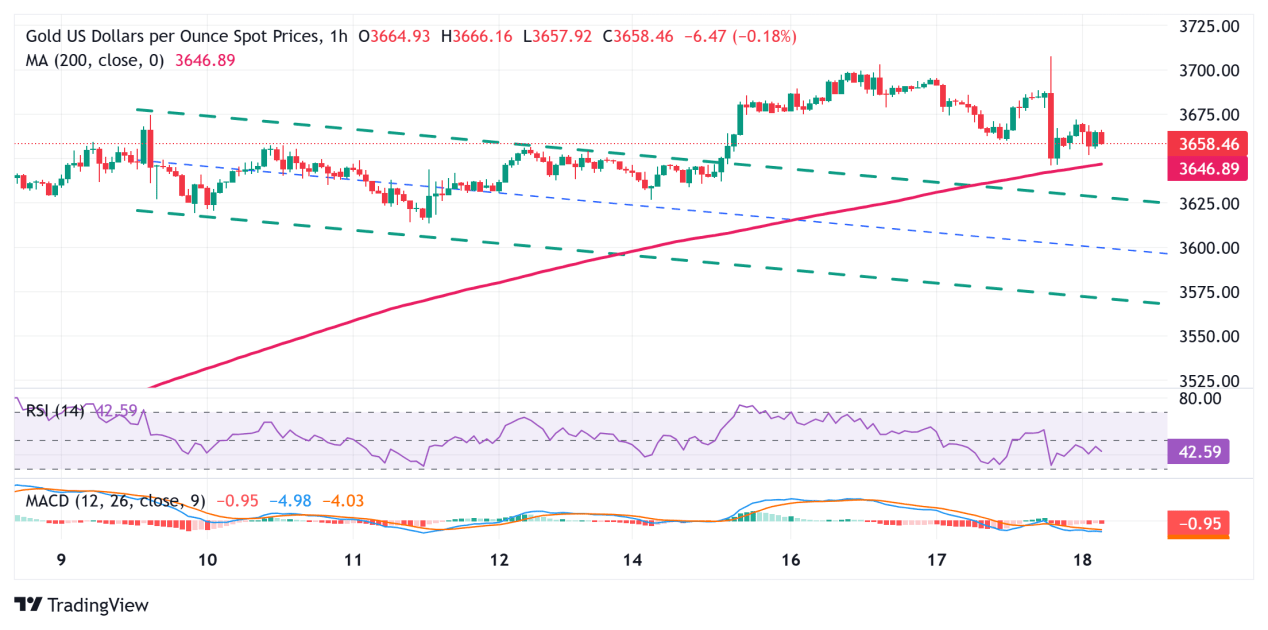
Core Viewpoint - Gold (XAU/USD) is under pressure, retreating below the historical high of $3700, influenced by a rebound in the US dollar following the Federal Reserve's decision to lower interest rates and comments from Chairman Powell indicating no immediate need for rapid rate cuts [1][2]. Market Drivers - The Federal Reserve cut the federal funds rate by 25 basis points to a range of 4.00%-4.25%, with indications of two more rate cuts within the year due to a slowing job market [2]. - Despite an initial surge in gold prices, the rebound in US Treasury yields and the dollar led to a sharp decline in gold prices, as Powell highlighted upward inflation risks and a gradual approach to future rate policy [2]. Geopolitical Risks - The intensification of geopolitical tensions, including Russia's military actions and Israel's increased military operations in Gaza, may provide some support for gold prices, limiting potential declines [3]. Technical Analysis - Key support for gold is identified at $3645, previously a resistance level, while $3700 remains a strong resistance point [4][6]. - If gold prices fall below $3645, further declines to the $3610-$3600 range may occur, while a breakthrough above $3678-$3680 could lead to a challenge of the historical high [6]. Economic Forecasts - The Federal Reserve's latest economic projections indicate a growth forecast of 1.6% for the US economy this year, with core PCE inflation expected at 3.1% [2].

降息落地后,金价的可能走向 | 投研报告
Zhong Guo Neng Yuan Wang· 2025-09-18 06:38
Group 1 - The Federal Reserve announced a 25 basis point cut in the federal funds rate target range to 4.00% to 4.25% during its monetary policy meeting on September 17, 2025, which is characterized as a risk management cut [1][2] - The focus of the Federal Reserve's policy-making is shifting from inflation to employment, with an emphasis on the risks in the labor market influencing the decision to cut rates [2][3] - The updated dot plot indicates a higher likelihood of two additional rate cuts within the year, totaling a 50 basis point reduction, aligning with market expectations [1][2] Group 2 - Short-term gold prices have limited upward potential, with a recent increase of 11.82% in London spot gold prices over the past month, suggesting that the market has already priced in the rate cut [3] - The consistency among Federal Reserve board members regarding the rate cut decision indicates limited political interference from the White House, although potential changes in board member appointments could impact future policy directions [3][4] - The long-term bullish outlook for gold remains intact, supported by the anticipated rate cuts and ongoing demand for gold as a safe-haven asset, with China increasing its gold reserves for the tenth consecutive month [4]
德银上调明年黄金均价预期至4000美元,预计金价易涨难跌
Jin Shi Shu Ju· 2025-09-18 06:14
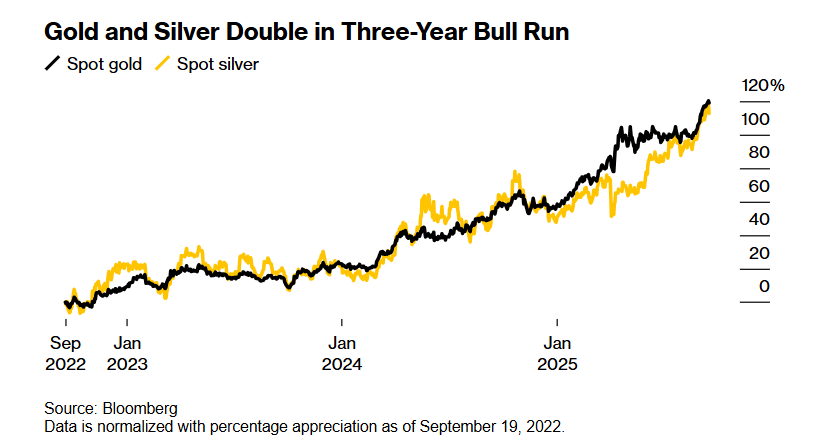
Group 1 - Deutsche Bank predicts that due to Federal Reserve rate cuts and central bank gold purchases, gold will continue its record-breaking rally, with an average price of $4,000 per ounce by 2026, up from a previous estimate of $3,700 [1] - The report indicates that central bank gold purchases could reach 900 tons next year, primarily from China, and that the likelihood of further gold price increases outweighs the possibility of a correction to fair value [1][2] - Gold prices have surged approximately 40% this year, recently surpassing the inflation-adjusted record high set in 1980, driven by ongoing economic and geopolitical uncertainties [1] Group 2 - Concerns regarding U.S. President Trump's recent attacks on the Federal Reserve have heightened market anxiety, with expectations for a more dovish monetary policy supporting non-yielding gold [2] - Deutsche Bank's latest forecasts do not account for potential risks to Federal Reserve independence, although changes in the Federal Open Market Committee (FOMC) membership could introduce uncertainty in policy responses [2] - Goldman Sachs indicated that if the Federal Reserve's independence is compromised, gold prices could potentially soar to nearly $5,000 per ounce with even a small shift in investor holdings from U.S. Treasuries to gold [2] Group 3 - Deutsche Bank raised its 2026 silver price target from $40 to $45 per ounce, citing a fifth consecutive year of physical supply shortages for silver [3]
有色板块净利润同增38%,资源股配置价值持续凸显 | 投研报告
Zhong Guo Neng Yuan Wang· 2025-09-18 01:55
Core Insights - In H1 2025, the Shanghai Composite Index increased by 5.57%, while the non-ferrous metals index rose by 17.00%, outperforming the Shanghai Composite by 11.42 percentage points. The steel index increased by 3.09%, underperforming the Shanghai Composite by 2.49 percentage points [2][3] - Commodity prices for precious and industrial metals have been on the rise, while energy metals and steel prices have seen a decline [2][3] - The non-ferrous sector achieved revenue of 1.8197 trillion yuan, a year-on-year increase of 6.66%, and a net profit attributable to shareholders of 95.3 billion yuan, a year-on-year increase of 38.28% [2][3] Industrial Metals - The industrial metals sector benefited from tariff adjustments and expectations of interest rate cuts, leading to a profit growth of 38% in H1 2025. The sector's total revenue reached 1.3586 trillion yuan, a year-on-year increase of 12.08%, with a net profit of 69.74 billion yuan, a year-on-year increase of 38% [2][3] - In Q2 2025, the industrial metals sector generated revenue of 727.99 billion yuan, a year-on-year increase of 9.97% and a quarter-on-quarter increase of 15.4%, with a net profit of 36.84 billion yuan, a year-on-year increase of 23.4% and a quarter-on-quarter increase of 12% [2][3] Precious Metals - The precious metals sector saw revenue of 188.25 billion yuan in H1 2025, a year-on-year growth of 27.0%, and a net profit of 9.68 billion yuan, a year-on-year growth of 65.6% [3] - In Q2 2025, the sector's revenue was 104.42 billion yuan, a year-on-year increase of 31.3% and a quarter-on-quarter increase of 24.6%, with a net profit of 5.79 billion yuan, a year-on-year increase of 76.3% and a quarter-on-quarter increase of 48.4% [3] Energy Metals - The energy metals sector reported revenue of 81.24 billion yuan in H1 2025, a year-on-year increase of 0.1%, and a net profit of 5.31 billion yuan, marking a return to profitability [3][4] - In Q2 2025, the sector's revenue was 43.88 billion yuan, a year-on-year increase of 5.5% and a quarter-on-quarter increase of 17.5%, with a net profit of 3.04 billion yuan, a year-on-year increase of 51.9% [3][4] Minor Metals - The minor metals sector experienced a decline in revenue, achieving 137.7 billion yuan in H1 2025, a year-on-year decrease of 37.6%, with a net profit of 7.64 billion yuan, a year-on-year decrease of 26.1% [4] - In Q2 2025, the sector's revenue was 73.89 billion yuan, a year-on-year decrease of 39.5% but a quarter-on-quarter increase of 16.4%, with a net profit of 3.93 billion yuan, a year-on-year decrease of 40.6% but a quarter-on-quarter increase of 8.0% [4]
避险热潮未退支撑金价 3700关口成“生死线”
Jin Tou Wang· 2025-09-17 06:08
Core Viewpoint - The recent geopolitical tensions, particularly the escalating conflict between Israel and Palestine, have significantly influenced the rise in gold prices, with current trading around $3680. The market is closely watching the Federal Reserve's monetary policy and the dynamics around the $3700 level, which will dictate future gold price movements [1][2]. Geopolitical Factors - The intensifying conflict between Israel and Palestine has heightened market concerns about regional instability and potential impacts on energy supply, leading to increased investor demand for gold as a safe-haven asset [2]. - The ongoing Russia-Ukraine conflict, despite being in a stalemate, continues to pose risks that support gold's appeal as a safe investment [2]. Economic Context - There is a prevailing expectation in the market that the Federal Reserve will further cut interest rates, which typically weakens the dollar. A weaker dollar reduces the cost of gold for holders of other currencies, thereby stimulating demand for gold [2]. - On September 17, gold prices struggled to maintain momentum above the $3700 mark due to a balance of buying and selling pressures, with some investors opting to take profits [2]. Technical Analysis - Gold prices experienced a strong upward movement, breaking through the previous high of $3574 and reaching new highs, currently in a phase of consolidation and potential further upward movement [3]. - Key support levels are identified around $3676-80, with a bullish outlook maintained as long as prices remain above the critical level of $3650 [3].
金属行业2025年中报总结:有色板块净利润同增38%,资源股配置价值持续凸显
Guoxin Securities· 2025-09-17 06:01
Investment Rating - The overall investment rating for the non-ferrous metal industry is "Outperform the Market" [6][7]. Core Views - The non-ferrous metal sector has shown strong performance, with a net profit increase of 38% year-on-year in the first half of 2025, driven by rising commodity prices [1][29]. - The industrial metal segment experienced a revenue growth of 12.08% year-on-year, with net profits increasing by 38% in the same period [2]. - Precious metals benefited from interest rate cut expectations and safe-haven demand, leading to a significant rise in gold prices [3][15]. - Energy metals have started to recover, with a slight revenue increase and a return to profitability [4]. - The small metals sector faced challenges, with a notable decline in revenue but some improvement in profitability in the second quarter [4]. Summary by Sections Non-Ferrous Metals - In the first half of 2025, the non-ferrous metal sector achieved a total revenue of 1,819.7 billion yuan, a year-on-year increase of 6.66%, and a net profit of 95.3 billion yuan, up 38.28% [1][29]. - The sector's performance was bolstered by rising prices in precious and industrial metals, while energy metals and steel saw price declines [1][14]. Industrial Metals - The industrial metal sector reported a total revenue of 1,358.6 billion yuan, with a year-on-year growth of 12.08%, and a net profit of 69.74 billion yuan, up 38% [2][34]. - The second quarter of 2025 saw a revenue of 727.99 billion yuan, reflecting a 9.97% year-on-year increase and a 15.4% quarter-on-quarter increase [2]. Precious Metals - The precious metal sector generated a revenue of 188.25 billion yuan, with a year-on-year growth of 27% and a net profit of 9.68 billion yuan, up 65.6% [3][34]. - The second quarter of 2025 showed a revenue of 104.42 billion yuan, a 31.3% year-on-year increase, and a net profit of 5.79 billion yuan, up 76.3% [3]. Energy Metals - The energy metal sector achieved a revenue of 81.24 billion yuan, with a slight year-on-year growth of 0.1%, and a net profit of 5.31 billion yuan, marking a return to profitability [4][34]. - The second quarter of 2025 reported a revenue of 43.88 billion yuan, a 5.5% year-on-year increase, and a net profit of 3.04 billion yuan, up 51.9% [4]. Small Metals - The small metal sector reported a revenue of 137.7 billion yuan, down 37.6% year-on-year, with a net profit of 7.64 billion yuan, down 26.1% [4][34]. - In the second quarter, the revenue was 73.89 billion yuan, a decrease of 39.5% year-on-year, but a quarter-on-quarter increase of 16.4% [4]. Steel - The steel sector lagged behind, with a revenue increase of only 3.09% year-on-year, indicating a weaker performance compared to non-ferrous metals [1][16].




美元“一蹶不振” 金价突破3700再创历史新高!市场静待美联储决议考验
Jin Tou Wang· 2025-09-17 02:51
周三(9月17日)亚市早盘,现货黄金小幅下跌,现报3680美元/盎司附近。周二(9月16日),现货黄金价格 一度突破3700美元/盎司,创下历史新高,反映投资者加码押注美联储本周将降息。特朗普关税方面传 来新消息,美商务部考虑对更多进口汽车零部件加征关税,这利好黄金避险买盘。 金价周二触及3703.07美元/盎司的纪录新高。美元走弱提振了金价。美元兑主要货币跌至逾两个月低 点。 追踪美元兑六种主要货币的美元指数(DXY)周二下跌0.7%,至96.64,为7月1日以来最低。美元走弱使 得黄金对其他货币持有者而言变得更便宜。 OANDA MarketPulse分析师Zain Vawda说:"全球经济增长不确定性,以及地缘政治风险,持续让避险 需求处在高点。但黄金涨势主要来自对美联储将大举降息的期待。" 独立金属交易员Tai Wong说:"黄金因美元大幅走弱而飙升,美元已跌至7月以来未见见过的低点。不 过,在周三至关重要的美联储决策出炉之前,市场可能吹起谨慎的风,部分获利了结并不令人意外。" 美商务部:考虑对更多进口汽车零部件加征关税 据英国路透社报道,美国商务部周二表示,将在未来几周内,基于国家安全理由,考虑行业 ...
FPG财盛国际:特朗普关税传新消息!聚焦美联储 近期如何交易黄金?
Sou Hu Cai Jing· 2025-09-17 02:32
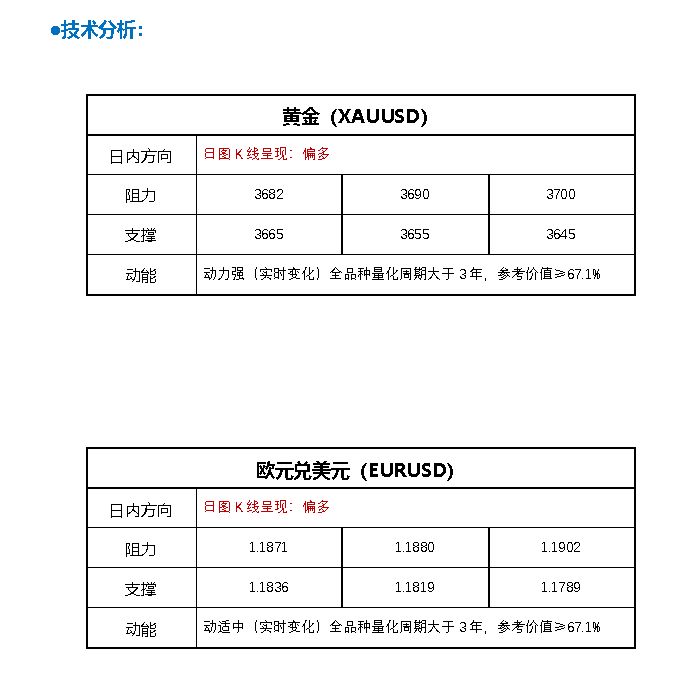
Group 1 - The US Dollar Index (DXY) fell by 0.7% to 96.64, marking its lowest level since July 1, making gold cheaper for holders of other currencies [1] - Gold prices have risen over 40% this year due to geopolitical uncertainties, concerns about the negative impact of US tariffs on the global economy, and purchases by central banks, especially in emerging markets [1] - The US Department of Commerce is considering requests for tariffs on more imported auto parts based on national security reasons [1] Group 2 - Analysts highlight that the demand for safe-haven assets remains high due to global economic growth uncertainties and geopolitical risks, with gold's surge primarily driven by expectations of significant interest rate cuts by the Federal Reserve [2] - Gold prices reached a record high of $3703 per ounce before retreating to around $3690, with expectations of challenging historical highs and potential targets of $3750 and $3800 [3] - The Relative Strength Index (RSI) indicates overbought conditions, suggesting limited short-term upside, but the outlook remains bullish [3] Group 3 - Key resistance levels for gold are identified at $3682, $3690, and $3700, while support levels are at $3665, $3655, and $3642 [4] - The Euro to US Dollar (EURUSD) shows a bullish trend with resistance at 1.1871, 1.1880, and 1.1902, and support at 1.1836, 1.181a, and 1.1789 [5] Group 4 - Upcoming key indicators include US housing starts and building permits for August, as well as the Bank of Canada's interest rate decision and EIA crude oil inventory data [5]
黄金价格再创新高机构看涨至5000美元
Sou Hu Cai Jing· 2025-09-16 16:53
Group 1 - The core viewpoint of the article highlights that COMEX gold futures reached a record high of $3731.9 per ounce, driven by multiple factors including expectations of a shift in Federal Reserve policy, increased demand for safe-haven assets, and imbalances in supply and demand [1][3] - Domestic gold futures in Shanghai closed at 842.08 yuan per gram, with a cumulative increase of 7.37% since September [1][3] - Analysts suggest that the bull market for precious metals may be entering an accelerated phase, with some foreign institutions predicting that gold prices could rise to $5000 per ounce in the future [1][3]
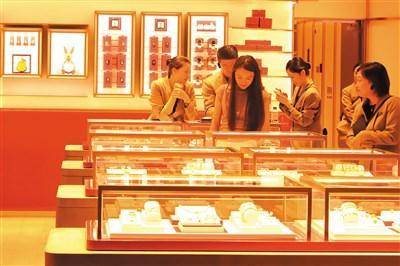
金价“起飞”!直逼3700美元/盎司
Guo Ji Jin Rong Bao· 2025-09-16 15:51
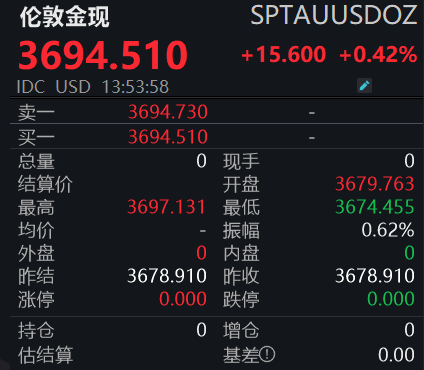
Core Viewpoint - Gold prices have reached new historical highs, with London gold touching $3697.131 per ounce and COMEX gold hitting $3734.8 per ounce, driven by various factors including monetary policy shifts, geopolitical risks, and central bank purchases [1][3][9]. Price Movements - As of September 10, London gold was reported at $3694.51 per ounce, up 0.42%, with a year-to-date increase of over $1000 per ounce [3][4]. - COMEX gold also saw an increase, reported at $3733.2 per ounce, up 0.38%, with a peak of $3734.8 per ounce [5][9]. - In the domestic market, Shanghai Gold Exchange's gold T+D rose by 1.14% to 838.1 yuan per gram, while the main futures contract increased by 1.16% to 844.58 yuan per gram, both reaching new highs [6]. Factors Driving Gold Prices - The primary factors contributing to the surge in gold prices include: - A shift in monetary policy, with a 100% probability of a Federal Reserve rate cut due to weak U.S. economic data, leading to lower opportunity costs for holding gold [8][9]. - Escalating geopolitical risks, including tensions in the Middle East and the ongoing Russia-Ukraine conflict, which have increased the geopolitical risk index [8][9]. - Continuous net purchases of gold by global central banks, supporting strategic demand for gold amid a trend of de-dollarization [9]. Market Outlook - Analysts suggest that while gold prices are currently high and may experience short-term fluctuations, the long-term outlook remains bullish due to persistent demand driven by risk aversion, policy uncertainty, and central bank support [10]. - Investment strategies should focus on monitoring Federal Reserve policies, inflation data, and geopolitical developments to adjust positions accordingly [10].