政策不确定性

Search documents
美联储金融稳定性报告:政治不确定性和地缘政治风险是最突出的稳定性顾虑
Sou Hu Cai Jing· 2025-11-07 21:18
Core Insights - The Federal Reserve's latest survey indicates that policy uncertainty, trade policy, central bank independence, and the availability of economic data are the most frequently mentioned risks to U.S. financial stability [1] - Respondents identified artificial intelligence (AI) as a primary concern for stability [1] - Other significant risks highlighted include geopolitical risks, inflation, monetary tightening, and higher long-term interest rates [1] - A shift in the current optimistic sentiment surrounding AI could lead to corrections in risk assets, potentially slowing the labor market and tightening financial conditions if the corrections are substantial [1]
Policy uncertainty, geopolitical risk are top stability concerns in latest Fed survey
Reuters· 2025-11-07 21:01
Group 1 - Policy uncertainty, particularly regarding global trade and central bank independence, is a primary concern for financial stability [1] - Overall geopolitical risk is also highlighted as a significant factor affecting financial stability [1]


突发!美参议院5147决议:喊停特朗普征税!金涨股跌Meta蒸发巨款
Sou Hu Cai Jing· 2025-10-31 18:07
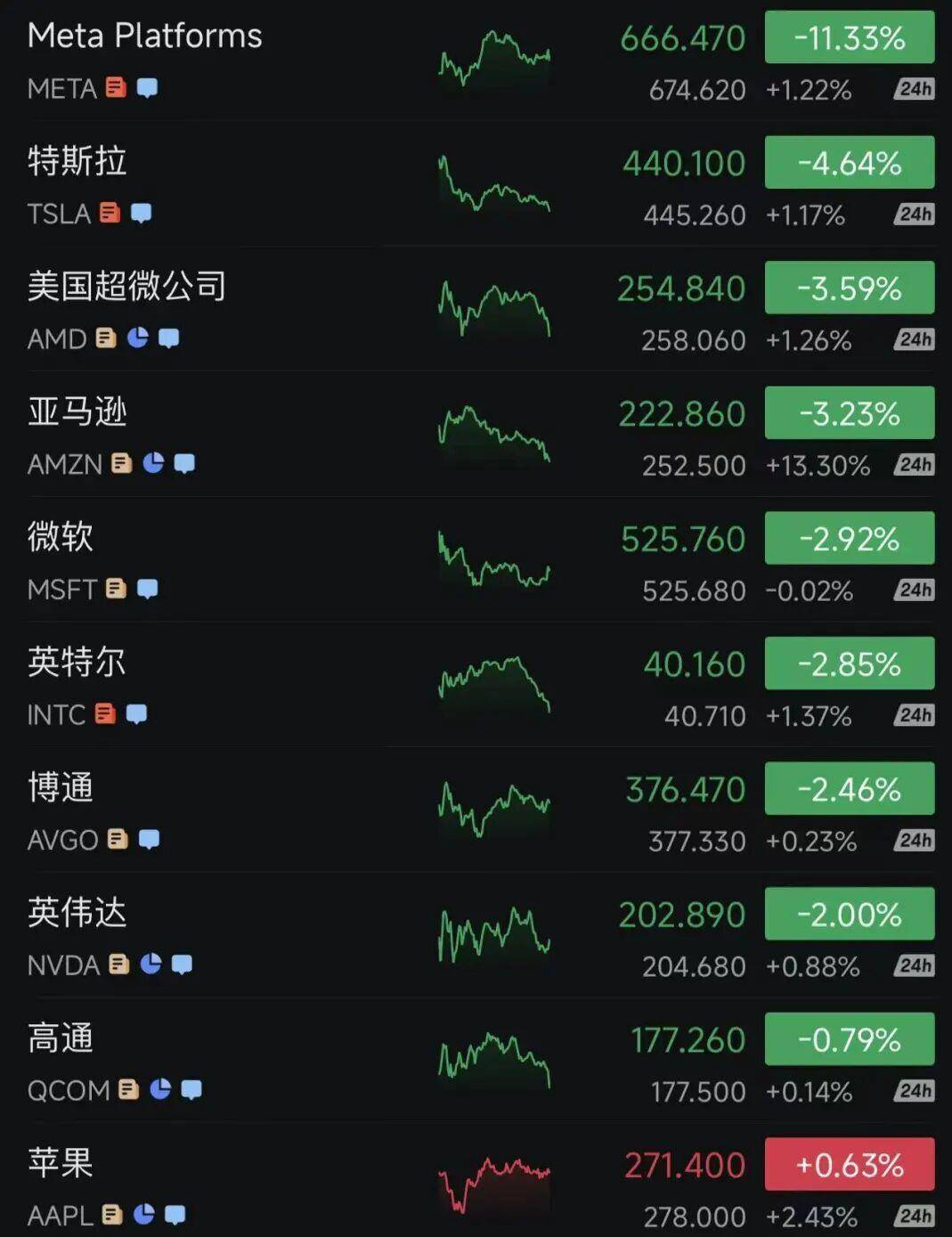
Core Viewpoint - The U.S. Senate's narrow vote (51-47) to terminate Trump's "global tax" policy has led to a significant market reaction, causing a massive drop in tech stocks and a surge in gold prices, reflecting the volatility in global capital markets [1][3][6]. Group 1: Market Reaction - Meta Platforms experienced a dramatic stock price drop of 11%, resulting in a market capitalization loss of $214 billion (approximately 1.5 trillion RMB) [3]. - Tesla's market value decreased by 506.3 billion RMB, while the Nasdaq index fell by 1.57%, with the S&P 500 and Dow Jones also turning negative [3][4]. - Despite strong earnings reports from Apple and Amazon, the overall market sentiment remained bearish, impacting their stock performance [3]. Group 2: Economic and Policy Context - The termination of the "global tax" policy is seen as a response to rising inflation and increased costs for American consumers, with the inflation rate reaching 2.7% in August and projected to rise to 3% by year-end [6]. - The uncertainty surrounding U.S. government policies, including the recent government shutdown, has led to significant economic disruptions, with small businesses reportedly losing $30 billion weekly [4][6]. - The Federal Reserve's recent interest rate cut of 25 basis points has been undermined by the lack of reliable economic data due to the government shutdown, leading to further market instability [8]. Group 3: Global Market Implications - The turmoil in U.S. markets has negatively affected Chinese stocks, with the Nasdaq Golden Dragon China Index dropping by 1.88%, although some education stocks like New Oriental and TAL Education saw gains [7]. - The current situation may lead to a shift in investment towards emerging markets, as foreign capital could seek opportunities in Chinese assets amidst the chaos in the U.S. [7]. - The surge in gold prices, reaching $4,027 per ounce, indicates a flight to safety among investors, reflecting heightened risk aversion in the market [1][7].




蛋白数据日报-20251030
Guo Mao Qi Huo· 2025-10-30 07:42
Report Summary 1. Report Industry Investment Rating No relevant information provided. 2. Core Viewpoints - Under the expectation of Sino-US talks, the US market rose strongly with high policy uncertainty. Domestic short - position funds reduced positions to avoid risks. The right to buy ships in China is still poor, and the domestic product valuation is low. With the expectation of crush margin repair, the short - term futures market is expected to continue the rebound trend. Attention should be paid to Sino - US policies and South American weather changes [8]. 3. Summary by Related Catalogs Supply - USDA estimates the ending inventory of US soybeans in the 25/26 season to be 300 million bushels, and the expected yield of 53.5 bushels per acre may have room for downward adjustment. Exports depend on Sino - US policies. According to CONAB data, as of October 25, the soybean sowing rate in Brazil was 34.4%, compared with 21.1% last week and 37.7% in the same period last year, with a five - year average of 42.5%. In November, domestic soybean meal is expected to start destocking, but the domestic soybean meal supply in the fourth quarter is still expected to be loose. If China cannot purchase US soybeans, the soybean meal supply in the first quarter of next year still needs to be supplemented, and the source of supplementation is uncertain [7]. Demand - Livestock and poultry are expected to maintain high inventory in the short term, and the capacity reduction is not obvious, which supports feed demand. However, the current breeding profit shows a loss, and national policies tend to control the inventory and weight of pigs, which may affect the long - term supply. The downstream trading volume of soybean meal is normal, and the pick - up is good [8]. Inventory - Domestic soybean and soybean meal inventories are at a high level in the same period of history, and the inventory days of soybean meal in feed enterprises have dropped to a low level [8]. Price and Spread - **Spot and Futures Basis**: On October 29, the 43% soybean meal spot basis in Dalian was 81, down 34; in Rizhao it was 31, down 34; in Tianjin it was 51; in Dongguan it was - 19; in Zhanjiang it increased by 6; in Fangcheng it increased by 6. The rapeseed meal spot basis in Guangdong was 60, up 16. The MJ - 5 was 166, down 14, and the RM1 - 5 was - 15 [6]. - **Price Spread**: The spot price spread of soybean meal - rapeseed meal in Guangdong was 300, and the futures price spread (Wangli) was 596, up 17. The price spread of soybean meal - rapeseed meal was 900, and the current value was 464, down 9 [7]. Other Data - **Exchange Rate and Crush Margin**: The US dollar - RMB exchange rate and the futures crush margin were - 240.00 yuan/ton, down 5 [7]. - **Inventory and Processing**: Data on Chinese port soybean inventory, national major oil mill soybean inventory, national major oil mill soybean meal inventory, feed enterprise soybean meal inventory days, national major oil mill soybean crushing volume, and national major oil mill operating rate are presented in the form of historical data comparison charts [7].
多元化策略有助分散风险
Guo Ji Jin Rong Bao· 2025-10-27 04:35
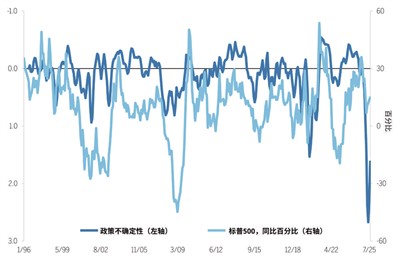
Group 1 - The financial markets are exhibiting contradictory characteristics, with persistent investor anxiety due to high inflation and ongoing policy uncertainties, yet the US stock market has shown an increase this year [2] - The S&P 500 index experienced a significant decline of 20% at its lowest point earlier this year, coinciding with the announcement of a protectionist trade policy in April [2] - Various policy uncertainties, including spending cuts, expanding US deficits, and immigration policies, are contributing to investor unease, alongside warning signs such as rising credit card default rates and weakened consumer data [2][3] Group 2 - Stubborn inflation remains a major concern, with central banks, including the Federal Reserve, indicating a need to address inflation despite growth risks [3] - Geopolitical tensions globally, including wars and climate-sensitive issues, are exacerbating uncertainty, potentially putting risk assets under pressure again [3] - The current market environment prompts a reevaluation of capital market expectations, suggesting that many portfolios may benefit from alternative sources of returns and diversification strategies, particularly hedge fund strategies [3][4] Group 3 - There are strong economic reasons for investors to consider diversifying their portfolios with strategies like hedge funds, as conditions for achieving stable, low-correlated, alpha-driven returns have significantly improved [4] - The differentiation in returns and increased macroeconomic volatility are driving changes in investment strategies, highlighting the need for diversification [4][5] - In the context of rising and persistent inflation, traditional bonds may not always serve as effective hedges, leading investors to seek strategies that provide expected diversification benefits [5]
道富集团:投资者对风险资产的乐观情绪恐已过度
Ge Long Hui A P P· 2025-10-23 10:45
Core Viewpoint - Investor confidence in high-risk assets may be overstated, as indicated by Dwyfor Evans, the Asia-Pacific Macro Strategy Head at State Street Global Markets [1] Group 1: Market Trends - Investors are currently buying U.S. stocks while hedging against dollar risk and selling U.S. Treasury bonds [1] - Evans anticipates a gradual rise in U.S. inflation due to increases in both imported and domestic goods prices, suggesting that "3% has become the new 2%" [1] Group 2: Implications for Monetary Policy - The rising inflation is crucial for the Federal Reserve, as fewer rate cuts could lead to a rebound in the dollar [1] - Given the ongoing policy uncertainty, Evans warns that current market risk positions may be overly optimistic [1]
当流动性潮水褪去,黄金和股市都躲不掉抛售?
Jin Shi Shu Ju· 2025-10-20 12:17
Group 1 - The global market is experiencing a unique situation where gold prices are surging like in 1979, while stock markets are reflecting the prosperity of 1999, despite the contrasting economic conditions of both eras [1] - Analysts suggest that the rise in gold during a new stock market boom is driven by investors seeking to hedge against policy uncertainties, particularly in the U.S., indicating a cognitive dissonance among global investors [1][2] - Ruchir Sharma, Chairman of Rockefeller International, attributes the simultaneous rise of gold and stock markets to massive liquidity injected by governments and central banks, with U.S. money market fund holdings reaching $7.5 trillion, significantly above long-term trends [1][2] Group 2 - Despite the Federal Reserve's claims of "moderate tightening," nominal interest rates remain below nominal GDP growth, keeping financial conditions loose, while the U.S. maintains the highest deficit levels among developed economies [2] - The liquidity in the market is closely tied to risk appetite, with increased confidence in financial asset appreciation leading to more funds being invested, supported by expectations of government intervention during downturns [2] - The rise of new trading applications and zero-commission investment tools has made it easier for ordinary investors to buy financial assets, contributing to the influx of liquidity into various market segments [2] Group 3 - The relationship between liquidity and the simultaneous rise of gold and stock prices has historically been disconnected, with past data showing zero correlation between the two during different market conditions [3] - Sharma remains optimistic about gold in the long term, especially after 2022 when central banks began increasing gold reserves as a substitute asset, although he expresses concern about the potential backlash from excessive liquidity [3] - The current market dynamics, including the rise of non-traditional safe-haven commodities and high-risk assets, do not reflect the inflationary fears typical of the 1970s [3] Group 4 - If the market genuinely feared inflation, this sentiment would be reflected in long-term bond yields and traditional inflation-hedging tools, but current bond market signals indicate expectations of long-term inflation remaining below 2.5% [4] - The Federal Reserve appears to be ignoring asset price inflation, and if consumer price inflation accelerates, it may force the Fed to tighten policies, potentially leading to unexpected shocks for investors who bought gold as a hedge [4]
IMF发布最新世界经济展望报告预计—— 全球经济增速温和放缓
Jing Ji Ri Bao· 2025-10-19 22:08
Core Insights - The International Monetary Fund (IMF) report indicates that while the global economy showed resilience in the first half of the year, it is now experiencing signs of moderate slowdown, which is expected to persist long-term [1][2] - The report highlights that the initial strong economic activity was driven by short-term factors, and as these dissipate, global economic data is showing weakness [1][3] Economic Performance - In the first half of the year, global economic activities were robust, with inflation levels in the US and Asian economies being well-controlled [1] - The global economic growth rate is projected to decline from 3.6% at the end of 2024 to 2.6% at the end of this year, with forecasts of 3.2% in 2025 and 3.1% in 2026 [1][2] Risks and Challenges - The report identifies ongoing downward risks to the global economy, including policy uncertainty, rising protectionism, and restrictive immigration policies, which could negatively impact consumption and investment [3] - The potential volatility in the artificial intelligence sector poses a risk to economic growth, with possible repercussions for technology stocks and overall financial market stability [3] Policy Recommendations - Policymakers are urged to establish clear and transparent trade policies to reduce uncertainty and support investment, while modernizing trade rules to adapt to the digital age [4] - The report emphasizes the importance of fiscal sustainability and suggests that countries should implement structural reforms to enhance resilience and growth prospects [4]

黄金4300美元 避险需求激增!
智通财经网· 2025-10-16 23:05
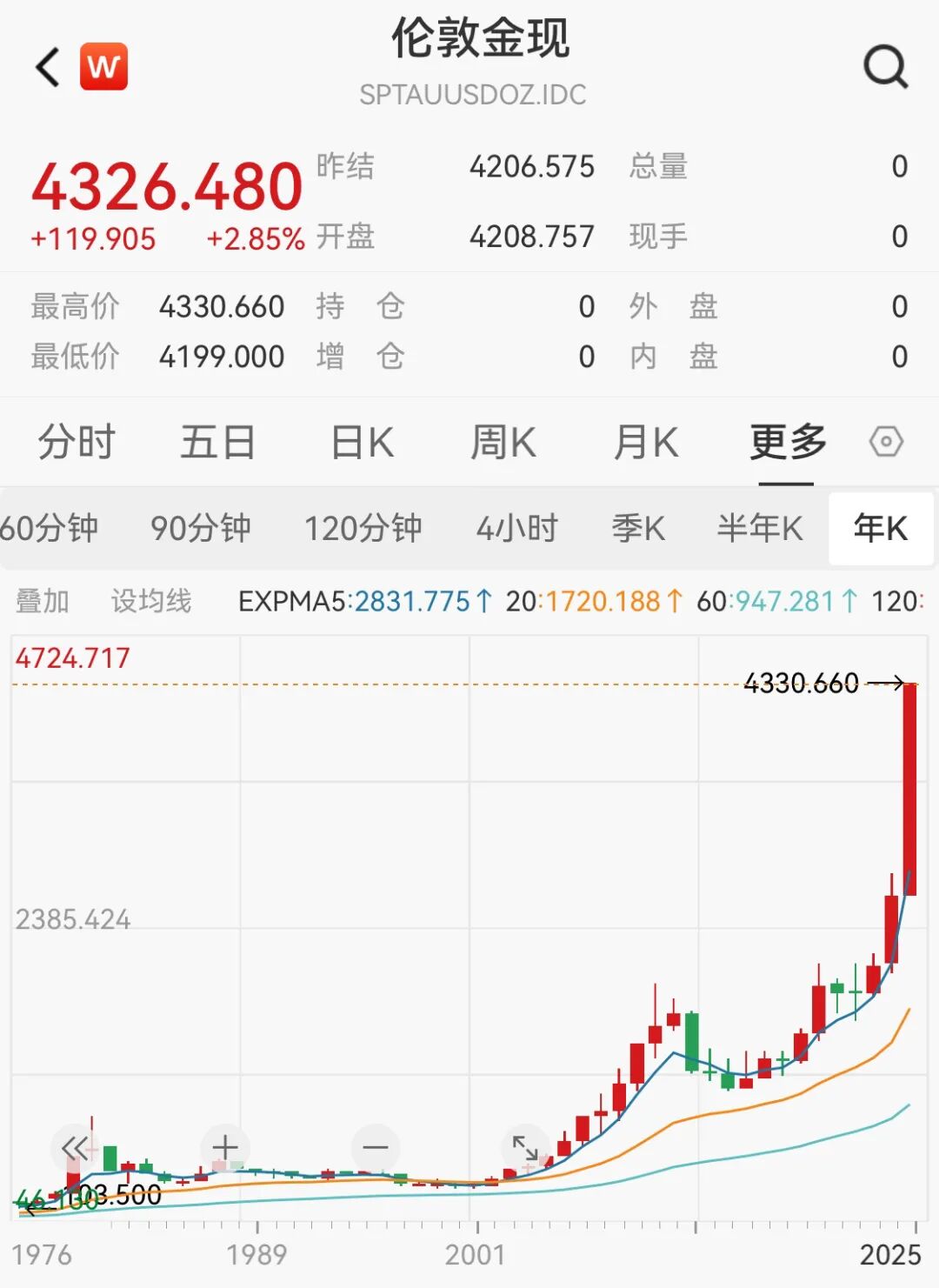
国际金价再度改写历史,现货黄金突破每盎司4300美元关口,年内累计涨幅超过60%,自2024年初以来的涨幅翻倍。美股三大指数齐跌,美元指数跌 0.3%,芝加哥期权交易所波动率指数VIX收于25.31,创4月24日以来最高收盘水平。 | < W | 伦敦金现 | | Q | | --- | --- | --- | --- | | SPTAUUSDOZ.IDC | | | | | /22 / 20 FF 4206.575 芯里 | | | 0 | | +119.905 +2.85% 开盘 | | 4208.757 现手 | 0 | | 最高价 4330.660 持 仓 | | 0 外 盘 | O | | 4199.000 增 仓 最低价 | | 内 盘 0 | 0 | | 分时 月K 更多 © 五日 日K | | 周K | | | 60分钟 90分钟 120分钟 幸K 未年K | | 4小时 | 年K | | 叠加 设均线 EXPMA5:2831.775↑ 20:1720.188↑ 60:947.281↑ 120: | | | | | 4724.717 ---- 4330.660 ---- | | | | | 2 ...
IMF's Adrian: Stocks 'perhaps 10% overvalued on average'
Youtube· 2025-10-15 12:57
Valuation and Market Concentration - Current stock valuations are estimated to be about 10% overvalued on average, which is less severe than the 20% overvaluation seen during the tech bubble of 1999 [1] - There is a high concentration of profitability among a small number of stocks, particularly those benefiting from the AI narrative, which raises concerns about how this concentration will affect future valuations [2][3] - The interconnectedness of these top-performing stocks could increase downside risks if negative shocks occur, although no such reassessment of valuations has been observed to date [3] Federal Reserve and Monetary Policy - The Federal Reserve's dual mandate focuses on price stability and full employment, with financial conditions influencing the transmission of monetary policy but not being a direct target [4][5] - There are discussions about whether the Fed should consider cutting interest rates due to asset price concerns, which could exacerbate growth cycles [4] Investment Trends and Safe Havens - There is a notable shift of investment into gold and cryptocurrencies as a response to concerns about currency debasement and market uncertainty [6] - The rise in gold prices is attributed to high levels of policy uncertainty, including tariff issues and broader global fragmentation concerns [7]