
适度宽松货币政策

Search documents
2025年基建投资增速下滑 今年有望实现较好增速
Di Yi Cai Jing· 2026-01-19 04:48
Core Viewpoint - The infrastructure investment growth rate in China has experienced a rare decline in 2025, marking the first drop since 2014, with a total fixed asset investment of approximately 48.5 trillion yuan, down 3.8% from the previous year [1] Group 1: Infrastructure Investment Trends - In 2025, infrastructure investment (excluding electricity, heat, gas, and water production and supply) decreased by 2.2%, contrasting with previous years of high growth [1] - The growth rate of infrastructure investment has shown a "high at the beginning, low at the end" pattern, aligning with the overall economic growth pace, influenced by tight local finances and limited quality project reserves [2][1] - The monthly growth rate of infrastructure investment in 2025 started at 5.8% in Q1 but slowed to 4.6% in H1 and further to 1.1% in Q3, ultimately resulting in an annual decline [1] Group 2: Funding Sources and Fiscal Policy - The main sources of funding for infrastructure investment include self-raised funds, national budget funds, domestic loans, foreign investment, and other funds, with a significant reduction in net financing from local government bonds due to strict regulations [3] - In 2025, the general public budget expenditure for infrastructure investment saw a decline, with agricultural, forestry, and water expenditures down 13.6%, and urban and rural community expenditures down 8.3% [3] - The fiscal expenditure structure is optimizing, with increased spending on social welfare sectors like education and healthcare, indicating a shift from "investment in things" to "investment in people," which may not immediately reflect in infrastructure investment but supports long-term human capital development [4] Group 3: Future Outlook - The 2026 economic outlook is expected to improve, with a projected GDP growth of 5.0% and a focus on stabilizing investment, increasing central budget investment, and optimizing local government bond usage [4] - The year 2026 marks the beginning of the "14th Five-Year Plan," with significant national projects entering the preparatory phase, suggesting that once funding is secured, these projects can drive economic growth [5] - The National Development and Reform Commission has initiated early projects for 2026, with a total investment plan of approximately 295 billion yuan, aimed at enhancing the modern infrastructure system [6]
每经热评丨商业用房首付比例降至30% 释放结构性去库存新信号
Xin Lang Cai Jing· 2026-01-18 13:19
Core Viewpoint - The People's Bank of China and the National Financial Regulatory Administration have announced a reduction in the minimum down payment ratio for commercial property loans to 30%, aiming to stimulate demand and alleviate inventory issues in the commercial real estate market [1][2]. Group 1: Policy Changes - The minimum down payment for commercial property loans has been adjusted from a previous range of 50% to 60% to a new minimum of 30%, which is expected to enhance liquidity in the commercial real estate sector [1][2]. - This policy extension to commercial properties follows a trend of focusing primarily on residential real estate in past regulatory measures, marking a significant shift in support for the commercial sector [1][2]. Group 2: Market Impact - The high down payment requirements had previously restricted market circulation, with some areas experiencing transaction volume declines of up to 90% due to stringent regulations [2]. - The reduction in down payment will lower the investment threshold, allowing for greater participation from small investors and startups, thereby injecting new vitality into the commercial market [3]. Group 3: Broader Economic Context - The down payment adjustment is part of a broader set of policies aimed at stabilizing the real estate market, including tax reductions on property sales and continued implementation of accommodative monetary policies [3][4]. - The current policy shift is not merely a relaxation of previous restrictions but is strategically focused on structural inventory reduction, signaling a new phase for the commercial real estate market [4].
(经济观察)中国多部门密集开“年会” 政策组合拳蓄势待发
Zhong Guo Xin Wen Wang· 2026-01-17 07:15
Group 1: Macroeconomic Policies - China is set to implement a more proactive fiscal policy, expanding fiscal spending and optimizing government bond tools to enhance their effectiveness [2] - The People's Bank of China emphasizes a moderately loose monetary policy, focusing on promoting high-quality economic development and maintaining ample liquidity [2] - Recent measures include eight policy actions from the central bank, indicating room for further rate cuts and reserve requirement ratio reductions [2] Group 2: Expanding Domestic Demand - "Expanding domestic demand" is prioritized in China's economic agenda, with multiple ministries focusing on boosting consumption [3] - The Ministry of Finance highlights the importance of supporting a strong domestic market and implementing special actions to stimulate consumption [3] - The National Business Work Conference emphasizes the creation of the "Buy in China" brand and the development of new growth points in service consumption [3] Group 3: Risk Prevention and Mitigation - Risk prevention is a key focus across various ministries, with the People's Bank of China addressing financial risks in key sectors [4] - The National Financial Regulatory Administration aims to effectively manage risks in small and medium-sized financial institutions, focusing on both existing and new risks [4] - The National Housing and Urban-Rural Development Conference stresses stabilizing the real estate market through targeted measures [4]
2025年全年新增贷款超16万亿元!金融“活水”激发经济活力
Sou Hu Cai Jing· 2026-01-17 02:33
Group 1 - The core viewpoint of the articles highlights the effectiveness of China's monetary policy in stimulating economic growth through increased lending and financing support [1][2][3] - In 2025, the total social financing scale increased by 35.6 trillion yuan, with broad money (M2) balance exceeding 340 trillion yuan and RMB loan balance surpassing 270 trillion yuan, indicating a robust financial system supporting economic stability [1] - The average interest rate for newly issued corporate loans was around 3.1% in December 2025, a decrease of 2.5 percentage points since the second half of 2018, which has lowered financing costs for businesses [1] Group 2 - In 2025, new loans to enterprises amounted to 15.47 trillion yuan, indicating that over 90% of new loans were aligned with corporate demand, with more than half of these being medium to long-term loans [2] - Key sectors attracting significant credit growth included technology (11.5%), green initiatives (23%), inclusive finance (10.3%), elderly care (60.2%), and digital fields (14.6%), all surpassing the overall loan growth rate [2] - Structural monetary policy tools have been continuously optimized to support high-quality economic development, including increased quotas for technology innovation and agricultural loans, as well as the introduction of new financial instruments [3] Group 3 - The Chinese central bank plans to continue implementing moderately loose monetary policies in 2026, focusing on expanding domestic demand and optimizing supply to support stable economic growth and financial market stability [3] - Financial support is increasingly aligned with the high-quality development of the real economy, reinforcing the positive momentum of economic stability and growth [3] - The emergence of new growth points and effective demand, such as in the humanoid robotics and biopharmaceutical sectors, illustrates the dynamic nature of China's economic development [3]
新浪财经资讯AI速递:昨夜今晨财经热点一览 丨2026年1月17日
Sou Hu Cai Jing· 2026-01-16 23:23
Group 1: US Stock Market - The three major US stock indices experienced slight declines, with all recording losses for the week as the earnings season began cautiously [1] - Bank stocks faced pressure due to the impact of the credit card interest rate cap plan by TransUnion, while chip stocks continued to rise, with Micron Technology surging over 7%, pushing its market value above $400 billion [1] - Investors are closely monitoring upcoming corporate earnings to assess the economic fundamentals and are scrutinizing high valuations amid the AI boom [1] Group 2: A-share Market Regulation - The A-share market has seen rapid increases, prompting regulatory authorities to implement measures to prevent excessive volatility [4] - The Shanghai and Shenzhen stock exchanges conducted over 800 regulatory actions within a week, including raising financing margin ratios for counter-cyclical adjustments [4] - The China Securities Regulatory Commission has emphasized strengthening trading and information disclosure regulations to maintain fair trading and guide long-term rational investment [4] Group 3: US Federal Reserve Leadership - US Treasury Secretary Becerra indicated that the pool of candidates for the Federal Reserve Chair has been narrowed down to four, with a final decision expected around the Davos Forum [5] - Former President Trump has completed interviews with the last candidate, Rick Reed, but has not disclosed his preference to the Treasury Secretary [5] Group 4: Financial Policy in China - The People's Bank of China and the State Administration of Foreign Exchange detailed the effectiveness of monetary policy in 2025 and measures for 2026, highlighting a moderately loose monetary policy that has led to total credit growth and structural optimization [6] - In 2026, the continuation of moderately loose monetary policy will be implemented, with a focus on counter-cyclical adjustments and eight measures to enhance structural support [6] Group 5: Real Estate Market Dynamics - Jingrui Holdings is auctioning off 120 luxury apartments and over 200 parking spaces in Beijing to repay a debt of approximately 720 million yuan, reflecting a trend among distressed real estate companies to liquidate assets in major cities to alleviate debt pressure [9]
信贷结构持续优化 12月企业中长期贷款同比多增2900亿元
Zhong Guo Jing Ying Bao· 2026-01-16 07:53
央行日前公布的金融数据显示,2025年12月新增人民币贷款9100亿元,同比少增800亿元,环比多增 5200亿元。全年看,2025年新增人民币贷款16.27万亿元,较上年少增1.82万亿元。 浙大城市学院副教授、中国城市专家智库委员会常务副秘书长林先平在接受《中国经营报》记者采访时 表示,信贷结构呈现"总量回暖、结构向好"的特征。从12月信贷环比多增看,这是季节性冲刺、政策撬 动与项目落地共振的结果:年末银行加快信贷投放节奏,叠加结构性货币政策工具发力、地方重大项目 集中开工,共同推动信贷增量走高。 民生银行首席经济学家温彬对记者表示,从利率水平看,贷款利率延续低位运行,表明信贷供给总体充 裕,实体经济融资需求满足度较高。 展望未来,林先平认为,在重大项目储备充足、政策支持力度不减的背景下,企业中长期贷款有望延续 同比多增态势,投向将更聚焦科技创新与产业升级,助力经济高质量发展。 冯琳预计,2026年固定资产投资增速有望加快,将带动企业中长期贷款恢复同比多增;同时,2026年新 增人民币贷款或在17.5万亿元左右,较2025年多增约1.2万亿元。 中国人民银行货币政策司司长谢光启在1月15日国新办新闻发布会 ...
金融“五篇大文章”落地成色足 支持实体经济效果明显
Jin Rong Shi Bao· 2026-01-16 01:13
Core Viewpoint - The People's Bank of China (PBOC) has implemented a moderately accommodative monetary policy in 2025, resulting in significant support for the real economy and a notable increase in social financing and loan balances [1][2]. Group 1: Financial Statistics - By the end of 2025, the total social financing stock reached 442.12 trillion yuan, a year-on-year increase of 8.3% [1]. - The balance of RMB loans to the real economy was 268.4 trillion yuan, growing by 6.3% year-on-year [1]. - The broad money supply (M2) increased by 8.5%, significantly outpacing the nominal GDP growth rate [2]. Group 2: Policy Implementation - The PBOC utilized various monetary policy tools to maintain ample liquidity and guide financial institutions to meet the effective financing needs of the real economy [2]. - The issuance of government bonds was accelerated, with a total issuance scale of 16 trillion yuan in 2025, net increasing by 6.6 trillion yuan [3]. - The PBOC's liquidity support through operations like reverse repos has stabilized market expectations and facilitated government bond issuance [3]. Group 3: Financing Structure - In 2025, the incremental social financing was 35.6 trillion yuan, with direct financing accounting for 46.9% of this total, marking a 7.8 percentage point increase compared to the last year of the 13th Five-Year Plan [4]. - The net financing from government bonds was 13.84 trillion yuan, and non-financial corporate bond financing reached 2.39 trillion yuan, reflecting a strong support for private enterprises [4]. - The balance of loans in the "Five Major Financial Articles" reached 107.7 trillion yuan, with significant growth in technology and green loans [6][7]. Group 4: Future Monetary Policy Outlook - The PBOC plans to continue implementing a moderately accommodative monetary policy in 2026, focusing on stabilizing economic growth and ensuring a suitable monetary environment [8]. - There is still room for further reductions in the reserve requirement ratio and interest rates, as the average reserve requirement ratio stands at 6.3% [9]. - The PBOC aims to lower comprehensive financing costs for enterprises by promoting transparency in loan costs and optimizing the financing environment [9].
央行出台八项政策措施支持实体经济
Sou Hu Cai Jing· 2026-01-16 00:31
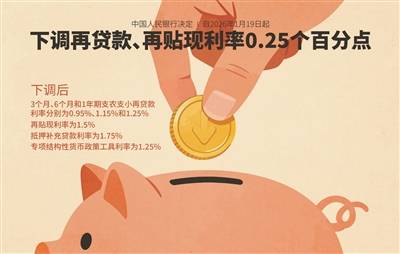
Group 1 - The core viewpoint of the news is that the People's Bank of China (PBOC) is implementing monetary policies to support high-quality development of the real economy, with a focus on increasing credit support and optimizing economic structure [2][3][4] - By the end of December 2025, the social financing scale stock increased by 8.3% year-on-year, and the broad money supply (M2) grew by 8.5%, significantly outpacing nominal GDP growth [2] - The PBOC plans to introduce eight policy measures to enhance credit allocation in key sectors, including a 0.25 percentage point reduction in various structural monetary policy tool rates [3][4] Group 2 - The PBOC will merge the agricultural and small enterprise re-loan and rediscount quotas, increasing the agricultural and small enterprise re-loan quota by 500 billion yuan, with a dedicated quota of 1 trillion yuan for private enterprises [3] - The quota for re-loans supporting technological innovation and transformation will be increased from 800 billion yuan to 1.2 trillion yuan, expanding the support to high R&D investment private SMEs [3] - The PBOC aims to lower the minimum down payment ratio for commercial property loans to 30% in collaboration with financial regulatory authorities [3] Group 3 - In 2025, the average weighted interest rate for new corporate loans and personal housing loans was around 3.1%, a decrease of 2.5 and 2.6 percentage points respectively since the second half of 2018 [7] - By the end of 2025, the total RMB loan balance was approximately 271.91 trillion yuan, with a year-on-year growth of 6.4%, indicating strong credit support for the real economy [7] - The manufacturing sector saw a 6.6% year-on-year increase in medium to long-term loans, while infrastructure and service sectors also experienced significant growth [7] Group 4 - The foreign exchange market in China is expected to operate stably, with a total trading volume of 42.6 trillion USD in 2025, and a net inflow of 302.1 billion USD for the year [5][6] - The proportion of enterprises conducting cross-border trade settlements in RMB is around 30%, which helps mitigate the impact of exchange rate fluctuations [6] - By the end of 2025, China's foreign assets and liabilities reached historical highs of 11.5 trillion and 7.5 trillion USD respectively, with foreign exchange reserves stable at 33,579 billion USD [5]

四大证券报精华摘要:1月16日
Zhong Guo Jin Rong Xin Xi Wang· 2026-01-16 00:19
Group 1: Monetary Policy and Economic Outlook - The People's Bank of China (PBOC) signals potential for interest rate cuts and reserve requirement ratio (RRR) reductions in 2026, aiming for a moderately loose monetary policy to support stable economic growth and high-quality development [1] - The average RRR for financial institutions is currently 6.3%, indicating room for further cuts [1] Group 2: Automotive Industry Trends - Major automotive companies have set sales targets exceeding 21.55 million units for 2026, representing about 63% of 2025's total sales, with traditional manufacturers targeting 10% to 30% growth and new entrants aiming for aggressive growth of 34% to 67.5% [2] - The automotive market is characterized by significant differentiation, reflecting companies' assessments of market trends and their product and technology capabilities [2] Group 3: Financial Market Performance - A-shares experienced mixed trading on January 15, with the Shanghai Composite Index closing at 4112.60 points, down 0.33%, while the Shenzhen Component Index rose by 0.41% [3] - The total trading volume in the Shanghai and Shenzhen markets reached 29.385 trillion yuan [3] Group 4: Investment in Power Infrastructure - State Grid Corporation plans to invest 4 trillion yuan during the 14th Five-Year Plan period, a 40% increase from the previous plan, focusing on high-quality development of the new power system supply chain [4] - The investment indicates an average annual grid investment exceeding 1 trillion yuan, with a focus on ultra-high voltage projects [4] Group 5: Asset Management Industry Changes - The asset management sector is undergoing significant changes due to the transition of public collective products and challenges in obtaining public fund licenses, prompting firms to seek new growth areas [5][6] - Strategies are shifting towards fixed income and multi-asset approaches, with alternative investments like REITs and derivatives becoming key revenue sources [6] Group 6: Gold ETF Milestone - The first gold ETF in China has surpassed 100.762 billion yuan in circulation, becoming the largest in Asia, amid rising international gold prices [6] - Fund managers remain optimistic about precious metals, citing ongoing trends that support gold price increases despite potential short-term volatility [6] Group 7: Corporate Dividend Announcements - Gree Electric Appliances plans to distribute approximately 5.585 billion yuan in cash dividends, enhancing investor returns and maintaining a stable dividend policy [7] Group 8: Cross-Border E-commerce Initiatives - Various provinces in China are actively promoting cross-border e-commerce to enhance foreign trade, with specific support measures for upstream manufacturers and brand owners [8] Group 9: AI Integration in E-commerce - Alibaba's Qianwen App has integrated with its ecosystem, offering over 400 AI functionalities for tasks like ordering food and booking flights, marking a shift towards practical AI applications [9] - The integration aims to establish Qianwen as a significant player in the AI market, with ongoing challenges in expanding its capabilities [9] Group 10: Luoyang Molybdenum's Profit Forecast - Luoyang Molybdenum expects a net profit of 20 to 20.8 billion yuan for 2025, a growth of 47.8% to 53.71%, driven by increased production and prices of copper [10]
货币信贷总量增长结构优化 2025年人民币贷款增加16.27万亿元
Zhong Guo Zheng Quan Bao· 2026-01-15 21:16
Core Insights - The People's Bank of China reported that in 2025, the total RMB loans increased by 16.27 trillion yuan, indicating a stable credit support for the real economy [1][2] - The broad money supply (M2) grew by 8.5% year-on-year by the end of December 2025, reflecting a favorable monetary environment for economic recovery [4][5] Loan Industry Structure Optimization - By the end of 2025, the balance of RMB loans from financial institutions reached 271.91 trillion yuan, with a year-on-year growth of 6.4% [2] - Household loans increased by 441.7 billion yuan, with short-term loans decreasing by 835.1 billion yuan and medium to long-term loans increasing by 1.28 trillion yuan [2] - Corporate loans increased by 15.47 trillion yuan, with short-term loans rising by 4.81 trillion yuan and medium to long-term loans increasing by 8.82 trillion yuan [2][3] Sectoral Loan Growth - Corporate medium to long-term loans were the main contributor to credit growth, increasing by 8.82 trillion yuan in 2025, indicating stable funding for the real economy [3] - The manufacturing sector saw a 6.6% year-on-year increase in medium to long-term loans, while infrastructure loans grew by 6.9% and service sector loans (excluding real estate) increased by 9.4% [3] Social Financing and Monetary Supply - By the end of 2025, the total social financing stock was 442.12 trillion yuan, with an 8.3% year-on-year growth [4] - The net financing of government bonds reached 13.84 trillion yuan, which is 2.54 trillion yuan more than the previous year [4] - The M2 balance was 340.29 trillion yuan at the end of December 2025, with a year-on-year growth of 8.5%, indicating a conducive monetary environment for economic recovery [4][5]