
美联储独立性

Search documents
经典重温 | 美联储的“政治危机”与美债风险的“重估”(申万宏观·赵伟团队)
申万宏源宏观· 2025-09-25 05:14
Group 1 - The core issue behind the political crisis surrounding the Federal Reserve is whether it can "manipulate" interest rates and the implications of a steepening U.S. Treasury yield curve [1][5] - The market is optimistic about the Federal Reserve's interest rate cuts in the short term, influenced by Trump's potential nominations for a "dovish" shadow chairman [2][20] - The Federal Reserve can "set" but not "manipulate" policy interest rates, as interest rates are endogenous and influenced by macroeconomic factors [3][45] Group 2 - The U.S. government's fiscal and debt situation is in a "quasi-war state," necessitating fiscal consolidation to manage rising deficits and leverage ratios [7] - Sustainable fiscal consolidation can be achieved through economic growth or budget cuts, each with different political costs [7] - A decrease in the basic fiscal deficit rate by 1 percentage point could lead to a decline in the 10-year Treasury yield by 12-35 basis points [5][7] Group 3 - The Federal Reserve's long-term ability to manipulate the yield curve is limited, and the trend of rising yield premiums on U.S. Treasuries is likely to continue [4] - The market tends to price in overly "dovish" expectations during rate hike cycles and overly "hawkish" expectations during rate cut cycles [4] - The transition from "loose fiscal + loose monetary" to "tight fiscal + loose monetary" policies is crucial for the Federal Reserve's future rate cut space [5][20]


美国财长直指美联储主席本该释放降息100到150个基点的信号!
Sou Hu Cai Jing· 2025-09-25 00:21
100到150个基点是什么概念?相当于半年内连降四五次,这幅度搁往年得是经济崩了才会用的猛药。可现在美国核心通胀还挂 在2.9%,离美联储2%的目标还差一截,鲍威尔上周刚说"要平衡通胀和就业风险",转头就被贝森特架在了火上。 贝森特急的不是经济,是特朗普那"3-3-3"经济目标,要到2028年搞3%GDP增长,光靠放松管制不够,得靠降息放水才容易出 效果。 9月24日,美国财长贝森特突然放话,直指美联储主席鲍威尔本该释放降息100到150个基点的信号!这消息一出市场就像被投 了颗炸弹,水花四溅。 这事儿最反常的地方在于,美国财长和美联储主席历来都是"面和心不和"也得装客气,哪有这么明着指着鼻子催降息的? 要知道贝森特可不是普通政客,这位前索罗斯基金首席投资官,是特朗普一手提拔的"自己人",他这话里藏的可不只是经济主 张。 更要命的是美联储的独立性。贝森特前几天还写文章呼吁"全面审查美联储",说人家政策失误多,现在又公开逼宫降息,明眼 人都看得出是想把央行绑上政治战车。 鲍威尔之前嘴硬说"坚定保独立",可面对财长这波攻势,下次议息会怕是很难硬气起来。 这哪是催降息,分明是政治之手伸进了货币政策的盘子。短期市场或 ...

见好就收?花旗退出押注美联储独立性受损交易
Jin Shi Shu Ju· 2025-09-24 05:48
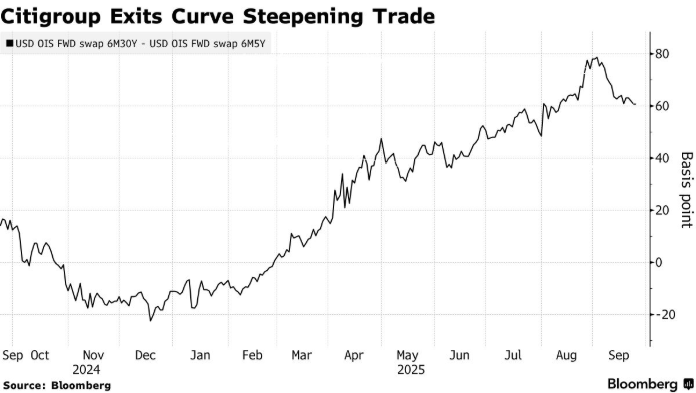
Group 1 - Citigroup's strategists have exited a bet that long-term U.S. Treasuries would underperform short-term Treasuries amid increasing attacks on the Federal Reserve, indicating a reduction in concerns over the central bank's independence [1][3] - The initial recommendation was based on expectations that President Trump's tax and spending policies would inflate government debt, putting pressure on longer-term debt [1][3] - The strategists noted that supply concerns for long-term Treasuries have eased since the trade was initiated in May, and the recent FOMC meeting has marginally reduced worries about the Fed's independence [3] Group 2 - The recent FOMC meeting resulted in a 25 basis point rate cut, with a near-unanimous consensus that surprised some market participants [3] - The only dissenting vote came from a Trump-appointed governor who favored a larger cut, while other previously dovish members aligned with the majority this time [3] - The strategists observed that past easing cycles during soft landing scenarios have been relatively shallow, limiting the potential for a steepening of the yield curve [3]

美元信用风险助黄金沪金涨势未改
Jin Tou Wang· 2025-09-24 02:59
今日周三(9月24日)亚盘时段,黄金期货目前交投于850附近,截至发稿,黄金期货暂报855.42元/ 克,涨幅0.50%,最高触及862.10元/克,最低下探855.12元/克。目前来看,黄金期货短线偏向看涨走 势。 【最新黄金期货行情解析】 打开APP,查看更多高清行情>> 【要闻速递】 在9月的利率决议会议上,美联储内部呈现出显著的意见分歧态势,不过鲍威尔始终展现出沉稳冷静的 姿态。近期,特朗普再度发力,加大对美联储的政策施压强度,此举不仅强化了市场对于美联储长期秉 持"鸽派"政策走向的预期,也对美元的国际公信力构成了更为严峻的挑战。 自今年就任以来,特朗普多次公开指责美联储降息步伐迟缓,甚至曾放出狠话称要罢免鲍威尔的职务。 此外,在8月初美联储理事库格勒提前离任之后,特朗普迅速做出人事安排,任命其经济顾问委员会主 席斯蒂芬·米兰临时接任该职位。当前,美联储理事会共有7名成员,其中沃勒与鲍曼均系特朗普提名人 选。倘若明年鲍威尔卸去主席之位并依惯例辞去理事职务,那么届时由特朗普所任命的理事会成员数量 或将增至5人。这一潜在变化无疑会进一步加深市场对美联储独立性受损的忧虑。 从整体情况来看,尽管面临诸多压力, ...
耶鲁大学调查:超七成美企CEO不满特朗普关税政策
Sou Hu Cai Jing· 2025-09-24 02:32
Core Insights - Approximately 70% of CEOs surveyed believe that Trump's tariffs have harmed their companies [1] - 74% of respondents agree with the court's ruling that the tariffs are illegal [1] - Despite Trump's intention to bring manufacturing back to the U.S., 62% of CEOs have not increased investments in U.S. manufacturing or infrastructure since early April [1] - 80% of CEOs think Trump's request for Federal Reserve Chairman Powell to lower interest rates is not in the best interest of the country [1] - About 70% of respondents believe recent government actions have undermined the independence of the Federal Reserve [1]
美联储9月如期降息但内部存在分歧
Qi Huo Ri Bao Wang· 2025-09-24 01:28
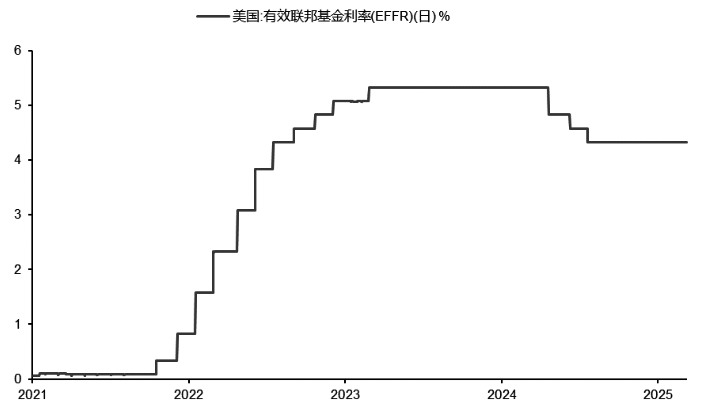
Group 1 - The Federal Reserve announced a 25 basis point cut in the federal funds rate, bringing it to a target range of 4.00% to 4.25%, marking the first rate cut of 2025 and the fourth cut since 2024 [1][2][12] - The decision was supported by 11 out of 12 voting members, indicating a consensus on the need for a rate cut, although there was some internal disagreement regarding the extent of the cut [2][3] - Fed Chairman Powell's statements were characterized as "hawkish," emphasizing the need for risk management and indicating that future rate adjustments would not be made hastily [1][4][6] Group 2 - The Fed's statement highlighted a slowdown in the labor market, with a noted increase in risks to employment, while inflation remains elevated [3][5] - The Fed's economic forecasts showed a divergence among officials regarding future interest rates, with expectations for two more rate cuts this year, but some officials predicting no further cuts [3][4][12] - The labor market has shown signs of significant weakening, with recent data indicating a drop in non-farm payrolls and an increase in the unemployment rate [8][9] Group 3 - The overall inflation rate in the U.S. has shown a slight decline, primarily driven by a decrease in core services inflation, while core goods inflation has increased [7][8] - The Fed's decision to cut rates is seen as a response to the dual pressures of rising inflation and a weakening labor market, with a focus on managing risks associated with these trends [5][9] - The market anticipates further rate cuts in October and December, with expectations for a cautious approach from the Fed moving forward [14][16] Group 4 - The Fed's independence has been a concern amid political pressures, particularly from former President Trump, but Powell has maintained a rational and independent stance [13] - The future trajectory of the Fed's monetary policy will depend heavily on economic data, with a focus on balancing inflation risks against employment risks [14][16] - The outlook for gold prices remains strong in the medium to long term, supported by central bank purchases and a global trend towards de-dollarization, despite short-term pressures from rate cuts [16]
花旗退出美债曲线交易 针对美联储独立性的疑虑降温
Sou Hu Cai Jing· 2025-09-24 01:24
四个月前的建议是基于总统唐纳德·特朗普标志性的税收和支出法案将导致政府债务膨胀,令长债承 压。8月底,特朗普试图罢免美联储理事丽莎·库克,引发外界担心政治干预将危及美联储对抗通胀的信 誉之际,他们加大了押注力度。 令一些市场参与者感到意外的是,在上周的政策会议上,美联储会主席杰罗姆·鲍威尔戮力达成近乎一 致的共识,支持降息四分之一个百分点。特朗普任命的理事米兰是唯一投票支持更大幅度降息的人。 来源:环球市场播报 花旗策略师退出了一项交易建议:该建议押注随着对美联储的攻击加剧,长期美债将表现不佳;他们宣 称,美联储上周几乎一致的政策决定"在一定程度上"减少了外界对该央行独立性的疑虑。 Dirk Willer和Adam Pickett等策略师建议客户,在该交易达到"回调上限"(drawdown limit)后,对30年 利率远期将低于5年期利率的押注"获利了结"。他们在5月以40个基点启动了这笔交易,8月份在72个基 点加码,之后在60个基点退出。 花旗策略师写道,自5月启动贸易谈判以来,供应担忧已变得更加缓和。他们表示,本月的美联储政策 会议"在一定程度上减轻了人们对美联储独立性的疑虑"。 ...
国投期货综合晨报-20250923
Guo Tou Qi Huo· 2025-09-23 03:20
Group 1: Energy Crude Oil - The short - term strategy is to sell at high prices, with the estimated average price of Brent crude in Q4 dropping to $63 per barrel from $67 in Q3. There are still geopolitical risks and supply disturbances [1] Fuel Oil - It is expected to follow crude oil in a weak and volatile pattern. High - sulfur demand is falling, and low - sulfur supply is under pressure, but both lack strong price drivers [19] Natural Gas (implied in LPG) - LPG is expected to trade in a bottom - grinding pattern. Supply has decreased slightly, demand has increased marginally, and the import cost is expected to improve [21] Coal (implied in Coke and Coking Coal) - Coke and coking coal prices are relatively firm due to high iron - water production. However, there is a game between price increases and decreases, and inventory is accumulating [14][15] Bitumen - It showed a relatively small decline in the oil products market. Demand is increasing due to pre - holiday rush work, and inventory is decreasing [20] Group 2: Metals Precious Metals - They are in a medium - term upward trend but should be treated with caution in the short term due to inflation pressure and geopolitical games [2] Base Metals - Aluminum: It is in a callback. Market drivers are weak, and it is necessary to pay attention to whether pre - holiday stocking can drive positive feedback between inventory and spot [3] - Zinc: Short - term rebounds may occur, but the overall strategy is to sell on rebounds due to the supply - demand imbalance during the holiday [6] - Lead: The fundamentals have improved in the short term, but the upward trend is under pressure due to external market supply [7] - Nickel: The supply disturbance has subsided, and the overall trend is weak [8] - Manganese Silicon and Ferrosilicon: In the context of "anti - involution", it is recommended to buy on dips [16][17] Iron and Steel - Steel prices are in a rebound but with limited upside due to weak demand. Iron ore is expected to fluctuate at a high level [12][13] Group 3: Chemicals Polycrystalline Silicon - The short - term futures may face a correction, but there may be a chance for a phased recovery if it stabilizes at the support level [10] Industrial Silicon - It is expected to continue the volatile pattern as the supply - demand contradiction persists [11] PVC and Caustic Soda - PVC may show a weak and volatile trend due to supply - demand imbalance. Caustic soda has a game between weak reality and strong expectations [27] PX and PTA - Their market expectations are weakening, and the processing margins have limited room for repair [28] Ethylene Glycol - It is under pressure due to new device expectations, but the current supply pressure is not large [29] Short - fiber and Bottle - grade Chip - Short - fiber can be considered for long - term allocation, while bottle - grade chip has limited room for processing margin recovery [30] Glass - It is in a pattern of high supply and weak demand. It is recommended to wait and see before the festival and look for long opportunities near the cost [31] 20 - rubber, Natural Rubber, and Butadiene Rubber - It is recommended to wait and see, paying attention to the impact of typhoon weather on supply [32] Urea - Supply is increasing, and the market may continue to be under pressure in the short term [22] Methanol - It is in a weak position in the short term, and attention should be paid to the actual implementation of overseas device gas restrictions [23] Pure Benzene - The reality is okay, but the expectation is weak due to high import expectations and poor downstream profits [24] Styrene - Supply is increasing more than demand, and the price trend is weak [25] Polypropylene and Plastic - They are in a weak and volatile pattern due to the game between supply and demand [26] Group 4: Agricultural Products Grains - Corn futures may continue to be weak at the bottom due to sufficient supply [38] Oilseeds and Oils - Soybean and soybean meal may continue to fluctuate in the short term, and soybean meal can be cautiously bullish in the long term. Soybean oil and palm oil should pay attention to trade trends and can be considered for long - term buying [34][35] Cotton - It is recommended to wait and see after the downward break. New cotton production is expected to be high, but the impact of possible抢购is controllable [40] Sugar - US sugar is under pressure, and the domestic market focuses on the next season's production estimate [41] Fruit - Apple futures are expected to decline in the short term due to expected high inventory [42] Wood - The price increase momentum is insufficient due to weak peak - season demand, and it is recommended to wait and see [43] Pulp - It is in a low - level volatile pattern, and attention should be paid to inventory and warehouse receipt changes [44] Group 5: Others Shipping - The container shipping index may return to the downward channel if the Maersk opening price continues to decline [18] Stock Index - The stock market is in a volatile state, and it is recommended to increase the allocation of technology - growth sectors in the medium term and consider the Hang Seng Technology Index [44] Bond - The bond market shows a structural differentiation, and the yield curve is expected to steepen [45]
特朗普系人马突入美联储,理事会分裂加剧,货币决策陷入政治博弈
Sou Hu Cai Jing· 2025-09-23 03:15
【改写版】 本周二,美联储迎来了一场载入史册的议息会议——这场被华尔街称为三十年来最火药味十足的决策会 议,从开场就弥漫着不同寻常的政治硝烟。 会议前夕,一场惊心动魄的人事变动为这场会议埋下伏笔。白宫首席经济学家斯蒂芬·米兰在参议院以 48:47的刀锋式票数险胜,火速完成宣誓就职程序,填补了前任理事库格勒8月突然离职留下的空缺。令 人玩味的是,库格勒的任期原本应持续至明年,其以赴乔治城大学任教为由的仓促离职引发诸多猜测 ——该校官网至今未见其授课信息,这个反常举动让金融圈议论纷纷。 米兰的任命堪称近年来最具党派色彩的美联储人事变动。共和党议员集体投下赞成票,而民主党方面几 乎全员反对,这种泾渭分明的投票格局实属罕见。与此同时,另一位身处漩涡的理事丽莎·库克在会议 前夕惊险保住职位,上诉法院驳回了白宫的解职动议,这场理事保卫战更凸显当前美联储面临的前所未 有的政治压力。 回望1951年确立央行独立性的《美联储-财政部协议》以来,即便在尼克松时代高达两位数的通胀危机 中,美联储也未曾遭遇如此赤裸裸的政治干预。如今连向来德高望重的主席鲍威尔都难逃政治攻讦,被 公开斥为愚蠢决策者,美联储引以为傲的独立性光环正在急速褪 ...
综合晨报-20250923
Guo Tou Qi Huo· 2025-09-23 01:51
Report Industry Investment Ratings No relevant content provided. Core Views of the Report - The bearish trend in the crude oil market continues, with the estimated average price of Brent crude in Q4 dropping to $63 per barrel from $67 in Q3. The mid - term strategy is to short on rallies. For precious metals, the mid - term upward trend remains, but short - term caution is advised. Different commodities have their own supply - demand situations and price trends, with various investment suggestions for each [1][2]. Summaries by Commodity Energy - **Crude Oil**: The bearish trend persists, with geopolitical risks around the Iran nuclear negotiation and supply disruptions from Ukraine's attacks on Russian energy facilities. It is recommended to hold short positions with out - of - the - money call options [1]. - **Fuel Oil**: High - sulfur demand declines, and low - sulfur supply is under pressure. It is expected to follow crude oil in a weak - side oscillation, with potential price fluctuations due to geopolitical situations [19]. - **Asphalt**: Although crude oil prices are falling, asphalt shows relatively small declines. With increased pre - holiday terminal demand in the north and inventory reduction, the futures price shows a strong - side oscillation [20]. - **Liquefied Petroleum Gas (LPG)**: Supply and demand improve marginally, and the import cost expectation is positive. The market is expected to oscillate at the bottom [21]. Metals - **Aluminum**: The downstream start - up rate is seasonally increasing, but the inventory inflection point has not appeared. There is resistance at the March high, and the pre - holiday inventory and spot feedback should be monitored [3]. - **Cast Aluminum Alloy**: It follows the fluctuation of Shanghai aluminum, with tight scrap aluminum supply and expected tax policy adjustment increasing costs, showing stronger resilience [4]. - **Alumina**: The operating capacity hits a new high, and the inventory is rising. The supply is excessive, and the price is expected to reach the support level around 2,830 yuan [5]. - **Zinc**: LME and domestic inventories are both decreasing. Short - term rebounds may occur, but the overall strategy is to short on rebounds due to the supply - demand imbalance during the holiday [6]. - **Lead**: The fundamentals improve in the short term, but the external market is under pressure. The price is expected to rebound with resistance [7]. - **Nickel and Stainless Steel**: The supply disruption eases, and the overall trend is weak [8]. - **Iron Ore**: The supply is slightly stronger than last year, and the demand is supported by high hot - metal production. It is expected to oscillate at a high level [13]. - **Coke**: There is a game between price cuts and increases. The inventory is increasing, and it is recommended to go long on dips [14]. - **Coking Coal**: The production increases slightly, and the inventory rises. It is recommended to go long on dips [15]. - **Manganese Silicon**: The demand and production are increasing, and it is recommended to go long on dips in the "anti - involution" context [16]. - **Silicon Iron**: The demand is okay, and the supply recovers to a high level. It is recommended to go long on dips [17]. Chemicals - **Polysilicon**: The futures price may face a correction, but there may be a phased repair opportunity if it stabilizes at the support level [10]. - **Industrial Silicon**: The supply surplus expectation remains, and the demand increase is limited. The price is expected to oscillate [11]. - **PVC and Caustic Soda**: PVC has a loose supply - demand pattern and may oscillate weakly. Caustic soda has a game between weak reality and strong expectation, and the month - spread may widen [27]. - **PX and PTA**: The strong supply - demand expectation of PX weakens, and the PTA processing margin repair space is limited. Attention should be paid to the downstream inventory reduction [28]. - **Ethylene Glycol**: The new - device expectation and weak external sentiment put pressure on the price. The supply pressure is not large in reality, but the expectation is weak [29]. - **Short - Fiber and Bottle - Chip**: Short - fiber is recommended for long - position allocation in the near - month contract. Bottle - chip has limited processing margin repair space due to over - capacity [30]. Agricultural Products - **Soybeans and Soybean Meal**: Argentina's export tax cancellation affects the market. The short - term market may oscillate, and long - term cautious optimism is maintained for soybean meal [34]. - **Soybean Oil and Palm Oil**: Argentina's policy changes the market sentiment. In the long - term, considering the biodiesel policy, it is advisable to buy on dips [35]. - **Rapeseed Meal and Rapeseed Oil**: The international rapeseed supply is seasonally loose, and the domestic market is relatively strong. The oil - meal ratio is expected to rise in the short - term [36]. - **Corn**: The new - season corn is expected to be a bumper harvest. The futures price may run weakly at the bottom [38]. - **Cotton**: The new - cotton production may be high, and the demand support is limited. After the price break - down, short - term observation is recommended [40]. - **Sugar**: Brazilian sugar production may remain high, and the domestic market focuses on the next - season's output [41]. - **Apples**: The supply lacks positive drivers, and the short - term price is expected to decline [42]. - **Timber**: The supply may remain low, and the demand in the peak season is weak. The price increase power is insufficient [43]. - **Paper Pulp**: The inventory is high, and the supply is loose. The operation suggestion is to observe or trade in the oscillation range [44]. Others - **Container Freight Index (European Line)**: The spot market is weak, and the price increase is difficult to implement. The盘面 may return to the downward channel [18]. - **Stock Index**: The macro - risk preference is high, and the market style is recommended to increase the allocation of the technology - growth sector and moderately allocate the cyclical style [44]. - **Treasury Bonds**: The debt risk is under control, and the liquidity is expected to be abundant. The yield curve is expected to steepen [45].