新消费

Search documents
联博基金朱良: 看好长久期资产 关注预期差机会
Zhong Guo Zheng Quan Bao· 2025-07-20 20:17
Core Viewpoint - The global equity market is expected to improve in the second half of 2025, but uncertainties and policy changes remain [1] Market Resilience - The A-share market experienced volatility driven by "uncertainty" in the first half of the year, with market fears stemming more from unpredictability than from the disturbances themselves [2] - The actual interest rate is currently at a favorable level, and if it remains in the 1%-2% range, the probability of positive returns for the CSI 800 index in the next year is expected to increase significantly [2][3] Asset Allocation Insights - Chinese investors currently allocate about 12% of their household assets to stocks and funds, compared to approximately 40% for American households, indicating a significant gap [3] - The long-term investability of the Chinese capital market is improving, with an increase in stock buybacks and dividend distributions by listed companies [3] Structural Opportunities - Three main asset categories are highlighted: dividend assets benefiting from declining real interest rates, new productivity focusing on technology-driven private enterprises, and new consumer trends aligned with experiential consumption [4] - The potential for revaluation of private enterprises is emphasized, with recent policies signaling a recovery in capital expenditure and return on equity (ROE) [4] Investment Strategy - The core strategy involves focusing on long-duration assets, which can be categorized into stable cash flow types and sustainable growth types [4] - Diversification in investment is stressed, with a focus on thorough fundamental research to identify individual stocks rather than betting on sectors [7] Future Outlook - The transformation of the Chinese economy is expected to continue, with long-term investment value in the stock market gradually becoming apparent despite short-term uncertainties [6] - The relationship between the Hong Kong and A-share markets is viewed as complementary rather than competitive, with each market serving different capital flows [6]
信达策略:周期股异动是牛市主升浪的信号
Ge Long Hui· 2025-07-20 15:19
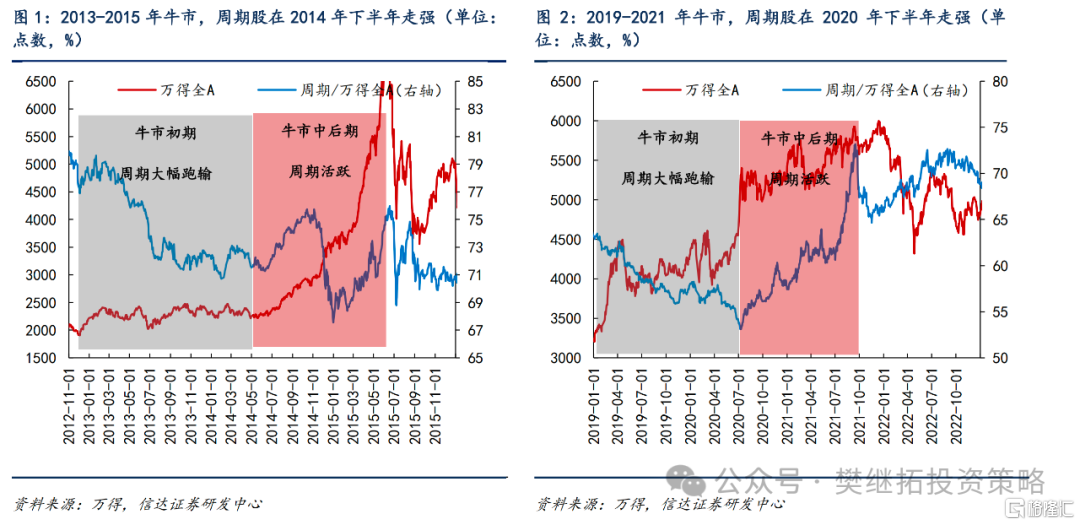
Core Viewpoint - The recent performance of cyclical stocks, such as photovoltaic, steel, and chemicals, indicates a potential signal for the mid-stage main upward wave of the bull market [1][12] Group 1: Historical Context - In previous major bull markets (2013-2015 and 2019-2021), cyclical stocks underperformed in the early stages but became active in the later stages [2][5] - During the mid-stage of the 2014-2015 bull market, cyclical stocks outperformed despite weak economic conditions and declining commodity prices, driven by themes like mergers and acquisitions and state-owned enterprise reforms [2][5] - In the 2020-2021 bull market, cyclical stocks significantly outperformed as the economy stabilized and commodity prices rose [2][5] Group 2: Reasons Behind Performance - The underperformance of cyclical stocks in the early bull market stages is attributed to limited incremental capital, leading to slow price increases, while only a few sectors with strong fundamentals saw gains [9][12] - As the bull market progresses, increased resident capital leads to valuation uplifts across most sectors, with cyclical stocks benefiting from their low valuations in the early stages [9][12] Group 3: Future Outlook - There are two potential scenarios for the future: 1. If economic recovery is weak and supply-side policies take time to impact, cyclical stocks may see 1-2 quarters of excess returns but face volatility afterward [12] 2. If supply-side policies improve quickly and demand-side growth policies show results, cyclical stocks could experience a year-long rally starting from the mid-stage of the bull market [12] - Regardless of the scenario, cyclical stocks are expected to generate excess returns within the next 1-2 quarters [12] Group 4: Current Market Judgments - The current market is characterized by low valuations, weak corporate earnings, and positive policy signals, resembling the early stages of previous bull markets [16] - The market is entering a phase driven by policy improvements and capital inflows, suggesting a broader bull market is likely [16] Group 5: Investment Strategy - The recommendation is to adopt a flexible allocation strategy, increasing exposure to non-bank financials, AI applications, and cyclical stocks, which are expected to show elastic performance in the next six months [18][19] - The focus should shift from a "barbell strategy" to an "elastic strategy," with strong performance anticipated in sectors like new consumption and AI, which are less correlated with the economy [18][19]

一周新消费NO.318|瑞幸×多邻国推出新品;舒淇成为爷爷不泡茶品牌代言人
新消费智库· 2025-07-20 13:00
New Product Launches - Bright Dairy launched the new organic milk ice cream "Guangming Youbei," containing 55% organic milk, with protein content not less than 4.5g/100g [4] - Xueji Snacks and Yili Group introduced a new yogurt product featuring a "milk skin" layer, made from fresh milk sourced from Yili's professional farms [4] - Joyoung released a new red date soy milk powder, made from non-GMO soybeans and red dates, containing 28g of protein per 100g [6] - Yi Bao launched a new 5L packaging of its bottled drinking water, designed for multiple consumption scenarios [6] - Luckin Coffee and Duolingo collaborated to launch a new product, "Green Sand Latte," made with high-quality green beans and IAC award-winning coffee beans [22] Industry Events - Anta opened a new brand experience space called "Anta Home" in Jinjiang, featuring appearances by Olympic champions [9] - Mengniu's high-end ice cream brand Tilan Shengxue officially entered the Hong Kong and Macau markets, becoming the first high-end ice cream brand approved by local authorities [10] - Yuanji Cloud Dumplings announced its first store in Thailand, maintaining its original recipe without local adaptations [12] - Grandpa's Tea appointed actress Shu Qi as its brand ambassador, marking a significant step in brand influence [12] Investment and Financing - The smart beverage retail brand "Pengbei Station" completed a financing round of 50 million yuan, focusing on AIOT solutions for unmanned retail [16] - Qunxing Toys secured 159.47 million yuan in financing, representing 26.25% of the day's buying amount [17] - Jujitang completed a 10 million yuan angel round financing, focusing on health food supply chains [18] - Three Squirrels announced an investment of up to 200 million yuan to upgrade its snack supply chain [19] Food Industry Developments - The new "Shang Jian Wang" tea beverage series from Shan Zha Shu Xia Group features oolong and jasmine tea, with zero sugar, fat, and calories [6] - Farmer Spring launched a new birch tree juice product, currently available only through Sam's Club [24] - DolCas Biotech introduced a chocolate bar containing fish collagen peptides, targeting joint and skin health [26]






最牛涨超130%!这类基金火了,最新研判
中国基金报· 2025-07-20 12:32
Core Viewpoint - The Hong Kong stock market has shown strong performance in 2023, leading global major indices, with thematic funds achieving significant returns, and a structured bull market is expected in the second half of the year, particularly in technology and consumer sectors [1][3][6]. Thematic Funds Performance - Hong Kong thematic funds have demonstrated outstanding performance, with the highest net asset value growth rate exceeding 130% year-to-date, leading the public fund performance rankings [2][3]. - As of July 18, the Hang Seng Index has risen over 23% this year, contributing to the strong performance of thematic funds, with eight out of the top 20 performing funds being Hong Kong thematic funds [3]. Market Drivers - The strong performance of the Hong Kong market is attributed to three main factors: positive changes in the industry, sensitivity to overseas liquidity conditions, and historically low valuations following several years of decline [3]. - The valuation of the Hang Seng Index is projected to be around 9 times PE by the end of 2024, indicating significant upside potential [3]. Investment Opportunities - Fund managers are optimistic about the Hong Kong market, anticipating a structured bull market with a focus on sectors such as AI, new consumption, and robotics [6][8]. - The healthcare sector in Hong Kong is highlighted as a promising investment area, featuring high-quality leaders and various sub-sectors like innovative drugs and internet healthcare [8]. - The consumer sector is also expected to benefit from government policies aimed at boosting consumption and domestic demand, creating new investment opportunities [8]. Fund Company Activity - There has been a surge in applications for Hong Kong thematic funds, with 17 applications received in July alone, indicating growing interest from fund companies [4][5]. - The influx of overseas and domestic capital into the Hong Kong market is seen as a positive sign for future growth, with the market becoming an attractive destination for diversified investment [5].

食饮行业周报(2025年7月第3期):龙头白马持续反弹,大众品Q2业绩表现分化-20250720
ZHESHANG SECURITIES· 2025-07-20 11:52
Investment Rating - The industry rating is maintained as "Positive" [4] Core Views - The rotation between old and new consumption sectors continues, with leading brands in liquor and dairy products rebounding. The performance of mass-market products in Q2 shows divergence, with new consumption-related stocks experiencing rapid growth despite previous adjustments in performance expectations. Traditional channel reforms have impacted some stocks, leading to ongoing adjustments in performance [1][3][33] - The liquor sector is expected to have limited downside potential for leading companies, with high ROE, dividends, and cautious profit assumptions indicating a valuation floor. Recommended stocks include Guizhou Moutai, Shanxi Fenjiu, and Luzhou Laojiao [2][12] - New consumption trends are anticipated to continue, with potential for recovery in the second half of the year. Focus on low-priced or undervalued stocks with future catalysts, including Wei Long, Yili, and Wancheng Group [1][3][33] Summary by Sections Liquor Sector - The liquor sector remains at a low point, with a focus on potential policy catalysts and rebound opportunities. Leading brands with strong market positions are prioritized for investment. Recommended stocks include Guizhou Moutai, Wuliangye, and Shanxi Fenjiu [2][12] - Recent performance shows a positive trend, with Luzhou Laojiao, Yanghe, and Jiu Gui Jiu leading in gains, while Jinzhidao and Huangtai Jiuye faced declines [5][39] Mass-Market Products - The new consumption paradigm is reshaping the food and beverage investment landscape. Despite a recent pullback, the long-term trend remains positive, with clear opportunities for continued investment. Focus on stocks that align with new consumption trends, such as Wei Long, Yili, and Wancheng Group [3][33] - The mass-market sector has seen significant fluctuations, with stocks like Huangshi Group and Guoquan showing strong gains, while stocks like Ganyuan and Gu Ming faced notable declines [39][42] Performance Metrics - From July 14 to July 18, the Shanghai Composite Index rose by 1.09%, with non-dairy beverages and liquor sectors showing gains of 2.16% and 1.30%, respectively. Conversely, frozen foods and snacks experienced declines of 2.26% and 1.10% [39][40] - The valuation levels for the food and beverage industry have adjusted, with the liquor sector showing the highest valuation increase this week [43]






上半年客流量突破800万,东郊记忆展演、文化、跨界共生激活消费|四川经济热观察
Sou Hu Cai Jing· 2025-07-20 11:12
Economic Performance - Sichuan Province's GDP grew by 5.6% year-on-year in the first half of the year, with an acceleration of 0.1 percentage points compared to the first quarter [1] - The service sector's value added increased by 6.0%, contributing 62.3% to the overall economic growth [1] Consumer Trends - Chengdu's Dongjiao Memory Park has seen a significant increase in visitor numbers, with over 800 million visitors in the first half of 2025, following a trend of rapid growth [1] - During the May Day holiday, the park received over 600,000 visitors, a year-on-year increase of 15.6% [1] New Consumption Models - The park has introduced over 300 businesses in music, fashion, and other sectors, contributing to a vibrant consumer environment [3] - The opening of the 3rd Warehouse has attracted a diverse range of niche brands, enhancing the park's appeal [5][8] Cultural Integration - Dongjiao Memory Park combines festival economies with public art, creating a unique cultural experience that attracts visitors [9] - The park's public music initiative has hosted 106 performances, expanding the cultural offerings available to the public [11] Real Estate and Commercial Development - The park is part of a broader trend in Chengdu's real estate market, with innovative commercial spaces that integrate various entertainment and leisure activities [13] - The local government emphasizes the development of distinctive commercial landmarks to enhance urban consumption [13]

周受资给加拿大工业部长写信,请求紧急面谈;估值 6.5 亿美元,这个产品做成了“美版公众号”丨Going Global
创业邦· 2025-07-20 10:37
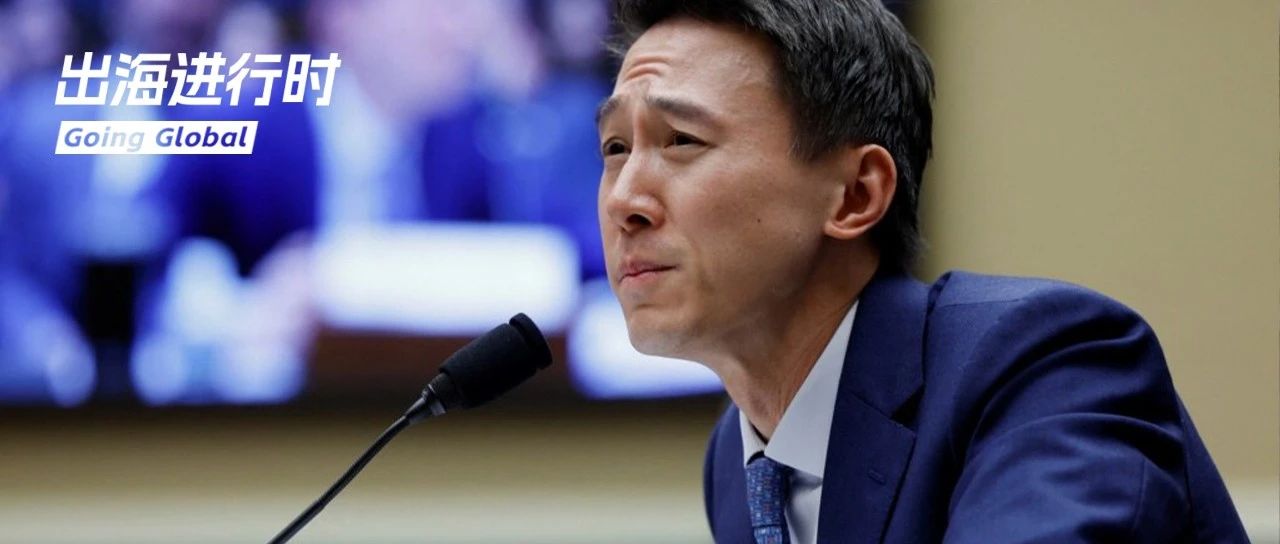
Core Insights - The article highlights significant developments in the global expansion of companies, particularly focusing on TikTok's negotiations in Canada, Blackstone's withdrawal from the TikTok US acquisition, and the rapid localization efforts of Temu in the UK [3][5][9][11]. Group 1: TikTok Developments - TikTok is urgently seeking negotiations with the Canadian government to avoid the shutdown of its local operations, which were ordered due to national security concerns [5]. - Blackstone has reportedly exited the consortium aimed at acquiring TikTok's US operations, adding uncertainty to the ongoing negotiations [9]. Group 2: Temu's Expansion - Temu plans to increase the proportion of local orders in the UK to 50% by the end of 2025, currently boasting 22 million users in the region [11]. - The platform has seen a 68% year-over-year increase in global monthly active users, reaching 417 million, with Latin America showing a remarkable 122% growth [11][12]. Group 3: SHEIN and Manus - SHEIN's India app has surpassed 2 million downloads within six months of its relaunch, with over 20,000 products available on the platform [14]. - Manus has disclosed its technical experiences while transitioning to overseas markets but did not address the reasons for its exit from China [16][17]. Group 4: Company Challenges - The lawnmower robot company Supoman has filed for bankruptcy, attributed to technological stagnation and declining market share [19]. - Inditex plans to reintroduce its budget brand Lefties in France to compete with low-cost rivals like SHEIN [25]. Group 5: Investment and Financing - Several Chinese venture capital firms are restarting USD fundraising, targeting over $2 billion, focusing on AI and new consumer sectors [32][34]. - Substack has completed a $100 million Series C funding round, increasing its valuation by nearly 70% since 2021 [34][35]. Group 6: Market Entries and Regulations - Couche-Tard has abandoned its $47 billion acquisition of Seven & i Holdings due to negotiation breakdowns [27]. - Thailand has classified 19 e-commerce platforms, including Shopee and Lazada, as "high-risk," subjecting them to mandatory regulations [31].
投顾周刊:外资机构集体上调中国2025年GDP增速预测
Wind万得· 2025-07-19 22:25
Group 1 - The return of "AI players" has led to a strong performance in the AI computing sector, with several actively managed equity products seeing significant net value increases, surpassing related ETF products. The light communication and PCB sectors have experienced rapid growth due to the AI boom, and Chinese companies are expected to benefit from the global AI development dividends [2][3] - High-performing funds have capitalized on emerging trends, with many focusing on innovative pharmaceuticals, new consumption, and artificial intelligence sectors. The emergence of niche products such as short drama-themed funds and controllable nuclear fusion funds indicates a diversification in investment strategies [2][3] - In the second quarter, many high-performing funds increased their equity asset allocations, with technology and pharmaceuticals becoming core investment directions. This shift reflects a strategic response to structural opportunities in the market [3] Group 2 - Foreign institutions have collectively raised their GDP growth forecasts for China in 2025, with Morgan Stanley increasing its prediction from 4.5% to 4.8%, Goldman Sachs from 4.6% to 4.7%, and UBS from 4% to 4.7% [3][5] - Citigroup has upgraded the ratings for the Chinese and South Korean stock markets to "overweight," projecting the Hang Seng Index to reach 25,000 points by the end of this year and 26,000 points by mid-next year, while the CSI 300 Index is expected to hit 4,200 points by year-end and 4,350 points by mid-next year [4][5] Group 3 - NVIDIA has confirmed the resumption of H20 chip sales in China, with CEO Jensen Huang stating that the U.S. government has assured the granting of licenses, and NVIDIA aims to initiate deliveries promptly [6] - Recent global stock market performance has shown mixed results, with the Hang Seng Index and Shenzhen Component Index in China both rising over 2%, while the U.S. markets also saw gains in the Nasdaq and S&P 500 indices [7] Group 4 - The bond market has shown varied performance, with yields on 1-year, 5-year, and 10-year Chinese government bonds all declining, while the 10-year U.S. Treasury yield increased slightly [9][10] - Recent data indicates that fixed-income products dominate the bank wealth management market, with fixed-income plus products accounting for 48.34% of new offerings and 61.23% of total assets, reflecting a preference for stable returns and low-risk assets [14][15]

徐翔旗下私募规模跃升3级!蒙玺、泓湖等16家私募荣升百亿!328家私募年内规模跃升!
私募排排网· 2025-07-19 10:04
Core Viewpoint - The A-share market maintained a sideways trend in the first half of 2025, with significant sector differentiation, while private equity securities investment funds in China saw an increase in total scale [2][3]. Group 1: Market Performance - In the first half of 2025, the A-share market showed a slight increase, with the Shanghai Composite Index rising by only 2.76% [2]. - The US stock market exhibited a V-shaped recovery, with both the Nasdaq and S&P 500 indices increasing by over 5% [2]. - The Hong Kong stock market performed relatively strongly, with the Hang Seng Index rising nearly 20% [2]. Group 2: Private Equity Fund Scale - As of June 2025, the total scale of private equity securities investment funds in China reached 5.56 trillion yuan, an increase of approximately 350 billion yuan compared to the end of 2024 [2][3]. - The number of private equity fund managers decreased to 7,761, down by 239 from the end of 2024, while the number of funds decreased to 83,356, down by 4,477 [2]. Group 3: Performance of Private Equity Firms - In the first half of 2025, 328 private equity firms achieved a management scale increase of at least one tier compared to the end of 2024 [3][4]. - Sixteen firms entered or re-entered the 100 billion yuan private equity club, with quantitative firms accounting for nine and subjective firms for six [4]. - Notable firms such as Fusheng Asset and Mengxi Investment reported average returns exceeding ***% in the first half of the year [4][8]. Group 4: Investment Strategies and Locations - By core strategy, 203 firms focused on stock strategies, 48 on multi-asset strategies, 33 on futures and derivatives, and 15 on bond strategies [4]. - Geographically, Shanghai had the highest concentration of firms with 127, followed by Beijing with 50 and Shenzhen with 41 [4]. Group 5: Top Performing Private Equity Firms - The top five private equity firms by performance in the first half of 2025 were Tongben Investment, Luyuan Private Equity, and Chengyao Private Equity, among others [15][20]. - Fusheng Asset, a subjective stock strategy firm, achieved the highest average return in the first half of 2025 [8][15].

“公奔私”浪潮又要来?来哪里?高毅、睿郡、睿璞成聚集地!陆航、梁文涛、凌鹏等业绩领先!
私募排排网· 2025-07-19 08:39
Core Viewpoint - The article discusses the increasing trend of public fund managers transitioning to private equity, highlighting the reasons behind this shift and the performance of these managers in their new roles [2][4]. Group 1: Manager Transition Trends - As of July 16, over 2,700 changes in fund managers have occurred this year, with 194 resignations and 307 new appointments [2]. - Notable fund managers such as Bao Wuke, Zhou Haidong, and Zhang Yufan have opted for complete resignations, with many moving to private equity [2]. - By June 2025, there are 863 private fund managers with public fund backgrounds, managing 320 products with an average return of 11.17% in the first half of the year [2]. Group 2: Private Fund Manager Performance - The majority of these transitioning managers are found in smaller private funds, with 555 managing funds between 0-500 million [2]. - High Yi Asset, Rui Jun Asset, and Qin Chen Asset are among the private equity firms with the most "public-to-private" fund managers [2]. - The top three performing "public-to-private" fund managers in the first half of the year are Lu Hang from Fu Sheng Asset, He Xiao from Xiang Cheng Capital, and Xu Shuang from Zi Ge Investment [5][8]. Group 3: Performance Rankings - In the first half of the year, 34 "public-to-private" fund managers had three or more products that met ranking criteria, with the top performers achieving significant returns [5][6]. - The article provides detailed rankings of these managers, including their backgrounds and performance metrics, emphasizing the successful transition from public to private sectors [9][12].