硬科技

Search documents
研报掘金|华泰证券:看好小米在硬科技上的持续投入 维持“买入”评级
Ge Long Hui A P P· 2025-09-29 05:47
Group 1 - The core viewpoint of the report is that Xiaomi's continued investment in hard technology (chips, AI, systems) is expected to lay a solid foundation for the development of its ecosystem encompassing vehicles and homes [1] - The target price for Xiaomi is maintained at HKD 65.4, corresponding to a 30 times price-to-earnings ratio for 2026, with a "Buy" rating upheld [1] - The forecast for Xiaomi's net profit attributable to shareholders for 2025, 2026, and 2027 is maintained at CNY 44.31 billion, CNY 52.63 billion, and CNY 67.12 billion respectively, reflecting a stable improvement in the gross margin of its automotive business [1]


国泰君安国际硬科技投资步入收获期,地平线千亿市值彰显战略眼光
Ge Long Hui· 2025-09-29 00:34
Group 1 - Core viewpoint: Everbright Securities has seen a stock price increase due to its early investments in "hard technology" sectors, attracting market attention towards brokerage equity investments [1] - The company has strategically positioned itself in high-growth sectors such as AI chips, autonomous driving, and lidar technology, benefiting from a valuation re-rating [1][2] - Guotai Junan International has been recognized for its systematic layout in emerging technology sectors since establishing its private equity team in 2020, focusing on areas like new energy and robotics [1][2] Group 2 - Guotai Junan International's investment strategy emphasizes early positioning and deep involvement in technology projects, ensuring a focus on technological leadership and market potential [2] - The company has made significant investments in notable firms such as Horizon Robotics and Innovusion, showcasing its commitment to the hard technology sector [2][3] - The investment in Horizon Robotics, which has seen a stock price increase of over 140% since its IPO, is highlighted as a representative success of Guotai Junan International's strategy [3] Group 3 - Guotai Junan International's technology investments are entering a harvest phase, with projects transitioning from early investment to large-scale production, significantly boosting overall investment returns [4] - The company has reported a 317% year-on-year increase in investment management income, reaching 8.83 billion HKD, indicating strong performance in its private equity business [4][5] - The firm is enhancing its financial service ecosystem, creating synergies between technology investments and core business areas such as wealth management and corporate financing [4][6] Group 4 - Wealth management commission income has increased by 56% year-on-year to 2.79 billion HKD, with fund management fees rising by 110% [5] - Corporate financing income has also seen a 69% increase, with underwriting commissions growing by 85%, reflecting the successful integration of private equity returns into broader business lines [5][6] - Guotai Junan International is effectively converting single project returns from private equity into comprehensive income across multiple business lines [6] Group 5 - Looking ahead, the ongoing interest in technology sectors such as AI and autonomous driving is expected to attract further capital market attention, positioning Guotai Junan International to capture innovation dividends [7] - The company's proactive investment strategy, mature risk control system, and ability to create business synergies are anticipated to support its long-term sustainable growth [7]
科创板汇聚创新动能更好服务高水平科技自立自强
Zheng Quan Ri Bao· 2025-09-28 16:08
Core Insights - The Shanghai Stock Exchange (SSE) held a conference focusing on the implementation of the "1+6" policy measures for the Sci-Tech Innovation Board, aiming to enhance the attractiveness and inclusiveness of the capital market [1] - Over 90% of companies listed on the Sci-Tech Innovation Board received support from equity investment institutions before going public, highlighting the collaborative nature of technological innovation involving multiple stakeholders [1] Group 1: Policy and Market Support - The SSE is committed to improving communication with market institutions to better implement the "1+6" policy and foster a favorable capital market ecosystem [1] - The Sci-Tech Innovation Board has supported 589 tech companies with a total IPO fundraising amount exceeding 925.7 billion yuan and refinancing exceeding 226.9 billion yuan, cumulatively supporting over 1 trillion yuan [2] - The board focuses on strategic emerging industries, with over 80% of companies in key technology sectors like integrated circuits and biomedicine, creating a demonstration effect that strengthens related industrial chains [2] Group 2: Recent Developments - The introduction of the "1+6" reform measures has led to the registration of three unprofitable tech companies under the new standards, indicating a more inclusive approach to IPOs [2] - The SSE has seen a notable increase in IPO project efficiency, exemplified by the 88-day process for the IPO application of Moore Threads Technology [2] - Wuhan Heyuan Biotechnology Co., Ltd. is the first company to initiate its issuance under the new standards, marking a significant milestone for the Sci-Tech Innovation Board [3] Group 3: Mergers and Acquisitions - The SSE has optimized its merger and acquisition mechanisms, with over 300 companies issuing Sci-Tech bonds totaling 1.17 trillion yuan since the pilot program began in 2021 [4] - The "Merger Six" policy has led to 111 new major asset merger and acquisition transactions, with a total transaction value exceeding 300.7 billion yuan [4] - Traditional companies are increasingly using mergers to transform and upgrade, with nearly 30 transactions aimed at transitioning from traditional industries to high-tech sectors [4]
帮主郑重:周末政策密集发力,“中国版英伟达”过会,中长线该盯啥?
Sou Hu Cai Jing· 2025-09-28 15:35
Group 1 - The central bank's third-quarter meeting emphasized maintaining ample liquidity and reducing social financing costs, indicating a stable policy environment for long-term investors [3] - Industrial enterprises reported a 20.4% increase in profits for August, with cumulative profits turning positive, signaling a genuine economic recovery supported by improved structures across various sectors [3] - Several industries received favorable policies, including high-end rare earth materials, AI-driven transportation, and digital economy support for quality enterprise financing, highlighting a shift towards high-end manufacturing and technological innovation [4] Group 2 - The approval of "China's version of Nvidia," Timor Thread, within 88 days reflects the growing support for hard technology in the Sci-Tech Innovation Board, indicating a vibrant domestic GPU market [4] - Upcoming economic indicators, such as the PMI on September 30, are crucial for confirming economic recovery, while external factors like U.S. government stability and non-farm payroll data will influence global capital flows [5] - The recent news suggests a clear direction: macroeconomic stability, economic recovery, and a policy focus on technology and high-end manufacturing, encouraging long-term investors to concentrate on quality sectors with policy support and improving profitability [5]


摩尔线程上市加速是资本点赞硬科技
Bei Jing Shang Bao· 2025-09-28 15:23
Group 1 - The IPO process of Moore Threads has accelerated, taking only 88 days from acceptance to approval, highlighting the effectiveness of capital market reforms in supporting technological innovation [1] - Moore Threads is recognized as a typical representative of hard technology enterprises, and its listing path exemplifies the adaptation of capital markets to technological innovation [1] - The approval date of Moore Threads coincides with the 100-day mark of the implementation of the "1+6" policy series for the Science and Technology Innovation Board, demonstrating the synergy between institutional innovation and industrial demand [1] Group 2 - The capital market's acceleration channel is not merely a "fast track" but an "elite track," where high-quality enterprises with significant technological content can benefit from expedited listing processes [2] - Continuous policy benefits are paving the way for companies like Moore Threads, with reforms in financing that focus on the development of new productive forces [2] - The evaluation criteria for companies are shifting from a singular focus on profitability to a long-term value orientation, allowing unprofitable hard technology companies to emerge as future capital stars [2][3] Group 3 - Unprofitability does not equate to a lack of excellence, especially for technology companies that typically face long R&D cycles and significant investment [3] - The "elite track" in the capital market is selective, requiring a combination of strong technology and market potential as the basis for policy support and capital interest [3] - Moore Threads aims to raise 8 billion yuan in its initial public offering, supported by its high technological content and increasing revenue, which provides strong persuasion in the capital market [3]
【西街观察】摩尔线程上市加速是资本点赞硬科技
Bei Jing Shang Bao· 2025-09-28 14:25
资本市场的加速通道从来不是"快车道",而是"优才道"。 从受理到过会仅用时88天,过会当晚提交注册,摩尔线程IPO进程加速度,"国产GPU第一股"距迈入资 本市场仅差临门一脚。 毋庸置疑,摩尔线程是硬科技企业的典型代表,它的上市路径是制度创新提升资本市场对科技创新适配 性的具体体现。 摩尔线程IPO过会的日子,正好是科创板深化改革"1+6"系列政策落地100天,深刻诠释了资本市场政策 改革对科技创新的精准适配,同时也是制度创新与产业需求的同频共振。 然而,资本市场的"优才道"不是普惠通道,唯有优中择优。"技术+市场"的双重底气,正是政策倾斜与 资本青睐的基础所在。 以摩尔线程为例,"含科量"高自然是标准之一,同时攻坚GPU核心技术壁垒,构建自主可控技术和产品 体系以及潜力巨大的未来市场空间,都是额外的加分项。 首发融资资源很宝贵,摩尔线程首发拟募资80亿元不是小数,但其高"含科量"以及呈现上升趋势的业绩 和快速增加的营业收入,在资本市场上有着足够的说服力。 当然,相比普通的上市公司,市场对"摩尔线程们"的期待值更高,在各个细分行业冲击成为具备国际竞 争力的领军企业,是对它们的期许。 "摩尔线程们"的加速上市窗 ...
银行理财子权益投资加码,年内调研“硬科技”超2000次
Di Yi Cai Jing· 2025-09-28 13:01
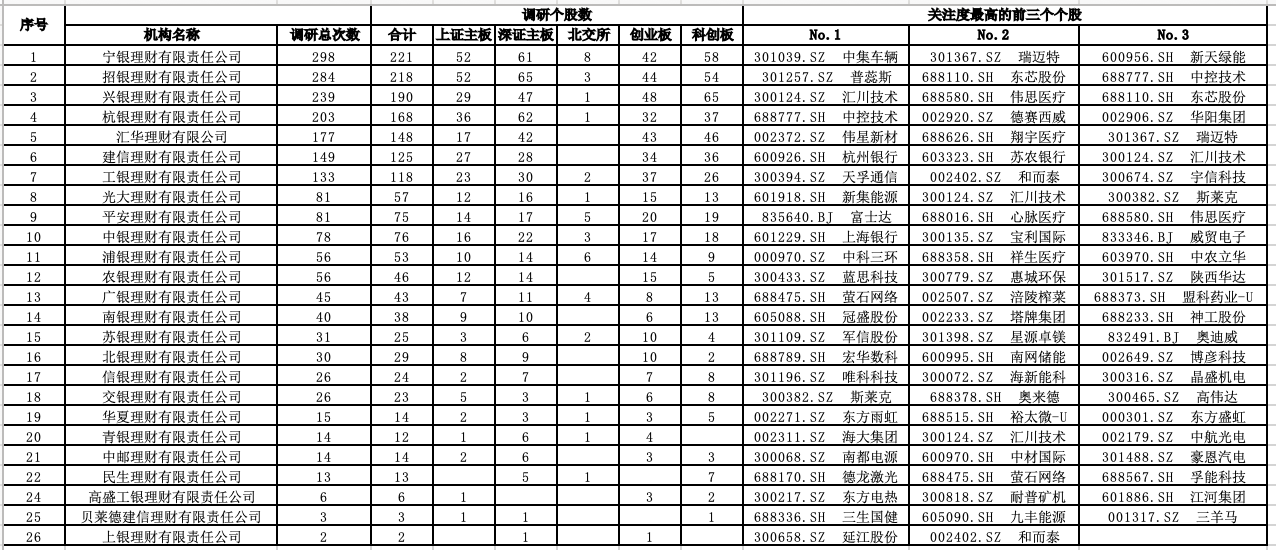
Group 1 - The issuance of equity and mixed financial products has significantly increased in 2025, with over 300 products currently available in the market [1][5] - As of September 2025, wealth management companies have conducted over 2,100 surveys of A-share listed companies, with a focus on the ChiNext and STAR Market, accounting for nearly half of the total surveys [2][4] - The active engagement of wealth management companies in surveys reflects a strategic shift towards active management and equity investment, influenced by macroeconomic conditions and changing client demands [1][4] Group 2 - The number of equity and mixed financial products issued in 2025 reached 259, with a total scale of 727 billion yuan, surpassing the entire issuance scale of the previous year [5][6] - The focus on "hard technology" companies has emerged, with frequent surveys conducted on firms like Zhongkong Technology and Dongxin Co., indicating a trend towards sectors with strong growth potential [4][6] - The current market environment shows a preference for "fixed income plus" products, as wealth management companies seek to meet client demand for higher risk-return profiles [5][6] Group 3 - The direct equity allocation scale for wealth management products dropped to a five-year low in the first half of 2025, while indirect allocation through funds reached a five-year high [6][7] - The issuance of mixed and "fixed income plus" products has significantly increased since August 2025, with expectations that total equity allocation will exceed 100 billion yuan in the latter half of the year [7] - The construction of equity investment capabilities within wealth management companies is deemed crucial for meeting the increasing client demand for equity investments as market conditions improve [7]
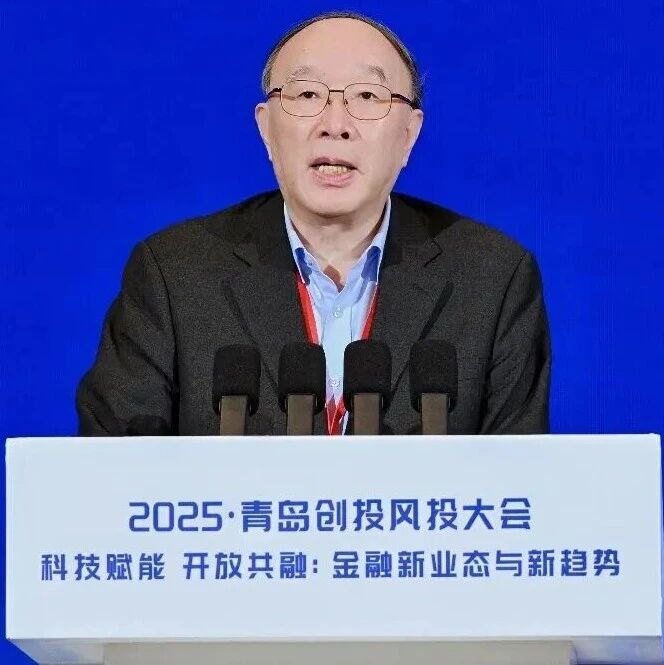
黄奇帆:投早投小投长投硬科技,不从生产性服务业切入基本上是南辕北辙
和讯· 2025-09-28 08:31
Core Viewpoint - The core viewpoint emphasizes the importance of investing in productive service industries, particularly in hard technology, as a means to foster high-tech enterprises and drive economic growth [2][3][4]. Summary by Sections Productive Service Industry - The productive service industry provides intermediate services to other sectors, indirectly promoting economic growth by enhancing production efficiency and resource allocation [2][3]. - This industry includes logistics, ICT services, financial services, R&D, human resources, and legal services, among others [2]. Economic Impact - The productive service industry is a key driver of innovation and profit in manufacturing, contributing significantly to GDP growth [3][4]. - In the U.S., the share of productive service industries in GDP increased from 10% in 1950 to 48% in 2023, while in China, it rose from 10% in 1980 to approximately 30% in 2024 [3][4]. Growth Rates - The average annual growth rate of the productive service industry from 2021 to 2023 was 12.1%, significantly outpacing the overall GDP growth rate of around 5% during the same period [4]. - This sector has been identified as crucial for local GDP growth, with a focus on high-tech industry development [4]. Unicorn Companies - Many unicorn companies are formed within the productive service industry, which is a major growth driver in the U.S. stock market, accounting for 30% of its total market value [5][6]. - Major tech companies like Apple and Microsoft are seen as chain-head enterprises in the productive service industry, leveraging their services to generate substantial profits [5][6]. Investment Recommendations - Investment funds should focus on five types of productive service enterprises: small and specialized firms, leading companies in the sector, hybrid firms like Haier, industrial internet platforms, and chain-head enterprises [8][9][10]. - Early, small, and long-term investments in these companies are recommended to foster the emergence of new trillion-dollar market cap companies in China [10].
国联民生承销保荐:深挖企业长期发展潜力,筛选优质科创标的
Jing Ji Guan Cha Wang· 2025-09-28 08:24
Core Viewpoint - Guolian Minsheng (601456) actively responds to the "Eight Policies for the Sci-Tech Innovation Board" and "Six Policies for Mergers and Acquisitions," seizing opportunities in IPOs and mergers and acquisitions through a series of pragmatic measures and strategic layouts in the capital market [1] Group 1: IPO Strategy - The company is deepening the segmentation of the investment banking industry, focusing on key industries supported by national strategies to enhance service competitiveness for niche industry companies [1] - There is an emphasis on understanding and uncovering the investment value of enterprises to supply high-quality investment targets to the capital market [1] Group 2: Mergers and Acquisitions - A dedicated department has been established, along with a company-wide platform for integrating merger opportunities, to systematically compile and organize various merger resources and business opportunities [1] - The aim is to achieve efficient information flow and sharing within the organization [1] Group 3: Focus on Unprofitable Enterprises - The company plans to construct a new value assessment system for project selection and evaluation, shifting focus from traditional profit indicators to a deep exploration of "hard technology" attributes and long-term development potential [1] - There is a commitment to thoroughly analyze the technological barriers and commercialization paths of enterprises, using detailed data to substantiate growth logic while repeatedly verifying and clarifying risks to avoid the entry of "pseudo-technology" companies into the market [1]

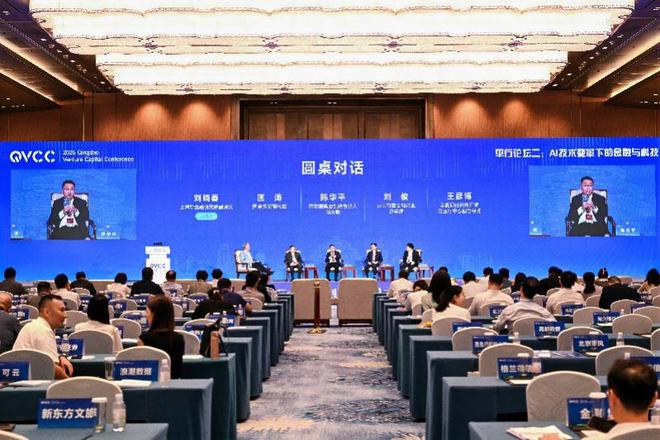
刘晓春谈科技与金融:科技要对接真需求,谨防被“割韭菜”
Nan Fang Du Shi Bao· 2025-09-28 06:17
Group 1 - The 2025 Qingdao Venture Capital Conference highlighted the trend of technology investment, particularly in artificial intelligence, which is attracting a significant portion of investment funds while other sectors remain relatively quiet [1][4] - The "2025 Venture Capital Industry Annual White Paper" indicates a noticeable concentration of capital in the global venture capital market by mid-2025, with a shift in China's venture capital industry towards a new paradigm focused on hard technology innovation and "patient capital" [1][9] - Liu Xiaochun, Vice President of Shanghai New Finance Research Institute, emphasized the importance of technology addressing real needs and the necessity to guard against risks associated with technological investments [1][4] Group 2 - Liu Xiaochun discussed stablecoins, comparing them to traditional payment methods, and highlighted that their utility is limited to specific scenarios, particularly where traditional currency transactions are hindered [4][5] - He warned against the speculative nature of stablecoins and the potential for exploitation, citing a recent Ponzi scheme involving a stablecoin that resulted in significant financial losses for investors [5][8] - The trend of investing in hard technology is gaining momentum, with encouragement from the government for early, small, and long-term investments in this area, despite the challenges posed by technological barriers and rapid iterations [8][9] Group 3 - The ongoing U.S.-China tech competition is creating substantial market opportunities for domestic innovation and replacement in critical technology sectors, such as chip design and new energy vehicles [9] - Liu Xiaochun noted that technology requires financial backing for growth, and the integration of technology and finance is crucial for the success of tech enterprises [9] - While technology can enhance risk management in financial institutions, it also introduces new types of risks, necessitating a balanced approach to risk management that does not solely rely on technology [9]