国补

Search documents
“国补”将继续!1380亿元中央资金将分批下达
中国基金报· 2025-06-19 03:58
Core Viewpoint - The "National Subsidy" program for replacing old consumer goods is ongoing, with a total of 3,000 billion yuan allocated for 2023, aimed at stimulating consumer spending and supporting economic growth [6][8]. Group 1: National Subsidy Program Overview - The program has seen a significant increase in funding, with the special long-term bonds for subsidies rising from 1,500 billion yuan last year to 3,000 billion yuan this year [5]. - The distribution of the 3,000 billion yuan will be based on various factors, including local population, GDP, and previous performance in implementing the subsidy program [5][6]. - As of May 31, 2025, the program has generated a total sales volume of 1.1 trillion yuan across five major categories, with approximately 175 million subsidies issued to consumers [7]. Group 2: Regional Implementation and Consumer Response - There have been discussions on social media regarding temporary unavailability of subsidies in regions like Chongqing, Jiangsu, and Hubei, but officials confirmed that the program is not being canceled [2][3]. - Local authorities are actively managing the subsidy distribution, with some regions implementing limits on the issuance of subsidy vouchers to ensure sustainability [3][5]. - In Hubei, as of June 11, 2023, the total sales volume of replaced products reached 33.58 million units, generating a total sales amount of 41.483 billion yuan [6]. Group 3: Economic Impact and Future Outlook - The program is seen as a crucial policy for promoting consumption and expanding domestic demand, with experts noting its positive effects on consumer behavior and market vitality [6][8]. - The ongoing funding and optimization of the program are expected to continue benefiting consumers and driving sales in related industries [8].


“国补”将继续!1380亿元中央资金将分批下达
财联社· 2025-06-19 03:15
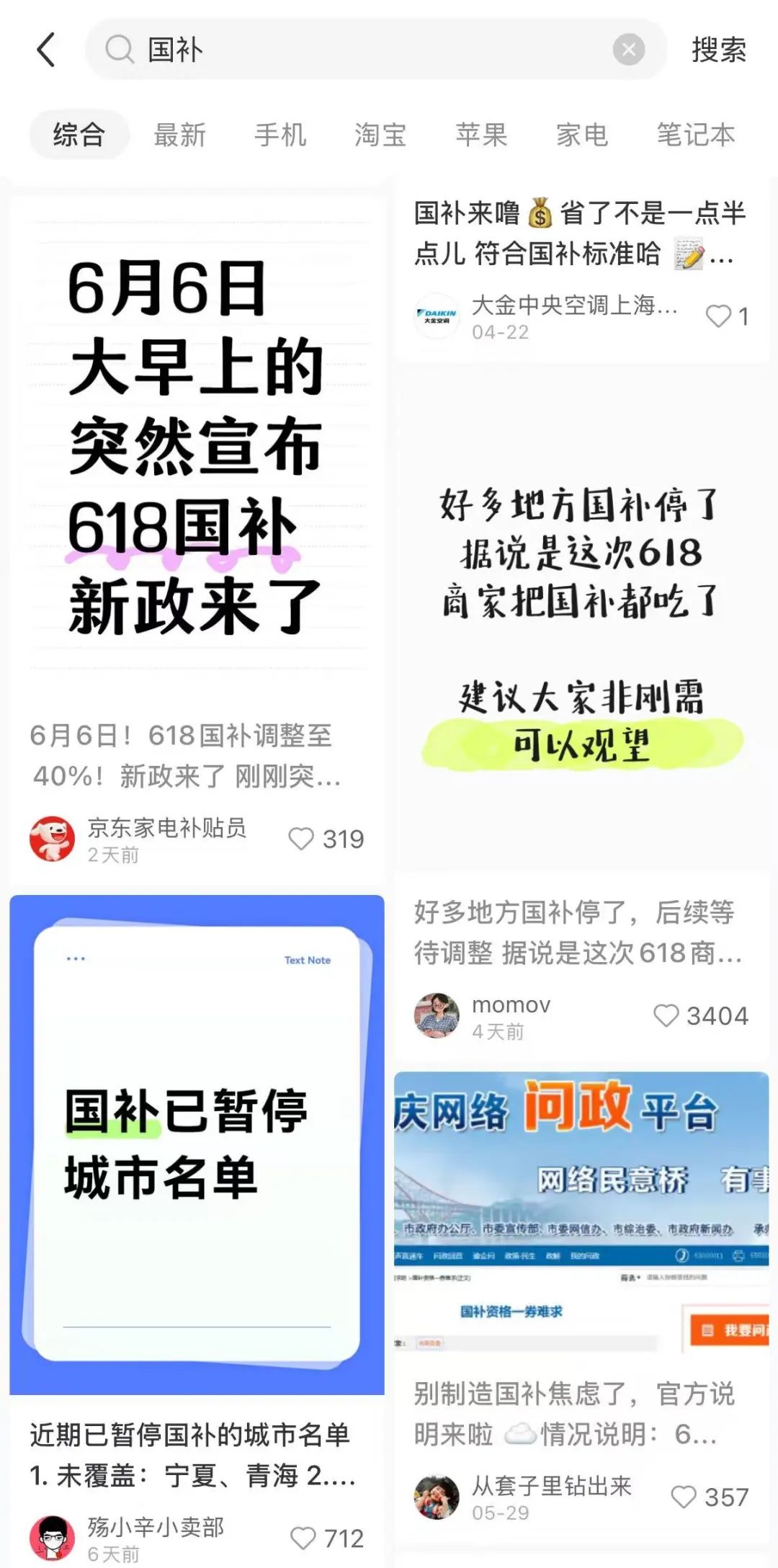
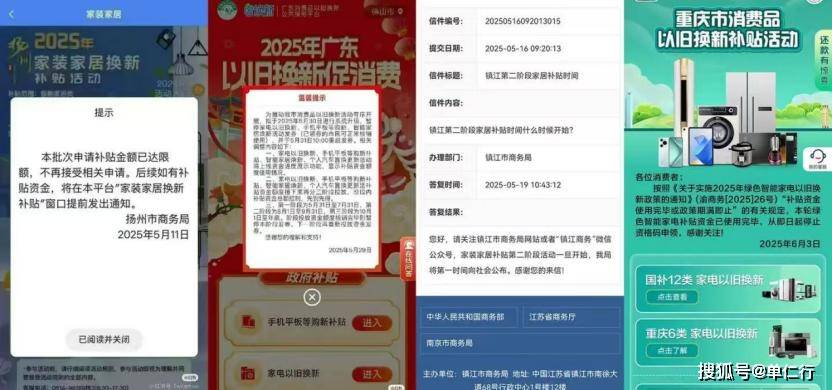
后续还有1380亿元中央资金将分批有序下达,"国补"将继续惠及广大消费者 "618"期间,线上线下促销活动持续多日,消费者对于以旧换新的热情不减。然而,社交媒体 也出现一些关于部分地区暂时无法申领"国补"的讨论。针对相关热点话题,记者在多地进行了 采访。 5月底以来,关于重庆、江苏、湖北等地"国补"暂时无法领取的讨论,在社交媒体上引发关 注。 记者查阅云闪付App重庆消费品以旧换新页面,一则公告提及绿色智能家电、家装厨卫"焕 新"27个小类补贴资金已使用完毕。 近日在登录淘宝的国补专区时,记者也看到,江苏省的页面曾出现"江苏国补活动升级中,升 级期间您将无法领取"的提示。京东国补专区湖北省的页面也曾出现"湖北智能家居国补活动升 级中"等提醒。 正是基于这些表述,部分网友开始猜测,一些地方"国补"是否就此停止? 记者通过调研发现,在国家确定补贴规则"大框架"的基础上,各地拥有一定的自主权,可以确 定国补落地的"小细节",如具体如何申领使用补贴等。 中国社科院财经战略研究院财政研究室主任、研究员何代欣认为,少数地区政策实施进度较 快,跟当地消费结构和消费者积极性有关。"这也说明市场对'国补'的需求旺盛,政策激发了 ...
网传上海“国补”停发消息不实
news flash· 2025-06-19 03:05
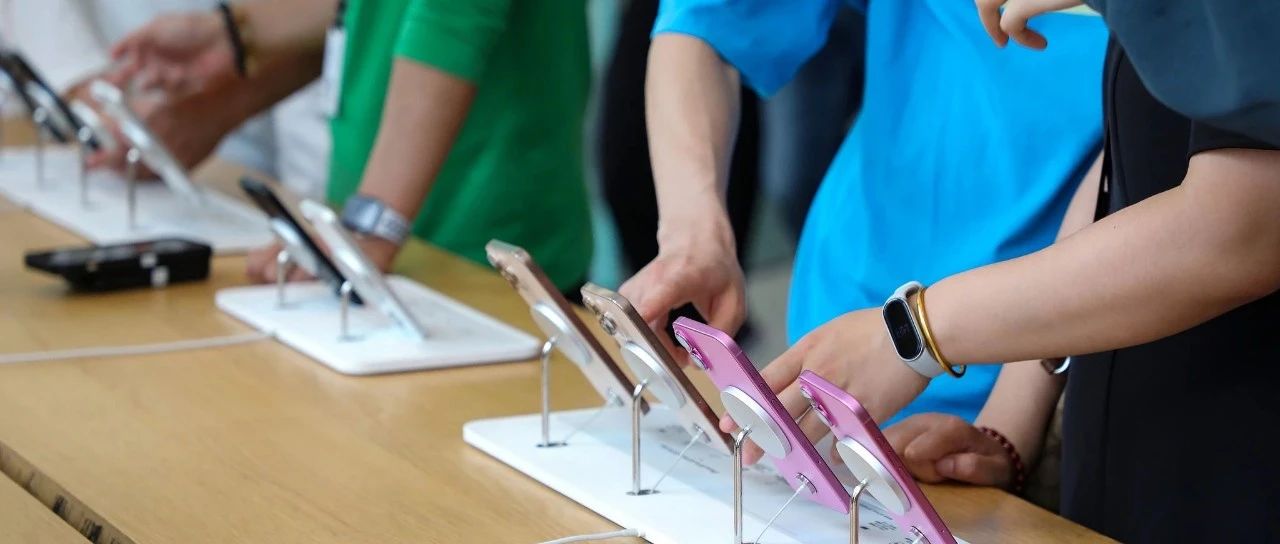
Core Viewpoint - The rumors regarding the cessation of the "National Subsidy" in Shanghai after June 18 are false, as both "National Subsidy" and "City Subsidy" are still being issued normally [1] Group 1: Subsidy Status - Consumers can still receive subsidies through platforms like Yunshanfu, which operates from 7:00 to 23:00 daily for coupon distribution [1] - Online platforms such as JD.com continue to offer subsidies for orders placed in Shanghai, with the system automatically calculating the "City Subsidy" [1] Group 2: Subsidy Details - The claim of a "maximum subsidy of 40%" circulating online is inaccurate; most products are receiving subsidies of 15% to 20% [1] - The current subsidy activities in Shanghai show no signs of suspension, allowing citizens to purchase eligible products through official channels with confidence [1]
中信期货晨报:国内商品期货大面积收涨,原油涨幅居前-20250619
Zhong Xin Qi Huo· 2025-06-19 02:39
投资咨询业务资格:证监许可【2012】669号 仲鼎 从业资格号F03107932 投资咨询号Z0021450 重要提示:本报告非期货交易咨询业务项下服务,其中的观点和信息仅作参考之用,不构成对任何人的投资建议。 我司不会因为关注、收到或阅读本报告内容而视相关人员为客户;市场有风险,投资需谨慎。 | 板块 | 品种 | 现价 | 日度涨跌幅 | 周度涨跌幅 | 月度涨跌幅 | 季度涨跌幅 | 今年涨跌幅 | 板块 | 品种 | 现价 | 日度涨跌幅 | 周度涨跌幅 | 月度涨跌幅 | 季度涨跌幅 | 今年涨跌幅 | | --- | --- | --- | --- | --- | --- | --- | --- | --- | --- | --- | --- | --- | --- | --- | --- | | 股指 | 沪深300期货 | 3872.2 | 0.09% | 0.41% | 1.30% | 0.74% | -1.24% | 航运 贵金属 | 集运欧线 | 2092 | 2.65% | 1.16% | 0.80% | 40.31% | -7.31% | | | 上证50期货 | 2677.4 | ...
618来袭,消费回暖了吗?5月社零数据超预期!中证A500指数ETF(563880)窄幅震荡,指数配置性价比如何
Sou Hu Cai Jing· 2025-06-18 01:57
Group 1 - The core viewpoint of the articles highlights the positive impact of consumption policies such as "trade-in for new" and "national subsidies" on China's retail sales, with a notable year-on-year growth of 6.4% in May, surpassing the previous month's growth of 5.1% [1][2][5] - The increase in retail sales is attributed to the combination of internal demand supporting external demand, as well as the early start of the 618 shopping festival, which stimulated consumer spending [2][5] - The "trade-in for new" policy has significantly boosted sales, with data indicating that it has driven sales of over 1.1 trillion yuan across five major categories by the end of May, with an estimated 300 billion yuan contribution in May alone [2][5] Group 2 - The funding progress for the "trade-in for new" initiative reached approximately 42% by May, indicating a rapid pace of implementation, which aligns with the recent adjustments in subsidy mechanisms [5] - Economic forecasts suggest that the second quarter GDP is expected to maintain strong growth, supported by recent government policies aimed at stabilizing employment and increasing income [5] - The 中证A500指数 ETF (563880) is highlighted as a potential investment opportunity, focusing on leading companies in various sectors, with expectations of strong profit growth and reasonable valuation compared to smaller stocks [2][8]
5月零售加速,不只是国补
HUAXI Securities· 2025-06-16 11:19
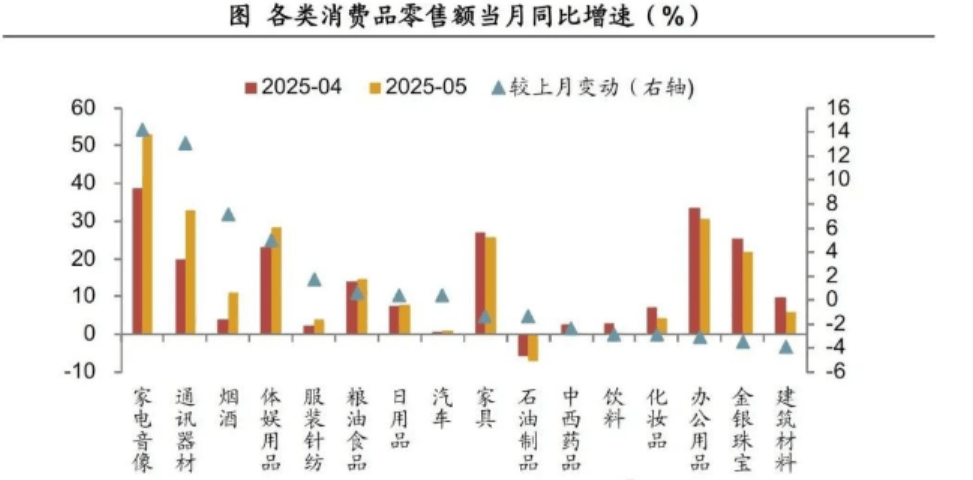
Economic Overview - In May, industrial added value grew by 5.8% year-on-year, slowing down by 0.3 percentage points from the previous month[1] - The service production index increased by 6.2% year-on-year in May, a slight acceleration of 0.2 percentage points from April[1] - The weighted year-on-year growth of industrial and service sectors combined was 6.1%, slightly up from 6.0% in April[1] Retail Performance - Retail sales in May increased by 6.4% year-on-year, the fastest growth since early last year, accelerating by 1.3 percentage points from the previous month[2] - National subsidies contributed an additional 0.5 percentage points to retail growth in May, with total subsidies amounting to 162 billion yuan[2] - The contribution of home appliances and audio-visual equipment to retail sales increased significantly, with growth rates of 53% and 33% respectively in May[2] Investment Trends - Fixed asset investment from January to May grew by 3.7% year-on-year, with a 7.7% increase when excluding real estate investments, both slowing by 0.3 percentage points from the previous month[4] - Equipment investment rose by 17.3% year-on-year, contributing 63.6% to total investment growth, down from 64.5% in the previous month[4] Real Estate Market - Real estate sales area and sales value in May decreased by 3.3% and 6.0% year-on-year, respectively, with sales area growth slowing by 1.2 percentage points from April[5] - Prices for new and second-hand homes in first-tier cities fell, with a 0.7% decline in first-tier cities leading the drop[5] Demand and Supply Dynamics - The weighted year-on-year growth of retail, investment, and export delivery values increased by 0.3 percentage points to 4.1%, still about 2 percentage points lower than the production growth rate of 6.1%[6] - The industrial sales rate fell by 0.8 percentage points year-on-year to 95.9%, indicating ongoing demand insufficiency[6] Future Outlook - The second quarter GDP is expected to exceed 5% year-on-year, supported by retail and service sector growth, despite weak investment and export performance[7] - Incremental policy measures may be delayed until after August, with potential new agreements between China and the U.S. impacting trade dynamics[8]
国补,为什么暂停了?
Sou Hu Cai Jing· 2025-06-15 04:27
Core Viewpoint - The recent suspension of national subsidies has raised concerns about its impact on consumer spending and the overall economy, prompting discussions on whether this is a short-term adjustment or a long-term shift in policy [3][10]. Group 1: Reasons for Suspension - The immediate reason for the suspension is the rapid depletion of funds, with 1.5 trillion yuan of the 3 trillion yuan budget already consumed by the end of May [3][6]. - Regional financial disparities complicate the subsidy model, as wealthier areas can contribute more, leading to policy tightening in those regions [4][6]. - The subsidy system faces significant "losses" due to issues such as arbitrage, price manipulation, and regional disparities in consumer purchasing power [8][11]. Group 2: Implications for Businesses - The subsidy program has intensified market concentration, disadvantaging small and medium-sized enterprises (SMEs) as larger companies leverage scale to reduce prices [13][15]. - SMEs face cash flow challenges due to the "pay first, reimburse later" mechanism of the subsidy, creating a dilemma between participating in the program or losing market access [15][17]. - Despite challenges, the rapid consumption of vouchers indicates strong market potential, suggesting that businesses with competitive products can still thrive [17][19]. Group 3: Future Directions - The focus of future policies is expected to shift from broad subsidies to more targeted support, emphasizing quality and innovation over price competition [19]. - Companies are encouraged to enhance their understanding of economic policies and improve their online presence to capitalize on future subsidy opportunities [17][19]. - The current pause in subsidies may serve as a precursor to a more sustainable and high-quality consumer market in China [19].
周末重点速递丨中金称全年阶段性底部可能已经出现;券商热议中国军贸的“DeepSeek时刻”来临
Mei Ri Jing Ji Xin Wen· 2025-06-15 02:11
Group 1: Automotive Data Regulations - The Ministry of Industry and Information Technology (MIIT) of China has solicited opinions on the "Automotive Data Export Security Guidelines (2025 Edition)" [1] - Automotive data processors must declare data export security assessments under specific conditions, including providing important data or personal information to overseas entities [1] Group 2: Market Outlook and Investment Strategies - The Chinese stock market is expected to experience continued divergence from the U.S. market, with a focus on a barbell strategy and opportunities in overseas expansion [2] - The AI sector is anticipated to drive valuation recovery in the internet industry, while external geopolitical factors remain a significant influence on market sentiment [2] - The Chinese new energy vehicle (NEV) market is projected to grow by 24% year-on-year, with a penetration rate of 53.3% [2] - The pharmaceutical sector is optimistic about domestic innovative drugs achieving overseas authorization, supported by national policies [3] Group 3: A-Share Market Analysis - Historical "bottoms" in the A-share market may have already occurred, with resilience observed despite external uncertainties [4] - The market is expected to continue narrow fluctuations, with potential upward movement dependent on macroeconomic policies, particularly fiscal measures [4] Group 4: Industry Opportunities - Investment opportunities are identified in three main areas: capacity cycle opportunities (industrial metals, lithium batteries, innovative drugs), high-growth sectors less correlated with economic cycles (AI industry), and dividend-paying sectors (consumer leaders, public utilities) [5] Group 5: Military Trade and Defense Industry - China's military trade is evolving, with the country transitioning from a "follower" to a "leader" in the global military trade landscape [6] - Investment opportunities in the defense sector include radar systems, guided equipment, drones, military aircraft, armored vehicles, and naval vessels [6] Group 6: Stablecoin Market Dynamics - The stablecoin market is gaining attention, with implications for financial technology and international currency dynamics [7] - USDT, a widely used stablecoin, has an issuance scale exceeding $150 billion, representing a new generation of payment technology [7] - Future focus on the listing of Circle and related companies in the stablecoin space is recommended [8]

北京国补措施让供需双向赋能
Bei Jing Qing Nian Bao· 2025-06-13 07:58
Core Viewpoint - The Chinese government has intensified its subsidy policies for replacing old products with new ones, including mobile phones, tablets, and smartwatches, which has significantly boosted consumer spending and market activity [1][2]. Group 1: Subsidy Policy Impact - The inclusion of digital products like mobile phones in the subsidy program has sparked a surge in consumer enthusiasm for upgrading devices, leading to explosive sales growth in multiple regions [2][3]. - As of May 31, 2025, approximately 175 million subsidies have been issued, resulting in total sales exceeding 1.1 trillion yuan across five major categories [2]. - In Beijing, the implementation of the new subsidy policy has led to over 127,000 units sold and sales exceeding 3.8 billion yuan since its launch [3]. Group 2: Market Dynamics - The overlap of the subsidy program with the "618" shopping festival has amplified the effects of the national subsidy, providing consumers with greater discounts through combined offers from platforms, brands, and government subsidies [3][4]. - Nearly 10,000 physical retail stores have participated in the "Super National Subsidy Week," enhancing the shopping experience by combining online efficiency with offline convenience [4]. - The demand for durable consumer goods, including electronics and automobiles, has surged, indicating a robust recovery in the domestic market supported by the subsidy initiatives [4].
国补的连环效应开始转向
3 6 Ke· 2025-06-10 04:06
Core Insights - The national subsidy program (国补) is not being canceled, with a total subsidy of 300 billion yuan expected this year, of which 160 billion yuan has already been distributed, and 140 billion yuan will be allocated based on local consumption progress [1][7][8] - The subsidy program is experiencing a shift, focusing on new consumer sectors such as childcare, elderly care, and service consumption, indicating a search for new consumption stimulation points [1][22] - The program has led to a concentration of market share among leading brands, with a trend towards the top brands benefiting more significantly from the subsidies [1][15][22] Subsidy Program Dynamics - Some regions are experiencing limited availability of subsidies, leading to discussions about the potential cancellation of the program, but officials confirm that the program will continue [3][6][8] - The subsidy has resulted in a significant increase in retail sales, with a 4.6% year-on-year growth in social retail sales in Q1, and a notable 5.9% increase in March [10] - The program has also led to a surge in specific product categories, such as cameras, with sales increasing by 86% year-on-year during the 618 shopping festival [11] Market Impact - The subsidy has created a situation of overconsumption in durable goods, particularly in home appliances and 3C products, leading to a slowdown in growth for these categories in Q1 and Q2 [12][14] - Brands are increasingly focusing on high-priced products, with consumers willing to spend more on premium items rather than cheaper alternatives [16][17] - Platforms like JD.com have benefited significantly from the subsidies, with a reported increase in revenue from subsidized products, while competitors like Pinduoduo are adjusting their strategies to remain competitive [18][21] Future Outlook - The subsidy program is entering a new phase, with a redistribution of benefits among brands and platforms, and a potential emergence of new growth opportunities in different sectors [22][23] - Companies that previously benefited from the subsidies are now looking to expand their market presence through international sales and product diversification [24] - JD.com is exploring new growth avenues such as instant retail and travel services, while Pinduoduo is focusing on maintaining its competitive pricing strategy and enhancing operational efficiency [26][28]