
AI投资

Search documents
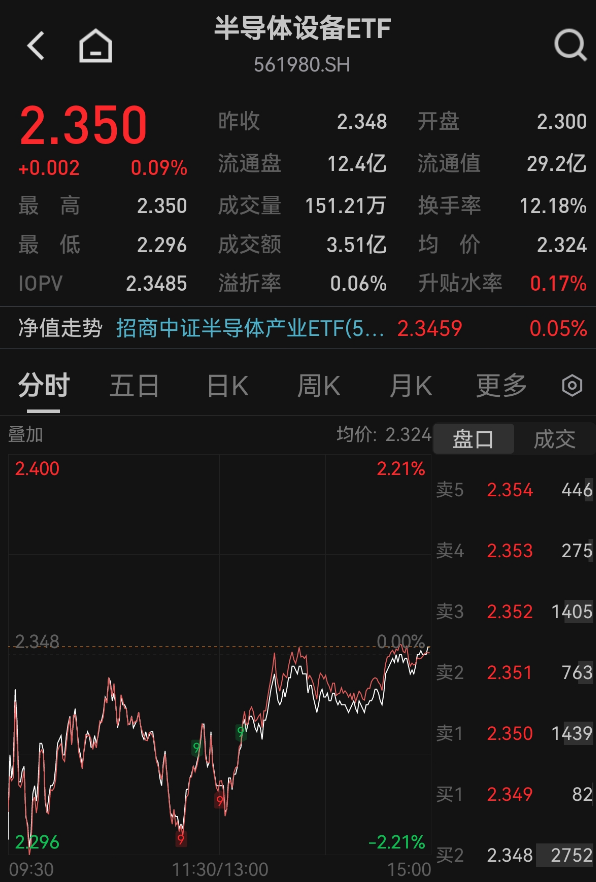
机构:存储大周期正在上演,受益品种半导体设备ETF(561980)尾盘翻红
Jin Rong Jie· 2026-01-09 07:37
Core Viewpoint - The semiconductor sector is experiencing a strong performance driven by domestic substitution expectations and AI investments, with significant gains in related stocks and indices [1][3][4]. Group 1: Market Performance - On January 9, all three major indices closed in the green, with notable gains in computing chips and photolithography concepts [1]. - Semiconductor equipment ETF (561980) saw a trading volume exceeding 350 million yuan, with a net inflow of over 100 million yuan in the last five trading days [1]. - The CSI Semiconductor Index recorded a 62.33% increase in 2025, outperforming other semiconductor indices [4][6]. Group 2: Industry Trends - The recent strength in computing chips and semiconductor materials is attributed to the conditional release of the H200 chip and anti-dumping investigations on related materials, indicating a dual logic of demand expansion and accelerated domestic substitution [3]. - Eight government departments have expressed support for breakthroughs in key technologies such as high-end training chips and AI servers, reinforcing the consensus on domestic substitution [3]. - AI investments continue to exceed expectations, with storage chip prices maintaining high growth, some products projected to increase by 1800% throughout 2025 [3]. Group 3: Investment Opportunities - Investment direction may focus on semiconductor equipment and materials companies with a high revenue share from the storage industry [3]. - Companies that are likely to achieve breakthroughs in domestic substitution related to the storage industry should also be considered for investment [3]. - The semiconductor equipment ETF (561980) tracks the CSI Semiconductor Index, which focuses on the upstream segment of the semiconductor industry with high technical barriers, with nearly 60% equipment content [6].

天弘基金2026年策略会:聚焦全球变局与产业升级 勾勒投资新蓝图
Zheng Quan Ri Bao Wang· 2026-01-08 14:13
Group 1: Economic Outlook and Investment Trends - The global economy continues to experience "divergence" and "restructuring," prompting investors to seek structural investment opportunities in 2026 [1] - In 2025, multiple funding sources contributed to a bullish A-share market, with increased participation from residents, insurance funds, and bank wealth management products expected to support market risk appetite in 2026 [1][2] - The return rate of A-shares is anticipated to rise while volatility remains low due to weakened capital expenditure cycles across households, government, and enterprises [1] Group 2: AI Investment Opportunities - Investment logic in AI is shifting from "hardware" to "software" and "applications," with a focus on computing power chips and infrastructure currently, and a future emphasis on AI software and green energy support [2] - Key investment directions for 2026 include improvements in domestic computing power chip performance, better fundamentals for semiconductor equipment manufacturers, and the potential emergence of popular domestic AI applications [2] Group 3: Industrial Demand and Commodity Investments - Global re-industrialization is driving demand across the entire advanced manufacturing supply chain, particularly for industrial metals like copper, lithium, cobalt, aluminum, and nickel [2] - Investment in Chinese power grid equipment, chemicals, commercial vehicles, and lithium battery storage is recommended due to their global competitive advantages [2] Group 4: Bond Market Insights - The bond market is transitioning from a non-bank institution-led environment focused on capital gains to a bank-led market prioritizing funding costs and coupon income [3] - In 2026, the bond market is expected to face challenges but may yield better returns than in 2025 due to higher short- to medium-term interest rates and more rational institutional expectations [3] - Investment strategies should focus on earning coupon income first, followed by seeking capital gains, with caution advised in certain credit sectors like city investment and small bank capital tools [3]
2025年美国经济回顾:表面韧性与内在脆弱
Yuekai Securities· 2026-01-08 09:55
Economic Overview - In 2025, the US GDP is expected to grow slightly above 2%, with a projected range of 2.1% to 2.3% for the year[9] - The GDP growth rate for the first three quarters of 2025 was 2.1%, down from 2.8% in 2024[9] Resilience Factors - The rapid adjustment of Trump's tariff policy led to a quick dissipation of its negative impact on economic growth, with no significant effect on overall inflation[16] - US consumer spending remained resilient, benefiting from a wealth effect, contributing approximately 25% to consumption growth in 2025[21] - AI-related investments surged, contributing about 1 percentage point to GDP growth in 2025, up from 0.3 percentage points in previous years[23] Structural Weaknesses - The job market showed significant cooling, with the unemployment rate rising from 4.0% in January to 4.6% in November 2025, the highest level since September 2021[13] - Consumer confidence declined sharply, with inflation expectations rising to 4.2% by December 2025, significantly higher than the previous year's 2.8%[30] - The top 10% of income earners contributed nearly 50% of total consumption, highlighting increasing income inequality and a "K-shaped" economic recovery[32] Investment Trends - Traditional sectors like residential and non-residential construction saw a decline, with residential investment shrinking for three consecutive quarters in 2025[35] - The average fixed mortgage rate remained above 6%, hindering recovery in the housing market despite the Federal Reserve's rate cuts[35]
天弘基金策略会:AI投资正向应用端扩散;把握再工业化下的“铜锂”机遇
Sou Hu Cai Jing· 2026-01-08 07:52
Group 1 - The global economy is experiencing a "divergence" and "restructuring," with AI transitioning from capital expenditure to application implementation, driven by large-scale fiscal investments and manufacturing return [2] - The U.S. has positioned AI as a strategic core for scientific breakthroughs and national security, focusing on advanced manufacturing, quantum technology, biomanufacturing, chips, new materials, and nuclear fusion, which align with China's "14th Five-Year Plan" priorities [2] - Global industrial chains are undergoing profound restructuring due to geopolitical changes, technological transformations driven by AI, and sustainable development initiatives [2] Group 2 - China's outbound investment process shows similarities to Japan's in the late 1980s, indicating significant potential for further expansion [3] - In 2025, various funding channels are expected to support the A-share market, with structural highlights in China's economy benefiting public and private fund holdings [3] - Investment focus is shifting from "hard" AI to "soft" applications, with current emphasis on computing chips and infrastructure, and future expansion into AI software and green energy sectors [3] Group 3 - AI investment is moving from hardware to demand-side validation and domestic breakthroughs, with three key areas to watch: performance improvement of domestic computing chips, fundamentals of semiconductor equipment manufacturers, and the emergence of popular domestic AI applications [4] - Global re-industrialization is driving demand across the entire advanced manufacturing supply chain, particularly for industrial metals like copper, lithium, cobalt, aluminum, and nickel, making certain Chinese industries attractive for investment [4] - In 2026, opportunities in cyclical commodities and service consumption investments are expected to become more apparent compared to 2025 [5]

财经早报:降准降息可期!央行2026年政策定调,A股新开户数创近三年新高丨2026年1月7日
Xin Lang Cai Jing· 2026-01-06 23:39
Group 1 - The Ministry of Commerce of China has decided to strengthen export controls on dual-use items to Japan, prohibiting all dual-use items from being exported to military users and any end-users that could enhance Japan's military capabilities [2][45][46] - China is considering tightening the export license review for medium and heavy rare earth items to Japan, which will be implemented starting April 4, 2025, under the Export Control Law [3][47] - China's Foreign Ministry has warned that Japan's recent moves towards militarization, including revising security documents to increase defense spending and develop offensive military capabilities, pose a danger to regional peace [4][48] Group 2 - The People's Bank of China has outlined seven key priorities for 2026, emphasizing the importance of monetary policy in promoting high-quality economic development and price stability, with a flexible approach to using tools like interest rate cuts [8][51] - A significant increase in new A-share accounts was reported, with 2.74369 million new accounts opened in 2025, marking a 9.75% year-on-year growth and the highest annual figure since 2022 [9][52][53] - The Shanghai Composite Index achieved a record 13 consecutive positive trading days, marking the longest streak in its history, with a 1.5% increase on January 6 [9][53] Group 3 - Financial regulators are conducting research to address barriers to long-term capital entering the market, focusing on enhancing the investment scale and proportion of bank wealth management products in A-shares [10][54] - The commercial aerospace sector continues to show strong growth potential, with expectations of a turning point in the industry [16][60] - The lithium carbonate market is experiencing a significant price increase at the start of the year due to tight supply and demand conditions [16][60]


沪指13连阳创十年新高 全市场成交额超2.8万亿元
Shang Hai Zheng Quan Bao· 2026-01-06 17:56
Core Viewpoint - The A-share market has reached a new record, with the Shanghai Composite Index closing at 4083.67 points, marking a 1.50% increase and breaking a ten-year high since July 2015, supported by a strong performance across various sectors and increased trading volume [1][2]. Market Performance - The A-share market exhibited a comprehensive upward trend, with significant contributions from the financial, materials, and technology sectors, driven by ongoing policy benefits and accelerated industrial trends [2]. - The financial sector, particularly securities and insurance, played a crucial role in supporting the Shanghai Composite Index above 4000 points, with companies like New China Life Insurance and China Pacific Insurance reaching new highs [2]. - The cyclical sector saw notable gains due to improved supply-demand dynamics, with the metals sector, including companies like Zijin Mining, experiencing significant price increases [2]. Emerging Trends - The technology and emerging industries continued to show structural growth, particularly in the brain-computer interface sector, which has become a hot topic, with companies like Beiyikang and Weisi Medical seeing substantial stock price increases [3]. - The brain-computer interface market in China is projected to exceed 120 billion yuan by 2040, with a compound annual growth rate of approximately 26%, indicating its potential as a key growth area in the global market [3]. Trading Volume and Capital Flow - The recent market rally is characterized by a significant increase in both trading volume and price, with the Shanghai Composite Index rising nearly 7% since December 17, 2025, and total market turnover increasing from 1.8 trillion yuan to 2.8 trillion yuan [4]. - Various funding sources, including foreign capital and margin trading, have contributed to this volume increase, with margin trading balances reaching a historical high of 25,606.48 billion yuan [4]. Institutional Outlook - Institutions are generally optimistic about the A-share market's future performance, attributing the current rally to a confluence of favorable policies, capital influx, and strong fundamentals [6]. - Analysts suggest that the ongoing "spring rally" has room for further development, with a focus on sectors benefiting from AI investments and global manufacturing recovery, such as industrial resources and equipment exports [7].



峰瑞资本李丰:2026年,AI投资的逻辑与展望
Sou Hu Cai Jing· 2026-01-06 10:02
Core Viewpoint - The current AI investment wave is characterized as the most financially abundant in history, driven by unprecedented liquidity and technological advancements [2][4][5]. Group 1: AI Investment Landscape - The AI investment boom began in November 2022 with the emergence of ChatGPT, marking three years of heightened interest and competition, particularly between the US and China [3][4]. - Central banks globally expanded their balance sheets by $12 trillion from 2020 to 2021, leading to an extraordinary increase in liquidity, estimated at nearly $50 trillion when considering the money multiplier effect [4][5]. - The influx of capital has resulted in a significant reallocation of investments, with a notable shift towards the US market due to geopolitical uncertainties in Europe and China [5][6]. Group 2: Future Investment Narratives - By 2026, the focus will shift from merely possessing technology to effectively utilizing it for profit, emphasizing the importance of practical applications over theoretical advancements [2][8]. - The AI investment cycle is expected to progress through three stages: initial focus on technology, followed by exploration of its applications, and ultimately, the realization of profitable use cases [8][9]. - Historical patterns suggest that while the US led in the first technology cycle, the second saw a balance between the US and China, and the third may present opportunities for Chinese advancements to surpass those of the US [9][10].

期市开门红 期货市场平稳开局 能源、有色品种领涨
Shang Hai Zheng Quan Bao· 2026-01-05 18:28
Group 1 - The futures market had a stable start on the first trading day of 2026, with energy and non-ferrous metal futures leading the gains, particularly asphalt and Shanghai aluminum contracts, which rose nearly 4% [2] - The geopolitical tensions, particularly the U.S. military actions in Venezuela, have significantly impacted energy futures, causing volatility in prices due to potential supply disruptions [2][3] - Venezuela holds the world's largest oil reserves at 303.2 billion barrels, and the disruption of its core export crude, Merey, which has a high asphalt yield, is expected to lead to a shortage of asphalt raw materials and increase prices [3] Group 2 - The overall strength in non-ferrous metal futures was noted, with industrial metals leading the gains, including a 4.14% rise in casting aluminum alloys and a 3.98% increase in Shanghai aluminum contracts [3] - The geopolitical conflicts have not directly impacted non-ferrous metals but have raised concerns about resource security, which is likely to sustain positive sentiment in the sector [3] - Institutions predict that global resource security demands will become a new main theme in 2026, with challenges to supply due to geopolitical risks and resource protectionism [4] Group 3 - The demand for strategic resources is expected to increase due to energy transitions and resource reserve requirements, particularly in non-OECD countries and emerging markets [5] - AI investments and industrialization in emerging economies are anticipated to drive new demand, contributing to the next commodity supercycle [5] - The restructuring of global trade and industrial division is likely to support the industrialization of emerging economies, further enhancing demand for commodities [5]
金鹰基金:业绩景气续新篇 流动性改善支撑市场蓄势待发
Xin Lang Cai Jing· 2026-01-05 02:33
Core Viewpoint - The market in December 2025 shows a significant characteristic of "sector concentration and stock differentiation," with high elasticity opportunities concentrated in policy-sensitive sectors and clearly defined industrial trends [1][7]. Group 1: Market Trends and Predictions - The strongest structural directions are from non-ferrous metals, military industry, and price increases, driven by supply-demand gaps and policy-driven market rallies [1][7]. - The National Space Administration's release of the "Action Plan for Promoting High-Quality Development of Commercial Aerospace" and the establishment of the Human Robot Standardization Committee by the Ministry of Industry and Information Technology have directly boosted the aerospace, defense, and robotics sectors [1][7]. - Looking ahead to January 2026, the market may refocus on performance and liquidity improvements, with expectations for a stable start to the domestic economy despite current weak demand [1][7]. Group 2: Key Upcoming Events - The Bank of Japan's interest rate decision on January 23 is crucial, as the previous meeting raised the benchmark rate to 0.75%, the highest in 30 years, indicating a clear policy direction [2][8]. - The Federal Reserve's interest rate decision on January 28 is anticipated to maintain the current rate, with expectations for a new chairperson to emerge, potentially influencing global capital markets [3][8]. - By January 31, A-share listed companies must release performance forecasts for 2025, which may impact market pricing based on industry performance [3][8]. Group 3: Investment Focus Areas - In January, the importance of performance realization increases, with a focus on core technology and manufacturing sectors, particularly in overseas computing power, storage, consumer electronics, and wind energy storage [4][8]. - There is potential for rotation into low-position innovative drugs and gaming sectors, which may see fundamental improvements in Q1 [4][8]. - The global manufacturing sector is expected to resonate in 2026, benefiting from fiscal and monetary easing, with a focus on manufacturing in the export chain and related sectors such as real estate and automotive [9].
2026年中国私募行业十大预测
3 6 Ke· 2026-01-05 01:52
时光如梭,已入新年。 过去一年,中国私募行业内部,许多变化完成了从显性波动到隐性定型的过渡。 这些迹象并不集中体现在短期业绩表现上,而是发生在结构、位置与角色的重新分配之中。 有的机构进入稳态区间,另有机构被迫加速调整,更有机构在失稳中逐步退场,这些变化并非单纯的周 期轮动。 资事堂团队通过走访证券类私募管理人、主要销售与服务渠道以及第三方研究人士,结合长期跟踪与一 线观察,尝试勾勒出未来一年行业可能呈现的轮廓。 这些判断并不追求即时显性化,而是指向正在形成的新秩序,也是对这一领域未来走向的冷静记录。 资事堂将其整理为2026年中国私募行业的十大预测。 过去两年时间里,私募资管舞台里出现了两个新的身影,一个是大型险资携政策红利而设立的私募投资 机构,一个是外资私募机构凭借业绩快速做强,两者在2026年可能继续高速成长,规模和影响力都持续 扩展。 险资私募方面,随着鸿鹄基金(由中国人寿与新华保险合资成立)在成立仅一年内即突破千亿规模后, 这条通道已经完全跑通。而外资机构方面,桥水中国规模的不断增大,也凸显了后者的竞争力。资事堂 预计,相关机构会不断成长,并实质性影响当下私募市场的供需结构。 03 基金业绩持续复 ...