
财政政策

Search documents
2025年政府工作报告解读:体现稳增长、提振市场预期决心
淡水泉投资· 2025-03-09 13:00
Core Viewpoint - The Chinese government has set a GDP growth target of around 5% for 2025, which is higher than most domestic and international forecasts, indicating a commitment to stabilize economic growth and boost market expectations [3][6]. Economic Growth Targets - The actual GDP target for 2025 is set at 141.5 trillion yuan, with a nominal GDP growth rate of 4.9%, which is an improvement compared to the previous year's nominal GDP growth of 4.23% [3][6]. - The consumer price index (CPI) target has been lowered from 3% to 2%, signaling a shift in policy focus from preventing inflation to promoting price stability [3][8]. Fiscal Policy - The total fiscal deficit for 2025 is projected at 5.66 trillion yuan, with a broad deficit rate of 8.4%, similar to the levels seen in 2020 during the COVID-19 pandemic response [3][9]. - The structure of fiscal spending is optimized, focusing on four key areas: investment construction, land reserve, acquisition of existing housing, and settling local government debts to enterprises [3][9]. Revenue and Budget - The target growth rate for general public budget revenue is set at 0.1%, indicating a more cautious approach compared to the previous year's 2.9% [3][10]. - The government expects improved realizability of budget revenues this year, particularly due to anticipated recovery in real estate sales [3][10]. Monetary Policy - The monetary policy remains moderately accommodative, with an emphasis on reducing social financing costs, although there is caution regarding broad interest rate cuts [3][12]. - The central bank has maintained a tight monetary market condition, focusing on the stability of the RMB exchange rate and the risks associated with low long-term interest rates [3][12].

今年人民币汇率怎么走?田轩:或在波动中逐渐趋稳
Zhong Guo Jing Ji Wang· 2025-03-09 10:02
Core Viewpoint - The RMB exchange rate is expected to show a trend of gradual stabilization amidst fluctuations by 2025, influenced by both external and internal factors [1] External Factors - Increased uncertainty in the global economic environment, particularly due to the U.S. government's intensified measures against China, is likely to lead to greater volatility in the RMB exchange rate [1] - Recent market concerns regarding Trump's tariff threats have diminished, contributing to a weaker U.S. dollar index and declining U.S. Treasury yields, which may help stabilize the RMB [1] Internal Factors - Domestic issues such as insufficient demand and economic structural adjustments are also impacting the stability of the RMB exchange rate [1] - Continuous policy efforts are expected to improve the economic fundamentals in China, providing strong support for the RMB exchange rate [1] - Specific measures include the implementation of moderately loose monetary policy, potential reductions in reserve requirements and interest rates, and a fiscal deficit target of around 4% to boost consumption and investment efficiency [1] Central Bank Actions - In extraordinary circumstances, the central bank may take various measures, such as moderate intervention in the foreign exchange market and adjustments to foreign exchange reserves, to ensure the exchange rate remains stable at a reasonable equilibrium level [1]
2025全国两会跟踪第四期:外长记者会要点总结
一瑜中的· 2025-03-08 12:33
Core Viewpoint - The article discusses the current economic conditions and forecasts, emphasizing the importance of understanding various economic indicators and their implications for investment strategies [3][4]. Domestic Fundamentals - The report highlights the pressure on enterprises that may be transmitted to the asset side, indicating a potential decline in industrial profits [3]. - It notes the dual mission of consumption, suggesting that consumer spending is crucial for economic recovery [3]. - The article analyzes the unexpected rise in the PMI data, attributing it to underlying economic resilience [3]. Financial Analysis - The report discusses the monetary policy execution report for Q3 2024, indicating a shift towards a "low-price" strategy [3]. - It provides insights into how financial indicators should be tracked following the implementation of this low-price strategy [3]. - The analysis of household debt reveals the ongoing deleveraging process and its implications for the economy [3]. Overseas Insights - The article examines the rise in U.S. Treasury yields, questioning whether it is driven by inflation narratives or deficit concerns [4]. - It evaluates the impact of Trump's new policies on the Federal Reserve's interest rate decisions [4]. - The report addresses the discrepancies in the U.S. non-farm payroll data and the stable unemployment rate, suggesting a complex labor market situation [4]. Policy Tracking - The report discusses fiscal support for the real estate sector, indicating hidden incremental policies that may affect market dynamics [4]. - It highlights the expansion of supervisory laws and their potential implications for various sectors [4]. - The article reviews the ongoing reforms and opening-up policies, suggesting a commitment to economic liberalization [4]. Annual and Semi-Annual Reports - The mid-year strategy report for 2024 emphasizes pricing strategies as a key determinant for market performance [3]. - The annual outlook for 2024 discusses the potential for growth and the need for strategic adjustments in investment approaches [3]. - The mid-year strategy report for 2023 focuses on identifying unseen growth opportunities in the current economic landscape [3].

实施更加积极的财政政策:申万期货早间评论-20250306
申银万国期货研究· 2025-03-06 00:35
Group 1 - The core viewpoint of the article emphasizes the implementation of a more proactive fiscal policy by the government, with a GDP growth target of around 5% and a budget deficit rate planned at approximately 4% [1][5] - The government plans to issue special bonds totaling 1.3 trillion yuan and arrange local government special bonds of 4.4 trillion yuan to support economic growth [1][5] - The article highlights the U.S. President's announcement of tariffs and the potential impact on the markets, including rising U.S. stock prices and falling oil and bond prices [1][4] Group 2 - In the oil market, a decline of 1.8% was noted, with OPEC+ planning to increase oil production for the first time since 2022, which may affect oil demand outlook due to U.S. tariffs [2][9] - Copper prices showed a slight increase, supported by stable domestic demand driven by power investment and household appliance production, although real estate data remains weak [2][18] - The shipping index for the European route experienced a drop of 4.73%, with limited support for shipping rates due to seasonal demand and excess supply [3][37] Group 3 - The article discusses the U.S. President's focus on tax cuts and budget balancing, along with the intention to repeal the Chip Act, which may influence market sentiment [4][5] - The Chinese government aims to create over 12 million new urban jobs and maintain a consumer price index (CPI) increase of around 2% [5] - The article notes that the overall market sentiment is cautious due to the potential impact of U.S. tariffs on various sectors, including commodities and equities [7][17]

【粤开宏观】如何理解2025年财政政策安排投资要点
Yuekai Securities· 2025-03-05 14:04
Fiscal Policy Overview - The fiscal policy for 2025 is more proactive, with a deficit rate reaching approximately 4%, the highest since the implementation of active fiscal policies in 2008, reflecting a strong commitment to economic recovery[2] - The total deficit scale is set at 5.66 trillion, significantly higher than last year's 1.6 trillion, indicating a substantial increase in fiscal spending[2] - Special bonds are planned at 4.4 trillion, exceeding last year's 500 billion, while the issuance of ultra-long special government bonds will increase to 1.3 trillion, up from 300 billion last year[2] Economic Impact - The increase in the deficit, special bonds, and ultra-long bonds collectively amounts to 11.86 trillion, surpassing last year's total of 8.96 trillion by 2.9 trillion, indicating a robust fiscal stimulus[2] - The 1.3 trillion ultra-long bonds, 500 billion special bonds, and 4.4 trillion special bonds correspond to an increase in the deficit rate by 0.9, 0.4, and 3.1 percentage points respectively, leading to an overall deficit rate of 8.4% for 2025, higher than last year's 6.6%[2] Policy Objectives - The proactive fiscal policy aims to expand total demand, optimize supply structure, stabilize expectations, and mitigate economic risks, particularly in real estate and finance[3] - The government emphasizes the importance of enhancing transfer payments to local governments, ensuring basic public services, and alleviating fiscal pressures at the grassroots level[12] Structural Reforms - The report highlights the need for deepening fiscal and tax reforms, including zero-based budgeting and consumption tax reforms, to improve fiscal efficiency and support high-quality development[16] - The focus on optimizing fiscal expenditure structure aims to increase efficiency and effectiveness, with a notable rise in spending on healthcare, education, and social security, which accounted for 39.7% of the general public budget in 2024, up 4.4 percentage points from 2013[14]
宏观点评:学习政府工作报告精神-宏观政策要“投资于人”
Soochow Securities· 2025-03-05 07:48
Economic Growth - The government has set a GDP growth target of around 5%, indicating a need for increased policy efforts to achieve this goal[7] - The implied nominal GDP growth rate has been adjusted down to 4.9%, with a fiscal deficit of 5.66 trillion and a deficit rate of 4%[8] - In 2024, final consumption and capital formation contributed only 3.5 percentage points to GDP growth, highlighting weak domestic demand[7] Price Stability - The CPI target has been lowered from 3% to 2%, reflecting a shift in focus from preventing inflation to promoting price recovery[9] - This adjustment indicates a stronger emphasis on price stability within the macroeconomic policy framework[18] Fiscal Policy - The total incremental fiscal funds for this year are projected to reach 2.9 trillion, second only to the 3.6 trillion in 2020[25] - The combined fiscal measures (deficit, special bonds, and long-term bonds) amount to 11.86 trillion, an increase of 2.9 trillion compared to last year[25] Monetary Policy - A moderately loose monetary policy is expected to be the main theme for 2025, with potential for timely adjustments in interest rates and reserve requirements[31] - Structural monetary policies will focus on supporting real estate, stock markets, and private enterprises[32] Consumption Promotion - Three key areas for consumption policy include subsidies for replacing old products, income support through social security, and improving the consumption environment[33] - The central government has allocated approximately 3,800 billion for consumption incentives, doubling last year's funding[26] Real Estate Policy - The government aims to stabilize the real estate market through measures such as lifting purchase restrictions and adjusting mortgage rates[34] - Attention will be given to the progress of land and housing stock acquisition through special bonds[36] Industrial Policy - Discussions on potential new rounds of capacity reduction are ongoing, but any measures are expected to be moderate and market-driven[37] - The focus will be on addressing structural issues in industries facing overcapacity, particularly in emerging sectors[38] Technology and Private Enterprises - The government emphasizes the need for institutional support for private enterprises in national technology innovation projects[45] - There is a stronger commitment to resolving issues related to overdue payments to private enterprises, with funding sources identified for this purpose[45] Energy Consumption - The energy consumption target has been raised to a reduction of 3% per unit of GDP, indicating stricter energy policies moving forward[46] - The actual reduction achieved last year was 3.8%, exceeding the previous target of 2.5%[46] Capital Market - The report highlights the need for comprehensive reforms in the capital market to enhance the balance between investment and financing functions[51] - There is a focus on increasing the entry of medium- and long-term funds into the market to stabilize investor confidence[51]
2025年政府工作报告要点解读
Dong Fang Jin Cheng· 2025-03-05 07:47
Economic Growth and Inflation - The GDP growth target for 2025 is set at "around 5.0%", consistent with last year's target and actual growth, aligning with market expectations[2] - The CPI control target is set at "around 2.0%", marking the first time since 2004 that the target is below 3%, indicating a focus on moderate price recovery[3] Fiscal Policy Adjustments - The fiscal deficit rate target for 2025 is increased to 4.0%, up by 1 percentage point from the previous year, with a fiscal deficit scale reaching 5.66 trillion yuan[5] - The new local government special bond issuance scale is set at 4.4 trillion yuan, an increase of 500 billion yuan from last year, reflecting a more proactive fiscal policy stance[4] Investment and Debt Management - The total new government debt issuance for 2025 is projected at 11.86 trillion yuan, an increase of 2.9 trillion yuan from the previous year, indicating a significant increase in fiscal spending intensity[8] - 8 billion yuan of the new special bonds will be used to replace existing local government hidden debts, helping to control debt risks and alleviate repayment pressures[6] Monetary Policy Outlook - The monetary policy is expected to remain "moderately loose," with potential interest rate cuts of up to 0.5 percentage points, which is higher than the 0.3 percentage point cut in 2024[10] - The central bank may continue to implement structural monetary policy tools to support key sectors, with expectations for increased new credit and social financing[11] External Trade and Risk Management - The report emphasizes the need to stabilize external trade development amid increasing external economic uncertainties, with measures to support cross-border e-commerce and service trade[12] - The focus on stabilizing the real estate market includes increasing loan support for "white list" projects and controlling new land supply to mitigate risks of corporate debt defaults[13]
为什么是这些目标?为什么是这些改革?|两会时间
和讯· 2025-03-05 06:29
Core Viewpoint - The government work report emphasizes the need to boost domestic demand and consumption as a primary strategy for economic growth, with a GDP growth target of around 5% for the year [1][3][9] Economic Growth Targets - The GDP growth target is set at approximately 5%, balancing the need for employment stability, risk prevention, and improved living standards, while aligning with long-term development goals [3][4] - The report indicates that achieving a 5% growth rate is feasible due to a large domestic market and recent positive economic indicators [4][11] Fiscal Policy and Debt Management - The fiscal deficit rate is proposed at around 4%, with a total new government debt scale of 11.86 trillion yuan, reflecting a significant increase in fiscal spending to support economic growth [6][7][8] - The report outlines plans for issuing special bonds and local government bonds to finance infrastructure and support consumption [6][10] Consumption and Domestic Demand - The report prioritizes boosting consumption and investment efficiency, aiming to make domestic demand the main driver of economic growth [9][11] - Specific measures include implementing special actions to enhance consumption, improving the consumption environment, and increasing residents' income [9][12] Investment Strategies - The government plans to enhance effective investment by focusing on key projects and ensuring proper funding allocation to prevent inefficient investments [10][11] - The report emphasizes the importance of private investment and encourages public-private partnerships in infrastructure and social services [10][16] Reforms and Market Environment - The report highlights the need for significant reforms to create a fair and vibrant market environment, particularly in supporting the private economy and improving the fiscal and tax systems [14][15][16] - It stresses the importance of addressing barriers to market entry and competition, particularly in the context of "involution" in various industries [18][19] Future Industries and Technological Development - The government work report outlines plans to advance future industries, particularly in artificial intelligence and digital economy sectors, to enhance consumer experiences and drive economic growth [20][21] - There is a focus on integrating new technologies into traditional industries to create new employment opportunities and stimulate economic activity [20][21]
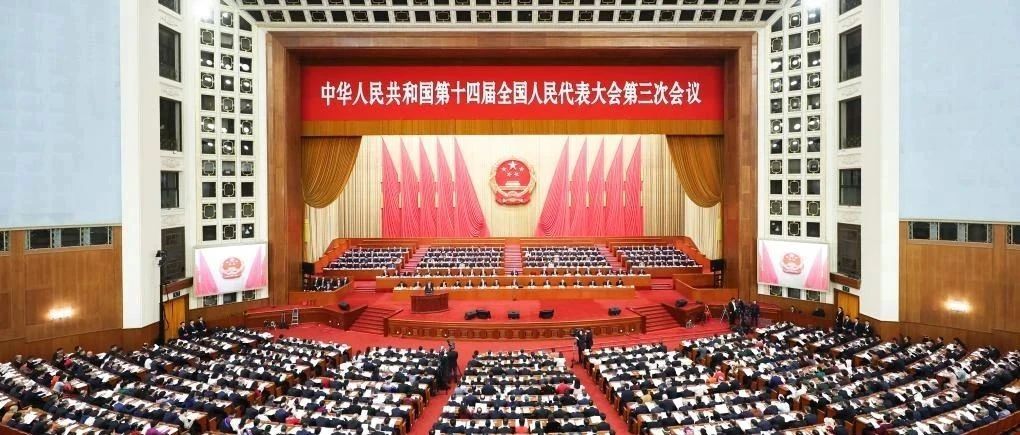
中国2025经济增长目标仍为5%左右
日经中文网· 2025-03-05 03:48
Core Viewpoint - The Chinese government aims to maintain a GDP growth target of around 5% for 2025, continuing a three-year trend, while expanding fiscal spending to support economic growth amid external pressures such as tariffs from the U.S. [1][2] Fiscal Policy - The government plans to increase the deficit ratio to approximately 4.0%, up from the 3.0% set for 2024, and will issue 500 billion yuan in government bonds to inject capital into state-owned banks to mitigate financial risks from a sluggish real estate market [1][2] - Special government bonds will be issued, with a total of 1.3 trillion yuan in ultra-long-term bonds (over 10 years), an increase of 300 billion yuan compared to 2024 [1] Local Government Financing - The issuance quota for local government special bonds will be expanded to 4.4 trillion yuan for 2025, an increase of 500 billion yuan from the previous year, focusing on investments in construction, land acquisition, and addressing overdue payments to enterprises [2] Monetary Policy - The government plans to adopt a moderately loose monetary policy to support economic growth, indicating potential reductions in reserve requirements and policy interest rates at appropriate times [2] Employment and Inflation - The target for urban surveyed unemployment is set at around 5.5%, with a goal of creating over 12 million new urban jobs, consistent with the previous year's targets [2] - The consumer price index (CPI) growth target is set at around 2%, lower than the 3% target for 2024, reflecting increasing deflationary pressures due to insufficient domestic demand [2] Social Services - The government intends to enhance support for healthcare, elderly care, and childcare services to improve consumer confidence amid structural issues like population decline [2] Foreign Policy - The government opposes unilateralism and protectionism, particularly targeting U.S. tariff policies, and has announced additional tariffs on U.S. imports as a countermeasure [3]
2025年3月宏观经济月报:政策预期锚点回归基本面-2025-03-04
BOHAI SECURITIES· 2025-03-04 10:31
Investment Rating - The report assigns a "Neutral" rating for the industry, indicating a projected performance within a range of -10% to 10% relative to the CSI 300 index over the next 12 months [53]. Core Insights - The macroeconomic environment shows signs of resilience in the U.S. with a combination of inflation rebound and strong employment, leading the Federal Reserve to maintain a cautious stance on interest rate cuts [3][15]. - In Europe, economic fundamentals are improving, but the European Central Bank is likely to continue a gradual rate cut approach due to ongoing uncertainties [4][25]. - Domestic consumption is expected to continue its recovery trend, with significant growth in retail and service sectors during the Spring Festival period [28]. - The export sector is showing resilience, supported by increased container throughput at ports and a recovery in the semiconductor supply chain [29]. - Inflation is anticipated to be influenced by seasonal factors, with CPI expected to decline post-Spring Festival due to the normalization of prices [41]. Summary by Sections 1. Overseas Economic and Policy Environment - U.S. GDP growth for Q4 2024 was revised to 2.3%, with consumer spending remaining strong despite some downward pressures from non-residential investment [13]. - The Eurozone's GDP growth for Q4 2024 was adjusted to 0.1%, with improvements in service and manufacturing PMIs, although disparities among major economies persist [24]. 2. Domestic Economy - Consumption during the Spring Festival saw a 10.8% increase in daily sales compared to the previous year, with significant growth in both goods and services [28]. - Investment in real estate remains under pressure, with construction activity not yet returning to pre-holiday levels [29]. - Export growth is expected to maintain resilience, aided by a recovery in global manufacturing and proactive export strategies [29]. 3. Domestic Policy Environment - The central bank is expected to maintain a cautious approach to interest rate cuts, with potential adjustments post the National People's Congress [6]. - Fiscal policy discussions during the upcoming meetings are likely to focus on stimulating domestic demand and supporting new productivity initiatives [45].