
产能过剩

Search documents
昇兴股份11.5亿元定增:所处行业产能过剩盈利承压 前次募投项目“既变又缓”效益远不及预期
Xin Lang Zheng Quan· 2025-12-19 10:45
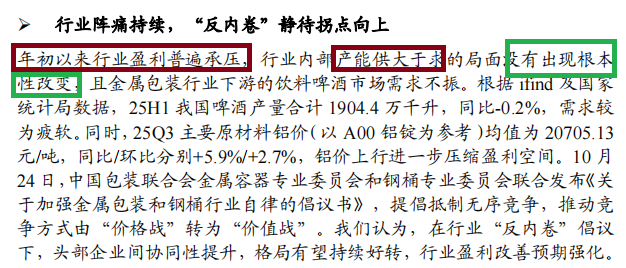
Core Viewpoint - The company, Shengxing Co., has announced a plan to raise up to 1.157 billion yuan through a private placement to expand production capacity, despite the metal packaging industry facing structural overcapacity and declining profitability [1][3]. Group 1: Fundraising and Investment Plans - Shengxing Co. plans to issue no more than 293,075,540 shares to raise a total of up to 1.157 billion yuan, with 70% of the funds (approximately 810 million yuan) allocated for capacity expansion projects in Vietnam and Sichuan [2][3]. - The specific allocation of the raised funds includes 540 million yuan for a new production base in Vietnam, 270 million yuan for new production lines in Sichuan, and 347 million yuan for working capital [2]. Group 2: Industry Context and Challenges - The metal packaging industry is currently experiencing a situation of supply exceeding demand, leading to widespread profitability pressure since the beginning of the year [5][6]. - The beverage and beer market, which is a key downstream sector for the metal packaging industry, is facing weak demand, with beer production in China showing a slight decline of 0.2% year-on-year in the first half of 2025 [5]. - Rising aluminum prices, which averaged 20,705.13 yuan per ton in Q3 2025, have further compressed profit margins for companies in the industry [5]. Group 3: Previous Fundraising and Project Performance - Previous fundraising projects by Shengxing Co. have undergone significant changes, including complete and partial alterations, with some projects experiencing delays [7][8]. - The effectiveness of prior investment projects has been disappointing, with the actual benefits realized in 2024 amounting to only 13.87% of the promised benefits [14][13]. - For instance, the project in Yunnan achieved a revenue of 572.99 million yuan against a promised 5,563.12 million yuan, while the projects in Anhui and Wuhan also fell short of their targets [13][14]. Group 4: Financial Performance and Liquidity Concerns - Shengxing Co. has shown a trend of increasing revenue without corresponding profit growth, with a reported revenue of 5.07 billion yuan in the first three quarters of 2025, a slight increase of 1.51% year-on-year, but a significant drop in net profit by 36.99% [15]. - The company faces high accounts receivable, totaling 1.7 billion yuan, which constitutes 20.58% of total assets, indicating potential liquidity issues [15]. - Short-term debt pressures are notable, with short-term loans and current liabilities totaling 1.3 billion yuan, leading to a current ratio of 1.09, barely covering short-term obligations [15].


甲醇聚烯烃早报-20251219
Yong An Qi Huo· 2025-12-19 01:37
观点 伊朗装置开始停车,港口内地共振反弹,基差小幅走强,卸货慢,港口连续两周去库,浮仓很多,预计后期回归 累库,11月伊朗发 运110w,预计12-1月进口下降较难,盘面01给进口无风险套机会,认为01终点仍是高库存,偏向逢高 做15反套。 甲醇聚烯烃早报 研究中心能化团队 2025/12/19 | 甲 醇 | | | | | | | | | | | | | | --- | --- | --- | --- | --- | --- | --- | --- | --- | --- | --- | --- | --- | | 日期 | 动力煤期 | | 江苏现货 华南现货 | 鲁南折盘 | 西南折盘面 | 河北折盘 | 西北折盘 | CFR中国 | CFR东南 | | 进口利润 主力基差 | 盘面MTO | | | 货 | | | 面 | | 面 | 面 | | 亚 | | | 利润 | | 2025/12/1 2 | 801 | 2092 | 2070 | 2440 | 2465 | 2395 | 2565 | 243 | 317 | 1 | 20 | - | | 2025/12/1 5 | 801 | 2123 ...
2026年胶版印刷纸年度行情展望:余寒未消,寻底路迢
Guo Tai Jun An Qi Huo· 2025-12-18 13:04
Report Industry Investment Rating No relevant information provided. Core Viewpoints of the Report - The paper price will fluctuate and seek the bottom throughout the year, with possible seasonal rebounds. The estimated price fluctuation range for the first half of 2026 is about 3,600 - 4,400 yuan/ton [3][83]. - The supply side will still see new capacity put into operation, and the resumption of production at Zhanjiang Chenming is on the agenda. The demand side will continue to be stable. The long - term supply surplus pattern remains unchanged, but the contradiction is relatively alleviated. Short - selling on rallies is still a relatively safe choice [3][83]. - Double - offset paper consumption has obvious seasonality. From March to May (with a delay in recent years) and from September to November are the tendering time points for the next spring's teaching and auxiliary materials. During these periods, there may be seasonal inventory replenishment in the distributor link and improved consumption, driving the paper price to rebound [3][83]. - The long - term decline of paper prices has forced paper mills to adjust formulas and optimize costs. The ton - paper costs of mainstream large - scale mills are concentrated in the range of 3,750 - 4,350 yuan/ton, and enterprises with integrated layouts have stronger competitiveness [3][83]. - In terms of bargaining power, pulp mills have stronger bargaining power than paper mills. From the perspective of industrial chain transmission, production enterprises naturally have the willingness to raise prices, but whether it can be implemented still depends on many factors [3][83]. Summary According to the Directory 1. Low - price Quagmire under Weak Supply and Demand 1.1 Market Review - In 2025, the price center of the domestic double - offset paper spot market moved down significantly, and the double - offset paper futures generally maintained a range - bound trend after listing [6]. - From January to March 2025, the double - offset paper price remained firm. The price of natural white double - offset paper fluctuated between 5,000 - 5,200 yuan/ton, and the high - white double - offset paper price was between 5,300 - 5,500 yuan/ton. The support for the paper price came from strong pulp prices before the Spring Festival, reduced supply pressure due to the shutdown of most production lines of Chenming Paper, and short - term inventory replenishment by distributors. The upward pressure came from the lack of concentrated tendering by publishers, poor continuity of printer orders, and the decline of pulp prices after the Spring Festival [6]. - Since April 2025, the spot market has shown a unilateral downward trend. The average price of natural white double - offset paper has fallen to about 4,400 yuan/ton, and the high - white double - offset paper price has fallen to about 4,700 yuan/ton. The reasons include the decline in double - offset paper consumption due to the population cycle and the "one textbook, one supplementary material" policy, the resumption of production at some Chenming production bases, and the limited support of pulp prices for paper prices [7]. - In the futures market, the trading volume and open interest of double - offset paper futures were low at the beginning of listing and gradually improved later. After the introduction of market - makers by the Shanghai Futures Exchange, the activity of double - offset paper futures increased significantly. As of early December, the open interest of the main contract exceeded 18,000 lots, and the trading volume was in the range of 3,000 - 5,000 lots. The futures price was at a discount to the spot price, and the basis was always positive [9]. 1.2 Profit Characteristics - Due to the stronger scarcity of pulp than finished paper, higher downstream dependence on high - quality virgin wood pulp, and more severe downstream supply - demand surplus, the upstream has stronger bargaining power, and the industrial chain profit has shifted from the downstream to the upstream. After April 2025, the pulp price was relatively firm, the production cost of double - offset paper increased, and the gross profit per ton declined significantly, reaching a historical low [12]. 2. The Pressure of Capacity Expansion Eases, but Supply Remains in Excess 2.1 Slowdown in Domestic Capacity Expansion - The double - offset paper production capacity expansion cycle is not over, but the growth rate of capacity expansion has slowed down. In 2025, the newly put - into - operation cultural paper capacity in China was about 1.9 million tons, mainly double - offset paper. It is expected that by the end of 2025, the domestic double - offset paper capacity will reach 17.98 million tons, a year - on - year increase of 12%. In 2026, Liansheng will put into operation two cultural paper production lines with a total capacity of about 1.2 million tons. It is expected that the domestic double - offset paper capacity in 2026 will be 19.18 million tons, a year - on - year increase of 6.67% [20]. - The overall capacity utilization rate of the cultural paper industry should be considered comprehensively. Since specific paper machines can produce multiple paper types, simply using double - offset paper production divided by the total cultural paper capacity may underestimate the industry's capacity utilization rate. The overall operating level of the uncoated woodfree paper industry may remain at around 79% [24][25]. 2.2 Resumption of Production at Chenming Paper - The resumption of production at Zhanjiang Chenming is on the agenda, and the supply pressure will increase. The company plans to resume production at the Zhanjiang base by the end of the year, and the market expects two cultural paper production lines with a total capacity of about 450,000 tons and one chemimechanical pulp production line to start operation in January 2026 [28]. - In 2025, from January to October, the domestic double - offset paper production decreased significantly due to the decline in terminal demand and insufficient orders. From January to November 2025, the double - offset paper production statistics from different information agencies showed a decline. The industry's operating rate was generally low, and although there was a slight improvement in November, it still reflected the supply - side surplus [30][33]. 2.3 Imports Remain at a Low Level - China has a low import dependence on double - offset paper. From 2021 to 2025, the import volume of double - offset paper in China showed a decreasing trend. In 2025, from January to October, the import volume of double - offset paper was about 142,000 tons, a year - on - year decrease of 18%, mainly due to the prominent domestic supply - demand contradiction and the lack of price advantage for imported paper [36]. 3. Demand Remains Stable with Little Fluctuation 3.1 Consumption Structure and Apparent Consumption Performance in 2025 - The main domestic consumption of double - offset paper comes from books, accounting for about 90% of the total consumption. The consumption of books and notebooks has declined in recent years due to the population cycle and policies, while the consumption of periodicals and other products has remained relatively stable [38]. - In 2025, from January to October, the apparent consumption of double - offset paper decreased significantly. According to different information agencies' statistics, the year - on - year decrease ranged from 5% to 10% [42]. 3.2 Slow Growth in Terminal Consumption - From January to October 2025, the consumption of double - offset paper continued to decline due to the "one textbook, one supplementary material" policy and the population cycle decline. The consumption has obvious seasonality, with traditional peak seasons from March to May and from October to December. However, in recent years, the tendering and printing time of autumn teaching and auxiliary materials have been delayed [44][45]. - The decline in the consumption of standard products is mainly due to the "one subject, one supplementary material" policy and the decrease in the number of school - age students. The "double - reduction" and "one subject, one supplementary material" policies have reduced the demand for teaching and training supplementary materials. The number of school - age students is expected to continue to decline in 2026 [47][50]. - The consumption of social books is also affected by e - reading, but the growth rate of the Chinese online literature user scale has slowed down. The "National Reading Promotion Regulations" to be implemented in 2026 may drive the consumption of double - offset paper for social books [52][54]. 3.3 Exports May Remain Stable - The export volume of double - offset paper in China has increased first and then decreased in the past five years. In 2024, it was about 970,000 tons, a year - on - year decrease of 12%. In 2025, from January to October, the export volume decreased by 15% year - on - year, mainly due to the increasing international environmental uncertainty and the loss of some overseas orders [57][60]. - China's double - offset paper exports are mainly to Southeast Asian countries. In 2025, from January to October, the top five export destinations were Japan, South Korea, the United Arab Emirates, Australia, and Hong Kong, China. Considering the local market conditions and the relaxation of the US tariff policy on China, the exports in 2026 may remain stable [62]. 3.4 Synchronous Inventory Accumulation in the Upstream and Downstream - Since the second half of 2025, the industrial chain inventory has shown synchronous accumulation in social inventory and enterprise inventory. Different information agencies' statistics show some differences, but the overall trend is inventory accumulation. It is expected that paper mills will still face inventory - reduction pressure in the first half of 2026, which is negative for the price [66][67]. 4. How to Measure the Pulp - Paper Contradiction 4.1 Spot Profit Calculation - The current apparent profit level of the pulp - paper industry has reached the lowest level in the same period of history, but there has been no large - scale capacity clearance. The main reason is the adjustment of formulas and cost optimization by paper mills. The mainstream large - scale mills' ton - paper costs are concentrated in the range of 3,750 - 4,350 yuan/ton [72]. - Newly added capacity is mostly equipped with pulp lines. Enterprises with integrated layouts have stronger competitiveness. In 2026, more pulp lines will be put into operation, further enhancing the cost advantage and competitiveness of integrated enterprises [73]. - It is expected that about 3.45 million tons of pulp capacity will be put into operation in China in 2026, and the growth rate of capacity expansion will slow down. The supply pressure will be mainly concentrated in the fourth quarter [74]. 4.2 Strengthened Linkage between Pulp and Paper - The contradiction between pulp and paper has deepened in recent years. The reasons include the higher scarcity of pulp, higher dependence on imported pulp in China, more concentrated upstream pulp mill capacity, and higher supply surplus in the papermaking industry [76][79][80]. - As the downstream profit is continuously compressed, the price linkage between pulp and paper is strengthening. Whether pulp mills and paper mills can raise prices depends on factors such as maintaining stable customer orders, inventory pressure, downstream customer acceptance, and market seasonality and price expectations [80]. 5. Market Outlook and Investment Strategy - The paper price will fluctuate and seek the bottom throughout the year, with possible seasonal rebounds. The estimated price fluctuation range for the first half of 2026 is about 3,600 - 4,400 yuan/ton [83]. - Investment outlook: In the first half of 2026, conduct bilateral operations around the range of 3,600 - 4,400 yuan/ton; short - sell processing profits on rallies (long SP, short OP) [83].

中国制造杀疯了!欧洲慌到要加关税,我们的难题才刚刚开头
Sou Hu Cai Jing· 2025-12-18 12:49
Group 1 - China's foreign trade surplus exceeded $1 trillion in the first 11 months, indicating a significant increase [3][5] - This surplus accounts for one-third of global trade profits, showcasing China's growing economic power [5] - The shift in trade dynamics has led to a decrease in demand for European goods in China, impacting their market share [10][12] Group 2 - The automotive sector is particularly affected, with domestic car sales dropping by 4.4% while exports surged by 48.5% [12] - European manufacturers are facing challenges as their traditional markets in China shrink, threatening their industrial base [14] - The economic imbalance is causing domestic companies to struggle with excess production capacity, leading to potential layoffs [18][20] Group 3 - Local governments are experiencing financial strain due to a cooling real estate market, affecting infrastructure projects and overall economic stability [22] - The Chinese government aims to prioritize domestic demand expansion by 2026 to break the cycle of economic stagnation [24][27] - The international community is watching closely as China's economic strategies evolve, with potential trade tensions anticipated in the coming years [27][29]

日度策略参考-20251217
Guo Mao Qi Huo· 2025-12-17 05:55
Industry Investment Ratings - There is no clear overall industry investment rating provided in the report. However, some individual commodity ratings are as follows: - Platinum: Bullish in the long - term [1] - Palladium: Bullish in the short - term; consider [long platinum, short palladium] arbitrage strategy in the medium - term [1] - Fuel oil: Bearish [1] Core Views - In the short term, the market is adjusting due to factors such as decreased risk appetite, weak economic data, and limited policy signals. But the market adjustment since mid - November has opened up space for the upward movement of stock indices next year [1]. - Asset shortage and weak economy are favorable for bond futures, but the central bank has recently warned of interest rate risks, and attention should be paid to the Bank of Japan's interest rate decision [1]. - Different commodities have different trends based on their own supply - demand fundamentals, cost factors, and macro - economic and policy environments. Summary by Categories Macro - finance - Stock indices are expected to continue a weak trend in the short term, but investors can consider gradually establishing long positions during the adjustment phase and using the discount structure of stock index futures to optimize long - term investment costs and win - rates [1]. - Bond futures are favored by asset shortage and weak economy, but short - term interest rate risks are signaled by the central bank, and the Bank of Japan's interest rate decision should be watched [1]. Metals Non - ferrous metals - Aluminum: Prices are in high - level wide - range oscillations due to limited industrial drivers and fluctuating risk appetite [1]. - Alumina: Production and inventory are both increasing, the fundamental situation is weak, some short - positions are closed in the short term with a price rebound, but the upward driving force is limited [1]. - Zinc: After the digestion of short - term macro - benefits, the fundamentals have improved, the cost center has moved up, but the price is under pressure due to news such as LME position limits, and low - long opportunities can be focused on [1]. - Nickel: The overall US non - farm data is weak, the macro - sentiment is fluctuating. Indonesian nickel ore premiums are stable in December. Global nickel inventory is high, and short - term prices may oscillate weakly. In the long - term, the primary nickel market remains in an oversupply situation [1]. - Stainless steel: The price of raw material nickel has declined, and the stainless steel futures are oscillating weakly. Short - term operations are recommended, and opportunities for selling hedging at high prices can be considered [1]. - Tin: Prices are oscillating in the short term due to the tense situation in the Congo and fluctuating macro - sentiment, but a bullish view is held in the long term, and opportunities for low - long after corrections can be focused on [1]. Precious metals - Gold: Prices are expected to oscillate in the short term but have upward potential in the long term [1]. - Silver: Prices are fluctuating sharply and are likely to have wide - range oscillations in the short term [1]. - Platinum: Prices are expected to be strong in the short term and can be bought at low prices in the long term [1]. - Palladium: May follow platinum to be strong in the short term; a [long platinum, short palladium] arbitrage strategy can be considered in the medium term [1]. New Energy - related - Industrial silicon: Northwest production is increasing while southwest production is decreasing. Polycrystalline silicon and organic silicon production schedules are decreasing in December. There is an expectation of capacity reduction in the long - term, and terminal installation is improving marginally in the fourth quarter [1]. - Polycrystalline silicon: It is the traditional peak season for new energy vehicles, energy storage demand is strong, supply - side复产 is increasing, and there is pressure at the 100,000 - yuan key point [1]. Black Metals - Rebar and hot - rolled coil: For both, the value of futures - spot positive arbitrage positions can be rolled for profit - taking. The futures - spot basis and production profit are not high, indicating that the price valuation is not high, and short - chasing is not recommended [1]. - Iron ore: Near - month contracts are restricted by production cuts, but the commodity sentiment is good, and there are upward opportunities for far - month contracts [1]. - Manganese silicon: Direct demand is weak, supply is high, inventory is accumulating, and the price is under pressure [1]. - Ferroalloy: Supply and demand provide support, the valuation is low, but short - term sentiment dominates, and the price is fluctuating strongly [1]. - Glass: Follows the general trend, with acceptable supply - demand and low valuation, and the downward space is limited, and it may be under pressure and oscillate [1]. - Soda ash: Follows glass, with acceptable supply - demand and low valuation, and may be under pressure and oscillate [1]. - Coking coal and coke: After the release of negative news, there are signs of stabilization, and attention should be paid to the spot situation this week and whether downstream enterprises will start winter storage replenishment [1]. Agricultural Products - Soybeans: The USDA report has no highlights. The short - term negative impact of imported soybean auctions on the supply side should be focused on. It is recommended to short the 05 contract due to the expected bumper harvest in global main producing areas [1]. - Cotton: There is strong expectation of a domestic bumper harvest, and the purchase price of seed cotton supports the cost of lint. The downstream opening rate is low, but the yarn mill inventory is not high, with rigid replenishment demand. The cotton market is currently in a situation of "having support but no driver", and future policies, planting area, weather, and demand in the peak season should be watched [1]. - Sugar: There is a global surplus and a significant increase in domestic new - crop supply, with a strong consensus among short - sellers. If the price continues to fall, there is strong cost support, but the short - term fundamentals lack continuous drivers, and changes in the capital side should be watched [1]. - Corn: The quantity of grain entering the port drying towers is increasing, but farmers are still reluctant to sell. The short - term expectation is weakly oscillating, and attention should be paid to the grain - selling progress and inventory changes at each link [1]. - Soybean meal: US soybean exports are weak, South American weather has no obvious driving factors for speculation, and domestic far - month crushing margins are good. The short - term expectation is oscillating, and attention should be paid to subsequent auction volumes and the domestic customs inspection and quarantine policy [1]. - Pulp: Paper pulp futures are fluctuating due to the contradiction between "weak demand" and "strong supply" expectations. It is recommended to wait and see for unilateral operations, and consider a 1 - 5 reverse spread for the monthly spread [1]. - Logs: Log futures are falling due to the decline in foreign quotes and spot prices. The 01 contract is under great pressure as the delivery month approaches and is expected to oscillate weakly [1]. Energy and Chemicals - Crude oil: OPEC+ has suspended production increases until the end of 2026, the Russia - Ukraine peace agreement is being promoted, and the US has increased a new round of sanctions against Russia [1]. - Fuel oil: Follows crude oil in the short term. The demand for "14th Five - Year Plan" construction is likely to be disproven, the supply of Ma Rui crude oil is sufficient, and the asphalt profit is high [1]. - Asphalt: The raw material cost provides strong support, the futures - spot price difference is at a low level, and the mid - stream inventory may start to accumulate [1]. - Natural rubber: The cost of butadiene has increased, supporting downstream products. The private factory's transaction price has increased, and the main factory's listed price has been raised. The operating rate of butadiene rubber is high, and there are rumors of a South Korean factory closing, boosting market sentiment [1]. - PTA: The cost of PX is high, and the PTA profit is under pressure, but integrated enterprises have an advantage in raw material self - sufficiency. The polyester load is maintained at a high level, and the PTA consumption remains high [1]. - Short - fiber: The price continues to closely follow the cost [1]. - Styrene: The cost of benzene and naphtha provides some support, but the overall production economy is negative. The spot market sentiment is warming up, and the short - term replenishment demand is reflected in the slight premium of forward prices. The total inventory remains high without significant destocking [1]. - Propylene: There is limited upside space due to weak export sentiment and insufficient domestic demand, but there is support from anti - reflux and the cost side [1]. - PP: There are fewer overhauls, the operating load is high, the supply pressure is large, downstream improvement is less than expected, and the cost is supported by high - priced propylene monomers [2]. - PE: The operating load is high, the supply pressure is large, downstream improvement is less than expected, and the cost is affected by the decline in oil prices [2]. - PVC: The market is returning to fundamentals, with more new capacity coming online, increasing supply pressure, and weakening demand [2]. - Caustic soda: The delivery of alumina in Guangxi has started, some alumina plants have postponed production, and the procurement rhythm has slowed down. There is inventory pressure in Shandong, and the price of liquid chlorine is high [2]. - LPG: Geopolitical and tariff issues are easing, the international oil and gas market is returning to a fundamentally loose situation. CP and FEI have recently rebounded. The northern hemisphere's combustion demand is gradually being released, and the domestic C3/C4 production and sales are smooth. The PG price is oscillating within a range after a correction [2]. Others - Shipping: In the container shipping market, the price increase in December did not meet expectations, and the price increase expectation during the peak season has been priced in. The supply of shipping capacity in December is relatively loose [2]. - Paper: The paper pulp futures are fluctuating due to the contradiction between "weak demand" and "strong supply" expectations. It is recommended to wait and see for unilateral operations, and consider a 1 - 5 reverse spread for the monthly spread. The log futures are expected to oscillate weakly [1].
【市场聚焦】聚烯烃:压力重重
Xin Lang Cai Jing· 2025-12-16 02:26
Core Viewpoint - The overall performance of polyolefins continues to be weak, with prices hitting new lows for the year, and the outlook remains bearish due to high supply and seasonal demand decline [2][18] Reality Factors - The primary pressure on polyolefins is high supply, with polypropylene weekly production reaching 808,000 tons (historical high), up 136,900 tons year-on-year, and polyethylene weekly production at 681,600 tons (historical high), up 117,500 tons year-on-year [3][19] - Inventory levels for polypropylene and polyethylene are also high, with respective inventories of 812,600 tons and 927,100 tons, up 194,000 tons and 96,300 tons year-on-year [3][20] - Demand is entering a seasonal decline, particularly for polyethylene, where key downstream sectors have seen a decrease in operating rates and orders for over four weeks [3][20] Expectation Factors - The large-scale capacity expansion in the polyolefin sector is leading to a more relaxed supply-demand balance, making shorting the industry profit a core trading logic [8][24] - Future capacity additions include 5.65 million tons for polypropylene and 6.78 million tons for polyethylene, which will further increase supply pressure [8][24] - The expectation is that polyolefin prices will follow other industrial products in a rebound, but the extent of the rebound will be weaker compared to other products [8][24] Summary - From a hedging perspective, the high production and inventory levels suggest that it is more suitable for industry players to hedge during price rebounds to alleviate inventory and sales pressure [10][25] - The current market dynamics favor downward price movements for polyolefins, making them a better choice for inter-product arbitrage [10][25]

去“内卷化”背景下:中国光伏制造业的价值重构与发展新范式
Lian He Zi Xin· 2025-12-15 12:42
Investment Rating - The report indicates a negative outlook for the photovoltaic manufacturing industry due to overcapacity and price competition, suggesting a need for structural reforms and regulatory measures to stabilize the market [2][5][11]. Core Insights - The photovoltaic manufacturing sector is experiencing severe overcapacity and price competition, leading to deteriorating financial conditions for many companies. The industry is undergoing a transformation driven by national strategies to combat "involution" competition [2][4][5]. - The Chinese government is implementing a series of policies aimed at regulating capacity and pricing to foster a healthier competitive environment in the photovoltaic industry [11][13][21]. - Despite current challenges, the long-term growth potential of the global photovoltaic market remains significant, with expectations of increased demand driven by global climate goals [37]. Summary by Sections Industry Status - The photovoltaic manufacturing capacity in China has expanded rapidly, with 2024 effective capacities for polysilicon, wafers, cells, and modules reaching 3.394 million tons/year, 1394.9 GW, 1426.7 GW, and 1388.9 GW respectively, representing over 90% of global capacity [5][9]. - Price declines in 2024 were significant, with polysilicon, wafers, cells, and modules experiencing drops of 40%, 56%, 40%, and 30% respectively [7][8]. - Financial metrics for the industry show a decline in revenue and profitability, with average operating profit margins dropping to 4.17% in 2024 [9][10]. Measures Against "Involution" - The government and industry associations are collaborating to implement measures to combat low-price competition, including legal definitions of compliance and industry self-regulation [11][13][20]. - Policies introduced include raising technical standards for new projects and establishing minimum capital requirements to curb irrational capacity expansion [17][24]. - A self-regulatory agreement among major photovoltaic manufacturers aims to implement a quota system to manage production and stabilize prices [14][18]. Future Development Paradigm - The report emphasizes the need for a three-pronged approach involving government guidance, industry collaboration, and corporate transformation to overcome the current challenges in the photovoltaic sector [21][23]. - The anticipated timeline for capacity clearing indicates that battery production will see the fastest exit of excess capacity by mid-2026, while polysilicon and wafer segments may take longer [33][35]. - The global photovoltaic market is projected to grow significantly, with expectations of reaching over 5400 GW of installed capacity by 2030, driven by international climate commitments [37].
这盘棋有点意思了。欧美之前天天喊着“产能过剩”,非要加关税,行啊,这回回旋镖了。
Sou Hu Cai Jing· 2025-12-15 04:38
特别是特种钢领域,新规影响显著。有消息称,某国造船业因特种钢供应问题急得跳脚,另一国相关产业也高度依赖此类产品。新规实施后,定价权将逐 渐掌握在主动方手中,资源出口的"闸门"收紧,即便对方拥有大量货币,没有相关许可文件,也难以获得所需产品。 在国际市场上,产能过剩并非个别现象,美国的大豆、法国的葡萄酒奢侈品等都被指存在产能过剩问题。此次钢铁出口新规,不仅是对自身产业的有力保 护,更是在国际经贸规则博弈中争取主动的积极尝试,未来走向值得持续关注。 近期国际经贸领域出现新动态,颇具看点。此前,欧美方面频繁指责他国"产能过剩",并采取加征关税等手段施压。如今,局势有了新变化,从2026年 起,某地区将实施钢铁出口新规,所有钢铁出口均需获得"许可证",这意味着购买方需先填写申请表。 这一举措意义重大。过去,相关产业在发展过程中,虽为全球市场提供了大量产品,却遭遇不公正对待,被无端指责倾销,还承受着环境污染等方面的压 力。如今新规出台,是对不公平指责的有力回应,如同"以彼之道还施彼身"。欧美限制芯片等产品销售,而这边则在钢铁出口程序上"严格"把控。 ...

多家上市公司拟提价 磷酸铁锂行业寻求以标准提升准入门槛
Di Yi Cai Jing· 2025-12-14 00:03
Core Insights - The lithium iron phosphate (LFP) materials industry is experiencing strong market demand but is simultaneously facing widespread losses across the sector [1][3][5] - Major companies are adjusting product prices in response to rising raw material costs and prolonged industry losses [1][3][6] - The industry is exploring sustainable development paths through standardization and cautious capacity expansion [2][7][8] Industry Overview - The LFP materials sector has been in a state of loss for three consecutive years, prompting companies to seek price adjustments to recover profitability [1][3][5] - Key raw materials, including sulfur and sulfuric acid, have seen significant price increases, contributing to the overall cost pressures faced by LFP manufacturers [3][4][6] - Despite high demand in the energy storage and electric vehicle markets, the industry is grappling with structural overcapacity and high debt levels among leading firms [4][6][7] Price Adjustments - A wave of price increases is occurring, with major manufacturers notifying clients of upcoming price hikes, including a unified processing fee increase starting in 2026 [3][4] - As of December 1, the average spot price for power-type LFP reached 39,950 yuan per ton, while energy storage-type LFP was at 36,950 yuan per ton [3][4] Demand Dynamics - The energy storage market has exceeded expectations in the second half of the year, driving demand alongside a steady increase in electric vehicle sales [4][6] - China's lithium-ion battery exports reached $55.38 billion from January to September 2025, marking a 26.75% year-on-year increase, with domestic new energy vehicle penetration surpassing 45% [4][6] Industry Standards and Regulations - The China Chemical and Physical Power Industry Association plans to establish a comprehensive standard system by 2026 to set technical barriers and guide industry development [1][7][8] - The association aims to create a technical roadmap and conduct surveys to assess actual production capacity and technological status [1][8] Capacity Expansion and Market Order - Companies are adopting a cautious approach to capacity expansion, emphasizing the need to maintain market order and avoid destructive low-price contracts [9] - The industry is calling for a unified technical standard to regulate market competition and guide investment towards advanced products rather than exacerbating overcapacity in existing technologies [8][9]

80岁富豪创业,公司卖了3.4亿元
Shen Zhen Shang Bao· 2025-12-13 13:31
12月12日晚间,"三元龙头"容百科技(688005)发布公告称,公司拟使用自有资金约3.42亿元收购贵州新仁约54.97%股份,并使用 自有资金1.4亿元对贵州新仁进行增资。 本次股转后,贵州新仁股权结构变更为容百科技持股54.9688%;本次增资完毕后,贵州新仁的股权结构变更为容百科技持股 93.2034%。贵州新仁将成为公司控股子公司,纳入公司合并报表范围内。 据证券时报报道,在2025年胡润百富榜上,曾小山家族以280亿元的财富值排在第231位。曾小山出生于1945年,今年已经80 岁。 公告显示,贵州新仁是一家专注于磷酸铁锂材料、磷酸铁及相关材料的研发、生产和销售的高科技企业。由上市公司天山铝业 (002532)创始人曾小山先生发起创办,于2021年8月在贵州省六盘水市六枝特区注册成立,注册资本为11.16亿元。 然而,其经营状况堪忧,2024年及2025年1月~8月,公司净利润分别亏损4681.44元、4808.98万元。 从交易本身看,容百科技此次出手堪称"精打细算"。根据审计报告,截至2025年8月31日,贵州新仁的审定净资产约为5.73亿 元,经双方协商确定的股权整体投前估值仅为3.99亿元 ...


