
原油库存

Search documents
EIA原油周度数据报告-20250905
Ge Lin Qi Huo· 2025-09-05 09:33
Report Summary 1. Report Industry Investment Rating - Not provided 2. Core Viewpoints - The increase in this period's crude oil inventory exceeded market expectations, leading to a decline in international oil prices. In the fourth quarter, crude oil consumption is transitioning from the peak season to the off - season. If the OPEC+ production increase plan continues, the market may face supply surplus pressure, which will limit the upside potential of oil prices [1] 3. Summary by Related Content 3.1 Product Demand - In the four weeks ending August 29, the average daily total demand for refined oil products in the United States was 21.282 million barrels, 2.5% higher than the same period last year. The four - week average daily demand for motor gasoline was 9.05 million barrels, 0.8% lower than the same period last year, and the four - week average daily demand for distillate oil was 3.894 million barrels, 4.2% higher than the same period last year [1] 3.2 Inventory Data - As of August 29, the U.S. commercial crude oil inventory was 420.707 million barrels, an increase of 2.415 million barrels (0.58%) from the previous week. The Cushing crude oil inventory was 24.222 million barrels, an increase of 1.59 million barrels (7.03%). The U.S. gasoline inventory was 218.539 million barrels, a decrease of 3.795 million barrels (-1.71%), and the U.S. distillate oil inventory was 115.923 million barrels, an increase of 1.681 million barrels (1.47%). The total U.S. oil product inventory was 1.26582 billion barrels, an increase of 7.102 million barrels (0.56%), and the U.S. strategic petroleum reserve inventory was 404.71 million barrels, an increase of 509,000 barrels (0.13%) [1][2] 3.3 Production and Trade Data - The U.S. refinery utilization rate was 94.3%, a decrease of 0.3 percentage points (-0.32%). The U.S. crude oil production was 13.423 million barrels per day, a decrease of 16,000 barrels per day (-0.12%). The U.S. crude oil imports were 6.742 million barrels per day, an increase of 508,000 barrels per day (8.15%), and the U.S. crude oil exports were 3.884 million barrels per day, an increase of 74,000 barrels per day (1.94%) [2]
EIA周度数据:汽油降库原油柴油累库-20250905
Zhong Xin Qi Huo· 2025-09-05 08:13
Report Summary 1. Report Industry Investment Rating - Not provided in the given content 2. Core View of the Report - In the week ending August 29, 2025, US commercial crude oil inventories increased by 2.415 million barrels, with net crude oil imports rising by 434,000 barrels per day, and the estimated single - week crude oil production decreasing by 16,000 barrels per day. The refinery utilization rate dropped from 94.6% to 94.3%, indicating a continued weakening of demand in the refining sector. Diesel inventories resumed their upward trend, gasoline inventories declined significantly, and the total inventories of crude oil and petroleum products accumulated. The apparent demand for refined oil products decreased. Although single - week data has limited implications, there are still concerns about future crude oil inventories after the decline in refinery utilization [3]. 3. Summary by Relevant Catalog Inventory Data - US commercial crude oil inventory change: increased by 2.415 million barrels, compared with a decrease of 2.392 million barrels in the previous period [5]. - US Cushing crude oil inventory change: increased by 1.59 million barrels, compared with a decrease of 838,000 barrels in the previous period [5]. - US strategic petroleum inventory change: increased by 509,000 barrels, compared with an increase of 776,000 barrels in the previous period [5]. - US gasoline inventory change: decreased by 3.795 million barrels, compared with a decrease of 1.236 million barrels in the previous period [5]. - US diesel inventory change: increased by 1.681 million barrels, compared with a decrease of 1.786 million barrels in the previous period [5]. - US jet fuel inventory change: decreased by 796,000 barrels, compared with an increase of 293,000 barrels in the previous period [5]. - US fuel oil inventory change: decreased by 215,000 barrels, compared with an increase of 316,000 barrels in the previous period [5]. - US crude oil and petroleum product inventory change (excluding SPR): increased by 7.102 million barrels, compared with a decrease of 4.394 million barrels in the previous period [5]. Production and Demand Data - US crude oil production: 13.423 million barrels per day, compared with 13.439 million barrels per day in the previous period [5]. - US refined oil apparent demand: 20.652 million barrels per day, compared with 21.614 million barrels per day in the previous period [5]. - US gasoline apparent demand: 9.117 million barrels per day, compared with 9.24 million barrels per day in the previous period [5]. - US diesel apparent demand: 3.768 million barrels per day, compared with 4.141 million barrels per day in the previous period [5]. - US crude oil imports: 6.742 million barrels per day, compared with 6.234 million barrels per day in the previous period [5]. - US crude oil exports: 3.884 million barrels per day, compared with 3.81 million barrels per day in the previous period [5]. - US refinery crude oil processing volume: 16.869 million barrels per day, compared with 16.88 million barrels per day in the previous period [5]. - US refinery utilization rate: 94.3%, compared with 94.6% in the previous period [5]
EIA周度报告点评-20250905
Dong Wu Qi Huo· 2025-09-05 07:02
Report Industry Investment Rating - Not provided in the given content Core View of the Report - The EIA report for the week is relatively bearish due to the unexpected increase in US crude oil inventories and the potential entry of refineries into the autumn maintenance period. The start of autumn maintenance at US refineries under the global crude oil production increase scenario is expected to widen the supply - demand gap. Although distillate demand is strong and inventories are low, which may support the diesel crack spread, the impact of refinery maintenance on crude oil demand will be more reflected in the crude oil market [4][6] Summary According to Relevant Catalogs Inventory Data - As of August 29, US commercial crude oil total inventory was 420.707 million barrels, a week - on - week increase of 2.415 million barrels, contrary to the expected decrease of 2 million barrels. Cushing inventory increased by 1.59 million barrels, and strategic reserve inventory increased by 0.509 million barrels. Gasoline inventory decreased by 3.795 million barrels, exceeding the expected decrease of 1.1 million barrels, while distillate inventory increased by 1.681 million barrels, contrary to the expected decrease of 0.6 million barrels. The total inventory of the US crude oil chain increased by 7.611 million barrels [2][3] Production and Consumption Data - US crude oil production decreased by 16 thousand barrels per day to 13.423 million barrels per day from August 22 to August 29. US crude oil net imports increased by 434 thousand barrels per day to 2.858 million barrels per day. Crude oil processing volume decreased by 11 thousand barrels per day to 16.869 million barrels per day. The four - week smoothed US crude oil terminal apparent demand increased by 132.5 thousand barrels per day, gasoline apparent demand increased by 19.25 thousand barrels per day, distillate apparent demand increased by 12 thousand barrels per day, and jet fuel apparent demand decreased by 0.25 thousand barrels per day [3] Refinery and Market Conditions - US refinery utilization rate declined for the second consecutive week, dropping 0.3% to 94.3%, moving further away from the previous high of nearly 97%. After the report was released, the market generally trended downwards. With the end of the driving peak season after the Labor Day weekend in early September, refinery operations are expected to follow a seasonal decline pattern, which is a bearish factor for crude oil demand [4][6] Product - Specific Analysis - Gasoline inventory decreased significantly before the Labor Day weekend, but the data at the end of the peak season has limited influence. Distillate demand, which rises seasonally with the start of the autumn harvest, remains stable. Although distillate inventory increased, it is still at a low level, and the distillate crack spread is expected to remain strong. However, due to the smaller consumption volume of distillates compared to gasoline, the overall terminal demand is expected to decline in the future [8]
大越期货原油早报-20250905
Da Yue Qi Huo· 2025-09-05 05:48
Report Industry Investment Rating - Not provided in the content Core Viewpoints - OPEC+ has not decided whether to continue increasing production, but previous news has damaged market confidence. Coupled with the unexpected increase in EIA crude oil inventories, oil prices have been further hit. Crude oil is expected to trade in the range of 480 - 490 in the short term, and long - term investors are advised to hold long positions [3] Summary by Catalog 1. Daily Hints - **Fundamentals**: OPEC+ is considering current market conditions and forecasts, and eight member countries may further increase oil production. OPEC's oil production in August may rise due to increased output from the UAE and Saudi Arabia [3] - **Basis**: On September 4, the spot price of Oman crude oil was $69.70 per barrel, and the spot price of Qatar Marine crude oil was $69.16 per barrel. The basis was 34.21 yuan/barrel, with the spot price higher than the futures price [3] - **Inventory**: From August 29, the API crude oil inventory in the US increased by 622,000 barrels, and the EIA inventory increased by 2.415 million barrels, both exceeding expectations. Cushing's inventory increased by 1.59 million barrels. As of September 4, the Shanghai crude oil futures inventory remained unchanged at 5.721 million barrels [3] - **Market**: The 20 - day moving average was flat, and the price was below the moving average [3] - **Main Position**: As of August 26, the main long positions in WTI crude oil decreased, while those in Brent crude oil increased [3] - **Futures and Spot Quotes**: The settlement prices of Brent crude oil, WTI crude oil, SC crude oil, and Oman crude oil all declined. The spot prices of various types of crude oil also decreased [7][9] 2. Recent News - **Political News**: Trump called on European countries to stop buying Russian oil. The US will gradually cancel some security aid to European countries near the Russian border [5] - **Corporate News**: ConocoPhillips will lay off up to a quarter of its employees (about 3,250). Chevron laid off up to 20% of its employees earlier this year [5] - **Inventory News**: As of August 29, US commercial crude oil inventories increased by 2.4 million barrels, strategic petroleum reserves increased by 500,000 barrels, gasoline inventories decreased by 3.8 million barrels, and distillate inventories increased by 1.7 million barrels. Domestic crude oil production decreased by 16,000 barrels per day, and refinery crude processing volume decreased by 11,000 barrels per day [5] 3. Long - Short Concerns - **Bullish Factors**: The US imposes secondary sanctions on Russian energy exports, and the Sino - US tariff exemption period is extended again [6] - **Bearish Factors**: There is hope for a cease - fire in the Russia - Ukraine conflict, and the US has tense trade relations with other economies [6] - **Market Drivers**: In the short term, geopolitical conflicts have decreased, and the risk of trade tariffs has increased. In the medium and long term, supply will increase after the peak season ends [6] 4. Fundamental Data - **API Inventory Trend**: From June 20 to August 29, API inventories showed fluctuations, with an increase of 622,000 barrels on August 29 [10] - **EIA Inventory Trend**: From June 27 to August 29, EIA inventories also fluctuated, with an increase of 2.415 million barrels on August 29 [14] - **Supply - Demand Balance Sheet**: The supply - demand gap and production data of OPEC+ from 2023 to 2026 - Q4 are presented [20] 5. Position Data - **WTI Crude Oil Fund Net Long Position**: From June 24 to August 26, the net long position of WTI crude oil funds showed a downward trend overall, with a decrease of 10,737 on August 26 [17] - **Brent Crude Oil Fund Net Long Position**: From June 24 to August 26, the net long position of Brent crude oil funds also fluctuated, with a decrease of 10,737 on August 26 [19]
美国原油库存意外增加241.5万桶 EIA汽油库存连续7周下降
Jin Tou Wang· 2025-09-05 03:09
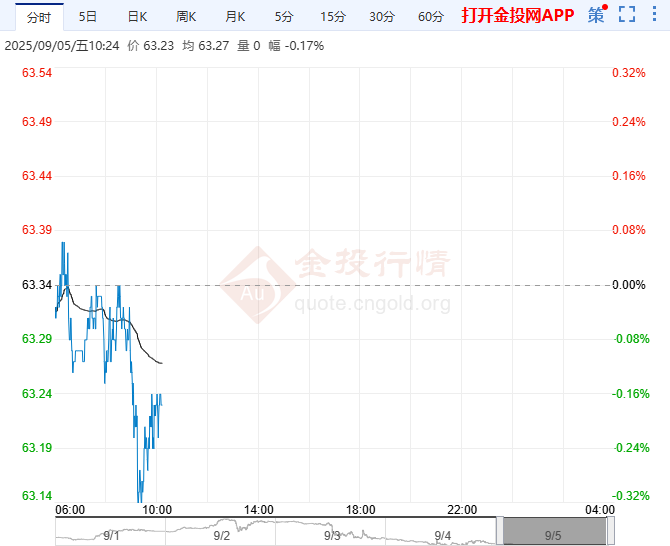
Group 1 - As of the week ending August 29, 2025, U.S. commercial crude oil inventories increased by 2.415 million barrels to 421 million barrels, contrary to market expectations of a decrease of 2.031 million barrels [1] - The U.S. Strategic Petroleum Reserve (SPR) inventory rose by 509,000 barrels to 40.47 million barrels, the highest level since October 14, 2022 [1] - Gasoline inventories decreased by 3.795 million barrels, marking the largest decline since the week ending April 25, 2025, and have now fallen for seven consecutive weeks [1] Group 2 - U.S. domestic crude oil production decreased by 16,000 barrels to 13.423 million barrels per day as of the week ending August 29, 2025 [1] - The four-week average supply of U.S. crude oil products was 21.282 million barrels per day, an increase of 2.47% compared to the same period last year [1] - U.S. crude oil imports, excluding the Strategic Reserve, increased by 508,000 barrels per day to 6.742 million barrels per day [1] Group 3 - As of September 5, 2025, WTI crude oil was reported at $63.23 per barrel, down 0.17%, while Brent crude was at $66.74 per barrel, down 0.21% [3]

美国上周API原油库存增加62.2万桶,预期减少340万桶,前值减少97.4万桶
Mei Ri Jing Ji Xin Wen· 2025-09-03 21:10
Core Insights - The API crude oil inventory in the U.S. increased by 622,000 barrels last week, contrary to expectations of a decrease of 3.4 million barrels [1] - The previous week's inventory showed a decrease of 974,000 barrels [1] Inventory Data - Current inventory change: +622,000 barrels [1] - Expected inventory change: -3.4 million barrels [1] - Previous inventory change: -974,000 barrels [1]
大越期货原油早报-20250902
Da Yue Qi Huo· 2025-09-02 05:47
Report Industry Investment Rating No relevant information provided. Core View of the Report The overnight attack on an oil tanker by the Houthi armed forces and the US considering giving up diplomatic efforts to promote a cease - fire between Russia and Ukraine have raised geopolitical concerns, stimulating oil prices to rise. However, as the summer peak - season demand ends, there is pressure on the upside. In the short term, oil prices will continue to fluctuate, with an expected range of 485 - 495 for the short - term, and long - term long positions are recommended to be held [3]. Summary by Directory 1. Daily Tips - For crude oil 2510, the fundamentals are neutral due to factors like US diplomatic considerations, Houthi armed attacks, and India's oil imports. The basis shows that the spot is at a premium to the futures, which is positive. Inventory data presents a neutral situation. The 20 - day moving average is downward with the price below it, which is negative. As of August 26, the WTI crude oil main - contract long positions decreased while Brent crude oil long positions increased, overall neutral [3]. 2. Recent News - Oil traders expect OPEC+ to keep crude oil production unchanged at the upcoming meeting. OPEC+ over - production, Asian fuel consumption slowdown, and supply surges in the US, Brazil, and Canada have led to an oil glut, causing a 9% drop in oil prices this year. Brent crude futures traded near $68 per barrel on Monday [5]. - On September 1, the Yemeni Houthi armed forces attacked the "Scarlet Ray" oil tanker in the Red Sea. After the Israeli military's air - strike on Sanaa on August 28, the Houthi armed forces vowed to retaliate and escalate attacks on Israel [5]. - Amid deteriorating relations with the US, Modi reaffirmed India's partnership with Russia. Modi and Putin discussed bilateral cooperation in various fields and the Ukraine conflict. Modi also called for peace with Zelensky [5]. 3. Long - Short Concerns - **Likely Positive Factors**: US secondary sanctions on Russian energy exports; extension of the Sino - US tariff exemption period [6]. - **Likely Negative Factors**: A possible cease - fire between Russia and Ukraine; continued tension in US trade relations with other economies [6]. - **Market Drivers**: In the short term, geopolitical conflicts are decreasing while trade tariff risks are rising. In the medium - to - long - term, supply will increase after the peak season ends [6]. 4. Fundamental Data - **Futures Quotes**: On September 1, compared with the previous day, Brent crude oil decreased by $0.50 (- 0.74%), WTI crude oil decreased by $0.59 (- 0.91%), SC crude oil increased by 1.80, and Oman crude oil remained unchanged [7]. - **Spot Quotes**: Compared with the previous day, UK Brent increased by $0.57 (0.84%), WTI decreased by $0.59 (- 0.91%), Oman crude oil increased by $0.75 (1.07%), Shengli crude oil increased by $0.86 (1.32%), and Dubai crude oil increased by $0.64 (0.91%) [9]. - **Inventory Data**: As of August 22, the US API crude oil inventory decreased by 974,000 barrels, the EIA inventory decreased by 2.392 million barrels, and the Cushing area inventory decreased by 838,000 barrels. As of September 1, the Shanghai crude oil futures inventory was 5.721 million barrels, unchanged [3]. 5. Position Data - **WTI Crude Oil**: As of August 26, the net long positions of WTI crude oil funds were 109,472, a decrease of 10,737 compared with August 19 [17]. - **Brent Crude Oil**: As of August 26, the net long positions of Brent crude oil funds were 109,472, a decrease of 10,737 compared with August 19 [19].
申万期货原油甲醇策略日报-20250901
Shen Yin Wan Guo Qi Huo· 2025-09-01 05:03
Report Industry Investment Rating - Not provided Core Viewpoints - For crude oil, SC rose 0.21% on Friday night. Concerns about supply disruptions due to geopolitical factors and potential interest - rate cuts may boost oil demand. US crude and product inventories decreased last week, and subsequent attention should be paid to OPEC's production increase [3]. - For methanol, it fell 0.89% on Friday night. The domestic methanol overall plant operating rate decreased slightly, while the coal - to - olefins plant operating rate increased. Coastal methanol inventory is at a high level but the accumulation rate has slowed, and methanol is short - term bullish [3]. Summary by Related Catalogs Futures Market Crude Oil - Price changes: SC near - month rose 0.85% (4.0 yuan), SC next - month rose 0.73% (3.5 yuan), WTI near - month rose 0.72% (0.46 dollars), WTI next - month rose 0.69% (0.44 dollars), Brent near - month fell 0.22% (- 0.15 dollars), Brent next - month fell 0.28% (- 0.19 dollars) [2]. - Volume and open interest: SC near - month volume was 98,327, open interest was 31,938 with a decrease of 3904; SC next - month volume was 193,074, open interest was 294,186 with a decrease of 10952; WTI near - month volume was 106,713, open interest was 199,459 with an increase of 1571; WTI next - month volume was 105,363, open interest was 159,322 with a decrease of 49565; Brent near - month volume was 330,931, open interest was 607,763 with an increase of 19824 [2]. - Spreads: SC near - month - SC next - month spread was - 8.2 yuan (previous - 8.7 yuan), SC near - month - WTI near - month spread was 18.9 yuan (previous 18.2 yuan), SC near - month - Brent near - month spread was - 8.2 yuan (previous - 13.2 yuan), WTI near - month - WTI next - month spread was 3.92 dollars (previous 3.78 dollars), Brent near - month - Brent next - month spread was 0.66 dollars (previous 0.62 dollars) [2]. Methanol - Price changes: 01 contract fell 0.51% (- 12.0 yuan), 05 contract fell 0.46% (- 11.0 yuan), 09 contract fell 0.94% (- 21.0 yuan) [2]. - Volume and open interest: 01 contract volume was 419,697, open interest was 821,019 with an increase of 35186; 05 contract volume was 16,487, open interest was 95,958 with an increase of 3509; 09 contract volume was 26,306, open interest was 12,902 with a decrease of 16307 [2]. Spot Market Crude Oil - International market: OPEC basket crude price was 69.65 dollars (previous 69.75 dollars), Brent DTD was 67.51 dollars (previous 67.38 dollars), Russian ESPD was 64.60 dollars (previous 64.15 dollars), Oman was 69.81 dollars (previous 69.43 dollars), Dubai was 69.98 dollars (previous 69.45 dollars), Cinta was 65.46 dollars (previous 65.20 dollars) [2]. - Domestic market: Daqing was 64.90 dollars (previous 64.71 dollars), Shengli was 65.11 dollars (previous 65.10 dollars), China gasoline wholesale price index was 7,919 yuan/ton (previous 7,929 yuan/ton), China diesel wholesale price index was 6,811 yuan/ton (previous 6,820 yuan/ton), FOB naphtha (Singapore) was 63.75 dollars (previous 63.31 dollars), aviation kerosene ex - factory price was 5,605 yuan/ton (previous 5,676 yuan/ton) [2]. Methanol - Port price was 257 dollars, East China was 2245 yuan, North China was 2220 yuan, South China was 2247 yuan, with price decreases in all regions [2]. Comment and Strategy Crude Oil - Geopolitical factors such as India - US tariff issues and Russia - Ukraine attacks on energy infrastructure have raised supply concerns. Interest - rate cut expectations may stimulate oil demand. US crude and product inventories decreased last week, and OPEC's production increase situation should be monitored [3]. Methanol - As of August 28, the domestic methanol overall plant operating rate was 72.19% (down 0.82 percentage points month - on - month but up 0.81 percentage points year - on - year), and the coal - to - olefins plant operating rate was 82.24% (up 0.83 percentage points month - on - month). Coastal methanol inventory was 129.95 tons (up 5.1 tons from August 21, a 4.08% increase and 19.71% higher year - on - year), and the estimated import volume from August 29 to September 14 is 94.05 - 95 tons. Methanol is short - term bullish [3].
本周原油小幅反弹
GOLDEN SUN SECURITIES· 2025-08-31 10:45
Investment Rating - The report maintains an "Accumulate" rating for the oil and petrochemical industry [5] Core Viewpoints - The oil market experienced a slight rebound this week, with WTI and Brent crude oil prices closing at $64.01 and $68.12 per barrel, respectively, reflecting increases of 0.55% and 0.58% from the previous week [1] - OPEC+ has completed four consecutive production increases since May, with a total increase of over 1.2 million barrels per day from May to July, and an increase of 548,000 barrels per day in August, marking the highest monthly increase since the Saudi price war in 2020 [2] - The IEA and EIA have adjusted their forecasts for global oil supply and demand, with the IEA predicting a supply increase of 2.5 million barrels per day for the year, while the EIA forecasts a 2.28 million barrels per day increase [2][3] - The report highlights a significant decline in U.S. commercial crude oil inventories, with a decrease of 2.392 million barrels reported for the week ending August 22 [3] Supply Summary - OPEC+ plans to increase production by an additional 550,000 barrels per day in September, aiming to fully restore the 2.2 million barrels per day of production capacity that was previously cut [2] - The IEA's August report indicates that non-OPEC+ countries are expected to add 1.3 million barrels per day of supply by 2025, primarily from the U.S., Brazil, Canada, and Guyana [2] Demand Summary - The IEA has downgraded its demand forecast for emerging markets, particularly for China, Brazil, Egypt, and India, while the EIA has raised its demand forecast for China, Canada, and the U.S. [3] - The IEA's forecast for demand growth in 2025 has been reduced from 700,000 barrels per day to 680,000 barrels per day, marking the lowest growth rate since 2009, excluding the unique macroeconomic events of 2020 [3] Price Support Analysis - The average breakeven price for U.S. oil and gas companies developing new wells is approximately $65 per barrel, with larger companies having a breakeven price around $61 per barrel [4] - The report indicates that 61% of U.S. oil and gas executives believe that if WTI prices remain at $60 per barrel, their companies will slightly reduce production [4]