牛市

Search documents
“牛市看客”赢时胜:牛市来了,我亏了4个亿
市值风云· 2025-12-31 10:08
三问赢时胜:为什么行业景气度高涨业绩反而下滑?为什么财务核算问题频发?为什么实控人在监管函 后急于减持? 作者 | 观韬 编辑 | 小白 随着金融科技板块在2025年12月初的集体躁动,赢时胜(300377.SZ)的股价在12月5日午后冲高涨 停,当天成交额高达17.15亿,换手率达到13.76%。随后的交易日,赢时胜仍然迈着碎步小阳线,持 续上涨至今。 与股价上涨形成鲜明对比的是,赢时胜的实际控制人唐球在这一期间进行了大手笔减持。 更有意思的是,赢时胜业绩反而从2024年第四季度开始急转直下。2024年第三季度,公司还能实现 4025万净利润,但第四季度就出现巨亏,此后一直未能彻底扭转颓势。 2025年第一季度,赢时胜亏损6899万;第二季度亏损收窄至1019万;第三季度勉强扭亏为盈,实现净 利润3597万,但同比仍下滑10.62%。 从单季度营收表现看,牛市来临之后,赢时胜的单季度业绩表现跟牛市之前并无两样,甚至比2023年 和2024年同期数据更差一些。 (来源:Choice数据,制图:市值风云APP) 究其根本原因,与同花顺和东方财富主要面向C端用户提供金融信息服务,牛市中交易量和用户活跃 度大增,会 ...



花旗:美联储降息兼买债,货币政策转向增加市场流动性!预期美股2026年牛市持续但波动犹存,维持超配大型股
Sou Hu Cai Jing· 2025-12-30 01:56
格隆汇12月30日|投资策略及资产配置主管廖嘉豪指,预期2026年牛市持续,但波动犹存,维持超配大 型股,受惠盈利增长,预期持续高企且不断上升,人工智能(AI)发展并非泡沫,企业仍在加速应用AI, 维持美国增长股仍是投资者防守性部署的策略。美联储降息兼买债,货币政策转向增加市场流动性,加 上放松监管、银行资产负债表强劲,以及贷存比例低企,有利明年债务杠杆健康增长,美国或可在明年 继续强势。 【免责声明】本文仅代表作者本人观点,与和讯网无关。和讯网站对文中陈述、观点判断保持中立,不 对所包含内容的准确性、可靠性或完整性提供任何明示或暗示的保证。请读者仅作参考,并请自行承担 全部责任。邮箱:news_center@staff.hexun.com ...

无人看空!华尔街一致预期2026美股继续涨,资深策略师对共识感到担忧
Hua Er Jie Jian Wen· 2025-12-29 13:53
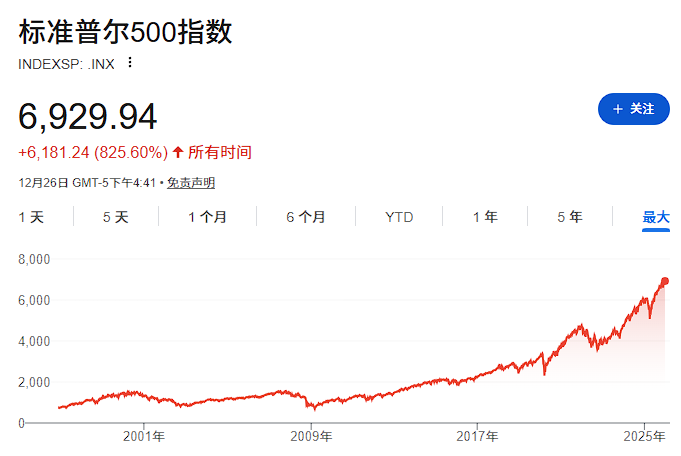
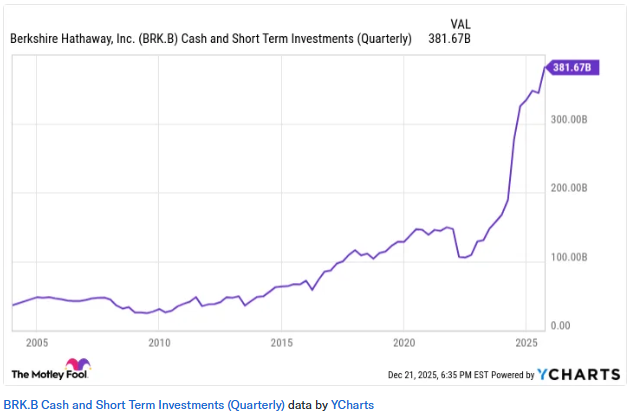
华尔街已形成罕见的乐观共识:美股将在2026年实现连续第四年上涨,创下近二十年来最长连涨纪录。 12月29日,据彭博报道,在标普500指数自2022年10月低点反弹约90%之后,卖方策略师几乎完全放弃 了看空立场。据彭博的一项调查显示,在受访的21位市场预测者中,没有任何一位预测明年股市会下 跌。华尔街的平均预测意味着标普500指数在2026年将再上涨9%。 尽管人工智能泡沫、美联储政策走向以及特朗普第二任期的不确定性仍是悬而未决的风险,但华尔街策 略师们选择了集体乐观。如果这一极度乐观的一致预期成真,美股将迎来全球金融危机爆发前夕以来最 长的年度上涨周期。其中最为乐观的预测如果实现,标普500指数将自1990年代互联网泡沫以来,首次 出现连续四年两位数回报的盛况。 报道称,这种步调一致的乐观情绪,标志着策略师们在经历了数年"预测失效"后的彻底转向。面对股市 在动荡中展现出的惊人韧性,此前看空的分析师(摩根大通等)被迫不断上调预期,以追赶市场的实际 表现。 值得注意的是,尽管没有策略师预测大跌,但部分人士仍在提示风险。资深市场策略师Ed Yardeni预计 标普500指数明年将收于7700点,较上周五收盘价上 ...
牛市信仰拉满!华尔街一致押注美股连涨四年 AI热潮、货币宽松与经济韧性将成最大助力
Zhi Tong Cai Jing· 2025-12-29 13:52
Core Viewpoint - A consensus among major banks and boutique investment firms indicates that the U.S. stock market is expected to rise for the fourth consecutive year by 2026, marking the longest streak in nearly two decades [1]. Group 1: Market Sentiment - The S&P 500 index has surged approximately 90% since its low in October 2022, despite concerns over the potential decline of the AI boom, economic conditions, and Federal Reserve interest rate decisions [1]. - Analysts surveyed predict a median year-end target for the S&P 500 index in 2026, suggesting an additional upside of about 9% for the coming year, with no analysts forecasting a decline [1]. - Market strategist Ed Yardeni expresses concern over the prevailing optimism, noting that the long duration of positive trends has led to a collective bullish sentiment that may be worrisome [2]. Group 2: Economic Factors - The optimism in Wall Street is bolstered by the resilience of the U.S. economy, which continues to show strength despite challenges posed by trade policies and the impact of AI investments on tech stock valuations [5]. - The S&P 500 index experienced a significant drop of nearly 20% from mid-February to early April, prompting strategists to revise their forecasts downward before adjusting them upward again due to a rapid market rebound [4]. - The economic growth in the third quarter was the fastest in two years, driven by strong consumer and business spending, alongside more stable trade policies [13]. Group 3: Analyst Predictions - Christopher Harvey, a senior strategist, maintains a year-end target of 7,450 points for the S&P 500 index in 2026, indicating an 8% increase, while cautioning against macro risks that may disrupt the market [11]. - Morgan Stanley has shifted to a bullish stance, predicting the S&P 500 index will rise to 7,500 points, supported by robust corporate earnings and declining interest rates [12]. - Savita Subramanian from Bank of America anticipates the S&P 500 index will reach 7,100 points in 2026, but warns that high valuations may limit further gains [12].

囤金近4000亿!巴菲特“无声”的最后警钟:历史预示2026年股市或迎剧变?
智通财经网· 2025-12-29 06:59
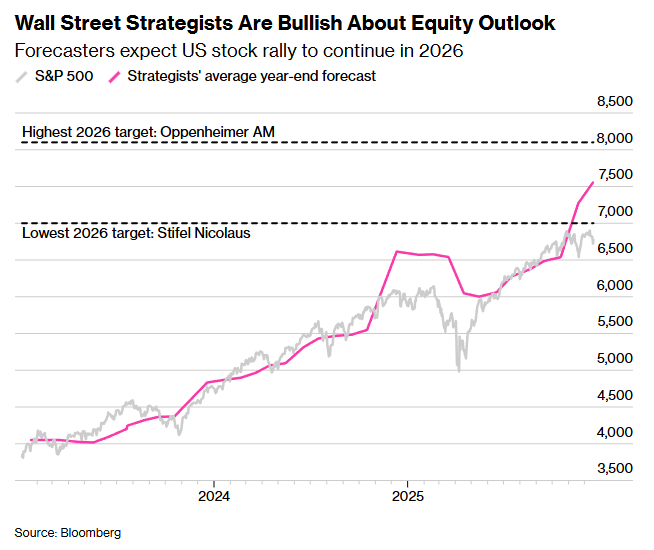
Core Insights - Berkshire Hathaway's cash reserves have surpassed $400 billion, exceeding the market capitalization of several large companies, indicating a strategic shift towards U.S. Treasury bonds as a safe asset while other investors chase AI stocks [1][2] - Warren Buffett's actions, particularly as he approaches retirement in early 2026, serve as a warning signal to investors about the current market conditions and potential future risks [1][3] Group 1: Cash Reserves - Since the beginning of the 2023 bull market, Berkshire Hathaway has increased its cash reserves from $100 billion to nearly $400 billion, largely due to a reduction in its Apple holdings from nearly $200 billion to $60 billion [2] - Buffett has also reduced or completely sold positions in several stocks, including U.S. Bank, while maintaining a cautious stance on AI stocks despite a recent small increase in Google shares [2] Group 2: Market Sentiment - Buffett's accumulation of cash during a time of heightened market enthusiasm for technology stocks suggests a belief that the current market is nearing a bubble phase rather than a pre-recession period [3] - The average P/E ratio of the S&P 500 is approaching historical peaks, with each of the "seven giants" in the AI sector exceeding a P/E ratio of 30 [3] Group 3: Investment Strategy - Buffett's cash strategy indicates a lack of attractive buying opportunities in the current market, emphasizing a patient approach until valuations return to reasonable levels [4] - Investors are cautioned not to blindly follow Buffett's strategy of liquidating all stock holdings, as individual financial situations vary significantly [4]
新老经济的平衡-2026年A股市场策略展望
2025-12-29 01:04
Summary of Conference Call Records Industry Overview - The focus is on the A-share market in China, particularly the balance between new and traditional economies as of 2026 [1][4]. Key Points and Arguments Economic Environment - China's GDP has maintained a nominal growth rate of around 4% since the second half of 2023 [1][2]. - The broad asset management strategy has shifted from being long on bonds and short on stocks to being long on stocks and short on bonds, indicating an increase in risk asset allocation [1][2]. Market Outlook for 2026 - A systemic rebalancing between new (currently 18% weight) and traditional economies is anticipated, similar to the adjustments seen between new energy and traditional energy from 2019 to 2021 [1][4]. - High valuation and high volatility assets may not sustain long-term market support, necessitating a style switch for stable development [4][6]. - The market is expected to enter a positive driving phase by 2026, characterized by a "long on stocks, short on bonds" trend, leading to a dual rise in both stock prices and equity allocation [5]. Valuation and Performance - High valuation and high volatility assets may perform well in the short term but are likely to see a decline in long-term returns, with a potential decrease in Sharpe ratios [6][7]. - The technology growth sector contributed significantly to the CSI 300 index returns in Q3, but its weight was only 25%, indicating structural imbalance and a potential shift towards value styles [6][7]. Nominal Economic Predictions - The expected rise in the deflation index will likely improve nominal economic conditions, increasing inflationary pressures and enhancing corporate profitability, which may provide more investment opportunities in traditional industries [8][9]. Market Characteristics and Trends - The market is transitioning from recessionary trading to a stagflation or shallow recovery pattern, benefiting undervalued, high-quality assets [3][8]. - The anticipated bull market in 2026 is expected to see index growth and reduced volatility, with value and quality assets playing a more sustained role in market support [9][12]. Investment Style Dynamics - In a pro-cyclical environment, high valuation and high volatility assets perform well, but in a counter-cyclical phase, precise stock selection becomes crucial for excess returns [10]. - A divergence followed by a convergence trend is expected among different stock types over the next two years, with value stocks experiencing valuation expansion and quality stocks facing compression [11][12]. Other Important Insights - The overall market dynamics suggest that policy guidance will play a significant role in balancing new and traditional economies, facilitating a smoother transition towards a more stable economic environment [12].
白银、碳酸锂、有机硅都在涨价,有什么需要注意的?| 1228 张博划重点
Hu Xiu· 2025-12-28 14:35
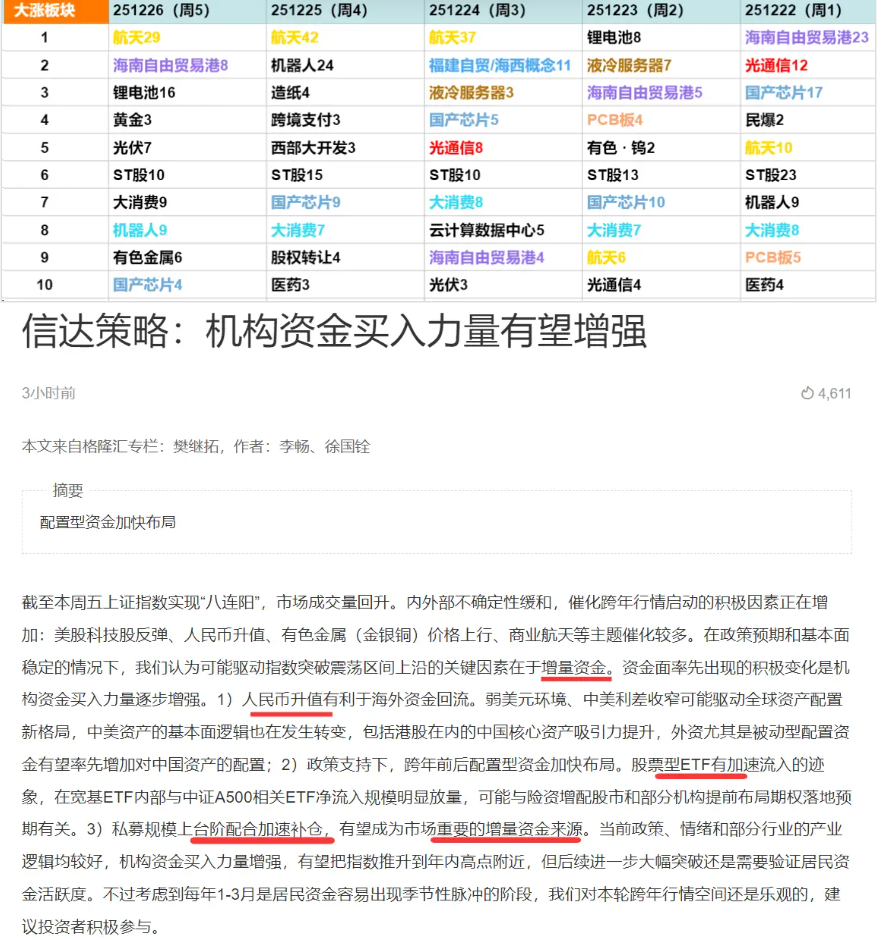
Group 1 - The core viewpoint of the article highlights the potential for increased institutional buying power, which may drive the market index to break through its current resistance levels due to a combination of factors including a rebound in US tech stocks, appreciation of the RMB, and rising prices of metals like gold, silver, and copper [2] - The Shanghai Composite Index has achieved an "eight consecutive days of gains," indicating a recovery in market trading volume and a positive shift in external uncertainties [2] - Institutional buying power is expected to strengthen as overseas capital flows back into Chinese assets, driven by a weak dollar environment and narrowing interest rate differentials between China and the US [2][3] Group 2 - The private equity fund sector is experiencing significant growth, with the total management scale increasing by 1.04 trillion yuan to reach 7.0076 trillion yuan in October 2025, and continuing to rise to 7.0383 trillion yuan in November [3] - The asset allocation of private equity funds has increased, with the average position rising to 66%, approaching historical averages seen during bull markets [3] - The current market conditions, including favorable policies and improved sentiment, are expected to enhance institutional buying power, potentially pushing the index closer to its yearly high [2][3]
百利好晚盘分析:节后行情 金价调整
Sou Hu Cai Jing· 2025-12-26 09:13
Gold Market - The recent Christmas holiday in Europe and the US has led to a quieter news environment for gold [2] - The gold bull market this year is driven by multiple favorable factors, including global central bank purchases disrupting supply-demand balance, a shift in the Federal Reserve's monetary policy towards easing, and concerns over the US dollar's credibility due to Trump's trade policies and rising national debt [2] - Looking ahead to 2026, concerns over US dollar credibility and sovereign debt are expected to persist, alongside ongoing geopolitical tensions, suggesting that the gold bull market may continue [2] - Analyst Chen Yu from Bailihau Special Research believes that with lower interest rates and a weaker dollar, long-term support for gold prices remains unchanged, although after two years of a bull market, prices are likely to oscillate between consolidation and continuation [2] - On the technical front, recent price action shows a strong upward trend, with support found at the 20-day moving average [2] Oil Market - The oil market has been under pressure this year due to oversupply, leading to weak price performance [3] - Future prospects indicate that expanded sanctions on Russian oil companies by the US and Europe may create obstacles for buyers, providing some support for oil prices despite no significant decline in Russian oil output [3] - Oil-producing countries have significantly increased production this year, particularly non-OPEC nations, but the urgency for further increases from Saudi Arabia has diminished, as evidenced by OPEC+ pausing production increases in Q1 of next year [3] - Demand-side improvements are anticipated as global trade conditions become clearer, with recent reports from major global agencies raising oil demand growth forecasts [3][4] - The technical outlook shows a potential for a short-term price rebound, with key support at $58 and resistance at $60 [4] US Dollar Index - There is considerable internal disagreement within the Federal Reserve regarding future rate cuts, which may limit the downside for the dollar [5] - The potential announcement of a new Federal Reserve chair by the US President could challenge the Fed's independence, especially given Trump's preference for loose monetary policy, which may exert downward pressure on the dollar [5] - According to CME's FedWatch, the probability of a 25 basis point rate cut in January is 15.5%, with an 84.5% chance of rates remaining unchanged [6] - The technical analysis indicates a bearish trend, with recent price action showing signs of stabilization, but the dollar remains below the 20-day moving average [6] Nikkei 225 - The Nikkei 225 index has been experiencing a period of high-level consolidation over the past month, with no clear directional movement until a breakout occurs [7] - The index is currently above the 20-day moving average, and a bullish crossover between the 20-day and 62-day moving averages suggests a higher likelihood of further gains [7] Copper Market - The copper market is showing strong bullish momentum, with recent price action indicating a breakout from a consolidation range [8] - The 20-day moving average continues to trend upward, indicating that bullish sentiment is dominant [8] - Key support is noted at $5.62, which will be monitored for potential price corrections [8] Market Overview - Russian Deputy Prime Minister Novak stated that oil consumption has increased by over 1 million barrels per day annually over the past two years, with projections suggesting a potential increase of 20 million barrels per day by 2050 [9] - Saudi government data indicates an 11.8% increase in commodity exports in October, with oil exports rising by 4.0% [9] - An agreement has been reached between Iraq, the Kurdistan region, and international companies to extend the oil export agreement for three months until March 31 of next year [10]

格林大华期货春季行情回顾
Ge Lin Qi Huo· 2025-12-26 08:45
1. Report Industry Investment Rating No relevant content provided. 2. Core Viewpoints of the Report - Chinese equity assets are expected to initiate a spring market. Factors include the Fed's monthly purchase of $40 billion in short - term bonds, intense space infrastructure competition between China and the US, institutional funds entering the market through A500ETF, the approaching of CSI 500 and CSI 1000 indices to previous highs, the seasonal pattern of the Chinese stock market, the end of the A - share sideways movement, the high "science content" of the CSI 500 index, and the accelerating appreciation of the RMB [37]. 3. Summary According to Relevant Catalogs Global Economic Outlook - Goldman Sachs believes that the global stock market has entered the "optimistic stage" of a bull market, and in 2026, earnings will continue to support the market, with a total return rate of 15% including dividends [4]. - The Fed cut interest rates by 25 basis points in December, started buying $40 billion in short - term bonds monthly, and restarted the expansion of its balance sheet [4][5]. - Trump stated that the next Fed chairman must believe in "substantial interest rate cuts" [4]. - Goldman Sachs analysts warned that the current decline in Las Vegas gambling revenue is similar to the early warning signals before the 2008 financial crisis [4]. - The US released a new National Security Strategy, adjusted its economic relations with China, and aimed to revitalize its economic autonomy [4]. - The Fed's Beige Book showed that consumer K - shaped differentiation has intensified. High - income consumers' spending remains resilient, while middle - and low - income families are tightening their belts [4]. - The Bank of Japan raised interest rates by 25 basis points, and the yield of Japan's 10 - year government bonds rose to 2.0% [4]. - The US unemployment rate rose to 4.6%, and economists are worried that large - scale corporate layoffs are an economic warning signal [4][11]. - The US is returning to the Monroe Doctrine, which will have a profound impact on major asset classes [4]. - The US November core CPI was 2.6%, far lower than the expected 3.0% [8]. - The US weekly initial jobless claims were 224,000 [11]. - The US employment outlook declined. The number of new ADP jobs in November was negative, and the number of active corporate layoffs increased rapidly [14]. - The total retail and food sales in the US in October showed zero month - on - month growth, indicating weakening consumption [17]. - The US capital goods import amount in September decreased rapidly both year - on - year and month - on - month, suggesting a poor manufacturing outlook [20]. - The US ISM manufacturing PMI index continued to contract in November [23]. - The US manufacturing PMI price index and service PMI price index continued to expand in November, indicating accelerating inflation [26]. - The US PPI commodity month - on - month growth rate in September was 0.9%. Coupled with weakening consumption and declining employment, the US economy is slipping into stagflation [29]. - The eurozone manufacturing PMI contracted again in November, and the eurozone economy was greatly impacted by US counter - tariffs [32]. - The Bank of Japan's interest rate hike and the rise in the yield of Japanese government bonds will have a negative impact on US bonds, US stocks, and Chinese bonds [34]. Asset Allocation - The Fed's purchase of short - term bonds is beneficial to Chinese equity assets [37]. - The space infrastructure competition between China and the US has led to a high - growth period in commercial space, and satellite ETFs have risen strongly [37][38]. - Some institutions have started spring layout in advance, and institutional funds have entered the market through A500ETF, pushing the Shanghai Composite Index above 3,950 points [37][45]. - The CSI 500 and CSI 1000 indices are close to previous highs and are expected to reach new highs after New Year's Day [37]. - The Chinese stock market has a seasonal pattern, and usually starts a spring offensive around the Spring Festival [37]. - The A - share market has been sideways for 4 months since late August and is expected to start a new market [37][48]. - Among the four stock index futures, the CSI 500 index has the highest "science content" and is expected to break through previous highs [37][51]. - The accelerating appreciation of the RMB is conducive to the influx of international capital into China [37][54]. Space Infrastructure - Blue Arrow Aerospace verified the vertical recovery technology of the first - stage rocket on December 6 [41].
币圈老吕:未来一到两年如何正确看待比特币涨跌,以太坊以空为主
Sou Hu Cai Jing· 2025-12-26 02:40
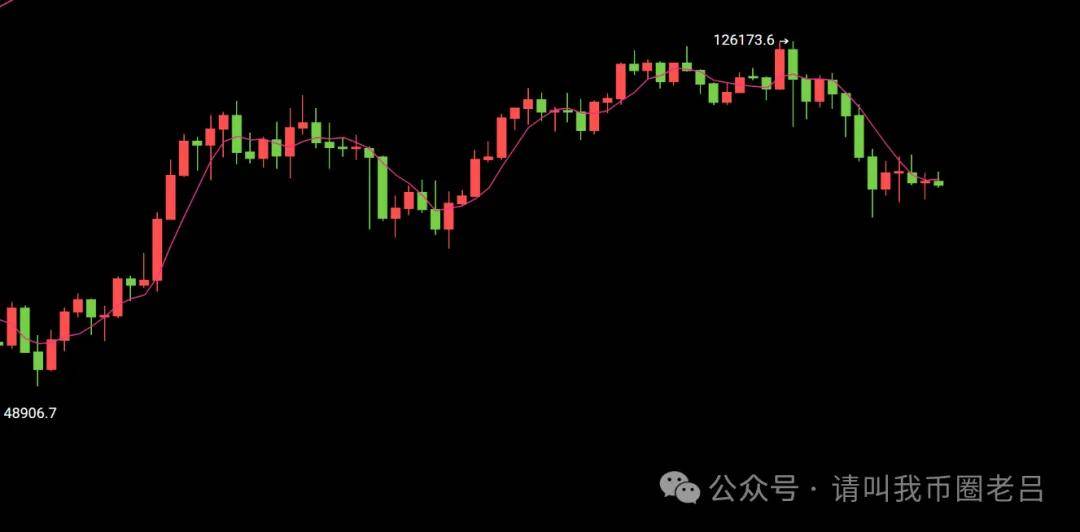
Group 1 - The core viewpoint indicates that Ethereum is experiencing significant price fluctuations, with a larger range of volatility compared to Bitcoin, leading to increased risks for retail investors [1][2] - The analysis suggests that Bitcoin's price must remain below $90,000 for bullish opportunities to be considered, while Ethereum is expected to continue oscillating between $2,700 and $3,000 [1][2] - The market manipulation is evident, with price movements occurring predictably at specific times, indicating a coordinated effort to control the market [1] Group 2 - For Ethereum, key support levels are identified at $2,380 and $2,120, with the former being suitable for medium-term trades and the latter for long-term positions [3] - The analysis emphasizes that a significant price drop of at least 70% from previous highs is necessary before a new bull market can begin, with a target of around $4,120 before a potential bear market [3] - Bitcoin is waiting for a daily divergence opportunity at $74,200 to initiate a new bull market, with resistance levels identified between $108,000 and $110,000 [5] Group 3 - The strategy for both cryptocurrencies remains cautious, focusing on short positions unless strong bullish signals are observed [5][6] - The analysis of gold indicates a continued bullish outlook, with expectations for prices to reach around $2,000, reinforcing the preference for gold over cryptocurrencies [6]