高分红

Search documents
中国神华(601088):高分红持续回馈投资者,资产注入有望打开成长空间
Huaxin Securities· 2025-07-03 07:08
Investment Rating - The report assigns a "Buy" investment rating for the company, marking its first coverage [8]. Core Insights - The company experienced a year-on-year revenue decline of 21.1% in Q1 2025, primarily due to decreases in coal sales volume and prices, as well as declines in electricity sales volume and prices [4]. - The company has completed the acquisition of Hangjin Energy, which adds significant coal reserves and production capacity, enhancing its integrated competitive advantage and long-term profitability [5][6]. - The company maintains a high dividend payout ratio, with a projected dividend yield of 5.2% for 2024, continuing its trend of high returns to investors since 2017 [6]. Financial Performance Summary - In Q1 2025, the company reported a coal production of 82.5 million tons, a slight decrease of 1.1% year-on-year, while coal sales volume fell by 15.3% to 99.3 million tons [4]. - The company forecasts net profits of 50.04 billion, 50.28 billion, and 50.51 billion yuan for 2025, 2026, and 2027 respectively, with corresponding P/E ratios of 16.5, 16.4, and 16.3 [7][8]. - The main revenue for 2025 is projected at 321.38 billion yuan, reflecting a decline of 5.0% from the previous year [10]. Cost and Expense Analysis - The sales expense ratio for Q1 2025 was 0.19%, a year-on-year increase of 0.07 percentage points, while the management expense ratio was 4.22%, up 1.14 percentage points year-on-year [5]. - The financial expense ratio increased to 0.23%, marking a year-on-year rise of 0.20 percentage points [5]. Asset and Resource Development - The acquisition of assets is expected to significantly enhance the company's operational efficiency and sales effectiveness, particularly in the eastern Mongolia region [5]. - The Tarang Coal Mine is projected to reach an annual production capacity of 10 million tons by 2029, which will substantially boost revenue and profitability [5].

高分红的关键在于成长性吗?
雪球· 2025-06-21 05:36
Core Viewpoint - The article argues that high dividend stocks are not solely a result of growth but rather possess inherent traits that make them likely to offer high dividends, emphasizing the importance of business models and competitive advantages [2][3]. Business Model - Companies with light asset and low capital expenditure business models are more likely to become high dividend stocks, as they have lower fixed costs and more available cash for dividends [3]. - High capital expenditure businesses face more pressure to reinvest profits, reducing the likelihood of high dividends [3]. Competitive Advantage - Sustainable high dividends require companies to have a competitive moat, ensuring stable output capabilities [3]. - Examples include Changjiang Electric, which benefits from prime hydropower resources, and banks that leverage regulatory licenses and customer loyalty [4]. Dividend Sustainability - Companies like Fuyao and Yili, despite not being cash cows, maintain high dividends due to their competitive advantages, which allow for stable cash flow over time [4]. - The focus for identifying reliable long-term dividend stocks should be on the presence of both a favorable business model and a competitive moat [4]. Dividend Reinvestment - Dividend reinvestment can enhance income over time, creating a compounding effect similar to interest [5]. - Investors can set future passive income goals, allowing for a balance between current living expenses and future financial security [5].


煤炭行业呈现"高盈利、高现金流、高分红",煤炭ETF(515220)涨超1%,关注全市场唯一煤炭ETF投资机会
Mei Ri Jing Ji Xin Wen· 2025-06-20 02:41
Group 1 - The coal industry is experiencing "high profitability, high cash flow, and high dividends" with the coal ETF (515220) rising over 1% [1] - In May, coal supply and demand conditions gradually improved, with industrial raw coal production reaching 400 million tons, a year-on-year increase of 4.2% [1] - Daily average production remained low at 13.01 million tons, while coal imports decreased by 18% year-on-year, indicating ongoing import constraints [1] Group 2 - On the demand side, industrial thermal power generation increased by 1.2% in May, reversing the decline seen in April [1] - Hydropower generation saw a larger decline of 14.3%, while the growth rate of renewable energy generation slowed down, indicating improved coal power demand [1] - As of June 13, the port price of thermal coal stabilized at 609 yuan per ton, with expectations of a price rebound due to increased summer demand [1] Group 3 - The coal ETF (code: 515220) is the only coal ETF in the market, tracking the CSI Coal Index (code: 399998), which reflects the overall performance of listed companies involved in coal mining, processing, and sales [1] - The CSI Coal Index is designed to represent the operational status of the coal sector in the capital market, showcasing its distinct industry characteristics and cyclicality [1]
陕鼓动力荣膺第十六届天马奖“股东回报奖”,连续15年保持分红,累计分红是融资的4.3倍
Zheng Quan Shi Bao Wang· 2025-06-17 07:09
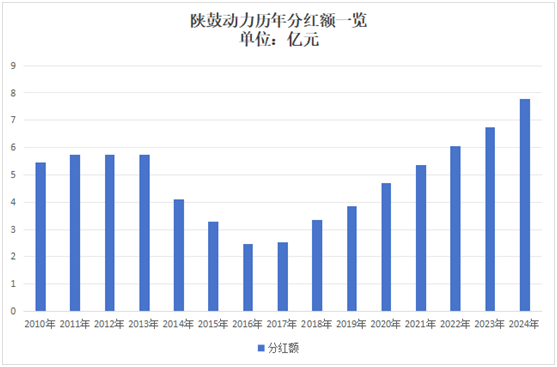
6月13日,由证券时报主办的第十六届中国上市公司投资者关系管理天马奖获奖名单隆重揭晓!陕鼓动力在本届评选中荣获 投资者关系管理股东回报奖。公司是国内透平风机龙头, 公司主要设备产品为高端透平压缩机,技术壁垒高,价值量大, 下游以大型流程工业为主。 从公司回复投资者咨询角度看,今年以来,公司在上证e互动平台累计回答投资者20个问题,回复率为68.9%;2024年累计 回答问题46个,回复率为73%,整体回复率均较高。 从分红率(分红额/净利润)来看,上市这15年间,陕鼓动力整体分红率为68.88%,2016年和2017年的分红率甚至超过 100%,其他年份分红率在60%左右。股息率方面,以6月16日收盘价和2024年分红额计算,公司的最新股息率为5.09%,如 果以2024年末股价计算,股息率达到5.17%。 在参加地方上市公司协会举办的投资者集体接待活动上,陕鼓动力已累计参加5届"陕西辖区上市公司投资者集体接待日"活 动。同时,从2020年开始,公司几乎在每个定期报告发布后,均举办业绩说明会,用面对面的方式与投资者沟通交流。 陕鼓动力能常年保持高分红,主要得益于优秀的经营业绩。从历史看,陕鼓动力上市以来,每年 ...

美的、恒瑞和石头们横跨两地上市后,A股与H股“谁更具投资性价比”
Sou Hu Cai Jing· 2025-06-16 09:25
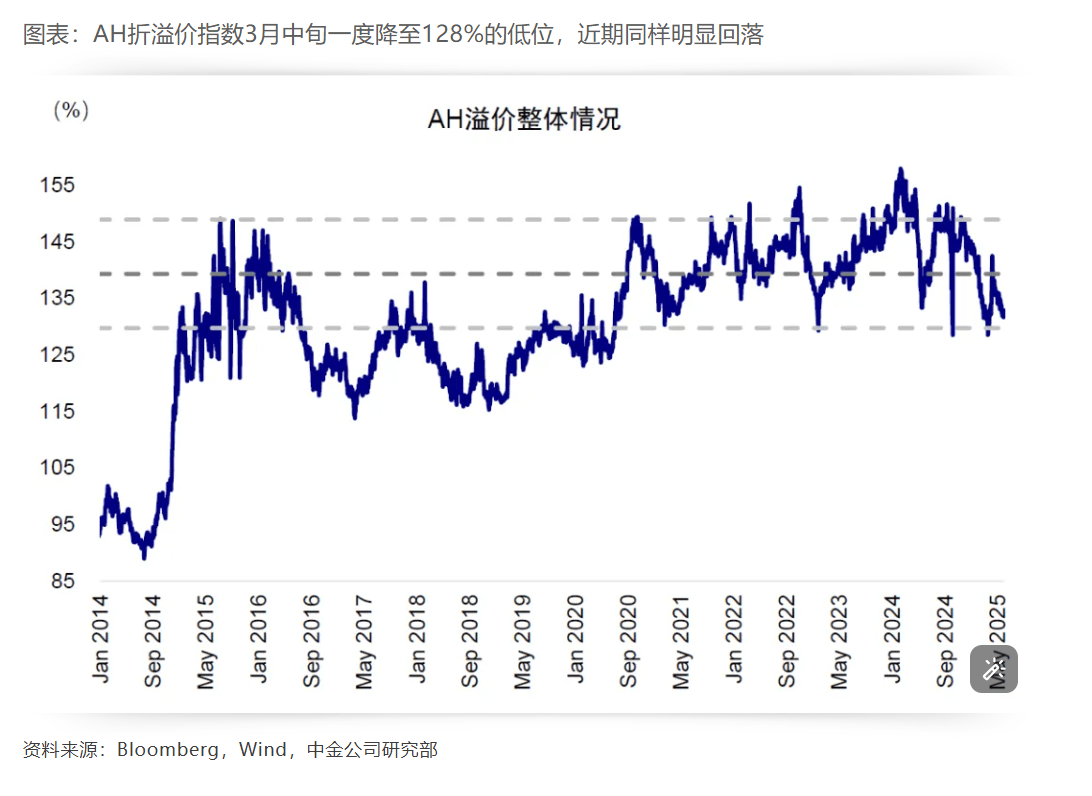
Core Viewpoint - The recent trend of leading A-share companies listing on H-shares is gaining momentum, with several companies successfully completing their listings in Hong Kong, enhancing their international market presence and brand recognition [1][2]. Group 1: H-share Listing Trend - Leading companies like Midea Group, CATL, and Heng Rui Pharmaceutical have recently listed on the Hong Kong Stock Exchange, indicating a growing trend among A-share companies to seek H-share listings [1]. - Stone Technology announced its intention to list on the Hong Kong Stock Exchange, further contributing to the ongoing "H-share boom" [2]. Group 2: Investment Considerations - Investors face a dilemma regarding whether to invest in A-shares or H-shares of companies listed on both exchanges, as each market has distinct advantages and disadvantages [2]. - Analysts highlight that H-shares generally trade at a discount compared to A-shares due to differences in investor structure, liquidity, and refinancing mechanisms [3][5]. Group 3: Price Discrepancies - The long-term price discrepancy between A-shares and H-shares is attributed to the lack of free convertibility and arbitrage mechanisms between the two markets [3]. - Currently, only 155 companies are listed on both A and H-shares, representing a small fraction of the total number of companies on the Hong Kong main board [5][6]. Group 4: Sector Analysis - The majority of companies listed on both exchanges are state-owned enterprises and belong to traditional economic sectors, such as finance and energy, which tend to attract dividend-focused investors [6]. - The analysis suggests that the price differences between A and H-shares can be better understood through a dividend perspective rather than purely market sentiment [6]. Group 5: Recent Market Dynamics - The phenomenon of "A-H share price inversion" has been observed, particularly with companies like CATL, where H-shares traded at a premium to A-shares, indicating a shift in market dynamics [7][9]. - The current macroeconomic environment and differing investor preferences contribute to the observed price behaviors between A and H-shares [9][10]. Group 6: Future Outlook - Companies like Stone Technology, which have a significant portion of their revenue from overseas markets, are expected to attract foreign investment and may experience similar price dynamics as seen with CATL [12][13]. - The ongoing trend of high dividend yields in the Hong Kong market, coupled with structural opportunities in sectors like new consumption and technology, positions H-shares favorably for investors [16][17].



金鹰基金杨晓斌:市场上下空间或有限 个股机会凸显行情或将持续
Xin Lang Ji Jin· 2025-06-16 06:03
Market Overview - The overall trend of AH stocks in the past six months can be summarized as "gathering market sentiment amid divergence, with gradual valuation recovery amid fluctuations" [1] - Since the pandemic, the stock market has been in a long-term adjustment due to risk control and the downturn in the real estate cycle [1] - After September 24, there has been a noticeable change in market style, with effective policies boosting confidence and altering the characteristics of a shrinking market [1] Investment Opportunities - The Chinese stock market has a high allocation value globally, with the Shanghai-Shenzhen 300 dividend yield remaining above 1.5%, indicating strong appeal for large incremental funds like insurance [1][2] - The continuous decline in bank deposit interest rates is expected to drive savings into the stock market as fixed deposits mature [1] - The return of overseas funds to the Chinese market is evident, with Hong Kong stocks showing significant recovery since the beginning of the year [2] Economic Context - The controllable economic downturn risk suggests that the current dividend yield is unlikely to experience a significant decline [2] - The major reasons for the significant pullback in A-shares since 2021 include economic downturn and deflation expectations, which are less pronounced compared to developed markets [2] - The stabilization of economic expectations is seen as a major positive factor for the stock market [4] Sector Analysis - Assets with strong earnings certainty and high dividend nature are expected to yield absolute returns, attracting low-risk preference funds [3] - Industries that are likely to see opportunities before the economic bottom is confirmed include innovative pharmaceuticals, new consumption, AI-related sectors, non-bank financials, and more [3] - Many downstream industries are gradually emerging from profit troughs due to price adjustments and technological breakthroughs, despite the year-on-year PPI hitting a new low [3] Conclusion - The risk-reward ratio in the stock market has become particularly evident after years of macro risks, with the current bottom position of the market not requiring a significant economic rebound for valuation recovery [4] - Patience and bottom-up research are essential for achieving favorable results in the current market environment [4]
6月6日重要资讯一览
Zheng Quan Shi Bao Wang· 2025-06-06 13:52
Group 1 - The Shanghai Stock Exchange held a seminar on high dividend returns and enhancing the valuation of listed companies, emphasizing the need to increase dividend payouts and frequency, and to utilize market value management tools [1] - The State Council's news office will hold a press conference on June 10, 2025, to discuss policies aimed at improving and safeguarding people's livelihoods [1] - The State-owned Assets Supervision and Administration Commission issued a new management method for the development planning of central enterprises, establishing a three-level planning system [1] Group 2 - The Ministry of Commerce reported that from January to April 2025, China's service trade maintained rapid growth, with total service trade imports and exports amounting to 26,320.6 billion yuan, a year-on-year increase of 8.2% [2] - The Beijing Stock Exchange and China Securities Index Co., Ltd. will launch the Bei Zheng Specialized New Index on June 30, 2025, which will select the top 50 companies based on market capitalization from the "little giant" listed companies [2] - The Shanghai Stock Exchange announced regulatory measures against 44 cases of abnormal trading behavior and initiated special investigations into 7 major company matters [2] Group 3 - The China Coal Industry Association and the China Coal Transportation and Marketing Association will hold the "2025 Summer National Coal Trading Conference" on July 10-11, focusing on efficient resource allocation and dynamic balance of coal supply and demand [3] Group 4 - Vanke A: Shenzhen Metro Group plans to provide a loan of up to 3 billion yuan to the company [4] - BlueFocus Communication Group: Planning to issue H-shares and list on the Hong Kong Stock Exchange [4] - Longbai Group: Plans to repurchase shares worth 500 million to 1 billion yuan [4] - Stone Technology: Plans to issue H-shares and list on the Hong Kong Stock Exchange [4] - Jiechuang Intelligent: Plans to procure servers worth up to 600 million yuan for providing intelligent cloud services [4]
高分红A股七朵金花 VS 成长型港股七朵金花
雪球· 2025-06-02 03:59
Core Viewpoint - The article discusses the structural differentiation in the current stock market, highlighting the significant performance gap between A-shares and Hong Kong stocks, driven by foreign capital inflow, the weight advantage of technology stocks, and differing policy expectations [2][3]. A-share High Dividend Portfolio: Stable Foundation for Value Reassessment - Financial Performance and Dividend Capability: In a low-interest and volatile market, high-dividend companies are preferred for their stable cash flow and shareholder returns. The total dividend of central state-owned enterprises is expected to reach 1.17 trillion yuan in 2024, accounting for 50% of the total A-share dividends [4][5]. - Key Companies: China Shenhua is expected to have a dividend yield of over 5.9% in 2024, while Huaneng International plans a dividend payout ratio of at least 50% of distributable profits. Wuliangye and Muyuan Foods are also highlighted for their strong financial performance and dividend potential [4][5][6]. - Competitive Moat: The sustainability of the high-dividend portfolio relies on the companies' competitive advantages, including cost advantages in the energy sector and brand differentiation in consumer goods [6]. - Market Outlook: The core opportunities for the high-dividend portfolio in 2025 include the resonance of declining interest rates and stable growth policies, with specific catalysts in the energy and consumer sectors [7]. Hong Kong Growth Portfolio: Profit Elasticity and Industry Wave Resonance - Financial Performance and Growth Momentum: The Hong Kong portfolio focuses on internet, consumer, and innovative pharmaceutical sectors, benefiting from global liquidity easing and AI breakthroughs. Meituan's revenue is expected to reach 337.6 billion yuan in 2024, with a net profit increase of 158.4% [8][9]. - Competitive Moat: The growth portfolio's moat is derived from network effects, research and development accumulation, and global capabilities, with companies like Tencent and Meituan leveraging their ecosystems [10]. - Market Outlook: The core opportunities for the Hong Kong growth portfolio in 2025 are driven by global liquidity easing and clear industry policy catalysts, particularly in AI applications and innovative pharmaceuticals [11]. Comparison of Portfolios and Investor Preferences - Market Performance and Fund Flows: Investors are currently favoring the Hong Kong growth portfolio due to significant performance differences, with the Hang Seng Index rising 16.1% compared to the -2.41% decline of the CSI 300 [13][14]. - Investor Structure Preference: The high-dividend portfolio attracts conservative investors such as insurance funds, while the growth portfolio appeals to foreign capital and growth-oriented funds [15][16]. - Current Popularity Assessment: The Hong Kong growth portfolio is more favored due to its higher earnings growth rate and alignment with global technology trends, while the high-dividend portfolio remains attractive for risk-averse investors [16][17].



高分红银行股VS港股高成长科技股,投资者更喜欢那个?
雪球· 2025-05-31 02:32
Current Market Environment and Asset Overview - High-dividend bank stocks and Hong Kong growth-oriented tech stocks show significant divergence in performance amid a declining interest rate environment and changing policy landscape. As of May 2025, major state-owned banks have lowered one-year deposit rates to a historical low of 0.95%, while bank dividend yields exceed 4%, with some surpassing 6%, creating a notable "substitution effect" that attracts institutional funds into the banking sector [1][2] - Despite facing short-selling pressures in mid-May 2025, the fundamentals and policy support for Hong Kong tech stocks remain strong. The "Artificial Intelligence +" initiative is being implemented, with leading companies like Alibaba committing to invest 380 billion yuan in cloud and AI infrastructure over the next three years, driving significant capital inflows into the tech sector [2] High-Dividend Bank Stocks: Defensive Attributes and Steady Returns - Dividend Advantage and "Substitution Effect": In a low deposit rate environment, bank stocks offer an average dividend yield of over 4%, with major state-owned banks exceeding 4.5%. For a 1 million yuan investment, annual returns from bank dividends can reach 45,000 yuan, significantly higher than the deposit interest [3][4] - Policy Benefits and Increased Holdings: New regulations strengthen dividend constraints and link dividends to the valuation system, enhancing the sustainability of bank dividends. As of Q1 2025, insurance funds' holdings in the banking sector reached 27.2%, the highest since 2018, indicating strong institutional interest [5][6] - Core Competitiveness and Moat: Large banks benefit from economies of scale, strong brand reputation, government support, and diversified business structures, which help mitigate risks and enhance profitability [6][7] Hong Kong Growth-Oriented Tech Stocks: High Growth and High Returns - Industry Benefits and Policy Support: The core driver for Hong Kong tech stocks is the AI technology breakthroughs leading to an industrial upgrade cycle. The Chinese government is actively supporting AI initiatives, providing long-term growth momentum for tech companies [8][9] - Valuation Recovery and Capital Inflows: Despite a promising industry outlook, Hong Kong tech stocks remain undervalued, with the Hang Seng Tech Index trading at a P/E ratio of 21.73, indicating a significant safety margin. Southbound capital inflows into the tech sector have surged, reflecting a shift in global capital perception towards Chinese tech stocks [10][11] - Core Competitiveness and Moat: Hong Kong tech stocks possess strong technological innovation capabilities, broad market prospects, ecosystem advantages, and significant investments in talent and R&D, which are crucial for maintaining competitive edges [11][12] Investment Value Analysis - High-dividend bank stocks provide stable cash flow returns, making them attractive for conservative investors, especially in a low-interest-rate environment. As the economy recovers, banks' valuations may also see improvement [7] - Hong Kong growth-oriented tech stocks offer high growth potential and investment returns, appealing to investors with a higher risk tolerance, particularly in the context of global digital transformation [12] Allocation Strategy - For insurance and pension funds, a strategy of "core holdings in bank stocks + satellite allocation in tech stocks" is recommended, with 70%-80% in state-owned banks for stable dividend yields and 20%-30% in tech ETFs to capture growth [13] - For public and actively managed funds, a dynamic balancing strategy is suitable, adjusting allocations between bank and tech stocks based on market conditions [14] - Individual investors are advised to adopt a "barbell strategy," focusing on bank ETFs for stable dividends while also investing in tech ETFs, utilizing dollar-cost averaging to mitigate timing risks [15]

【滔搏(6110.HK)】25财年继续保持高分红,未来聚焦经营效率提升——2025财年业绩点评(姜浩/孙未未/朱洁宇)
光大证券研究· 2025-05-27 09:13
Core Viewpoint - The company reported a decline in revenue and net profit for the fiscal year 2025, with a significant drop in profit margins, while maintaining a high dividend payout ratio of 135.0% [3][6]. Financial Performance - For the fiscal year 2025, the company achieved a revenue of 27.01 billion yuan, a year-on-year decrease of 6.6%, and a net profit attributable to shareholders of 1.29 billion yuan, down 41.9% [3]. - Earnings per share (EPS) was reported at 0.21 yuan, with a proposed final dividend of 0.02 yuan per share and a special dividend of 0.12 yuan per share, alongside an interim dividend of 0.14 yuan per share [3]. - The company experienced a decline in gross margin by 3.4 percentage points to 38.4%, and operating profit margin decreased by 3.7 percentage points to 5.9% [3][5]. Revenue Breakdown - Revenue from the main brands (Nike and Adidas) decreased by 6.1%, while other brand revenues fell by 9.9% [3]. - Retail and wholesale revenues accounted for 85.3% and 14.0% of total revenue, respectively, with retail revenue declining by 6.8% and wholesale by 5.8% [4]. Store Performance - The total number of stores decreased by 18.3%, with the company operating 5,020 stores as of February 2025 [4]. - The total sales area decreased by 12.4%, while the average sales area per store increased by 7.2% [4]. Cost and Cash Flow Management - The company reported a slight increase in expense ratio by 0.4 percentage points to 33.2%, with employee costs and rental expenses remaining stable [5]. - Inventory decreased by 4.5% to 6 billion yuan, and operating net cash flow increased by 20.0% to 3.76 billion yuan [5]. Strategic Focus - The company aims to enhance operational efficiency by closing underperforming stores and focusing on online channels, including platform e-commerce and private domain operations [6]. - The company continues to expand its brand portfolio, becoming the exclusive operator for high-end running brand SOAR Running and top outdoor brand Norrøna in the Chinese market [6]. Dividend Policy - The company has maintained a high dividend payout ratio exceeding 100% for the fiscal years 2023 to 2025, with an average dividend yield of 12.6% over the past three years [7].