智能驾驶

Search documents
访谈|邓承浩:深蓝智能驾驶布局坚持合作和自研“两条腿”走路
Bei Ke Cai Jing· 2025-11-25 12:08
Core Viewpoint - Deep Blue Automotive is focusing on a dual approach to intelligent driving, utilizing both Huawei's solutions and self-developed systems, while recognizing the continued market presence of fuel vehicles for the foreseeable future [1][4][9] Group 1: Intelligent Driving Strategy - Deep Blue Automotive adopts a "two-legged" approach in intelligent driving, considering user demographics and software architecture when choosing between Huawei's and self-developed driving assistance systems [4][5] - The choice of intelligent driving solutions is aimed at ensuring long-term over-the-air (OTA) updates and improvements [4] Group 2: Product Definition and Target Market - The product definition is based on consumer needs and scenarios, targeting young users with a focus on technology and sports [5] - Future products will emphasize smart technology and driving enjoyment, integrating advanced design and performance features [5] Group 3: Range Extender Technology - The company asserts that range extender technology is not merely a transitional phase but has significant applications and advantages [6] - Deep Blue is developing hydrogen fuel technology to demonstrate the viability of range extenders, which will include both oil and electricity, and eventually hydrogen and electricity [6] Group 4: Market Trends and Consumer Behavior - Chinese consumers are becoming more aware of their vehicle usage scenarios, indicating a maturation of the electric vehicle market [7] - There is a sustained demand for fuel vehicles due to specific consumer needs, with predictions that both range extenders and plug-in hybrids will remain relevant for a long time [7][9] Group 5: Sales Outlook - The company anticipates that the end-of-year tax incentives may not significantly impact sales this year, but there could be more opportunities in the following year [8] - The overall market dynamics are seen as part of a normal ecosystem development process, with expected fluctuations [8]


邓承浩:深蓝智能驾驶布局坚持合作和自研“两条腿”走路
Xin Jing Bao· 2025-11-25 12:07
Core Viewpoint - Deep Blue Automotive is adopting a dual approach in its intelligent driving strategy, utilizing both Huawei's solutions and self-developed systems to cater to different user demographics and software architecture needs [1][2]. Group 1: Intelligent Driving Strategy - Deep Blue Automotive's chairman emphasizes the importance of choosing between Huawei's intelligent driving system and self-developed solutions based on user demographics and software architecture considerations [2]. - The company aims for long-term over-the-air (OTA) updates to enhance the chosen intelligent driving assistance system [2]. Group 2: Product Definition - The definition of products at Deep Blue Automotive is driven by consumer needs and usage scenarios, focusing on technology and sports attributes to appeal to young users [3]. - Future products will emphasize smart technology and driving enjoyment as core elements [3]. Group 3: Range Extender Technology - The chairman asserts that range extender technology is not a transitional or outdated technology, highlighting its practical applications and the company's commitment to hydrogen fuel as a future extension of this technology [4]. - There is a growing understanding among Chinese consumers regarding their electric vehicle usage scenarios, indicating a maturation of the electric vehicle market [4]. - The company anticipates a continued market for fuel vehicles alongside range extenders and plug-in hybrids in the coming years [4]. Group 4: Market Outlook - The chairman predicts that the end of the purchase tax exemption may not significantly impact sales this year, but could present more opportunities next year [5]. - The competitive landscape for fuel vehicles remains strong, as many users still require fuel vehicles based on their specific usage scenarios [6].

【资本】获批!这家PCB企业上市倒计时~
Sou Hu Cai Jing· 2025-11-25 11:15
Core Insights - Hongban Technology has successfully obtained the IPO registration approval and aims to list on the Shanghai Stock Exchange main board [2][4] Company Overview - Hongban Technology has established a strong customer base across multiple sectors, including consumer electronics, automotive electronics, high-end displays, and communication electronics [3] - The company is a leading manufacturer of high-density interconnect (HDI) boards, capable of producing boards with up to 26 layers, and holds a 13% market share in the smartphone HDI mainboard sector [3] - In the smartphone battery board market, Hongban Technology supplies seven of the top ten global smartphone brands, achieving a market share of 20% in 2024 [3] Financial and Operational Plans - The funds raised from the IPO will be invested in a project to produce 1.2 million square meters of high-precision circuit boards annually, enhancing HDI board production capacity and technical capabilities [4] - The company aims to optimize its financial structure, reduce financial leverage, and alleviate funding bottlenecks through this investment [4] Future Strategy - Hongban Technology plans to focus on product development in areas such as AI computing, low-orbit satellites, intelligent cockpits, optical modules, and smart driving [4] - The company intends to strengthen its core competitiveness and market share by enhancing R&D capabilities and fostering global collaborations [4]

大涨,净买入超100亿!
中国基金报· 2025-11-25 10:24
Market Overview - The Hong Kong stock market continued to rise, with the Hang Seng Index rebounding for the second consecutive day, closing up 0.69% and surpassing 26,000 points at one point [2] - Southbound funds recorded a net inflow of approximately 11.2 billion HKD, with Alibaba receiving over 5.6 billion HKD in net purchases [2] Large Technology Stocks - Major technology stocks contributed significantly to the market's strong performance, with Baidu, Xiaomi, Kuaishou, Alibaba, NetEase, Meituan, and Tencent all closing higher [5][6] - Alibaba's trading volume reached 23.218 billion HKD, while Xiaomi's was 12.795 billion HKD [6] Precious Metals and Commodities - The expectation of a shift in the Federal Reserve's policy has led to increased interest in precious metals, with gold stocks gaining traction [10] - Notable increases were seen in companies like Chifeng Jilong Gold and China Silver Group, which rose by 4.86% and 3.28% respectively [10][11] Autonomous Driving Sector - Stocks in the autonomous driving sector saw significant gains, with Hesai Technologies rising over 13% and Pony.ai increasing by 9.32% [12][13] - Recent contracts secured by Hesai and RoboSense with major automotive manufacturers indicate a growing investment in autonomous driving technology [13] Financial Sector - Major financial stocks experienced broad gains, with China Life and China Merchants Bank both rising over 2% [15][16] - Analysts predict a double-digit growth in new insurance premiums for 2026, driven by strong investment returns in Q3 [15] Airline Sector - Airline stocks faced significant pressure, with China Eastern Airlines dropping nearly 6% and other major airlines also declining [17][19] - A reported increase of approximately 56% in flight cancellations to Japan has negatively impacted ticket bookings, leading to a 29% decrease in future bookings compared to mid-November [18][19]


雷军1亿港元增持!小米股价终于涨了
Sou Hu Cai Jing· 2025-11-25 10:21
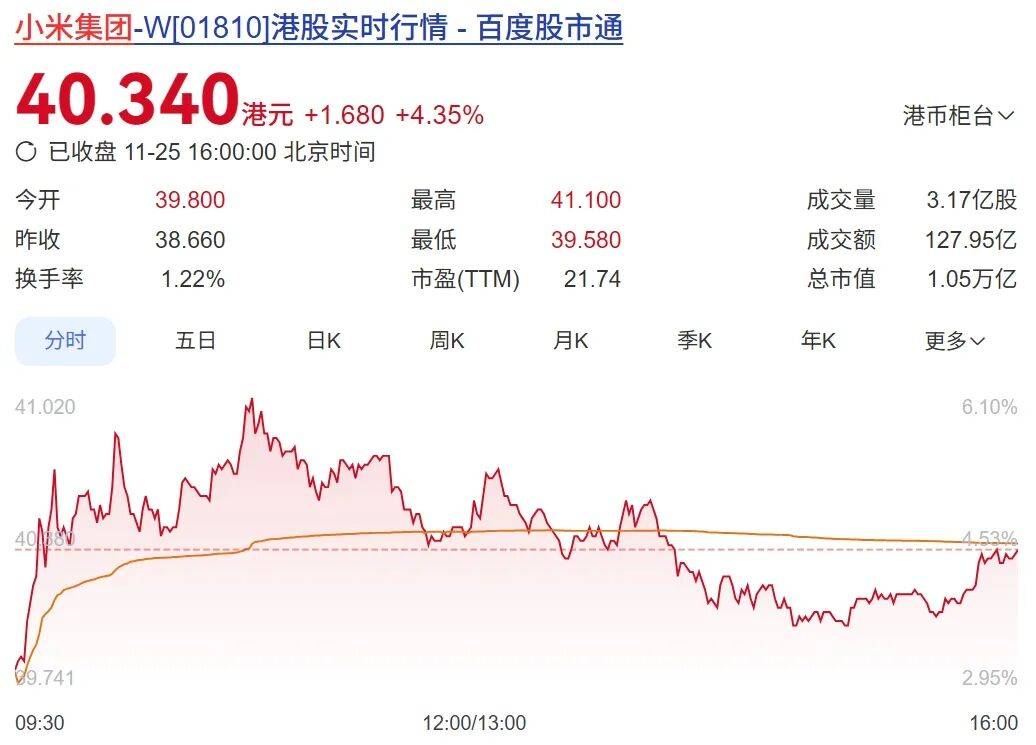
Group 1 - Xiaomi Group's founder, chairman, and CEO Lei Jun invested over 100 million HKD to purchase 2.6 million shares, increasing his ownership stake to 23.26% [1] - Following this announcement, Xiaomi's stock price surged by 4.35% to close at 40.34 HKD on November 25 [1] Group 2 - Xiaomi announced a stock buyback totaling over 800 million HKD on November 20 and 21, with a total of 21.5 million shares repurchased this year, bringing the total buyback amount to over 2.3 billion HKD [4] - The company reported a total revenue of 113.1 billion RMB for Q3 2025, a year-on-year increase of 22.3%, and an adjusted net profit of 11.3 billion RMB, up 80.9% year-on-year [4] - Xiaomi's electric vehicle and AI segments achieved operational profit of 700 million RMB for the first time [4] Group 3 - Xiaomi has invested over 7 billion RMB in AI this year and has established a team of over 1,800 personnel for smart driving, with R&D centers in Beijing, Shanghai, and Wuhan [5] - The company introduced an upgraded smart driving system at the Guangzhou Auto Show, utilizing a "reinforcement learning + world model" training method to enhance driving capabilities [4]

毫末智行停摆、地平线HSD量产,第三方智驾格局生变?
3 6 Ke· 2025-11-25 09:42
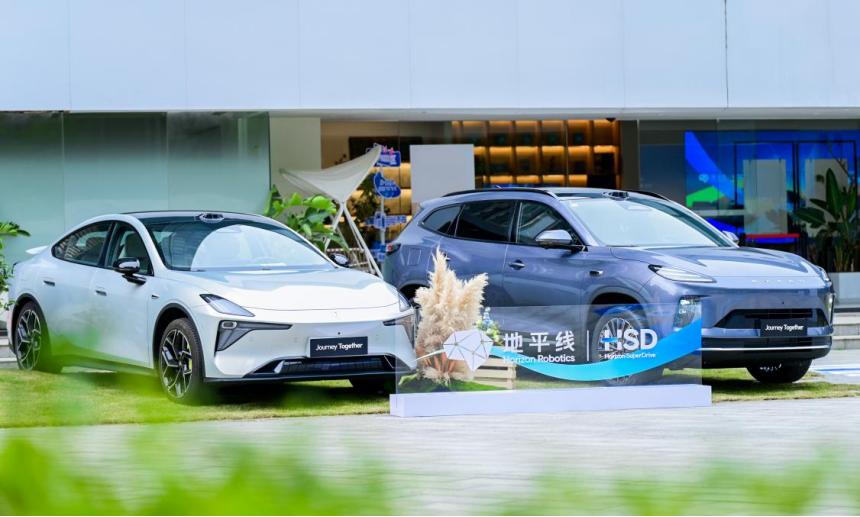
Core Insights - The Guangzhou Auto Show 2023 showcased 1,085 vehicles, with 629 new energy vehicles, indicating a 58% representation, highlighting the completion of China's automotive industry's electrification [1] - Major automakers emphasized "AI cars" and intelligent driving technologies, with a consensus on advancing smart assisted driving [1] - Horizon's HSD (Horizon SuperDrive) has rapidly integrated into multiple production models, demonstrating a significant leap in China's smart driving capabilities [2][4] Group 1: Industry Trends - The trend of smart assisted driving technology is evolving both upwards towards higher levels of safety and adaptability, and downwards to more vehicle models [1] - Most automakers are opting for third-party solutions from companies like Horizon, DJI, and Huawei, rather than developing in-house technologies [2][8] - Horizon's HSD has been adopted by over 10 automakers and is expected to achieve a production target of 10 million units in the next 3-5 years [6][24] Group 2: Technological Advancements - Horizon's HSD is designed with a true end-to-end architecture, providing seamless control and enhanced user experience [12][20] - The system's low latency and high computational power enable it to handle complex driving scenarios effectively, improving safety and efficiency [17][26] - The collaboration between Horizon and automakers allows for customization without compromising their technological strategies [25] Group 3: Competitive Landscape - Horizon's HSD positions itself as a viable alternative for automakers to compete with Tesla's FSD, offering a unique value proposition in the market [8][22] - The automotive industry is shifting from price wars to technology-driven competition, with Horizon's HSD facilitating this transition [26][27] - The integration of Horizon's technology allows Chinese automakers to enhance their global competitiveness by focusing on differentiation rather than cost-cutting [27][29]
天瞳威视港股IPO:上汽集团到底是关联方还是独立第三方?招股书前后表述矛盾可靠性有几分?
Xin Lang Zheng Quan· 2025-11-25 09:25
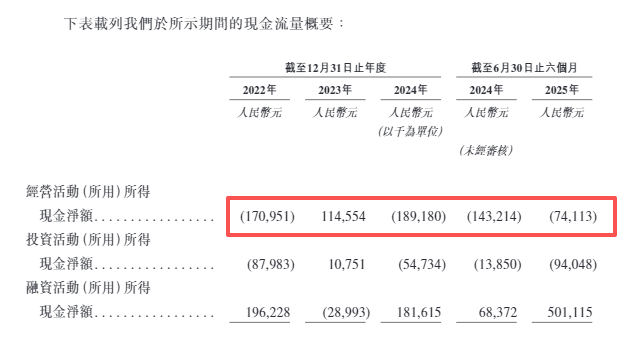
Core Viewpoint - Suzhou Tiantong Weishi Electronic Technology Co., Ltd. (Tiantong Weishi) has submitted an IPO application despite ongoing losses and a significant decline in profit margins, raising questions about its financial health and business strategy [1][10]. Financial Performance - Tiantong Weishi's revenue has shown rapid growth, with figures of 172 million, 204 million, 483 million, and 157 million RMB over the reporting periods, resulting in a compound annual growth rate of 67.7%. However, the company has incurred cumulative losses of approximately 284 million RMB [7][10]. - The company's net profit figures were -325 million, -231 million, -463 million, and -193 million RMB, with adjusted net profits of -188 million, -88 million, -4.38 million, and -4.17 million RMB [7][10]. - The operating cash flow has been negative, with net cash outflows totaling 320 million RMB over the reporting periods, indicating a reliance on equity financing and bank loans [9][10]. Research and Development - Tiantong Weishi's R&D expenses have significantly decreased, with rates of 108.7%, 51.8%, 24.3%, and 11.6% of total revenue, which are substantially lower than comparable companies [7][8]. - The company’s R&D expenses were 187 million, 106 million, 117 million, and 18.31 million RMB, reflecting a downward trend [7][8]. Profit Margins - The gross margin for L4-level business has declined sharply, with figures of 38.7%, 35.4%, 26%, and 22.3%, while L2-L2+ business margins have shown an upward trend [12][13]. - The gross margin for L2-L2+ solutions was 26.1%, 36.4%, 32.4%, and 47.8%, indicating a significant difference compared to L4-level solutions [12][13]. Customer Concentration - Tiantong Weishi has a high customer concentration, with the top five customers accounting for 73%, 91.4%, 44.6%, and 63.5% of revenue, raising concerns about dependency on a few clients [15][16]. - The largest customer, VinFast, saw a drastic revenue drop from 127 million RMB to 33.6 million RMB, indicating potential issues with customer retention and sustainability of revenue streams [16][19]. Strategic Partnerships - The company has established strategic alliances with major players like ZF Friedrichshafen and SAIC Motor, which have facilitated its growth and market entry [5][10]. - Tiantong Weishi's collaboration with ZF has led to the delivery of approximately 39 vehicle solutions, leveraging ZF's engineering experience and global market resources [5][10]. Governance and Management - The founder, Wang Xi, holds a significant stake of 28.39% directly and controls an additional 13.22% through employee stock ownership platforms, totaling approximately 41.61% [2][3]. - Despite the company's continuous losses, Wang Xi's compensation has increased over the years, raising questions about governance and management priorities [3][10].

汽车行业投资策略:乘用车市场销量持续增长,关注激光雷达和
Dongguan Securities· 2025-11-25 09:21
Group 1: Industry Performance and Market Trends - The automotive industry in China has shown a continuous growth trend in the first three quarters of 2025, with total revenue reaching 30,088.47 billion yuan, a year-on-year increase of 10.13% [12] - The net profit attributable to shareholders reached 1,222.52 billion yuan, growing by 7.46% year-on-year, while the net profit excluding non-recurring items was 1,026.63 billion yuan, up by 12.97% [12] - The strong performance is driven by policy support, the penetration of new energy vehicles (NEVs), and structural consumption upgrades due to intelligent and new product cycles [12][23] Group 2: Passenger Vehicle Market Growth - The passenger vehicle market has seen sustained growth, with wholesale sales of narrow-sense passenger vehicles reaching 2.932 million units in the first ten months of 2025, a year-on-year increase of 12.16% [31] - NEV sales exceeded 11 million units, marking a significant year-on-year growth of 32.75% [31] - The penetration rate of NEVs in retail sales has consistently surpassed 50% from March to October 2025, indicating strong market demand [23][31] Group 3: Laser Radar Demand and Technology - The cost of laser radar has significantly decreased, with prices dropping from tens of thousands to between 2,000 and 3,000 yuan, facilitating increased demand [43] - The penetration of Navigation On Autopilot (NOA) technology is rising, which is expected to drive the demand for laser radar and other key components [56] - The delivery volume of laser radar has surged, with companies like Hesai Technology reporting a 228.9% year-on-year increase in deliveries [50] Group 4: Robotaxi Market Expansion - The Robotaxi market is expanding rapidly, with companies like Pony.ai and WeRide seeing significant revenue and order growth [38] - The cost of core components for Robotaxi is decreasing, enhancing the feasibility of commercial operations [38] - The potential market for Robotaxi services is vast, indicating a transformative shift in transportation methods [38][43] Group 5: Investment Recommendations - The report maintains an overweight rating for the automotive sector, highlighting strong demand driven by policies and technological advancements [4] - Recommended companies include leading domestic luxury SUV manufacturers and key players in the laser radar and Robotaxi supply chains, such as Seres and Great Wall Motors [4][5]



【联合发布】2025年10月OTA监测月报
乘联分会· 2025-11-25 09:01
Core Insights - The article discusses the monthly OTA (Over-The-Air) monitoring report, highlighting the trends and updates in the automotive industry regarding OTA upgrades and functionalities [1]. Industry Overview - In October 2025, a total of 1,257 functions were updated across the industry, a decrease from 1,318 in the previous month. The number of brands involved in OTA upgrades dropped significantly from 32 to 22 [4]. - The report indicates that several brands, including BYD, have launched significant version upgrades, with features like urban memory navigation assistance being introduced [4]. New Forces - New force brands updated a total of 383 functions in October 2025, down from 586 in the previous month. Leap Motor was a major contributor, pushing 14 versions across multiple models, including practical features like commuting navigation assistance and steering assistance imagery [6]. Domestic Brands - Domestic brands collectively updated 771 functions in October 2025, slightly down from 688 in the previous month. Notable updates included enhancements in map navigation and vehicle control features, particularly from BYD and Tengshi [11]. Joint Venture & Luxury Brands - Joint venture and luxury brands saw a significant increase in OTA updates, with 103 functions updated in October 2025 compared to 44 in the previous month. Notably, Nissan's N7 model introduced urban memory navigation assistance and memory parking assistance [10]. User Feedback - User feedback highlighted mixed experiences with new features. For instance, the commuting navigation assistance was noted for its limited applicability in real-world scenarios, leading to dissatisfaction among users [38][45]. - Users expressed appreciation for features like voiceprint recognition and lane detection but criticized the commuting navigation assistance for its restrictive triggering conditions [45]. OTA Operational Activities - The article outlines various OTA operational activities, including promotional events and user engagement strategies by brands like Geely and Nissan, aimed at enhancing user experience and awareness of new features [21][29][47]. Future OTA Updates - Upcoming OTA updates are scheduled for various models, with features such as intelligent voice control, enhanced navigation systems, and advanced driving assistance set to be rolled out in late 2025 and early 2026 [32][33].

股价一度飙涨16%!禾赛迎来发展黄金期?
Sou Hu Cai Jing· 2025-11-25 06:48
Core Viewpoint - Hesai Technology (HSAI.US) experienced a significant stock price surge, closing up 18.08% at $18.22 per share on November 24, 2023, with continued gains in the Hong Kong market [2][4]. Group 1: Technological Advancements - The key driver behind the stock price increase was the announcement of major technological breakthroughs, including the launch of the Fermi C500, a high-performance smart control chip based on RISC-V architecture, and the unique "photon isolation" safety technology [4][5]. - The "photon isolation technology" is now integrated into all of Hesai's main lidar products, enhancing their safety features [4]. Group 2: Market Position and Performance - Hesai is the largest lidar manufacturer globally, holding a 46% market share in the automotive lidar sector as of August, which is 1.5 times that of the second-ranked competitor and 2.4 times that of the third [6]. - The company has established partnerships with over 20 major automotive manufacturers, including BYD, Geely, and Xiaomi, and has secured contracts for the 2026 model year with leading ADAS clients [6][7]. - In Q3 2025, Hesai reported a net revenue of 795 million RMB, a 47.5% year-over-year increase, and a net profit of 256 million RMB, marking a turnaround from a loss of 70.4 million RMB in the same period last year [8]. Group 3: Industry Growth and Future Outlook - The demand for lidar technology is expected to rise significantly due to the rapid development of the autonomous driving and robotics sectors in China, with projections indicating that lidar shipments for vehicles could exceed 3 million units by 2025 [8]. - Hesai anticipates Q4 2025 net revenue to be between 1 billion to 1.2 billion RMB, representing a year-over-year growth of approximately 39% to 67% [8]. Group 4: Market Recognition - Hesai's strong performance and position in the lidar and robotics sectors have drawn attention from the capital markets, particularly with the upcoming announcement of the "Hong Kong Top 100" list, which could further enhance its market visibility [9][10].