
十五五规划

Search documents
为实现“十五五”目标任务贡献资本市场力量
Qi Huo Ri Bao Wang· 2025-11-16 21:33
吴清强调,习近平总书记在全会上的重要讲话高屋建瓴、定向领航,明确了推动未来5年乃至更长一段 时期经济社会发展的一系列方向性、根本性重大问题,进一步深化了我们党对经济社会发展的规律性认 识,为推动高质量发展、推进中国式现代化提供了科学指南和重要遵循。"十五五"时期具有承前启后的 重要地位,是夯实基础、全面发力的关键时期。证监会系统要深刻领悟"两个确立"的决定性意义,增 强"四个意识"、坚定"四个自信"、做到"两个维护",全面理解和把握全会关于加快建设金融强国的新部 署新要求,认真落实金融系统学习贯彻全会精神会议提出的工作要求,抓紧研究谋划"十五五"时期资本 市场战略任务和重大举措,着力推动市场更具韧性、更加稳健,制度更加包容、更具吸引力,上市公司 质量更高、价值更优,监管执法更加有效、更具震慑力,开放迈向更深层次、更高水平,证监会系统全 面从严治党更严、更实,为实现党中央确定的"十五五"目标任务积极贡献资本市场力量。 吴清要求,证监会系统要把学习宣传贯彻全会精神这项重大政治任务抓紧抓实,扎实开展多层次、全覆 盖学习培训,大兴调查研究,认真做好规划编制,精心做好宣传解读,以钉钉子精神抓好各项任务落 实,切实把全会 ...
军工周报:关注“十五五”推进国防和军队现代化建设任务-20251116
NORTHEAST SECURITIES· 2025-11-16 14:55
Investment Rating - The report maintains an "Outperform" rating for the defense and military industry [7] Core Insights - The report emphasizes the focus on high-quality advancement in national defense and military modernization during the "14th Five-Year Plan" period, with a core goal of enhancing strategic capabilities to safeguard national sovereignty and security [2][39] - The defense and military sector is expected to experience sustained growth due to the release of new orders and the execution of backlog orders from the previous plan, particularly in main battle equipment and emerging domains [3][43][44] Summary by Sections Market Review - The Shenwan Defense and Military Index fell by 2.15% last week, ranking 27th among 31 Shenwan primary industries [15] - As of last Friday's close, the PE (TTM) for the Shenwan Defense and Military sector was 77.31 times, with aerospace equipment at 305.96 times and military electronics at 105.17 times [24] Key Recommendations - Recommended companies include: AVIC Chengfei, Hongdu Aviation, AVIC Shenyang, AVIC Xifei for downstream mainframe manufacturers; Lianchuang Optoelectronics, Guangqi Technology, Zhongjian Technology for military new technologies; and others in missile industry chains and underwater equipment [4] Industry Dynamics - The report highlights the importance of the "15th Five-Year Plan" in driving modernization efforts, with a focus on advanced weaponry and military training [39][41] - The unveiling of the J-20 and drone collaboration showcases advancements in military capabilities, emphasizing the strategic advantages of unmanned systems [3][42] Future Outlook - The report anticipates a positive outlook for the defense and military sector in 2026, driven by the release of new orders and the completion of backlog orders from the previous plan [43] - The international geopolitical landscape is evolving, creating opportunities for the expansion of China's military trade market, with a notable shift towards high-end military equipment [44]


展望“十五五” | 专访尹艳林:让有钱且愿消费的人顺利消费;个税起征点可提高 最高边际税率可下调 让有关群体少缴税、多收入
Mei Ri Jing Ji Xin Wen· 2025-11-16 14:29
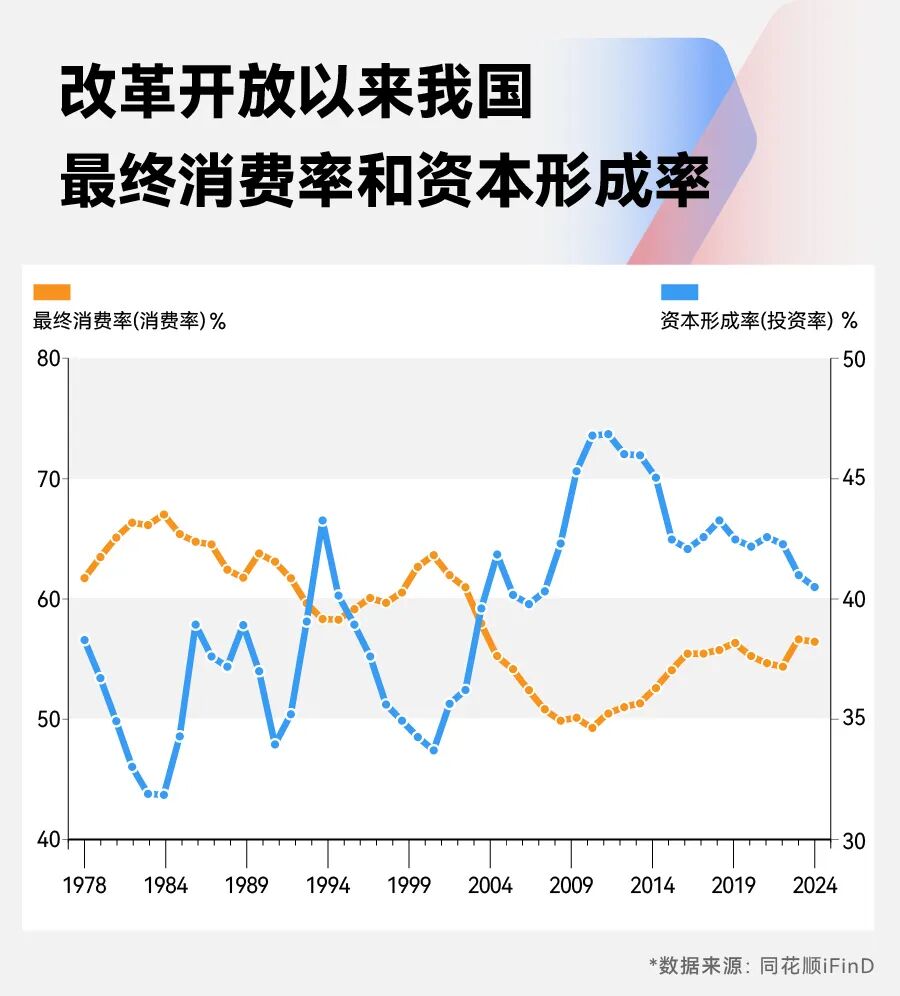
Core Viewpoint - The "15th Five-Year Plan" emphasizes the need for reforms to boost domestic consumption and address structural issues in the economy, particularly in the context of low consumption rates and insufficient domestic demand [1][2]. Investment and Consumption - The plan highlights the importance of increasing total factor productivity and significantly raising the household consumption rate, which is currently low compared to developed countries [2][5]. - The relationship between investment and consumption is dynamic; as investment rates decline, consumption rates are expected to rise, indicating a need for a balanced approach to both [6]. Urbanization and Economic Growth - New urbanization is identified as a crucial engine for economic growth, with millions of rural residents still needing to transition to urban areas, necessitating substantial investment in public services [8][9]. - The urbanization rate in China has reached 67%, but there remains a significant gap between registered and actual urban populations, indicating ongoing opportunities for investment [8]. Consumer Demand and Restrictions - The removal of unreasonable restrictions on major consumer goods like automobiles and housing is seen as a direct method to stimulate consumption among those with purchasing power [8][10]. - The central government is expected to push for these changes, although implementation may vary by locality due to differing regional conditions [10]. Taxation and Disposable Income - Increasing the personal income tax threshold and optimizing tax rates are proposed as effective measures to enhance disposable income for middle-income groups, thereby stimulating consumption [11][12]. - The current tax burden on middle-income earners is considered heavy, and adjustments could lead to significant increases in consumer spending [12]. Investment Strategy - The plan calls for a combination of investments in both physical infrastructure and human capital, emphasizing that investments should directly benefit the population [20][21]. - Effective investment is defined not solely by financial returns but also by its ability to stimulate demand and improve public welfare [23][25]. Private Sector Engagement - The government aims to increase the share of private investment, particularly in sectors traditionally dominated by state-owned enterprises, to enhance market competition and innovation [26][27]. - Legal and institutional reforms are necessary to ensure that private enterprises can compete fairly and access resources [26]. Market Integration - The plan stresses the need to eliminate barriers to building a unified national market, addressing deep-seated issues of market segmentation and local protectionism [31][33]. - Reforms in fiscal, statistical, and assessment systems are essential to facilitate this integration and improve government efficiency in market regulation [34][35].

中国财政科学研究院院长杨志勇:遏制地方政府新增隐性债务 债务信息要透明,尽可能降低利息成本
Mei Ri Jing Ji Xin Wen· 2025-11-16 14:27
Core Viewpoint - The "15th Five-Year Plan" emphasizes the role of proactive fiscal policy and enhancing fiscal sustainability, marking a shift from the previous plan's focus on establishing a modern fiscal and tax system [1] Group 1: Central-Local Fiscal Relations - The plan suggests strengthening central authority and increasing the central government's fiscal expenditure ratio while enhancing local fiscal autonomy, especially as reliance on land finance decreases [2][3] - Central government transfer payments to local governments have exceeded 10 trillion yuan for three consecutive years, indicating a commitment to increasing local fiscal capacity [2] - The central fiscal expenditure ratio is currently below 15%, which is lower than that of major countries, highlighting the need for reform to better align responsibilities and resources between central and local governments [3] Group 2: Debt Management - The establishment of a long-term mechanism for government debt management is crucial, with a focus on addressing existing hidden debts and preventing new ones [4] - Transparency in local government debt information is essential, and debt management should consider sustainability and market conditions to minimize financing costs [4] - The government aims to optimize debt structure and scale, ensuring that debt management aligns with high-quality development goals [4] Group 3: Tax System Reform - The plan calls for deepening tax system reforms to ensure that tax obligations align with the capacity of microeconomic entities, addressing discrepancies in tax burdens [6][7] - The macro tax burden has been decreasing since 2017, with projections indicating that tax revenue will account for less than 13% of GDP by 2024, which may not be sustainable given the fiscal pressures [6] - Tax incentives should be rationalized to avoid market distortions and ensure fair competition, while direct tax systems need to be improved to promote social equity [7] Group 4: Zero-Based Budgeting Reform - The introduction of zero-based budgeting is seen as a critical reform to break the rigid expenditure patterns and improve the efficiency of fiscal resources [8][9] - Challenges in zero-based budgeting include reconciling legal spending requirements with the need for more efficient budget allocations [8][9] - Successful implementation of zero-based budgeting has been observed in various regions, enhancing fiscal management and resource allocation [9] Group 5: Proactive Fiscal Policy - The proactive fiscal policy aims to expand effective demand, support technological self-reliance, and promote rural modernization and high-quality employment [11] - The policy will also address demographic changes and focus on risk prevention in key areas to create a conducive environment for fiscal policy implementation [11] - The "15th Five-Year Plan" is positioned as a foundational period for achieving socialist modernization by 2035, necessitating strategic actions to overcome challenges and leverage opportunities [10][11]
经济的三个温度——10月经济数据点评
一瑜中的· 2025-11-16 12:19
Core Viewpoint - The article discusses the economic data for October, highlighting three different "temperatures" of the economy: sectors that feel better than the economy, those that feel similar, and those that feel worse. It emphasizes the divergence in economic performance across different regions and industries, as well as the impact of policy support on various sectors [2][3]. Group 1: Better than Economic Conditions - The productive service industry and equipment manufacturing are performing strongly, with the productive service sector's contribution to GDP rising to approximately 9.3% by the third quarter. In October, the information industry production index grew by 13%, marking eight consecutive months of growth, while the rental and business services sector grew by 8.2% [5][15]. - Equipment manufacturing saw an increase of 8% in value added in October, with significant contributions from the automotive and electronics sectors, which accounted for 42.1% of the growth in large-scale industry [6][15]. Group 2: Similar to Economic Conditions - Essential consumption showed a growth rate of 4.2% in October, up from 3.4% in the previous month, with a cumulative growth rate of 4.4% from January to October, surpassing last year's 4.0% [7][21]. - Service consumption, as measured by retail sales in the service sector, had a cumulative growth rate of 5.3% from January to October, slightly better than the previous value of 5.2% [8][21]. Group 3: Worse than Economic Conditions - Productive investment, particularly in manufacturing, is declining, with a cumulative growth rate of 2.7% from January to October, down from 4.0% previously. The middle-stream investment in manufacturing has decreased significantly, with a growth rate of only 1.43% [10][25]. - Subsidized consumption, particularly in six categories of durable goods, saw a negative growth rate of -2.6% in October, a significant drop from the previous month's 3.9%. Notably, automotive and home appliance sectors experienced declines of -6.6% and -14.6%, respectively [10][25]. - The construction chain, including infrastructure and real estate investments, continued to decline, with significant drops in production rates for related materials like crude steel and cement [11][26].
粤开宏观:税收赋能“十五五”:对税收职能的思考与六点建议
Yuekai Securities· 2025-11-16 12:16
Economic Development and Taxation - The "14th Five-Year Plan" outlines a comprehensive framework for China's economic and social development, emphasizing the importance of tax policy in fiscal governance and income distribution[4] - Key goals include optimizing supply structure, enhancing domestic demand, and promoting equitable development, with a focus on high-quality growth and technological self-reliance[5] Tax Policy Recommendations - Taxation should balance revenue generation and market vitality, ensuring adequate funding for public services while stimulating economic activity[8] - Tax incentives must be carefully evaluated and aligned with industry life cycles to avoid overcapacity and promote competition[9] - A more precise tax policy is needed to support strategic areas like technological innovation and rural revitalization, moving away from fragmented approaches[10] - The tax system should adapt to the digital and service economy, promoting green development and addressing the unique challenges of these sectors[11]
“十五五”谋局,中国城镇化下一个五年走向何方?
Mei Ri Jing Ji Xin Wen· 2025-11-16 11:54
每经记者|淡忠奎 每经编辑|杨欢 中国的城镇化,正在悄然换挡。 过去的46年间,中国城镇化率从17.9%迅速提高到67%,城镇常住人口从1.72亿人增加到9.4亿人。在城镇化取得巨大成就的同时,也积累了一些矛盾和问 题。 比如,中小城市在基础设施、公共服务等方面与大城市的差距较大,企业聚集和产业聚集能力薄弱;大城市内部发展不均衡,城市规划与治理的短板限制人 口承载能力进一步提升。 我国城镇化正从快速增长期转向稳定发展期,城市发展正从大规模增量扩张阶段转向存量提质增效为主的阶段——今年中央城市工作会议首次提出"现代化 人民城市"建设目标,也为城镇化的下半场指明航向。 面对即将到来的"十五五",城镇化如何实现高质量发展?中国城市建设还有哪些新机遇新动能?11月13日,"中国新型城镇化理论·政策·实践论坛2025"在清 华大学召开,胡祖才、范恒山、李稻葵、魏后凯等多位权威学者围绕相关话题展开探讨。 如中国国土经济学会首席专家,国家发改委原副秘书长范恒山所说,城市发展首先要自己过硬,把能量搞足,把品质提升,同时,城市的发展不仅仅为了城 市,"如果仅仅为了城市,我们的城镇化将失去意义,要带动区域,特别是带动农村"。 眼 ...

从“十五五”规划看下阶段中央宏观调控思路
Guoxin Securities· 2025-11-16 11:43
Growth Targets and Economic Framework - The "15th Five-Year Plan" emphasizes achieving a per capita GDP of $20,000 (constant prices) by 2035, which is considered the threshold for "middle-developed countries" [5] - To meet this target, an average annual GDP growth rate of 4.17% is required during the "15th" and "16th" Five-Year Plans, considering a projected annual population decrease of approximately 0.20% [7] - The IMF recognizes 39 developed countries with a per capita GDP generally exceeding $20,000, which serves as a benchmark for China's growth aspirations [7] Economic Growth Projections - The expected growth rate for the "15th Five-Year Plan" is projected to be between 4.5% and 4.9%, while the "16th Five-Year Plan" is anticipated to be between 4.0% and 4.4% [18] - Achieving the 2035 target necessitates a compound annual growth rate of 4.4% over the next decade, factoring in a potential annual population decline [18] Structural Economic Changes - The transition from a GDP-driven growth model to a composite model involving productivity, inflation, and exchange rates is essential for sustainable growth [21] - The focus on "new quality productivity" is critical, aiming to enhance total factor productivity as a response to labor force contraction [26] Monetary Policy Considerations - The current monetary policy environment suggests limited room for interest rate cuts, with a focus on maintaining interest rate spreads [60] - A moderate easing of monetary policy is expected, primarily through liquidity support and structural adjustments rather than broad-based rate cuts [63] Fiscal Policy and Domestic Demand - The fiscal deficit is projected to remain between 3.8% and 4.0%, with a broad deficit exceeding 12 trillion yuan, emphasizing the need for effective fiscal measures to stimulate domestic demand [89] - The shift from "infrastructure finance" to "livelihood finance" is crucial for enhancing fiscal multipliers and improving overall economic efficiency [89]
传媒行业周报:2026年布局已开启-20251116
Huaxin Securities· 2025-11-16 10:03
Group 1 - The report highlights that the media industry is entering a new phase in 2026, with companies actively exploring new products and business models driven by AI technology [4][16][18] - The report emphasizes the dual attributes of the media sector, combining technology applications and discretionary consumption, which presents new opportunities due to generational changes in user content demands [4][18] - The report recommends focusing on state-owned enterprises leveraging AI for cultural development, as well as major companies enhancing AI applications in consumer-facing sectors [4][16] Group 2 - The report provides a list of recommended stocks in the media sector, including Oriental Pearl (600637), BlueFocus (300058), Mango Excellent Media (300413), and Wanda Film (002739), highlighting their potential for growth driven by AI [5][9] - The report notes that Bilibili (9626.HK) is expected to see continued improvement in its commercial capabilities, with a projected revenue increase of 5% year-on-year [15] - The report indicates that Tencent's international gaming revenue has surpassed 20 billion, with a significant year-on-year growth of 43% in the international market [24] Group 3 - The report states that the film market is projected to exceed 45 billion in box office revenue for 2025, with several popular IP films set to release soon [30] - The report mentions that the micro-short drama market has seen a user base of 662 million, with a market size surpassing 50 billion, indicating a shift in content consumption trends [31] - The report highlights that the gaming sector is experiencing robust growth, with Tencent's gaming revenue reaching 636 billion, a 24% increase year-on-year [24]


化工行业周报20251116:海外天然气价格、六氟磷酸锂价格上涨,蛋氨酸价格下跌-20251116
Bank of China Securities· 2025-11-16 08:20
Investment Rating - The report rates the chemical industry as "Outperform the Market" [3] Core Views - The report highlights the increase in overseas natural gas prices and lithium hexafluorophosphate prices, while methionine prices have decreased. It suggests focusing on sectors mentioned in the "14th Five-Year Plan," undervalued leading companies, the impact of "anti-involution" on supply, and electronic materials companies under the context of self-sufficiency [3][10]. Summary by Sections Industry Dynamics - In the week of November 10-16, 2025, among 100 tracked chemical products, 42 saw price increases, 30 saw price decreases, and 28 remained stable. The average price of 31% of products increased month-on-month, while 56% decreased, and 13% remained unchanged. The top gainers included butyl acetate and sulfur, while the largest declines were seen in pure pyridine and methionine [8][29]. Price Trends - The average price of lithium hexafluorophosphate rose to 135,000 CNY/ton, marking a 13.45% increase week-on-week and a 141.07% increase year-on-year. Conversely, methionine's average price fell to 19.55 CNY/kg, down 1.76% week-on-week and 0.91% year-on-year [31][32]. Investment Recommendations - The report recommends focusing on sectors highlighted in the "14th Five-Year Plan," undervalued leading companies, and the impact of supply-side reforms. It suggests a mid-to-long-term investment strategy that includes companies in emerging fields such as semiconductor materials and new energy materials, with specific recommendations for companies like Wanhua Chemical and Hualu Hengsheng [10][29]. Market Performance - The basic chemical industry index rose by 2.61%, ranking 9th among 31 primary industries, while the oil and petrochemical sector increased by 2.29%, ranking 11th [8][10]. Key Stocks - The report identifies "Golden Stocks" for November as Hualu Hengsheng and Yake Technology, highlighting their strong performance and growth potential [5][11][17].

