
宏观经济数据

Search documents
本周热点前瞻2025-06-16
Guo Tai Jun An Qi Huo· 2025-06-16 03:38
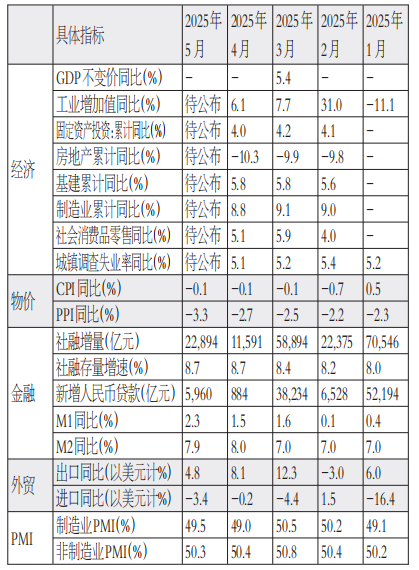
Report Summary 1. Report Industry Investment Rating No relevant information provided. 2. Core Viewpoints The report provides a forward - looking analysis of key events and data releases in the current week (June 16 - 20, 2025) and their potential impacts on the futures market [2]. 3. Summaries by Related Catalogs 6月16日 - The National Bureau of Statistics will release the monthly report on residential sales prices in 70 large and medium - sized cities at 09:30, and its impact on relevant futures prices should be noted [3]. - The State Council Information Office will hold a press conference on the national economic situation at 10:00, releasing macro - economic data such as fixed - asset investment, industrial added value, and total retail sales of consumer goods from January to May. Forecasts include 3.9% y/y growth in cumulative urban fixed - asset investment from January to May (4.0% in January - April), 5.9% y/y growth in industrial added value of large - scale industries in May (6.1% in April), 5.0% y/y growth in total retail sales of consumer goods in May (5.1% in April), and a surveyed unemployment rate of 5.1% in May (same as April). Lower - than - previous growth rates may suppress the rise of stock index and commodity futures but help the rise of treasury bond futures [4]. - The central bank will conduct a 400 - billion - yuan 6 - month (182 - day) outright reverse repurchase operation [5]. - OPEC will release its monthly crude oil market report between 18:00 - 21:00, and its impact on crude oil and related commodity futures prices should be noted [7]. 6月17日 - The US Department of Commerce will release US retail sales for May at 20:30. The expected monthly rate of retail sales is - 0.7% (0.1% previously), and the expected monthly rate of core retail sales is 0.3% (0.1% previously). A lower - than - previous monthly rate of retail sales may help the rise of gold and silver futures but suppress the rise of non - ferrous metals, crude oil, and related commodity futures [8]. - The Federal Reserve will release US industrial output for May at 21:15. The expected monthly rate of industrial output is 0.1% (0% previously). A slightly higher - than - previous monthly rate may slightly help the rise of non - ferrous metals futures but slightly suppress the rise of gold and silver futures [9]. - The IEA will release its monthly crude oil market report at 16:00, and its impact on crude oil and related commodity futures prices should be noted [10]. - The Bank of Japan will announce its interest rate decision at 11:00, expected to keep the benchmark interest rate at 0.5% [11]. 6月18日 - The 2025 Lujiazui Forum will be held in Shanghai from June 18 - 19. The theme is "Financial Opening - up, Cooperation, and High - Quality Development in the Changing Global Economic Landscape". Central financial regulatory authorities will announce several major financial policies during the forum [12]. - The US Department of Commerce will release data on new home starts and building permits for May at 20:30. The expected annualized total of new home starts is 1.36 million units (1.361 million previously), and the expected initial annualized total of building permits is 1.43 million units (1.422 million previously) [13]. - The US Department of Labor will release the number of initial jobless claims for the week ending June 14 at 20:30. The expected number is 245,000 (248,000 previously). A slightly lower - than - previous number may slightly suppress the rise of gold and silver futures and slightly help the rise of non - ferrous metals, crude oil, and related commodity futures [15]. - The EIA will release the change in EIA crude oil inventories for the week ending June 13 at 22:30. A continued decrease in inventories may help the rise of crude oil and related commodity futures [16]. 6月19日 - The Federal Reserve FOMC will announce its interest rate decision and economic outlook summary at 02:00, and Fed Chairman Powell will hold a press conference at 02:30. It is expected that the federal funds rate will remain unchanged. Attention should be paid to the economic outlook summary and Powell's speech and their impact on relevant futures prices [17]. - The Swiss National Bank will announce its interest rate decision at 16:30, expected to keep the policy rate at 0.25% [18]. - The Bank of England will announce its interest rate decision and meeting minutes at 19:00, expected to keep the benchmark interest rate at 4.25% [19]. 6月20日 - The People's Bank of China will authorize the National Inter - bank Funding Center to announce the loan prime rate (LPR) for June 2025 at 09:00. The expected 1 - year LPR is 3.00% (unchanged from the previous value), and the expected 5 - year - plus LPR is 3.50% (unchanged from the previous value). If unchanged, the impact on commodity futures, stock index futures, and treasury bond futures is basically neutral [20]. - Eurostat will release the preliminary consumer confidence index for the eurozone in June at 22:00. The expected preliminary value for May is - 14.05 (- 15.2 previously) [21].
海外扰动因素增多 股指市场波动或加大
Qi Huo Ri Bao· 2025-06-15 23:06
Group 1 - Domestic factors are currently in a phase where their impact on the stock index market needs to be strengthened, with macroeconomic data showing resilience but lacking short-term positive catalysts [1][7] - The CPI in May decreased slightly by 0.2% month-on-month and 0.1% year-on-year, while the core CPI rose by 0.6% year-on-year, indicating ongoing pressure on industrial product prices [1][7] - In May, exports grew by 4.8% year-on-year, down from 8.1%, while imports fell by 3.4%, leading to a trade surplus of $103.22 billion [2] Group 2 - The manufacturing PMI in May rose by 0.5 percentage points to 49.5%, indicating a slight recovery but still below the expansion threshold, suggesting insufficient recovery momentum [2][7] - Recent monetary policy measures from the central bank have created a "vacuum period" for domestic policies, with the market focusing on the actual effects of these policies [3][7] - The recent easing of trade tensions between China and the U.S. has reduced the necessity for large-scale market interventions by state funds, allowing the stock index to operate more independently [3][4] Group 3 - The recent escalation of geopolitical tensions, particularly the conflict between Israel and Iran, has introduced new volatility factors into the market, affecting global risk sentiment and asset prices [5][7] - Investors are advised to monitor the developments in the Iran situation closely, as it may impact commodity supply expectations and overall market stability [5][7] - The overall economic environment is characterized by low inflation and structural adjustments in exports, with a focus on observing the effectiveness of prior policy measures [7]

下周关注丨5月份宏观经济数据将发布,这些投资机会最靠谱
Di Yi Cai Jing· 2025-06-15 00:41
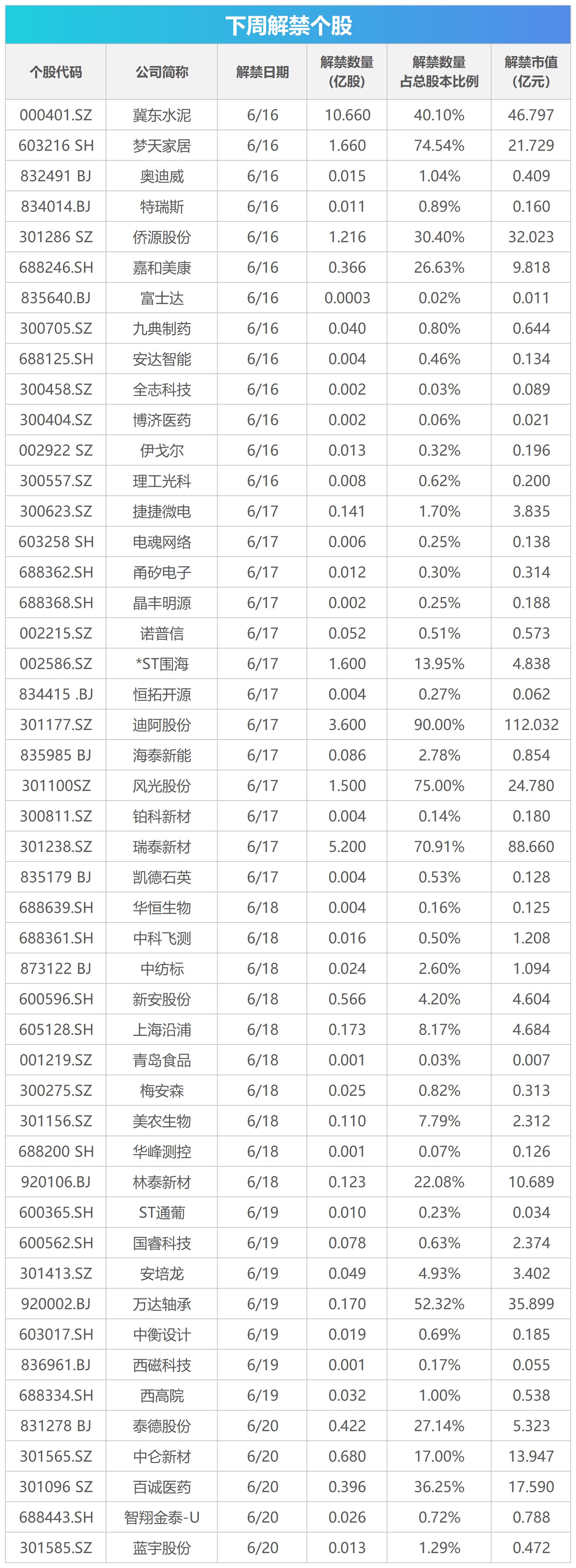
Group 1: Macroeconomic Data Release - The National Bureau of Statistics will release macroeconomic data for May on June 16, with expectations of positive indicators in industrial output, consumption, and investment [2] - Predicted year-on-year growth rates include 5.85% for industrial added value, 4.85% for retail sales of consumer goods, and 3.96% for fixed asset investment [2] - The latest confidence index from First Financial indicates a value of 50.50, suggesting a return to above the neutral line, reflecting optimism in the economy [2] Group 2: Index Sample Adjustments - Shenzhen Stock Exchange indices such as the Shenzhen Component Index and ChiNext Index will undergo sample adjustments effective June 16 [3][4][5] - New additions to the Shenzhen Component Index include 20 stocks such as Zhongtung High-tech and Gansu Energy, while 20 stocks like Nanbo A and Tianmao Group will be removed [3] - The ChiNext Index will add 8 stocks including BlueFocus and Changying Precision, while removing 8 stocks such as Anke Bio and Steel Research High-tech [4] Group 3: Oil Price Adjustment - A new round of fuel price adjustments will take place on June 17 at 24:00, with a projected increase of 155 CNY per ton for gasoline and diesel based on current crude oil prices averaging 66 USD per barrel [6] Group 4: Upcoming Events - The 2025 Lujiazui Forum is scheduled for June 18-19, 2025, in Shanghai, focusing on financial openness and high-quality development amid global economic changes [7] Group 5: Stock Unlocking - From June 16 to June 20, 48 stocks in the A-share market will face unlocking, with a total market value exceeding 454 billion CNY, including over 100 billion CNY from Diya Shares [9][10] Group 6: New Stock Issuance - One new stock, Xintong Electronics, is set to be issued on June 20, with approximately 39 million shares expected to raise 541 million CNY [14]
国元证券每日热点-20250613
Guoyuan Securities2· 2025-06-13 01:56
Economic Data - The US May core PPI increased by 3% year-on-year and 0.1% month-on-month, both below expectations[4] - Initial jobless claims in the US last week were 248,000, exceeding expectations[4] - The US Department of Commerce announced tariffs on various steel household appliances starting June 23[4] - May maritime imports in the US saw a significant decline[4] Market Performance - The 2-year US Treasury yield fell by 5 basis points to 3.897%[4] - The 5-year US Treasury yield decreased by 5.6 basis points to 3.961%[4] - The 10-year US Treasury yield dropped by 6.11 basis points to 4.359%[4] - The Baltic Dry Index closed at 1738.00, up 3.45%[5] - The Nasdaq Index closed at 19662.48, up 0.24%[5] - The Dow Jones Industrial Average closed at 42967.62, up 0.24%[5] - The S&P 500 closed at 6045.26, up 0.38%[5] - The Hang Seng Index closed at 24035.38, down 1.36%[5]
国泰君安期货商品研究晨报:黑色系列-20250613
Guo Tai Jun An Qi Huo· 2025-06-13 01:23
Report Industry Investment Rating No relevant content provided. Report's Core View - Iron ore is expected to fluctuate within a range due to repeated expectations [2][4]. - Rebar and hot-rolled coil are subject to wide fluctuations under the influence of macro sentiment [2][6]. - Ferrosilicon is expected to have a weak oscillation due to sector sentiment resonance [2][10]. - Silicomanganese is expected to have a weak oscillation as the quotes of mining enterprises move down [2][10]. - Coke is expected to have wide fluctuations [2][14]. - Coking coal is expected to have wide fluctuations as safety inspections become stricter [2][15]. - Steam coal is expected to have wide fluctuations as demand still needs to be released [2][19]. - Logs are expected to oscillate repeatedly [2][23]. Summary by Related Catalogs Iron Ore - **Fundamental Tracking**: The closing price of iron ore futures was 704.0 yuan/ton, down 3.0 yuan or -0.42%. The positions decreased by 12,525 hands. Among spot prices, the prices of imported and domestic ores mostly declined slightly [4]. - **Macro and Industry News**: In May, the CPI decreased by 0.1% year-on-year, and the PPI decreased by 0.4% month-on-month [4]. - **Trend Intensity**: The trend intensity of iron ore is 0, indicating a neutral outlook [4]. Rebar and Hot-Rolled Coil - **Fundamental Tracking**: The closing prices of rebar and hot-rolled coil futures declined, with decreases of -0.70% and -0.87% respectively. In terms of trading volume and positions, both showed certain changes. Spot prices generally decreased, and the basis and spreads also had corresponding fluctuations [6]. - **Macro and Industry News**: According to the weekly data of Steel Union on June 12, in terms of production, rebar decreased by 10.89 tons, hot-rolled coil decreased by 4.1 tons, and the total of five major varieties decreased by 21.53 tons. In terms of total inventory, rebar decreased by 12.4 tons, hot-rolled coil increased by 4.77 tons, and the total of five major varieties decreased by 9.25 tons. In terms of apparent demand, rebar decreased by 9.06 tons, hot-rolled coil decreased by 1.04 tons, and the total of five major varieties decreased by 14.07 tons. In May 2025, China's automobile production and sales reached 2.649 million and 2.686 million respectively, with month-on-month increases of 1.1% and 3.7%, and year-on-year increases of 11.6% and 11.2%. In May 2025, China exported 10.578 million tons of steel, a month-on-month increase of 1.1%; from January to May, the cumulative steel exports were 48.469 million tons, a year-on-year increase of 8.9%. In May, China imported 481,000 tons of steel, a month-on-month decrease of 7.9%; from January to May, the cumulative steel imports were 2.553 million tons, a year-on-year decrease of 16.1%. In late May 2025, key steel enterprises produced 23 million tons of crude steel, with an average daily output of 2.091 million tons, a daily output decrease of 4.9% month-on-month; 21.04 million tons of pig iron, with an average daily output of 1.913 million tons, a daily output decrease of 3.5% month-on-month; and 23.94 million tons of steel, with an average daily output of 2.177 million tons, a daily output increase of 2.5% month-on-month [6][7][8]. - **Trend Intensity**: The trend intensities of rebar and hot-rolled coil are both 0, indicating a neutral outlook [6]. Ferrosilicon and Silicomanganese - **Fundamental Tracking**: The closing prices of ferrosilicon and silicomanganese futures declined. Spot prices also decreased. The basis, spreads between near and far months, and cross-variety spreads all had corresponding changes [10]. - **Macro and Industry News**: On June 12, the prices of 72 and 75 ferrosilicon in different regions were reported, and the prices of some grades decreased. The price quotes of silicomanganese 6517 in the north and south were also reported. A large steel group in Hebei increased the procurement volume of silicomanganese and 75B ferrosilicon in June compared with May. Comilog announced a decrease in the quotation of Gabon blocks to China in July 2025, and United Mining (CML) also decreased its quotation to China [11]. - **Trend Intensity**: The trend intensity of ferrosilicon is 0, indicating a neutral outlook; the trend intensity of silicomanganese is -1, indicating a bearish outlook [13]. Coke and Coking Coal - **Fundamental Tracking**: The closing prices of coking coal and coke futures declined, with decreases of -2.17% and -2.03% respectively. In terms of trading volume and positions, there were certain changes. Spot prices were mostly stable, and the basis and spreads also had corresponding fluctuations [15]. - **Price and Position Situation**: The quotes of coking coal in northern ports were reported, and the CCI metallurgical coal index on June 12 was also provided. In terms of positions, on June 12, from the positions of the top 20 members of the DCE, the long positions of the coking coal JM2509 contract increased by 4,909 hands, and the short positions increased by 3,349 hands; the long positions of the coke J2509 contract decreased by 803 hands, and the short positions increased by 304 hands [15][17]. - **Trend Intensity**: The trend intensities of coke and coking coal are both -1, indicating a bearish outlook [17]. Steam Coal - **Yesterday's Domestic Market**: The steam coal ZC2507 had no trading yesterday. The previous opening price was 931.6 yuan/ton, the highest was 931.6 yuan/ton, the lowest was 840.0 yuan/ton, and the closing price was 840.0 yuan/ton, a decrease of 51.4 yuan from the previous trading day's settlement price. The trading volume was 18 lots, and the positions were 0 [20]. - **Fundamentals**: The quotes of foreign trade steam coal in southern ports and domestic steam coal production areas were reported. In terms of positions, on June 12, from the positions of the top 20 members of the Zhengzhou Commodity Exchange, the long and short positions of the steam coal ZC2507 contract both decreased by 0 hands [21]. - **Trend Intensity**: The trend intensity of steam coal is 0, indicating a neutral outlook [22]. Logs - **Fundamental Tracking**: The closing prices, trading volumes, and positions of different log futures contracts all showed certain fluctuations. The prices of log spot products also had different degrees of changes, with some showing slight decreases [25]. - **Macro and Industry News**: In May, the CPI decreased by 0.1% year-on-year, and the PPI decreased by 0.4% month-on-month [27]. - **Trend Intensity**: The trend intensity of logs is 0, indicating a neutral outlook [27].
股指期货将偏强震荡白银期货再创上市以来新高原油期货将震荡偏强玻璃、纯碱、PTA、PVC 期货将偏强震荡黄金、铜、螺纹钢、铁矿石、集运欧线期货将偏弱震荡
Guo Tai Jun An Qi Huo· 2025-06-09 08:08
Report Industry Investment Rating No relevant content provided. Core Viewpoints The report provides a forward - looking analysis of various futures contracts on June 9, 2025, including their expected trends (such as strong or weak oscillations) and corresponding support and resistance levels. It also presents macro - economic information and recent trends in international and domestic financial markets, which influence the futures market [2][9]. Summary by Directory 1. Futures Market Outlook - **Stock Index Futures**: Expected to be strongly oscillating on June 9. For example, IF2506 has resistance at 3863 and 3879 points, support at 3848 and 3835 points; IH2506 has resistance at 2689 and 2699 points, support at 2664 and 2653 points; IC2506 has resistance at 5749 and 5790 points, support at 5700 and 5671 points; IM2506 has resistance at 6168 and 6200 points, support at 6060 and 6030 points [2]. - **Treasury Bond Futures**: The ten - year T2509 and thirty - year TL2509 are likely to be strongly oscillating on June 9. T2509 has resistance at 109.00 and 109.12 yuan, support at 108.90 and 108.79 yuan; TL2509 has resistance at 120.0 and 120.3 yuan, support at 119.6 and 119.5 yuan [2]. - **Precious Metals Futures**: Gold futures AU2508 is likely to be weakly oscillating on June 9, with support at 772.6 and 766.7 yuan/gram, resistance at 783.4 and 788.0 yuan/gram. Silver futures AG2508 is likely to have a wide - range oscillation and may reach new highs, with support at 8750 and 8700 yuan/kg, resistance at 8880 and 8950 yuan/kg [2][3]. - **Base Metals Futures**: Most base metals futures (such as copper, aluminum, zinc, etc.) are expected to be weakly oscillating on June 9, while nickel futures NI2507 is expected to be strongly oscillating [3][4]. - **Building Materials and Chemicals Futures**: Glass, soda ash, PTA, PVC, and methanol futures are likely to be strongly oscillating on June 9, while steel - related futures (such as rebar and hot - rolled coil) are expected to be weakly oscillating [6][7]. - **Energy Futures**: Crude oil futures SC2507 is expected to be strongly oscillating on June 9, with resistance at 477 and 489 yuan/barrel, support at 466 and 463 yuan/barrel [6]. - **Agricultural Futures**: Soybean meal futures M2509 is expected to be consolidating, while soybean oil, palm oil futures are likely to be strongly oscillating on June 9, and natural rubber futures RU2509 is expected to be weakly oscillating [7]. - **Shipping Futures**: The container shipping index (European line) futures EC2508 is expected to be weakly oscillating on June 9, with support at 1988 and 1928 points, resistance at 2100 and 2199 points [8]. 2. Macro - economic Information - **International Relations**: China - Canada and China - UK have cooperation and exchange plans. China is promoting cooperation in various fields with other countries and strengthening communication on export control issues [9]. - **Economic Data**: China's foreign exchange reserves increased in May, and gold reserves have been increasing for 7 consecutive months. The global manufacturing PMI in May was 49.2%, up 0.1 percentage points from the previous month, with different regional performances [10][18]. - **Policy and Regulation**: The State Council SASAC issued a management method for central enterprise development plans, and the Ministry of Finance announced its 2025 legislative work plan [11][12]. - **Stock Market**: On June 6, A - shares were narrowly sorted, and overseas giants are bullish on Chinese stocks. The US and European stock markets had different performances, affected by factors such as employment data [23][24][25]. 3. Commodity Futures - related Information - **Precious Metals**: On June 6, COMEX gold futures fell 1.31%, and COMEX silver futures rose 0.91%. The prices were affected by factors such as the US labor market and geopolitical risks [18]. - **Crude Oil**: On June 6, international oil prices rose, with WTI crude oil rising 2.21% and Brent crude oil rising 2%. The increase was driven by multiple factors such as Sino - US trade relations and geopolitical tensions [19]. - **Base Metals**: On June 6, London base metals closed lower, affected by global macro - economic conditions and Fed policy adjustments [19]. - **Exchange Rates**: On June 6, the on - shore RMB against the US dollar closed down 9 basis points, and the US dollar index rose 0.47% [19][20].
国富期货早间看点:SPPOMA马棕6月前5日产量增19.09% Safras24/25年巴西大豆已销售64%-20250609
Guo Fu Qi Huo· 2025-06-09 07:12
1. Report Industry Investment Rating No relevant information provided. 2. Core Viewpoints of the Report The report comprehensively presents the overnight and spot market conditions of multiple commodities such as palm oil, soybeans, and their related products, along with important fundamental information, macro - news, and capital flow data. It also analyzes the impact of weather on crop production and the influence of various economic data on the market [1][2][3]. 3. Summary by Relevant Catalogs 3.1 Overnight Market Conditions - The closing price of BMD palm oil 08 was 3917.00, with a previous - day increase of 0.33%. Brent 08 (ICE) closed at 66.65, up 2.08% previously and 0.56% overnight. NYMEX crude oil 07 closed at 64.77, up 2.40% previously and 0.39% overnight [1]. - The latest price of the US dollar index was 99.19, up 0.50%. The exchange rate of CNY/USD was 7.1845, down 0.03% [1]. 3.2 Spot Market Conditions - For DCE palm oil 2509, the spot price in North China was 8590, with a basis of 500 and no change from the previous day. In East China, it was 8490, with a basis of 400 and a decrease of 20 from the previous day [2]. - For DCE soybean meal 2509, in Shandong, the spot price was 2840, with a basis of - 159 [2]. 3.3 Important Fundamental Information - From June 1 - 5, 2025, Malaysian palm oil production increased by 19.09%, with a 19.16% increase in yield and a 0.01% decrease in oil extraction rate [6]. - As of the week ending June 3, CBOT soybean long - positions decreased by 3097 lots to 191916 lots, and short - positions increased by 9517 lots to 131969 lots [7]. - The FAO vegetable oil price index in May averaged 152.2 points, down 5.8 points (3.7%) month - on - month but still 19.1% higher than the same period last year [9]. 3.4 Macro - news International News - The US non - farm payrolls in May were 139,000, higher than the expected 130,000. The unemployment rate was 4.2%, in line with expectations [15]. - The eurozone's Q1 GDP annual rate revision was 1.5%, higher than the expected 1.2% [15]. Domestic News - On June 6, the central bank conducted 1350 billion yuan of 7 - day reverse repurchase operations, with a net withdrawal of 1561 billion yuan on that day [17]. - China's central bank's gold reserves at the end of May were 73.83 million ounces, an increase of 60,000 ounces from the previous month [17]. 3.5 Key Information Analysis - Malaysia's palm oil ending inventory in April increased by 19.37% to 1.866 million tons, with a significant increase in production and the report's impact being negative [18]. - The USDA May supply - demand report increased US soybean exports in the 24/25 season by 25 million bushels to 1.85 billion bushels, and the ending inventory was estimated to be 350 million bushels [19]. 3.6 Capital Flow - On June 6, 2025, the futures market had a net capital outflow of 2.243 billion yuan, with a net inflow of 4.883 billion yuan in commodity futures and a net outflow of 7.127 billion yuan in stock index futures [22].
中辉有色观点-20250609
Zhong Hui Qi Huo· 2025-06-09 05:52
Report Industry Investment Rating No relevant information provided. Core Views of the Report - Gold is expected to experience high - level oscillations. The long - term strategic allocation value of gold is high due to the ongoing global order reshaping, while short - term uncertainties are numerous [1]. - Silver will have a strong oscillation. With gold's high - level adjustment, there is a potential for silver to make up for the price increase, but it requires the cooperation of multiple forces to continue rising [1]. - Copper will be in a high - level consolidation. Short - term copper long positions should take profit, and there is a risk of a high - level decline, but the long - term outlook for copper remains positive [1]. - Zinc will have a range - bound oscillation. In the short - term, it will be in a low - level oscillation, and in the long - term, it has a pattern of increasing supply and weak demand, so opportunities for shorting on rallies should be grasped [1]. - Lead and tin and aluminum and nickel will face pressure on rebounds. For lead, new production capacity is increasing supply while consumption is weak; for tin, short - term supply is tight but prices are under pressure after a rebound; for aluminum, inventory is accumulating and consumption is entering the off - season; for nickel, cost support is weakening and downstream inventory is accumulating [1]. - Industrial silicon and lithium carbonate should be shorted on rebounds. For industrial silicon, there are concerns about oversupply; for lithium carbonate, supply pressure is large and demand is in the off - season [1]. Summary by Related Catalogs Gold and Silver - **Market Review**: Gold prices oscillated at a high level because US employment data was low but consumption data was positive, and the Chinese central bank continued to buy gold, with no concentrated outbreak of systemic risk factors in the short - term [2]. - **Basic Logic**: US employment and consumption data were mixed. The Chinese central bank continued to increase its gold reserves for the seventh consecutive month. There was a potential for Russia to retaliate against Ukraine. In the short - term, geopolitical variables were large, and in the long - term, the trend of reducing dependence on the US dollar and the dual - loose fiscal and monetary policies remained unchanged, and the bull market was not over [3]. - **Strategy Recommendation**: For gold, pay attention to the support at 765 and control positions for long - term investment. For silver, short - term long positions can wait for an opportunity to enter, relying on the level of 8700 [4]. Copper - **Market Review**: Shanghai copper oscillated and consolidated at a high level [5]. - **Industry Logic**: Overseas copper mine supply was tight. Domestic electrolytic copper production increased in May but was expected to decline in June. COMEX copper was draining global copper inventory, and there was a risk of a soft squeeze. Domestic social inventory decreased slightly, and overseas Russian copper flowed into domestic ports, causing the premium and spot premium to decline [5]. - **Strategy Recommendation**: With the better - than - expected US non - farm employment data and the slight rebound of the US dollar index, it is recommended to take profit on previous copper long positions at high levels. Be vigilant about the risk of a decline. In the long - term, there is confidence in the rise of copper prices. Short - term attention should be paid to the range of [77900, 79200] for Shanghai copper and [9600, 9800] dollars/ton for London copper [6]. Zinc - **Market Review**: Zinc was in a low - level consolidation, oscillating weakly [8]. - **Industry Logic**: In 2025, the zinc ore supply was expected to be looser. The domestic zinc ore processing fee increased in June. The output of refined zinc decreased in May but was expected to increase in June. Downstream demand weakened, and the start - up rate of zinc - related enterprises decreased, affected by the weak steel demand [8]. - **Strategy Recommendation**: In the short - term, zinc will be in a low - level consolidation and oscillate weakly. In the long - term, with increasing supply and weak demand, opportunities for shorting on rallies should be grasped. Attention should be paid to the range of [22000, 22600] for Shanghai zinc and [2600, 2700] dollars/ton for London zinc [9]. Aluminum - **Market Review**: Aluminum prices faced pressure on rebounds, and alumina prices declined again [10]. - **Industry Logic**: For electrolytic aluminum, the overseas macro - trade environment was uncertain. The cost decreased in May, and inventory changes showed a mixed trend. The demand side entered the off - season. For alumina, the overseas bauxite supply was stable, the operating capacity increased in June, and the inventory accumulated slightly [10]. - **Strategy Recommendation**: It is recommended to short on rebounds for Shanghai aluminum, paying attention to inventory changes. The main operating range is [19800 - 20500]. Alumina will operate in a low - level range [11]. Nickel - **Market Review**: Nickel prices faced pressure on rebounds, and stainless steel prices rebounded and then declined [12]. - **Industry Logic**: Overseas, the macro - environment was uncertain. The increase in the shipment of Philippine nickel ore and the decrease in Indonesian nickel ore prices weakened cost support. Domestically, the supply of refined nickel was still in an oversupply situation, and the social inventory was relatively high. For stainless steel, it entered the off - season, and the inventory pressure increased [12]. - **Strategy Recommendation**: It is recommended to short on rebounds for nickel and stainless steel, paying attention to downstream consumption. The main operating range for nickel is [119000 - 125000] [12]. Lithium Carbonate - **Market Review**: The main contract LC2507 reduced positions for 5 consecutive days and closed slightly higher [13]. - **Industry Logic**: The supply pressure was still large, and although overseas imports decreased, domestic smelters did not significantly reduce production. The terminal demand entered the off - season, and only the energy storage end provided some support. The production of lithium carbonate recovered quickly, and the expectation of inventory accumulation increased, and the sustainability of the short - term rebound was questionable [14]. - **Strategy Recommendation**: Short on rebounds in the range of [60000 - 61500] [14].
【早间看点】MPOA马棕5月产量预估增长3.07%美豆当周净出口销售19.79万吨符合预期-20250606
Guo Fu Qi Huo· 2025-06-06 08:18
2025/6/6 14:11 【国富期货早间看点】MPOA 5 3.07% 19.79 20250606 【国富期货早间看点】MPOA马棕5月产量预估增长3.07% 美豆当周 净出口销售19.79万吨符合预期 20250606 2025年06月06日 07:31 上海 01 隔夜行情 | | 收盘价 | 上日 流跌幅(%) | 隔夜漆跌幅(%) | | --- | --- | --- | --- | | 马棕油08(BMD) | 3921.00 | -1.16 | 0. 44 | | 布伦特08(ICE) | 65. 29 | 0.59 | -0. 61 | | 美原油07(NYMEX) | 63. 25 | 0. 81 | -0. 75 | | 美豆07 (CBOT) | 1050. 50 | 0. 55 | 0. 17 | | 美豆箱07(CBOT) | 296. 80 | -0. 03 | 0. 27 | | 美豆油07(CBOT) | 46. 62 | -0. 21 | -0. 51 | | | 最新价 | 流跌幅(%) | 十日漆跌幅 | | --- | --- | --- | --- | | 美元 ...
【环球财经】市场消化最新宏观数据 美元指数30日小幅上涨
Xin Hua Cai Jing· 2025-05-31 00:20
Group 1 - The US dollar strengthened against the euro, pound, and Swedish krona, while it weakened against the Swiss franc, yen, and Canadian dollar, with the dollar index rising by 0.05% to 99.328 [1] - The US international goods trade deficit for April was reported at $87.6 billion, significantly lower than the expected $143 billion and the revised $162.3 billion from March [1] - The US personal consumption expenditures price index increased by 0.1% month-on-month in April, matching market expectations, while the year-on-year increase was 2.1%, slightly below March's 2.3% [1] Group 2 - The German consumer price index for May rose by 0.1% month-on-month, below the expected 0.2% and April's 0.4%, with a year-on-year increase of 2.1% [1] - The likelihood of the European Central Bank lowering interest rates increased due to inflation data being close to the 2% target [1] - The Bank of England's external member Alan Taylor suggested that the central bank should consider lowering interest rates due to economic growth risks from the US-China trade war [2] Group 3 - Japan's consumer price index for May increased by 3.4% year-on-year, with the core index rising by 3.6%, and industrial production for April grew by 0.7%, exceeding the expected 0.1% [2] - The probability of the Bank of Japan raising interest rates by the end of the year is now estimated at 67% following the latest data [2] - Canada's GDP for March rose by 0.1%, and the annualized growth rate for the first quarter was reported at 2.2%, surpassing the expected 1.6% [2]