贸易战

Search documents
“刚果(金)与美国若达成矿产协议,可能触怒中国”
Guan Cha Zhe Wang· 2025-05-21 08:17
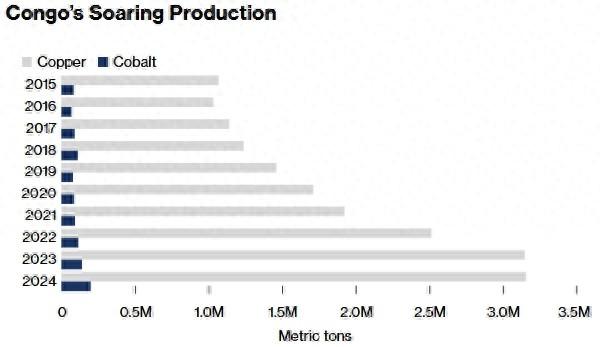
Group 1 - The Democratic Republic of the Congo (DRC) implemented a four-month cobalt export ban in late February to boost declining cobalt prices, with signals of potential further tightening of export policies as the ban nears its end [1][11] - DRC President Tshisekedi aims to transform the country from a mere commodity supplier to a key player in the strategic mineral refining value chain [1] - Analysts view Tshisekedi's strategy as a "high-risk gamble," attempting to attract external investors while maintaining relations with China, which has significant investments in DRC's mining sector [1][2] Group 2 - The U.S. has expressed interest in a mineral share deal with DRC, which could provoke China, as the DRC's copper and cobalt exports account for approximately 40% of its GDP [2] - The bilateral trade volume between China and DRC is projected to reach nearly $27 billion in 2024, while U.S.-DRC trade is only $820 million [2] - The DRC's mining sector has seen significant growth, with copper production expected to triple and cobalt production increasing similarly, largely due to Chinese investments [2][6] Group 3 - The U.S. is facing challenges in entering the DRC's mining sector, as China has established a dominant position over decades, making any U.S. attempts to penetrate the market difficult [6][7] - Chinese companies have built a comprehensive business ecosystem in DRC's copper and cobalt industries, overcoming challenges such as corruption and poor infrastructure [6][7] - The speed of Chinese enterprises in developing mining projects has outpaced Western companies, with the largest cobalt mine, Kisanfu, being operational in just over two years [7] Group 4 - DRC's cobalt export ban may be lifted in late June, but there are indications that the country may continue to tighten export policies, potentially leading to a loss of up to $400 million if the ban extends to the end of the year [11] - DRC is considering long-term price control measures, including export quotas, to ensure that the mining sector develops sustainably and benefits the local population [11]

美英已谈妥,要将中国挤出英国供应链?沉默6天后,中方反将一军
Sou Hu Cai Jing· 2025-05-21 07:11
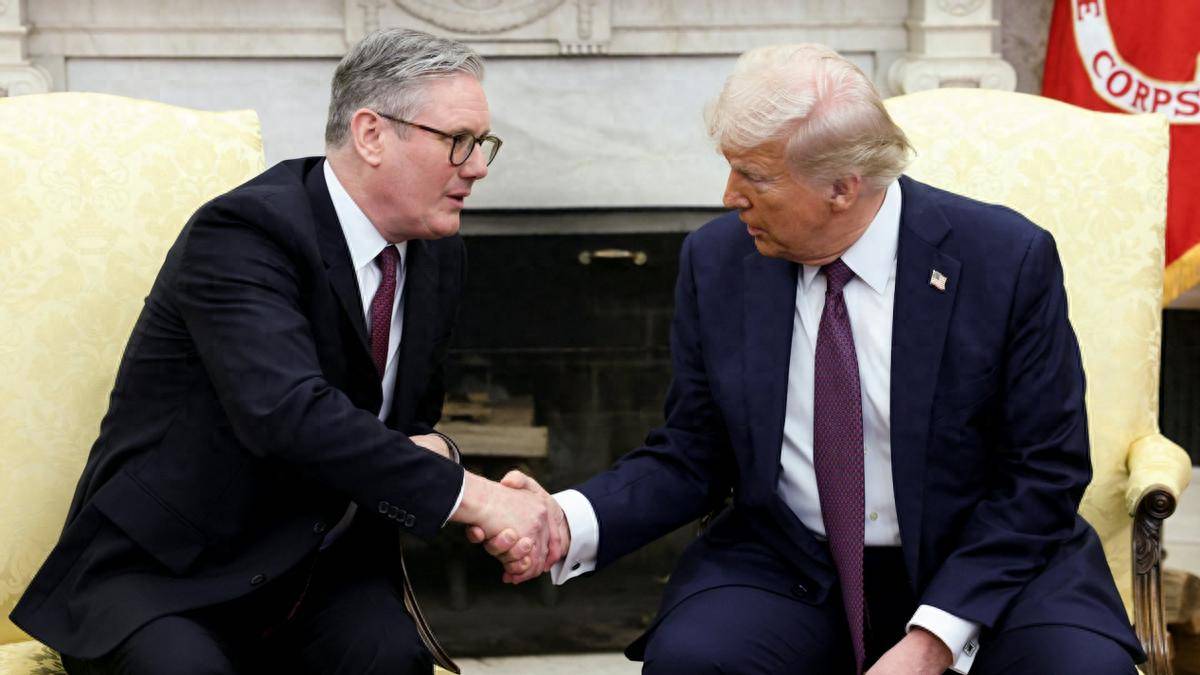
Group 1 - The core viewpoint of the article is that the new trade agreement between the US and the UK, while appearing to focus on tariff reductions, is primarily aimed at isolating China [1][5] - The agreement allows for increased access of US agricultural products to the UK market in exchange for tariff reductions on UK automobiles, which is expected to protect the UK automotive industry and related jobs [1][3] - Analysts suggest that this could lead to a significant influx of US agricultural products into the UK market, potentially replacing the Chinese orders for soybeans and pork that were previously canceled [3] Group 2 - The trade agreement includes stringent safety requirements from the US regarding the steel and pharmaceutical industries, indicating a potential squeeze on Chinese enterprises in these sectors [5] - The US has hinted that China is the intended target of these regulations, revealing ongoing ambitions to suppress and isolate China [5] - China's response emphasizes the importance of UK-China relations and the potential for mutual benefits through cooperation, countering the US-UK efforts to exclude China from supply chains [7][9] Group 3 - The Chinese government expresses a willingness to work with the UK to foster a healthy and stable bilateral relationship, which could mitigate geopolitical risks posed by US unilateralism [9] - China's stance is framed as a commitment to multilateralism and cooperation, contrasting with the isolationist approach of the US and UK [9] - The article suggests that the real concern for the US and UK may not be China's market share, but rather China's adherence to principles of openness and mutual benefit, which are crucial in the current era of globalization [9]
特朗普下最后通牒,中方84天内不签协议就征税,美国信用却先崩了
Sou Hu Cai Jing· 2025-05-21 05:20
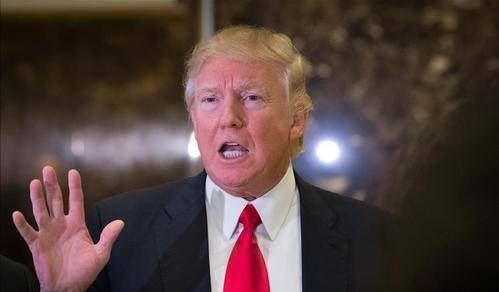
Group 1 - Trump has issued a 90-day ultimatum to China for a trade agreement, threatening to impose tariffs if no deal is reached, with only 84 days remaining [1][3] - The urgency behind Trump's threats is driven by domestic political pressure and the need to maintain a strong image among supporters [3][5] - Other countries, including Japan and the EU, are not responding to Trump's threats as expected, instead opting for a delay in negotiations [5][7] Group 2 - Trump's strategy of setting deadlines to pressure countries into compliance has backfired, as nations are uniting and delaying discussions [9][11] - The recent downgrade of the U.S. credit rating by Moody's from Aaa to Aa1 has weakened Trump's negotiating position internationally [11][13] - The downgrade has led to increased borrowing costs for the U.S. government and higher interest rates for consumers, further complicating Trump's domestic challenges [11][13] Group 3 - The global economic landscape is shifting, with countries looking to leverage the situation to negotiate better terms, inspired by China's ability to secure concessions [7][9] - Trump's unilateral approach to trade negotiations is becoming less effective in a globalized economy, where cooperation is essential [13][15]
贵金属数据日报-20250521
Guo Mao Qi Huo· 2025-05-21 03:35
兄追究法律责任。 期市有风险,入市需谨慎 投资咨询业务资格:证监许可【2012】31号 ITG国贸期货 世界500强投资企业 国贸期货有限公司 成为一流的衍生品综合服务商 入 册 市 市 官 方 网 站 假 有 客 服 热线 译 风 www.itf.com.cn 400-8888-598 tiff Pco 贵金属数据日报 ITG国贸期货 | | | | | 国贸期货研究院 | | 投资咨询号: Z0013700 | | | 2025/5/21 | | --- | --- | --- | --- | --- | --- | --- | --- | --- | --- | | | | | | 宏观金融研究中心 白素娜 | | 从业资格号:F3023916 | | | | | | 日期 | 伦敦金现 | 伦敦银现 | COMEX更金 | COMEX日银 | AU2508 | AG2508 | AU (T+D) | AG (T+D) | | 内外盘金 | | (美元/盎司) | (美元/盎司) | (美元/登司) | (美元/盎司) | (元/克) | (元/千克) | (元/克) | (元/千克) | | 银15点 ...
金价大反攻!现货黄金重新触及3300美元/盎司
Sou Hu Cai Jing· 2025-05-21 02:41
Group 1 - Gold prices surged again, breaking the $3,300 per ounce mark for the first time since May 9, driven by rising geopolitical tensions and a negative GDP growth in the US, which increased safe-haven demand [1] - Since May 19, spot gold has been on the rise, following a significant correction after reaching a historical high before the May Day holiday, with a notable drop of 2.23% on May 14 [1] - The National Bureau of Statistics reported a strong performance in gold and jewelry consumption, with a year-on-year growth of 25.3% in April for gold and jewelry, and a 38.6% increase in the average closing price of AU9999 gold [1] Group 2 - CITIC Futures believes that the current adjustment in gold prices is a short-term trend, with a long-term bullish outlook remaining intact, influenced by a combination of rising inflation and economic downturn in the US [2] - According to Founder Securities, while gold prices are currently high, the easing of trade tensions may lead to profit-taking by investors and a slowdown in central bank purchases, potentially causing a short-term price correction [2] - Citigroup has significantly lowered its three-month gold price target from $3,500 to $3,150, indicating a 10% decrease, and predicts that gold prices will oscillate between $3,000 and $3,300 in the near term [4]

大越期货螺卷早报-20250521
Da Yue Qi Huo· 2025-05-21 02:22
Report Industry Investment Rating No relevant content provided. Core Viewpoints - For rebar, the demand shows a seasonal increase, inventory decreases slightly at a low level, but traders' purchasing willingness remains weak, and the downstream real estate industry is still in a downward cycle. With a weak real - estate market, future demand may cool down. Although there are signs of trade - war mitigation and potential domestic policy support, it should be treated with a bearish - leaning and volatile mindset [2]. - For hot - rolled coils, both supply and demand have weakened, inventory continues to decline, and exports are blocked. There are also signs of trade - war mitigation and potential domestic policy support. It should also be treated with a bearish - leaning and volatile mindset [5]. Summary by Related Catalogs Rebar - **Fundamentals**: Demand has a seasonal increase, inventory decreases slightly at a low level, traders' purchasing willingness is weak, and the downstream real - estate industry is in a downward cycle [2]. - **Basis**: The spot price of rebar is 3190, and the basis is 132, which is bullish [2]. - **Inventory**: The inventory in 35 major cities across the country is 4.3488 million tons, showing a month - on - month and year - on - year decrease, which is bullish [2]. - **Disk**: The price is below the 20 - day line, and the 20 - day line is downward, which is bearish [2]. - **Main Position**: The net position of rebar's main contract is short, and short positions are decreasing, which is bearish [2]. - **Likely Factors**: Production and inventory remain at a low level, and consumption increases month - on - month [3]. - **Negative Factors**: The downward cycle of the downstream real - estate industry continues, and terminal demand is weaker than the same period [3]. Hot - Rolled Coils - **Fundamentals**: Both supply and demand have weakened, inventory continues to decline, and exports are blocked. There may be domestic policy support, showing a neutral situation [5]. - **Basis**: The spot price of hot - rolled coils is 3280, and the basis is 78, which is bullish [5]. - **Inventory**: The inventory in 33 major cities across the country is 2.6935 million tons, showing a month - on - month and year - on - year decrease, which is bullish [5]. - **Disk**: The price is below the 20 - day line, and the 20 - day line is flat, which is bearish [5]. - **Main Position**: The net position of hot - rolled coils' main contract is short, and short positions are decreasing, which is bearish [5]. - **Likely Factors**: Demand remains higher than the same period, and inventory starts to decrease [6]. - **Negative Factors**: The expectation of downstream demand is pessimistic [7].
【期货热点追踪】主流船司相继开启6月GRI窗口期,集运欧线是否仍有上行空间?
Jin Shi Shu Ju· 2025-05-21 02:06
Core Viewpoint - The shipping industry, particularly the European route, is experiencing fluctuations in freight rates due to trade tensions and geopolitical factors, with short-term demand expectations showing signs of improvement despite ongoing uncertainties [1][4]. Group 1: Market Performance - The main contract for European shipping opened lower and fell over 2% during the day, reaching a low of 2261.0 points, following a previous day where it rose over 6% and closed up 4.36% [1]. - The Shanghai export container freight index for European routes reported a decrease of 2.9%, standing at 1265.30 points as of May 19, 2025 [2]. Group 2: Freight Rates - Current spot freight rates for the latter half of May have dropped to a range of $1500-$1900 per FEU, with various shipping companies adjusting their rates, such as YML at around $1600 and MSC at $1890 [2]. - Predictions indicate that the "explosion" of demand on the US routes may continue until late July, potentially leading shipping companies to reallocate capacity from European routes, tightening supply and driving up European freight rates [1]. Group 3: Demand and Supply Dynamics - The demand for European shipping is expected to improve due to a potential recovery in US line demand, which may alleviate pressure on European routes [3][5]. - The average weekly capacity for May, June, and July is projected at 27.46, 29.89, and 29.83 million TEU respectively, with attention needed on future shipping schedule adjustments [5]. Group 4: Market Sentiment and Strategy - Short-term trading sentiment remains bullish due to the lack of significant negative drivers, with expectations for freight rates to rise despite potential downward adjustments in the short term [3]. - Investors are advised to remain cautious and monitor geopolitical developments, capacity, and cargo volume data closely [4].


泰媒:泰国多举措应对美国关税影响
Huan Qiu Shi Bao· 2025-05-20 22:42
Group 1 - The Thai government is implementing measures to boost the economy in response to the potential impact of U.S. tariffs, including extending corporate income tax exemptions for SMEs from 3 to 5 years and increasing the exemption amount to 100% of the investment amount [1][2] - A total investment plan of 99.7 billion Thai Baht (approximately 21.76 billion RMB) has been approved for data centers and renewable energy, with strict requirements for foreign investments to ensure they bring high technology to Thailand [1] - The International Monetary Fund (IMF) has lowered Thailand's economic growth forecast for the year to 1.8% due to the impact of U.S. tariffs, emphasizing the need for Thailand to diversify trade and restructure its economy [2] Group 2 - Thailand is actively strengthening economic cooperation with other ASEAN countries, including elevating its relationship with Vietnam to a comprehensive strategic partnership and aiming to increase bilateral trade from over 20 billion USD to 25 billion USD [3] - The Thai government is also collaborating with Indonesia to promote ASEAN economic integration and address global geopolitical and economic uncertainties, with bilateral trade currently at 18 billion USD [3]
从中国手上吃的亏,美国要在印度身上找补?莫迪对美反制开始
Sou Hu Cai Jing· 2025-05-20 17:32
Group 1 - The core point of the news is the recent developments in US-India trade relations, particularly the proposal for a zero-tariff trade agreement by India, which comes after India's earlier decision to impose tariffs on certain US goods in response to US tariffs on Indian steel and aluminum products [1][3][5] - India's initial response to the US's imposition of tariffs was to adopt a conciliatory approach, but this changed to a more aggressive stance with plans to impose retaliatory tariffs on $3.2 billion worth of US agricultural and chemical products [3][5] - The announcement of a zero-tariff agreement by President Trump raises questions about whether the US will reciprocate by lowering or eliminating tariffs on Indian goods, highlighting the uncertainty in trade negotiations [3][5][7] Group 2 - India's ambition to become a global manufacturing hub, particularly in high-tech industries like smartphones, faces significant challenges due to inadequate infrastructure, technology levels, and industrial support, despite its large population advantage [5][7] - The US's aggressive trade tactics, including the recent zero-tariff proposal, are seen as a way to exert pressure on India, which may struggle to compete with US goods in its domestic market [5][7] - The contrasting approaches of China and India in response to US trade policies illustrate the different strategies being employed, with China taking a strong stance while India appears to be yielding to US demands [5][7]

美股抄底潮背后 科技巨头遭遇“信任危机”?
智通财经网· 2025-05-20 11:21
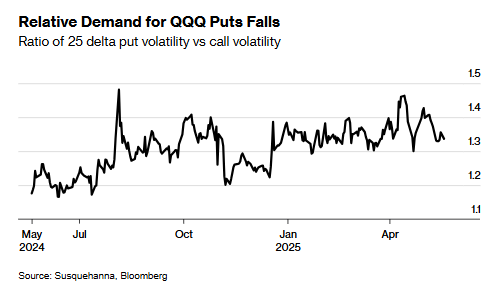
Group 1 - The core viewpoint is that there is a significant divergence among traders regarding the future performance of major tech stocks, with a nearly equal amount of call and put options being held, contrasting with a generally bullish sentiment towards the broader market due to easing trade tensions [1] - The demand for call options on the Invesco QQQ Trust has reached the highest level since January, while the cost of put options is at a high percentile, indicating a shift in trader sentiment towards expecting sustained volatility in the market [4] - Despite the Nasdaq 100 index recovering most of its losses from earlier trade concerns, major tech companies like Apple, Google, Amazon, and Tesla are still experiencing declines in stock prices, highlighting uncertainty in the tech sector's outlook [5] Group 2 - Some institutional investors remain optimistic about the short-term performance of specific tech giants, as evidenced by significant purchases of call options for Amazon and Microsoft set to expire between June and August [5] - However, long-term outlooks appear more cautious, with a report indicating that bullish bets on six-month options for the S&P 500 remain relatively subdued [5]