
去美元化

Search documents
有色金属“开门红”,公募扎堆推新,机遇还是风险?
Di Yi Cai Jing· 2026-01-11 13:13
Core Viewpoint - The outlook for non-ferrous metals remains optimistic for 2026, with expectations of continued price increases driven by macroeconomic factors and supply-demand dynamics, despite concerns about high valuations and potential risks in the market [1][2][5]. Group 1: Market Performance and Trends - The non-ferrous metals sector has shown strong performance, with the China Nonferrous Metals Index rising over 8% since the beginning of the year, reaching a historical high of 3369 points on January 9 [1]. - In 2025, the China Nonferrous Metals Index recorded a cumulative increase of 91.67%, with leading stocks like Luoyang Molybdenum and Jiangxi Copper seeing price increases of 200.7% and 166% respectively [2]. - The futures market also reflected this trend, with LME copper futures prices increasing by over 40% in 2025, and LME tin and aluminum rising by 39% and 17% respectively [2]. Group 2: Investment Opportunities - Analysts suggest that the demand for metals such as copper and aluminum will continue to rise due to increased global electricity construction and investment in power infrastructure, which is expected to outpace GDP growth [2][6]. - The electric aluminum sector is anticipated to mirror the coal market's performance from 2022 to 2024, with limited supply and high dividend yields making it attractive for value investors [3]. - The ongoing macroeconomic environment, including potential interest rate cuts by the Federal Reserve, is expected to create a favorable backdrop for both precious and non-ferrous metals [6]. Group 3: Institutional Activity and Caution - There has been a surge in public fund applications for non-ferrous metal-themed ETFs, indicating strong institutional interest in the sector [4]. - Despite the positive sentiment, there is a growing caution among market participants regarding high valuations, with the price-to-book ratio of the non-ferrous sector rising from 2 to approximately 3.5 [6]. - Analysts recommend a balanced approach, advising against blindly chasing high valuations while recognizing the ongoing demand and investment opportunities in the sector [6][7].



大转变,“囤积商品”的时代来临了!
华尔街见闻· 2026-01-11 12:21
Core Viewpoint - The commodity market is undergoing a profound paradigm shift due to escalating geopolitical tensions and the restructuring of global supply chains, moving from a "just-in-time" model to a "just-in-case" inventory accumulation strategy [1][2]. Group 1: Supply Chain Transformation - Major economies are transitioning from a reliance on minimal commercial inventories to large-scale strategic reserves to mitigate risks from potential wars, shipping disruptions, or geopolitical blockades [2]. - This shift is driven by an extreme desire for security, reshaping the supply-demand dynamics of various commodities, particularly energy and strategic metals [3][4]. Group 2: Price Volatility and Investment Opportunities - Prices of critical military metals like tungsten and cobalt have experienced significant volatility, with projected price increases of 229% and 120% respectively by 2025 [5][15]. - The new trading narrative for investors includes a focus on gold as a hedge against credit risk and a bullish outlook on metals driven by national security demands, especially as defense budgets rise significantly [6][15]. Group 3: Geopolitical Implications - The low-trust global environment has shifted priorities from efficiency to survival, with countries now prioritizing physical ownership of commodities [9]. - The U.S. is reinforcing its energy security, with strategic actions reflecting a long-term focus on resource control to ensure absolute security [12][13]. Group 4: Gold and De-dollarization - The global de-dollarization process is fundamentally changing the pricing logic of gold, with central banks accelerating their shift from dollar reserves to gold [16]. - If the top 50 central banks increase their gold reserves by just 1%, it could potentially raise gold prices by approximately $1,000 [17]. Group 5: Market Implications - The macro narrative shift presents direct investment implications, with recommendations for investors to focus on capital market opportunities related to defense stocks and commodity ETFs [18]. - Mining stocks, particularly gold mining companies, are also positioned to benefit, as evidenced by record profits across tracked gold miners [20].


全球资管巨头“锚定”香港
Xin Lang Cai Jing· 2026-01-11 11:00
Core Insights - The global economic landscape is becoming increasingly polarized, with the Federal Reserve entering a rate-cutting cycle and a rising trend of de-dollarization, prompting investors to reassess their asset portfolios [1] - Hong Kong is emerging as a strategic hub for global asset management, attracting international investment firms due to its unique institutional advantages and comprehensive financial ecosystem [1][2] - The influx of capital into Hong Kong has accelerated since 2024, with total assets under management increasing by 13% year-on-year and net inflows surging by 81%, reaching a total of 35 trillion HKD by the end of 2024 [1] Group 1: Investment Trends - Hong Kong is becoming a key destination for mainland Chinese capital seeking global allocation, handling approximately 80% of offshore RMB transactions [2] - The "Cross-Border Wealth Management Connect 2.0" initiative has significantly increased the number of accounts for mainland investors in Hong Kong wealth products from 25,000 to 110,000 [2] - The asset management market in Hong Kong is characterized by a diverse investor base, with overseas investors consistently holding over 54% of assets [1][2] Group 2: Institutional Strategies - International asset management giants are establishing Hong Kong as a core point for their Asian strategies, with firms like PIMCO focusing on fixed income and alternative assets [3] - Future Asset is leveraging its expertise in industry sectors such as renewable energy and semiconductors to identify investment opportunities in Hong Kong [4] - Southern Eastern, a major ETF issuer in Hong Kong, has seen significant growth, managing 36 ETFs and achieving a market share of 87% in the Hang Seng Tech Index ETF [5] Group 3: Market Dynamics - The competitive landscape between domestic and international institutions is becoming more pronounced, with domestic firms capitalizing on their understanding of mainland needs and international firms leveraging their global research capabilities [2][6] - Fidelity International is focusing on active management strategies, emphasizing the potential for growth in the Hong Kong market [6] - Invesco is utilizing Hong Kong's offshore RMB status to create a cross-border investment platform, aligning with global asset allocation trends [7] Group 4: Long-term Outlook - International investors view Chinese assets as a long-term value proposition, particularly given their low correlation with U.S. equities [8][9] - The Hong Kong IPO market is expected to remain robust, driven by the fundraising needs of Chinese companies and ongoing reforms by the Hong Kong Stock Exchange [10] - The anticipated economic growth in China and the continued appeal of Hong Kong as a hub for foreign investment are expected to sustain momentum in 2026 [11]
最新!突袭委内瑞拉后,特朗普放话:美国将控制全球55%的石油?
Sou Hu Cai Jing· 2026-01-11 05:47
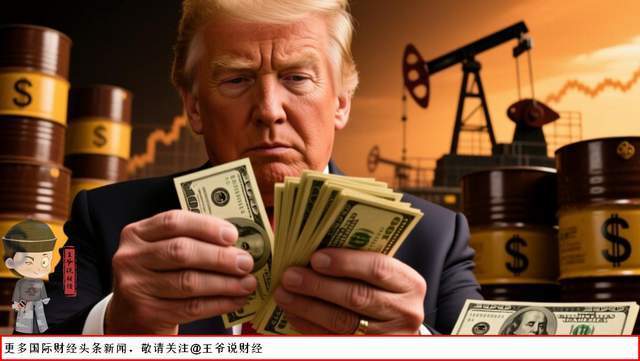
Group 1 - Trump's statement about the U.S. controlling 55% of global oil is linked to recent military actions in Venezuela, where the U.S. aims to dominate oil resource development [3] - Current OPEC data shows that Venezuela holds 19% of the world's proven oil reserves, while the U.S. only holds 3%, making Trump's claim of 55% unrealistic [3] - The combined oil production of the U.S. and Venezuela is projected to be less than 15% of global production in 2025, further questioning the feasibility of Trump's assertion [3] Group 2 - The U.S. is interested in Venezuela's oil reserves due to its significant proven reserves, and aims to control these resources through military intervention [5] - The U.S. seeks to weaken OPEC+ by disrupting its influence on global oil prices through control of Venezuelan oil [5] - The U.S. aims to reinforce the dominance of the petrodollar by linking Venezuelan oil exports to the U.S. dollar amidst a global trend of de-dollarization [5] Group 3 - The global oil supply chain may become polarized, with the U.S. potentially linking oil distribution to compliance with its policies, affecting many countries' energy strategies [7] - A low oil price cycle may be on the horizon due to increased production from the U.S. and Middle Eastern countries, alongside a slowdown in global oil demand [7] - The assertion of U.S. energy control reflects a broader strategy to reshape global energy order, raising concerns about geopolitical stability and energy security for importing nations [9]
我国拒接美8500亿债务,再遭美国施压,希望中国接盘美债
Sou Hu Cai Jing· 2026-01-11 05:04
Core Viewpoint - China is adjusting its foreign exchange asset allocation strategy in response to significant changes in the global financial landscape, leading to a decline in the attractiveness of U.S. Treasury bonds, which were once considered a safe investment [1][3]. Group 1: Shift in Asset Allocation - China is gradually reallocating its assets towards gold, RMB-denominated assets, and diversified economies along the Belt and Road Initiative, focusing on asset diversification and risk mitigation [3][5]. - The shift away from U.S. Treasury bonds is influenced by the 2022 freezing of Russian central bank assets, raising concerns about the safety of dollar-denominated assets amid potential sanctions [5][7]. - The increasing U.S. fiscal deficit and downgrading of U.S. Treasury credit ratings by international agencies have made investors wary of U.S. debt, reflecting a growing lack of confidence in the U.S. financial system [7][13]. Group 2: Internationalization of the RMB - In 2024, Saudi Arabia and China signed multiple oil trade contracts partially settled in RMB, enhancing the internationalization of the currency and providing China with more confidence to reduce its U.S. Treasury holdings [9][14]. - The number of countries participating in the RMB cross-border payment system is increasing, with RMB becoming the fifth largest global payment currency, indicating its growing international influence [14]. Group 3: Global De-dollarization Trend - The trend of de-dollarization is not unique to China, as emerging economies like India and Turkey are also accelerating their efforts to reduce reliance on the dollar by increasing gold holdings and expanding local currency settlements [15]. - Major economies, including Saudi Arabia, Russia, and Japan, are reducing their U.S. Treasury holdings, indicating a global shift in capital flows and a gradual move towards a multi-currency system [13][15]. - The global financial market is witnessing a mainstream trend of de-dollarization, with countries adjusting their strategies to navigate the changing financial landscape [17].

3万项制裁没打垮俄罗斯!全球悄悄建体系,美元霸权要塌了
Sou Hu Cai Jing· 2026-01-11 04:46
Core Viewpoint - The article discusses the impact of over 30,000 sanctions imposed on Russia, highlighting its resilience and the emergence of a counter-sanction ecosystem that challenges U.S. economic hegemony [1][2]. Group 1: Sanctions and Economic Resilience - Russia's energy exports have reached a five-year high, with 80% of trade conducted in its own currency [1]. - The sanctions, initially thought to be crippling, have instead catalyzed the formation of a counter-system that undermines U.S. dominance [2]. Group 2: U.S. Economic Control - The U.S. maintains control over global economic flows through the dollar system, which accounts for 88% of foreign exchange transactions and prices for major commodities [3]. - Key mechanisms of U.S. control include the New York financial court's jurisdiction, SWIFT system authority, and CHIPS network control, allowing the U.S. to influence international transactions [4]. Group 3: Emergence of a Counter-System - A shadow fleet of 1,580 vessels has been established by countries like Russia and Iran to bypass sanctions, with 798 of these being oil tankers [12]. - India has become a crucial hub for energy arbitrage, refining Russian oil and selling it to Europe under Indian labels, generating billions in profits [14]. Group 4: Financial De-dollarization - The cross-border payment system (CIPS) has expanded to 189 countries, with transaction volumes reaching 90.19 trillion yuan in the first half of 2025 [18]. - In trade between China and Russia, over 95% is now settled in local currencies, with some months seeing this figure rise to 99.1% [19]. Group 5: The Gray System - The gray system operates by exploiting gaps in sanctions, using alternative logistics and financial channels to maintain trade [23]. - Countries like the UAE and Turkey play significant roles in facilitating trade through loopholes, while also balancing their relationships with the U.S. [27]. Group 6: Global Economic Dynamics - The global economy is evolving into a tripartite structure, with the U.S. and its allies as sanctioning powers, while countries like Russia and Iran adapt through gray systems [24]. - Arbitrageurs such as India and the UAE benefit from sanctions, but face increasing scrutiny and regulatory pressures from the U.S. [29].
暴涨150%!黄金危了?白银狂飙背后,你需要了解什么?
美投讲美股· 2026-01-11 03:11
【2026年前瞻 - 黄金】 黄金是我一直都比较看好的板块,而它在25年的表现也确实非常好。不过,往后看,我对于黄金的看法出现了一些变化。它那去美元化和央行购金的大逻辑都还在,但一些小逻辑在26年正变得松动。 https://www.jdbinvesting.com/tofu/DqFve-TOFU?utm_source=mtq&utm_campaign=01102026&utm_medium=yt_week_desc 【美投Pro——让你安心投资!】 华人投资者的专业股票研究平台,新用户7天免费试用~ 详情点击:https://www.jdbinvesting.com/?utm_source=mtq&utm_campaign=01102026_ETF&utm_medium=yt_week_desc 服务包括: ✅ Pro股票:热门个股绝对跟踪;每月发掘个股机会 ✅ Pro市场:每月分享宏观报告;市场热点深度解析 ✅ ProETF:发掘ETF机会和玩法;安心赚取被动收入 ✅ Pro新闻:每日分享新闻总结;个股异动及时解析 ✅ Pro学堂:从入门到精通,系统性学习美股投资 ✅ Pro问答:美投团队每日分享投资观点 ...
囤积商品的时代来临了?“强安全”逻辑重塑金属估值
Hua Er Jie Jian Wen· 2026-01-11 02:22
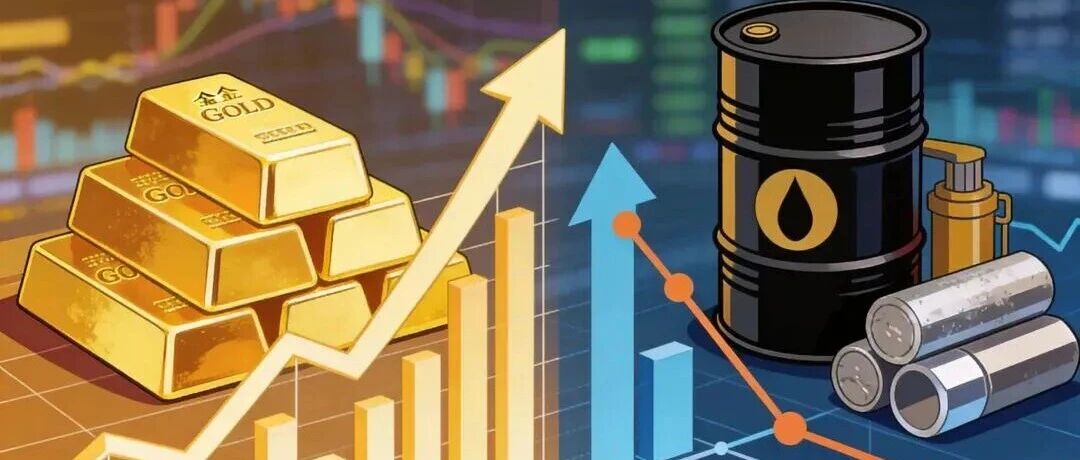
Core Insights - Geopolitical tensions and supply chain security concerns are driving countries to stockpile strategic materials, leading to a surge in prices for critical military metals like tungsten and cobalt due to "strong security" demand [1][2] - The shift from a "just-in-time" supply chain model to a "just-in-case" stockpiling approach is reshaping the supply-demand dynamics across various commodities, particularly energy and strategic metals [2][4] - The transition to a "hard asset" era is characterized by increased investment in commodities and defense assets, as they outperform technology stocks [1][3] Commodity Market Dynamics - Major economies are moving away from minimal commercial inventories to large-scale strategic reserves to mitigate risks from potential conflicts and supply disruptions [2][4] - Countries may have stockpiled approximately 1.4 billion barrels of oil, with plans to increase this to 2 billion barrels, significantly exceeding the international standard of 90 days [4] - Prices for tungsten and cobalt are projected to rise by 229% and 120% respectively by 2025, driven by heightened military demand [2][5] Investment Implications - Investors are advised to focus on gold as a hedge against credit risk and to consider the demand for metals driven by national security needs [3][7] - The shift in central bank strategies towards gold, with many aiming to increase gold reserves to 20%, is expected to push gold prices significantly higher [6] - The market is witnessing a transition where defense stocks and commodity ETFs are becoming attractive investment options, while technology stocks like Nvidia are underperforming [7] Central Bank Strategies - The global "de-dollarization" trend is fundamentally changing the pricing logic of gold, with central banks accelerating their shift from dollar reserves to gold [6] - A mere 1% increase in gold reserves among under-reserved central banks could potentially raise gold prices by approximately $1,000 [6] Market Trends - The current macroeconomic narrative suggests a direct investment opportunity in hard assets, with a notable shift in market focus from technology to commodities and defense-related sectors [7] - Gold mining stocks are also benefiting, with all tracked gold miners achieving record profits at current gold prices [7]
彭博:囤积商品的时代来临了
美股IPO· 2026-01-11 01:23
Core Viewpoint - The article discusses a significant paradigm shift in the commodity market driven by geopolitical tensions and supply chain security concerns, leading to increased accumulation of strategic materials and a restructured pricing logic for gold due to "de-dollarization" [1][4]. Group 1: Commodity Market Shift - Major economies are transitioning from a "just-in-time" supply chain model to a "just-in-case" accumulation strategy, focusing on building strategic reserves to mitigate risks from potential conflicts and supply disruptions [3][5]. - Countries are reportedly stockpiling significant amounts of oil, with estimates suggesting around 1.4 billion barrels, which could sustain supply for hundreds of days, exceeding the typical 90-day standard [3][6]. - Prices for critical military metals like tungsten and cobalt have surged, with projections indicating increases of 229% and 120% respectively by 2025 [3][7]. Group 2: Investment Implications - The shift in commodity dynamics suggests new investment opportunities, particularly in gold as a hedge against credit risk and in metals driven by national security demands [4][10]. - The global trend of "de-dollarization" is reshaping gold's pricing logic, with central banks aiming to increase gold reserves significantly, potentially pushing gold prices up by approximately $1,000 if certain reserve ratios are achieved [9][10]. - The market is witnessing a shift towards "hard assets," with defense stocks and commodity ETFs becoming attractive investment vehicles, as evidenced by the FTSE 100 index reaching 10,000 points, primarily driven by mining, oil, and defense sectors [10].
特朗普"门罗主义"转向西半球 金价4509美元创历史新高
Jin Tou Wang· 2026-01-11 00:51
Group 1 - The core viewpoint of the news is the escalation of geopolitical risks following the U.S. military operation in Venezuela, which has led to increased market volatility and a rise in gold prices [2][3] - The U.S. military's operation against Venezuelan President Maduro marks a shift in U.S. foreign policy towards a more interventionist approach in Latin America, as stated by President Trump [2] - The operation has drawn strong condemnation from countries like Russia, Iran, and Brazil, which argue it violates international law and the UN Charter [2][3] Group 2 - Following the U.S. military action, gold prices have remained elevated, with February futures reaching $4,402.29 per ounce, driven by heightened market risk aversion [3] - The World Gold Council reported that global central bank gold purchases remained robust, with a net purchase of 297 tons from early 2025 to the end of November [3] - The potential for accelerated de-dollarization and re-monetization of gold could lead to a faster long-term increase in gold prices, as central banks outside South America may increase their gold purchases [4]