
银发经济

Search documents
中国老人社会形象变迁史:1900—2025
3 6 Ke· 2025-10-09 13:20
Core Perspective - The article discusses the evolution of the social image of the elderly in China from 1900 to 2025, highlighting the transformation from traditional views to a more diverse and active perception of the elderly in contemporary society [1][34]. Phase Summaries Phase 1: Traditional and Turbulent "Respectable" and "Obsolete" (1900-1949) - The elderly were viewed through a dual lens: as "respectable" figures rooted in Confucian culture and as "obsolete" individuals amidst societal upheaval [2]. - Traditional family structures placed elderly men in positions of power, symbolizing authority and moral guidance [2]. - The collapse of traditional values led to the emergence of the "obsolete" image, where some elderly were criticized as outdated and irrelevant [5]. Phase 2: Collectivism and "Revolutionary Elders" (1949-1979) - Post-1949, the elderly's value shifted to their political identity and revolutionary contributions, with "old revolutionaries" gaining respect [9][10]. - Elderly women transitioned from traditional roles to "revolutionary mothers," reflecting the changing gender dynamics [10]. - The Cultural Revolution polarized elderly images, with some being revered and others vilified based on their political stance [14]. Phase 3: Transition and Reflection "Lost" and "Watchers" (1980-1999) - The reform era emphasized economic development, yet traditional family values persisted, with elderly often seen as family heads [16]. - Literature and film began to reflect on the historical experiences of the elderly, portraying them as witnesses to national history [17]. - The rise of market economy led to a decline in the traditional authority of the elderly, with many feeling marginalized and disconnected from societal changes [19]. Phase 4: Deep Aging and the Diverse Image of the Elderly (2000-2025) - By 2000, China officially entered an aging society, with projections indicating that by 2024, over 22% of the population will be aged 60 and above [21]. - The elderly's image has become increasingly negative, often framed as a societal burden due to issues like pension gaps and healthcare challenges [21][22]. - The concept of "silver economy" has emerged, recognizing the elderly as consumers rather than just dependents, leading to a rise in industries catering to their needs [24][26]. - Urban and rural elderly face different challenges, with urban seniors benefiting from social security while rural seniors often experience neglect [27]. - The emergence of "active elderly" and "new elderly" reflects a shift towards a more empowered and engaged image of the elderly, emphasizing lifelong learning and personal fulfillment [30][34]. Future Outlook - By 2050, the elderly population is expected to reach 500 million, necessitating a redefined image that emphasizes their contributions and diversity [34]. - The future elderly image should transition from "passive recipients" to "active contributors," recognizing their potential as valuable societal resources [34][35]. - Acknowledging the internal diversity of the elderly population is crucial, promoting a multifaceted representation that includes various lifestyles and contributions [35]. - Emphasizing lifelong learning and adaptation to technological advancements will be essential for integrating the elderly into modern society [36]. - A shift in focus from mere survival to a holistic approach that values the dignity and quality of life for the elderly is necessary for societal progress [36].

牛市里亏钱?林园旗下部分产品收益不佳被“吐槽”
Shen Zhen Shang Bao· 2025-10-09 07:19
Core Viewpoint - Lin Yuan remains optimistic about the A-share market despite some underperformance of his investment products, suggesting a focus on "beauty economy" and "silver economy" as future investment themes [1][2][3] Group 1: Market Performance - The A-share market has shown a significant recovery, with the Shanghai Composite Index up nearly 16%, the Shenzhen Component Index up nearly 30%, and the ChiNext Index up over 50% in the first three quarters of the year [1] - Lin Yuan's products have underperformed, with nearly 20 products lagging behind the CSI 300 Index, and some even reporting losses, leading to dissatisfaction among investors [1][2] Group 2: Investment Strategy - Lin Yuan's investment strategy focuses on sectors with strong earnings potential and monopolistic characteristics, particularly in consumer and pharmaceutical industries [2] - He emphasizes the importance of long-term returns, arguing that short-term underperformance is not unusual in value investing [1][2] Group 3: Future Outlook - Lin Yuan identifies two key areas for future investment: the "beauty economy," which he believes will be a critical factor in society, and the demand for health and longevity products as the population ages [2] - He asserts that the current A-share market sentiment is rational, with most companies' stock prices and valuations still at historical lows compared to the past two decades [3]
关于银发经济,我们可能理解错了
创业邦· 2025-10-09 03:23
Core Viewpoint - The article emphasizes the structural differentiation within China's aging population, challenging common perceptions about elderly consumers and highlighting the need for businesses to understand these nuances to seize opportunities in the silver economy [4][12]. Understanding "Old Age" - "Old age" is not merely a natural stage but a social construct defined by modern systems, particularly influenced by the industrial revolution and the establishment of pension systems [6][8]. - The perception of aging has shifted from a symbol of wisdom and authority to a label associated with retirement and social identity [8][9]. Structural Differentiation of the Elderly - The elderly population in China is experiencing unprecedented levels of differentiation, influenced by historical events and socio-economic changes [12][13]. - Factors such as the Cultural Revolution, education access, housing reforms, and the digital divide have created significant disparities in health, wealth, and lifestyle among the elderly [13][14]. Consumption Patterns - A significant portion of the elderly population exhibits low consumption behavior, with over 80% either not participating in certain markets or spending very little [17][18]. - For instance, only 16.6% of elderly individuals consume health supplements, and among them, over 80% spend less than 3,000 yuan annually [17][18]. Market Segmentation in the Silver Economy - The report identifies four key consumer segments within the elderly population based on their resources and capabilities, each with distinct consumption behaviors and needs [19][20]. 1. **Experience Upgrade Type**: Wealthy retirees seeking high-quality experiences and social engagement [20]. 2. **Health Assurance Type**: Individuals willing to pay for health-related products and services due to health concerns [21]. 3. **Quality Steady Type**: Moderate-income retirees focused on improving their quality of life within their means [22]. 4. **Health Management Type**: Elderly individuals driven by necessity, prioritizing basic health needs and convenience [25]. Emerging Opportunities - The article highlights several emerging opportunities in the silver economy, including: - **Elderly-friendly modifications**: Addressing safety and accessibility in living spaces, such as installing elevators and making bathrooms safer [27][30]. - **Accompaniment services**: The rise of "accompaniment services" for elderly individuals navigating complex healthcare systems [31][32]. - **Emotional needs**: Addressing the emotional well-being of the elderly, with a focus on companionship and mental health services [35][36]. - **Fitness for the elderly**: The growing interest in fitness among the elderly, with a need for tailored programs that address their specific health concerns [39][40]. Conclusion - Understanding the diverse needs and pain points of the elderly population is crucial for businesses aiming to tap into the silver economy. This requires a shift from generalized assumptions to a more nuanced approach that recognizes the complexity of this demographic [42].

国庆出行活跃,远途游及情绪消费亮眼
HTSC· 2025-10-09 03:04
Investment Rating - The report maintains an "Overweight" rating for the consumer discretionary sector [7] Core Insights - The report highlights robust growth in consumption during the National Day and Mid-Autumn Festival holidays, driven by overlapping holidays and increased travel intentions, with daily cross-regional passenger flow reaching 304 million, a year-on-year increase of 6.2% [2][16] - The report identifies structural opportunities in the consumption sector, particularly in emotional consumption, the rise of domestic brands, and AI-driven consumer experiences [2][5] Retail Sector Summary - Retail sales for key retail and catering enterprises increased by 3.3% year-on-year during the first four days of the holiday [2] - Popular tourist provinces and lower-tier cities showed strong performance, with cities like Qingdao (+8.2%) and Nanjing (+5.9%) leading the way [2][11] - Emotional consumption trends are emerging, with significant sales increases in products like projectors and gaming consoles, which saw year-on-year growth of 245% and 292% respectively [2][12] Tourism Sector Summary - The long holiday period has amplified travel intentions, with long-distance and cross-border travel demand remaining strong [3][16] - Domestic long-distance travel orders increased by 3 percentage points year-on-year, with popular tourist destinations experiencing significant visitor growth [3][17] - Outbound tourism to Hong Kong and Macau saw daily visitor numbers increase by 6.4% and 7.8% respectively [22] Dining and Hospitality Summary - The dining and hotel sectors experienced moderate growth, with average prices remaining stable [4][37] - The average daily sales for duty-free shopping in Hainan reached approximately 1.2 billion yuan, reflecting an 11% year-on-year increase [27] - Hotel revenue per available room (RevPAR) showed a year-on-year increase of 6.27%, driven by growth in average daily rates (ADR) [37] Investment Recommendations - The report emphasizes institutional investment opportunities in the consumer sector for 2025, recommending four main investment themes: the rise of domestic brands, high-growth emotional consumption, the silver economy, and AI-driven consumer experiences [5][9]




蒙牛集团与光大养老与达成战略合作 “营养+康养”共绘银发产业新蓝图
Zhong Jin Zai Xian· 2025-10-09 03:01
Core Viewpoint - Mengniu Group and Everbright Pension signed a strategic cooperation agreement to enhance health management and nutrition products for the elderly, aiming to integrate elderly nutrition and care services [1][3]. Group 1: Strategic Cooperation - The partnership focuses on health management, customized nutrition products, medical-care integration, and research collaboration for the elderly [1]. - Both companies aim to create a world-class comprehensive care service system and exclusive nutrition solutions for the elderly, contributing to the "Healthy China" initiative [3]. Group 2: Industry Context - China is entering a deeply aging society, making the development of the silver economy essential for enhancing the well-being of the elderly and promoting intergenerational harmony [3]. - The integration of nutrition and care services is a key component of the national health strategy [3]. Group 3: Company Initiatives - Mengniu is actively responding to national strategies by advancing its "one body, two wings" strategy, focusing on functional and precise nutrition markets [4]. - The company has developed products targeting the elderly, such as "Yourui" bone-strengthening milk powder and "Antang Shield" probiotic powder, to meet specific nutritional needs [4]. Group 4: Everbright Pension Overview - Everbright Pension operates over 230 various elderly care institutions across 39 cities in 18 provinces, serving nearly 500,000 elderly individuals annually [6]. - The company plans to launch the "Heguang Yiyang" unified brand by August 2025, marking a new phase in addressing the aging population [6]. Group 5: Future Directions - Mengniu will continue to collaborate with Everbright Pension and other partners to explore new opportunities in the care industry and integrate nutrition with care services for the elderly [6].


当老人鞋巨头,卖起有机食品
3 6 Ke· 2025-10-09 01:00
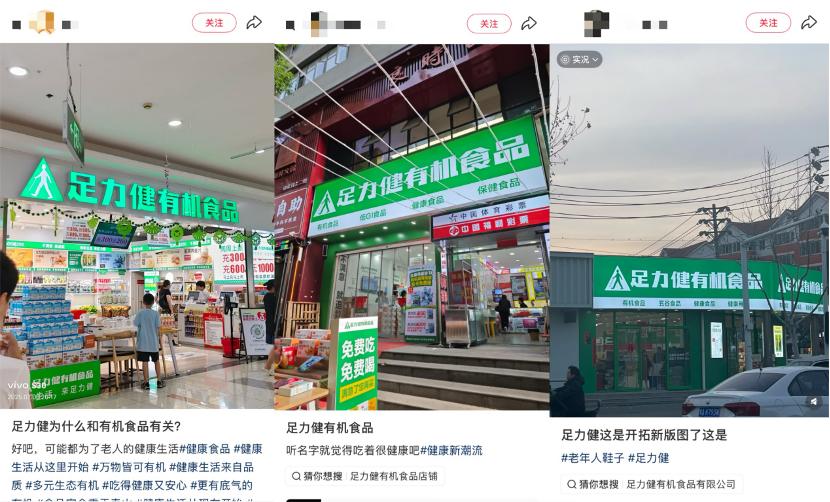
Core Insights - The article discusses the expansion of the elderly consumer market, highlighting how companies are diversifying their product offerings from traditional health supplements to everyday consumables like organic food [1][15] - The case of the brand "足力健" (Zulijian) is examined, showcasing its transition from a specialized elderly shoe brand to entering the organic food sector, raising questions about the motivations behind this shift [1][7] Company Strategy - Zulijian has opened "organic food stores" in various locations, featuring a range of products labeled as "organic" and "healthy," while avoiding the controversial health supplement market [1][3] - The stores employ a mixed strategy for product certification, combining strictly certified organic products with those that only have standard food certifications, potentially confusing consumers about product quality [3][10] - A low-cost membership system is central to Zulijian's business model, where members pay a nominal fee to access significantly discounted prices on products, creating a strong incentive for consumer participation [4][6] Market Response - The initial market response indicates the effectiveness of Zulijian's model, with membership surpassing 80,000 and over 40 stores established in key regions [6][9] - However, the sustainability of this model is questioned due to low profit margins and the challenge of covering operational costs while maintaining competitive pricing [6][9] Financial Challenges - Zulijian's financial struggles are highlighted, with a significant portion of its revenue being used to repay debts, raising concerns about its long-term viability [9][19] - The brand's attempt to pivot into the organic food market is seen as a desperate measure to generate cash flow and address mounting financial pressures [9][19] Industry Trends - The article notes a shift in the elderly consumer market towards daily dietary needs, with organic food emerging as a potential growth area, reflecting broader health concerns among older consumers [15][17] - The organic food market in China has seen rapid growth, with a market size exceeding 100 billion yuan in 2023, positioning it as a significant player in the global organic product consumption landscape [15][17] Competitive Landscape - The competition in the elderly market is intensifying, with various brands now targeting the same demographic, necessitating a deeper exploration of the elderly lifestyle rather than just product offerings [17][19] - Zulijian's strategy of appealing to both elderly and younger consumers reflects a broader trend of brands seeking to capture diverse market segments, though this may dilute their core identity [10][14]
居家养老如何从“有”到“优”
Jing Ji Ri Bao· 2025-10-09 00:09
Core Insights - Home-based elderly care remains the mainstream choice for seniors, and optimizing this service is crucial for public welfare [1][2] - The elderly population aged 60 and above in China has exceeded 310 million, projected to surpass 400 million by around 2035, indicating a growing demand for home-based care services [1] - The current elderly care service system is steadily advancing, with a focus on enhancing home and community-based services supported by institutional care and medical integration [1] Group 1: Current State of Home-based Elderly Care - Home-based elderly care services primarily focus on daily living assistance, with insufficient integration of medical care, despite a significant portion of seniors suffering from chronic diseases [2] - There are challenges in collaboration among medical, community, and elderly care institutions, leading to a lack of synergy in service delivery [2] - Issues such as an unbalanced talent structure, inadequate user payment capacity, and an imperfect evaluation system hinder the development of home-based elderly care services [2] Group 2: Policy and Infrastructure Support - High-quality development of home-based elderly care services requires supportive policies, including the use of local government bonds for infrastructure development and tax incentives for care institutions [2] - The establishment of a robust professional nursing workforce is essential, necessitating improvements in salary, career pathways, and a systematic skills certification framework to attract talent to the elderly care sector [2] Group 3: Innovative Service Models - Encouraging social participation in home-based elderly care through diverse service models, such as "community + property + elderly care" and "elderly dining services," is vital to meet the varied needs of seniors [3] - Leveraging technology to create community-based elderly care information platforms and developing "smart" elderly care scenarios can enhance service efficiency and quality [3] - Long-term care insurance, initiated in 2016, has benefited over 2.25 million disabled individuals, reducing their financial burden and improving their quality of life, highlighting the importance of sustainable funding and fairness in the system [3]
瞄准需求,看3所大学这样调整专业
Bei Jing Ri Bao Ke Hu Duan· 2025-10-08 23:51
Core Viewpoint - The article discusses the optimization of higher education disciplines and professional settings in response to industry demands, emphasizing the importance of talent cultivation for technological innovation and national strategic needs [1]. Group 1: Industry Demand and Educational Response - The new materials industry in China had a total output value exceeding 8 trillion yuan last year, maintaining double-digit growth for 14 consecutive years, leading to a rising demand for specialized talent [2]. - The establishment of new majors, such as electronic information materials, is aimed at addressing the needs of strategic emerging industries like semiconductors and new materials [2]. - The industry is facing challenges with reliance on imported key materials, necessitating the development of original technologies to solve critical issues [3]. Group 2: Interdisciplinary Collaboration - The demand for graduates with cross-disciplinary integration capabilities is increasing, as industries require knowledge spanning from research and development to industrial application [4]. - Collaborative laboratories between universities and companies are being established to tackle cutting-edge topics, allowing students to engage deeply with industry projects during their studies [4]. Group 3: Aging Population and Talent Needs - By the end of 2024, the elderly population in China is projected to reach 310 million, accounting for 22% of the total population, creating significant opportunities in the silver economy [6]. - The aging industry is characterized as a sunrise industry, with a substantial talent gap due to the high turnover and low educational background of existing workers [6]. - New academic programs focusing on aging-related fields are being introduced to meet the growing demand for high-end talent in the aging industry [7]. Group 4: Technological Integration in Traditional Fields - The integration of artificial intelligence and big data into traditional engineering disciplines is transforming the educational landscape, particularly in fields like smart transportation [9]. - New programs in smart transportation are being developed to incorporate advanced technologies, ensuring that graduates are equipped with both traditional knowledge and modern technical skills [9][12]. - The focus on practical experience and research in educational programs is enhancing graduates' employability in various sectors, including internet companies and government transportation management [12].
陈倩:破解四重困境,激发“银发动能”
Sou Hu Cai Jing· 2025-10-08 23:31
Core Viewpoint - The Chinese government is actively promoting the "silver economy" by leveraging the expertise of retired teachers to enhance rural education, while recognizing the potential of the aging population as a new economic driver [1][2]. Group 1: Policy and Implementation - The Ministry of Education and the Ministry of Finance have announced a plan to recruit 7,000 teaching staff for the 2025 Silver Age Teaching Program, aimed at utilizing the professional experience of retired teachers to strengthen the rural teaching workforce [1]. - Despite the issuance of numerous supportive policies for the silver economy, challenges such as fragmented policies and lack of inter-departmental collaboration persist, leading to inefficiencies in service delivery [4]. Group 2: Market Dynamics and Consumer Behavior - The perception of the elderly as "dependent" rather than valuable consumers limits investment and innovation in related industries; however, a growing segment of the population aged 55-64 is emerging as a significant force in quality consumption [2]. - Expenditures on health check-ups, cultural activities, and travel among the elderly are increasing, reflecting a shift in consumer behavior and the need to break down stereotypes surrounding the silver demographic [2]. Group 3: Technological Innovation - While technological innovations such as smartwatches and remote health platforms are entering the silver market, many products fail to integrate into the daily lives of the elderly due to complexity, high costs, and lack of emotional connection [3]. - The current technological challenges stem from a disconnect between product development teams and the elderly, absence of standardized aging-friendly product criteria, and unclear business models [3]. Group 4: Service Integration and Consumer Experience - Many companies offering elderly-friendly products and services lack user insights, leading to mismatches between supply and demand, which negatively impacts the consumer experience [5]. - To address these challenges, a service logic centered on consumer needs is essential, emphasizing community-based platforms that integrate healthcare, entertainment, and financial services [5]. Group 5: Systemic Reformation - The silver economy represents not just a new industry but a comprehensive restructuring of population dynamics, development models, and cultural perceptions, necessitating a shift away from short-term policy approaches [5].
沈白高铁通车 便利更多京沪游客畅游东北三省
Zheng Quan Ri Bao· 2025-10-08 16:18
Group 1 - The opening of the Shenyang-Jiamusi high-speed railway segment has significantly boosted tourism in the Changbai Mountain area, with a record high of 99,830 visitors from October 1 to October 3, representing a year-on-year increase of 22.16% [1] - The high-speed railway has reduced travel time from Beijing to Changbai Mountain to approximately 4 hours and 33 minutes, enhancing accessibility and convenience for tourists [2] - The Shenyang-Jiamusi high-speed railway is a key project in the national "14th Five-Year" railway development plan, aimed at revitalizing the Northeast region's tourism economy and supporting new economic models such as ice and snow tourism and senior tourism [2] Group 2 - Liaoning and Jilin provinces have seen a significant increase in tourism orders during the "Double Festival" period, with orders from Liaoning up by 16% and Jilin by 20% compared to last year [3] - The development of tourism projects along the high-speed railway line is expected to enhance the overall tourism industry in the region, contributing to the economic revitalization of cities like Fushun and Tonghua [2][3]
