
市场避险情绪

Search documents
铸造铝合金价格延续大涨,现货交投活跃
Xin Lang Cai Jing· 2026-01-06 08:07
Group 1 - The core viewpoint of the articles highlights the rising prices of aluminum alloys driven by macroeconomic factors and supply-demand dynamics in the market [1][2]. - The main aluminum alloy futures contract (2603) closed at 22,995 yuan, up 515 yuan, with a trading volume of 18,270 lots, an increase of 6,450 lots [1]. - The average price of various aluminum alloy ingots has increased, with A356.2 rising by 600 yuan to an average of 25,500 yuan/ton, and ADC12 increasing by 400 yuan to 23,200 yuan/ton [1]. Group 2 - On the macroeconomic front, geopolitical tensions, particularly the U.S. military actions in Venezuela, have heightened market risk aversion and raised concerns about global trade and supply chain stability, leading to increased premiums for strategic resources like non-ferrous metals [1]. - The domestic macro policy has been favorable, with the central government issuing 625 billion yuan in long-term special bonds to stimulate consumption, particularly ahead of the New Year and Spring Festival [1]. - The aluminum alloy market is experiencing a tightening supply of scrap aluminum and ongoing losses in the recycling aluminum industry, which is providing significant cost support [2].


市场避险情绪未见明显增强
工银国际· 2026-01-05 13:46
Report Summary 1. Investment Rating The report does not mention the investment rating of the industry. 2. Core Views - The market's risk - aversion sentiment has not significantly increased. The new issuance of Chinese offshore bonds was sluggish last week due to the holiday, with basically no new issuance. The yields of US Treasury bonds showed differentiation, with the 10 - year and 2 - year US Treasury bond yields rising by 6 and falling by 1 basis point respectively last week to 4.19% and 3.47% [1][2]. - The minutes of the December FOMC meeting showed that most participants supported the December rate cut. Most participants believed that if inflation declines gradually as expected, further rate cuts might be appropriate. Although inflation is still above the Fed's policy target, in the absence of a further upward trend, most Fed officials tend to cut rates to support the job market [2]. - The situation in Venezuela over the weekend did not significantly boost the market's risk - aversion sentiment. The oil price remained generally stable, and the US Treasury bond yields in the Asian session on Monday did not change much. The Bloomberg Barclays China US - dollar bond total return index remained flat last week [1][3]. - After the New Year's Day holiday, funds flowed back to the banking system, and inter - bank funding rates dropped significantly. The yields of 3 - year and 10 - year Chinese government bonds remained unchanged and fell by 1 basis point respectively to 1.38% and 1.85%. The long - term Chinese interest rates have basically entered a volatile market since the end of August 2025, and their subsequent trends may depend on the implementation of further loose monetary policies [1][4]. 3. Summary by Related Catalogs Offshore Market - **New Issuance**: Affected by the holiday, the new issuance of Chinese offshore bonds was sluggish last week, with basically no new issuance [1][2]. - **US Treasury Bond Yields**: The 10 - year and 2 - year US Treasury bond yields showed differentiation, rising by 6 and falling by 1 basis point respectively last week to 4.19% and 3.47% [1][2]. - **Market Sentiment and Bond Index**: The situation in Venezuela over the weekend did not significantly push up the market's risk - aversion sentiment. The oil price was generally stable. The US Treasury bond yields in the Asian session on Monday did not change much. The Bloomberg Barclays China US - dollar bond total return index remained flat, with the high - rating index falling slightly by 0.1% and the high - yield index rising slightly by 0.1% [1][3]. Onshore Market - **Funding Rates**: After the New Year's Day holiday, funds flowed back to the banking system, and inter - bank funding rates dropped significantly. The 7 - day deposit - type institutional pledged - repo weighted - average rate and the 7 - day inter - bank pledged - repo weighted - average rate dropped by 17 and 48 basis points respectively to 1.43% and 1.45% [4]. - **Government Bond Yields**: The yields of 3 - year and 10 - year Chinese government bonds remained unchanged and fell by 1 basis point respectively to 1.38% and 1.85%. The long - term Chinese interest rates have basically entered a volatile market since the end of August 2025, and their subsequent trends may depend on the implementation of further loose monetary policies [1][4]. Appendix: List of Chinese US - dollar Bonds The appendix lists a large number of Chinese US - dollar bonds, including information such as the issuer, guarantor, coupon rate, issuance amount, maturity date, and ratings from Moody's, S&P, and Fitch [19][20][21].
局势动荡或令市场避险情绪升温 沪铝期货迎来补涨
Jin Tou Wang· 2026-01-05 07:03
1月5日盘中,沪铝期货主力合约遭遇一波急速上涨,最高上下探至23780.00元。截止发稿,沪铝主力合 约报23565.00元,涨幅3.63%。 沪铝期货主力涨超3%,对于后市行情如何,相关机构该如何评价? 机构 核心观点 申银万国期货 中长期沪铝继续保持乐观 铜冠金源期货 铝价或有高位调整 国信期货 预计沪铝震荡偏强运行 申银万国期货:中长期沪铝继续保持乐观 假期期间,伦铝自2022年以来首次突破3000美元/吨,上涨0.8%。金银铜涨势暂缓后,铝作为前期跟随 品种迎来补涨,预计节后沪铝也将迎来补涨。美国11月数据先后发布,部分美联储官员向市场传递暂停 降息的信号,但2026年美联储主席换届或对市场降息预期产生影响,宏观层面可能更多关注点在于就业 的衰退风险和后续美联储降息预期的节奏。中短期电解铝供应端未见明显扰动,国内供应面临政策刚性 限制,海外面临投产不及预期,需求面由于今年春节相对偏晚,尽管下游开工率出现边际下滑迹象,需 求整体尚可,后续需关注随着春节逐渐临近,下游走弱节奏对价格的影响,随着新疆发运好转、在途库 存上升,社会库存有所积累,短期关注沪铝补涨的强度和持续性,中长期建议继续保持乐观。 铜冠金源 ...
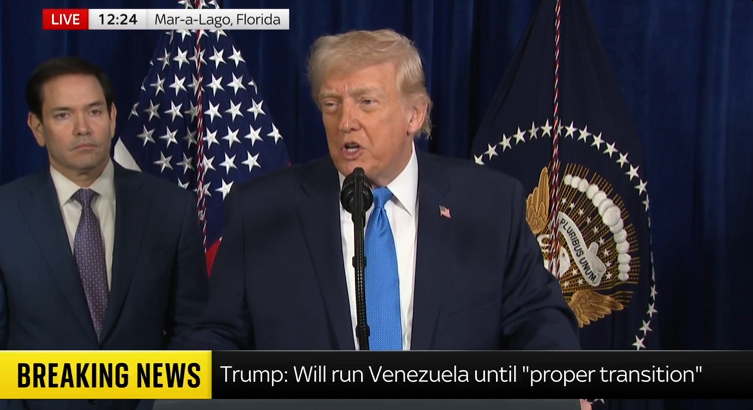
特朗普称美国将暂时“管理”委内瑞拉
Dong Zheng Qi Huo· 2026-01-05 01:13
Report Industry Investment Ratings No relevant content provided. Core Views of the Report - The domestic economic outlook is expected to improve in Q1 2026, but short - term geopolitical risks may suppress risk assets [1][18]. - The short - term strengthening of the US dollar index is due to rising geopolitical risks after the US's actions in Venezuela [3][12][13]. - The stock index long - position strategy should be continued, while the bond market may still face downward pressure after a rapid rise [19][22]. - Different commodities have different trends. For example, palm oil may face supply pressure, and copper prices are mainly affected by macro factors [24][52]. Summary by Directory 1. Financial News and Comments 1.1 Macro Strategy (Gold) - The arrest of the Venezuelan president by the US has increased geopolitical tensions, but the impact on the financial market is expected to be limited. Short - term precious metals may face correction risks [10]. 1.2 Macro Strategy (Foreign Exchange Futures - US Dollar Index) - The US's actions in Venezuela have raised geopolitical risks, causing the US dollar index to strengthen in the short term. The US dollar is expected to rise in the short term [3][12][13]. 1.3 Macro Strategy (US Stock Index Futures) - The US air strike on Venezuela may cause short - term market risk aversion, but the market risk appetite is expected to improve. US stocks are expected to operate in a volatile and slightly stronger manner [15][16]. 1.4 Macro Strategy (Stock Index Futures) - The domestic economic outlook is expected to improve, but short - term geopolitical risks may suppress risk assets. The long - position strategy for stock indices should be continued [18][19]. 1.5 Macro Strategy (Treasury Bond Futures) - The new fee rate regulations are short - term positive for the bond market, but cannot reverse the bearish sentiment. It is recommended to consider short - selling at high prices [2][22]. 2. Commodity News and Comments 2.1 Agricultural Products (Soybean Oil/Rapeseed Oil/Palm Oil) - In December 2025, Malaysian palm oil production and exports decreased, and the inventory may exceed 3 million tons. It is advisable to wait for India's increased purchases and consider going long at low levels [23][24][25]. 2.2 Agricultural Products (Soybean Meal) - CBOT soybeans declined due to poor export prospects. Domestic soybean crushing is expected to decrease in January. Soybean meal is expected to decline with CBOT soybean futures prices [28][29]. 2.3 Agricultural Products (Sugar) - The global sugar market is expected to have a small surplus in 2025/26. The sugar price may be sensitive to weather and production changes. Pay attention to the actual stocking and sales progress [30][32][33]. 2.4 Agricultural Products (Cotton) - The US cotton export demand is weak, and the Indian import tariff exemption has expired. The external market is expected to remain in a low - level shock. Be wary of the risk of a decline in Zhengzhou cotton [38][39]. 2.5 Black Metals (Rebar/Hot - Rolled Coil) - Before the New Year's Day holiday, the inventory of five major steel products continued to decline, but the speed slowed down. The steel price is expected to fluctuate in the short term, waiting for the accumulation of market contradictions [44][45]. 2.6 Black Metals (Steam Coal) - The price of steam coal in the northern port market was stable on December 31, 2025. The demand is weak, and attention should be paid to the coal mine's production in January [45][46]. 2.7 Black Metals (Iron Ore) - The Samarco mine expansion project was suspended. The iron ore price is expected to continue to fluctuate. Pay attention to the steel mills' raw material replenishment after January [47][48]. 2.8 Non - ferrous Metals (Copper) - Macro factors have a great impact on copper prices. Fundamentally, short - term price increases are restricted. It is recommended to buy at low prices [52]. 2.9 Non - ferrous Metals (Nickel) - Indonesia's supply contraction expectation is being realized. Unilaterally, it is advisable to consider going long at low levels. For arbitrage, pay attention to the 03 - 05 reverse spread opportunity [55][56]. 2.10 Non - ferrous Metals (Lithium Carbonate) - There may be short - term callback pressure, and it is recommended to consider going long at low levels in the medium term [58][59][60]. 2.11 Non - ferrous Metals (Polysilicon) - Polysilicon enterprises have raised spot quotes. It is advisable to consider going long at low levels, but investors should hold positions carefully [60][61]. 2.12 Non - ferrous Metals (Industrial Silicon) - The current production reduction scale of industrial silicon is insufficient to reverse the inventory accumulation pattern in 2026. It is recommended to short at high prices after a rebound [63][64]. 2.13 Non - ferrous Metals (Tin) - The supply and demand contradictions of tin are alleviated, and attention should be paid to the risk of price decline caused by the withdrawal of funds [68]. 2.14 Non - ferrous Metals (Lead) - The fundamental contradictions of lead are marginally alleviated. It is recommended to take a wait - and - see approach both unilaterally and in terms of arbitrage [69][70]. 2.15 Non - ferrous Metals (Zinc) - The short - term fundamentals of zinc have no obvious contradictions. Unilaterally, wait for the opportunity to take profits at high prices; for arbitrage, take a wait - and - see approach [71][72][73]. 2.16 Energy Chemicals (Carbon Emissions) - The EU carbon price is expected to be volatile and slightly stronger in the short term [74]. 2.17 Energy Chemicals (Crude Oil) - The short - term risk premium of crude oil prices may rise moderately, and the long - term supply growth depends on US investment [75][76].
委内瑞拉,一个世纪的资源争夺与宿命
Feng Huang Wang Cai Jing· 2026-01-04 07:02
Core Viewpoint - The military intervention by the U.S. in Venezuela is a culmination of over a century of conflict over oil resources, highlighting the strategic importance of Venezuela's vast oil reserves, which are the largest in the world [1][3][19]. Group 1: Oil Wealth and Historical Context - Venezuela has proven oil reserves of approximately 300 billion barrels, accounting for 17% of the global total, surpassing Saudi Arabia and the U.S. [3][5]. - The oil boom in the mid-20th century did not benefit the general population, leading to significant wealth disparity, with profits primarily flowing to international oil companies and a small elite [5]. - The "Bolivarian Revolution" initiated by Hugo Chávez in 1999 aimed to nationalize the oil industry, reclaiming resource sovereignty through reforms such as the Hydrocarbons Law of 2001, which mandated majority ownership by the state oil company PDVSA in joint ventures [5][7]. Group 2: U.S. Response and Geopolitical Tensions - U.S. interests were threatened by Venezuela's nationalization efforts, leading to sanctions and support for opposition movements, including a failed coup in 2002 [9][11]. - Following Chávez's death in 2013, Nicolás Maduro continued the nationalization policies, but U.S. relations deteriorated, especially after the 2018 elections, which the U.S. did not recognize [11][13]. - In 2025, the U.S. escalated its approach from economic sanctions to military threats, including a $50 million bounty on Maduro, reflecting the strategic importance of Venezuelan oil to U.S. interests [13][18]. Group 3: Impact on Global Oil Market - The military intervention is expected to disrupt Venezuela's oil exports, which have already plummeted from a peak of 3.5 million barrels per day to around 1 million barrels per day, representing only 0.8% of global production [13][19]. - Despite the geopolitical tensions, the global oil market is currently characterized by oversupply, with the International Energy Agency projecting a supply increase of 3 million barrels per day in 2025, which may mitigate the impact of Venezuela's supply disruption [20][22]. - The U.S. military control over Venezuelan oil resources could weaken OPEC+'s influence in the global oil market, potentially altering production coordination among oil-producing nations [22]. Group 4: Broader Economic Implications - The geopolitical turmoil is likely to create volatility in oil prices, with potential short-term spikes due to supply concerns, while long-term price pressures may remain limited due to existing supply surpluses [19][20]. - The military actions may also affect precious metals and shipping markets, with increased risk aversion likely driving up gold prices, which have already seen significant gains in 2025 [23][24]. - The situation may lead to increased logistics costs for energy and commodities due to military blockades, impacting supply chains and market dynamics [24].
美伊局势升温支撑金价 2月期金收报4347美元
Jin Tou Wang· 2026-01-04 02:01
Group 1 - The geopolitical risks, particularly the escalating tensions between the US and Iran, are driving market sentiment towards safe-haven assets, notably gold [1][3] - As of the latest trading session, February gold futures rose by $6.3, closing at $4347.4 per ounce, reflecting a clear risk-driven market behavior [1] - The US Treasury market showed stability on the first trading day of 2026, with the 10-year Treasury yield maintaining around 4.10%, influenced by holiday trading conditions [3] Group 2 - The Federal Reserve's December meeting minutes indicate a more open attitude towards easing monetary policy if inflation continues to decline, although there are still disagreements on the timing and extent of rate cuts [3] - The market anticipates two potential rate cuts in 2026, with attention on upcoming key economic data, particularly the non-farm payroll report [3] - The gold futures market is currently targeting a price above the historical high of $4584.00 per ounce, while short positions aim to push prices below the critical support level of $4200.00 per ounce [4]
美委局势最新:马杜罗夫妇已被起诉!假期“黑天鹅”影响哪些品种?来看解读→
Qi Huo Ri Bao· 2026-01-03 14:09
Core Viewpoint - The recent military actions by the U.S. against Venezuela have raised concerns in the global commodity markets, particularly regarding oil and mineral supplies, as Venezuela is a significant supplier of key resources [1][2]. Group 1: Impact on Oil Market - Venezuela, holding the largest proven oil reserves globally, currently has an oil production of approximately 1 million barrels per day, which is only 0.8% of global oil production [3]. - The U.S. airstrikes have heightened fears of a disruption in Venezuelan oil exports, which are currently around 600,000 barrels per day, significantly lower than historical levels [3]. - Analysts predict that the airstrikes will provide short-term support for oil prices, although the extent of this impact remains uncertain due to other factors influencing global oil supply and demand [3][4]. Group 2: Impact on Mineral Resources - Venezuela is a key supplier of copper, accounting for 5% to 8% of global reserves, and also provides essential minerals like bauxite and uranium, which are critical for the energy and defense industries [3]. - The geopolitical tensions may lead to increased prices for these minerals due to supply concerns, with gold prices expected to remain strong as investors seek safe-haven assets [3][4]. Group 3: Broader Market Implications - The ongoing conflict may lead to a divergence in market performance, with energy and gold sectors potentially benefiting while other sectors may face challenges [5]. - The situation could also influence domestic markets, with analysts suggesting that the opening of the domestic futures market should be closely monitored for potential volatility driven by geopolitical developments [5][6].
地缘风险与降息预期支撑需求,贵金属新年首个交易日延续涨势
Zhi Tong Cai Jing· 2026-01-03 02:08
Group 1 - The core viewpoint of the articles highlights the continued strength of precious metals, particularly gold, driven by geopolitical tensions and expectations of interest rate cuts in the U.S. [1] - As of the last trading day, spot gold rose by 0.33% to $4,332.88, with a significant annual increase of 64% in 2025, following a record high of $4,549.95 per ounce on December 26 [1] - Market expectations suggest that the Federal Reserve may implement at least two rate cuts of 25 basis points each, making non-yielding gold more attractive to investors [1] Group 2 - Other precious metals have shown even stronger performance, with spot silver increasing by 1.66% to $72.8 per ounce, and platinum rising by 3.5% to $2,125.80, both reaching historical highs [2] - In 2025, silver and platinum outperformed gold, with silver's annual increase exceeding 147% and platinum's rising by 127%, driven by supply constraints and industrial demand [2] - Palladium also maintained its strong momentum, rising nearly 2% to $1,636.43 per ounce, with a total annual increase of 76%, marking the largest annual gain in 15 years [2]
2026黄金持续上涨是好事还是坏事?
Sou Hu Cai Jing· 2026-01-02 12:46
Group 1: Gold Market Dynamics - The continuous rise in gold prices reflects market risk aversion and economic uncertainty [1][4] - Key drivers include the Federal Reserve's interest rate cuts, geopolitical tensions, and central banks' gold purchases [4][6] - Gold's appeal as a safe-haven asset is heightened during economic downturns and inflationary periods [4][6] Group 2: Silver Market Analysis - Recent silver price drops are attributed to technical overbought conditions, regulatory tightening, and profit-taking [2][3] - Market sentiment has been affected by panic selling and liquidity issues during holiday trading periods [5] - Despite short-term volatility, the long-term supply-demand balance for silver remains stable [2][3] Group 3: Investment Considerations - Investors should approach gold as a potential short-term profit opportunity while being cautious of price fluctuations [4][6] - Ordinary consumers may face increased costs for gold jewelry due to rising prices [4] - Mining companies could benefit from higher gold prices, leading to improved performance and expansion opportunities [4]

今日期货市场重要快讯汇总|2025年12月30日
Xin Lang Cai Jing· 2025-12-30 00:25
Group 1: Precious Metals Futures - New York gold prices experienced significant volatility, dropping below $4420 per ounce on December 29, with a daily decline of 2.92%, and further falling to $4330 per ounce, expanding the daily loss to 4.93% [1][6] - On December 30, New York gold initially broke above $4360 per ounce, with a daily increase of 0.38%, but later fell below $4340 per ounce, resulting in a daily decline of 0.09% [1][6] - Spot gold also showed large fluctuations, falling below $4310 per ounce on December 29, with a daily drop of 5.03%, and then rising above $4340 per ounce on December 30, with a daily increase of 0.21% [1][6] - New York silver similarly experienced a volatile market, dropping below $71 per ounce on December 29, with a daily decline of 8.25%, and rebounding above $72 per ounce on December 30, with a daily increase of 2.20% [1][7] - Spot silver fell below $71 per ounce on December 29, with a daily drop of 10.31% [1][7] - Palladium futures fell below $1700 per ounce on December 29, with a significant drop of 15.98% [2][7] Group 2: Base Metals Futures - Base metals futures faced widespread pressure, with copper futures dropping 4% on December 29, now priced at 96420.00 yuan [3][8] - Tin futures showed extreme volatility, initially dropping 5% (to 325220.00 yuan), then 6% (to 321750.00 yuan), and ultimately closing down 7% at 318370.00 yuan [3][8] Group 3: Energy and Shipping Futures - U.S. crude oil futures closed at $58.08 per barrel on December 29, an increase of $1.34, or 2.36% [4][9] - The U.S. Energy Information Administration (EIA) announced a delay in the release of the weekly oil status report, with notifications to be provided at least one hour in advance [4][9] - For the week ending December 19, EIA reported a decrease in natural gas inventories by 1660 billion cubic feet, slightly above the expected decrease of 1680 billion cubic feet [4][9] Group 4: Macro and Market Impact - The volatility in precious metals and metal futures may be linked to geopolitical factors and market sentiment [5][10] - U.S. Congressman Green criticized both parties for their roles in the growth of national debt and the depreciation of the dollar, while Trump mentioned considering legal action against Federal Reserve Chairman Powell, increasing policy uncertainty and market volatility [5][10] - In the U.S. stock market, the Dow opened down 0.2% on December 29, with the S&P 500 down 0.5% and the Nasdaq down 0.8%, while silver mining stocks generally declined, with the Invesco Silver Trust down 7.3% [5][10] - On December 30, all three major U.S. stock indices closed lower, with the Dow down 0.51%, Nasdaq down 0.5%, and S&P down 0.35% [5][10]