美元指数

Search documents
金价狂飙至3417美元!白银涨幅碾压黄金,金银比暗藏玄机|大宗风云
Hua Xia Shi Bao· 2025-06-03 15:18
Group 1 - The core viewpoint of the articles highlights the significant rise in international gold prices due to geopolitical tensions and fluctuating tariff policies, with gold reaching a near 20-day high of $3417.8 per ounce [2] - The increase in gold prices has also led to a rise in jewelry gold prices, with Chow Tai Fook adjusting its gold jewelry price to 1020 yuan per gram, up by 22 yuan from the previous day [2] - The gold-silver ratio has experienced substantial fluctuations, reaching a five-year high, indicating potential market corrections in the future [2][4] Group 2 - The rise in gold prices is attributed to multiple factors, including the increase in U.S. import tariffs on steel and aluminum, which has heightened global economic uncertainty [3] - The ISM manufacturing PMI for May showed a decline in new import orders, reflecting concerns over supply chain stability, further driving investors towards gold as a safe haven [3][7] - Silver prices have outperformed gold, with a 5.31% increase compared to gold's 2.8%, driven by the extreme gold-silver ratio and market sentiment [3][4] Group 3 - As of June 3, the gold-silver ratio reached 1:100, indicating that one ounce of gold can be exchanged for 100 ounces of silver, significantly higher than the historical average of 53-66 ounces [4] - This extreme ratio suggests that either silver is severely undervalued or gold is overvalued, with a high probability of mean reversion in the medium to long term [4] - Historical data indicates that when the gold-silver ratio exceeds 80, there is a 70% chance of silver prices rising, targeting a ratio range of 60-70 ounces [4] Group 4 - The volatility of silver is greater due to its smaller market size compared to gold, meaning that equal capital inflows can lead to larger price movements in silver [5] - The improvement in China's manufacturing PMI indicates a gradual economic recovery, which is expected to boost industrial demand for silver, as it is widely used in various sectors [5] - The anticipated economic recovery is likely to increase silver demand, further supporting its price [5] Group 5 - The U.S. dollar index fell to 98.86 on June 3, which reduced the holding cost of gold and contributed to its price increase [6] - The ongoing uncertainty from U.S. tariff policies and high fiscal deficits has shaken investor confidence in dollar assets, leading to a potential decline in the dollar's value [6] - The downgrade of the U.S. credit rating by Moody's has heightened concerns over the sustainability of the fiscal deficit, prompting capital outflows from dollar assets [6] Group 6 - The ISM manufacturing PMI for May was reported at 48.5, indicating a contraction in U.S. manufacturing activity for three consecutive months, which adds pressure to the dollar index [7] - The market anticipates that the Federal Reserve will maintain interest rates, with a 99.1% probability of no rate change in June, reflecting cautious monetary policy amid economic weakness [7] - The combination of weak manufacturing data and inflation expectations suggests limited potential for rate cuts in the near term, impacting gold prices [7] Group 7 - The future trajectory of gold prices will be influenced by the Federal Reserve's monetary policy, particularly if rate cuts are implemented, which would lower the opportunity cost of holding gold [8] - Geopolitical tensions and trade disputes are expected to further elevate gold's appeal as a safe haven asset, potentially driving prices higher [8] - However, gold prices may face resistance at previous highs around $3400-$3450 per ounce, and any easing of trade tensions could lead to price corrections [9]

棉花策略月报-20250603
Guang Da Qi Huo· 2025-06-03 07:21
Report Industry Investment Rating No relevant content provided. Core Viewpoints of the Report - The fundamentals of cotton provide limited driving force, and it is expected to operate slightly weaker within a range. In the international market, due to continuous macro - disturbances and limited fundamental driving forces, ICE cotton is expected to maintain a low - level oscillating performance. In the domestic market, terminal demand is a major factor affecting cotton prices, and the Zhengzhou cotton futures price is expected to operate slightly weaker within a range in the short term [4][11][12]. Summary According to Relevant Catalogs Supply - **Global Production Forecast**: The USDA May report predicts that the global cotton production in the 2025/26 season will be 25.651 million tons, a year - on - year decrease of 710,000 tons or 2.7%. China's production is expected to be 6.314 million tons, a decrease of 653,000 tons or 9.4%, but the market believes the USDA underestimates it. Brazil's production is estimated at 3.974 million tons, a 7.4% increase; the US production is expected to be 3.157 million tons, a 0.6% increase; Australia's production is expected to be 893,000 tons, a 26.8% decrease [6][38]. - **US Drought Impact**: The area affected by drought in the US is gradually decreasing. As of May 20, 2025, the US drought - affected area accounted for 31.65% (D1 - D4 level), a month - on - month decrease of 1.60 percentage points [42][45]. - **US Planting Progress**: As of May 25, 2025, the US cotton planting progress was 52%, 4 percentage points lower than the five - year average [50]. - **China's Planting Area**: China's new cotton planting area in Xinjiang may increase slightly year - on - year, and China's cotton is still likely to have a good harvest this year [12]. - **China's Pima Cotton Sales**: As of May 22, 2025, China's cotton sales volume was 5.546 million tons, and the sales rate was 83.10%, both higher than the same period in previous years [56]. Demand - **Global Consumption Forecast**: The USDA May report predicts that the global cotton consumption in the 2025/26 season will be 25.708 million tons, a year - on - year increase of 304,000 tons or 1.2%. China's consumption is expected to be 7.947 million tons, a decrease of 109,000 tons [7][57]. - **US Retail Sales**: In April 2025, the US clothing and clothing accessories retail sales were $25.837 billion, a month - on - month decrease of 0.4% and a year - on - year increase of 3.5% [60]. - **Overseas Textile Enterprises' Operating Rates**: As of May 30, 2025, Vietnam's textile enterprises' operating rate was 65%, a week - on - week decrease of 1 percentage point; India's was 75%, a decrease of 0.5 percentage points; Pakistan's was 58.5%, remaining flat [63]. - **China's Retail Sales**: In April 2025, China's clothing, footwear, and textile products retail sales were 108.8 billion yuan, a year - on - year increase of 2.2%; from January to April, the cumulative retail sales were 493.9 billion yuan, a cumulative year - on - year increase of 3.1%. The growth rate was lower than that of social retail sales [7][66]. - **Yarn and Grey Cloth Operating Loads**: As of May 30, 2025, the yarn comprehensive operating load was 55.28%, a week - on - week increase of 0.48 percentage points; the pure - cotton yarn mill load was 54.08%, a decrease of 0.12 percentage points. The short - fiber cloth comprehensive load was 51.84%, a week - on - week decrease of 1.22 percentage points; the all - cotton grey cloth load was 49.52%, a decrease of 1.6 percentage points [7][67][70]. Import and Export - **Global Import Forecast**: The global cotton import volume in the 2025/26 season is expected to be 9.759 million tons, an increase of 510,000 tons year - on - year. China's import volume is expected to be 1.524 million tons, an increase of 218,000 tons [8][71]. - **China's Textile and Clothing Exports**: In April 2025, China's textile yarn, fabric, and related product export value was $12.58 billion, a year - on - year increase of 3.2%; from January to April, the cumulative export value was $45.848 billion, a year - on - year increase of 3.8%. The clothing and clothing accessories export value was $11.607 billion, a year - on - year decrease of 1.17%; from January to April, the cumulative export was $44.62 billion, a year - on - year decrease of 1.5% [8][81]. - **China's Cotton Imports**: In April 2025, China imported 60,000 tons of cotton, at a low level in recent years [83]. - **China's Cotton Yarn Imports**: In April 2025, China imported 120,000 tons of cotton yarn, a slight month - on - month decrease [88]. Inventory - **US Retail and Wholesaler Inventories**: In March 2025, the US clothing and clothing accessories retail inventory was $58.329 billion, a month - on - month decrease of 0.15% and a year - on - year increase of 3.66%. The wholesaler inventory was $27.813 billion, a month - on - month decrease of 0.79% and a year - on - year decrease of 6.46% [101]. - **Yarn and Grey Cloth Inventories**: As of May 30, 2025, the yarn comprehensive inventory was 23.74 days, a week - on - week increase of 0.54 days; the short - fiber cloth comprehensive inventory was 30.92 days, a week - on - week increase of 0.36 days [102]. - **Spinning Enterprises' Inventories**: As of May 30, 2025, the spinning enterprises' cotton inventory was 33.42 days, a week - on - week increase of 0.08 days; the cotton yarn inventory was 20.5 days, a week - on - week increase of 0.68 days [104]. - **Weaving Mills' Inventories**: As of May 30, 2025, the weaving mills' cotton yarn inventory was 8.02 days, a week - on - week decrease of 0.78 days; the all - cotton grey cloth inventory was 33.1 days, a week - on - week increase of 0.62 days [105]. - **China's Commercial Cotton Inventory**: As of mid - May 2025, China's commercial cotton inventory was 3.834 million tons, a month - on - month decrease of 318,600 tons, at a low level in recent years [9]. Options - **Cotton Option Volatility**: The historical volatility of cotton options decreased month - on - month [114].
地缘政治紧张局势加剧 金价上涨了1%以上
Jin Tou Wang· 2025-06-03 00:02
Group 1 - Gold prices increased by over 1% due to a decline in the dollar and falling U.S. yields, with trading prices reaching $3,338 [1] - The geopolitical tensions between India and Pakistan have contributed to the high prices of gold bars, as the conflict escalates [2] - The dollar index fell by 0.32% to 100.31 after breaking the key level of 100.00, creating a favorable environment for gold [2] Group 2 - The recent rebound in gold prices has halted as they fell below $3,400, with the next key resistance level at $3,350 [3] - If gold closes below $3,300, it may further decline, potentially exposing the cycle low of $3,202 from May 1 [3]
5月人民币汇率三大报价全线升值,后续走势将更为稳定
Bei Jing Shang Bao· 2025-06-02 11:09
Core Viewpoint - In May, the RMB appreciated against the USD, with onshore RMB rising by 1% and offshore RMB by 0.86% [1][3] Exchange Rate Performance - On May 30, the onshore RMB closed at 7.1989, down 0.18% for the day, while the offshore RMB closed at 7.2065, down 0.24% [3] - The RMB's middle rate against the USD on May 30 was reported at 7.1848, reflecting a 0.23% appreciation compared to the end of April [3] - Year-to-date, the middle rate has appreciated by 0.05%, with onshore and offshore RMB appreciating by 1.38% and 1.65% respectively [3] Factors Influencing RMB Appreciation - The appreciation in May was driven by two main factors: ongoing stable growth policies and positive outcomes from US-China trade talks, which boosted market confidence [3][4] - The weakening of the USD, with the index dropping for the fourth consecutive month to below 99, also contributed to the RMB's strength [4] Monetary Policy and Market Outlook - The Federal Reserve maintained its benchmark interest rate for the third consecutive time, leading to increased market pessimism and a rise in US Treasury yields [4] - The widening of the interest rate differential between China and the US is expected to have limited impact on the RMB due to effective regulatory frameworks controlling cross-border capital flows [5] - The People's Bank of China is anticipated to continue implementing interest rate cuts and reserve requirement ratio reductions to support the economy and stabilize the RMB [5]

大摩预测美元指数明年或下跌9%,欧元、日元等迎来机遇?
智通财经网· 2025-06-02 03:43
Core Viewpoint - Morgan Stanley's latest report indicates that the US Dollar Index (DXY) is expected to undergo a significant adjustment due to the dual pressures of the Federal Reserve's interest rate cuts and a slowdown in global economic growth, predicting a decline of approximately 9% by mid-2026, reaching a low of 91 points, the lowest since the onset of the COVID-19 pandemic in 2020 [1][4]. Group 1: Key Drivers - The first key driver is the shift in Federal Reserve policy, which is anticipated to push real interest rates down. Morgan Stanley forecasts that the 10-year US Treasury yield will drop to 4.0% by the end of 2025, with the Federal Reserve expected to cut rates by a cumulative 175 basis points, leading to a more significant decline in the benchmark rate range by 2026, thereby diminishing the attractiveness of dollar-denominated assets [4]. - The second driver is the restructuring of global trade patterns, which is reshaping the currency landscape. Policies such as tariffs imposed by the Trump administration have not only impacted market confidence but have also prompted a reassessment of the dollar's status as a reserve currency. Current data from the Commodity Futures Trading Commission (CFTC) indicates that bearish sentiment towards the dollar has not yet reached historical extremes, suggesting further potential weakness for the dollar [4]. Group 2: Currency Market Outlook - Morgan Stanley is optimistic about three non-USD currencies: the euro is expected to rise from the current exchange rate of 1.13 to 1.25, benefiting from the European Central Bank's cautious rate cuts and improved trade conditions due to falling energy prices; the Japanese yen, a traditional safe-haven asset, may appreciate from 143 yen to 130 yen, particularly as the uncertainty from Trump’s trade policies continues to support its value; and the British pound is projected to increase from 1.35 to 1.45, driven by a relatively mild trade environment in the UK and the interest rate advantage from the current 5.25% policy rate [4]. - Additionally, JPMorgan's strategist team has also issued a bearish signal for the dollar, advising investors to short the dollar and favor currencies such as the yen, euro, and Australian dollar. During the Asian trading session, the dollar index continued its downward trend, with the Bloomberg Dollar Spot Index falling by 0.2%, indicating potential for further selling pressure if key support levels are breached [5].


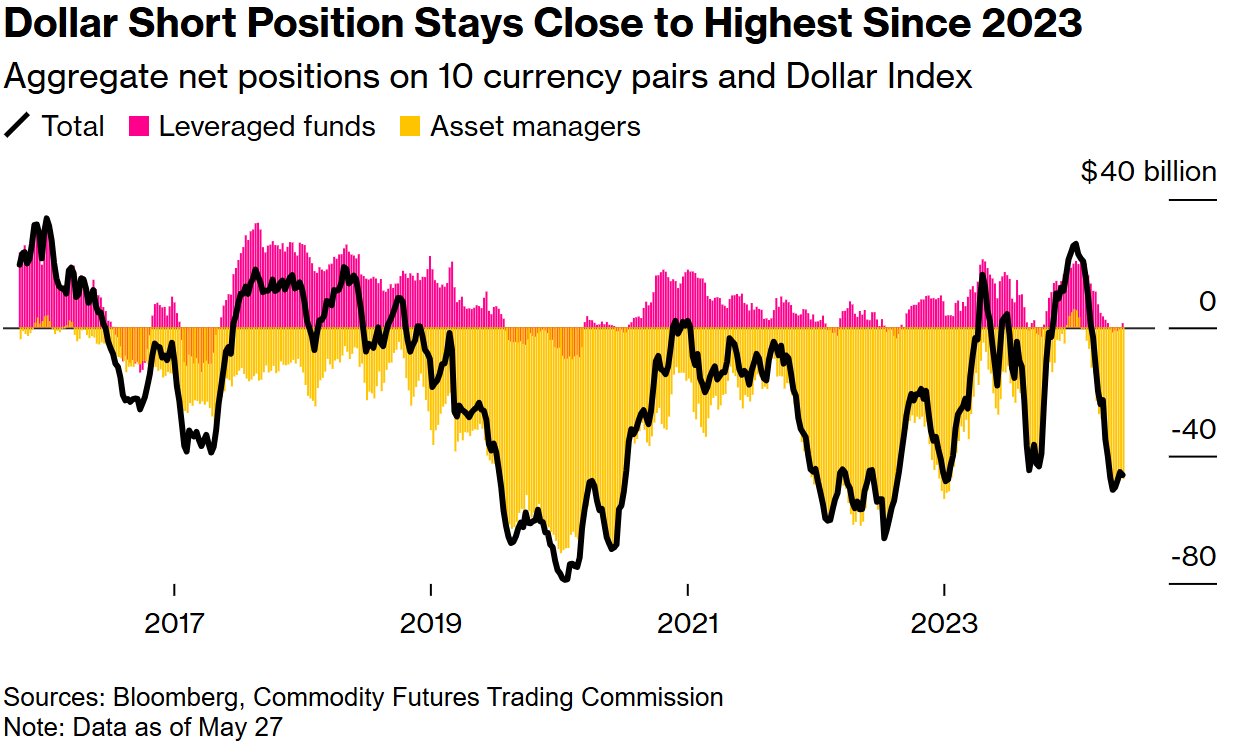
摩根士丹利预测,受降息和经济增长放缓的影响,到明年年中,美元指数将从目前的水准下跌约9%。
news flash· 2025-06-02 01:33
Core Viewpoint - Morgan Stanley predicts that the US Dollar Index will decline by approximately 9% from its current level by mid-next year, influenced by interest rate cuts and slowing economic growth [1] Group 1 - The forecast indicates a significant depreciation of the US Dollar Index, reflecting broader economic trends [1] - The prediction is based on the anticipated impact of interest rate cuts on the currency's value [1] - Slowing economic growth is identified as a contributing factor to the expected decline in the dollar's strength [1]
【环球财经】市场消化最新宏观数据 美元指数30日小幅上涨
Xin Hua Cai Jing· 2025-05-31 00:20
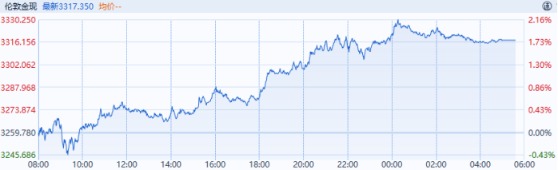
Group 1 - The US dollar strengthened against the euro, pound, and Swedish krona, while it weakened against the Swiss franc, yen, and Canadian dollar, with the dollar index rising by 0.05% to 99.328 [1] - The US international goods trade deficit for April was reported at $87.6 billion, significantly lower than the expected $143 billion and the revised $162.3 billion from March [1] - The US personal consumption expenditures price index increased by 0.1% month-on-month in April, matching market expectations, while the year-on-year increase was 2.1%, slightly below March's 2.3% [1] Group 2 - The German consumer price index for May rose by 0.1% month-on-month, below the expected 0.2% and April's 0.4%, with a year-on-year increase of 2.1% [1] - The likelihood of the European Central Bank lowering interest rates increased due to inflation data being close to the 2% target [1] - The Bank of England's external member Alan Taylor suggested that the central bank should consider lowering interest rates due to economic growth risks from the US-China trade war [2] Group 3 - Japan's consumer price index for May increased by 3.4% year-on-year, with the core index rising by 3.6%, and industrial production for April grew by 0.7%, exceeding the expected 0.1% [2] - The probability of the Bank of Japan raising interest rates by the end of the year is now estimated at 67% following the latest data [2] - Canada's GDP for March rose by 0.1%, and the annualized growth rate for the first quarter was reported at 2.2%, surpassing the expected 1.6% [2]
刘刚:“对等关税”后的全球市场2025下半年投资机会前瞻
2025-05-30 16:09
Summary of Conference Call Minutes Industry or Company Involved - Focus on the global market impact of the "reciprocal tariff" policy Core Points and Arguments - The recent tariff reduction from 145% to 10% exceeded expectations, alleviating short-term market concerns, but medium to long-term risks related to trade restrictions need monitoring, particularly around key dates in July and August [1][2] - The U.S. effective tax rate has decreased to 16-17%, indicating a significant shift in market dynamics [2] - The performance of U.S. stocks, particularly in the tech sector, has rebounded quickly, suggesting that previous recession fears may have been overstated [4] - The current market is characterized by limited upward momentum and constrained downside potential, indicating a state of indecision [2] - The liquidity shock is viewed as an occasional event that presents buying opportunities, with central bank interventions typically proving effective [4] Other Important but Possibly Overlooked Content - The recommendation to focus on sectors with strong end-demand and technology innovation, while also capitalizing on short-term trading opportunities in Hong Kong stocks [1] - The expectation that the core Personal Consumption Expenditures (PCE) inflation rate will decline to 3.5-4% by year-end, with the Federal Reserve potentially lowering rates 1-2 times in Q4 [4] - The suggestion to wait for U.S. Treasury yields to rise to 4.8-5% before making long positions, as the current yield of 4.5% is deemed unattractive [5][8] - The impact of tariff adjustments on China's market is projected to reduce GDP influence from 3% to 1-1.5%, with Hong Kong's earnings being less affected than A-shares [7][9] - Recommendations for gold investment strategies include dollar-cost averaging or grid trading, given the high levels of market congestion [6][9]
黄金时间·每日论金:金价三千三关口失而复得
Xin Hua Cai Jing· 2025-05-30 13:45
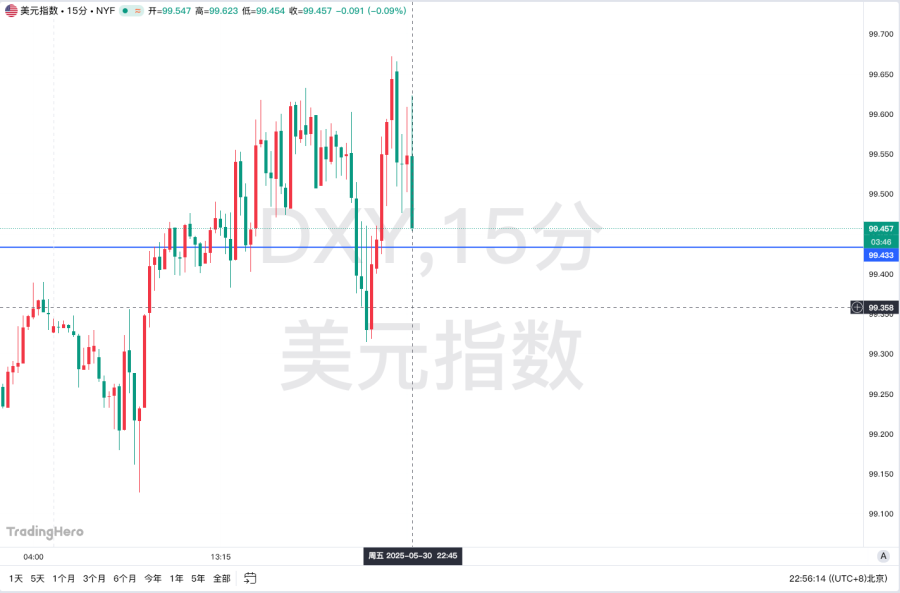
Group 1 - The international gold price opened at 3287.97 USD, reached a high of 3331.11 USD, and closed at 3317.19 USD, showing a daily increase of 30.85 USD or 0.94% [1] - The market sentiment improved after the U.S. International Trade Court ruled against Trump's "Liberation Day" tariff policy, leading to a temporary drop in gold prices to 3245 USD, but buying support remained strong due to geopolitical and economic uncertainties [3] - The U.S. GDP data revision is not expected to change the Federal Reserve's cautious stance, with expectations of interest rate cuts later this year [3] Group 2 - Gold prices are currently within the expected range of 3150-3450 USD, with a focus on maintaining around the 3300 USD level as the month ends [4] - Short-term fluctuations saw gold prices drop to 3245 USD after hitting a high of 3366 USD, but support was found at the 10-week moving average [4] - The overall judgment indicates that gold prices will oscillate around 3300 USD, with support at 3280-3290 USD and resistance near 3350 USD [4] Group 3 - Silver prices have broken out of a triangular consolidation pattern and are currently fluctuating within the Bollinger Bands, indicating cautious upward movement [6] - The silver price is supported at 32.6-32.8 USD and faces resistance at 33.6-33.8 USD, with a potential upward breakout expected [6] - Important levels for trading strategies include maintaining support at 32.6-32.8 USD for silver, while gold has support at 3300 USD and resistance at 3350 USD [6]