
贸易战

Search documents
英伟达股价较峰值下跌21%。是时候买入了吗?
美股研究社· 2025-05-09 11:43
Core Viewpoint - Nvidia's CEO Jensen Huang highlighted the role of artificial intelligence in San Francisco's recovery post-pandemic, raising questions about Nvidia's own growth amidst increasing competition and trade tensions [1]. Group 1: Nvidia's Current Situation - Nvidia's stock price has dropped nearly 21% from its recent high of $149.42 on January 6, attributed to rising competition from DeepSeek and the impact of trade wars [1]. - Bank of America Securities analyst Vivek Arya predicts that tariff headwinds could reduce Nvidia's revenue from China by $15 billion to $20 billion, casting a shadow over the upcoming earnings report [1]. - Nvidia has informed major clients in China, including ByteDance, Alibaba, and Tencent, about modifications to its AI chip design to comply with U.S. export restrictions, which is expected to result in a $5.5 billion loss in Q1 performance [1]. Group 2: Broader Industry Context - The performance of the seven major tech giants, including Nvidia, has lagged behind the S&P 500 index this year, contrasting sharply with expectations for 2024 [2]. - The Roundhill Magnificent Seven ETF (MAGS) shows that the expected revenue and earnings for these seven companies have reached historical highs, indicating their enduring market dominance [4]. - The Magnificent Seven companies account for 28.4% of the S&P 500's market capitalization, 22.6% of expected revenue, and 11.8% of expected earnings [4]. Group 3: Market Conditions and Valuation - The Federal Reserve decided to maintain interest rates at 4.25%-4.50%, emphasizing ongoing market uncertainty due to trade policy and negative GDP growth in Q1 [6]. - Nvidia's price-to-earnings ratio has significantly compressed this year, yet the stock remains expensive compared to the S&P 500 [7]. - The earnings gap between the Magnificent Seven and the S&P 500 is narrowing, with projections indicating that this gap will reduce to 2% by Q4 as earnings growth slows [7]. - As the returns of the Magnificent Seven lag behind the S&P 500, justifying the purchase of such expensive stocks becomes increasingly difficult despite Nvidia's high PEG ratio and other positive factors [9].



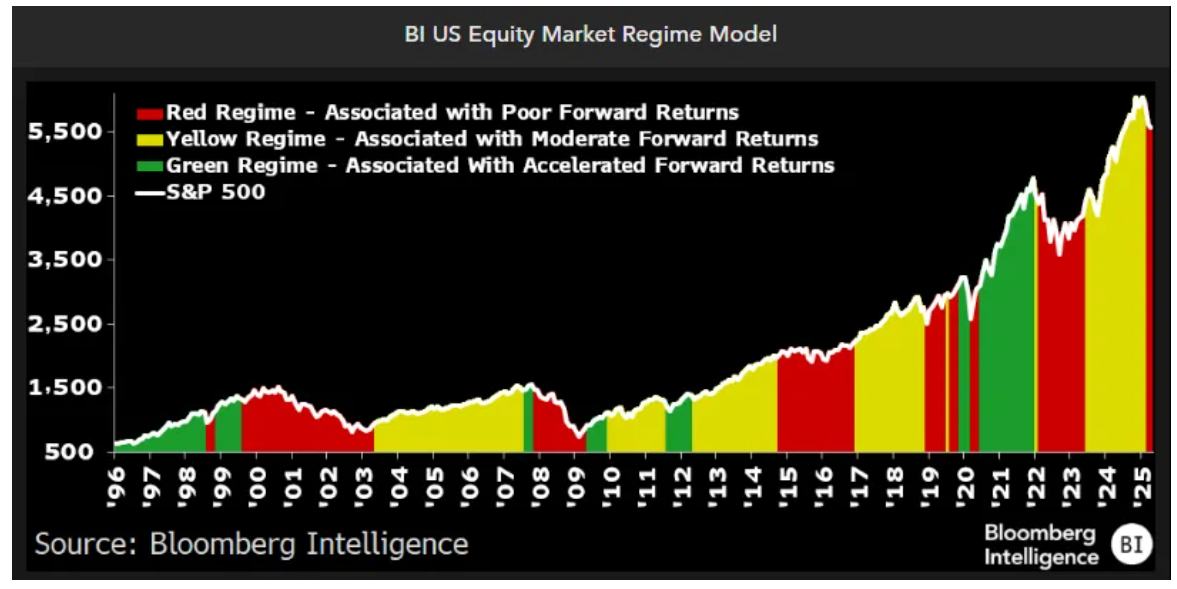
标普500浮现红色预警 关税阴霾下或开启历史最差回报周期
智通财经网· 2025-05-09 11:16
Core Insights - A stock market indicator has entered a historical phase associated with poor return prospects for the S&P 500 index, influenced by trade tensions that have weakened U.S. corporate earnings growth [1] - The Bloomberg industry research stock market cycle model has categorized the market into three phases: accelerating growth, moderate growth, and decline, with the current model indicating a bearish signal for the first time since February 2022 [1][3] Group 1: Market Cycle and Indicators - The stock market cycle model has entered a warning red zone, with the S&P 500 index having dropped below its 200-day moving average for the first time since November 2023, currently about 1% below long-term support [3] - The average decline for the S&P 500 during previous red cycles has been 5.6% over the following 12 months, with the current cycle being the first bearish signal since the onset of concerns over the Federal Reserve's interest rate path [1][5] - The model is based on six factors, including the correlation of component stock returns and the annual change in the benchmark index's price-to-book ratio [3] Group 2: Economic and Policy Context - The recent red cycle is characterized by a significant drop in the S&P 500 index and a decline in its price-to-book ratio growth rate, aligning with historical red cycle patterns [3][5] - Federal Reserve Chairman Jerome Powell has indicated that interest rate cuts will not occur until there is clarity on trade policy from the White House, despite acknowledging a decline in consumer and business confidence [3] - Analysts suggest that a shift towards a more optimistic outlook may require the White House to ease its protectionist stance, which could alleviate stagflation concerns and improve corporate earnings prospects [5]
俄媒:欧盟对中国移动式升降作业平台征收最高14.2%反补贴税
Sou Hu Cai Jing· 2025-05-09 10:37
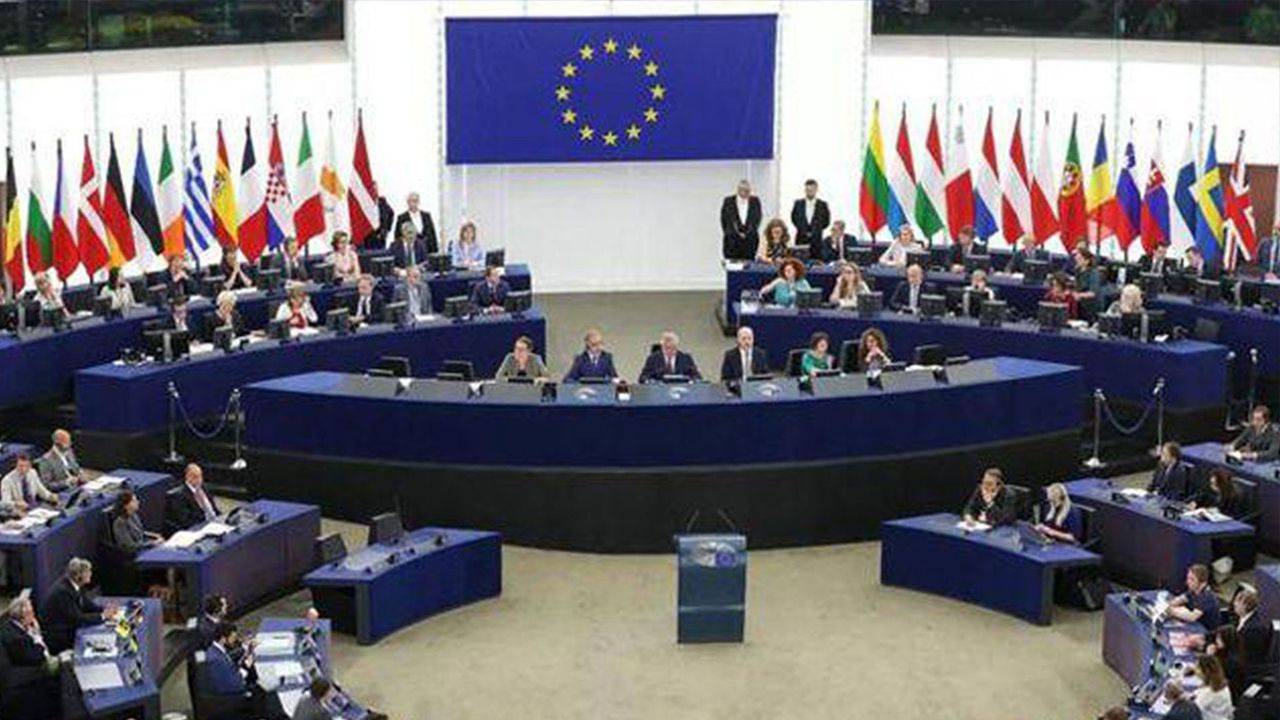
Core Viewpoint - The European Union (EU) has begun imposing tariffs on over 80 Chinese products, responding to pressure from the United States amid ongoing trade tensions initiated by President Trump [1][3]. Group 1: EU Actions - The EU has previously imposed tariffs on certain Chinese goods since January, citing "anti-dumping" measures, and the recent tariffs on mobile elevating work platforms add to this list [3]. - The EU claims that Chinese products benefit from unfair subsidies and are sold below normal prices, justifying the tariffs [3]. Group 2: Impact on China - The tariffs are expected to significantly reduce the competitiveness of Chinese products in the EU market, leading to a decrease in orders for affected companies [3]. - China's Ministry of Commerce has criticized the EU's actions as "selective enforcement," arguing that it creates trade barriers and violates World Trade Organization (WTO) rules [3]. Group 3: China's Response - China has indicated that it understands some countries may negotiate under pressure from the US, but any actions that harm Chinese interests will lead to reciprocal measures [5]. - A recent bilingual video released by China's Ministry of Foreign Affairs emphasized China's refusal to submit to US "bullying" tactics, asserting the need for a firm stance to protect national interests [5][7]. - China does not oppose countries aligning with the US, provided it does not come at the expense of Chinese interests, warning of potential retaliation if such boundaries are crossed [7].

美国农民发愁:鸡爪、鱼头...除了中国,好难找到买家
Guan Cha Zhe Wang· 2025-05-09 09:16
Core Viewpoint - The article discusses the challenges faced by American farmers in finding alternative markets for products like chicken feet and fish heads, which were previously exported to China but are now affected by high tariffs due to trade tensions [1][2][12]. Group 1: Impact on Chicken Feet Exports - American farmers are struggling to adapt to new tariffs imposed by China, which has significantly reduced the demand for chicken feet, a product that is popular in China but not in the U.S. [1][2] - In 2022, the export volume of chicken feet to China reached 479,700 tons, making it the largest export market for this product [1]. - The president of the U.S. Poultry & Egg Export Council stated that the latest tariffs could drive chicken feet exports "close to zero" [1]. Group 2: Broader Implications for U.S. Agriculture - The imposition of a 125% retaliatory tariff by China on U.S. imports has led to a significant loss of market for American chicken feet, forcing farmers to consider freezing the product or repurposing it for animal feed [2]. - The U.S. Meat Export Federation reported that the actual tariff rate on U.S. pork products has risen to 172%, severely impacting exports of pork by-products to China, which accounted for over half of U.S. exports [6]. - The economic loss for U.S. farmers due to the trade dispute is estimated to be around $1 billion annually, with each pig potentially losing $8 to $10 in value [6]. Group 3: Fish Head Exports and Alternative Markets - The Two Rivers Fisheries Company, a major fish exporter in Kentucky, reported a 20% expected revenue drop due to canceled orders for fish heads after the tariffs were imposed [8]. - The company processed 1.6 million kilograms of Asian carp in 2024, with China being the sole export market for fish heads [8]. - The owner of the company is now considering targeting the Asian community in the U.S. or exploring markets in South Korea and Vietnam as alternatives [8][9]. Group 4: Overall Agricultural Crisis - The trade tensions have led to widespread cancellations of agricultural orders across various sectors, with the American Agricultural Transportation Coalition describing the situation as a "full-blown crisis" [11]. - The rising costs of fertilizers, pest control chemicals, and agricultural machinery due to tariffs are further exacerbating the challenges faced by American farmers [11].

关税,大消息!美国商务部,突发警告
券商中国· 2025-05-09 07:54
日本、韩国与美国的关税谈判,或陷入拉锯战! 卢特尼克在接受彭博电视台采访时表示:"你必须花大量时间与日本、韩国打交道。这些交易不会很快达成。"卢特 尼克补充道,印度为达成协议也"非常努力",有可能成为下一个达成协议的国家之一。但他警告称,这是一项艰巨 的工作。 据最新消息,美国商务部长卢特尼克警告称,美国跟日本、韩国的关税谈判要花大量时间,协议不会很快达成。 在卢特尼克发表上述言论之际,美国与英国在周四达成了一份贸易协议。然而,协议的诸多细节尚待敲定,美方此 前加征的10%所谓"对等关税"也未取消。《纽约时报》称,美英达成的这项协议看起来更像是一个框架协议,而非完 整的贸易协议。 Ebury市场策略主管Matthew Ryan指出,到目前为止,英国金融市场几乎没有表现出任何欣喜若狂的迹象,这足以 说明投资者是如何看待这一协议的。这远非一个全面的贸易协定,可能需要几个月甚至几年的时间才能最终敲定。 美国商务部长发出警告 北京时间5月9日消息,卢特尼克表示,与韩国和日本的贸易协议可能比英美周四达成的框架协议需要更长的时间才 能完成。 卢特尼克称,"说到印度,打个比方在协议下可能需要修改或调整7000项关税,这需要 ...

亚洲超级富豪因贸易战快马加鞭减少对美国敞口 甚至全部撤出
news flash· 2025-05-09 07:46
Core Viewpoint - Wealthy families in Asia are significantly reducing their exposure to U.S. assets due to uncertainties stemming from President Trump's tariffs, indicating a potential long-term shift in investment strategies [1] Group 1: Investment Trends - A family office managing assets for Chinese billionaires has completely divested from U.S. assets, reallocating profits back to Asia [1] - A senior executive from one of Europe's largest private banks noted that the scale of recent sell-offs by wealthy clients and institutions is unprecedented in the past 30 years, suggesting a possible long-term trend [1] Group 2: Asset Allocation - An executive from an Asian bank has reduced 60% of U.S. assets from their investment portfolio, citing cash and gold as safer holdings [1]
需求不足是怎么样炼成的:不怕高税率,就怕没回路
Sou Hu Cai Jing· 2025-05-09 04:46
Group 1 - The core argument is that the trade war has shifted the focus from external demand to internal demand, making the latter the cornerstone for winning the trade war, emphasizing the need for certainty in internal demand [3][5] - The issue of insufficient internal demand is linked to the high tax burden on private enterprises, which leads to low profitability and potential market exit, thereby reducing the tax base and overall income [4][9] - The comparison with Western developed countries highlights that despite high tax systems, they do not face demand shortages due to a greater allocation of tax revenue towards social welfare rather than administrative costs, leading to a more balanced distribution of resources [7][9] Group 2 - The high administrative costs in the domestic economy are identified as a direct cause of insufficient demand, indicating that tax revenue must be effectively redistributed to stimulate consumption [9] - The article suggests that the current economic model is unsustainable, as low corporate profits lead to cost-cutting measures that can spiral into a decline in the middle-income group, creating a negative feedback loop [4][9]

2025年贸易行业分析
Lian He Zi Xin· 2025-05-09 04:45
Investment Rating - The report provides a stable outlook for the trade industry, indicating a steady growth in import and export activities despite external challenges [2][5]. Core Insights - In 2024, China's total import and export value reached 61,622.89 billion USD, a year-on-year increase of 3.8%, with exports rising by 5.9% and imports by 1.1% [4]. - The trade surplus for 2024 was 9,921.55 billion USD, an increase of 1,700.53 billion USD compared to 2023, indicating a significant growth in trade surplus [4]. - The report highlights a shift in export dynamics, with stronger performance in exports to ASEAN and other developing economies compared to developed economies like the US and EU [8][9]. Summary by Sections Trade Performance - In Q1 2025, China's foreign trade showed a stable start with a total import and export value of 14,343.67 billion USD, a slight increase of 0.2% year-on-year [5]. - Exports in Q1 2025 reached 8,536.67 billion USD, up 5.8% year-on-year, while imports fell by 7.0% to 5,807.00 billion USD [5]. Product Structure - The export product structure is improving, with mechanical and electrical products dominating, accounting for 59.4% of total exports in 2024, valued at 21,255.0 billion USD, a growth of 7.5% [9]. - The report notes significant growth in shipbuilding exports, which increased by 25.1% in volume and 57.3% in value [11]. Commodity Price Trends - The report discusses the fluctuating prices of commodities, with crude oil prices expected to face downward pressure in 2025 due to various geopolitical and economic factors [13]. - Coal prices are also projected to decline due to a relaxed supply-demand balance, with average prices dropping from 1,748 RMB/ton to 1,380 RMB/ton by the end of 2024 [19]. Currency Exchange Rate Analysis - The report indicates that the RMB exchange rate showed a two-way fluctuation in 2024, with the offshore RMB reaching a high of 6.97 and a low of 7.36 against the USD [26]. - The RMB index against a basket of currencies increased by 4.2% year-on-year, reflecting its resilience amid external pressures [26]. Policy and Focus Areas - The report outlines key policies aimed at promoting foreign trade and enhancing resource allocation capabilities for bulk commodities, including adjustments to export tax rebates [29]. - The implementation of "reciprocal tariffs" by the US is expected to significantly impact China's direct exports to the US, with potential declines in overall export volumes [31]. Future Outlook - The global trade environment is expected to face increased uncertainty in 2025, influenced by US policies and inflation risks, which may hinder export growth [34]. - Domestic policies are anticipated to support economic recovery, with an emphasis on infrastructure investment and consumer demand [36].
国新办发布会点评:二季度经济运行不确定性加大,政策对冲恰逢其时
AVIC Securities· 2025-05-09 04:25
Economic Overview - In Q1 2025, China's GDP grew by 5.4%, exceeding market expectations despite a high base from the previous year[2] - The trade war initiated in April 2025 has increased economic uncertainty, leading to downward revisions in GDP growth forecasts by international institutions[3] Monetary Policy Response - The People's Bank of China (PBOC) has implemented a comprehensive financial policy package, including a 0.5 percentage point reduction in the reserve requirement ratio, releasing approximately 1 trillion yuan in liquidity[4] - The PBOC also lowered the benchmark interest rate for 7-day reverse repos from 1.5% to 1.4%, potentially reducing the Loan Prime Rate (LPR) by about 0.1 percentage points[10] Sector-Specific Measures - The reserve requirement ratio for auto finance and financial leasing companies has been reduced from 5% to 0%, aimed at stimulating auto consumption and reducing manufacturing costs[10] - The interest rate for personal housing provident fund loans has been cut by 0.25 percentage points, with the first home rate now at 2.6%[10] Consumer Behavior and Market Trends - In March 2025, retail sales grew by 5.9% year-on-year, indicating improved consumer sentiment[17] - The consumer spending propensity reached 63.1% in Q1 2025, the highest for the first quarter since 2020, reflecting a positive trend in consumer confidence[17] Trade War Impact - The trade war could potentially reduce China's GDP growth by approximately 2 percentage points if high tariffs lead to a complete halt in trade with the U.S.[18] - However, the actual impact is expected to be less severe, with the IMF estimating a drag of only 0.6% on GDP growth due to the ability to reroute exports to non-U.S. markets[18] Future Outlook - The PBOC is expected to maintain a moderately loose monetary policy, with significant room for further easing if economic conditions worsen due to the trade war[12] - The combination of monetary and fiscal policies is anticipated to support domestic demand, countering external uncertainties[16]
俄罗斯专家认为—— 中国经济能有效应对关税挑战
Jing Ji Ri Bao· 2025-05-08 21:46
Core Viewpoint - The new U.S. government's trade war and tariff policies are seen as detrimental to global economic development and are unlikely to achieve the intended effects, with China demonstrating greater economic resilience to external shocks [1][2][3] Group 1: U.S. Trade Policies - The U.S. government's imposition of tariffs is viewed as a manifestation of its hegemonic ambitions, aiming to restructure economic relations globally [1] - Experts argue that unpredictable tariff policies hinder not only global trade but also the U.S. economy itself, with potential negative impacts expected to manifest by the end of 2025 if the current situation persists [2] - The high tariffs are perceived as negotiation tools rather than sustainable measures, with expectations of partial reductions and exemptions in the future [2] Group 2: China's Economic Resilience - China's economy is characterized by strong resilience, capable of effectively responding to the challenges posed by the U.S. trade war [3] - The trade war has prompted China to diversify its trade partners and enhance economic interactions with countries outside the U.S., potentially strengthening its position in the Russian market [3] - Despite short-term losses due to the trade war, China's economic influence is expected to grow, positioning it as a significant player in a multipolar world [3]