内卷式竞争整治

Search documents
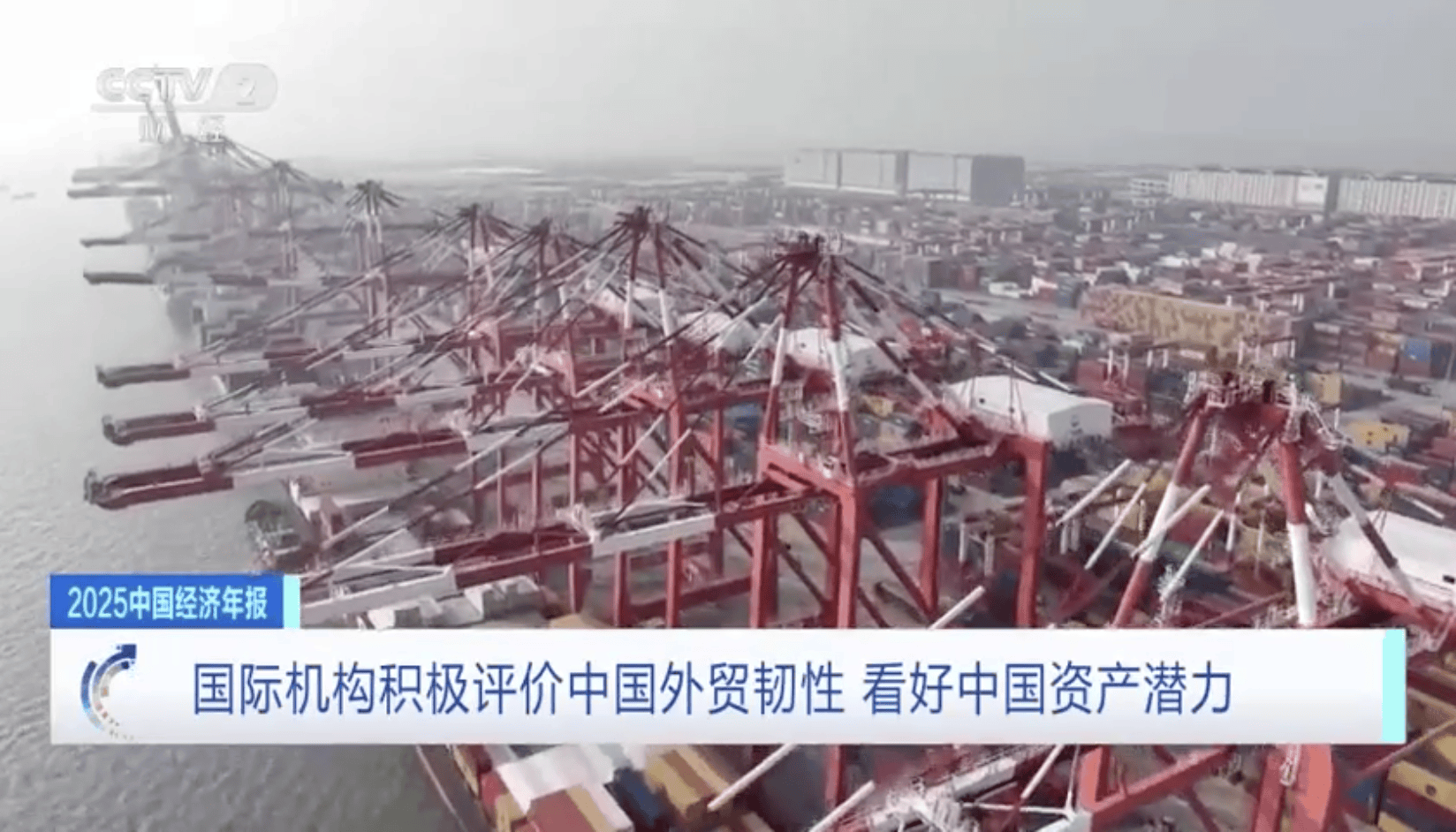
中国经济年报丨国际机构积极评价中国外贸韧性 看好中国资产潜力
Sou Hu Cai Jing· 2026-01-19 15:30
Group 1 - The core viewpoint is that by 2025, China's economy is expected to become a stable and reliable driver of global economic growth, with international institutions providing positive evaluations of China's competitiveness [1][3]. - Experts predict that China's foreign trade will demonstrate resilience and vitality in 2025, injecting certainty into global trade, supported by domestic macro policy adjustments that stimulate internal demand [3][7]. - Morgan Stanley's chief economist for Asia anticipates that China's global export share will increase from 15% to 16.5% by 2030, driven by strategic planning and foresight in identifying future global economic demands [5]. Group 2 - Fitch Ratings experts note that policies aimed at addressing "involution" competition are positively impacting price stabilization and improving corporate profitability in certain industries [7][9]. - It is expected that in 2026, China will adopt a reasonable expansion of fiscal deficits and flexible monetary policies to boost domestic demand and create favorable conditions for improving corporate profits and household income [7]. - A study by Invesco reveals that 59% of sovereign wealth funds prioritize China as a high or medium investment market, a significant increase from 44% in 2024, with digital technology, advanced manufacturing, and clean energy being the most attractive sectors [11].

中汽协:我国汽车产销连续17年稳居全球第一
Qi Huo Ri Bao Wang· 2026-01-14 18:17
Core Insights - The Chinese automotive industry has achieved significant breakthroughs during the "14th Five-Year Plan" period, maintaining annual production and sales above 30 million units for three consecutive years, with revenue surpassing 10 trillion yuan and becoming the world's largest exporter [1][2] - By 2025, the industry is expected to reach cumulative production and sales of 34.53 million and 34.40 million vehicles, representing year-on-year growth of 10.4% and 9.4%, respectively, setting new historical records [1] - Domestic sales of traditional fuel vehicles are projected to decline by 4% to 13.43 million units in 2025, while domestic sales of new energy vehicles are expected to continue their upward trend, reaching 16.62 million units, a year-on-year increase of 29% [2] Group 1: Industry Performance - The automotive industry is projected to maintain a production and sales scale of over 30 million units for three consecutive years, with a strong resilience and vitality [1] - In 2025, domestic vehicle sales are expected to reach 27.30 million units, a year-on-year increase of 6.7% [2] - The export of automobiles is anticipated to exceed 7 million units in 2025, with a year-on-year growth of 21.1%, driven by the increasing international competitiveness of Chinese brands [2] Group 2: New Energy Vehicles - New energy vehicle production and sales are expected to exceed 16 million units in 2025, maintaining the global leadership position for 11 consecutive years [2] - The share of new energy vehicles in total vehicle sales is projected to reach 47.9% in 2025, an increase of 7 percentage points compared to 2024 [2] - The export of new energy vehicles is expected to reach 2.615 million units in 2025, marking a year-on-year increase of 100% [2] Group 3: Future Outlook - For 2026, the total automotive sales are forecasted to be 34.75 million units, a year-on-year increase of 1%, with passenger vehicle sales expected to reach 30.25 million units [4] - The growth of new energy vehicle sales is projected to be 15.2% in 2026, reaching 19 million units [4] - The automotive export volume is expected to reach 7.4 million units in 2026, reflecting a year-on-year growth of 4.3% [4]

汽车产销连续17年稳居全球第一!中汽协:2026年预计微增1%
Zheng Quan Shi Bao· 2026-01-14 11:12
Core Insights - The Chinese automotive industry has achieved significant breakthroughs during the "14th Five-Year Plan" period, maintaining annual production and sales above 30 million units for three consecutive years, with revenue surpassing 10 trillion yuan and becoming the world's largest exporter [1][2] - By 2025, the automotive industry is expected to continue its strong growth, with production and sales reaching 34.53 million and 34.40 million units respectively, representing year-on-year increases of 10.4% and 9.4% [1] - Domestic sales of traditional fuel vehicles are projected to decline, while new energy vehicles (NEVs) are expected to see substantial growth, with production and sales exceeding 16 million units [2] Industry Performance - In 2025, domestic automobile sales are forecasted to reach 27.30 million units, a year-on-year increase of 6.7%, while traditional fuel vehicle sales are expected to decline by 4% to 13.43 million units [1] - The export of automobiles is anticipated to exceed 7 million units, reaching 7.10 million units in 2025, with NEV exports expected to double to 2.61 million units [2] - The top ten exporting companies are projected to include Chery and BYD, with Chery exporting 1.34 million units and BYD showing a significant growth rate of 140% in exports [2] Future Outlook - For 2026, the total automotive sales are predicted to reach 34.75 million units, a 1% increase, with NEV sales expected to grow by 15.2% to 19 million units [4] - The industry is expected to face challenges such as international market volatility and reduced demand, which may impact growth [3] - The government will continue to implement policies to support the automotive sector, focusing on quality improvement and efficiency [3]
时报观察丨协同攻坚“内卷式”竞争 为高质量发展注入持久动能
证券时报· 2026-01-09 00:17
Core Viewpoint - The article emphasizes the need for regulatory actions to address "involutionary" competition in various industries, aiming to establish a fair market environment and promote sustainable development [1][2]. Group 1: Regulatory Actions - On January 8, multiple government departments, including the Ministry of Industry and Information Technology and the National Development and Reform Commission, jointly issued a document targeting irrational behaviors such as blind construction and low-price competition in the power and energy storage battery industry [1]. - The State Administration for Market Regulation and the National Internet Information Office have released guidelines to regulate online trading platforms and live e-commerce, focusing on issues like counterfeit goods and false marketing [1]. - The central economic work conference has set the goal of formulating a unified national market construction regulation and prioritizing the rectification of "involutionary" competition as a key reform task for 2026 [1]. Group 2: Multi-Dimensional Governance - The governance approach involves breaking and establishing systems simultaneously, with a focus on both regulatory and industrial dimensions [2]. - Regulatory measures include enhanced inter-departmental collaboration and comprehensive law enforcement to ensure that violations are addressed effectively [2]. - The establishment of clear behavioral boundaries for industries, such as a tiered early warning mechanism for the battery sector and a responsibility list for live e-commerce, aims to guide enterprises towards orderly competition [2]. Group 3: Importance of Addressing Involution - The article highlights that addressing "involutionary" competition is particularly significant as China’s industries transition towards high-end, intelligent, and green development [2]. - The coordinated actions by multiple departments at the beginning of the year are intended to safeguard sustainable industrial development and clear obstacles for the cultivation of new productive forces [2]. - By eliminating market barriers and standardizing competition, companies can allocate more resources to technological research and quality improvement, thereby gaining a competitive edge globally [2].

机票价格又跳水低价还能卖多久? 春运渐近将迎反弹
Xin Lang Cai Jing· 2026-01-08 23:08
Core Viewpoint - The recent significant drop in domestic flight ticket prices is attributed to a temporary imbalance in supply and demand, with airlines adopting a strategy of lowering prices to increase passenger volume, despite ongoing high operational costs [3][5][8]. Group 1: Price Trends and Market Dynamics - Following the New Year holiday, domestic flight ticket prices have sharply decreased, with some routes offering prices as low as 1.7% of the full fare, such as flights from Guangzhou to Beijing priced at 428 yuan [2][3]. - The current low ticket prices are expected to be a short-term phenomenon, as demand is anticipated to rise again with the upcoming winter break and the Spring Festival, leading to a potential rebound in prices [4][6]. - Airlines are facing a paradox where they report losses while simultaneously offering low prices to fill seats, indicating a struggle between cost management and revenue generation [5][6]. Group 2: Competitive Landscape and Regulatory Environment - The competitive landscape is intensifying, with airlines increasingly adopting a "price for volume" strategy, resulting in a 12.7% year-on-year decline in average economy class ticket prices for 2024 [6]. - The rise of online travel agencies (OTAs) has made price comparisons easier for consumers, further pressuring airlines to maintain competitive pricing [6][7]. - Regulatory bodies are focusing on addressing "involutionary" competition among airlines, aiming to prevent predatory pricing below cost and improve market efficiency through various measures [9][10]. Group 3: Impact of Alternative Transportation - The dominance of rail transport, especially for distances under 800 kilometers, is increasing, with railways capturing a larger share of the market, which is forcing airlines to adapt their strategies towards longer routes [7]. - The trend of self-driving trips during holidays is also contributing to a decline in air travel, as families find it more economical compared to flying [7]. Group 4: Future Outlook - The aviation industry is expected to continue facing challenges in balancing operational costs with competitive pricing strategies, as the market adjusts to changing consumer preferences and regulatory pressures [5][9]. - The upcoming adjustments in airport operations, such as the transition of airlines to new terminals, may also influence operational efficiency and customer experience [11].

时报观察 协同攻坚“内卷式”竞争 为高质量发展注入持久动能
Zheng Quan Shi Bao Wang· 2026-01-08 22:56
Group 1 - The article discusses the coordinated efforts by multiple government departments to address "involution" competition in various industries, aiming to establish a more rational market environment [1][2] - On January 8, the Ministry of Industry and Information Technology, National Development and Reform Commission, State Administration for Market Regulation, and National Energy Administration jointly issued a document targeting irrational behaviors such as blind construction and low-price competition in the power and energy battery industry [1] - The central economic work conference emphasized the need for a unified national market construction regulation and identified the deep rectification of "involution" competition as a key reform task for 2026 [1] Group 2 - The measures taken by various departments reflect a multi-dimensional approach to governance, including enhanced cross-departmental collaboration and comprehensive law enforcement [2] - The article highlights the importance of addressing "involution" competition as China’s industries transition towards high-end, intelligent, and green development, noting that vicious competition hinders innovation and slows down transformation [2] - Future governance measures are expected to further improve the market environment for fair competition, thereby enhancing corporate innovation and contributing to sustainable economic growth [2]
时报观察 | 协同攻坚“内卷式”竞争 为高质量发展注入持久动能
Zheng Quan Shi Bao· 2026-01-08 18:12
Group 1 - The core viewpoint of the articles emphasizes the need for regulatory actions to address "involutionary" competition in various industries, particularly in the battery and e-commerce sectors [1][2] - Multiple government departments, including the Ministry of Industry and Information Technology, National Development and Reform Commission, State Administration for Market Regulation, and National Energy Administration, are collaborating to combat irrational behaviors such as blind construction and price competition [1][2] - The central economic work conference has highlighted the importance of establishing a unified national market and addressing "involutionary" competition as a key reform task for 2026 [1][2] Group 2 - The measures taken by the government reflect a multi-dimensional approach to governance, focusing on cross-departmental collaboration and comprehensive law enforcement [2] - The introduction of capacity monitoring and standard-setting in industries like power and energy storage batteries aims to guide enterprises towards orderly competition and scientific layout [2] - The ongoing efforts to eliminate "involutionary" competition are crucial as the industry transitions towards high-end, intelligent, and green development, ensuring sustainable growth and fostering innovation [2]
中国国家邮政局:2026年将综合整治“内卷式”竞争
Xin Lang Cai Jing· 2026-01-07 13:07
Core Insights - The China National Postal Administration has set eight key focus areas to promote high-quality development in the postal industry by 2026, including addressing "involution" competition [1][2] - The postal industry is projected to maintain steady growth, with delivery volumes expected to reach 230 billion items in 2026, a year-on-year increase of approximately 6% [1] - The integration of artificial intelligence in postal and express services will be deepened, with policies to promote the application of unmanned delivery technologies and automated facilities [1] Financial Performance - In 2025, the postal industry achieved a business revenue of 1.8 trillion yuan and a delivery volume of 216.5 billion items, reflecting year-on-year growth of 6.4% and 11.5% respectively [1] - The express delivery sector generated a revenue of 1.5 trillion yuan and handled 199 billion items, with year-on-year increases of 6.5% and 13.7% [1] Regulatory and Compliance Measures - The meeting emphasized strong regulatory oversight and improved service, aiming to enhance compliance levels among delivery companies and optimize algorithms for better profit distribution among headquarters, franchisees, and couriers [2] - Implementation of "penetrating" regulation to address unreasonable management practices, such as differentiated delivery fees and immediate penalties for complaints, was also highlighted [2] - Continued efforts to rectify illegal charges for mail and package collection in rural areas were noted as a key focus [2]

民航的2026年:反内卷、低空与国产化
Bei Jing Shang Bao· 2026-01-06 15:52
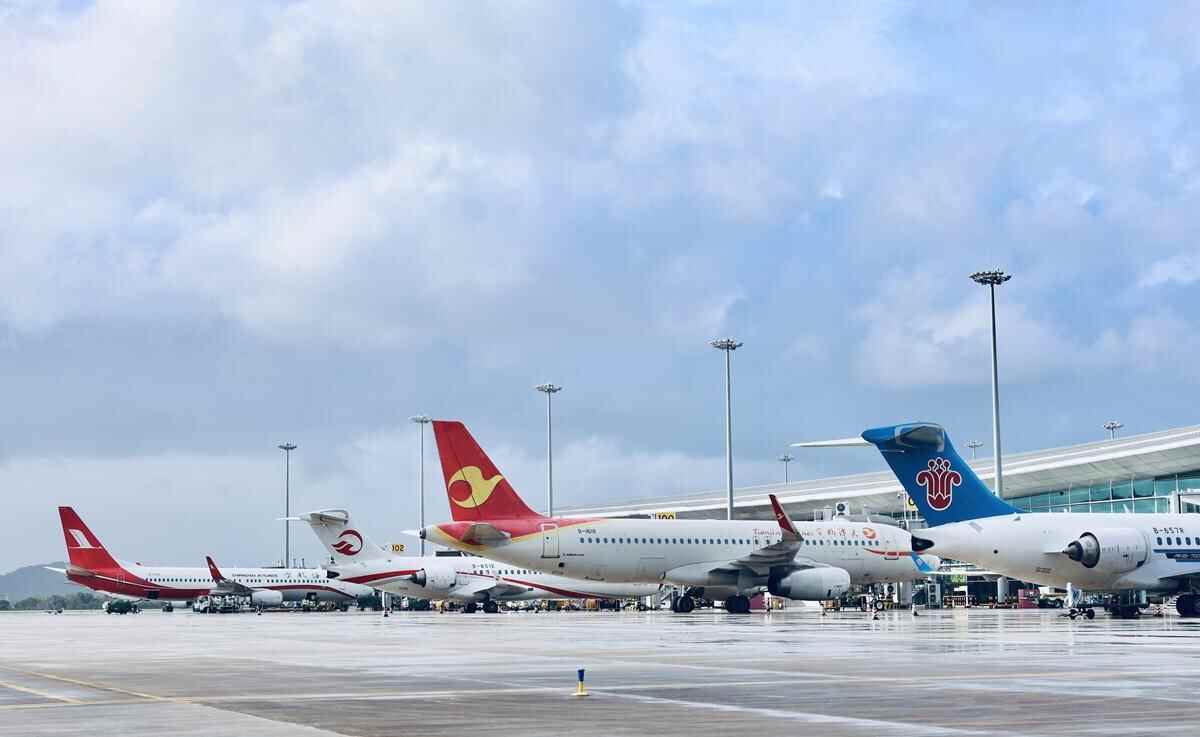
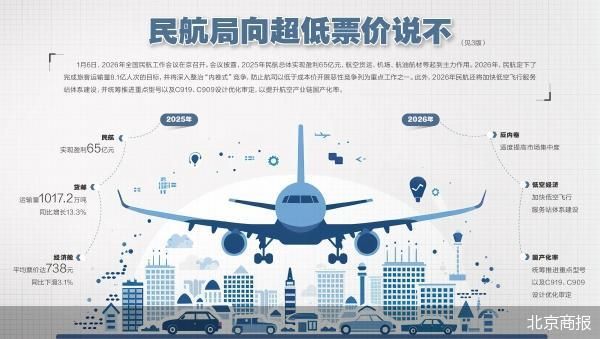
Core Insights - The civil aviation industry in China achieved a profit of 6.5 billion yuan in 2025, driven primarily by air cargo, airports, and aviation fuel and materials, with passenger transport lagging behind [1][3] - The industry aims to transport 810 million passengers in 2026 and will focus on addressing "involution" competition and preventing airlines from engaging in predatory pricing [1][5] Financial Performance - In 2025, the civil aviation sector completed a total transport turnover of 1,640.8 billion ton-kilometers, with passenger transport reaching 770 million and cargo mail transport at 10.172 million tons, representing year-on-year growth of 10.5%, 5.5%, and 13.3% respectively [3] - Domestic and international cargo mail transport volumes grew by 7.3% and 22.1%, respectively, with Chinese airlines capturing 44% of the international cargo market, an increase of 3 percentage points [3] Airline and Airport Performance - Major airlines such as Air China, China Eastern Airlines, and China Southern Airlines reported net profits of 1.87 billion yuan, 2.103 billion yuan, and 2.307 billion yuan, respectively, by Q3 2025 [3] - Listed airports like Shanghai Airport and Guangzhou Baiyun Airport reported net profits of 1.634 billion yuan and 1.096 billion yuan, while Beijing Capital Airport incurred a loss of 239 million yuan, although this was a 48.11% reduction in losses year-on-year [4] Market Dynamics - The recovery of international flights has significantly improved operational efficiency, with international passenger transport increasing by 21.6% year-on-year and international cargo transport volumes showing substantial growth across various regions [4] - The industry is experiencing a trend of "involution" competition, with airlines adopting low-price strategies, leading to a 12.7% decline in average economy class ticket prices in 2024 and a further 3.1% drop in 2025 [5][6] Strategic Initiatives - The civil aviation sector plans to enhance the domestic aviation market by addressing "involution" competition through regulatory reforms and improving operational efficiency [6] - The focus will also be on increasing the domestic production rate of aviation products, with specific attention to the C919 and C909 aircraft models [7] Low-altitude Economy Development - The meeting highlighted the importance of developing the low-altitude economy, with significant progress in general aviation and the establishment of low-altitude flight service stations [7][8] - The industry aims to promote high-quality development in general aviation and low-altitude economy, including the establishment of a comprehensive monitoring service platform for low-altitude flights [8]
厚植尊商、亲商、重商文化土壤,上海营商环境9.0版有十大新提法
Xin Lang Cai Jing· 2026-01-04 07:35
Core Viewpoint - The Shanghai Municipal Government has officially released the "Action Plan for Accelerating the Creation of an International First-Class Business Environment (2026)", marking the ninth iteration of its business environment optimization plan, which includes 26 specific tasks across four key areas [1][2]. Group 1: Market Competition and Regulation - The 9.0 version of the action plan emphasizes creating a fair and just market competition environment, specifically addressing the regulation of monopolistic and unfair competition behaviors, and aims to deepen the rectification of "involution" competition [3][5]. - Experts suggest that "involution" competition often arises from an imperfect market environment and excessive pursuit of short-term profits, highlighting the need for improved market access thresholds and regulatory enforcement [5]. Group 2: Policy Accessibility - As of November 30 last year, Shanghai has implemented "no application, immediate enjoyment" for 643 policy projects, serving enterprises over 6.11 million times [6]. - The action plan aims to fully integrate inclusive policies into a "one-stop service" platform, simplifying unnecessary expert reviews and exploring batch approval models to ensure policy benefits reach enterprises quickly [6]. Group 3: Financing Support for SMEs - The action plan proposes the establishment of a unified financing service platform for small and medium-sized enterprises (SMEs) called "Sui Shen Rong", which will enhance policy integration and service delivery [7]. - This year's action plan shifts from "policy subsidies" to "credit empowerment", utilizing the "Sui Shen Rong" platform to aggregate and activate enterprise credit data assets [7]. Group 4: Payment Practices - The plan includes a commitment to ensure zero arrears in payments from government agencies and institutions, reflecting the government's determination to respect the basic rights of market entities [8]. - Measures will be taken to improve payment efficiency in supply chains and establish regular disclosure of payment terms to alleviate financial pressure on SMEs [8]. Group 5: Digital and Algorithm Governance - The action plan stresses the need for enhanced governance of platform algorithms to ensure fair and humane treatment of platform operators and workers, addressing the negative impacts of algorithmic management [11][12]. - It aims to regulate online platform activities and promote win-win development among platform enterprises and their operators [11]. Group 6: Import and Consumption Policies - The action plan seeks to expand the "white list" of enterprises and new products for the first-release economy of imported consumer goods, enhancing the convenience of inspection measures [13]. - Shanghai has seen the addition of 933 new stores from January to November 2025, including 14 global and Asian flagship stores, indicating a strong trend in the first-release economy [14]. Group 7: Urban Vitality and Cultural Development - The action plan proposes optimizing regulations for outdoor activities and advertisements to enhance urban vitality and the "smoky atmosphere" of neighborhoods, supporting the development of night economies [15][16]. - It emphasizes the importance of fostering a culture that respects and encourages entrepreneurship, aiming to transform the government's role from a manager to a service provider [20][29]. Group 8: Data Management - The action plan expands the scope of the negative list for data export to encompass all areas, facilitating compliant operations for enterprises while ensuring data security [17][18].