宏观环境

Search documents
商品情绪偏强带动胶价上行
Zhong Xin Qi Huo· 2025-12-25 00:35
Group 1: Report's Industry Investment Ratings - No industry - wide investment ratings are provided in the report. Group 2: Core Views of the Report - The overall commodity market shows a mixed trend, with different agricultural products having their own price movements and influencing factors. For example, natural rubber prices rose due to strong commodity sentiment, but face potential pressure from hedging; while soybean - related products are affected by factors such as South American harvest expectations and domestic inventory levels [1][5]. Group 3: Summaries by Relevant Catalogs 1.行情观点 (1)油脂 - **观点**: Yesterday, rapeseed oil was relatively strong. Pay attention to the changes in domestic and international oil production and demand expectations. - **Logic**: Concerns about US soybean exports and expectations of a bumper Brazilian soybean harvest led to a bearish trend in US soybeans and soybean oil. Domestic oils showed a differentiated trend, with rapeseed oil relatively strong. The macro - environment includes a strong US Q3 GDP and a weakening US dollar, and rising crude oil prices due to geopolitical concerns. From the industrial side, South American soybean harvest expectations are strong, US soybean demand is uncertain, domestic soybean inventories are high, and the de - stocking speed of domestic soybean oil is expected to be slow. Palm oil is in a seasonal production - reduction period in December, and the probability of inventory reduction in the origin is high. Rapeseed oil supply is expected to increase in the later stage. - **Outlook**: Soybean oil, palm oil, and rapeseed oil are expected to fluctuate. The oil market is facing a game of multiple factors and may continue to fluctuate in the near future [5]. (2)蛋白粕 - **观点**: Inventory pressure persists, and the two - meal (soybean meal and rapeseed meal) prices fluctuate at a low level. - **Logic**: Internationally, the US soybean market is closed during the Christmas period. US soybean crushing volume decreased in November, and exports to China grew slowly. South American soybeans have a good production outlook. Domestically, spot and basis are stable, soybean and soybean meal inventories are slowly decreasing seasonally, downstream aquaculture is in a loss, and consumption is not strong during the peak season. The purchase volume of imported soybeans in Q4 2025 decreased year - on - year, while that in Q1 2026 increased year - on - year. - **Outlook**: US soybeans, Dalian soybean meal, and rapeseed meal are expected to fluctuate [6]. (3)玉米及淀粉 - **观点**: Snowy weather has a phased impact on the supply in the production area. - **Logic**: In the upstream, snow in the Northeast has slowed down the grain - selling process, and in the North China region, the purchase of local corn has increased. In the downstream, feed enterprises and deep - processing enterprises have different inventory and procurement strategies. The market is in a tight - balance state, with prices having both upward and downward pressures, and is expected to fluctuate within a range. - **Outlook**: Fluctuate weakly. Pay attention to factors such as old wheat auctions, grain - selling progress, and downstream profits [8][9]. (4)生猪 - **观点**: The increase in secondary fattening in some areas has led to a stop in the decline of pig prices and a rebound. - **Logic**: In terms of supply, the short - term supply of large pigs is increasing, the medium - term supply of commercial pigs is expected to be excessive until April 2026, and the long - term supply pressure is expected to ease after May 2026. In terms of demand, the demand during the Winter Solstice has increased. In terms of inventory, the average weight of pigs has increased. In the short - term, the increase in consumption has driven the rebound of pig prices, but high - weight pigs may limit the price increase. In the medium - term, the supply - demand situation is generally loose, and in the long - term, the supply pressure is expected to gradually weaken. - **Outlook**: Fluctuate weakly. The near - term prices are expected to be weak, while the far - term prices are supported by the expectation of capacity reduction. Pay attention to reverse - spread strategy opportunities [10]. (5)天然橡胶 - **观点**: Strong commodity sentiment has driven up rubber prices. - **Logic**: Natural rubber prices rose strongly yesterday, mainly due to macro - level driving. Although it slightly broke through the shock range, there may still be large hedging pressure above. The current fundamentals lack strong driving forces. Overseas supply is increasing seasonally, and raw material prices support the market to some extent, but there is still a risk of decline. The demand side is weak. If there is no continuous capital inflow, rubber prices are likely to return to the range - bound market. - **Outlook**: The fundamentals have limited variables, and rubber prices are expected to continue to fluctuate, with no obvious trend - based single - side market [12]. (6)合成橡胶 - **观点**: The market rebounded after a decline. - **Logic**: The BR contract recovered all the previous day's losses and rose slightly. It is favored by funds due to the marginal improvement of butadiene fundamentals and the relatively low absolute price of the BR contract. The butadiene market price fluctuated upward last week, but there was resistance to high - price transactions later. - **Outlook**: The supply - demand pattern of butadiene is expected to improve, but there is still short - term upward pressure, and it is expected to fluctuate strongly in the medium - term [14]. (7)棉花 - **观点**: The rebound continues. - **Logic**: In the long - and medium - term, Zhengzhou cotton futures prices are expected to rise, mainly due to the possible tight - balance situation in the new year and potential positive policies. Currently, commercial inventories are accumulating during the peak cotton - listing period. The planting policy is expected to tighten next year, which may lead to a decrease in the cotton - planting area in Xinjiang. - **Outlook**: In the long - term, it is expected to fluctuate strongly. Maintain the strategy of buying on dips [14]. (8)白糖 - **观点**: Short - sellers taking profits have driven up sugar prices. - **Logic**: The Zhengzhou sugar 05 contract rebounded from the low level. Short - sellers taking profits was the main reason for the sharp rise. In the international market, Brazil's sugar production is still at a high level, and the new - season production in the Northern Hemisphere shows different trends. The global sugar market is expected to have a surplus supply in the new season. In the domestic market, the supply of sugar will increase marginally. - **Outlook**: In the long - and medium - term, it is expected to fluctuate weakly, as the new - season global sugar market is expected to have a supply surplus [16]. (9)纸浆 - **观点**: The warming atmosphere in the commodity market has led to a fluctuating and rising trend in pulp futures. - **Logic**: The pulp futures fluctuated at a high level yesterday. The fundamental factors include both positive and negative aspects. The positive factors are more likely to be realized in the short - term, and the negative factors are mainly related to the transmission of high prices in the long - term. Overall, the positive factors in the pulp market are more, which will push up the bottom of the futures price. - **Outlook**: Fluctuate strongly. Positive news will lift the bottom, but the hedging pressure above still exists [17]. (10)双胶纸 - **观点**: Fluctuate. - **Logic**: The spot price of double - offset paper is stable. Some paper mills have announced price - increase plans for January 2026, which slightly boosts market confidence. However, the supply - surplus situation is difficult to change, and the market expectation is cautious. The supply pressure still exists, downstream demand is weak, and the supply - demand is in a weak - balance state. - **Outlook**: The weak supply - demand pattern is expected to continue, and the market is expected to fluctuate weakly in the short - term. Pay attention to whether paper mills will shut down production [18]. (11)原木 - **观点**: The fundamentals have improved marginally, and logs are expected to fluctuate within a range. - **Logic**: The current contradiction in the log market lies in the realization process of weak reality and strong expectation. The short - term supply pressure is gradually relieved, and the futures price of the 03 contract has a certain support level. In the medium - term, the arrival pressure is expected to be relieved, and there are game points in the 03 contract. - **Outlook**: The fundamentals have improved marginally, and the supply pressure is relieved. Pay attention to reverse - spread or low - buying opportunities in the far - month contracts [20]. 2.品种数据监测 - The report only lists the names of various product categories such as "油脂油料", "蛋⽩粕", etc., but no specific data monitoring content is provided. 3.中信期货商品指数 - **综合指数**: - The special index shows that the commodity index, commodity 20 index, and industrial product index all increased, with increases of 1.08%, 1.01%, and 1.10% respectively. - **板块指数**: - The agricultural product index on December 24, 2025, increased by 0.31% today, with a 0.63% increase in the past 5 days, a - 0.86% change in the past month, and a - 3.52% change since the beginning of the year [178][180].
白银连创新高!沪银日内大涨8% 年内涨幅逾130%
Zheng Quan Ri Bao· 2025-12-24 09:07
Group 1 - The core viewpoint of the articles highlights a significant surge in precious metal prices, particularly silver, driven by both short-term trading dynamics and long-term fundamental factors [1][2] - International gold prices have increased by over 71% year-to-date, while silver prices have surged nearly 150% in the same period [1] - Domestic silver prices have also seen a substantial rise, with a reported increase of 8.12% on the day, leading to an annual increase of over 130% [1] Group 2 - The recent price increases in silver and gold are attributed to macroeconomic conditions and heightened risk aversion, with silver exhibiting stronger price elasticity compared to gold [2] - The gold-silver ratio has contracted to 62:1, indicating that silver is currently undervalued relative to gold, as historical data suggests a typical range of 40:1 to 60:1 [2] - A potential return of the gold-silver ratio to its historical mean of 50:1 could imply significant upside for silver prices, even if gold prices decline [3]
上市时机选择:如何把握市场窗口与内部准备的最佳平衡点?
Sou Hu Cai Jing· 2025-12-24 06:17
Core Insights - The timing of an IPO is more critical than the decision to go public, requiring strategic decision-making to balance market conditions and internal readiness [1][2] Group 1: Importance of Timing - Blindly chasing market trends can lead to companies going public with unresolved internal issues, risking regulatory scrutiny and loss of investor trust [3] - Conversely, excessive caution in waiting for perfect internal conditions may result in missed opportunities during high valuation periods or favorable market sentiment [3] Group 2: Market Window Insights - Market windows can be analyzed through observable signals, including macroeconomic trends, policy support, market sentiment, and capital flows [5][6] - Successful timing involves not only recognizing current opportunities but also identifying "preparatory windows" 3-6 months in advance based on economic cycles and market events [7] Group 3: Internal Preparation - Internal readiness must be a systematic process aimed at the target IPO window, involving strict timelines and comprehensive planning [9] - Financial compliance is foundational, requiring at least three years of audited financial statements that meet local accounting standards [10] - Clear governance structures and ownership clarity are essential, addressing historical issues and establishing a competent management team [11] - Legal compliance and business sustainability must be ensured through thorough due diligence and risk assessments [12] - A dynamic management system should be established to track preparation progress and identify potential risks in real-time [13] Group 4: Balancing Decision-Making - Decision-makers need a rational framework to assess the quality of market windows and the readiness of internal preparations [14] - Evaluating whether the current market window is driven by sustainable trends or temporary sentiments is crucial [14] - Quantifying the gap in internal preparations helps determine if issues are critical or manageable, influencing the decision to proceed with the IPO [14] - Conducting stress tests on the implications of missing the current window can inform strategic choices, including phased IPOs or alternative listing options [14]


黑色金属周报合集-20251207
Guo Tai Jun An Qi Huo· 2025-12-07 11:58
国泰君安期货-黑色金属周报合集 国泰君安期货研究所 黑色金属团队 | 林小春 | 投资咨询从业资格号:Z0000526 | linxiaochun@gtht.com | | --- | --- | --- | | 李亚飞 | 投资咨询从业资格号:Z0021184 | liyafei2@gtht.com | | 张广硕 | 投资咨询从业资格号:Z0020198 | zhangguangshuo@gtht.com | | 金园园 | (联系人)从业资格号:F03134630 | jinyuanyuan2@gtht.com | 2025年12月07日 Guotai Junan Futures all rights reserved, please do not reprint CONTENTS 1、钢材观点:宏观环境偏暖,钢价小幅反弹 2、铁矿周度观点:现货价格偏强,但未来供需压力仍存 3、煤焦周度观点:供需差预期羸弱,估值下修 4、铁合金观点:合金原料端成本抬升,盘面走势坚挺 Special report on Guotai Junan Futures 2 螺纹钢&热轧卷板周度报告 黑色分析师:李亚飞 投资咨询号 ...
Donaldson Analysts Boost Their Forecasts Following Strong Q1 Earnings - Donaldson (NYSE:DCI)
Benzinga· 2025-12-05 17:42
Core Insights - Donaldson Company, Inc. reported strong first-quarter fiscal 2026 results, with sales increasing by 3.9% year over year to $935.4 million, surpassing the consensus estimate of $922.9 million [1] - GAAP net earnings rose to $113.9 million (97 cents per share) from $99.0 million (81 cents per share) in the previous year, while adjusted EPS was 94 cents, exceeding the consensus of 92 cents [1] Financial Guidance - The company raised its fiscal 2026 guidance for adjusted EPS to a range of $3.95-$4.11, compared to the previous range of $3.92-$4.08, and above the consensus of $4.01 [2] - Sales growth guidance was revised to 1%-5% year over year, up from the earlier guidance of 1%-3%, with an expected pricing benefit of around one percentage point [2] Market Performance - CEO Tod Carpenter highlighted that the company gained market share in key businesses and increased replacement part sales, achieving a 13% growth in adjusted EPS from a 4% sales growth [3] - Following the earnings announcement, Donaldson shares dipped by 1.8%, trading at $92.16 [3] Analyst Ratings - Baird analyst Richard Eastman maintained an Outperform rating on Donaldson and raised the price target from $96 to $100 [6] - Stifel analyst Adam Farley maintained a Hold rating and increased the price target from $90 to $96 [6]


淡季基本?亮点有限,盘?表现承压
Zhong Xin Qi Huo· 2025-12-04 00:52
1. Report's Industry Investment Rating - The mid - term outlook for the black building materials industry is "Oscillation" [6] 2. Core Viewpoints of the Report - The macro - environment is warm as the December Central Economic Work Conference is approaching and there are still expectations of interest rate cuts overseas. However, the current steel inventory level is still higher year - on - year, demand is under pressure to weaken, and the steel futures market lacks upward momentum. There is still an expectation of seasonal weakening of hot metal, the driving force for further upward movement of iron ore is insufficient, the spot prices of coking coal and coke remain weak, and the supply - demand surplus of glass and soda ash continues to suppress the futures prices [1][2]. - Overall, there are limited bright spots in the fundamentals during the off - season. There is still a possibility of positive news from the macro and policy fronts, and the futures market may have phased upward opportunities due to the boost of macro sentiment [6]. 3. Summary by Relevant Catalogs Iron Element - Sinter ore inventory decreased slightly despite the increase in the sinter ore output and its proportion in the furnace, but sinter powder inventory increased. With the continuous compression of profit margins, hot metal is expected to continue to weaken, and the support from rigid demand is gradually weakening. Overseas mine shipments increased slightly month - on - month, with a decrease in Australian shipments, a significant increase in Brazilian shipments, and a slight decrease in non - mainstream shipments. The arrivals in this period decreased month - on - month, port inventory continued to accumulate, and the inventory of imported ore in national steel mills declined, with the replenishment demand not yet significantly released. After the previous price recovery, there is insufficient support for further upward movement, and the iron ore price is expected to oscillate in the short term [2]. - The arrival of scrap steel is low. After the price decline, its cost - performance has recovered, and the demand for scrap steel from both long - and short - process steel enterprises is supported. The downside space is limited, and the scrap steel price is expected to oscillate [2]. Carbon Element - Coke supply has increased slightly, and steel mill开工 has declined seasonally. Coke supply and demand are slightly loose. Coupled with the continuous weakening of spot cost support, there are still expectations of 1 - 2 rounds of supplementary price cuts. However, there are still expectations of winter storage and replenishment for raw materials in the future, and the possibility of continuous multiple rounds of price cuts is low. The futures market is expected to oscillate following coking coal [3]. - Although the fundamentals of coking coal have slightly deteriorated marginally, the current valuation level of the futures market is still low. The low - output state of domestic coal mines will continue, and the expectations of winter storage and replenishment by the mid - and downstream are strong. There is still support at the bottom of the spot price. The near - month contracts may remain oscillating due to the impact of delivery, while the far - month contracts are less affected, and are expected to oscillate with an upward trend [3][11]. Alloys - The price center of ore has risen, and the cost of ferromanganese silicon remains relatively high. However, the market supply - demand is in a loose state, and the price is under great upward pressure. It is difficult to transfer the cost downstream. It is expected that the futures price will mainly operate at a low level [3]. - The strong cost supports the bottom of the ferrosilicon price. However, the market supply - demand is in a weak state, and the price increase is still weak. The cost transfer downstream is not smooth, and the futures price of the main contract is expected to mainly operate at a low level [3]. Glass and Soda Ash - There are still expectations of supply disturbances, but the inventory of the mid - and downstream is moderately high. From the perspective of fundamentals, the current supply - demand is still in a surplus state. If there is no more cold - repair before the end of the year, the high inventory will always suppress the price, and it is expected to oscillate weakly. Otherwise, the price will rise [3][6][12]. - The price of the soda ash industry is approaching the cost, and the bottom support is obvious. Recently, the cold - repair of glass has further increased, and the overall supply - demand is still in a surplus state. It is expected to oscillate in the short term. In the long run, the surplus pattern of supply will further intensify, and the price center will still decline, promoting capacity reduction [6][15]. Specific Varieties - **Steel**: The demand is under pressure in the off - season, and the futures market lacks upward momentum. The spot market trading is generally average. The profitability of steel mills continues to decline, but the willingness to reduce production is limited. The overall steel inventory continues to decline, but the current inventory level is still higher year - on - year, and the demand is facing the pressure to weaken. The third - round and fifth - batch of the Central Ecological and Environmental Protection Inspection Team has reported some typical environmental problems in Tianjin and Hebei. Although it has limited impact on the production of northern steel mills, the macro - environment is warm, and the futures market still has the driving force to rebound from a low level, but the upside space is limited [7]. - **Iron Ore**: The supply - demand contradiction is not significant, and the price is expected to oscillate. The overseas mine shipments increased slightly month - on - month, the arrivals decreased month - on - month. The rigid demand for hot metal is gradually weakening, the port inventory continues to accumulate, the inventory of imported ore in steel mills has declined, and the replenishment demand has not been significantly released. After the previous price recovery, there is insufficient support for further upward movement [8]. - **Scrap Steel**: The arrival of scrap steel at steel mills is low, and the price is expected to oscillate. The arrival volume this week decreased slightly compared with last week and was lower than the level of the same period last year. The demand from both long - and short - process steel enterprises is supported, and the downside space is limited [9]. - **Coke**: The supply and demand are slightly loose, and the price is still under pressure. The supply has increased slightly, the demand has declined slightly, the inventory has slightly accumulated, but the overall contradiction is not significant. There are still expectations of 1 - 2 rounds of supplementary price cuts, but the possibility of continuous multiple rounds of price cuts is low, and the futures market is expected to oscillate following coking coal [10]. - **Coking Coal**: The supply remains at a low level, and coal mines continue to accumulate inventory. The domestic coal mine production continues at a low level, the imports from Mongolia remain high, the demand from the mid - and downstream has decreased, and the inventory has continued to accumulate. The futures market is expected to oscillate, with the near - month contracts remaining stable and the far - month contracts expected to oscillate with an upward trend [10][11]. - **Glass**: The demand is still weak, and supply reduction is still needed. The supply is expected to decline in December. The demand is weak compared with the same period last year, and the large inventory of the mid - stream always suppresses the futures valuation. If there is no further cold - repair, the price may decline [12]. - **Soda Ash**: The supply remains at a low level, and the supply - demand is still in a surplus state. The supply and demand fundamentals have not changed significantly. The industry is still in the stage of clearing at the bottom of the cycle. In the short term, it is expected to oscillate, and in the long run, the price center will decline [15]. - **Ferromanganese Silicon**: The cost transfer downstream is not smooth, and the inventory accumulation puts pressure on the price. The supply - demand is loose, and the price is under pressure. The cost support still exists, but the supply contraction is limited, and it is difficult to relieve the inventory pressure. It is expected that the futures price will mainly operate at a low level [16]. - **Ferrosilicon**: The supply - demand is in a weak state, and the price increase is weak. The cost support is strong, but the supply - demand is still weak, and it is difficult to transfer the cost downstream. It is expected that the futures price of the main contract will mainly operate at a low level [18]. Index Information - On December 3, 2025, the comprehensive index of CITIC Futures' commodity index was 2270.14, down 0.22%; the commodity 20 index was 2587.91, down 0.13%; the industrial product index was 2219.45, down 0.41% [101]. - The steel industry chain index on December 3, 2025, was 1990.66, with a daily decline of 0.30%, a 5 - day increase of 0.53%, a monthly decline of 0.39%, and a year - to - date decline of 5.58% [103].
宏观情绪偏暖,板块表现偏强
Zhong Xin Qi Huo· 2025-12-02 00:24
1. Report Industry Investment Rating - The mid - term outlook for the black building materials industry is "oscillating" [6] 2. Core Viewpoints of the Report - The macro - environment is warm, and the steel plate is strong. Although there are disturbances in the steel supply, the actual impact on production is limited. Iron ore has strong support, and coking coal and coke have rebounded from low levels [1]. - In the off - season, steel continues to destock, with limited fundamental contradictions. There may be positive news from the macro and policy fronts, and the plate may have phased upward opportunities due to improved macro - sentiment [6]. 3. Summary by Relevant Catalogs 3.1 Iron Element - Iron water production is expected to decline, and the rigid demand support for iron ore is weakening. Overseas mine shipments have increased slightly, port inventories are accumulating, and steel mills' import ore inventories are decreasing. Short - term ore prices are expected to oscillate [2][8]. - Scrap steel arrivals are stable, and after the price drop, its cost - effectiveness has increased. The demand from both long - and short - process steel enterprises is supported, and the price is expected to oscillate [2][9]. 3.2 Carbon Element - Coke supply has increased slightly, and steel mill开工 has declined seasonally. Coke supply and demand are slightly loose. There is an expectation of winter storage replenishment, and the futures price is expected to follow coking coal to oscillate [2][10]. - The fundamentals of coking coal have slightly deteriorated, but the current valuation of the futures is too low. There is a strong expectation of winter storage replenishment, and the spot price has bottom support. Near - month contracts may oscillate, while far - month contracts are expected to oscillate strongly [2][11]. 3.3 Alloys - The cost of ferromanganese silicon remains relatively high, but the market supply and demand are loose, and the price is expected to run at a low level [3][15]. - The cost of ferrosilicon supports the price bottom, but the market supply and demand are weak, and the price increase is weak. The futures price of the main contract is expected to run at a low level [3][16]. 3.4 Glass and Soda Ash - Glass supply may be disturbed, but the mid - and downstream inventories are moderately high. If there is no more cold repair by the end of the year, the high inventory will suppress the price, otherwise, the price will rise [6][12]. - The price of soda ash is close to the cost, with obvious bottom support. In the short term, it is expected to oscillate, and in the long term, the supply - surplus pattern will intensify, and the price center will decline [6][14]. 3.5 Steel - The macro - environment is warm, and the steel plate is strong. Although the steel mill profitability is decreasing, the willingness to reduce production is limited. The demand is under pressure to weaken, and the inventory is decreasing, but the inventory level is still high year - on - year [7]. 3.6 Commodity Index - On December 1, 2025, the comprehensive index of CITIC Futures commodities showed an increase. The special indices such as the Commodity 20 Index and the Industrial Products Index also rose. The steel industry chain index had a daily increase of 1.24%, a 5 - day increase of 0.62%, a 1 - month decrease of 1.31%, and a year - to - date decrease of 5.33% [99][100]
宏观诡谲,需求难启
Hua Tai Qi Huo· 2025-11-30 12:12
Report Industry Investment Rating There is no information about the report industry investment rating in the provided content. Core Viewpoints - **Nickel**: In 2025, LME and SHFE nickel prices showed a downward trend throughout the year. The core issue was the exacerbation of supply - demand imbalance. Currently, nickel prices are at a 5 - year low, and the downward space is expected to be limited [6]. - **Stainless Steel**: In 2025, stainless steel prices generally followed the trend of nickel prices, showing a downward trend. The supply - strong and demand - weak pattern was difficult to reverse. Currently, stainless steel prices are at a 5 - year low, and the downward space is expected to be limited [13]. Summary by Directory 1. 2025 Nickel and Stainless Steel Price Trends - Nickel and stainless steel prices first rose and then fell in 2025, and have now dropped to a 5 - year low. In 2026, both are expected to show a situation of weak supply and demand [1][5]. 2. Nickel Ore - **Indonesia**: In 2025, there were many disturbances in Indonesia. The nickel ore price first rose and then fell. The RKAB total approval volume increased, but the actual production was far lower than the approved quota. It is expected that the RKAB approval volume will decline in 2026 [31][34]. - **Philippines**: In 2025, the nickel ore price showed a "high - level shock - seasonal decline - rainy - season support - weak stability" pattern. The export volume to Indonesia increased significantly, and it is expected to continue to grow throughout the year [36][37]. - **Sulfide Nickel Ore**: After the clearance of high - cost production capacity in 2024, the supply of overseas sulfide nickel ore has gradually stabilized [40]. 3. Refined Nickel - **Production**: From January to November 2025, domestic refined nickel production increased by 21.8% year - on - year. The import volume from Russia and Norway increased significantly [44]. - **Inventory**: As of October 31, 2025, the global nickel inventory reached a 5 - year high. The main reason was the intensification of the supply - demand contradiction [48]. 4. Nickel Intermediates and Nickel Sulfate - **Nickel Intermediates**: In 2025, the production and price of MHP and high - nickel matte both increased. It is expected that the price of MHP will face downward pressure in the second quarter of 2026 [51][52]. - **Nickel Sulfate**: From January to October 2025, the production decreased by about 10% year - on - year. In the long term, the price is expected to continue to be weak [57][58]. 5. Ferronickel - **Production**: From January to October 2025, the total production of China and Indonesia increased by 11.6% year - on - year. Indonesia's supply proportion continued to rise [64]. - **Price**: In 2025, the ferronickel price fluctuated greatly and is currently close to the cost line. It is expected that the price will continue to decline in the short term, but the downward space is limited [69]. 6. Stainless Steel - **Capacity and Production**: In 2025, the capacity continued to be released, and the supply increased steadily. The export volume remained stable, while the import volume decreased significantly [75][76]. - **Inventory**: The stainless steel inventory remained at a high level and showed a trend of re - accumulation [88]. - **Cost and Profit**: The cost remained stable, and it was still difficult for the profit to turn positive in the short term [90][91]. 7. Terminal Demand - **Traditional Sectors**: In 2025, the real estate sector was sluggish, while the home appliance industry was outstanding. Overall, the demand showed a downward trend [94][95]. - **Lithium - Battery Industry**: The production of new - energy vehicles increased rapidly, driving nickel consumption. However, the proportion of ternary batteries continued to decline [101][102]. 8. Supply - Demand Balance - **Nickel**: In 2026, the oversupply of primary nickel is expected to shrink slightly [106][107]. - **Stainless Steel**: The stainless steel industry will improve the current supply - demand pattern under policy guidance, and the oversupply in China is expected to shrink in 2026 [112][113].
板块依旧分化,玻纯表现偏强
Zhong Xin Qi Huo· 2025-11-28 02:24
Report Industry Investment Rating - The medium - term outlook for the black building materials industry is "Oscillation" [7] Core View of the Report - In the off - season, the fundamentals of the black industry have limited bright spots, and prices are under pressure. Glass and soda ash prices rebounded from low levels due to supply - side disturbances. As the Central Economic Work Conference approaches, there may be positive news from the macro and policy fronts. Attention should be paid to the potential for short - term upward movements driven by improved macro sentiment [6] Summary by Relevant Catalogs Iron Element - Overseas mine shipments decreased month - on - month, with reduced shipments from Australia and Brazil and increased shipments from non - mainstream mines. Port stocks increased, steel mills' imported ore inventories decreased, and the demand for restocking has not been significantly released. Iron water production decreased month - on - month, and steel mills' profitability declined. The short - term iron ore price is expected to oscillate [3]. - The supply of scrap steel increased while demand remained stable. After the price decline, its cost - effectiveness improved, and the downside space is limited. The scrap steel price is expected to oscillate [3] Carbon Element - After profit recovery and relaxation of environmental protection measures, coke supply stabilized. In the short term, the rigid demand from steel mills remained strong, and the total inventory remained low. However, the cost support for spot goods continued to weaken, and the market expected price cuts. The coke futures price is expected to oscillate following coking coal [3]. - Domestic coking coal supply remained low, and its fundamentals have not significantly weakened. After the spot price correction, there is still an expectation of restocking for winter storage. The near - term futures contracts are affected by delivery, and the price is expected to oscillate. The far - term contracts are undervalued, and the fundamentals strongly support the price [3] Alloys - The cost of ferromanganese silicon provides support, but the market supply and demand remain loose, and the upward pressure on prices is significant. The futures price is expected to operate at a low level around the cost [6]. - The firm cost supports the bottom of the ferrosilicon price, but the market supply and demand are still loose, suppressing the upward price space. The futures price is expected to operate at a low level around the cost [6] Glass and Soda Ash - There are still expectations of supply disruptions for glass, but the mid - and downstream inventories are moderately high. If there is no more cold - repair by the end of the year, high inventories will suppress prices; otherwise, prices may rise. The soda ash price is close to the cost, with obvious bottom support. In the short term, it is expected to oscillate, and in the long term, the supply surplus will intensify, and the price center will decline [6]. Specific Products - **Steel**: In the off - season, demand is weakening, and the steel inventory is higher than the same period last year. The short - term futures price is expected to oscillate at a low level [8]. - **Iron Ore**: Iron water production decreased month - on - month, and the profitability continued to decline. The short - term ore price is expected to oscillate [9]. - **Scrap Steel**: The supply increased while demand remained stable. The price is expected to oscillate [11]. - **Coke**: Supply increased as profits improved, and cost support weakened. The futures price is expected to oscillate following coking coal [12]. - **Coking Coal**: The fundamentals marginally weakened, and the futures and spot prices are under pressure. The near - term contracts are expected to oscillate, and the far - term contracts are expected to oscillate strongly [13]. - **Glass**: Affected by the expected price increase from manufacturers, the sales improved. If there is no more cold - repair by the end of the year, prices will be under pressure; otherwise, they may rise [14]. - **Soda Ash**: The price is close to the cost, with obvious bottom support. In the short term, it is expected to oscillate, and in the long term, the supply surplus will intensify, and the price center will decline [16]. - **Ferromanganese Silicon**: The cost provides support, but the supply and demand are loose, and the futures price is expected to operate at a low level [17]. - **Ferrosilicon**: The cost supports the bottom, but the supply and demand are loose, and the futures price is expected to operate at a low level [18]
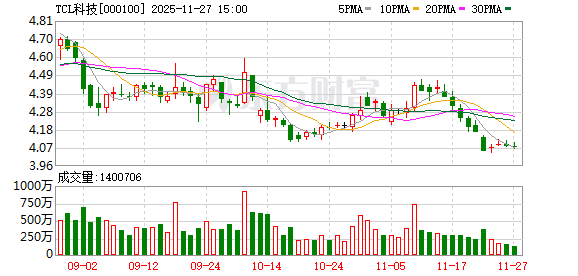
TCL科技:TCL中环经营所处阶段受到宏观环境等影响
Zheng Quan Ri Bao· 2025-11-27 13:41
Group 1 - The core viewpoint of the article highlights that TCL Technology's operations are influenced by various factors including macroeconomic environment, industry cycles, technological iterations, corporate strategy, and operational tactics [2]