生产力提升

Search documents
欧洲亟需技术革新提升生产力 安盛经济学家预警债务风险
Xin Lang Cai Jing· 2026-01-20 15:01
Core Viewpoint - Europe needs to accelerate the adoption of new technologies and enhance productivity to address current economic challenges [1] Group 1: Economic Conditions - The flexibility of EU economies is currently insufficient, and the development of key infrastructure is lagging [1] - Germany's shift towards a high-investment strategy provides a blueprint for a new economic management model [1] Group 2: Future Outlook - This transformation could lead to a significantly different Europe in ten years [1] - However, the risk of credit bubbles remains severe against a backdrop of high debt levels [1] - Large-scale investments will be necessary in the coming years, with a higher interest rate environment likely becoming a structural norm [1]
马斯克:再见,程序员
投资界· 2026-01-07 08:34
Core Viewpoint - The article discusses the concept of the technological singularity, predicting that it will occur in 2026, significantly earlier than previous estimates of 2045. This shift is attributed to advancements in AI, particularly the capabilities of Claude Code, which have rapidly transformed programming and software development [2][7][12]. Group 1: Predictions and Impacts of the Singularity - Elon Musk has declared 2026 as the year of the singularity, indicating a major shift in technological capabilities [2][3][7]. - The singularity refers to a point where technology accelerates exponentially, leading to profound changes in society and industry [7][22]. - The advancements in AI, particularly with Claude Code, are seen as a catalyst for this rapid transformation, with predictions that software engineering may soon be rendered obsolete [12][13]. Group 2: Advancements in AI Technology - Claude Opus 4.5 has been recognized as the leading coding model, outperforming competitors like GPT-5.1 and Gemini 3 Pro in various benchmarks [13][14]. - The efficiency of coding tasks has reportedly increased by 220% when using Claude Opus 4.5 in conjunction with Claude Code [12][13]. - The ability of AI to handle complex coding tasks has led to a scenario where even individuals with no programming experience can create functional applications in under ten minutes [17][24]. Group 3: Changes in Software Engineering Roles - The role of software engineers is evolving, with AI now responsible for 70%-80% of coding tasks, leading to a shift towards code review and oversight rather than traditional coding [23][24]. - The introduction of natural language as a new programming syntax allows users to define logic without needing to write code, fundamentally changing the landscape of software development [24][25]. - As AI automates software development, similar automation is expected to extend to operations, planning, and management roles within organizations [24][25].


2026的市场共识与风险
2026-01-04 15:35
Summary of Key Points from Conference Call Industry Overview - The discussion revolves around the U.S. economy and the stock market, particularly focusing on the S&P 500 index and its projected performance for 2026 [2][3]. Core Insights and Arguments - **Market Consensus for 2026**: Wall Street's consensus is optimistic, with predictions for the S&P 500 index ranging from a low of 7,000 to a high of 8,100 points by the end of 2026. The average forecast is around 7,500 to 7,600 points, indicating a general expectation of growth despite potential risks [2][3]. - **Economic Growth Drivers**: The anticipated growth is attributed to advancements in AI, tax reduction policies, and the Federal Reserve's interest rate cuts, which are expected to collectively boost the economy [2][3]. - **Potential Economic Scenarios**: Three potential scenarios for the U.S. economy in 2025 are outlined: 1. **Mainstream Scenario**: Continued robust growth driven by AI and consumer spending, supported by tax cuts and interest rate reductions, leading to a stable economic environment [4][5]. 2. **Upward Risk Scenario**: Significant productivity gains from AI, leading to a strong stock market performance and a favorable investment climate [4][5]. 3. **Downward Risk Scenario**: Slower-than-expected AI adoption and adverse political actions could lead to economic fragmentation and increased market volatility [4][5]. Additional Important Content - **Venezuela's Oil Production Challenges**: Venezuela faces significant hurdles in increasing oil production due to outdated infrastructure and complex political situations, which could exacerbate geopolitical risks and market uncertainties [5][6]. - **Macroeconomic Environment**: Current conditions indicate potential simultaneous tightening of supply and demand, increasing the risk of stagflation. Concerns include rising credit risks and questions about the sustainability of fiscal policies and the independence of the Federal Reserve [7]. - **Stock Market Performance Under Different Scenarios**: - In a **rebalanced cycle**, the stock market may see modest gains, with funds shifting from tech to defensive sectors [8]. - In a **productivity boost scenario**, the market could rise over 20%, particularly benefiting tech sectors [8]. - In a **stagflation scenario**, increased volatility and poor performance are expected, with funds moving towards defensive sectors [8]. - **Bond Market Dynamics**: The bond market is expected to react differently under various scenarios, with potential fluctuations in yields based on economic conditions and Federal Reserve policies [9]. - **Dollar Exchange Rate Influences**: The dollar's performance will be influenced by the relative strength of the U.S. economy compared to other major economies. In a recovery phase, the dollar may weaken, while significant productivity gains could lead to a slight appreciation [10][11]. This summary encapsulates the key points discussed in the conference call, highlighting the optimistic outlook for the U.S. economy while acknowledging the potential risks and challenges ahead.
国金宏观:增长的盛夏,就业的寒冬
Xin Lang Cai Jing· 2025-12-24 14:50
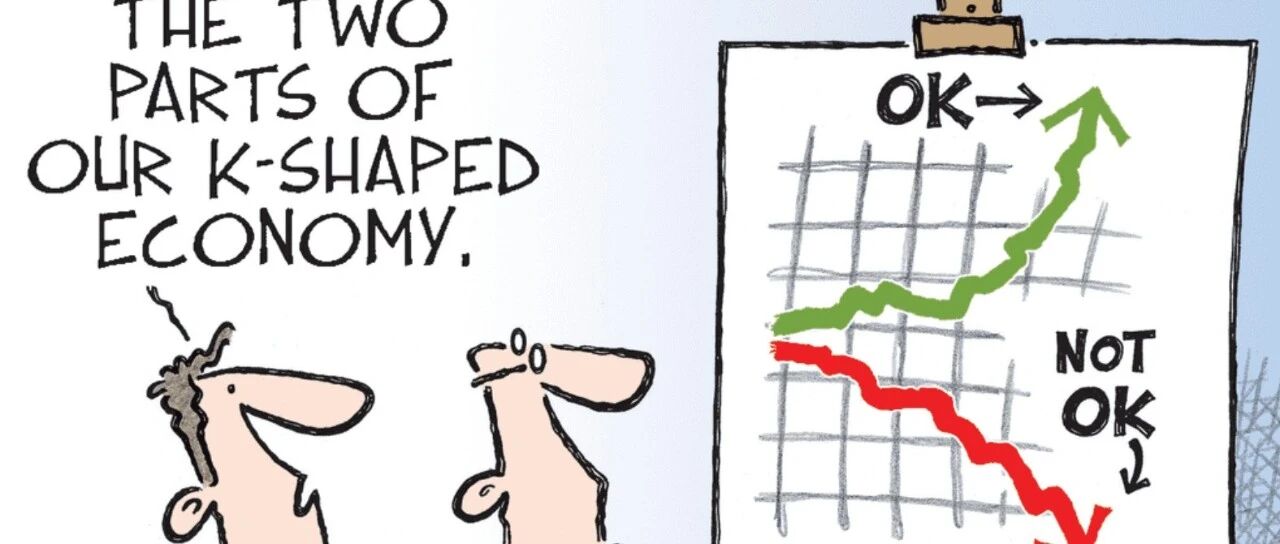
Core Viewpoint - The U.S. economy is experiencing a dichotomy characterized by "summer of growth" and "winter of employment," with significant disparities in economic performance and labor market conditions [3][29]. Economic Growth - The U.S. GDP for Q3 was reported at an annualized rate of 4.3%, exceeding expectations of 3.3%, while the year-on-year growth rate rose to 2.3%, still below the previous year's 2.8% [4][29]. - Key contributors to the GDP growth were consumer spending and net exports, contributing 2.4 and 1.6 percentage points respectively, although consumer spending shows signs of overestimation and disparity [6][30]. Investment Trends - Non-cyclical sectors are showing strong growth, while cyclical sectors are increasingly weak. AI-related investments, despite a decline in growth rate, remain the fastest-growing investment category [8][33]. - Broad AI investments contributed 0.8 percentage points to GDP, while private consumption added 1.1 percentage points, indicating a dual-engine growth model [8][33]. Consumer Behavior - Private consumption is strong overall, but there is a notable disparity among different income groups, with actual disposable income growth slowing down [15][38]. - The consumer spending structure shows significant contributions from healthcare, international travel, and entertainment, while broader service demand indicators have not shown exceptional seasonal performance [18][42]. Employment Conditions - Despite rapid economic growth, unemployment rates are rising, and non-farm payroll growth is declining, indicating a concentration of growth in sectors with lower labor demand [23][47]. - Labor market indicators suggest a potential increase in unemployment, with consumer confidence declining after a brief rebound [23][49]. Policy Implications - Current monetary policy appears misaligned with economic indicators, suggesting a need for a more dovish approach to support employment while addressing growth concerns [25][49].

增长的盛夏,就业的寒冬(国金宏观钟天)
雪涛宏观笔记· 2025-12-24 14:40
Core Viewpoint - The article discusses the contrasting dynamics of the U.S. economy, characterized by strong growth in GDP alongside rising unemployment, indicating a divergence between economic expansion and labor market performance [2][20]. Group 1: Economic Growth - The U.S. GDP for Q3 recorded an annualized growth rate of 4.3%, surpassing expectations of 3.3%, while the year-on-year growth rate rose to 2.3%, still below the previous year's 2.8% [4]. - Key contributors to the GDP growth were consumer spending and net exports, contributing 2.4 and 1.6 percentage points respectively, although there are concerns about the sustainability of this growth due to underlying disparities [6][7]. - AI-related investments, despite a slowdown in growth, remain the fastest-growing investment category, contributing 0.8 percentage points to GDP, while private consumption contributed 1.1 percentage points, indicating a dual-engine growth model [7]. Group 2: Employment Trends - Despite strong economic growth, the unemployment rate is rising, and non-farm payroll growth is declining, highlighting a disconnect between economic performance and labor market health [20]. - The labor market's weakness is a significant concern, with indicators suggesting a potential increase in unemployment rates, as consumer confidence has also dipped [20][22]. Group 3: Consumer Spending - Private consumption showed strength overall, but there are signs of wealth disparity and overestimation, particularly as disposable income growth has slowed, making consumption increasingly reliant on wealth effects and borrowing [14][15]. - The report indicates that the strongest contributions to consumer spending came from healthcare, international travel, and entertainment, while broader service demand did not show exceptional seasonal performance [15][17]. Group 4: Investment Dynamics - Traditional sectors sensitive to interest rates, such as durable goods consumption and residential investment, continue to show weakness despite significant interest rate cuts, raising doubts about the effectiveness of monetary policy in stimulating traditional economic recovery [12][23]. - The volatility in AI-related investments reflects a normalization after strong growth earlier in the year, indicating a gap between committed and realized investments [9].

全球目光再度转向中国:多家机构同步上调增速预测
Sou Hu Cai Jing· 2025-12-12 11:21
Group 1 - International institutions such as the World Bank, IMF, and ADB have raised their growth forecasts for China's economy for next year, with the World Bank increasing by 0.4 percentage points, IMF by 0.2 percentage points, and ADB by 0.1 percentage points, indicating a consensus in their updated judgment logic [1][3] - China's economic resilience has proven stronger than many anticipated at the beginning of the year, supported by sustained fiscal efforts and loose monetary policy, which have kept consumption and investment active under pressure [3] - The diversification of export markets has provided more stable support for external demand, prompting international institutions to reassess their growth expectations for the coming year [3] Group 2 - The World Bank's chief economist for China, Melissa, believes that China's long-term growth potential remains considerable, with key factors being technological innovation and productivity improvement, suggesting that the potential growth rate is not declining as rapidly as feared [3] - IMF President Georgieva emphasized the importance of domestic demand, noting that China is enhancing consumption stability through targeted policy measures such as improving the social security system and providing childcare subsidies, which will positively impact mid-term growth quality [3] - The expectation of improved certainty in the operating environment is seen as beneficial for both consumer spending and corporate investment, which will support the financial sector, small and medium enterprises, and asset allocation needs [3][4]

洪灝、李蓓、付鹏同台讨论:AI就是个泡沫、黄金都卖掉了,中国有个AI龙头被严重低估(附8000字实录)
Xin Lang Cai Jing· 2025-12-02 10:10
Group 1: AI Bubble Discussion - The consensus among experts is that AI represents a significant bubble, with comparisons made to the 2000 internet bubble, suggesting that the current situation may be even worse [4][10][83] - Despite the recognition of the AI bubble, investment in AI is deemed necessary due to its high market concentration, particularly in the U.S. stock market [24][74][84] - Concerns are raised about the sustainability of AI investments, likening them to past infrastructure investments in China that did not yield sufficient cash flow returns [15][81][82] Group 2: Investment Opportunities - There is a strong recommendation for investing in commodities and mining stocks, which have outperformed AI stocks this year, with gold and silver prices rising approximately 60% and 80% respectively [30][31][95] - The focus is also on non-U.S. value stocks and dividend-paying stocks, which have shown resilience and better returns compared to tech stocks [30][31][41] - The concept of "flowers blooming in winter" is introduced, highlighting companies that maintain profitability even in downturns, suggesting they are good investment opportunities [34][70][89] Group 3: Gold and Precious Metals - Gold has been highlighted as a crucial part of investment portfolios, with a significant increase in its price reflecting concerns over fiat currency, particularly the U.S. dollar [48][95][102] - Recent actions by central banks, such as Russia selling gold, are seen as warning signs for the gold market, indicating potential overvaluation [52][63][100] - The long-term narrative for gold remains strong, but caution is advised regarding current price levels, as they may not be sustainable [50][56][102] Group 4: Asset Allocation Strategies - A "barbell strategy" is recommended, balancing investments between dividend-paying stocks (beta assets) and productivity-related assets (alpha assets) [37][66][92] - Investors are encouraged to focus on low PE and PB stocks that exhibit defensive characteristics and potential for growth during economic downturns [32][70][89] - The importance of diversifying investments to avoid the risks associated with concentrated positions in high-flying sectors like AI is emphasized [71][74][96]

汇丰预测OpenAI到2030年难盈利,需再投2070亿美元
3 6 Ke· 2025-11-28 06:11
Group 1 - The core concern in the capital market is how OpenAI can meet the nearly unlimited computing power demand of ChatGPT while establishing a profitable business model [1] - HSBC predicts that by 2030, OpenAI's user base will cover 44% of the global adult population, yet the company will still struggle to achieve profitability [1] - To sustain its growth plans, OpenAI will need to invest an additional $207 billion in computing power over the next decade, driven by high infrastructure costs and increasing competition in the AI market [1] Group 2 - HSBC estimates that OpenAI will have a negative free cash flow of $207 billion by 2030, even if revenues could exceed $213 billion, which would still be insufficient to cover computing and data center leasing costs [2] - The future of OpenAI is closely tied to its investors and the AI industry chain, with Microsoft and Amazon being both partners and investors, while other companies like Oracle and NVIDIA will also be affected by OpenAI's performance [2] - Concerns about the sustainability of OpenAI's business model, market saturation of subscription services, regulatory pressures, and excessive capital requirements remain unresolved [2]
“南北双雄”崛起,中国AI的下一站在哪里?
Jing Ji Guan Cha Wang· 2025-11-25 11:25
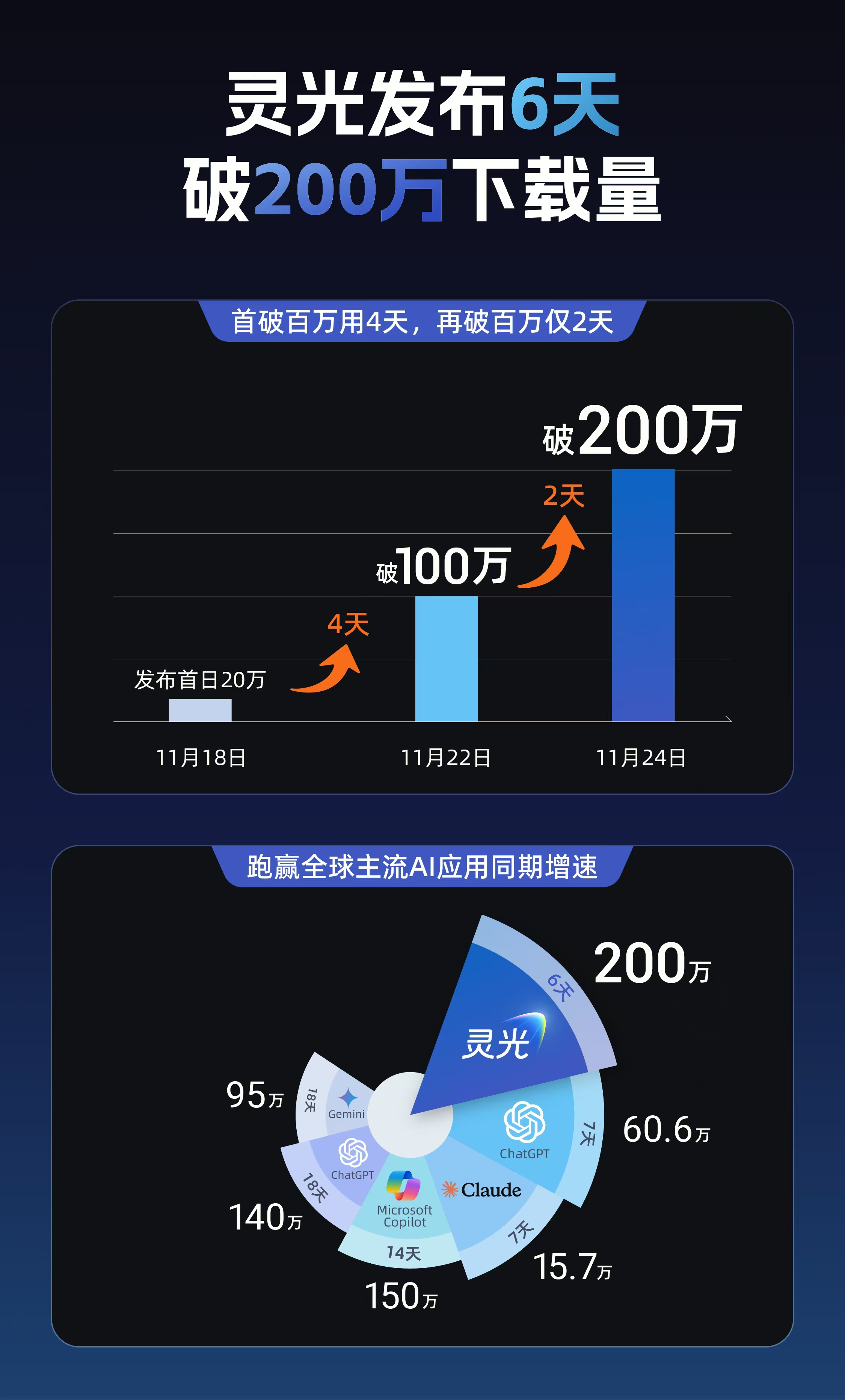
Core Insights - Alibaba and Ant Group have launched AI assistants that have rapidly gained user traction, with Alibaba's "Qianwen" app surpassing 10 million downloads within a week and Ant Group's "Lingguang" achieving 2 million downloads in just 6 days, indicating a significant shift in the competitive landscape of AI applications in China [1][5][15] User Demand Shift - The competition in AI to C products has evolved from mere conversational capabilities to practical utility, with users now seeking tools that solve real-life problems rather than just providing information [6][8] - Lingguang's ability to generate interactive applications in 30 seconds has sparked a trend where users create personalized tools, reflecting a shift towards a "practical necessity" phase in AI applications [8][13] Competitive Landscape - The emergence of a "North Byte, South Alibaba" dynamic highlights the contrasting strategies of the two companies, with Alibaba focusing on practical applications and user needs, while ByteDance emphasizes content and engagement [5][10][12] - Lingguang's success is attributed to its focus on delivering tools rather than just information, marking a generational leap in AI capabilities [10][14] Market Implications - The rapid growth of Lingguang and Qianwen signifies a new phase in the AI market, where the emphasis is on creating value through user-driven applications rather than just attracting traffic [9][15] - The differentiation in the underlying ecosystem logic between Alibaba and ByteDance suggests that future competitive barriers will be built on the reliability of tool generation and deep integration with complex service scenarios [11][14] Future Outlook - The potential for Lingguang lies in its ability to integrate with various services, creating a closed loop of tool generation, service invocation, and payment, which could enhance its user retention and ecosystem value [14][15] - The competition in the AI to C market is expected to intensify as both companies strive to establish sustainable value creation mechanisms, with the initial success of Lingguang being just the beginning of a longer journey [15]

大摩:2026年的主要风险是“AI资本狂潮未能提升生产力”
美股IPO· 2025-11-24 03:41
Group 1 - The core view of Morgan Stanley's 2026 outlook is that an AI-driven capital expenditure wave of nearly $3 trillion will propel the market higher, with the S&P 500 index expected to reach 7800 points [1][2][8] - The report highlights that the shift in U.S. policy towards industrial policy and strategic investments is driving a significant rebound in corporate capital expenditures [3][4] - Morgan Stanley predicts that global AI-related capital expenditures will approach $3 trillion, with approximately $1.5 trillion needing to be financed through public and private credit markets, contributing 0.4 percentage points to the projected 1.8% GDP growth in the U.S. by 2026 [5][6] Group 2 - Investment opportunities are expected to be broad-based across various industries, not limited to a few leading AI companies, with industrial firms, tech component suppliers, and financial institutions likely to benefit [8] - In the credit market, high-yield bonds are forecasted to outperform investment-grade bonds due to increased issuance pressures on investment-grade bonds, while high-yield bonds are expected to provide around 6-7% total returns [8] - Despite the positive outlook for 2026, there are warnings about potential cyclical pressures from trade policies and interest rate fluctuations, with the Fed possibly starting to cut rates in early 2026 [9] Group 3 - The main risk identified is the potential failure of the AI capital expenditure wave to translate into substantial productivity gains, which could lead to rising corporate leverage outpacing output growth and causing credit market concerns [10] - However, the likelihood of this risk materializing in 2026 is considered low, as corporate fundamentals remain strong with healthy balance sheets and low leverage [10] - It is crucial for investors to monitor key indicators such as corporate leverage, market valuations, and the conversion of investment waves into actual output starting in 2026 [10]