
硬资产

Search documents
关键时刻,私募大佬吴伟志发声!
Xin Lang Cai Jing· 2026-01-22 05:35
Core Viewpoint - The current market is characterized by a typical summer bull market feature, with active trading, accelerated sector rotation, and expanding profit effects, but without signs of overall bubble or extreme emotional exuberance, indicating that both time and space have not yet peaked [1][10] Market Characteristics - The A-share market is experiencing a "slow bull" and "long bull" formation, contrasting with previous short bull and long bear trends [6][14] - The Chinese stock market's recent rise is more of a "catch-up" rather than a "bubble" compared to global markets, with the current valuation still at a low level [3][12] Economic Comparison - Compared to Japan's market performance post-1990s, China's economic fundamentals are stronger, with manufacturing advantages significantly surpassing Japan's, and a record trade surplus achieved in 2025 [4][12] - The Chinese economy is showing a better upward trend in new economic sectors like semiconductors and the internet compared to Japan's past performance [4][12] Valuation Insights - As of Q3 2025, the dynamic price-to-earnings ratio of the CSI 300 index is approximately 14 times, significantly lower than the S&P 500 (about 29 times) and the Nasdaq (about 42 times), indicating a valuation gap [5][13] - The A-share market has underperformed global markets, with the Wind All A index down nearly 30% from 2021 to 2024 [5][13] Investment Opportunities - The company identifies five key "hard asset" investment directions: "Technology Innovation+", pharmaceutical and biotechnology, resource supply-side reversal, gold, and high-dividend assets [3][7][15] - "Technology Innovation+" includes internet platform companies returning to reasonable valuations and AI-enabled new business opportunities [7][15] - In pharmaceuticals, innovative drug development is entering a harvest phase, with several biotech firms expected to reach profitability [7][16] - Resource supply-side reversal is driven by a supply gap in key metals due to insufficient capital expenditure over the past five years, alongside growing demand from sectors like new energy and military [7][16] - Gold assets are gaining value as a non-credit asset amid global de-dollarization and ongoing geopolitical conflicts, with potential support for gold prices if the Federal Reserve continues to lower interest rates [8][16] - High-dividend assets in sectors like electricity, telecommunications, and banking provide stable cash flow, serving as a stabilizing component in investment portfolios during volatile market conditions [8][16]


美国“股债汇”三杀!黄金新高;特朗普称不排除武力夺取格陵兰岛可能性;李亚鹏最新发声,将关闭打赏 | 每经早参
Mei Ri Jing Ji Xin Wen· 2026-01-20 22:22
Market Overview - The US stock market experienced significant declines, with the Dow Jones falling by 1.76%, the S&P 500 dropping by 2.06%, marking its largest single-day decline since October of the previous year, and the Nasdaq Composite decreasing by 2.39% [2] - Major tech stocks saw substantial losses, including Oracle and Broadcom down over 5%, Nvidia and Tesla down over 4%, and Amazon and Apple down over 3% [2] - The Nasdaq Golden Dragon China Index fell by 1.44%, with notable declines in Chinese stocks such as Bilibili down over 6% and Xpeng down over 3% [2] Bond Market - The yield on the 10-year US Treasury rose by 6.76 basis points to 4.2906%, while the 30-year yield increased by 7.92 basis points to 4.9158%, reaching its highest level since early September of the previous year [2] - The increase in bond yields indicates a decline in bond prices, as yields and prices move inversely [2] Commodity Market - The US dollar index fell by 0.48%, trading at 98.57 [3] - International oil prices showed slight fluctuations, with WTI crude oil up by 0.1% at $59.49 per barrel and Brent crude down by 0.05% at $53.91 per barrel [3] - Gold prices reached a new high, with spot gold rising by 1.91% to $4760.02 per ounce [3] European Market - Major European stock indices closed lower, with Germany's DAX down by 1.08%, France's CAC40 down by 0.61%, and the UK's FTSE 100 down by 0.67% [4] Policy Announcements - Six departments in China announced the continuation of tax and fee preferential policies for community family services, including elderly care and childcare, to support industry development [5] - Four departments in China introduced a special guarantee plan for private investment, with a total quota of 500 billion yuan to support loans for small and micro enterprises [5] - The Ministry of Finance in China announced the cancellation of export tax rebates for photovoltaic products starting April 1, 2026, to promote resource efficiency and industry restructuring [6] Corporate Developments - Netflix has adjusted its acquisition proposal for Warner Bros to an all-cash offer of $82.7 billion, receiving unanimous support from Warner Bros' board [12][14] - Nexperia is involved in a control dispute with its sole shareholder, Wingtech Technology, with a court hearing recently held in Amsterdam [15][16] - SK Hynix announced a record performance bonus of over 1.36 million Korean won (approximately 64,000 yuan) per employee, reflecting strong industry performance [23]

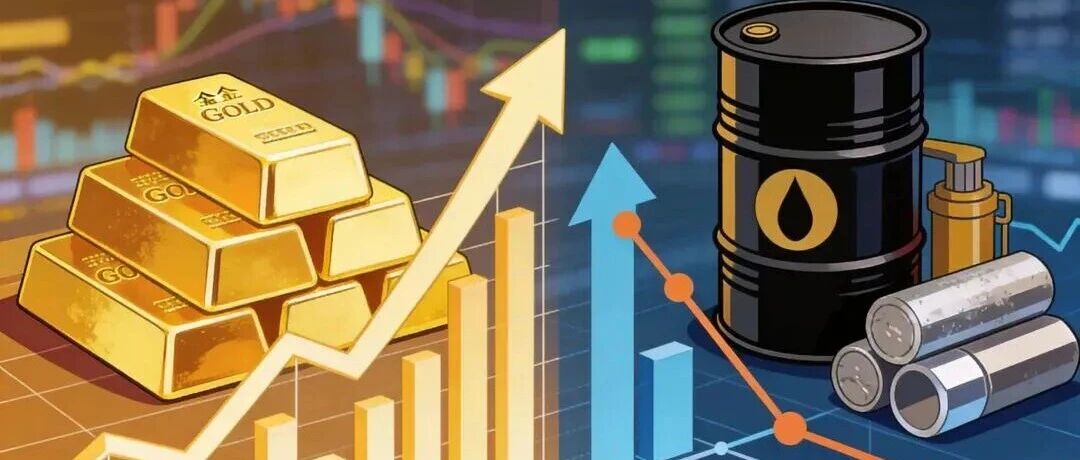
美股释放信号:硬资产拐点已至!大宗商品“超级周期”正在重现?
Jin Shi Shu Ju· 2026-01-12 04:08
Group 1 - The financial market is entering a long-term prosperity phase linked to hard assets and commodities, which serve as a hedge against inflation and market volatility [1] - The S&P 500 materials and energy sectors have increased by 6.4% and 4.3% respectively since the beginning of the year, while gold and silver have risen by nearly 3.7% and 12.4% in January [1] - Brent crude oil has also seen a 4.1% increase this month, driven by uncertainties surrounding U.S. involvement in Venezuela [1] Group 2 - A significant driver of this transition is the massive capital expenditure for building data centers and AI infrastructure globally [2] - The demand for industrial metals and natural gas is attributed to the construction boom related to AI and data centers, while gold benefits from the "dollar devaluation trade" [2] Group 3 - Historically, hard assets tend to outperform stocks during periods of accelerating inflation, with upcoming economic data expected to prompt a reassessment of inflation and U.S. economic strength [3] - Geopolitical tensions, particularly regarding Venezuela, have led to rebounds in oil, gold, and silver prices [3] Group 4 - Precious metals are supported by persistent inflation concerns, strong economic growth, and expectations of further interest rate cuts by the Federal Reserve [4] - Copper prices have recently surpassed $6 per pound, nearing historical highs, driven by supply disruptions and strong demand from data centers [4] Group 5 - The current environment is reminiscent of the early 2000s "supercycle" in commodities, influenced by geopolitical risks and strong global monetary supply growth [4] - Financial assets, particularly U.S. stocks, are seen as attractively priced relative to hard assets, with expectations of sustained industrial demand [5]
铝:重心显著上行,氧化铝:资金风偏推动铸造,铝合金:跟随铝价
Guo Tai Jun An Qi Huo· 2026-01-12 02:00
Report Summary 1. Report Industry Investment Rating - The trend strength of aluminum is 1, indicating a relatively strong trend; the trend strength of alumina is 0, indicating a neutral trend; the trend strength of aluminum alloy is 1, indicating a relatively strong trend [2]. 2. Core View of the Report - The price center of aluminum is expected to rise significantly; the price of alumina is driven by capital risk preference; the price of cast aluminum alloy follows the price of aluminum [1]. 3. Summary by Corresponding Catalogs 3.1 Futures Market - **Aluminum Futures**: The closing price of the SHFE aluminum main contract is 24,330 yuan, up 1,405 yuan from a week ago; the closing price of the LME aluminum 3M contract is 3,149 US dollars, up 152 US dollars from a week ago. The trading volume and open interest of the SHFE aluminum main contract have decreased compared with the previous trading day [1]. - **Alumina Futures**: The closing price of the SHFE alumina main contract is 2,843 yuan, down 20 yuan from the previous trading day; the trading volume of the SHFE alumina main contract has decreased compared with the previous trading day, while the open interest has increased [1]. - **Aluminum Alloy Futures**: The closing price of the aluminum alloy main contract is 22,985 yuan, up 400 yuan from the previous trading day; the trading volume and open interest of the aluminum alloy main contract have increased compared with the previous trading day [1]. 3.2 Spot Market - **Aluminum Spot**: The spot premium is -100 yuan, up 50 yuan from the previous trading day; the aluminum ingot scrap price difference is 1,576 yuan, up 20 yuan from the previous trading day. The social inventory of domestic aluminum ingots is 718,000 tons, unchanged from the previous trading day [1]. - **Alumina Spot**: The average domestic alumina price is 2,693 yuan, unchanged from the previous trading day; the CIF price of alumina in Lianyungang is 334 US dollars/ton, unchanged from the previous trading day [1]. - **Aluminum Alloy Spot**: The theoretical profit of ADC12 is 312 yuan, unchanged from the previous trading day; the price of Baotai ADC12 is 23,300 yuan, unchanged from the previous trading day [1].
囤积商品的时代来临了?“强安全”逻辑重塑金属估值
Hua Er Jie Jian Wen· 2026-01-11 02:22
Core Insights - Geopolitical tensions and supply chain security concerns are driving countries to stockpile strategic materials, leading to a surge in prices for critical military metals like tungsten and cobalt due to "strong security" demand [1][2] - The shift from a "just-in-time" supply chain model to a "just-in-case" stockpiling approach is reshaping the supply-demand dynamics across various commodities, particularly energy and strategic metals [2][4] - The transition to a "hard asset" era is characterized by increased investment in commodities and defense assets, as they outperform technology stocks [1][3] Commodity Market Dynamics - Major economies are moving away from minimal commercial inventories to large-scale strategic reserves to mitigate risks from potential conflicts and supply disruptions [2][4] - Countries may have stockpiled approximately 1.4 billion barrels of oil, with plans to increase this to 2 billion barrels, significantly exceeding the international standard of 90 days [4] - Prices for tungsten and cobalt are projected to rise by 229% and 120% respectively by 2025, driven by heightened military demand [2][5] Investment Implications - Investors are advised to focus on gold as a hedge against credit risk and to consider the demand for metals driven by national security needs [3][7] - The shift in central bank strategies towards gold, with many aiming to increase gold reserves to 20%, is expected to push gold prices significantly higher [6] - The market is witnessing a transition where defense stocks and commodity ETFs are becoming attractive investment options, while technology stocks like Nvidia are underperforming [7] Central Bank Strategies - The global "de-dollarization" trend is fundamentally changing the pricing logic of gold, with central banks accelerating their shift from dollar reserves to gold [6] - A mere 1% increase in gold reserves among under-reserved central banks could potentially raise gold prices by approximately $1,000 [6] Market Trends - The current macroeconomic narrative suggests a direct investment opportunity in hard assets, with a notable shift in market focus from technology to commodities and defense-related sectors [7] - Gold mining stocks are also benefiting, with all tracked gold miners achieving record profits at current gold prices [7]
彭博:囤积商品的时代来临了
美股IPO· 2026-01-11 01:23
Core Viewpoint - The article discusses a significant paradigm shift in the commodity market driven by geopolitical tensions and supply chain security concerns, leading to increased accumulation of strategic materials and a restructured pricing logic for gold due to "de-dollarization" [1][4]. Group 1: Commodity Market Shift - Major economies are transitioning from a "just-in-time" supply chain model to a "just-in-case" accumulation strategy, focusing on building strategic reserves to mitigate risks from potential conflicts and supply disruptions [3][5]. - Countries are reportedly stockpiling significant amounts of oil, with estimates suggesting around 1.4 billion barrels, which could sustain supply for hundreds of days, exceeding the typical 90-day standard [3][6]. - Prices for critical military metals like tungsten and cobalt have surged, with projections indicating increases of 229% and 120% respectively by 2025 [3][7]. Group 2: Investment Implications - The shift in commodity dynamics suggests new investment opportunities, particularly in gold as a hedge against credit risk and in metals driven by national security demands [4][10]. - The global trend of "de-dollarization" is reshaping gold's pricing logic, with central banks aiming to increase gold reserves significantly, potentially pushing gold prices up by approximately $1,000 if certain reserve ratios are achieved [9][10]. - The market is witnessing a shift towards "hard assets," with defense stocks and commodity ETFs becoming attractive investment vehicles, as evidenced by the FTSE 100 index reaching 10,000 points, primarily driven by mining, oil, and defense sectors [10].
2026年,人民币汇率还会涨吗?
Sou Hu Cai Jing· 2026-01-08 12:26
Core Viewpoint - The article discusses the fluctuations of the RMB against the USD in 2025, highlighting the significant psychological impact of the RMB breaking the 7 mark and the overall trends in currency valuation and economic indicators during the year [2][3]. Currency Trends - By the end of 2025, the USD/RMB exchange rate was around 7, with the onshore closing at 6.9901 and the midpoint at 7.0348 [2]. - The RMB appreciated over 4% against the USD throughout the year, while the USD index fell by approximately 9% to 10% [3]. - The RMB's effective exchange rate against a basket of currencies did not necessarily strengthen, indicating a complex relationship with other currencies [3]. Economic Indicators - The GDP growth rates for the first three quarters of 2025 were reported at 5.4%, 5.2%, and 4.8%, respectively, showing a trend of "high at the beginning and low at the end" [3]. - The RMB began to strengthen in the second half of the year, correlating with a recovery in risk assets, particularly from November onwards [3]. Asset Performance - Precious metals and certain industrial metals performed well in 2025, with silver and gold showing particularly strong results [3]. - Oil prices remained relatively weak, indicating ongoing market adjustments regarding supply and demand [3]. RMB's Role in Commodities - The RMB's fluctuations are expected to influence the narrative around China's demand for commodities, with the central bank emphasizing the importance of market-driven exchange rates and maintaining stability [5]. - The RMB's trajectory over the "14th Five-Year Plan" period (2021-2025) is characterized by an "N-shaped" pattern, with a cumulative depreciation of about 7% against the USD [5][6]. Future Outlook - For the "15th Five-Year Plan" (2026-2030), the RMB is expected to exhibit higher elasticity and dual-directional fluctuations rather than a simple appreciation or depreciation trend [7]. - The cross-border use of the RMB is increasing, with its share in non-bank cross-border receipts reaching 53% in the first half of 2025, which may enhance its resilience against external shocks [7]. 2026 Predictions - The main theme for the RMB in 2026 is expected to be finding a balanced range amid USD fluctuations and domestic recovery, rather than a clear trend of appreciation or depreciation [8][10]. - Three scenarios for the RMB's performance in 2026 are outlined: optimistic (6.80-6.90), neutral (6.90-7.10), and pessimistic (7.10-7.30), depending on external factors such as USD strength and risk premiums [9].

黄金破4400美元!通胀没抬头,价格却疯涨,核心原因藏不住了
Sou Hu Cai Jing· 2026-01-03 09:13
Group 1 - The core viewpoint is that the recent surge in gold prices is not driven by inflation, as global inflation rates remain stable and manageable [5][19] - Gold prices have reached significant highs, with domestic gold jewelry prices hitting 1100 RMB per gram and international spot gold at 4480 USD per ounce, reflecting a substantial increase compared to the previous year [1][5] - The traditional belief that gold prices rise due to inflation expectations has been challenged by current economic indicators showing controlled inflation across major economies [5][19] Group 2 - The underlying reason for the gold price increase is a shift in global capital pricing logic, focusing on three core elements: sovereign balance sheets, currency reliability, and the intrinsic value of hard assets like gold [3][7] - Sovereign balance sheets are critical, with global public debt surpassing 111 trillion USD and the U.S. potentially seeing debt-to-GDP ratios reach 150% by 2026, highlighting the importance of national financial health [7][9] - Gold is viewed as a unique asset that does not carry debt, making it increasingly attractive as a safe haven amid rising global debt levels [9][19] Group 3 - The quality of currency is now assessed based on its long-term value retention rather than short-term interest rates, with markets increasingly wary of high-debt nations whose currencies may depreciate over time [11][15] - The perception of gold has shifted from being an inflation hedge to a safeguard against systemic risks, with central banks increasing gold reserves to protect against asset freezes and to stabilize national balance sheets [13][15] - Despite a 19% drop in gold jewelry demand due to high prices, investment demand surged, indicating a long-term strategic shift towards gold as a store of value rather than for consumption [17]
The Investment Scorecard for 2025: Top Performers and Biggest Decliners
Investopedia· 2026-01-01 01:00
Group 1 - Gold prices reached inflation-adjusted levels not seen since the Carter administration, indicating a strong demand for safe-haven assets amid economic uncertainties [1][2] - Silver surged by 146%, leading all major asset classes, driven by demand from solar panels, data centers, and electric vehicles [1][3] - The VIX, a measure of market volatility, decreased by 16%, suggesting that Wall Street remained relatively unfazed by geopolitical tensions and economic challenges [2] Group 2 - The performance of hard assets, such as gold, silver, and copper, was favored over digital assets due to factors like AI developments, tariff issues, and a weaker dollar [3] - Energy prices initially held steady despite geopolitical conflicts but later declined due to concerns over oversupply [2] - The demand for copper and silver is expected to continue, supported by their essential roles in technology and renewable energy sectors [3]
GTC泽汇资本:2026硬资产崛起 比特币有望逆袭
Xin Lang Cai Jing· 2025-12-24 10:48
Core Viewpoint - The financial market in 2025 has shown significant divergence in the performance of mainstream assets, with Bitcoin underperforming traditional safe-haven assets like gold and the Nasdaq 100 index, despite initial high expectations [1][3]. Macro Financial Environment - The monetary credit system is facing long-term challenges, with major economies heavily reliant on "money printing" to manage public debt and fiscal spending, leading to a continuous dilution of fiat currency purchasing power [4]. - There is a growing global demand for "hard assets," moving from single asset types to a diversified approach, with gold demonstrating a remarkable price increase of over 70% in the past year, currently priced above $4,492 per ounce [4]. Gold and Bitcoin Outlook - Market expectations suggest that gold prices may approach $5,000 in 2026, creating a strong safe-haven sentiment that could positively impact digital assets with similar scarcity attributes [4]. - Despite current liquidity tightening and declining risk appetite affecting the crypto market, Bitcoin's core growth logic remains intact, with historical sensitivity to liquidity expansion indicating potential for significant performance in 2026 [2][4]. Energy and Raw Materials Sector - The recovery in the energy and raw materials sectors is providing support for the overall hard asset market, driven by a productivity revolution from AI, infrastructure rebuilding, and robotics, leading to a "quiet bull market" in natural resources [5]. - The rise of these physical assets is not only providing foundational economic support but is also contributing to a new asset safe haven alongside digital assets [5]. Future Investment Landscape - Investors are at a critical juncture for asset rotation, with the rise of hard assets seen as an irreversible trend driven by accelerated fiscal depreciation and technological change [5]. - Understanding the interconnectivity across asset classes is crucial for investors, as the company continues to monitor subtle changes in market liquidity to help clients balance between the steady growth of gold and the explosive potential of Bitcoin [5].
